States warn of health care worker shortage as they prep for next pandemic

As the worst of the COVID-19 pandemic appears to fade in the rearview mirror, public health departments are already preparing for the next threat, noting that they have built better operational infrastructure, but caution that budget cutbacks and a health care worker shortage may be putting the country at risk.

The World Health Organization has warned that the accelerating pace of climate change, deforestation and globalization means that it isn’t a matter of if, but when the next pandemic will strike. Even in the midst of the COVID-19 pandemic, state and local health departments were forced to grapple with yet another emergency last summer, with the emergence of the monkeypox (now known as mpox), outbreak.

At least 13 state health departments and 11 hospital associations told ABC News that chronic staffing shortages and new threats to funding may undermine their ability to swiftly respond to future pandemic threats.

“Without the personnel to do the hard work of analyzing data, interviewing cases, tracing contacts, testing specimens, and performing other essential public health activities, our nation is less prepared in some ways than it was before 2020,” Dr. Jay Varma, director of the Cornell Center for Pandemic Prevention and Response told ABC News.

The American Hospital Association has called federal lawmakers to reauthorize the Pandemic and All Hazards Preparedness Act to strengthen the Strategic National Stockpile, to fund the Hospital Preparedness Program, and require more collaboration between the federal government and stakeholders to build national data infrastructure.

Health care worker shortage

After a grueling three years caring for patients on the front lines of the COVID-19 pandemic, nurses continue to leave the health care sector en masse, according to state health departments and state hospital associations, sparking widespread shortages nationwide that states warn may lead to an inability to care for patients during a new outbreak.

Before the pandemic, Georgia was already dealing with a nursing staffing shortage. Now, with not enough nurses graduating in the state, the governor has created a statewide healthcare workforce commission to increase the hospital workforce, according to Anna Adams, the executive vice president, external affairs of the Georgia Hospital Association, a nonprofit trade group.

States warn of health care worker shortage as they prep for next pandemic

A nurse tends to a patient inside the COVID-19 unit of Salinas Valley Memorial Hospital in Salinas, Calif., Sept. 2, 2021.

Bloomberg via Getty Images, FILE

Part of the issue, health and hospital association officials from several states told ABC News, was the recurring cycle of worker shortages leading to increased labor costs – with turnover driving higher expenses to hire and recruit new staff.

“Now, nurses and others are leaving health care altogether, to companies that have signing bonuses and very high hourly rates. And so all of a sudden, hospitals are in a position where the only way we’re going to have an adequate nursing force is to work with the nurse traveler agencies,” said Brian Peters, CEO of the Michigan Health & Hospital Association.

In addition, some hospitals are experiencing negative profit margins, making less money in relation to their own expenses compared to before the pandemic. California health officials, for example, noted that over half of hospitals in the state already had unsustainable margins before the pandemic. This worsened during the COVID-19 pandemic as the state’s total hospital expenses rose 15{bf0515afdcaddba073662ceb89fbb62b6b1bf123143c0e06b788e1946e8c353f} in just one year. According to state officials, California hospitals are losing money on operations.

Funding in flux

Early in the COVID crisis, as case counts exploded and deaths began to creep up, public health departments received hundreds of billions of dollars in funding from the federal government to support their work. But most of that money was earmarked to respond to the emergency — not to shore up public health permanently. Now, many are warning that the flood of money could transition to a trickle without renewal of some of the federal funds, which could lead them to cut contractual employees and reduce some of their initiatives.

“Funding comes in on specific diseases,” said Susan Kansagra, North Carolina’s state health officer. “When that disease goes away, funding goes away. We’re left rebuilding.”

Most state public health departments significantly expanded their workforce in the early days of the pandemic, and they have larger staffs now than in 2019. But many of those hires were temporary positions, including some epidemiologists and behavioral scientists. Washington, for example, stated that even now, 30{bf0515afdcaddba073662ceb89fbb62b6b1bf123143c0e06b788e1946e8c353f} of its current workforce were in time-limited positions.

There is also high turnover in the public health sector. The Virginia Department of Health noted that about a third of its workforce had minimal work experience prior to 2019, whereas now 40{bf0515afdcaddba073662ceb89fbb62b6b1bf123143c0e06b788e1946e8c353f} has less than two years of know-how on the job. Many experienced public health workers left their jobs in the past few years, often because of the political blowback and pressures from far-right groups opposed to things like masks and vaccines, state health officials told ABC News.

While most state health officials interviewed by ABC News shared they may need to tighten their ranks amid lower funding support, some felt confident in being able to revamp their workforce should another crisis arise.

“The takeaway for us is that we have worked through rapid hiring, onboarding, and training processes, so that we could do it again if needed,” the Utah Department of Health and Human Services said to ABC News in a statement.

Identifying the next threat

With the rise of at-home tests and dwindling contact-tracing programs, public health departments have shifted their attention to different methods of identifying where COVID-19 is spreading most and detecting any new diseases that may pose a threat.

Wastewater has become a key tool for epidemiologists to quickly identify where pockets of the community may be experiencing a greater number of COVID-19 cases than usual. Most state health departments contacted by ABC News noted they had integrated a wastewater surveillance system and were tracking old and new threats.

PHOTO: An employee collects a wastewater sample to monitor COVID-19 in Tucson, Ariz., Aug. 31, 2020.

An employee collects a wastewater sample to monitor COVID-19 in Tucson, Ariz., Aug. 31, 2020.

Bloomberg via Getty Images, FILE

Nevada officials shared that the state built “a viral respiratory surveillance program to expand upon influenza surveillance efforts to help understand what respiratory viruses are circulating, the magnitude of these viruses within communities, and the overall severity of the viral illnesses” with a team set to monitor data for early detection for potential surges.

Most states also developed dashboards to inform the public of case numbers and hospitalizations statistics as well as avenues to collect vaccine data or notify contacts of someone sick of an exposure. Those tools are in place and ready for future disease threats, so health department wouldn’t have to start from scratch.

“We’ve created forums for sharing information throughout the three years to ensure that we can continue to respond to COVID-19, and also that we will be ready in the future,” said Nicole Stallings, chief external affairs officer at the Maryland Hospital Association.

Experience counts, say health departments

State health department officials reached by ABC News overwhelmingly said their experience responding to COVID-19 means they are better prepared to react to a new health threat than in 2019.

“We’re better trained, better staff, better equipped and managed, more responsive, and experienced personnel, our information systems are much more robust. So, I think, at this point, and recognizing that all capabilities atrophied over time, but at this point, we’re much better prepared than we were in 2019,” said Robert Mauskapf, director of the office of emergency preparedness at the Virginia Department of Health.

Still, some public health experts remained skeptical, noting that budget and staffing problems — and even cultural shifts — will make it harder to respond to future threats.

Many states, for example, have passed or are considering laws that would prohibit mask mandates or vaccine requirements — both tools that helped protect people against the spread of COVID-19.

PHOTO: A discarded surgical mask, April 26, 2022, in Chicago.

A discarded surgical mask, April 26, 2022, in Chicago.

Chicago Tribune via Getty Images, FILE

So even though health departments know the strategies that helped during the COVID-19 pandemic, they might not have the ability to implement them as successfully going forward.

“Federal, state, and local health departments have far fewer personnel today than they did before [the pandemic]. This is a consequence of public health staff being chronically over-worked and underpaid, public health officials being verbally attacked on social media, including by elected officials, and a broad national narrative that public health is somehow incompetent,” Varma said.

ABC’s John Brownstein, Ph.D., Sony Salzman, John Santucci, Nicole Wetsman, Emma Egan, Sara Avery, Alexandra Myers and Soorin Kim contributed to this report.


COVID-19 pandemic expected to end this year ‘as a public health emergency,’ says World Health Organization

The director of the Entire world Well being Group (WHO) announced on Friday that he is “confident” the COVID-19 pandemic will conclusion in 2023.

Director-Standard Dr. Tedros Adhanom Ghebreyesus made the reviews to reporters at a media briefing in Geneva.

“We are definitely in a much better place now than we have been at any time in the course of the pandemic,” Dr. Ghebreyesus claimed. 

He mentioned that in the past 4 months, the weekly range of documented fatalities has been reduce than it was just before the pandemic was declared in March 2020.

More mature People in america REJECT Extra VACCINES, Choose As a substitute FOR ‘NATURAL Healing,’ Claims REPORT

“I am assured that this yr, we will be able to say that COVID-19 is around as a community well being unexpected emergency of global issue,” he extra.

COVID-19 instances and fatalities proceed to pattern downward all over the world. 

COVID-19 pandemic expected to end this year ‘as a public health emergency,’ says World Health Organization

Globe Wellness Corporation (WHO) Director-Basic Tedros Adhanom Ghebreyesus announced on Friday he is “assured” the COVID-19 pandemic will conclusion in 2023. (iStock)

As of March 6, weekly fatalities stood at 5,048 globally.

That’s a lower of additional than 26{bf0515afdcaddba073662ceb89fbb62b6b1bf123143c0e06b788e1946e8c353f} from the prior 7 days — and down from a peak of 102,000 deaths in January 2021, for every info from WHO.

Weekly instances of COVID-19 are down to 812,255 globally, a 21.65{bf0515afdcaddba073662ceb89fbb62b6b1bf123143c0e06b788e1946e8c353f} lessen above the prior 7 days. They peaked at 44.3 million in December 2022.

“Very last week, there were even now a lot more than 5,000 noted deaths.”

In the U.S., as of March 15, weekly scenarios were down to 149,955, right after peaking at 5.6 million on Jan. 19, 2022, for every knowledge from the Facilities for Disease Manage and Avoidance (CDC). 

COVID VACCINE UPDATE: Food and drug administration AUTHORIZES PFIZER BOOSTER FOR SOME Young children Underneath AGE 5

Weekly deaths in the region were at 1,706, down from an all-time peak of 23,478 on Jan. 13, 2021 and one more surge of 17,357 on Feb. 2, 2022. 

‘We are not there yet’

Having said that, even with its optimistic prediction, the WHO is not really ready to announce the conclude of the pandemic at this exact minute in time.

“We are not there however. Past week, there were nonetheless additional than 5,000 documented fatalities,” Dr. Ghebreyesus mentioned in the course of the briefing. 

“That is 5,000 too numerous for a ailment that can be prevented and dealt with.”

In the U.S., as of March 15, weekly cases were down to 149,955, after peaking at 5.6 million on Jan. 19, 2022. 

In the U.S., as of March 15, weekly circumstances were down to 149,955, right after peaking at 5.6 million on Jan. 19, 2022.  (iStock)

Dr. Ghebreyesus also pressured the want to decide how the pandemic started.

“Previous Sunday, WHO was designed conscious of knowledge released on the GISAID databases in late January, and taken down yet again recently,” he explained. 

“The information, from the Chinese Center for Illness Management and Prevention, relates to samples taken at the Huanan marketplace in Wuhan in 2020.”

Dr. Ghebreyesus claimed that whilst this distinct knowledge did not offer a “definitive reply” to the pandemic’s origins, all information is crucial in acquiring that intention.

Exceptional TICK-BORN BABESIOSIS Condition ON THE Increase IN NORTHEASTERN US, Claims CDC — Here’s WHY

“These facts could have — and really should have — been shared 3 decades ago,” he ongoing. “We keep on to call on China to be transparent in sharing knowledge, and to carry out the needed investigations and share the final results. Comprehending how the pandemic started remains both of those a moral and scientific crucial.”

“We are surely in a considerably greater situation now than we have been at any time all through the pandemic.”

Dr. Marc Siegel, medical professor of medicine at NYU Langone Medical Centre in New York Metropolis and a Fox Information professional medical contributor, stated this weekend that he inquiries the WHO’s hesitancy to signal the conclusion of the international crisis irrespective of the weekly COVID loss of life depend staying reduced than pre-pandemic.

Weekly COVID-19 cases and deaths have been trending consistently downward both in the U.S. and globally. 

Weekly COVID-19 scenarios and deaths have been trending continually downward both in the U.S. and globally.  (iStock)

“Under the heavy impact of China, WHO leadership actions have been erratic at greatest, delaying contacting it a pandemic for practically two months soon after it was spreading greatly and failing at acquiring China to be open and transparent about origins,” Dr. Siegel told Fox Information Electronic in an interview.

Click on Listed here TO Sign UP FOR OUR Wellbeing Publication

“The pandemic has revealed WHO at the highest ranges to be woefully inadequate.”

In January 2023, President Joe Biden introduced that he would end the COVID crisis on May perhaps 11. 

Click on Listed here TO GET THE FOX Information Application

He had earlier declared the pandemic to be “over” in September 2022.

Millions of Americans could lose Medicaid insurance as the pandemic winds down

Perhaps the greatest success of the American health care system these last few benighted years is this surprising fact: The uninsured rate has reached a historic low of about 8 percent.

That’s thanks in part to the pandemic — or, more precisely, the slew of emergency provisions that the government enacted in response to the Covid crisis.

One policy was likely the single largest factor. Over the past three years, under an emergency pandemic measure, states have stopped double-checking if people who are enrolled in Medicaid are still eligible for its coverage. If you were enrolled in Medicaid in March 2020, or if you became eligible at any point during the pandemic, you have remained eligible the entire time no matter what, even if your income later went up.

But in April, that will end — states will be re-checking every Medicaid enrollee’s eligibility, an enormous administrative undertaking that will put health insurance coverage for millions of Americans at risk.

The Biden administration estimates upward of 15 million people — one-sixth of the roughly 90 million Americans currently receiving Medicaid benefits — could lose coverage, a finding that independent analysts pretty much agree with. Those are coverage losses tantamount to a major economic downturn: By comparison, from 2007 to 2009, amid the worst economic downturn of most Americans’ lifetimes, an estimated 9 million Americans lost their insurance.

Some will lose coverage because they are no longer eligible due to a change in income or circumstance, such as a child turning 18. States are supposed to direct these people toward other insurance options, such as the Affordable Care Act marketplaces.

But many of the people who end up losing their benefits — even most, according to some projections — could be people who are actually still eligible for Medicaid but slip between the cracks of the system. People who have recently moved are one particular concern, as are children and people with disabilities.

For people who watch health policy closely, the coming “redetermination” process is one of the biggest stories of the year, with major ramifications for Americans’ health.

A lot of people are going to lose coverage no matter what. That is inevitable. The emergency “continuous coverage” provision, which cost nearly $150 billion over the past three years, was never going to be indefinite. The US health system is not set up to provide that many people, some of whom are no longer eligible for the program, with indefinite health benefits, unless they are old enough to qualify for Medicare.

But the goal, according to people who advise and advocate for people on Medicaid in states across the country, should be to minimize the number of Americans who lose their Medicaid benefits even if they are still eligible for them, and to make sure that the people who no longer qualify for Medicaid get other coverage.

Don’t let too many people fall through the cracks. Otherwise, the coverage gains of the past few years could be quickly eroded.

“If people lose Medicaid, whether they’re ineligible or remain eligible for Medicaid, and they’re not connected with another form of insurance, that’s potentially devastating for individuals,” Emma Morris, a policy analyst at the Oklahoma Policy Institute, told me. “This is a really pivotal point.”

This year’s coverage losses could be particularly dramatic. But they’re also a symptom of a bigger, more persistent problem that predated the pandemic: People cycle on and off Medicaid coverage all the time, including for reasons as mundane as paperwork. It’s a problem that, historically, many states have shown little interest in solving, and one that is now reemerging with a vengeance.

The end of Medicaid emergency continuous coverage, explained

The task in front of public officials is enormous: check the eligibility of every single one of the 90 million people currently on Medicaid to confirm they still meet the criteria for their benefits. And if they don’t happen to reach someone because that person moved, or they think a notice from the state is junk mail? That person will find themselves out of luck — and out of Medicaid.

Preventing that worst-case scenario will depend on states getting the word out early and often and using all of the tools available to them to reach people. Whether they will actually do that is already creating some concern. Congress has given states up to 12 months to complete the redetermination process. But in Texas, where as many as 1 million people may lose coverage, state officials have said they want to finish it in eight months, for reasons that are not clear.

“That raises a concern of trying to do this fairly complex job in a shortened timeline and the risk that might lead to adverse redetermination outcomes for people that that still are entitled to being in Medicaid,” Jason Terk, a physician and chair of the Texas Public Health Coalition, said.

In an ideal scenario, many beneficiaries won’t have to do anything to affirm their Medicaid eligibility. States can check existing data sources to verify a person’s income. If they are still eligible, they will keep their benefits. If they are not, the state should let them know what their insurance options are. (We’ll come back to that.)

The problem is these automatic checks are something a lot of states were terrible at doing prior to the pandemic. Almost all states say they conduct what are known as ex parte renewals, meaning they use existing public data to verify people’s eligibility without the person having to do anything. Ex parte renewals were supposed to be mandatory under the Affordable Care Act. But, according to Jen Wagner at the Center on Budget and Policy Priorities, enforcement has been lax: A few states don’t do them at all, and 20 of them said they completed less than half of their renewals this way. Some states, including Texas, have decided not to adopt policies that make ex parte renewals easier, such as assuming people who are eligible for SNAP, or food stamps, are also eligible for Medicaid.

Now states’ ability to perform those tasks is crucial. Most states say their redetermination plans start with ex parte renewals, which will test the effectiveness of their databases and IT systems. And many Medicaid offices are beginning this process understaffed: One in five jobs posted at state Medicaid offices were unfilled, according to the National Association of Medicaid Directors. In some states, nearly half of the jobs, more than 40 percent, were unfilled.

“We’re seeing states struggling right now to keep up now, when you’re not doing renewals,” Wagner said.

The first way states are trying to minimize risk is by starting the process with certain groups of people who may be at less risk if they lose coverage, such as those who have never filed a claim while enrolled in Medicaid; for those recipients, the possibility of disrupting medical care seems lower. In states like Oklahoma, Missouri, North Carolina, and Florida, where I interviewed patient advocates and state Medicaid officials to get a better sense of states’ preparation, the plan was usually to save more vulnerable populations — older people, people with disabilities, and children — for the later phases.

For people whose eligibility cannot be confirmed via a public database, states will have to do it manually. That will mean sending out mail and other forms of communication to ask beneficiaries to send in information so their eligibility can be verified.

That can be a difficult task. People move, some frequently. They ignore mail. They may not know this is happening in the first place. Most states allow people to report eligibility details or change their contact info on their websites or over the phone, but not all do — and those services, such as a call center, have to be adequately staffed. Otherwise, problems can arise and people may give up rather than put up with a hassle.

In Florida and Texas, two states worth watching closely given their large size and right-leaning politics, Republican leaders have not appeared very engaged on the issue, even as doctors and activists in those states credit the state health agencies with taking it seriously.

“The political leadership is not particularly enamored with or concerned about necessarily enhancing Medicaid policy here in the state of Texas,” Terk said. “I would hope, and I would try to be optimistic, that the governor’s office would be more forceful in his messaging. … It would be helpful if that were to happen. But I’m not sure that it’s reasonable to expect that.”

There are myriad ways administrative friction leads to people losing benefits when they shouldn’t. States have to be invested in preventing it. In states like Missouri and Oklahoma, top elected officials have been actively fighting against the implementation of Medicaid expansion, which made many low-income adults newly eligible for the program; now many of the people who became eligible through the expansion in the past few years will have their eligibility checked for the first time. Policy analysts worry some of those people could lose coverage simply because they aren’t familiar with the process.

Another way people could lose coverage in the coming months is if they are legitimately no longer eligible for Medicaid but fail to get enrolled in a different insurance plan.

States could make a big difference in preventing that, by directing people to the ACA marketplaces (where they may qualify for government assistance) and the navigators who receive federal funding to help people sort their marketplace options and sign up.

Medicaid offices across the country have been planning for this for months. But it’s not clear some states are doing everything they can on to make sure people who are no longer eligible are enrolled in a new health plan In Florida’s redetermination plan, for example, the actual mechanisms for directing people to their other coverage options are left vague and navigators are not mentioned at all.

“A lot of these plans sound excellent. The question is, what do they look like in implementation?” Alison Yager, executive director of Florida Health Justice, told me. “There are invariably going to be challenges. This is too huge for there not to be challenges.”

According to the Georgetown Center for Children and Families, nine states have not even posted their public plan for this Medicaid unwinding. A similar number have not shared any kind of communications toolkit, which could be useful to the advocates and providers who will be on the front lines of educating people about the situation. (Here is an example from the state of Texas.)

Some people may have no viable option for coverage at all, if they’ve had a change in circumstance that renders them ineligible (such as a child turning 18) but they live in a state that hasn’t expanded Medicaid under the ACA nor do they have a high enough income to qualify for subsidies to purchase private insurance.

Florida is one of those non-expansion states. One family there, who shared their story with Florida Health Justice, has three members who all need regular monitoring and check-ups because of complex medical conditions. They were supposed to lose their Medicaid coverage in 2020, when their son turned 18, but that was postponed through the continuous coverage provision. When that policy ends, they may become uninsured because Florida has not expanded Medicaid under the ACA.

It all adds up to a dramatic and sudden US health policy problem that has laid dormant for the past three years: churn.

The problem of Medicaid churn remains

It is an absurdity of the American health system, compared to those of other developed countries, that millions of vulnerable people could end up becoming uninsured in a matter of months. But even in normal times, because of how our health system is set up, people with low incomes shift frequently between different insurance coverage, going from Medicaid to ACA insurance subsidized by the federal government or not having any insurance at all.

It’s called “churn,” and it has long been recognized as a problem. In 2018, about 10 percent of Medicaid enrollees cycled on and off the program within a year.

Sometimes, people can simply have a few months where they pick up extra work hours, boosting their income to the point they are no longer eligible, and they lose coverage. (Eligibility checks vary across states in normal times.) The next month, their earnings may drop back down, making them eligible once again — but then they have to sign back up.

It adds to the workload for those understaffed Medicaid offices and it can disrupt health care for the patients too. People don’t fill prescriptions when they have to pay more money out of pocket. They skip doctor’s appointments and other vital services.

Now, after the three-year pause on redeterminations eliminated that problem, the end of the emergency coverage will bring it back.

States could be doing more to prevent Medicaid churn — but, at least so far, they’re not. The low rate of ex parte renewals that automatically confirm eligibility was one way the US was coming up short pre-pandemic.

States are also not taking advantage of other optional policies that the federal government has made available. A state can, for example, extend coverage for a woman who becomes eligible during pregnancy through their first year after her child is born. Only three states have actually done so, according to the Georgetown Center for Children and Families.

A year of continuous coverage for kids is more common, and states such as Oregon and Washington have even approved multi-year continuous eligibility for children. On the other hand, more than a dozen states have not adopted that policy either and a number of others have conditions that limit their effectiveness.

Congress has recently added some new requirements to address the problem for the longer term, including that all states provide children with 12 months of continuous coverage starting next year. That should help. But it won’t eliminate the problem entirely. It will come back again to how well states perform in checking and re-checking people’s eligibility, now and in the future, and whether they are being held accountable when they fall short.

There has been more sustained interest in the problem of Medicaid churn with the end of the emergency coverage provision approaching. But it remains to be seen how long it will last. A reversion to the pre-pandemic normal would put beneficiaries at a higher risk going forward of losing their coverage than they should. Research has routinely shown people have more access to health care, use more health care, and self-report better health when they are enrolled in Medicaid. That is what people are losing when they lose their benefits.

Churn is inevitable in the multi-payer structure that the US has set up to finance its health care. But we could be handling it better. The massive redetermination process will be an immense test, forcing states to re-check the eligibility of every single beneficiary. But even once it’s over, individual patients will still face the risk of losing coverage when they perhaps should not. The problems churn creates are not going away.

“Churn doesn’t have to be what it is. Unwinding doesn’t have to be a disaster,” Wagner told me.

The stakes for the rest of 2023 are enormous, and Medicaid agencies have not always performed well in the past in making sure everybody who is eligible for Medicaid gets on it. Now, health coverage for millions of Americans hinges on their being able to get it right.

Medicaid grew a lot during the pandemic. Soon, it will shrink again. : Shots

Medicaid grew a lot during the pandemic. Soon, it will shrink again. : Shots

George Mink Jr. is a health care outreach worker in Delaware County, Pa. He worries about what will happen when vaccines are no longer paid for by the federal government. (Kimberly Paynter/WHYY)

Kimberly Paynter/WHYY


hide caption

toggle caption

Kimberly Paynter/WHYY


George Mink Jr. is a health care outreach worker in Delaware County, Pa. He worries about what will happen when vaccines are no longer paid for by the federal government. (Kimberly Paynter/WHYY)

Kimberly Paynter/WHYY

Robert, who lives in Philadelphia, knows signing up for Medicaid can be tricky with his ADHD, so he brought his daughter along to help him fill out the paperwork.

“If we miss one little detail, they would reject you,” says Robert, who has had the government health insurance for people on low incomes in the past. “I usually get two applications, so if I mess up on one. I can do the other one.”

This time, with his daughter’s help, the application only took Robert a half hour. (NPR agreed to use Robert’s first name only because he has a medical condition he would like to keep private.)

Signing up for Medicaid correctly is about to become an important step for enrollees again after a three-year break from paperwork hurdles. In 2020, the federal government recognized that a pandemic would be a bad time for people to lose access to medical care, so it required states to keep people on Medicaid as long as the country was in a public health emergency. The pandemic continues and so has the public health emergency, most recently renewed on Jan. 11.

But the special Medicaid measure known as “continuous enrollment” will end on March 31, 2023 no matter what. It was part of the budget bill Congress passed in Dec. 2022. Even if the public health emergency is renewed in April, states will begin to make people on Medicaid sign up again to renew their coverage. And that means between 5 and 14 million Americans could lose their Medicaid coverage, according to the Kaiser Family Foundation, the nonpartisan health policy organization..

The federal Department of Health and Human Services expects 6.8 million people to lose their coverage even though they are still eligible, based on historical trends looking at paperwork and other administrative hurdles. Pre-pandemic, some states made signing up for and re-enrolling in Medicaid very difficult to keep people off the rolls.

In the three pandemic years, the number of Americans on Medicaid and CHIP – the Children’s Health Insurance Program – swelled to 90.9 million, an increase of almost 20 million.

Jenn Lydic is the director of social services and community engagement at the Public Health Management Corporation, a nonprofit that runs six health centers in Philadelphia. She says the reprieve from renewal paperwork “allowed for a continuity that I think has really been lifesaving for a lot of folks.”

“I know so many patients who have now been able to really finally get ahead of a lot of their health conditions,” Lydic says.

Research shows that disruptions in Medicaid coverage can lead to delayed care, less preventative care, and higher health care costs associated with not managing chronic conditions like diabetes and substance-use disorder.

Philadelphia Health Commissioner Cheryl Bettigole worked in city health centers for years. She said the continuous Medicaid enrollment and pandemic measures like free access to COVID-19 tests and treatments have been a big advance. She would like to see some of that last.

“There was this moment with the pandemic in which we recognized that it was really important for everybody to have access to care. And we’ve somehow changed our minds about that,” says Bettigole. “If we were to have a newer, better vaccine that lasts longer, we would want everyone to get that. We recognized it for a moment, for a single condition, and now we’re kind of walking back from that. I do think that’s a pity.”

The boosted Medicaid rolls mean the country has a historically high rate of people with insurance at 92{bf0515afdcaddba073662ceb89fbb62b6b1bf123143c0e06b788e1946e8c353f}. That rate is likely to erode as Medicaid winnows down again. States do have some discretion on how they re-start the sign up process. It could take a few months to a year. If a state finds someone to be no longer eligible for Medicaid, they won’t be cut off immediately, said Jennifer Tolbert, associate director for the program on Medicaid and the uninsured at the Kaiser Family Foundation. The Pennsylvania Department of Human Services said it will take a full year to do this and is working to make sure no one experiences a lapse in health coverage.

The federal government also increased Medicaid funding to the states in 2020, and that increased funding won’t start phasing out until the end of 2023. Tolbert added that the move to keep people enrolled on Medicaid continuously is truly unprecedented, but there will be some lasting changes from the pandemic.

For instance, Oregon will allow children who qualify for Medicaid to enroll at birth, and stay enrolled until age 6, without having to reapply. Washington, California, and New Mexico are considering similar policies as well.

Another concern is what happens when the federally-funded supply of COVID-19 vaccines and tests ends. Last August, the federal government announced they do not have more funds from Congress to pay for COVID-19 vaccines. In March 2022, the federal government stopped paying for tests for uninsured patients.

George Mink Jr. is a community activist for Health Educated, a nonprofit in Delaware County that has hosted vaccine clinics, health fairs, and webinars. He took advantage of free Covid testing and vaccines early in the pandemic. Mink said he might not have gotten tested if he had to have health insurance or pay for it himself. He has not had any serious health issues, but in 2020, a close family friend died from COVID-19. Mink and his family got tested and found out they were positive.

“Who knows what could have happened?’ he says. “We still would have been … infecting other people. It made a major difference.”

Mink is also up to date with his COVID-19 vaccinations, but worries about what will happen when the vaccines are no longer free: “What if in two months, we got a new variant coming and now I need a new booster, and now I can’t afford it?”

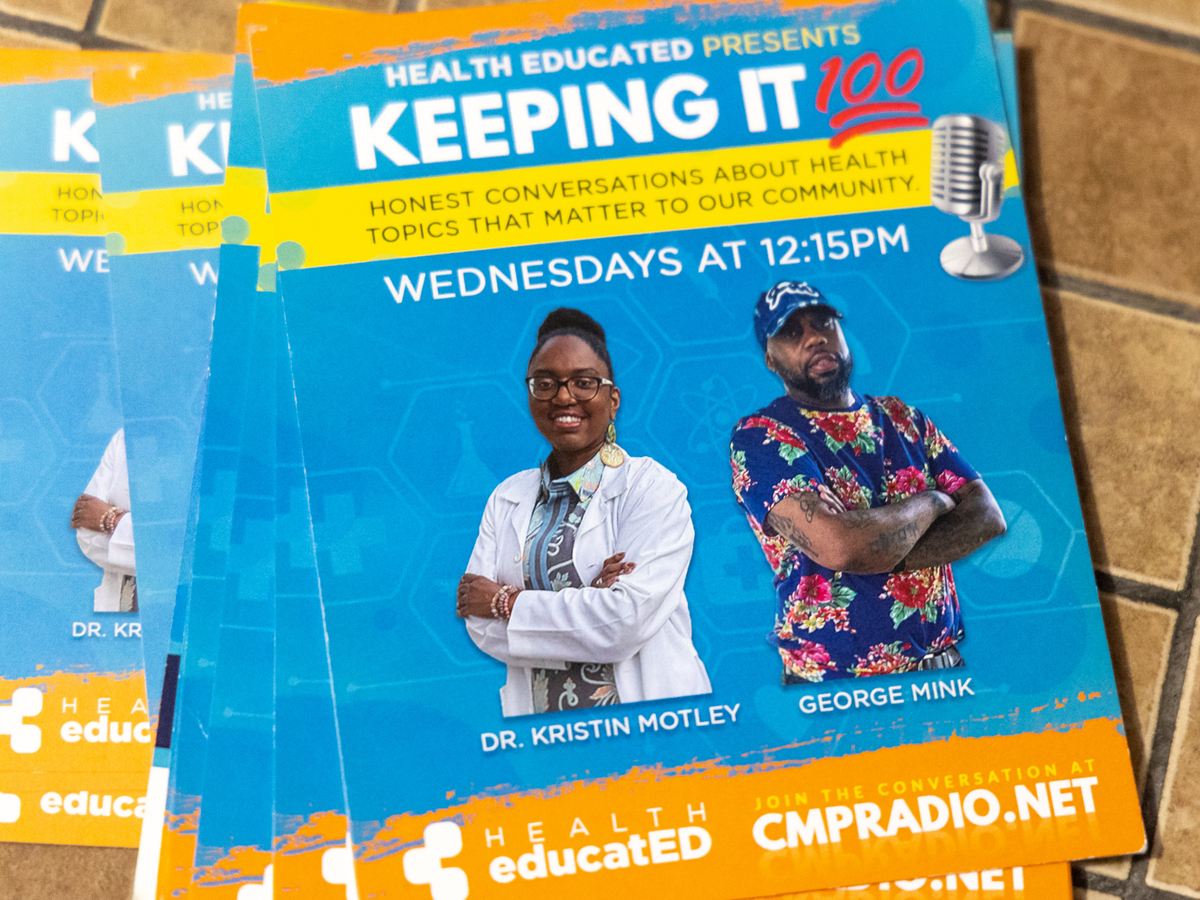
Dr. Kristin Motley, a pharmacist, founded Health Educated, an outreach organization in Delaware County, Pa. Flyers for the podcast she hosts with George Mink Jr. (Kimberly Paynter/WHYY)

Kimberly Paynter/WHYY


hide caption

toggle caption

Kimberly Paynter/WHYY


Dr. Kristin Motley, a pharmacist, founded Health Educated, an outreach organization in Delaware County, Pa. Flyers for the podcast she hosts with George Mink Jr. (Kimberly Paynter/WHYY)

Kimberly Paynter/WHYY

The health departments in Pennsylvania and Delaware say they plan to keep providing free tests and vaccines for the foreseeable future, and that the federal government has yet to say when the free vaccine supply will be cut off.

Pharmacist Kristin Motley, the founder of the Health Educated nonprofit where Mink works, will be sorry to see the free vaccines go.

“It allowed us to go into the community, wherever people were and to say, you don’t have to register, you don’t have to bring I.D., you don’t have to bring insurance. You just come,” she says. “That was really nice to be able to help people in that way with no red tape, no bureaucracy. It was so seamless.”

Researchers propose the tools and frameworks of EBM+ to help overcome the COVID-19 pandemic

In a recent article published in BMJ, researchers proposed the tools and frameworks of mechanistic evidence, sometimes known as evidence-based medicine (EBM)+ combined with traditional EBM, might help overcome the highly protracted coronavirus disease 2019 (COVID-19) pandemic.

Researchers propose the tools and frameworks of EBM+ to help overcome the COVID-19 pandemic
Study: Adapt or die: how the pandemic made the shift from EBM to EBM+ more urgent. Image Credit: CKA/Shutterstock

EBM+ encompasses conceptual tools and quality frameworks from various fields, including complexity science, engineering, and the social sciences, and a more pluralist approach to fetch ‘high-quality’ mechanistic evidence.

Background

Traditional methods, such as randomized controlled trials (RCTs) and meta-analyses, contributed significantly to the science of COVID-19. However, these methods have historically answered simple, focused questions in a stable context, such as those about biomedicine. They have significant limitations when extended to complex situations. In this case, severe acute respiratory syndrome coronavirus 2 (SARS-CoV-2), a novel pathogen, led to chaos across multiple sectors, medical, social, economic, and political dimensions in a fast-changing global context.

SARS-CoV-2 has proved tenacious and shifting. While RCTs and meta-analyses of RCTs remarkably estimated the efficacy of COVID-19 drugs and vaccines, some scholars argue that tackling some of its aspects critically required mechanistic evidence. COVID-19 led to complex situations where multiple variables interacted dynamically with high uncertainty.

Decisions had to be taken in days (urgently), not years, and the consequences of not acting would have been catastrophic (threatening). In such situations, dismissing mechanistic evidence and overvaluing poorly designed or irrelevant RCT findings cost thousands of lives. Overall, the COVID-19 pandemic presented an epistemic opportunity to understand, debate, and embrace EBM+.

About the study

In the present study, researchers argued that while the hierarchy of evidence that places mechanistic evidence at the bottom and meta-analyses of RCTs at the top is a useful heuristic, but inapplicable to all circumstances. There should be enough guidance to apply hierarchy flexibly depending on the nature of the research question and the extent of complexity involved.

Indeed, RCTs are not a panacea; thus, systemic reviews are crucial to interpret primary evidence along with modifications of the hierarchy of evidence to answer contemporary policy questions pertaining to SARS-CoV-2.

Further, the researchers suggested modifications to the hierarchy of evidence for mechanistic evidence. They emphasized combining evidence of mechanisms with probabilistic evidence from clinical trials and non-randomized studies, both comparative and observational, to make a strong case for causality. It’s because a plausible mechanism confirms or denies the stability of the causal relationship across settings.

This exercise could ensure that public health interventions would work as they involve both the upstream causes and the ’causes’ through which interventions might act. For instance, COVID-19 causes included family structures and their interactions, economic and cultural variations, etc., and attitudes, beliefs, capabilities, and personal resources determined whether public health measures worked. Furthermore, the researchers argued that mechanistic evidence is inherently explanatory.

Early in the pandemic, COVID-19 scientific research was prematurely fixed and constrained to a population-intervention (or exposure)-comparison-outcome (PICO) format that narrowed predefined outcomes and suppressed scientific imagination. Such studies estimated infections in the mask wearer(s) in statistical terms. Still, they failed to account for unique patterns of SARS-CoV-2 spread (e.g., overdispersion, indoor predominance), all of which could have pointed at its predominantly airborne transmission.

An RCT randomized 6,024 people advised wearing masks outside the home. Its results showed infection with SARS-CoV-2 in 42 and 53 people (1.8{bf0515afdcaddba073662ceb89fbb62b6b1bf123143c0e06b788e1946e8c353f} and 2.1{bf0515afdcaddba073662ceb89fbb62b6b1bf123143c0e06b788e1946e8c353f}) of the intervention and control arms, respectively, i.e., statistically insignificant. However, EMB supporters argue and evidenced that wearing masks in public does not substantially reduce infection.

The Cochrane Database of Systematic Reviews encouraged policy-makers to adopt the precautionary principle based on the findings of this flawed study because of the urgency of the situation. However, an EBM approach would have accounted for studies elucidating the mechanism(s) by which masking might work. For instance, evidence from:

i) real-world case studies and mathematical modeling studies supporting airborne route of transmission of SARS-CoV-2

ii) Engineering studies showing the filtration properties of different masks

iii) Psychological and socio-cultural evidence of whether people wear masks

Delivering public health interventions and ensuring they are implemented, for instance, face masking, is a complex phenomenon. It has multiple components acting interdependently and individually at multiple levels. Masks could be homemade or produced to formal technical standards. People may mask as socially expected, organisationally required, or legally mandated.

Overall, its adequate implementation is complex in real-world settings for multiple social and behavioral reasons. Thus, complex systems require a new paradigm with designs that could capture dynamic change(s), simultaneously accommodating non-linearity and embracing uncertainty. In support of structural evidence, the researchers discussed how engineering designs account for physical and technical properties and capabilities, social needs, and assessment of impact with the example of personal protective equipment (PPEs).

The use and impact of PPEs are influenced by the quality of indoor air. Yet, an RCT comparing these products with less effective protection to ‘prove’ their value in protecting against chemical contamination in a lead smelter makes no sense. All required is robust certification systems, standards, and workplace usage protocols for PPEs. Currently used PPEs have already proven a boon against occupational hazards for millions of healthcare workers worldwide.

Professor Susan Michie, an adviser to UK’s Scientific Advisory Group on Emergencies, proposed the capability-opportunity-motivation-behavior model. This model helped explain why people prefer or do not prefer wearing a mask. In some cases, they may lack key knowledge (e.g., they may not know whether cloth masks are as effective as surgical masks) or may physically not want to because they are not a good fit. Likewise, they might lack motivation (e.g., conscious beliefs) or opportunity (e.g., employer bans masks). Nevertheless, not exploring these wider influences might produce misleading findings by experimental studies.

Conclusions

In the present study, the authors emphasized more on other sources of evidence, especially mechanistic evidence, to manage the complex and fast-changing COVID-19 pandemic. As the debate regarding EBM+ continues, they hope to contribute further articles on how an EBM+ approach could enhance contribution to pandemic science.

Despite the slowdown in elective medical procedures prompted by the COVID-19 pandemic, 2021 has been a banner year for medical device manufacturers.

I

ntuitive Surgical opened its Peachtree Corners, Georgia, campus nearly 10 years ago, serving as a primary training facility for surgeons and care teams on the East Coast. For 27 years, the advanced robotic systems company, headquartered in Sunnyvale, California, has changed the landscape of medical practice through minimally invasive robotic-assisted surgery. Dozens of hospitals around Georgia use Intuitive’s systems and technologies, such as the da Vinci, with portions of the da Vinci XI and X systems manufactured in Peachtree Corners, a northeast Atlanta suburb in the metro area’s booming Gwinnett County.

Despite the slowdown in elective medical procedures prompted by the COVID-19 pandemic, 2021 has been a banner year for medical device manufacturers.

Surgeon operating with da Vinci XI system.

Photo courtesy of Intuitive Surgical.

Intuitive plans to expand its Georgia site to 750,000 sq. ft. with a $500 million investment to include manufacturing and engineering operations, training facilities and administrative offices. Now under construction, the site (about a mile from Site Selection’s headquarters) will be opening in phases until completion, with full operation anticipated by 2024.

“This expansion is part of our broader, multi-year global growth strategy to build and expand global ‘hubs’ where we can best support our customers and all elements of our business,” says Eric Torbenson, senior manager of global public affairs at Intuitive. “Over the next few years, we anticipate adding approximately 1,200 employees in manufacturing, production, distribution, engineering, sales, customer training, customer service and more.”

Torbenson tells Site Selection that access to a strong and diverse talent pool and quality infrastructure were key factors in Intuitive’s decision to expand in Georgia.

Peachtree Corners City Manager Brian Johnson says Intuitive’s investment is the largest economic development project in Gwinnett County’s history. With the creation of 1,200 high-paying jobs, Johnson notes the move is a “game changer” for the community, a win that state and local officials worked hard to score.

The impact on the local economy through increased need for housing, education and retail developments brings challenges that Johnson looks forward to addressing. Investments like Intuitive’s not only bring new talent to the area, but site acquisitions from suppliers as well.

“These are companies that want to be close to the mothership,” Johnson says. “We have definitely had interest and are working with some of those companies now to show why they should move to Peachtree Corners.”

CBRE’s Americas Life Sciences Leader Matthew Gardner says markets like Atlanta are gaining recognition.

“I think that’s a very important signal for the industry to hear they can find a highly educated life sciences workforce in a number of markets around the U.S.”

— Matthew Gardner, Americas Life Sciences Leader, CBRE

“There’s something really interesting as a signal to other multinationals about that decision, which is that a lot of the industry feels like it has matured in Massachusetts and California and has to think about [which] emerging markets should be next,” he says. “I think that’s a very important signal for the industry to hear they can find a highly educated life sciences workforce in a number of markets around the U.S.”

Georgia, with assets such as the Atlanta-based Centers for Disease Control and Prevention in its holster, indeed has gained recognition and attracted investments from top players in the industry, including Boston Scientific and Moderna.

CBRE’s top five life sciences markets — Boston, Washington, D.C., San Francisco, New York and San Diego — tote a high cost of living relative to salary earnings. Atlanta finds itself in a favorable situation as the annual cost of living averages $48,752, according to the U.S. Bureau of Labor Statistics. That low cost of living in comparison to other metros plays a vital role in not only talent retention, but real estate costs as well.

CBRE’s 2022 Life Sciences Talent Report ranked Atlanta 14th out of the top 25 life sciences research talent clusters. “Denver/Boulder, Minneapolis/St. Paul, Houston, Atlanta, Dallas/Ft. Worth and Miami, though sometimes overlooked, also have world-class health centers and universities, and in turn, sizable pools of life sciences research talent,” the report stated.

Institutions such as Emory University and Georgia Institute of Technology offer a wealth of skilled talent to add to over 75,000 life science employees in the state. Between 2016 and 2020 the state produced over 33,000 graduates with life sciences-related degrees. Over the next 10 years, Georgia occupations in the industry are expected to increase by 7{bf0515afdcaddba073662ceb89fbb62b6b1bf123143c0e06b788e1946e8c353f}, higher than the U.S. average.

Just Up the Street

Georgia Governor Brian Kemp announced in June 2022 that Boston Scientific plans to expand its Johns Creek facility. About 11 miles northwest of Initiative’s campus, what was once an EndoChoice site became part of Boston Scientific’s Endoscopy business in 2016 after a $210 million acquisition.

MedicalDevicesFinal1122a-two

Construction underway at Intuitive’s Peachtree Corners site.

Photo by Adam Bruns

For over 40 years, the medical technology leader has designed and manufactured a portfolio of over 17,000 products. The company’s medical devices and therapies cater toward less-invasive procedures, its Georgia facility specializing in endoscopy.

Boston Scientific is investing $62.5 million to expand and integrate a new manufacturing and supply chain plant. The expansion will create 340 new jobs, adding to its roster of 300 employees in Fulton County.

“As we expand our presence in Georgia, we remain grateful to all of our local employees whose work is already making a difference for healthcare providers and patients around the world,” said Brad Sorenson, executive vice president of global operations at Boston Scientific, in a press release. “Our new site in Johns Creek will enable continued growth as we fulfill our mission to transform lives.”

Like the city of Peachtree Corners, Fulton County figures prominently in Atlanta’s budding life sciences market. According to Georgia Power’s 2021 Life Sciences Database there are 110 medical device companies in Georgia, employing over 10,000. The sector accounts for $2.8 billion of Georgia’s Gross Regional Product.

Georgia’s potential to be one of the next big medical devices markets is not a far-fetched idea.