Some ACA health insurance plans have lots of enrollees, few providers : Shots

Some ACA health insurance plans have lots of enrollees, few providers : Shots

The Affordable Care Act saw a record number of sign ups this year, but some people are having trouble finding doctors in their health plan networks.

Getty Images


hide caption

toggle caption

Getty Images


The Affordable Care Act saw a record number of sign ups this year, but some people are having trouble finding doctors in their health plan networks.

Getty Images

The Affordable Care Act may be struggling with its own success.

Record enrollment over the last two years brought more consumers into the health insurance market. At the same time, many insurers began offering smaller networks of doctors and hospitals, partly to be price competitive.

That combination left some patients scrambling to find an available in-network physician or medical facility. That can be a challenge, especially when enrollees must rely on inaccurate provider lists from their insurance company. A recent federal report found that 243 out of 375 insurance company plans reviewed by regulators failed to meet network standards.

‘The last thing she needed’

Take what happened to a central Pennsylvania policyholder, who in January fell and broke her arm and a bone near her eye.

She was directed by the hospital that provided her emergency care to follow up with an orthopedist, recounted Kelly Althouse, the patient’s insurance agent, who works near Reading, Pa. Althouse’s client spent hours calling orthopedic doctors listed in the provider directory of her new health plan from insurer Ambetter Health, a national carrier that in 2019 started offering ACA plans in Pennsylvania. Several doctors said they weren’t part of the network, despite being listed by the company, Althouse said. It took about 15 tries before her client found an in-network doctor who would see her.

That “was the last thing she needed when she was already feeling terrible,” said Althouse.

It’s a story that has been repeated to her multiple times since January, when the new plan year began. Her clients have “bombarded” her with calls, saying a range of physicians and other providers were not accepting the insurance, even if that provider was listed in the plan’s own directory. “The thing that shocked me was how many offices told my clients, ‘We have never heard of this company,'” Althouse said.

For its part, Ambetter officials said in a written statement to KHN that their network in Pennsylvania “meets or exceeds regulatory standards.”

The size of insurers’ networks of contracted doctors and hospitals, particularly in ACA plans, has long drawn concern. In recent years, insurers have trended toward offering smaller networks, in part to cut costs and keep premiums in check.

Problems arise when patients cannot find local in-network providers and must either pay more, for out-of-network care, if that’s even an option in their plans, or travel farther for in-network care.

It wasn’t supposed to be that way anymore, after new rules kicked in this year to address such issues.

More oversight, but is it enough?

For one, federal regulators are again checking whether insurers have enough providers. That comes after a 2021 court ruling that reversed a Trump administration move to eliminate such federal oversight.

In addition, new “time and distance” standards went into effect, requiring insurers to make available, within certain driving distances, at least one provider for each of a variety of physician specialties. For example, a large metro area must have enough endocrinologists for at least 90 percent of enrollees to be able to find one within 15 miles or a 30-minute drive.

Yet insurance brokers in multiple states told KHN that many clients are having trouble finding in-network providers across a variety of health plans. Even when they do, patients on some plans face “a four- to five-month wait to see a primary care doctor,” said Tracy McMillan, president of Marketplace Insurance Exchange, an insurance brokerage in the Dallas-Fort Worth area.

Under the Affordable Care Act, insurers must “ensure a sufficient choice of providers.” But there is no single nationwide standard on what to measure to determine network adequacy, and both federal and state regulators have authority to oversee the plans.

“These exchange networks have never had much rigorous oversight,” said Karen Pollitz, a senior fellow at KFF.

But access is still limited in some areas and even the standards themselves may not be tough enough, say policy experts and brokers.

“We have insurers that don’t even have a hospital in some counties,” said Lauren Jenkins, owner of Native Oklahoma Insurance, a brokerage based near Tulsa. “How do they even get approved to be in these counties?”

In a metro area no more than 40 miles across, a plan could theoretically have as few as 10 doctors and three facilities in network and still meet these standards, Pollitz said.

In Texas, North Carolina, and other parts of the country, new companies, often charging lower premiums, have entered the ACA market. Some have networks “that are very, very tiny,” said Don Hilke, owner of ClearBenefits Group in Durham, N.C. Even larger carriers are either squeezing their networks to compete on price or enrolling so many customers that they are stretching their existing networks.

‘Everyone in a pickle’

In Texas, two smaller insurance companies left the market, leaving the remaining insurers without enough doctors to absorb the policyholders who had to find other coverage, said Ronnell Nolan, president and CEO of Health Agents for America, a membership association for independent brokers. “It left everyone in a pickle.”

Federal regulators propose more changes for next year, including requiring insurers to meet appointment wait-time standards.

More has been done this year too, including reviewing insurer networks, said Ellen Montz, deputy administrator and director of the federal Center for Consumer Information and Insurance Oversight, part of the Centers for Medicare & Medicaid Services.

Insurers pegged as having a shortfall in their networks must now report monthly to CMS their “good faith efforts to fill those gaps” and how many complaints they get from consumers about access, she wrote.

Montz did not say how many insurers have fallen short, but the December report from the U.S. Government Accountability Office noted that CMS found the majority of insurance companies whose medical or dental plans were reviewed by federal regulators in August failed to meet network adequacy standards. CMS told the GAO that all plans eventually satisfied the requirements or provided “an acceptable justification as to why they were unable to meet the standards.”

Creating networks and keeping lists of participating providers up to date pose ongoing challenges, said Jeanette Thornton, executive vice president of policy and strategy at AHIP, the health insurance industry’s leading lobbying group. Those include the need to rely on providers to inform insurers when they move, retire, or stop accepting new patients.

Questions about the accuracy of provider directories persist. Dr. Neel Butala, an assistant professor at the University of Colorado School of Medicine, found that fewer than 20{bf0515afdcaddba073662ceb89fbb62b6b1bf123143c0e06b788e1946e8c353f} of more than 449,000 physician listings had consistent address and specialty area information across five large insurers’ directories, according to a research letter published in the Journal of the American Medical Association on March 14.

A lawsuit filed in August 2022 in the U.S. District Court for the Northern District of Illinois alleges the provider networks for Centene’s Ambetter plans “are simply false and are often just copies of physician directories from other sources.”

Without accurate directories, the lawsuit alleges, patients face “delays in treatment, inability to get treatment, traveling to see an in-network provider who is hundreds of miles away, and paying out-of-pocket for out-of-network providers.” Similar allegations are included in ongoing lawsuits first filed in 2021 by the San Diego City Attorney against three California insurers.

The “No Surprises Act,” which went into effect more than a year ago, requires insurers to update their provider directories every 90 days. No insurers have yet been penalized for failing to update theirs, said CMS’s Montz. The law also stipulates that if patients get hit with an out-of-network charge because they relied on inaccurate information, the insurer can charge the patient only the in-network rate.

In October, CMS published an official query asking for comment on whether the federal government should create its own national database of in-network medical providers, an inquiry that drew hundreds of responses, both for and against.

There has been no indication whether such a plan will move forward.

KHN (Kaiser Health News) is a national newsroom that produces in-depth journalism about health issues. Together with Policy Analysis and Polling, KHN is one of the three major operating programs at KFF (Kaiser Family Foundation). KFF is an endowed nonprofit organization providing information on health issues to the nation.

Scientists warned a decade ago American lives were shortening. Then it got worse : Shots

Just before Christmas, federal health officials confirmed life expectancy in America had dropped for a nearly unprecedented second year in a row – down to 76 years. While countries all over the world saw life expectancy rebound during the second year of the pandemic after the arrival of vaccines, the U.S. did not.

Then, last week, more bad news: Maternal mortality in the U.S. reached a high in 2021. Also, a paper in the Journal of the American Medical Association found rising mortality rates among U.S. children and adolescents.

“This is the first time in my career that I’ve ever seen this happen – it’s always been declining in the United States for as long as I can remember,” says the JAMA paper’s lead author Steven Woolf, director emeritus of the Center on Society and Health at Virginia Commonwealth University. “Now, it’s increasing at a magnitude that has not occurred at least for half a century.”

Across the lifespan, and across every demographic group, Americans die at younger ages than their counterparts in other wealthy nations.

How could this happen? In a country that prides itself on scientific excellence and innovation, and spends an incredible amount of money on health care, the population keeps dying at younger and younger ages.

An unheard alarm

One group of people are not surprised at all: Woolf and the other researchers involved in a landmark, 400-page study ten years ago with a name that says it all: “Shorter Lives, Poorer Health.” The research by a panel convened by the National Academy of Sciences and funded by the National Institutes of Health compared U.S. health and death with other developed countries. The results showed – convincingly – that the U.S. was stalling on health advances in the population while other countries raced ahead.

The authors tried to sound an alarm, but found few in the public or government or private sectors were willing to listen. In the years since, the trends have worsened. American life expectancy is lower than that of Cuba, Lebanon, and Chechnya.

Ten years later, here’s a look back at what that eye-popping study found, and why the researchers involved believe it’s not too late to turn the trends around.

Beyond bad habits

Americans are used to hearing about how their poor diets and sedentary lifestyles make their health bad. It can seem easy to brush that off as another scold about eating more vegetables and getting more exercise. But the picture painted in the “Shorter Lives” report could shock even those who feel like they know the story.

“American children are less likely to live to age 5 than children in other high-income countries,” the authors write on the second page. It goes on: “Even Americans with healthy behaviors, for example, those who are not obese or do not smoke, appear to have higher disease rates than their peers in other countries.”

The researchers catalog what they call the “U.S. health disadvantage” – the fact that living in America is worse for your health and makes you more likely to die younger than if you lived in another rich country like the U.K., Switzerland or Japan.

“We went into this with an open mind as to why it is that the U.S. had a shorter life expectancy than people in other countries,” says Woolf, who chaired the committee that produced the report. After looking across different age and racial and economic and geographic groups, he says, “what we found was that this problem existed in almost every category we looked at.”

That’s why, says Eileen Crimmins, professor of gerontology at the University of Southern California who was also on the panel that produced the report, they made a deliberate choice to focus on the health of the U.S. population as a whole.

“That was a decision – not to emphasize the differences in our population, because there is data that actually shows that even the top proportion of the U.S. population does worse than the top proportion of other populations,” she explains. “We were trying to just say – look, this is an American problem.”

Digging into the ‘why’

The researchers were charged with documenting how Americans have more diseases and die younger and to explore the reasons why.

“We were very systematic and thorough about how we thought about this,” says Woolf. The panel looked at American life and death in terms of the public health and medical care system, individual behaviors like diet and tobacco use, social factors like poverty and inequality, the physical environment, and public policies and values. “In every one of those five buckets, we found problems that distinguish the United States from other countries.”

Yes, Americans eat more calories and lack universal access to health care. But there’s also higher child poverty, racial segregation, social isolation, and more. Even the way cities are designed makes access to good food more difficult.

Scientists warned a decade ago American lives were shortening. Then it got worse : Shots

A fruit seller at Dom Pedro market in Coimbra, central Portugal. A lack of access to fresh fruits and vegetables in the U.S. may contribute to Americans shorter lifespan.

PATRICIA DE MELO MOREIRA/AFP via Getty Images


hide caption

toggle caption

PATRICIA DE MELO MOREIRA/AFP via Getty Images


A fruit seller at Dom Pedro market in Coimbra, central Portugal. A lack of access to fresh fruits and vegetables in the U.S. may contribute to Americans shorter lifespan.

PATRICIA DE MELO MOREIRA/AFP via Getty Images

“Everybody has a pet thing they worry about and say, ‘it’s oral health’ or ‘it’s suicides’ – everyone has something that they’re legitimately interested in and want to see more attention to,” says John Haaga, who was the director of the Division of Behavioral and Social Research at the National Institute on Aging at NIH, before he retired. “The great value of an exercise like this one was to step back and say, ‘OK, all of these things are going on, but which of them best account for these long-term population level trends that we’re seeing?’ “

The answer is varied. A big part of the difference between life and death in the U.S. and its peer countries is people dying or being killed before age 50. The “Shorter Lives” report specifically points to factors like teen pregnancy, drug overdoses, HIV, fatal car crashes, injuries, and violence.

“Two years difference in life expectancy probably comes from the fact that firearms are so available in the United States,” Crimmins says. “There’s the opioid epidemic, which is clearly ours – that was our drug companies and other countries didn’t have that because those drugs were more controlled. Some of the difference comes from the fact that we are more likely to drive more miles. We have more cars,” and ultimately, more fatal crashes.

“When we were doing it, we were joking we should call it ‘Live free and die,’ based on the New Hampshire slogan, [‘Live free or die’],” Crimmins says. “The National Academy of Sciences said, ‘That’s outrageous, that’s too provocative.’ “

There are some things Americans get right, according to the “Shorter Lives” report: “The United States has higher survival after age 75 than do peer countries, and it has higher rates of cancer screening and survival, better control of blood pressure and cholesterol levels, lower stroke mortality, lower rates of current smoking, and higher average household income.” But those achievements, it’s clear, aren’t enough to offset the other problems that befall many Americans at younger ages.

All of this costs the country tremendously. Not only do families lose loved ones too soon, but having a sicker population costs the country as much as $100 billion every year in extra health care costs.

“Behind the statistics detailed in this report are the faces of young people – infants, children, and adolescents – who are unwell and dying early because conditions in this country are not as favorable as those in other countries,” the paper’s authors wrote.

Little action, despite the stakes

“Shorter Lives” is filled with recommended next steps for the government, especially the NIH, which has a budget of more than $40 billion annually to conduct research to improve Americans’ health.

The NIH should undertake a “thorough examination of the policies and approaches that countries with better health outcomes have found useful and that may have application, with adaptations, in the United States,” the authors wrote.

In other words: let’s figure out what they are doing that works in other places, and do it over here.

Dr. Ravi Sawhney, who helped conceive of and launch the “Shorter Lives” study at NIH before he says he was “driven out” of the agency, had high hopes that the report would make a mark. “I really thought that when the results came out, they would be so obvious that people would say: Let’s finally do this,” he says.

Ten years on, how much of the detailed action plan has been done?

“To be brief, very little of that happened,” Woolf says. At the time, he says, NIH officials didn’t seem very interested in raising awareness about the panel’s findings or in following up on its proposed research agenda. “There was some media coverage at the time that the report rolled out, but NIH was not involved in trying to promote awareness about the report.”

Crimmins agrees. “There was a little bit more research, but there wasn’t any policy reaction,” she says. “I thought there might be, because it’s embarrassing, but it just tends to be ignored.” Those who are interested in this issue, she notes, tend to be those invested in “marvelous things they think are going to delay aging,” even though people older than 75 are the only age group in the country that already does comparatively well.

Haaga, the former NIH division director, also thinks the response at the agency was lacking. “Not nearly enough has been done, given the stakes and given what we could learn,” he says.

In response to NPR’s request for comment for this story, NIH pointed to a subsequent panel on midlife mortality, several initiatives the agency has undertaken on disparities between subgroups within the U.S., and a recent paper funded by NIH that looked again at international life expectancy.

Outgoing NIH Director Francis Collins told NPR in 2021 that it bothered him that there hadn’t been more gains to American life expectancy during his tenure. In his view, the success of NIH in achieving scientific breakthroughs hadn’t translated to more gains because of problems in society that the research agency had little power to change.

Woolf calls it a misconception to assume that America’s great scientific minds and medical discoveries translate to progress for the health of the population. “We are actually very innovative in making these kinds of breakthroughs, but we do very poorly in providing them to our population,” he says.

‘We can’t touch everything’

Department of Health and Human Services Secretary Xavier Becerra answered NPR’s question at a press conference earlier this month about work the agency was doing to address lagging life expectancy by mentioning COVID-19 and vaccine hesitancy, along with mental health issues and gun violence.

“There’s so many things that we’re doing,” Becerra said. “We can’t touch everything. We can’t touch state laws that allow an individual to buy an assault weapon and then kill so many people. We can only come in afterwards.”

Secretary of the Department of Health and Human Services Xavier Becerra at a news conference at HHS headquarters in Washington, DC on March 9, 2023. Becerra said gun violence contributes to shorter lifespans in the U.S.

Drew Angerer/Getty Images


hide caption

toggle caption

Drew Angerer/Getty Images


Secretary of the Department of Health and Human Services Xavier Becerra at a news conference at HHS headquarters in Washington, DC on March 9, 2023. Becerra said gun violence contributes to shorter lifespans in the U.S.

Drew Angerer/Getty Images

CDC Director Rochelle Walensky responded by listing some of the agency’s work on mental health and vaccines, and acting NIH director Larry Tabak pointed to research on health disparities.

HHS did not answer a follow up question about whether the agency has considered a national commission or similar effort to address American life expectancy and poor health.

Sawhney thinks the federal government should try harder to fix the problems documented in the “Shorter Lives” report. He doesn’t think lack of public awareness is the problem. “I really think that most Americans know that Americans are more overweight and obese and that we have higher rates of disease and live shorter lives than other countries,” he says, “It’s just the NIH and the CDC that don’t want to take the responsibility for that failure or to do anything about it.”

Crimmins says, in her experience, lawmakers and federal health officials don’t like talking about how the U.S. is lagging behind other countries.

“I convened a meeting in Washington with the National Center for Health Statistics [part of CDC] about increasing healthy life expectancy,” she recalls. “It was a relatively small meeting, but we brought experts from Canada.” An official at the time gave what she calls a “typical” response, saying: “Oh, we can’t have anything but an American solution to these issues – we can’t listen to other countries.”

“International studies are not the flavor of the month – they never will be,” says Haaga. “The problem with foreign countries is that they’re not in someone’s congressional district.”

It’s more than a missed opportunity, says Woolf. It’s a tragedy.

“If you add up the excess deaths that have occurred in the United States because of this unfolding problem, it dwarfs what happened during COVID-19, as horrible as COVID-19 was,” Woolf says. “We’ve lost many more Americans cumulatively because of this longer systemic issue. And if the systemic issue is unaddressed, it will continue to claim lives going forward.”

Small victories are possible

Taking stock of the many ways in which Americans are sicker and die younger can be overwhelming, says Haaga. “It’s such a long list, that might partly be why the issue doesn’t grab people,” he says. “They just go, ‘Oh, my gosh, that’s depressing, what’s on the other channel?’ But there’s a lot of things that could be done, and small victories are victories.”

According to the “Shorter Lives” report, “the important point about the U.S. health disadvantage is not that the United States is losing a competition with other countries, but that Americans are dying and suffering at rates that are demonstrably unnecessary.”

Rather than feel overwhelmed at the immensity of the problems, Sawhney suggests, the focus should instead be on the fact that every other rich country has been able to figure out how to help people live longer, healthier lives. That means that Americans could do it too, he says.

He believes that the changes might not be as hard as some policymakers and health officials seem to think. “You look at these healthier countries, they’re free countries – England, France, Italy – they’re not banning delicious foods. They’re not chaining people to treadmills,” he says. “Americans love to travel to Europe, to Australia, to Canada to enjoy their foods and their lifestyles, and so the idea that we might say, ‘Hey, maybe we could bring some of those lifestyles back’ – I don’t think people are going to go up in arms that we’re taking away their freedoms.”

Getting policy ideas from other countries is just an obvious move, Woolf adds. “If a martian came down to earth and saw this situation, it would be very intuitive that you [would] look at other countries that have been able to solve this problem and apply the lessons learned,” he says.

In historical research he’s been doing, “I found that there are dozens and dozens of countries on almost every continent of the world that have outperformed the United States for 50 years,” he says. “It’s worth taking a look at what they’ve done and Americanizing it – you don’t have to take it right off the shelf.”

Some of the policies he’s identified as helpful include universal, better coordinated health care, strong health and safety protections, broad access to education, and more investments to help kids get off to a healthy start. These policies are “paying off for them,” he says, and could for Americans, too.

Graphic by Ashley Ahn; Edited by Diane Webber

Medical residents unionize at hospitals around the country : Shots

Medical residents unionize at hospitals around the country : Shots

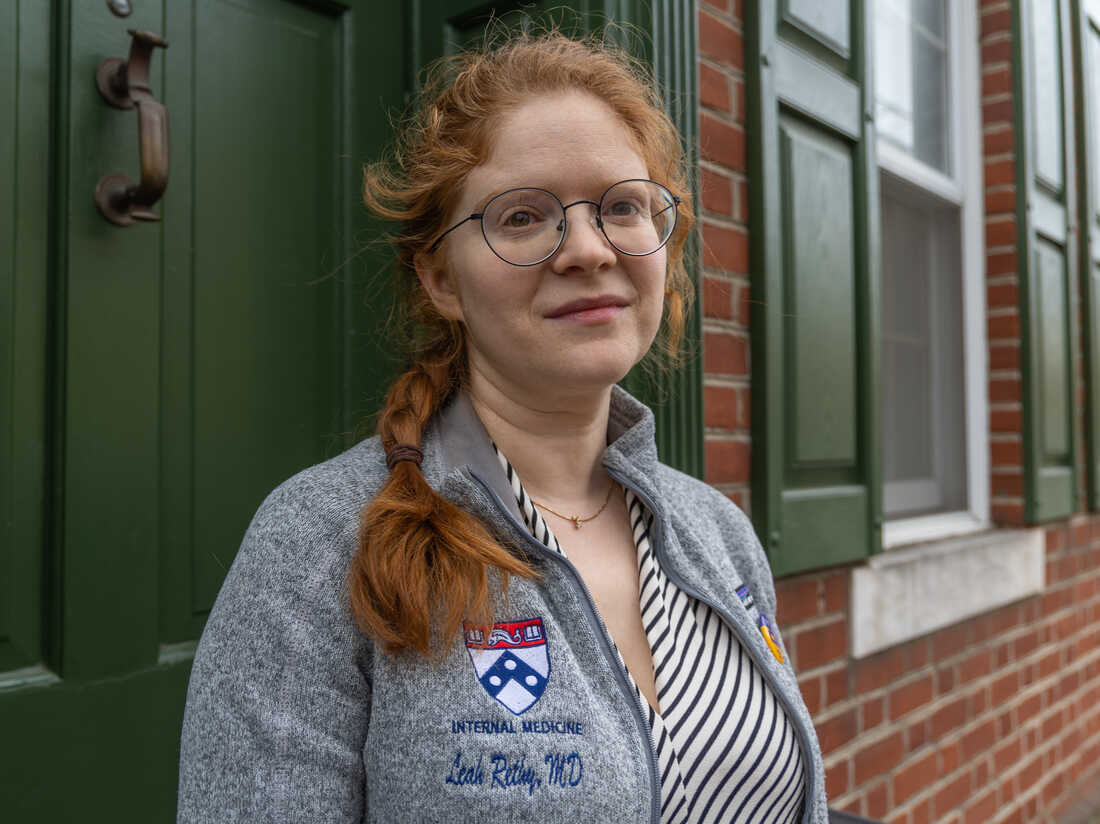
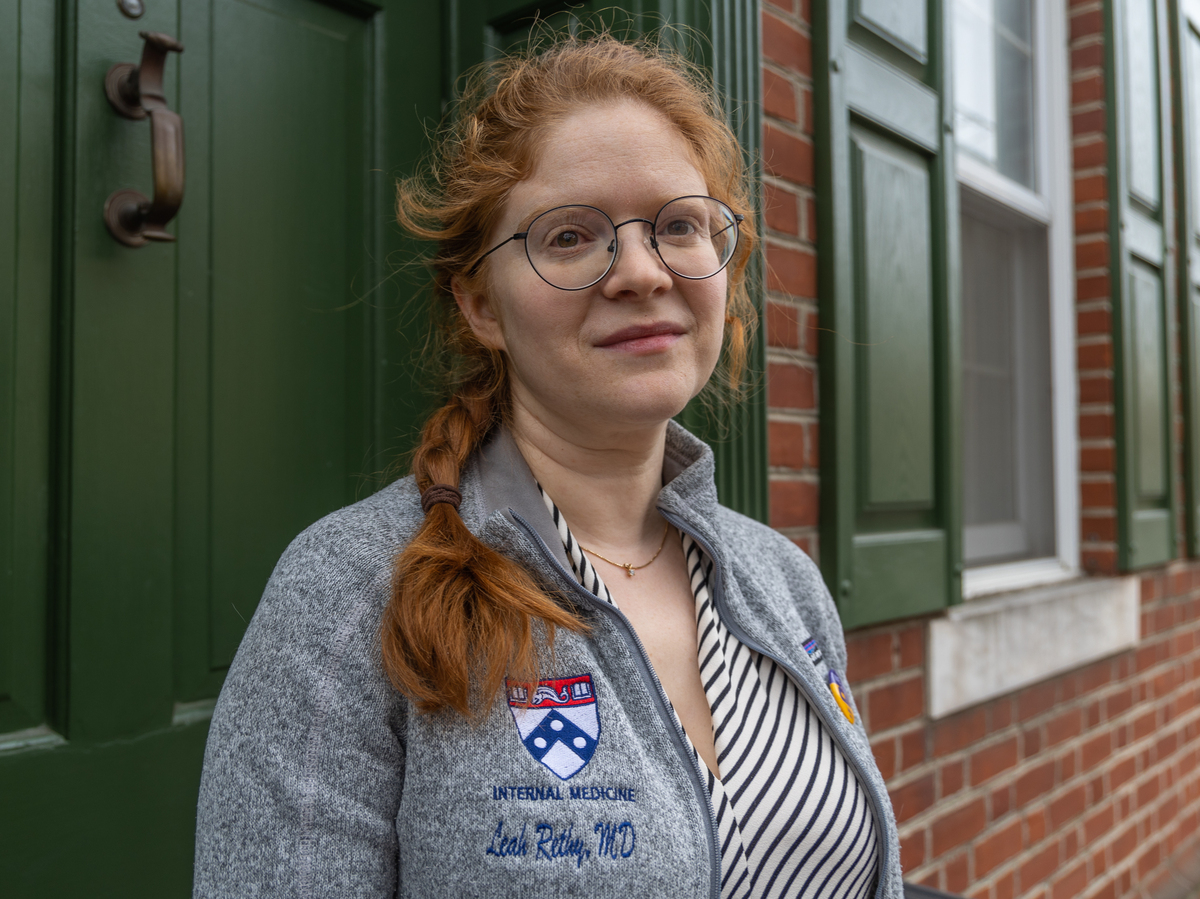
Dr. Leah Rethy is an internal medicine resident with Penn Medicine.

Kimberly Paynter/WHYY


hide caption

toggle caption

Kimberly Paynter/WHYY


Dr. Leah Rethy is an internal medicine resident with Penn Medicine.

Kimberly Paynter/WHYY

Dr. Leah Rethy was pregnant during the first year of her internal medicine residency at the Hospital of the University of Pennsylvania in Philadelphia. She gave birth during her second year. She worked through her 40th week of pregnancy so she could save her time off and spend more time with her newborn.

Now she’s back at work and needs child care. A lot of child care. Medical residents often work long and irregular hours, sometimes as many as 80 hours a week. And child care is one of the main issues motivating Rethy to push for a union at her hospital.

In February, most residents at two major Penn Medicine hospitals decided to form a union, and the National Labor Relations Board will conduct their election in early May. They join a wave of other residents unionizing at programs around the country, most recently at Montefiore hospital in New York, George Washington University in Washington, DC, and Mass General Brigham in Boston.

If successful, these residents would join the Committee of Interns and Residents, the union for medical residents. According to the union’s figures, the number of campaigns spiked from two in 2021, to eight in 2022, an unprecedented increase.

Child care challenges

Rethy says her problem with child care is not unusual — residency follows undergraduate education, and usually four years of medical school, so it overlaps with childbearing years for most people.

“I know a lot of people who’ve delayed having children,” she says. “And I also have heard a number of stories of people delaying having children and then, ultimately, having real challenges getting pregnant because of being older and various factors.”

Dr. Leah Rethy, an internal medicine resident with Penn Medicine, holds her 17 month-old son, Peter.

Kimberly Paynter/WHYY


hide caption

toggle caption

Kimberly Paynter/WHYY


Dr. Leah Rethy, an internal medicine resident with Penn Medicine, holds her 17 month-old son, Peter.

Kimberly Paynter/WHYY

Rethy laments the waiting lists for child care affiliated with Penn Medicine, and says finding her own child care is prohibitively expensive.

“The cost of day care … in a month is about half of my salary in total, and the cost of a nanny is essentially the entirety of my salary,” says Rethy.

She says this experience led her to believe unionizing is the best way for residents to demand better working conditions and higher pay, which would lead to better patient care.

A workforce that can’t leave

Sunyata Altenor is the communications director of Committee of Interns and Residents, or CIR, as the union is known. She says residents who want to unionize understand the program is supposed to be hard work, with long hours. But they want to be treated fairly for their efforts, at a workplace they cannot just choose to leave, as it’s a required part of their training.

“It’s easy to exploit physicians during this time in their career,” Altenor says. “They’re only going to be there for a few years. It’s sort of expected that you go through this hard, hazing culture, and then you come out at the other end an attending physician.”

Prominently, Stanford Medicine did not include residents in their COVID-19 vaccination plans in 2020, leading to protests, and later, a successful unionization drive.

Dr. Chantal Tapé, a third-year resident in family medicine at Penn Medicine, said residents expect challenging work and long shifts, but they would also like to be able to be healthy and financially stable so they can focus on taking care of patients.

She said it is “frustrating as someone who is a prenatal care provider,” to watch colleagues struggle during pregnancy make it to prenatal care appointments and during early parenthood to afford child care. Her colleagues can’t follow advice she recommends for her patients.

Parking, mice and roaches, too

Penn Medicine residents cite many issues for their decision to form a union, such as: the upcoming loss of parking benefits that would lead to an extra $200 monthly cost for residents; and dirty call rooms, which are rooms where residents stay and rest if they have to work overnight.

Residents say some current call rooms have mice and cockroaches.

Dr. Madison Sharp, a third-year OB-GYN resident, recalls not even having a call room to sleep in during a 24-hour rotation.

“So I tried to sleep in a dialysis chair that didn’t lie flat in a conference room off to the side,” she said. “Two years later, residents on that same rotation still don’t have a place to sleep for a few hours on a 24-hour call shift … keep in mind that Penn just opened a billion-dollar hospital but neglected to create physical space for us.”

Medical residents at Penn Medicine say cockroaches and mice have been seen in the “call rooms” where doctors rest during 24-hour shifts.

Resident at Penn Medicine


hide caption

toggle caption

Resident at Penn Medicine


Medical residents at Penn Medicine say cockroaches and mice have been seen in the “call rooms” where doctors rest during 24-hour shifts.

Resident at Penn Medicine

In a prepared statement, Penn Medicine says it values residents and is “proud of the ways in which we have sought to continually improve resident life and wellness.” The statement maintains it provides benefits and increased salaries to offer competitive working conditions. Starting July 1, resident salaries will start at a little more than $69,000 a year, according to Penn Medicine. They also say “trainees” should bring their concerns to administrators through an existing advisory council.

“I was the president of this council last year, and I can tell you firsthand that the House staff governing council is extremely limited in what we could accomplish,” Sharp said. “It was incredibly frustrating to advocate for residents and fellows and not be heard or have our concerns brushed aside or dismissed.”

Residents at the University of Vermont Medical Center voted to form a union last year. Following the successful union vote for residents, support staff including maintenance workers and technicians are unionizing as well.

The union for residents at Jersey City Medical Center has already argued for a better work environment in the years since they’ve organized, said Dr. Andrea Attenasio, a fourth-year resident in orthopedic surgery. For instance, she said they recently managed to ask the hospital to provide food for residents who work after hours; to provide bedsheets for the rooms where residents stay if they work overnight; and to stop tying salary increases for residents to overall hospital performance, a major concern with rising inflation and cost of living.

Attenasio said the bargaining power and strength in numbers that comes from being a union member makes a difference for residents:.

“It’s an automatic support system and it allows you to go to your hospital administration as a united front.”

Mobile clinics, launched to help with COVID, now fill gaps in rural health care : Shots

Mobile clinics, launched to help with COVID, now fill gaps in rural health care : Shots

Clinics in rural areas with fewer doctors, dentists and nurses are turning to mobile health care clinics to take care to where it’s most needed. The Healthy Communities Coalition organizes a few mobile dental events each year in Lyon County, Nev.

Wendy Madson/KHN


hide caption

toggle caption

Wendy Madson/KHN


Clinics in rural areas with fewer doctors, dentists and nurses are turning to mobile health care clinics to take care to where it’s most needed. The Healthy Communities Coalition organizes a few mobile dental events each year in Lyon County, Nev.

Wendy Madson/KHN

Nearly 12 years ago, a nonprofit centered on substance abuse prevention in Lyon County, Nev., broadened its services to dental care.

Leaders with the Healthy Communities Coalition were shocked into action after two of their food pantry volunteers used pliers to pull each other’s abscessed teeth. The volunteers saw no other option to relieve their overwhelming pain in the small town where they lived, 40 miles southeast of Reno, because of a dearth of dental care providers.

That drastic act, said Wendy Madson, executive director for the coalition, prompted her organization to use mobile clinics to offer health and dental services in rural communities where there aren’t enough patients to support brick-and-mortar offices.

The coalition now sends a van outfitted with dental equipment to county schools to treat hundreds of students per stop a few times each year. They also host events providing free care for adults in the region. The response has been overwhelming.

“Dental is the hot ticket,” Madson said. “Everybody wants dental. Availability of those services is what runs out first in those large mobile events.”

The coalition’s mobile programs mirror efforts nationwide to dispatch services to patients experiencing gaps in the health care system, especially in rural areas.

Rural residents face more significant health care provider shortages, including dentists, compared with their counterparts in larger cities. Since the beginning of the pandemic, mobile clinics have increased access to a range of services in hard-to-reach places with sparse populations.

A recently passed law, which makes it easier for rural communities to pay for new mobile clinics, could expand this trend. In the past, clinics that serve low-income rural residents couldn’t spend federal grant money — called new access point grants — on mobile services in communities where they didn’t already have facilities.

Then last fall, Congress passed the MOBILE Health Care Act, sponsored by Sens. Jacky Rosen, D-Nev., and Susan Collins, R-Maine, which gives federally qualified health centers – health clinics serving medically underserved areas — greater flexibility to use federal funding to create and operate mobile units.

Healthy Communities Coalition executive director Wendy Madson says mobile dental clinics in Lyon County, Nevada, help reach young students whose parents might otherwise lack the means or insurance to schedule regular visits.

Wendy Madson/KHN


hide caption

toggle caption

Wendy Madson/KHN

Since 2019, the number of mobile clinics on the road has expanded, according to the National Association of Community Health Centers. Many were used for COVID-19 testing and vaccinations. And health and community organizations started using mobile units to bring primary care, behavioral health, and reproductive services to out-of-the-way patients. The new funding pathway could soon put even more mobile health vans on the road.

For now, the law is dependent on congressional funding, and experts predict it could be at least a year before health centers can access the grant money.

Freed from brick-and-mortar requirements, health centers can roll out the vans

Once funded, the regulatory shift will allow health centers to collaborate with independent organizations like Madson’s Health Communities Coalition in Nevada to expand services in underserved regions. Because the coalition is not a federally qualified health center, it has relied on a mix of other federal and state grants.

Nearly 1,400 federally qualified health centers nationwide receive federal funding for providing comprehensive health services in underserved areas. The previous requirement that health centers establish brick-and-mortar clinics before expanding mobile clinics prevented many from applying, said Steve Messinger, policy director for the Nevada Primary Care Association. It was burdensome and costly for health centers.

But in rural areas with small populations, served well by mobile clinics, it wouldn’t make sense to first establish a building with a full-time provider, he said. That could eat up the budget of a federally qualified health center.

While health center advocates lobby Congress for base funding, the Healthy Communities Coalition is forging ahead with three dental events this year funded by a grant from the Health Resources and Services Administration, part of the Department of Health and Human Services.

At the first medical outreach event the coalition organized in 2012 in Lyon County, where 61,400 residents are spread across more than 2,000 square miles, more than 200 people showed up to receive free care and 150 teeth were pulled, Madson said. Since then, the organization has hosted several events a year — except in 2020, when the pandemic paused work.

Mobile dental clinics organized by the Healthy Communi(Wendy Madson) ties Coalition help ensure Lyon County, Nev., students receive cleanings, screenings, X-rays, and more.

Wendy Madson/KHN


hide caption

toggle caption

Wendy Madson/KHN

Many of the dental events are school-focused and provide children with such services as screenings, X-rays, sealings, varnish, and cleanings. But an overwhelming need for care also exists among area adults, said Madson, because Medicare and Nevada’s Medicaid do not include comprehensive dental coverage for adults. It’s harder to fund those events, she said.

Of the five communities in Lyon County, at least one, Silver Springs, does not have a single dentist. There are 10 dentists total in Fernley and Dayton, communities with a combined population of 38,600 people, but only two of those practices accept Medicaid, which covers low-income people younger than 21 and limited dental services for adults.

Filling a desperate need for dental and health services

Traci Rothman, who manages the coalition’s food pantries, said the dental outreach events made a difference for her 29-year-old son, who moved to Silver Springs last year. He went to two mobile clinics to receive free care, which Rothman said was a big relief because he’s uninsured and needed dental care badly.

“Otherwise, you’re going to somebody that you’re paying cash,” she said. “Oftentimes I cannot pay, honestly; it’s just out of reach for some people, or most people … in rural areas.”

Madson said the coalition stepped in to help a young student in desperate need of a root canal. The coalition is helping the girl’s family apply for Medicaid or Nevada Check Up, the state Children’s Health Insurance Program, and is paying $1,600 to cover the service with federal grant money. Another student had to be referred to several specialists before she had her decayed baby teeth surgically removed and received restorative treatment for adult teeth that had begun to decay.

“Her mom was so thankful, she was in tears,” Madson said. “She told me that her daughter woke up without instant pain for the first time in years.”

Madson said her organization has enough grant funding for three events through May, but she hopes the MOBILE Health Care Act will help expand services. Besides dental care, the group provides primary care mobile clinics for immigrant workers in Yerington, a small town in an agricultural region about 70 miles southeast of Reno.

Sara Rich, CEO of Choptank Community Health in Maryland, said she shares Madson’s hope.

Choptank serves five counties in Maryland, including small towns between the Chesapeake Bay and the Delmarva Peninsula. Amid the pandemic, the health organization struck an unlikely partnership with a car dealership and used federal COVID relief money to buy a Ford Transit cargo van for mobile clinics.

Choptank used its new van to provide vaccines but has since started using it to provide primary care to immigrant workers and dental services to children at 36 schools. The mobile clinics have been so successful that the health center is working on purchasing more vans to expand its services.

Rich said the mobile clinics are “breaking down barriers that a lot of us have been working on for a long time.”

Among the new services Choptank seeks to provide are behavioral health, preventing and treating substance use disorders, and skin screenings for people working on the shores of Maryland.

“Flexibility has been a theme over the last few years,” Rich said. “I think this MOBILE Health Care Act will help us do that even more into the future.”

KHN (Kaiser Health News) is a national newsroom that produces in-depth journalism about health issues. Together with Policy Analysis and Polling, KHN is one of the three major operating programs at KFF (Kaiser Family Foundation). KFF is an endowed nonprofit organization providing information on health issues to the nation.

‘The People’s Hospital’ doctor treats Houston’s uninsured and undocumented : Shots

‘The People’s Hospital’ doctor treats Houston’s uninsured and undocumented : Shots

Paramedics at Ben Taub General Hospital speed a patient with a gunshot wound to the trauma team for further care. Ben Taub is the largest safety-net hospital in Houston.

Gregory Smith/Corbis via Getty Images


hide caption

toggle caption

Gregory Smith/Corbis via Getty Images


Paramedics at Ben Taub General Hospital speed a patient with a gunshot wound to the trauma team for further care. Ben Taub is the largest safety-net hospital in Houston.

Gregory Smith/Corbis via Getty Images

As a doctor in a so-called “safety-net” hospital, Ricardo Nuila’s daily practice looks quite different from that of his colleagues who work in private or not-for-profit hospitals. That’s because safety-net hospitals treat everyone who walks in the doors — regardless of insurance status.

Many of Nuila’s patients at Houston’s Ben Taub Hospital are dealing with serious illnesses as a result of not being able to get access to basic preventive care. “What we see is that patients’ lack of health care has meant that the disease has been able to grow within their bodies,” he says. “Their cancer is widespread, or we find that they have an infection that has not been treated or discovered.”

In his new book, The People’s Hospital, Nuila writes about his experiences at Ben Taub, which is the largest safety-net hospital in Houston. He says despite the hospital’s budget constraints, the doctors and nurses there still manage to provide quality health care. By limiting the number of patients a practitioner can see in a day, Ben Taub allows physicians to spend more time with their patients than is typical.

“My cap is 15 patients in one day,” Nuila says. “That’s compared to some of my colleagues in the private world, who I’ve heard admit up to 24 patients in one night, or don’t carry a cap.”

Because resources are tight at Ben Taub, there is an emphasis on using them mindfully, Nuila says. Instead of ordering an MRI with the push of a button, for instance, he might talk to the radiologist directly, to find out if extra imaging is really called for. “There are benefits to further discussion between medical professionals about emergencies and how to deal with these emergencies,” he says.

Overall, Nuila says, working at a safety-net hospital allows him to keep his focus on medicine: “I like that I have the time to be able to hear my patients’ stories, that I don’t have to think about billing all the time, that I can sit with them and hear about why they came to the hospital and learn about their lives — and that, no matter what, we are going to be thinking about how best to help them, regardless of whether they have insurance or not.”

Interview highlights

The People's Hospital, by Ricardo Nuila

On treating undocumented people at the hospital

It’s not considered illegal. … The law EMTALA — the Emergency Medical Treatment & Labor Act — that was passed in the 1980s, that states that anybody in the United States, whether you’re a resident or not, whether you have health insurance or not, can go to a hospital and receive an exam and stabilizing treatment. So that’s a right that everybody in the United States has, regardless of citizenship. What’s different about the safety-net hospital is that we have clinics and we have chronic care also — and that was under question by certain politicians, who ultimately found that it didn’t make any sense to question that. Because when you get in the way of preventive care, when you get in the way of primary care, those patients end up coming to the emergency room and they become much more expensive. … So, [the politicians] decided that the financial gains were more important [than limiting care].

On explaining the American health care system to uninsured patients

The patients are all so different — some have had multiple family members in the United States before, so they understand the landscape a little bit better. But yeah, it can feel very, very contradictory when I tell patients that, well, “You need health insurance for that.” And they will say sometimes, “Well, in Mexico or in Guatemala (or whatever), I don’t necessarily.” And it’s hard to explain that in the richest country in the world, there’s little available for people without health care insurance.

Now, I’m happy that in Harris County [in Texas], where I work at Harris Health, we can provide a robust set of services. But somebody who lives outside of the county doesn’t have availability for those services. And that’s one of the things that I’ve argued, is that the line between Mexico and the United States is not as important as the line between Harris County and Fort Bend County, for instance, in some of the treatments that we give to patients.

On speaking Spanish with patients

That’s one of the reasons that I love my job and I love the hospital where I work — I can speak Spanish. … The people are so happy to hear somebody attempt to speak their language, and not just on a translation basis, but the flavor of the language and also thinking about the locations [they come from]. For instance, when I ask somebody where they’re from and they say Mexico or El Salvador, it’s never enough for me to hear just a country. I need to ask a region so I can situate it in my mind, the map, and draw a relationship that I have with that region. And so I think it helps a lot for building trust with patients.

On his reaction when very sick patients put their faith in God

I don’t dismiss it. Because I feel that science and medicine, we don’t know everything. There’s a lot of mystery in this world and I think faith is important. I’m not saying that faith in one particular religion is important, but faithfulness is important. I think that in my experience, when people demonstrate faith, whether it’s in their God or whether it’s in the treatment, they do better. It’s not my job to take away that person’s faith. What I tell people is that I’m just doing my job, which is [that] I’m a human being, and I need to tell you … the recommendation from doctor human beings for this illness and for the treatment, but that I’m just a person and I don’t know. And that’s the truth – we don’t know everything. We have very good ideas. When somebody is close to death, we can prognosticate quite accurately if that person’s going to die or not. But I can not tell exactly when that is going to happen. And I don’t want to rob somebody of their faithfulness.

On struggling with thoughts of suicide after the suicide of a friend and colleague

I think everything was a struggle. And I think that seeing somebody like Dave, who I admired so much, who was a friend, my best friend in the hospital, who I could speak with and who was so knowledgeable and intelligent — just to know that that is a risk for me as I grow older. Dave was also a very good father and it’s something that I’ve struggled with, parenting.

It felt so much like a pressure of trying to be a good father while trying to be a good doctor, while trying to be a good writer. They can work together, but there are moments where they feel like they can just implode on themselves. And I think that knowing that that had happened to my friend weighed on me and made me think, Is this going to be me? Is this the fate that so many of us who care a lot that we face? …

Therapy helped. I found a therapist who was very attuned to people who were creative types. … That listening really helped. My relationships improved. When I was at my lowest, I could look at my relationships with the people who were around me, who I valued the most, and I can see that at that moment they weren’t great relationships. And somehow over time, those relationships started to improve and that helped immensely. I think that writing also helped me too, at the end of the day.

On hospital staff losing their sense of meaning with their job because of burnout

For me that just demonstrates a real fundamental problem with how health care is administered in this country. If something like medicine, where you are helping people on a daily basis, if you can’t see the meaning behind that, that’s a bad omen. Whenever a patient tells me, “I’m thirsty” and I go get them ice water, I feel really good that day. Something as simple as that. With my Spanish-speaking patients, they can say one phrase to me and I will feel satisfied for that day — when they say, “Que amable,” which means you were very kind in the way you said that. And I feel that that gives me a lot of meaning for the day. But I feel that the pressures and the mechanism by which health care operates right now obfuscates that for so many people. And that’s sad to me. Now, I take a little bit of heart in that the medical field is really taking this seriously and is trying to do something about this. There is an added emphasis now on bringing in the arts and humanities into medicine.

Audio interview produced and edited by: Sam Briger and Thea Chaloner. Audio interview adapted for NPR.org by: Bridget Bentz, Molly Seavy-Nesper and Deborah Franklin.

Why Medicare politics are heating up : Shots

Why Medicare politics are heating up : Shots

Prescription drug coverage is just one part of Medicare, the federal government’s health insurance program for people age 65 and over.

d3sign/Getty Images


hide caption

toggle caption

d3sign/Getty Images


Prescription drug coverage is just one part of Medicare, the federal government’s health insurance program for people age 65 and over.

d3sign/Getty Images

The White House released President Biden’s $6.8 trillion proposed budget last week, listing his priorities for the upcoming fiscal year. Among other things, Biden singled out Medicare — the federal health insurance program for people aged 65 or older. Republican leaders insist they won’t be threatening cuts to Medicare in upcoming budget negotiations, but others in the party have floated the idea of making changes over time to the program — including benefit cuts they say will be necessary to keep Medicare solvent.

NPR’s Michel Martin, as co-host of All Things Considered, sat down this week with veteran health care journalist Julie Rovner, of Kaiser Health News, to get a better sense of where the debate is headed over how to fund Medicare, an expensive, but popular program. The following excerpt of their conversation has been edited for length and clarity.

MARTIN: So, what is the issue here?

ROVNER: Medicare’s trustees say that within six years, the trust fund is going to run out of reserves, and so it won’t be able to pay all of the current benefits. So basically, in order to bring down the cost, you have three options: You can make the people who are on the program pay more, you can make taxpayers who help support the program pay more, or you can pay health care providers — doctors and hospitals and all those folks — less.

Everybody considers any of those things, “cuts,” although paying providers less is usually only considered a cut to the providers. If the cuts get too big, and the health care providers say “We’ll walk away from the program,” that’s a problem too.

But Medicare is very popular, and I think in the State of the Union, when the president said he wasn’t going to do anything to Medicare, people sort of slapped back and said, “But Medicare is going to go broke if we don’t do anything.” So in the budget, Biden said, well, here are a couple of things that we could do, none of which affect how much beneficiaries pay.

MARTIN: What are the top lines of what President Biden’s proposing, in regards to Medicare?

ROVNER: It’s actually fairly small. Last year, for the first time, Medicare was given legal permission to negotiate the price of drugs. There is a short list of drugs. This budget would make the list longer, and it would have those negotiations happen faster. It would also raise a tax on very high-income earners — those earning over $400,000. The Biden budget would raise that Medicare tax from 3.8{bf0515afdcaddba073662ceb89fbb62b6b1bf123143c0e06b788e1946e8c353f} to 5{bf0515afdcaddba073662ceb89fbb62b6b1bf123143c0e06b788e1946e8c353f} on those high earners.

MARTIN: Republicans have said that they can balance the budget over the next decade, but won’t touch Medicare. Is that a credible stance?

ROVNER: It is, but only if they go after Medicaid — the actually larger public health insurance program for people with low incomes — and the subsidies on the Affordable Care Act, which the president has now also said he won’t go after. It is possible to balance the budget without touching Medicare or Social Security or raising taxes, but you would have to cut so much from the rest of the budget. That’s why we haven’t seen a Republican plan yet. They’re still trying to figure it out.

MARTIN: Senate Minority Leader Mitch McConnell has already said publicly that Biden’s plan to increase the Medicare tax on high earners, “will not see the light of day.” So what are we likely to see next?

ROVNER: Well, at some point, you know, the two parties are going to have to come together before the Medicare trust fund runs out of money. This is not the first time we’ve been within this close period where the trust fund could run out of money. It’s happened several times in the past. Eventually, the parties do get together and figure out some way to shore it up. And I’m sure that will happen this time, too, but I suspect this year is going to be more of a fight leading up to the 2024 elections.

MARTIN: The talks over the debt ceiling are approaching. The leaders of both parties have said that Medicare is off the table. But is it conceivable that Medicare won’t be implicated at some point in these talks?

ROVNER: No. Of course Medicare is going to be implicated at some point in these talks. First of all, what Republican leaders say is not necessarily what all of the Republican rank and file will do. That’s true of the Democrats, too, so it’s hard to imagine that Medicare won’t be put on the table in some way, shape or form.

MARTIN: So, what will you be paying attention to as these discussions continue over the next couple of weeks and months?

ROVNER: Something needs to be done to Medicare, lest it run out of money. So I think that pretty much the entire federal panoply of health programs is going to be up for discussion — and that’s what I’ll be watching.

MARTIN: I’m just wondering, is this the kind of subject that the public really can focus on, can really get galvanized around?

ROVNER: It can and it can’t. The trick is how this gets negotiated and how it gets presented to the public as to whether it will actually affect their health care.

Julie Rovner is the Washington correspondent for KHN and host of “What The Health?” — KHN’s weekly health policy news podcast. After nearly eight years of hosting Weekend All Things Considered, Michel Martin is taking on a new hosting role on NPR’s Morning Edition.