
As the worst of the COVID-19 pandemic appears to fade in the rearview mirror, public health departments are already preparing for the next threat, noting that they have built better operational infrastructure, but caution that budget cutbacks and a health care worker shortage may be putting the country at risk.
The World Health Organization has warned that the accelerating pace of climate change, deforestation and globalization means that it isn’t a matter of if, but when the next pandemic will strike. Even in the midst of the COVID-19 pandemic, state and local health departments were forced to grapple with yet another emergency last summer, with the emergence of the monkeypox (now known as mpox), outbreak.
At least 13 state health departments and 11 hospital associations told ABC News that chronic staffing shortages and new threats to funding may undermine their ability to swiftly respond to future pandemic threats.
“Without the personnel to do the hard work of analyzing data, interviewing cases, tracing contacts, testing specimens, and performing other essential public health activities, our nation is less prepared in some ways than it was before 2020,” Dr. Jay Varma, director of the Cornell Center for Pandemic Prevention and Response told ABC News.
The American Hospital Association has called federal lawmakers to reauthorize the Pandemic and All Hazards Preparedness Act to strengthen the Strategic National Stockpile, to fund the Hospital Preparedness Program, and require more collaboration between the federal government and stakeholders to build national data infrastructure.
Health care worker shortage
After a grueling three years caring for patients on the front lines of the COVID-19 pandemic, nurses continue to leave the health care sector en masse, according to state health departments and state hospital associations, sparking widespread shortages nationwide that states warn may lead to an inability to care for patients during a new outbreak.
Before the pandemic, Georgia was already dealing with a nursing staffing shortage. Now, with not enough nurses graduating in the state, the governor has created a statewide healthcare workforce commission to increase the hospital workforce, according to Anna Adams, the executive vice president, external affairs of the Georgia Hospital Association, a nonprofit trade group.
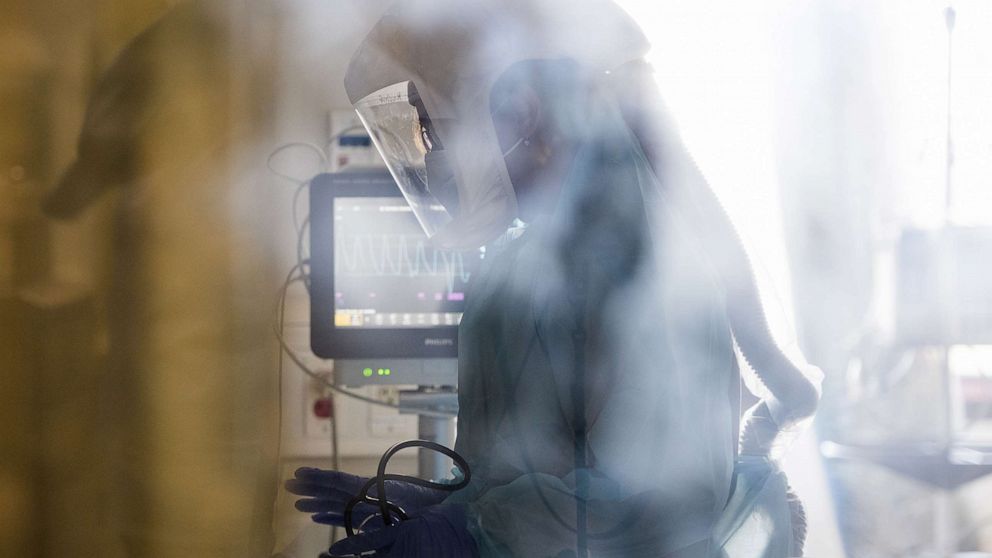
A nurse tends to a patient inside the COVID-19 unit of Salinas Valley Memorial Hospital in Salinas, Calif., Sept. 2, 2021.
Bloomberg via Getty Images, FILE
Part of the issue, health and hospital association officials from several states told ABC News, was the recurring cycle of worker shortages leading to increased labor costs – with turnover driving higher expenses to hire and recruit new staff.
“Now, nurses and others are leaving health care altogether, to companies that have signing bonuses and very high hourly rates. And so all of a sudden, hospitals are in a position where the only way we’re going to have an adequate nursing force is to work with the nurse traveler agencies,” said Brian Peters, CEO of the Michigan Health & Hospital Association.
In addition, some hospitals are experiencing negative profit margins, making less money in relation to their own expenses compared to before the pandemic. California health officials, for example, noted that over half of hospitals in the state already had unsustainable margins before the pandemic. This worsened during the COVID-19 pandemic as the state’s total hospital expenses rose 15{bf0515afdcaddba073662ceb89fbb62b6b1bf123143c0e06b788e1946e8c353f} in just one year. According to state officials, California hospitals are losing money on operations.
Funding in flux
Early in the COVID crisis, as case counts exploded and deaths began to creep up, public health departments received hundreds of billions of dollars in funding from the federal government to support their work. But most of that money was earmarked to respond to the emergency — not to shore up public health permanently. Now, many are warning that the flood of money could transition to a trickle without renewal of some of the federal funds, which could lead them to cut contractual employees and reduce some of their initiatives.
“Funding comes in on specific diseases,” said Susan Kansagra, North Carolina’s state health officer. “When that disease goes away, funding goes away. We’re left rebuilding.”
Most state public health departments significantly expanded their workforce in the early days of the pandemic, and they have larger staffs now than in 2019. But many of those hires were temporary positions, including some epidemiologists and behavioral scientists. Washington, for example, stated that even now, 30{bf0515afdcaddba073662ceb89fbb62b6b1bf123143c0e06b788e1946e8c353f} of its current workforce were in time-limited positions.
There is also high turnover in the public health sector. The Virginia Department of Health noted that about a third of its workforce had minimal work experience prior to 2019, whereas now 40{bf0515afdcaddba073662ceb89fbb62b6b1bf123143c0e06b788e1946e8c353f} has less than two years of know-how on the job. Many experienced public health workers left their jobs in the past few years, often because of the political blowback and pressures from far-right groups opposed to things like masks and vaccines, state health officials told ABC News.
While most state health officials interviewed by ABC News shared they may need to tighten their ranks amid lower funding support, some felt confident in being able to revamp their workforce should another crisis arise.
“The takeaway for us is that we have worked through rapid hiring, onboarding, and training processes, so that we could do it again if needed,” the Utah Department of Health and Human Services said to ABC News in a statement.
Identifying the next threat
With the rise of at-home tests and dwindling contact-tracing programs, public health departments have shifted their attention to different methods of identifying where COVID-19 is spreading most and detecting any new diseases that may pose a threat.
Wastewater has become a key tool for epidemiologists to quickly identify where pockets of the community may be experiencing a greater number of COVID-19 cases than usual. Most state health departments contacted by ABC News noted they had integrated a wastewater surveillance system and were tracking old and new threats.
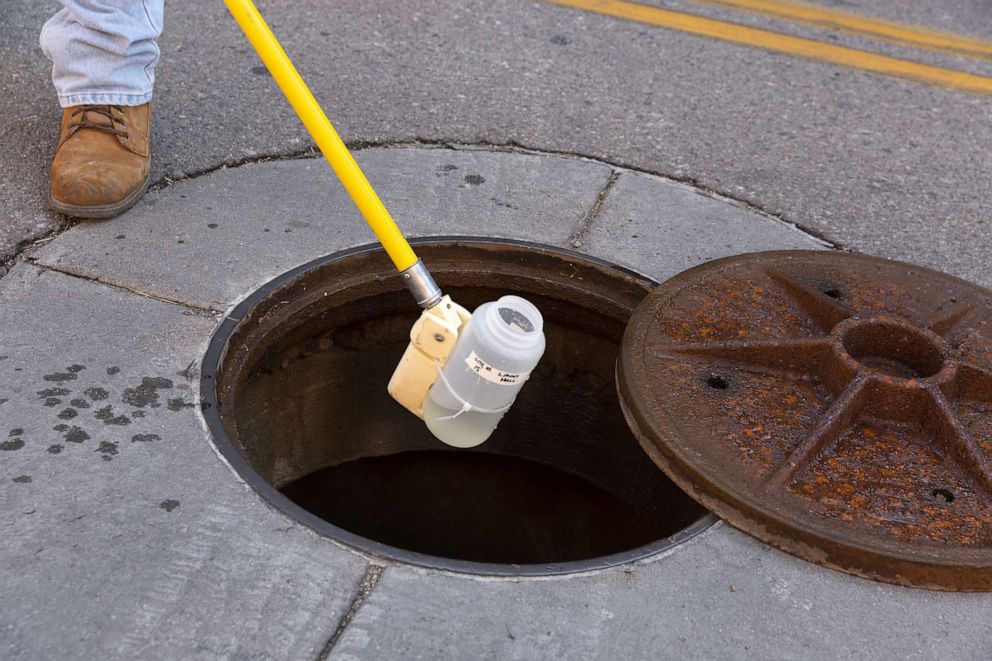
An employee collects a wastewater sample to monitor COVID-19 in Tucson, Ariz., Aug. 31, 2020.
Bloomberg via Getty Images, FILE
Nevada officials shared that the state built “a viral respiratory surveillance program to expand upon influenza surveillance efforts to help understand what respiratory viruses are circulating, the magnitude of these viruses within communities, and the overall severity of the viral illnesses” with a team set to monitor data for early detection for potential surges.
Most states also developed dashboards to inform the public of case numbers and hospitalizations statistics as well as avenues to collect vaccine data or notify contacts of someone sick of an exposure. Those tools are in place and ready for future disease threats, so health department wouldn’t have to start from scratch.
“We’ve created forums for sharing information throughout the three years to ensure that we can continue to respond to COVID-19, and also that we will be ready in the future,” said Nicole Stallings, chief external affairs officer at the Maryland Hospital Association.
Experience counts, say health departments
State health department officials reached by ABC News overwhelmingly said their experience responding to COVID-19 means they are better prepared to react to a new health threat than in 2019.
“We’re better trained, better staff, better equipped and managed, more responsive, and experienced personnel, our information systems are much more robust. So, I think, at this point, and recognizing that all capabilities atrophied over time, but at this point, we’re much better prepared than we were in 2019,” said Robert Mauskapf, director of the office of emergency preparedness at the Virginia Department of Health.
Still, some public health experts remained skeptical, noting that budget and staffing problems — and even cultural shifts — will make it harder to respond to future threats.
Many states, for example, have passed or are considering laws that would prohibit mask mandates or vaccine requirements — both tools that helped protect people against the spread of COVID-19.
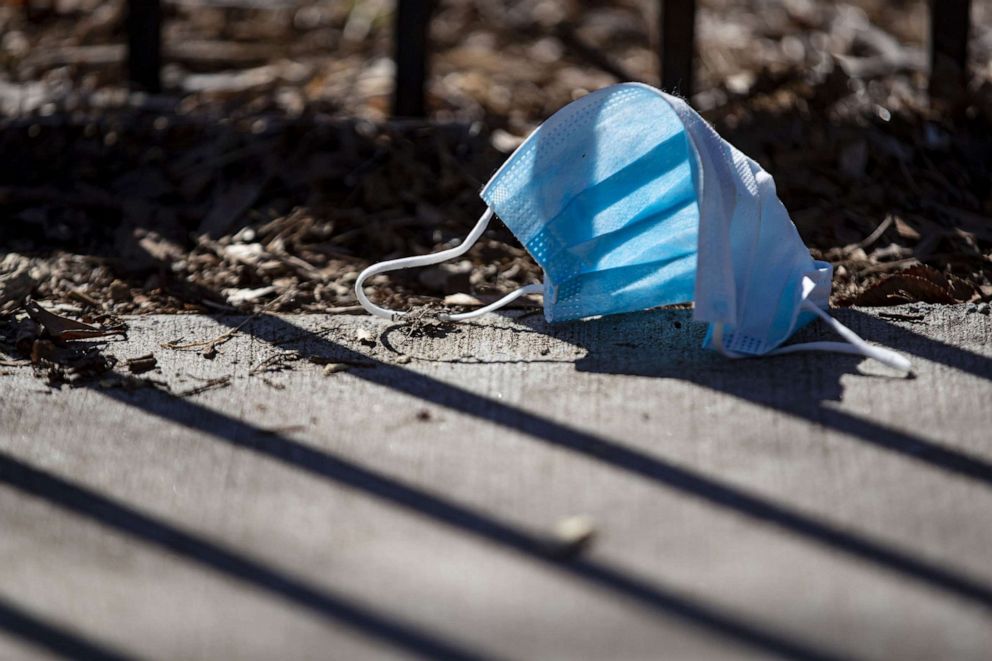
A discarded surgical mask, April 26, 2022, in Chicago.
Chicago Tribune via Getty Images, FILE
So even though health departments know the strategies that helped during the COVID-19 pandemic, they might not have the ability to implement them as successfully going forward.
“Federal, state, and local health departments have far fewer personnel today than they did before [the pandemic]. This is a consequence of public health staff being chronically over-worked and underpaid, public health officials being verbally attacked on social media, including by elected officials, and a broad national narrative that public health is somehow incompetent,” Varma said.
ABC’s John Brownstein, Ph.D., Sony Salzman, John Santucci, Nicole Wetsman, Emma Egan, Sara Avery, Alexandra Myers and Soorin Kim contributed to this report.

