How To Lose Arm Fat

If you ever feel insecure about your arms when you look in the mirror or put on a sleeveless shirt, you’re not alone. A lot of women can relate—many people look up ways on how to lose arm fat online, and there are tons of workout videos claiming to zero in on the underarms. But there is *a lot* of misunderstanding and incorrect info out there surrounding how to lose arm fat.

While it’s totally natural to want to tone different parts of your body and look fit, women do need a certain amount of fat to be healthy. At the very least, 12 percent of their total weight should come from essential fat found in the heart, lungs, liver, kidneys, intestines, muscles, and tissue of the central nervous system, according to the National Academy of Sports Medicine.

That’s because “it cushions our organs and insulates our body for temperature control and is also our body’s source of energy reserves,” Stefanie Mendez, RD, cofounder of Matriarch, a women’s fitness and nutrition service. “Fat is also needed for the production of hormones and reproductive functions.” And yes, that fat can appear in your thighs, belly, and, upper arms.

And let’s get something straight upfront: Spot reduction just flat-out does not work, Mendez says. Instead of stressing out about arm fat, focus on living a healthy, well-fueled, and physically active lifestyle. By doing that and aiming for overall weight loss, you’ll see far greater gains in the arm department. Just note that it’s best to lose one to two pounds a week, and an average of 2 percent of your overall weight a month, says Tatiana Lampa, CPT, a corrective exercise specialist.

Meet the experts: Dana Ellis Hunnes, PhD, is a senior dietitian at UCLA Medical Center. Stefanie Mendez, RD, is a cofounder of Matriarch, a women’s fitness and nutrition service. Tatiana Lampa, CPT, is a corrective exercise specialist and the founder and creator of the Training with T app and Move Better program. Lauren Williams, CPT, is a trainer at PROJECT Equinox.

Training and building your arm muscles should be your focus. “A pound of muscle burns 10 times as many calories as a pound of fat,” Mendez explains. Plus, the muscular definition you get can also “create some change in the aesthetic of that area,” says Lauren Williams, CPT, a trainer at PROJECT Equinox.

But remember: Everyone’s fitness journey is different, so be patient with yourself. Losing arm fat could take some time depending on your current activity level, diet, and genetics. Don’t know where to start? Here are eating and workout tips recommended by the pros that can help you lose weight and reduce arm fat.

1. Load up on fiber.

Adding more fiber to your diet can help you feel and stay full longer, which means less snacking throughout the day. This may help lower the total number of calories you consume and lead to weight loss. A great way to get more fiber is by incorporating chia seeds, which are packed with fiber and omega-3 fatty acids, says Hunnes.

2. Hydrate, hydrate, and hydrate.

Make it a point to stay hydrated . Upping your water intake in general, substituting high-calorie beverages with water, and hydrating before a meal can lead to weight loss, according to a 2019 systematic review.

Drinking water can suppress your appetite, burn off stored fat in your body, and ramp up calorie burn, Lampa says. Other benefits including removing excess waste from the body and helping with digestive issues like diarrhea and indigestion, per Lampa and Harvard Health.

3. Make plant-based foods a big part of your meals.

A diet full of fresh fruits, vegetables, and hearty whole grains is lower in calories, which can ultimately help you lose weight overall, says Hunnes. People who eat a vegetarian diet lost more weight than those who ate a normal diet, according to a 2016 review published in the Journal of General Internal Medicine. A plant-based diet is also naturally more nutritionally adequate and better for your health overall, another review shows.

4. Cut out sweet drinks.

ICYMI, sugary beverages only add more calories and not much else, says Hunnes. They’ll make sticking to a calorie deficit harder. So swap them for fruit-infused water instead, or try ordering one less pump of flavoring in your afternoon Starbucks.

5. Exercise.

You already know exercise is an effective way to lose weight and fat, but research also backs this up. Go for a walk, hit the running trails, or sign up for a new fitness class with a friend. Whatever form of physical activity you choose, commit to something you enjoy because the more fun you have doing it, the more likely you are to repeat it day after day and lose weight (and arm fat!).

6. Get plenty of sleep.

Clocking enough hours in bed is important in general, but especially if you want to drop pounds and burn fat, because getting adequate and quality shuteye is linked to greater weight and fat loss among overweight and obese adults, per a 2021 study published in the International Journal of Obesity. “Not having enough sleep can increase our body’s resistance to lose weight and its ability to store fat, which can make weight loss difficult,” Lampa says.

On top of snoozing for seven to nine hours for your weight loss journey, you should also aim for a consistent bedtime every night and deep, uninterrupted slumber, according to research.

7. De-stress regularly.

Stress is positively associated with weight gain, a 2014 study published in the journal Obesity found, and it’s all due to the increase in cortisol. ICYMI, cortisol is “a stress hormone that promotes body fat and makes it harder to lose weight, especially around the midsection,” says Lampa.

Find self-care activities that can help you reset, whether it’s meditating every morning before you start your day, silencing your phone notifications for some quiet time, or spending time in nature.

8. Lift weights.

Besides exercising, Hunnes recommends toning your arms with some weights. Don’t worry if you’re a newbie to strength training. The weights you use don’t have to be super heavy—a simple five-pound set will do, even less if needed. The goal is to build up muscle in this area. Remember that it’ll take time to see results, so don’t be discouraged if you don’t see your arm fat melting off in a week or month.

This content is imported from poll. You may be able to find the same content in another format, or you may be able to find more information, at their web site.

9. Tackle compound exercises.

Performing compound exercises, which target different groups of muscles at once, is the best way to tone your arms, Lampa says. Give push-ups, chest presses, pull-ups, lat pulldowns, bent-over rows, and face pulls a shot. “This is when you maximize your time and recruit more muscles versus isolated muscles like just triceps and biceps,” she says. But, note that “it’s still important to include isolated arm exercises if you want to get stronger.”

Here’s an at-home workout you can try with medium-weight dumbbells three times a week from Lampa. Do three to four sets of 12 to 15 reps of the following:

Want to take this routine to the next level? Increase the weight you’re lifting or shift your time under tension. So, if you’re doing a bent-over row, row for one second upward and three seconds down when you extend your elbows, Lampa says.

    How To Lose Arm Fat

    Ashley Mateo is a writer, editor, and UESCA- and RRCA-certified running coach who has contributed to Runner’s World, Bicycling, Women’s Health, Health, Shape, Self, and more. She’ll go anywhere in the world once—even if it’s just for a good story. Also into: good pizza, good beer, and good photos.

    Headshot of Ashley Martens

    Ashley Martens is a Wellness Writer based in Chicago, Illinois. With a digital marketing background and her knowledge of general nutrition and a lifelong passion for all things health and wellness, Ashley covers topics that can help people live happier and healthier lives. 

    Woman’s healthWoman’s health Lettermark logo

    Addison Aloian (she/her) is an editorial assistant at Women’s Health. When she’s not writing about all things pop culture, health, beauty, and fashion, she loves hitting leg day at the gym, shopping at Trader Joe’s, and watching whichever hockey game is on TV. Her work has also appeared in Allure, StyleCaster, L’Officiel USA, V Magazine, and Modern Luxury Media. 
Millions will lose health insurance starting Saturday. But they might not know it.

Tens of millions of men and women will start to eliminate their wellbeing insurance on Saturday, as five states start off the unwinding of a pandemic-era protection that held people today from currently being eradicated from the Medicaid rosters.

In the course of the general public wellbeing crisis, states ended up needed to continue to keep persons on Medicaid without the frequently annually reapplication system normally in spot. But now that the general public well being emergency is winding down, so are the Medicaid rolls.

“We are now in a position in just a few of times exactly where states can start to disenroll men and women — to redo their rosters for Medicaid — and this steady protection need is no for a longer period heading to be in put,” Dr. Avenel Joseph, vice president of plan for the Robert Wooden Johnson Foundation, informed ABC News.

The concern that Joseph and other advocates are worried about is that not adequate individuals know they are about to get kicked off their protection.

For Jeffrey Jackson, a 62-yr-previous Medicaid beneficiary in Arkansas who faces dropping that protection in a matter of days, that could be a “nightmare.”

Arkansas is a person of the five states that will get started taking away people today from coverage on April 1, together with Arizona, Idaho, South Dakota and New Hampshire.

Millions will lose health insurance starting Saturday. But they might not know it.

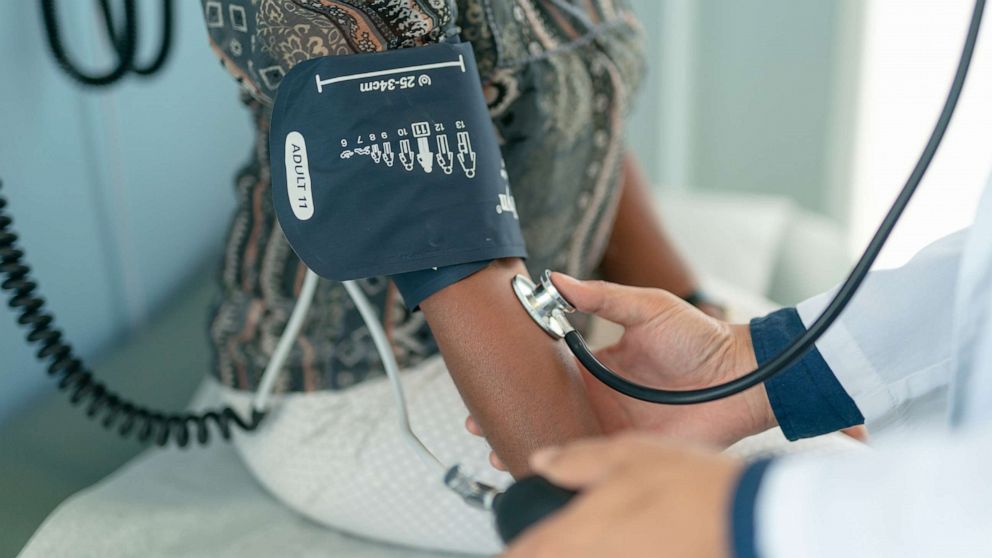
A lady sits on an examination table in a clinic while a health treatment qualified checks her blood force.

Stock Photograph/Getty Photographs

Without having Medicaid, Jackson’s economic selections would have to come down to “regardless of whether I would take in or regardless of whether I will get my treatment.”

Jackson reported he’ll have to meet up with with his medical practitioners to inquire them what drugs he can do with no.

“We’ll seem at what’s remaining and then I’ll say I will search at the value and what I can manage or won’t be able to afford,” Jackson told ABC Information.

Regardless of the dire stakes, losing Medicaid is a common trouble that employed to happen every year just before the pandemic — the normal man or woman on Medicaid acquired about 10 months of coverage a calendar year, for the reason that of something termed “churn,” which frequently takes place when bureaucratic hurdles drive folks out of the procedure for explanations as easy as lacking a letter in the mail or relocating.

According to estimates from KFF, a nonpartisan nonprofit that stories on nationwide overall health issues, around 65{bf0515afdcaddba073662ceb89fbb62b6b1bf123143c0e06b788e1946e8c353f} of men and women who do get disenrolled end up uninsured for a portion of the following yr.

Receiving again on wellness insurance policy can be difficult, Joseph mentioned.

“It’s not just like you check out a box and you can get again on Medicaid the subsequent working day. The procedure of having re-enrolled in Medicaid, even when you might be suitable, can just take months. And during that period of time of time, folks — folks but also their households, and children in specific — can slide as a result of the cracks,” Joseph stated.

The Office of Wellness and Human Providers estimates that this time all over, following a few many years with no “churn” in the system, around 7 million Us citizens who even now qualify for Medicaid will get rid of rewards.

An additional 8 million will get rid of coverage because they no longer qualify and need outreach to understand where they can enroll in other, reduced-value govt wellness plans through the Affordable Care Act, according to HHS.

“What we’ve heard from Medicaid directors across the states is this is the major shifting of insurance coverage for persons since the Very affordable Care Act was put in location over 10 a long time back,” Joseph said. “This is a significant endeavor.”

“And with that sort of movement,” Joseph said, “susceptible people will fall by way of the cracks.”

5 Best Exercises to Lose Belly Fat at Home Quickly

Increase these body fat burning exercise routines into your routines if you want to change your entire body from the ease and comfort of your own household.

How Can Workout Assistance You Shed Unwanted fat?

Training can be a beneficial resource in assisting you reduce excess fat, and in this article are some methods it can help:

Increases calorie expenditure: When you physical exercise, you burn off energy, which can support create a calorie deficit that is required for fat decline.

Boosts rate of metabolism: Workout can raise your metabolic rate, this means your system can burn additional energy even when you’re not performing exercises. This can enable you shed fats far more efficiently.

Things Stopping you Lose Stubborn Fat How to Lose 5lbs of Fat

Preserves muscle mass mass: Resistance coaching, these as weightlifting or bodyweight exercises, can support maintain your muscle mass mass even though you get rid of body fat. This is essential mainly because muscle tissue is metabolically lively and will help increase your metabolic process, which can assistance you burn off additional calories.

Lessens visceral unwanted fat: Physical exercise can assist lower visceral body fat, which is the fats saved all over your organs. Visceral extra fat has been connected to an amplified danger of serious conditions this sort of as diabetes and coronary heart condition.

Improves insulin sensitivity: Physical exercise can help improve your body’s ability to use insulin, which is a hormone that regulates blood sugar concentrations. When your human body results in being much more insulin-delicate, it can use glucose (sugar) far more proficiently for vitality, fairly than storing it as fats.

It’s essential to note that physical exercise by yourself may perhaps not be adequate to drop excess fat if you’re not also eating a wholesome diet. Nonetheless, when put together with a healthy diet, workout can be an efficient device in attaining your body fat loss ambitions.

What are Energy?

Calories are units of electricity that are generally used to measure the amount of electricity contained in food stuff and drinks. In scientific phrases, a calorie (abbreviated as “cal”) is outlined as the total of electricity needed to raise the temperature of just one gram of h2o by one particular diploma Celsius.

When we try to eat food items, our bodies break down the macronutrients (carbohydrates, proteins, and fat) to release power that can be employed for several bodily capabilities. The amount of money of energy unveiled from the macronutrients is calculated in calories.

Energy are crucial for our bodies to purpose properly, as they supply the strength needed for each day functions, this kind of as respiration, walking, and even sleeping. Having said that, consuming far too numerous energy with no burning them off by way of physical action can lead to weight gain and other wellness difficulties.

It is important to observe that when people refer to “calories” in the context of foodstuff, they are commonly referring to kilocalories (kcal), which is a unit of measurement equal to 1,000 calories.

What is a Calorie Deficit?

A calorie deficit is a state in which the body is burning much more energy than it is consuming by food and drink. It is often utilised in the context of pounds loss, as generating a calorie deficit is one particular of the most essential components in obtaining body fat loss.

When you take in less energy than your human body needs, it is compelled to use stored energy (these types of as body fat) to make up for the deficit. Around time, this can result in pounds reduction.

Making a calorie deficit can be obtained in quite a few approaches, together with:

  • Decreasing calorie consumption: This entails taking in much less calories than your human body involves, which can be accomplished by cutting down portion measurements, deciding upon lower-calorie foodstuff, or basically consuming much less general.
  • Raising actual physical action: This consists of burning more calories as a result of exercise and bodily action. By expanding the amount of money of bodily activity you do, you can develop a calorie deficit even if you maintain your standard calorie intake.
  • A combination of both of those: Combining a reduction in calorie ingestion with an increase in bodily action is normally the most helpful way to develop a calorie deficit for fat loss.

It’s crucial to notice that creating also substantial of a calorie deficit can be hazardous to your wellness and gradual down your rate of metabolism, earning it more challenging to reduce pounds in the extensive operate. It is proposed to goal for a average calorie deficit of about 500-750 energy for each day for risk-free and sustainable fat loss.

Max Posternak is a private coach, diet mentor, and the founder of Gravity Transformation, a exercise and diet enterprise. He is also the creator of the Gravity Transformation YouTube channel.

On his YouTube channel, Max shares his abilities on subject areas these kinds of as excess fat reduction, muscle mass making, nourishment, and exercises. He presents educational information, recommendations, and information to enable viewers achieve their physical fitness ambitions.

Video clip

What are Macronutrients?

Macronutrients are the a few important vitamins that make up the bulk of the calories in our diets: carbohydrates, proteins, and fat. These vitamins and minerals are known as “macro” mainly because we will need them in big amounts for appropriate bodily function.

Carbs supply strength for the body, with a single gram of carbs offering four energy. Fantastic resources of carbs consist of fruits, greens, grains, and legumes.

Proteins are essential for creating and restoring entire body tissues, as properly as for other bodily capabilities. One particular gram of protein supplies four energy. Great resources of protein consist of meat, fish, eggs, dairy, beans, and nuts.

Fat also give power and are critical for hormone production and brain purpose. A single gram of body fat provides 9 energy. Superior sources of fats contain nuts, seeds, avocados, oils, and fatty fish.

It is essential to eat a well balanced mix of macronutrients to assist general health and fitness and perfectly-becoming. The exact ratio of macronutrients that is exceptional for each and every person can range relying on factors these kinds of as age, sex, weight, and action amount.

Mountain Climbers Work out

Mountain climbers are a dynamic bodyweight work out that have interaction the main, shoulders, chest, and legs. To conduct mountain climbers:

  1. Get started in a significant plank position, with your fingers positioned on the floor shoulder-width apart, and your system in a straight line from head to heels.
  2. Brace your main and convey one particular knee in the direction of your chest, retaining your other leg straight.
  3. Immediately swap legs, bringing the straight leg ahead and the bent leg back.
  4. Keep on alternating legs, shifting quickly and retaining a solid plank posture all over the exercise.

Mountain climbers are a wonderful cardiovascular exercising that can enable enhance your stamina and melt away calories. They also function your abs and hip flexors, assisting to increase main energy and stability.

Mountain climbers can be modified to fit distinctive physical fitness ranges. Rookies might want to begin with a slower rate or complete the exercising from a modified plank situation, with their knees on the ground. Advanced versions can incorporate including a push-up or undertaking the exercise with a slider or towel below your feet to raise the problem.

Burpees

Burpees are a entire-system work out that brings together many actions, like a squat, plank, press-up, and jump. To execute a burpee:

  1. Start in a standing posture with your feet shoulder-width aside.
  2. Squat down and put your arms on the ground in front of you, just within your feet.
  3. Jump or step both ft again into a plank place, with your arms prolonged and your body in a straight line.
  4. Execute a drive-up, reducing your chest in the direction of the ground and then pushing back again up.
  5. Bounce or move your feet back again toward your palms, returning to the squat situation.
  6. Explosively jump up, achieving your arms overhead.

Burpees are a very efficient exercising for constructing strength and endurance, as they get the job done a number of muscle groups at after and get your coronary heart charge up swiftly. They are also a fantastic alternative for burning calories and increasing cardiovascular wellness.

Burpees can be modified to suit different exercise stages. Inexperienced persons may perhaps want to begin by stepping again into a plank position in its place of jumping, or by omitting the drive-up. Innovative variations can consist of introducing a tuck bounce at the end or accomplishing the exercising with a pounds vest.

Understand Additional

5 ways to even bigger arms in 30 days

How to get a 6 pack at residence in 22 days

Isometric Core Exercise routines

6 Ideal Bodyweight Shoulder Workouts

11 Ideal Household Six Pack Abdominal muscles Routines with no Gear (For Every person)

Appear Great and Transfer Properly – 5 Most effective Dwelling Glute Exercise routines with a Resistance Band

How to Eliminate Belly excess fat without the need of Work

Push Up Variations to Create Muscle mass at Residence

Build an Desirable Lower Chest

Does sabudana help you lose weight?

In your pursuit to lose the extra kilos, you will have to have appear throughout a gazillion points that are touted as the ideal cure for weight reduction. While not all substances work in your favour when it arrives to shedding stubborn extra fat, some can do the job wonders. Have you tried using sabudana for pounds loss? Let’s locate out if it can help you shed fat or not.

Sabudana is a staple foods throughout the fasting year in India. These little and translucent balls are normally located in India and eaten nearly in each individual component of the state. Also known as sago, tapioca, kappa, and javvarisi, it is believed to have been launched by the Portuguese in India. No matter of how it was very first launched in India, sabudana is utilized to create scrumptious recipes like khichdi, kheer, kababs and tikkis.

Is sabudana superior for bodyweight loss?

Sabudana includes a choke total of nutrients, but does it assistance you eliminate bodyweight? Whilst it may perhaps really feel gentle on the abdomen, it is not the most effective for pounds reduction. Ms Deepti Khatuja, Head of medical diet at Fortis Memorial Study Institute in Gurgaon, Haryana, shares that sabudana does not assist a particular person to drop pounds. In actuality, it will help you achieve weight.

Also Browse: Fat loss: 7 damaging calorie meals you can increase to your eating plan

sabudana for weight loss
Know if sabudana assists you shed excess weight. Impression courtesy: Adobe Inventory

There is not plenty of study to aid the statements that sabudana or sago can assistance you shed body weight. “But it’s great for attaining excess weight and if eaten in moderation, success can be superior. It can guide to beneficial well being outcomes,” suggests Khatuja.

Sabudana is also significant in carbohydrate and small in extra fat, generating it a much healthier choice for fat achieve. It can help avoid adverse consequences related with taking in as well significantly unwanted fat, these types of as the greater possibility of coronary heart disorder, incorporate the expert.

Sabudana is not just for excess weight acquire

Of course, sabudana can be a very good addition to your diet program if you are somebody striving to drop excess weight but it also is made up of abundant of other vitamins and minerals. It incorporates critical necessary vitamins and minerals, including fiber, protein and calcium. Sabudana is gluten-totally free and can provide as an outstanding substitute for wheat-dependent flour and grains. High in carbs, this foods merchandise can help in making critical fat tissues and bone repair service, she provides.

Given that sabudana is high in calories and carbs, it assists in getting some further kilos if taken in extra quantities. Sabudana khichdi, when built with great quantities of vegetables or sago vegetable cutlets that are not deep fried, can be made use of a effective nutrient dense food or snack. Also, if replaced with harmful food stuff like maida, fried or junk, it can assistance you not get a lot more pounds and can be an productive alternative to fulfil your cravings for quickly food, adds the professional.

Sabudana for weight loss
Sabudana for fat decline. Picture courtesy: Adobe Stock

Other wellbeing advantages of sabudana

Not just bodyweight attain, sabudana delivers quite a few other well being benefits, which includes:

  • Improves digestive well being
  • Bolster bones and joints
  • Allows manage blood sugar levels
  • Fantastic source of electrical power
  • Will help hold your blood tension in manage

Takeaway

Sabudana can be a very good addition to your food plan, but it will not benefit you if you are an individual striving to lose weight. In reality, it assists you gain bodyweight if eaten in moderation and combination with veggies. The essential to excellent wellbeing is ingesting a nutritious balanced eating plan with normal bodily action for at the very least 30-45 minutes day-to-day.

Millions of Americans could lose Medicaid insurance as the pandemic winds down

Perhaps the greatest success of the American health care system these last few benighted years is this surprising fact: The uninsured rate has reached a historic low of about 8 percent.

That’s thanks in part to the pandemic — or, more precisely, the slew of emergency provisions that the government enacted in response to the Covid crisis.

One policy was likely the single largest factor. Over the past three years, under an emergency pandemic measure, states have stopped double-checking if people who are enrolled in Medicaid are still eligible for its coverage. If you were enrolled in Medicaid in March 2020, or if you became eligible at any point during the pandemic, you have remained eligible the entire time no matter what, even if your income later went up.

But in April, that will end — states will be re-checking every Medicaid enrollee’s eligibility, an enormous administrative undertaking that will put health insurance coverage for millions of Americans at risk.

The Biden administration estimates upward of 15 million people — one-sixth of the roughly 90 million Americans currently receiving Medicaid benefits — could lose coverage, a finding that independent analysts pretty much agree with. Those are coverage losses tantamount to a major economic downturn: By comparison, from 2007 to 2009, amid the worst economic downturn of most Americans’ lifetimes, an estimated 9 million Americans lost their insurance.

Some will lose coverage because they are no longer eligible due to a change in income or circumstance, such as a child turning 18. States are supposed to direct these people toward other insurance options, such as the Affordable Care Act marketplaces.

But many of the people who end up losing their benefits — even most, according to some projections — could be people who are actually still eligible for Medicaid but slip between the cracks of the system. People who have recently moved are one particular concern, as are children and people with disabilities.

For people who watch health policy closely, the coming “redetermination” process is one of the biggest stories of the year, with major ramifications for Americans’ health.

A lot of people are going to lose coverage no matter what. That is inevitable. The emergency “continuous coverage” provision, which cost nearly $150 billion over the past three years, was never going to be indefinite. The US health system is not set up to provide that many people, some of whom are no longer eligible for the program, with indefinite health benefits, unless they are old enough to qualify for Medicare.

But the goal, according to people who advise and advocate for people on Medicaid in states across the country, should be to minimize the number of Americans who lose their Medicaid benefits even if they are still eligible for them, and to make sure that the people who no longer qualify for Medicaid get other coverage.

Don’t let too many people fall through the cracks. Otherwise, the coverage gains of the past few years could be quickly eroded.

“If people lose Medicaid, whether they’re ineligible or remain eligible for Medicaid, and they’re not connected with another form of insurance, that’s potentially devastating for individuals,” Emma Morris, a policy analyst at the Oklahoma Policy Institute, told me. “This is a really pivotal point.”

This year’s coverage losses could be particularly dramatic. But they’re also a symptom of a bigger, more persistent problem that predated the pandemic: People cycle on and off Medicaid coverage all the time, including for reasons as mundane as paperwork. It’s a problem that, historically, many states have shown little interest in solving, and one that is now reemerging with a vengeance.

The end of Medicaid emergency continuous coverage, explained

The task in front of public officials is enormous: check the eligibility of every single one of the 90 million people currently on Medicaid to confirm they still meet the criteria for their benefits. And if they don’t happen to reach someone because that person moved, or they think a notice from the state is junk mail? That person will find themselves out of luck — and out of Medicaid.

Preventing that worst-case scenario will depend on states getting the word out early and often and using all of the tools available to them to reach people. Whether they will actually do that is already creating some concern. Congress has given states up to 12 months to complete the redetermination process. But in Texas, where as many as 1 million people may lose coverage, state officials have said they want to finish it in eight months, for reasons that are not clear.

“That raises a concern of trying to do this fairly complex job in a shortened timeline and the risk that might lead to adverse redetermination outcomes for people that that still are entitled to being in Medicaid,” Jason Terk, a physician and chair of the Texas Public Health Coalition, said.

In an ideal scenario, many beneficiaries won’t have to do anything to affirm their Medicaid eligibility. States can check existing data sources to verify a person’s income. If they are still eligible, they will keep their benefits. If they are not, the state should let them know what their insurance options are. (We’ll come back to that.)

The problem is these automatic checks are something a lot of states were terrible at doing prior to the pandemic. Almost all states say they conduct what are known as ex parte renewals, meaning they use existing public data to verify people’s eligibility without the person having to do anything. Ex parte renewals were supposed to be mandatory under the Affordable Care Act. But, according to Jen Wagner at the Center on Budget and Policy Priorities, enforcement has been lax: A few states don’t do them at all, and 20 of them said they completed less than half of their renewals this way. Some states, including Texas, have decided not to adopt policies that make ex parte renewals easier, such as assuming people who are eligible for SNAP, or food stamps, are also eligible for Medicaid.

Now states’ ability to perform those tasks is crucial. Most states say their redetermination plans start with ex parte renewals, which will test the effectiveness of their databases and IT systems. And many Medicaid offices are beginning this process understaffed: One in five jobs posted at state Medicaid offices were unfilled, according to the National Association of Medicaid Directors. In some states, nearly half of the jobs, more than 40 percent, were unfilled.

“We’re seeing states struggling right now to keep up now, when you’re not doing renewals,” Wagner said.

The first way states are trying to minimize risk is by starting the process with certain groups of people who may be at less risk if they lose coverage, such as those who have never filed a claim while enrolled in Medicaid; for those recipients, the possibility of disrupting medical care seems lower. In states like Oklahoma, Missouri, North Carolina, and Florida, where I interviewed patient advocates and state Medicaid officials to get a better sense of states’ preparation, the plan was usually to save more vulnerable populations — older people, people with disabilities, and children — for the later phases.

For people whose eligibility cannot be confirmed via a public database, states will have to do it manually. That will mean sending out mail and other forms of communication to ask beneficiaries to send in information so their eligibility can be verified.

That can be a difficult task. People move, some frequently. They ignore mail. They may not know this is happening in the first place. Most states allow people to report eligibility details or change their contact info on their websites or over the phone, but not all do — and those services, such as a call center, have to be adequately staffed. Otherwise, problems can arise and people may give up rather than put up with a hassle.

In Florida and Texas, two states worth watching closely given their large size and right-leaning politics, Republican leaders have not appeared very engaged on the issue, even as doctors and activists in those states credit the state health agencies with taking it seriously.

“The political leadership is not particularly enamored with or concerned about necessarily enhancing Medicaid policy here in the state of Texas,” Terk said. “I would hope, and I would try to be optimistic, that the governor’s office would be more forceful in his messaging. … It would be helpful if that were to happen. But I’m not sure that it’s reasonable to expect that.”

There are myriad ways administrative friction leads to people losing benefits when they shouldn’t. States have to be invested in preventing it. In states like Missouri and Oklahoma, top elected officials have been actively fighting against the implementation of Medicaid expansion, which made many low-income adults newly eligible for the program; now many of the people who became eligible through the expansion in the past few years will have their eligibility checked for the first time. Policy analysts worry some of those people could lose coverage simply because they aren’t familiar with the process.

Another way people could lose coverage in the coming months is if they are legitimately no longer eligible for Medicaid but fail to get enrolled in a different insurance plan.

States could make a big difference in preventing that, by directing people to the ACA marketplaces (where they may qualify for government assistance) and the navigators who receive federal funding to help people sort their marketplace options and sign up.

Medicaid offices across the country have been planning for this for months. But it’s not clear some states are doing everything they can on to make sure people who are no longer eligible are enrolled in a new health plan In Florida’s redetermination plan, for example, the actual mechanisms for directing people to their other coverage options are left vague and navigators are not mentioned at all.

“A lot of these plans sound excellent. The question is, what do they look like in implementation?” Alison Yager, executive director of Florida Health Justice, told me. “There are invariably going to be challenges. This is too huge for there not to be challenges.”

According to the Georgetown Center for Children and Families, nine states have not even posted their public plan for this Medicaid unwinding. A similar number have not shared any kind of communications toolkit, which could be useful to the advocates and providers who will be on the front lines of educating people about the situation. (Here is an example from the state of Texas.)

Some people may have no viable option for coverage at all, if they’ve had a change in circumstance that renders them ineligible (such as a child turning 18) but they live in a state that hasn’t expanded Medicaid under the ACA nor do they have a high enough income to qualify for subsidies to purchase private insurance.

Florida is one of those non-expansion states. One family there, who shared their story with Florida Health Justice, has three members who all need regular monitoring and check-ups because of complex medical conditions. They were supposed to lose their Medicaid coverage in 2020, when their son turned 18, but that was postponed through the continuous coverage provision. When that policy ends, they may become uninsured because Florida has not expanded Medicaid under the ACA.

It all adds up to a dramatic and sudden US health policy problem that has laid dormant for the past three years: churn.

The problem of Medicaid churn remains

It is an absurdity of the American health system, compared to those of other developed countries, that millions of vulnerable people could end up becoming uninsured in a matter of months. But even in normal times, because of how our health system is set up, people with low incomes shift frequently between different insurance coverage, going from Medicaid to ACA insurance subsidized by the federal government or not having any insurance at all.

It’s called “churn,” and it has long been recognized as a problem. In 2018, about 10 percent of Medicaid enrollees cycled on and off the program within a year.

Sometimes, people can simply have a few months where they pick up extra work hours, boosting their income to the point they are no longer eligible, and they lose coverage. (Eligibility checks vary across states in normal times.) The next month, their earnings may drop back down, making them eligible once again — but then they have to sign back up.

It adds to the workload for those understaffed Medicaid offices and it can disrupt health care for the patients too. People don’t fill prescriptions when they have to pay more money out of pocket. They skip doctor’s appointments and other vital services.

Now, after the three-year pause on redeterminations eliminated that problem, the end of the emergency coverage will bring it back.

States could be doing more to prevent Medicaid churn — but, at least so far, they’re not. The low rate of ex parte renewals that automatically confirm eligibility was one way the US was coming up short pre-pandemic.

States are also not taking advantage of other optional policies that the federal government has made available. A state can, for example, extend coverage for a woman who becomes eligible during pregnancy through their first year after her child is born. Only three states have actually done so, according to the Georgetown Center for Children and Families.

A year of continuous coverage for kids is more common, and states such as Oregon and Washington have even approved multi-year continuous eligibility for children. On the other hand, more than a dozen states have not adopted that policy either and a number of others have conditions that limit their effectiveness.

Congress has recently added some new requirements to address the problem for the longer term, including that all states provide children with 12 months of continuous coverage starting next year. That should help. But it won’t eliminate the problem entirely. It will come back again to how well states perform in checking and re-checking people’s eligibility, now and in the future, and whether they are being held accountable when they fall short.

There has been more sustained interest in the problem of Medicaid churn with the end of the emergency coverage provision approaching. But it remains to be seen how long it will last. A reversion to the pre-pandemic normal would put beneficiaries at a higher risk going forward of losing their coverage than they should. Research has routinely shown people have more access to health care, use more health care, and self-report better health when they are enrolled in Medicaid. That is what people are losing when they lose their benefits.

Churn is inevitable in the multi-payer structure that the US has set up to finance its health care. But we could be handling it better. The massive redetermination process will be an immense test, forcing states to re-check the eligibility of every single beneficiary. But even once it’s over, individual patients will still face the risk of losing coverage when they perhaps should not. The problems churn creates are not going away.

“Churn doesn’t have to be what it is. Unwinding doesn’t have to be a disaster,” Wagner told me.

The stakes for the rest of 2023 are enormous, and Medicaid agencies have not always performed well in the past in making sure everybody who is eligible for Medicaid gets on it. Now, health coverage for millions of Americans hinges on their being able to get it right.

5 Bad Fitness Habits That Cause You To Lose Muscle Mass

The foundation of any productive health regimen is constructed upon balanced routines. Irrespective of whether your goal is to operate your initially marathon, established a deadlift personal document, or dedicate to a day by day walking regime, the key is sticking to normal patterns that nudge you together the route to a much healthier, fitter you. Even so, when it arrives to achieving your health and fitness and health ambitions, realizing what not to do is often similarly as significant as understanding the ideal points to do. Making and sustaining muscle mass is no exception to this common rule. To enable you build and maintain on to your lean muscle mass, we’re sharing 5 bad health and fitness habits that trigger you to drop muscle mass mass so you can stay away from them at all prices.

You can commit numerous hours in the health club and educate with Tazmanian devil-like intensity, but if you have awful health habits, you’re taking pictures by yourself in the proverbial foot and are unlikely to achieve your physical fitness plans. The good news is, by earning insignificant tweaks to your nourishment, exercise routine schedule, and everyday behaviors, you’ll prevent the pitfalls of negative patterns and substantially increase your means to grow muscle mass. Qualified own trainer Kate Meier, CPT of Fitness center Garage Assessments shares the lowdown on which negative health behavior you really should steer clear of like the plague. Preserve examining to come across out what they are, then verify out The 5 Best Diet & Training Tips To Get back Muscle mass Mass.

5 Bad Fitness Habits That Cause You To Lose Muscle Mass
Shutterstock

A surefire way to eliminate muscle mass mass is not consuming ample vitality (energy). Food is gas for your muscle groups, and not ingesting sufficient calories implies your system will operate on an empty tank.

“Noticeably cutting energy combined with intense cardio will direct to muscle mass reduction in excess of time,” claims Meier. “Converse with a nutritionist or use an on-line calorie calculator to help determine how many calories your entire body wants to support every day features and your education regimen.”

man fatigued, overtraining at the gym
Shutterstock

“Training continuously is a vital facet of building muscle, but overtraining can have the precise opposite outcome,” cautions Meier. Except you happen to be an endurance athlete who runs marathons or competes in triathlons, performing out also much can lead to overtraining syndrome (OTS), a situation that takes place when you you should not allow for for proper restoration soon after constant, vigorous teaching classes, in accordance to the Healthcare facility for Unique Surgical procedure (HSS). Additionally, minimized muscle glycogen levels and muscle weakness are connected with overtraining, analysis shows. Typical signs and symptoms of OTS include things like prolonged fatigue, bad slumber excellent, small power, persistent muscle mass soreness, and mood swings, according to the HSS.

Similar: Above 50? Listed here Are 6 Workout Mistakes You happen to be Also Old To Make

man yawning in bed, fatigued
Shutterstock

Slumber is possible the most effective (yet most underrated) part of any well being or physical fitness purpose. Working towards fantastic snooze cleanliness and making significant-high quality, restorative rest a top rated priority will assistance you retain and expand muscle. Exploration demonstrates that not acquiring superior excellent snooze, or not sleeping ample, can heighten your chance of losing muscle mass.

“Your muscle mass maintenance and increase whilst you sleep, and slumber regulates almost all of your bodily features,” says Meier. “Intention to get 8 strong hrs of shuteye each night. This will assist avert very long-term tiredness and help with muscle mass advancement if you work out continuously.”

man holding tray of protein
Shutterstock

Your entire body consists of roughly 20{bf0515afdcaddba073662ceb89fbb62b6b1bf123143c0e06b788e1946e8c353f} protein it really is located in all of your cells. Hence, acquiring ample protein is critical for not only good health but also for building and retaining muscle mass mass.

“Regardless of your diet system, be certain you might be getting more than enough protein in your diet regime,” says Meier. “Muscle is fueled by protein, so correct restoration and muscle growth relies upon on it.”

Whilst the global advised nutritional allowance (RDA) for the total of protein you need to eat is .8 grams per kilogram of your physique bodyweight, you may will need to eat extra if your goal is to enhance muscle mass progress and get better from routines quicker. The American School of Sports activities Medication (ACSM) recommends consuming between 1.2 and 2. grams of protein for every kilogram of physique pounds each day for the finest benefits. Just make guaranteed you are energy teaching and acquiring your protein from whole food stuff sources and superior-top quality protein powders.

Linked: The Best Physical fitness Behaviors That Improve Your Muscular Stamina Immediately after 50

woman on snowy winter run to lose holiday weight
Shutterstock

Although normal cardio workout is excellent for overall health and fitness, heading overboard can trigger muscle mass reduction. The Actual physical Exercise Pointers for Americans propose that nutritious grownups get a bare minimum of 150 minutes of moderately intense aerobic exercise for every week. Nonetheless, continuously likely above and beyond this threshold—combined with not taking in more than enough calories or doing power training—is a bad routine for everyone wanting to maintain or regain muscle mass.

“Generating certain your body is appropriately fueled ahead of cardio exercises is critical, because as a lot as it allows you burn up additional calories and body fat, it will also melt away muscle at the time other electrical power sources are depleted,” suggests Meier. “The bottom line is you should locate a great equilibrium in between cardio and strength instruction if your purpose is muscle expansion.”

Adam Meyer

Adam is a well being writer, accredited holistic nutritionist, and 100{bf0515afdcaddba073662ceb89fbb62b6b1bf123143c0e06b788e1946e8c353f} plant-based athlete. Read through much more about Adam