Medical residents unionize at hospitals around the country : Shots

Medical residents unionize at hospitals around the country : Shots

Dr. Leah Rethy is an internal medicine resident with Penn Medicine.

Kimberly Paynter/WHYY


hide caption

toggle caption

Kimberly Paynter/WHYY


Dr. Leah Rethy is an internal medicine resident with Penn Medicine.

Kimberly Paynter/WHYY

Dr. Leah Rethy was pregnant during the first year of her internal medicine residency at the Hospital of the University of Pennsylvania in Philadelphia. She gave birth during her second year. She worked through her 40th week of pregnancy so she could save her time off and spend more time with her newborn.

Now she’s back at work and needs child care. A lot of child care. Medical residents often work long and irregular hours, sometimes as many as 80 hours a week. And child care is one of the main issues motivating Rethy to push for a union at her hospital.

In February, most residents at two major Penn Medicine hospitals decided to form a union, and the National Labor Relations Board will conduct their election in early May. They join a wave of other residents unionizing at programs around the country, most recently at Montefiore hospital in New York, George Washington University in Washington, DC, and Mass General Brigham in Boston.

If successful, these residents would join the Committee of Interns and Residents, the union for medical residents. According to the union’s figures, the number of campaigns spiked from two in 2021, to eight in 2022, an unprecedented increase.

Child care challenges

Rethy says her problem with child care is not unusual — residency follows undergraduate education, and usually four years of medical school, so it overlaps with childbearing years for most people.

“I know a lot of people who’ve delayed having children,” she says. “And I also have heard a number of stories of people delaying having children and then, ultimately, having real challenges getting pregnant because of being older and various factors.”

Dr. Leah Rethy, an internal medicine resident with Penn Medicine, holds her 17 month-old son, Peter.

Kimberly Paynter/WHYY


hide caption

toggle caption

Kimberly Paynter/WHYY


Dr. Leah Rethy, an internal medicine resident with Penn Medicine, holds her 17 month-old son, Peter.

Kimberly Paynter/WHYY

Rethy laments the waiting lists for child care affiliated with Penn Medicine, and says finding her own child care is prohibitively expensive.

“The cost of day care … in a month is about half of my salary in total, and the cost of a nanny is essentially the entirety of my salary,” says Rethy.

She says this experience led her to believe unionizing is the best way for residents to demand better working conditions and higher pay, which would lead to better patient care.

A workforce that can’t leave

Sunyata Altenor is the communications director of Committee of Interns and Residents, or CIR, as the union is known. She says residents who want to unionize understand the program is supposed to be hard work, with long hours. But they want to be treated fairly for their efforts, at a workplace they cannot just choose to leave, as it’s a required part of their training.

“It’s easy to exploit physicians during this time in their career,” Altenor says. “They’re only going to be there for a few years. It’s sort of expected that you go through this hard, hazing culture, and then you come out at the other end an attending physician.”

Prominently, Stanford Medicine did not include residents in their COVID-19 vaccination plans in 2020, leading to protests, and later, a successful unionization drive.

Dr. Chantal Tapé, a third-year resident in family medicine at Penn Medicine, said residents expect challenging work and long shifts, but they would also like to be able to be healthy and financially stable so they can focus on taking care of patients.

She said it is “frustrating as someone who is a prenatal care provider,” to watch colleagues struggle during pregnancy make it to prenatal care appointments and during early parenthood to afford child care. Her colleagues can’t follow advice she recommends for her patients.

Parking, mice and roaches, too

Penn Medicine residents cite many issues for their decision to form a union, such as: the upcoming loss of parking benefits that would lead to an extra $200 monthly cost for residents; and dirty call rooms, which are rooms where residents stay and rest if they have to work overnight.

Residents say some current call rooms have mice and cockroaches.

Dr. Madison Sharp, a third-year OB-GYN resident, recalls not even having a call room to sleep in during a 24-hour rotation.

“So I tried to sleep in a dialysis chair that didn’t lie flat in a conference room off to the side,” she said. “Two years later, residents on that same rotation still don’t have a place to sleep for a few hours on a 24-hour call shift … keep in mind that Penn just opened a billion-dollar hospital but neglected to create physical space for us.”

Medical residents at Penn Medicine say cockroaches and mice have been seen in the “call rooms” where doctors rest during 24-hour shifts.

Resident at Penn Medicine


hide caption

toggle caption

Resident at Penn Medicine


Medical residents at Penn Medicine say cockroaches and mice have been seen in the “call rooms” where doctors rest during 24-hour shifts.

Resident at Penn Medicine

In a prepared statement, Penn Medicine says it values residents and is “proud of the ways in which we have sought to continually improve resident life and wellness.” The statement maintains it provides benefits and increased salaries to offer competitive working conditions. Starting July 1, resident salaries will start at a little more than $69,000 a year, according to Penn Medicine. They also say “trainees” should bring their concerns to administrators through an existing advisory council.

“I was the president of this council last year, and I can tell you firsthand that the House staff governing council is extremely limited in what we could accomplish,” Sharp said. “It was incredibly frustrating to advocate for residents and fellows and not be heard or have our concerns brushed aside or dismissed.”

Residents at the University of Vermont Medical Center voted to form a union last year. Following the successful union vote for residents, support staff including maintenance workers and technicians are unionizing as well.

The union for residents at Jersey City Medical Center has already argued for a better work environment in the years since they’ve organized, said Dr. Andrea Attenasio, a fourth-year resident in orthopedic surgery. For instance, she said they recently managed to ask the hospital to provide food for residents who work after hours; to provide bedsheets for the rooms where residents stay if they work overnight; and to stop tying salary increases for residents to overall hospital performance, a major concern with rising inflation and cost of living.

Attenasio said the bargaining power and strength in numbers that comes from being a union member makes a difference for residents:.

“It’s an automatic support system and it allows you to go to your hospital administration as a united front.”

DOJ Continues to Eye Clinical Researchers (and the Universities and Hospitals Employing Them) | Husch Blackwell LLP

What particularly are clinical researchers doing to merit this scrutiny? And what can tutorial health care centers and other universities and hospitals do to protect them selves versus the misconduct of their scientists?

What DOJ is Investigating

There are a selection of things similar to clinical investigate that can attract the attention and ire of the Justice Division.

Initially and foremost, in accordance to general public statements by DOJ officials, clinical demo fraud is a top precedence of DOJ’s client safety department. Some of the clinical demo fraud that DOJ is pursuing is clear-cut, even though other kinds are a lot more nuanced.

For an instance of clear-cut clinical demo fraud, in September of 2022, 3 Florida health-related clinic house owners ended up indicted for allegedly fabricating clinical trial info in at least 4 strategies: by (1) enrolling subjects in the trial who the defendants realized did not meet eligibility requirements, (2) falsifying laboratory outcomes, (3) falsifying professional medical documents, and (4) falsely symbolizing that topics have been taking the drug staying researched when, in actuality, they ended up not.[2] The indictment alleges that these defendants did all of this to increase income from the scientific demo.

But nuanced kinds of fraud are being introduced by DOJ as effectively. For example, a CEO of a biotech company went to trial and was convicted of disseminating deceptive information about the efficacy of a individual drug. In accordance to DOJ, the CEO announced that the drug’s medical trial saw effects that the drug lowered mortality, when in fact, as the DOJ promises to have proved at trial, the scientific trial confirmed no this sort of reduction.[3]

Yet another nuanced variety of fraud specific by DOJ is grant fraud. The federal government is a big supply of grant money, and accepting federal grants signifies compliance with the phrases of the grant. Non-adherence invitations DOJ scrutiny. Circumstances are introduced towards all those misusing grant resources for myriad motives, including the January 2023 settlement involving a New York researcher that submitted personal journey expenditures for scuba places and his possess birthday bash to the Nationwide Institutes of Overall health as “facilities and administrative costs” linked with a grant to review HIV.[4]

An additional sizzling-button space of enforcement deals with scientific scientists who are unsuccessful to disclose ties to foreign governments. In modern a long time, DOJ introduced quite a few circumstances against researchers who received federal grants but who also did not disclose interactions with Chinese universities. These cases, introduced as section of what some in DOJ contact the China Initiative or the Thousand Abilities Initiative, charge the researchers with untrue statements in the grant purposes that demand listing ties to international governments and universities.[5]

How These Situations Affect Universities and Hospitals

Although a lot of situations of clinical demo fraud, grant fraud, and untrue statements on grant programs are focused at the people included in the fraud or phony statements, DOJ also frequently targets hospitals and universities that are linked with the persons.

For illustration, in the grant fraud case in point above in which the researcher billed the National Institutes of Health for scuba and birthday journeys, the researcher’s employer, a New York faculty, ended up consenting to judgment towards it in federal court docket and to shell out $200,000 to solve its Bogus Promises Act allegations.[6] Ties with international governments can also lead to universities’ Fake Promises Act publicity, which led to one latest Ohio university settling with DOJ and agreeing to pay back $875,000 above a professor’s failure to disclosure foreign ties even though implementing for Army, NASA, and Nationwide Science Foundation grants.[7]

The largest risk to universities and hospitals, however, is when their researchers falsify medical knowledge compensated for by grant cash. The 2019 DOJ settlement with Duke University for $112 million stays the key example of how the steps of staff members can irreparably hurt an institution. In that circumstance, for in excess of a decade a analysis technician was alleged to have falsified or fabricated knowledge and study effects, resulting in extra grant funds to be deployed to the Duke lab by the Nationwide Institutes of Health and fitness and the Environmental Safety Company.[8]

Takeaway

What is apparent from these cases is that universities and hospitals should be knowledgeable that they have legal responsibility if their workers dedicate fraud or make bogus statements. Investing in a strong compliance system to root out fraud is critical, in order to the two reduce Phony Statements Act danger and to help save institutional popularity. 


[1] “There is a stressing volume of fraud in clinical analysis: And a stressing unwillingness to do anything about it.” The Economist (Feb. 22, 2023), out there at https://www.economist.com/science-and-technologies/2023/02/22/there-is-a-stressing-volume-of-fraud-in-professional medical-research.

[2] United States v. Montalvo Villa et al., Situation No. 1:22-cr-20431, Doc. 3 (S.D. Fla. Sept. 15, 2022) (indictment).

[3] Push Release, DOJ, “Former InterMune CEO Sentenced for Fake & Misleading Statements Associated to Pulmonary Fibrosis Drug’s Clinical Assessments,” Apr. 14, 2011, accessible at https://www.justice.gov/opa/pr/former-intermune-ceo-sentenced-false-misleading-statements-connected-pulmonary-fibrosis-drug-s.

[4] United States ex rel. English v. Parsons-Kietikko et al., Case No. 1:19-cv-07705-RA, Doc. 15 (S.D.N.Y. Jan. 27, 2023) (stipulation and order of settlement).

[5] See, e.g., United States v. Mingqing Xiao, Circumstance No. 4:21-cr-40039-JPG, Doc. 1 (S.D. Sick. Apr. 21, 2021) (indictment).

[6] United States ex rel. English v. Parsons-Kietikko et al., Scenario No. 1:19-cv-07705-RA, Doc. 20 (S.D.N.Y. Jan. 27, 2023) (stipulation and order of settlement).

[7] Press Release, DOJ, “Ohio Point out College Pays Around $875,000 to Take care of Allegations that It Unsuccessful to Disclose Professor’s International Authorities Support,” Nov. 10, 2022, offered at https://www.justice.gov/opa/pr/ohio-state-college-pays-over-875000-resolve-allegations-it-unsuccessful-disclose-professor-s.

[8] Push Launch, DOJ, “Duke College Agrees to Spend U.S. $112.5 Million to Settle Wrong Statements Act Allegations Related to Scientific Investigation Misconduct,” Mar. 25, 2019, available at https://www.justice.gov/opa/pr/duke-university-agrees-pay out-us-1125-million-settle-phony-statements-act-allegations-relevant.

[View source.]

End of COVID public health emergency will bring changes to U.S. hospitals, nursing homes, addiction treatment and more

The Biden administration’s decision to end the COVID-19 public health emergency in May will institute sweeping changes across the health care system that go far beyond many people having to pay more for COVID tests.

In response to the pandemic, the federal government in 2020 suspended many of its rules on how care is delivered. That transformed essentially every corner of American health care — from hospitals and nursing homes to public health and treatment for people recovering from addiction.

Now, as the government prepares to reverse some of those steps, here’s a glimpse at ways patients will be affected:

Training rules for nursing home staff get stricter

The end of the emergency means nursing homes will have to meet higher standards for training workers.

Advocates for nursing home residents are eager to see the old, tougher training requirements reinstated, but the industry says that move could worsen staffing shortages plaguing facilities nationwide.

In the early days of the pandemic, to help nursing homes function under the virus’s onslaught, the federal government relaxed training requirements. The Centers for Medicare & Medicaid Services instituted a national policy saying nursing homes needn’t follow regulations requiring nurse aides to undergo at least 75 hours of state-approved training. Normally, a nursing home couldn’t employ aides for more than four months unless they met those requirements.

Last year, CMS decided the relaxed training rules would no longer apply nationwide, but states and facilities could ask for permission to be held to the lower standards. As of March, 17 states had such exemptions, according to CMS — Georgia, Indiana, Louisiana, Maryland, Massachusetts, Minnesota, Mississippi, New Jersey, New York, Oklahoma, Pennsylvania, Rhode Island, South Carolina, Tennessee, Texas, Vermont, and Washington — as did 356 individual nursing homes in Arizona, California, Delaware, Florida, Illinois, Iowa, Kansas, Kentucky, Michigan, Nebraska, New Hampshire, North Carolina, Ohio, Oregon, Virginia, Wisconsin, and Washington, D.C.

Nurse aides often provide the most direct and labor-intensive care for residents, including bathing and other hygiene-related tasks, feeding, monitoring vital signs, and keeping rooms clean. Research has shown that nursing homes with staffing instability maintain a lower quality of care.

Advocates for nursing home residents are pleased the training exceptions will end but fear that the quality of care could nevertheless deteriorate. That’s because CMS has signaled that, after the looser standards expire, some of the hours that nurse aides logged during the pandemic could count toward their 75 hours of required training. On-the-job experience, however, is not necessarily a sound substitute for the training workers missed, advocates argue.

Adequate training of aides is crucial so “they know what they’re doing before they provide care, for their own good as well as for the residents,” said Toby Edelman, a senior policy attorney for the Center for Medicare Advocacy.

The American Health Care Association, the largest nursing home lobbying group, released a December survey finding that roughly 4 in 5 facilities were dealing with moderate to high levels of staff shortages.

Treatment threatened for people recovering from addiction

A looming rollback of broader access to buprenorphine, an important medication for people in recovery from opioid addiction, is alarming patients and doctors.

During the public health emergency, the Drug Enforcement Administration said providers could prescribe certain controlled substances virtually or over the phone without first conducting an in-person medical evaluation. One of those drugs, buprenorphine, is an opioid that can prevent debilitating withdrawal symptoms for people trying to recover from addiction to other opioids. Research has shown using it more than halves the risk of overdose.

Amid a national epidemic of opioid addiction, if the expanded policy for buprenorphine ends, “thousands of people are going to die,” said Ryan Hampton, an activist who is in recovery.

The DEA in late February proposed regulations that would partly roll back the prescribing of controlled substances through telemedicine. A clinician could use telemedicine to order an initial 30-day supply of medications such as buprenorphine, Ambien, Valium, and Xanax, but patients would need an in-person evaluation to get a refill.

For another group of drugs, including Adderall, Ritalin, and oxycodone, the DEA proposal would institute tighter controls. Patients seeking those medications would need to see a doctor in person for an initial prescription.

David Herzberg, a historian of drugs at the University at Buffalo, said the DEA’s approach reflects a fundamental challenge in developing drug policy: meeting the needs of people who rely on a drug that can be abused without making that drug too readily available to others.

The DEA, he added, is “clearly seriously wrestling with this problem.”

Hospitals return to normal, somewhat

During the pandemic, CMS has tried to limit problems that could arise if there weren’t enough health care workers to treat patients — especially before there were COVID vaccines when workers were at greater risk of getting sick.

For example, CMS allowed hospitals to make broader use of nurse practitioners and physician assistants when caring for Medicare patients. And new physicians not yet credentialed to work at a particular hospital — for example, because governing bodies lacked time to conduct their reviews — could nonetheless practice there.

Other changes during the public health emergency were meant to shore up hospital capacity. Critical access hospitals, small hospitals located in rural areas, didn’t have to comply with federal rules for Medicare stating they were limited to 25 inpatient beds and patients’ stays could not exceed 96 hours, on average.

Once the emergency ends, those exceptions will disappear.

Hospitals are trying to persuade federal officials to maintain multiple COVID-era policies beyond the emergency or work with Congress to change the law.

Surveillance of infectious diseases splinters

The way state and local public health departments monitor the spread of disease will change after the emergency ends, because the Department of Health and Human Services won’t be able to require labs to report COVID testing data.

Without a uniform, federal requirement, how states and counties track the spread of the coronavirus will vary. In addition, though hospitals will still provide COVID data to the federal government, they may do so less frequently. 

Public health departments are still getting their arms around the scope of the changes, said Janet Hamilton, executive director of the Council of State and Territorial Epidemiologists.

In some ways, the end of the emergency provides public health officials an opportunity to rethink COVID surveillance. Compared with the pandemic’s early days, when at-home tests were unavailable and people relied heavily on labs to determine whether they were infected, testing data from labs now reveals less about how the virus is spreading.

Public health officials don’t think “getting all test results from all lab tests is potentially the right strategy anymore,” Hamilton said. Flu surveillance provides a potential alternative model: For influenza, public health departments seek test results from a sampling of labs.

“We’re still trying to work out what’s the best, consistent strategy. And I don’t think we have that yet,” Hamilton said.


KHN (Kaiser Health News) is a national newsroom that produces in-depth journalism about health issues. Together with Policy Analysis and Polling, KHN is one of the three major operating programs at KFF (Kaiser Family Foundation). KFF is an endowed nonprofit organization providing information on health issues to the nation.

Siemens Healthineers plans to supply medical devices to IISc-associated hospitals: Staudinger

Germany’s Siemens Healthineers has tied up with the Indian Institute of Science in Bengaluru on clinical research projects and plans to supply medical devices to the upcoming hospitals and medical schools associated with the institute. The two parties signed a related memorandum of understanding on Tuesday, according to Elisabeth Staudinger, a managing board member at the German firm. In a conversation with DH’s Dhanya Skariachan and two other reporters, she shed light on the German medical device maker’s plans for India. Edited excerpts.

How important is India in your larger scheme of things?

India is a very important location as well as market. In terms of location, it – especially Bengaluru – is the hub where we have (an) almost 3500-people strong software development team, where we also over the years have started building a manufacturing base. And we are now in this transition of further elevating the role of the team here in Bengaluru to become one of the key nodes in our global innovation network. So we are really moving to making Bengaluru one of the key places where we also innovate and work on the future for Siemens Healthineers, both in India as well as globally.

Also Read: Protecting families from ruinous healthcare costs

Does India have the potential to become a manufacturing hub for medical devices?

Already today, we have a first product which was entirely designed, developed, engineered and … built in India. We originally created this product to address the specific needs of the market in India. But in the meantime, we have started exporting that product. To me, this is a real success story and a good example of how by starting from kind of a focus on the specific needs of the market here in India, we can create global success stories.

Has India become a meaningful manufacturing hub for you already?

For India to be a meaningful manufacturing base, it’s extremely important to have a strong supplier ecosystem around you. If you ship all the parts here and assemble them here, it’s not really meaningful. It doesn’t bring a lot of cost savings. On the contrary, it may even increase cost and it also doesn’t create jobs for people in India. So it’s not a win-win type of setup and you can really create a win-win type of setup if, in addition to locating your own production manufacturing here in India, you also make sure you have as many parts that you need from your local supply base. And this is something which takes some time. This doesn’t happen overnight. But, step by step, we are building that ecosystem around us, which will allow us over time to further expand.

What fuels your optimism tied to the Indian market?

If you look at the metro areas in India, you have very good hospitals. Very, I mean, maybe sometimes difficult to afford for some patients, but the quality of care is excellent. If you go to more rural areas, yeah, even basic things sometimes are not there. And this is why we believe there is still a significant need to provide better access to care to people in India. And this also makes us very optimistic about the future market development here in the country.

Also Read: Gender inequalities, inequities in healthcare, clinical research are alive!

How will you make healthcare services more accessible and affordable in India?

I’m actually quite confident here that we have very meaningful value products available, which can make a difference in these places. However, spending the money on putting a piece of equipment somewhere…is not really enough to be able to offer services to patients which make a difference. In order to do this, you need qualified staff, you need physicians, you need nurses, you need people who know how to diagnose a disease and to recommend them and follow up on a treatment. And this is where digitalisation really can make a difference. You can leverage digitalisation in many different ways. It starts from training people. It can be about providing the scanning service from a metro location (such) that you don’t need the specialised personnel on the ground here, which sometimes may be very difficult. So you can do things remotely. If you look at diagnostic information, be it lab results or imaging tests, the doctor who looks at the images can sit anywhere, right? If you use digital tools, you can send this information to wherever the expert is and send the diagnosis back. So digitalisation is a key enabler when it comes to providing better access to care.

Could you shed some light on your collaboration with IISc? 

This morning, we had a meeting with the Indian Institute of Science, where we are also entering into closer collaborations to really capture this idea of creating an innovation hub here in Bengaluru. And in that context, there are also certain discussions around corporate social responsibility in the collaboration with IISc here in Karnataka, so it’s a bit of a different angle. But it’s also a way where we bring our expertise together with people here in the ecosystem who then multiply the impact together with us.
(IISc’s upcoming hospital on campus) will focus on not only training doctors, but it will also focus on this aspect of bringing science into medicine. So they want to develop programs where you have training as a medical doctor together with a PhD. And this is something which fits very well with who we are and how we work. So because we are the partners, to a certain extent, on the technological side. (We are) helping them with, kind of, building a strong research base, to go a bit beyond just providing medical services, but really look for pioneering healthcare.

How does India compare with China w.r.t. its position on the global healthcare map?

China may be a bit further down the road when it comes to really providing good access to healthcare to their populations. We are very optimistic about India. We do believe that the dynamics here in India, both in the economy, but also when it comes to providing better health care services will be positive over the next years to come. And this is also why we are now focusing here in India, investing here in India, building a manufacturing base, moving up the food chain, also in the software development work to becoming an innovation hub, because we believe that India, I mean, already today, it’s not small, but it will become an even more important element in our global network going forward.

What are the cutting-edge technologies you are heavily invested in right now? 

There’s three pillars which make us unique. The first is what we call patient twinning. So this is our ability based on imaging, based on the blood testing, to enable a very early, very precise diagnosis, which then helps guide treatment. And this is extremely important. For the treatment to be effective, the better the diagnosis, the earlier the diagnosis, the cheaper it is to be treated, and the more effective the treatment will be. Then we have strengths when it comes to precision therapy. And this revolves around leveraging robotics, to guide therapy and make therapy ultra precise, which again, has significant benefits for patients. One really good example is in cancer therapy, where we provide the equipment that destroys tumours in the body. You use a very high energy radiation to do this. And this is harmful. You want to make sure that you only and very precisely only expose this part of the body which you want to treat, and that you spare everything else. So this is one area where we have absolute strengths and where we keep innovating because there is still a lot which can be improved. And these two pillars are all founded in our ability to work with digitalisation data, and artificial intelligence. And especially that pillar is enabled here by the work we do here in Bengaluru.

In 2020, you unveiled plans to invest ₹1,300 crore in an innovation hub in Bengaluru. Could you give us an update on where things stand now?

Tomorrow’s the groundbreaking ceremony for the investment we’re making here. The state-of-the-art facility, which is something we are really excited about, will bring together all the different disciplines we have in the company. We have our strong software development team, the innovation centre, the manufacturing footprint as well as our headquarters for India. So the people who work with customers here in India, who service our installed base in the country, everybody will be co located here in Bengaluru. And we believe that this will be a very interesting space, which can also drive innovation.

Are you planning to hire more people in India?

We have about 7000 employees in India, about half of those are based out of Bengaluru. We expect that we will add another 1800 people in the years to come. The building will be ready by 2025. Then, we will have the facilities to then, over time, add this additional headcount.

CommonSpirit to purchase 5 Steward Health Care hospitals

CommonSpirit Wellbeing, a Chicago-centered nonprofit program, is shopping for 5 hospitals to increase its western U.S. footprint, regardless of a difficult running setting that carries on to weigh on the healthcare business.

CommonSpirit said on Wednesday it will acquire Steward Well being Care’s Utah destinations, which include more than 35 clinics and five hospitals—Davis Healthcare facility and Medical Center in Layton Jordan Valley Medical Middle in West Jordan Jordan Valley Professional medical Heart-West Valley Campus Mountain Level Professional medical Heart in Lehi and Salt Lake Regional Professional medical Middle in Salt Lake City—for an undisclosed total.

Centennial, Colorado-primarily based Centura Wellness will manage the operations.

The transaction is envisioned to shut afterwards this calendar year.

“While bittersweet, this transition will let Steward to reinvest in our worth-based mostly care design and maximize its impact in other locations while also enabling Centura to leverage its extraordinary scale to greatly enhance care and strengthen results for patients in Utah,” Steward CEO Dr. Ralph de la Torre claimed in a information release.

For-revenue process HCA Health care seemed to get the 5 hospitals in 2021 to broaden its Utah existence, but it called off the proposed offer fewer than a 12 months afterwards amid opposition from the Federal Trade Commission. 

The announcement adopted Tuesday’s information that CommonSpirit and Alamonte Springs, Florida-based AdventHealth would end their longtime Centura Health and fitness joint undertaking, which was fashioned in 1996 and has achieved its “natural maturity,” according to the health and fitness units. CommonSpirit agreed to work 15 of Centura’s 20 overall hospitals in Colorado and western Kansas. 

Also on Wednesday, CommonSpirit reported a net income of $200 million for the 2nd quarter of its 2023 fiscal calendar year, which finishes June 30. That’s a 45{bf0515afdcaddba073662ceb89fbb62b6b1bf123143c0e06b788e1946e8c353f} increase in contrast with a yr back, with a $719 million strengthen from expenditure revenue. 

On the other hand, quarterly running losses totaled $474 million, thanks in part to a 5.4{bf0515afdcaddba073662ceb89fbb62b6b1bf123143c0e06b788e1946e8c353f} decrease in internet client profits. CommonSpirit attributed the success to the COVID-19 pandemic, higher labor expenditures and inflation, alongside with a cybersecurity attack it uncovered in October that affected additional than 600,000 folks. 

Profits fell 6.6{bf0515afdcaddba073662ceb89fbb62b6b1bf123143c0e06b788e1946e8c353f} to $8.3 billion, and operating costs also declined 2.1{bf0515afdcaddba073662ceb89fbb62b6b1bf123143c0e06b788e1946e8c353f} to $8.77 billion. Prices for salaries and added benefits arrived to $4.51 billion, in contrast with $4.59 billion in the exact quarter in fiscal year 2022.

Doctors Are Disappearing From Emergency Rooms as Hospitals Look to Cut Costs

Pregnant and scared, Natasha Valle went to a Tennova Healthcare hospital in Clarksville, Tennessee, in January 2021 because she was bleeding. She did not know substantially about miscarriage, but this seemed like one particular.

In the unexpected emergency space, she was examined then sent dwelling, she claimed. She went again when her cramping became excruciating. Then dwelling yet again. It finally took 3 visits to the ER on three consecutive days, creating 3 independent bills, before she noticed a physician who seemed at her bloodwork and confirmed her fears.

“At the time I was not considering, ‘Oh, I require to see a medical doctor,’” Valle recalled. “But when you consider about it, it is like, ‘Well — dang — why didn’t I see a physician?’” It’s unclear no matter whether the repeat visits were due to delays in viewing a medical doctor, but the knowledge apprehensive her. And she’s still paying the bills.

The medical center declined to explore Valle’s treatment, citing affected individual privacy. But 17 months just before her three-working day ordeal, Tennova had outsourced its unexpected emergency rooms to American Physician Partners, a clinical staffing business owned by non-public fairness traders. Application employs less doctors in its ERs as one of its value-conserving initiatives to increase earnings, according to a private business document attained by KHN and NPR.

This staffing tactic has permeated hospitals, and particularly crisis rooms, that find to lessen their prime expense: medical doctor labor. Even though diagnosing and managing people was at the time their area, medical doctors are significantly currently being replaced by nurse practitioners and health practitioner assistants, collectively recognised as “midlevel practitioners,” who can accomplish lots of of the identical duties and produce substantially of the exact same revenue for significantly less than 50 percent of the pay back.

“APP has a lot of expense preserving initiatives underway as aspect of the Company’s continuous concentration on cost optimization,” the document states, which include a “shift of staffing” involving medical professionals and midlevel practitioners.

In a assertion to KHN, American Medical professional Companions claimed this approach is a way to ensure all ERs continue to be fully staffed, calling it a “blended model” that lets physicians, nurse practitioners and doctor assistants “to deliver care to their fullest opportunity.”

Critics of this approach say the quest to conserve revenue outcomes in therapy meted out by somebody with considerably considerably less coaching than a health practitioner, leaving clients vulnerable to misdiagnoses, increased professional medical expenses, and insufficient care. And these fears are bolstered by evidence that suggests dropping doctors from ERs may possibly not be great for patients.

A performing paper, posted in Oct by the Nationwide Bureau of Economic Research, analyzed roughly 1.1 million visits to 44 ERs throughout the Veterans Health Administration, wherever nurse practitioners can address clients without the need of oversight from doctors.

Scientists identified that cure by a nurse practitioner resulted on common in a 7{bf0515afdcaddba073662ceb89fbb62b6b1bf123143c0e06b788e1946e8c353f} boost in charge of care and an 11{bf0515afdcaddba073662ceb89fbb62b6b1bf123143c0e06b788e1946e8c353f} raise in size of remain, extending patients’ time in the ER by minutes for slight visits and hrs for more time ones. These gaps widened among the patients with much more severe diagnoses, the study explained, but could be considerably mitigated by nurse practitioners with additional experience.

The study also uncovered that ER patients treated by a nurse practitioner ended up 20{bf0515afdcaddba073662ceb89fbb62b6b1bf123143c0e06b788e1946e8c353f} much more likely to be readmitted to the clinic for a preventable explanation in 30 times, though the general hazard of readmission remained quite small.

Yiqun Chen, who is an assistant professor of economics at the University of Illinois-Chicago and co-authored the examine, explained these results are not an indictment of nurse practitioners in the ER. As a substitute, she reported, she hopes the analyze will manual how to most effective deploy nurse practitioners: in cure of more simple individuals or circumstances when no physician is offered.

“It’s not just a uncomplicated query of if we can substitute physicians with nurse practitioners or not,” Chen explained. “It is dependent on how we use them. If we just use them as impartial vendors, specially … for reasonably challenging patients, it does not seem to be a incredibly good use.”

Chen’s study echoes lesser experiments, like a person from The Harvey L. Neiman Well being Plan Institute that uncovered nonphysician practitioners in ERs ended up connected with a 5.3{bf0515afdcaddba073662ceb89fbb62b6b1bf123143c0e06b788e1946e8c353f} improve in imaging, which could unnecessarily improve charges for sufferers. Separately, a study at the Hattiesburg Clinic in Mississippi located that midlevel practitioners in key care — not in the emergency department — amplified the out-of-pocket fees to individuals while also foremost to even worse efficiency on 9 of 10 good quality-of-care metrics, which include most cancers screenings and vaccination premiums.

But definitive proof stays elusive that replacing ER medical professionals with nonphysicians has a unfavorable impression on sufferers, explained Dr. Cameron Gettel, an assistant professor of emergency medication at Yale. Non-public fairness financial commitment and the use of midlevel practitioners rose in lockstep in the ER, Gettel explained, and in the absence of match-modifying analysis, the sample will possible continue on.

“Worse patient results haven’t really been shown throughout the board,” he claimed. “And I believe till that is demonstrated, then they will keep on to enjoy an raising part.”

For Non-public Equity, Dropping ER Docs Is a ‘Simple Equation’

Personal equity organizations pool cash from rich buyers to get their way into numerous industries, typically slashing investing and looking for to flip enterprises in 3 to seven many years. Whilst this organization model is a established moneymaker on Wall Street, it raises fears in health and fitness treatment, in which critics fret the strain to flip large income will affect everyday living-or-loss of life choices that had been when still left solely to professional medical professionals.

Nearly $1 trillion in personal fairness cash have gone into just about 8,000 wellbeing care transactions more than the previous decade, in accordance to field tracker PitchBook, together with getting into healthcare staffing businesses that lots of hospitals use to take care of their crisis departments.

Two firms dominate the ER staffing marketplace: TeamHealth, bought by private fairness agency Blackstone in 2016, and Envision Healthcare, acquired by KKR in 2018. Trying to undercut these staffing giants is American Medical professional Partners, a fast expanding company that runs ERs in at least 17 states and is 50{bf0515afdcaddba073662ceb89fbb62b6b1bf123143c0e06b788e1946e8c353f} owned by personal fairness agency BBH Cash Companions.

Doctors Are Disappearing From Emergency Rooms as Hospitals Look to Cut Costs
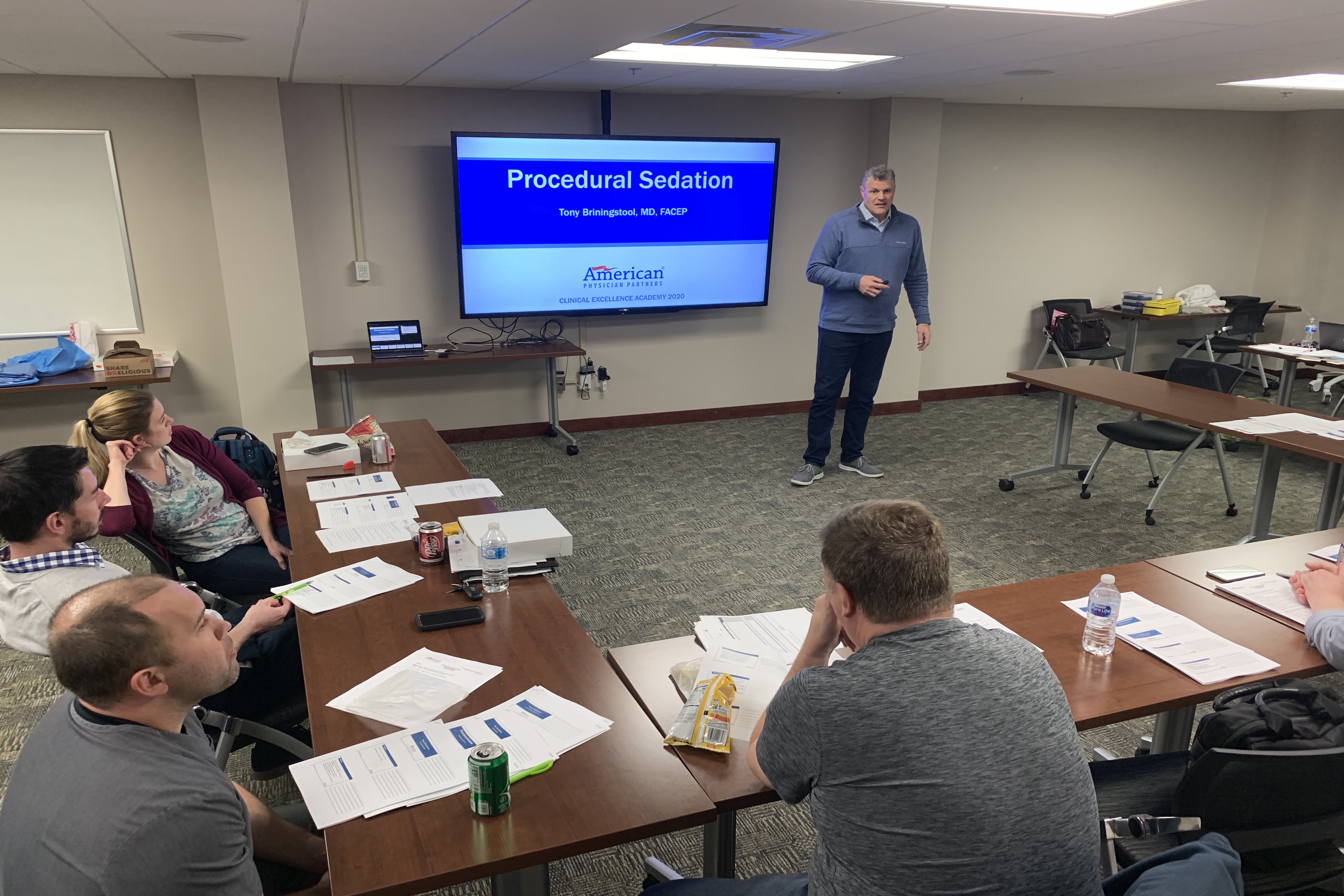
At a two-working day business education put on by American Health practitioner Companions in 2020, main health care officer Dr. Tony Briningstool teaches medical professionals and nurse practitioners how to securely use sedation in the crisis division. As a funds-conserving technique, unexpected emergency rooms are using much less medical doctors and relying in its place on midlevel practitioners. (Blake Farmer for KHN)

These staffing providers have been among the most aggressive in changing medical doctors to slash prices, stated Dr. Robert McNamara, a founder of the American Academy of Emergency Drugs and chair of unexpected emergency medication at Temple University.

“It’s a fairly very simple equation,” McNamara claimed. “Their No. 1 expense is the board-qualified crisis physician. So they are likely to want to hold that cost as very low as possible.”

Not every person sees the trend of private fairness in ER staffing in a damaging light-weight. Jennifer Orozco, president of the American Academy of Medical doctor Associates, which signifies doctor assistants, stated even if the alter — to use a lot more nonphysician providers — is driven by the staffing firms’ wish to make additional revenue, sufferers are even now very well served by a team technique that features nurse practitioners and physician assistants.

“Though I see that change, it is not about revenue at the close of the day,” Orozco claimed. “It’s about the client.”

The “shift” is approximately invisible to patients for the reason that hospitals seldom advertise branding from their ER staffing companies and there is tiny community documentation of private fairness investments.

Dr. Arthur Smolensky, a Tennessee unexpected emergency medicine specialist attempting to evaluate private equity’s intrusion into ERs, stated his overview of healthcare facility work postings and employment contracts in 14 major metropolitan parts discovered that 43{bf0515afdcaddba073662ceb89fbb62b6b1bf123143c0e06b788e1946e8c353f} of ER sufferers have been seen in ERs staffed by businesses with nonphysician proprietors, just about all of whom are personal equity traders.

Smolensky hopes to publish his full examine, expanding to 55 metro locations, later this year. But this study will just quantify what a lot of medical doctors previously know: The ER has transformed. Demoralized by an greater target on profit, and cautious of a looming surplus of unexpected emergency drugs inhabitants because there are less careers to fill, a lot of experienced doctors are leaving the ER on their personal, he reported.

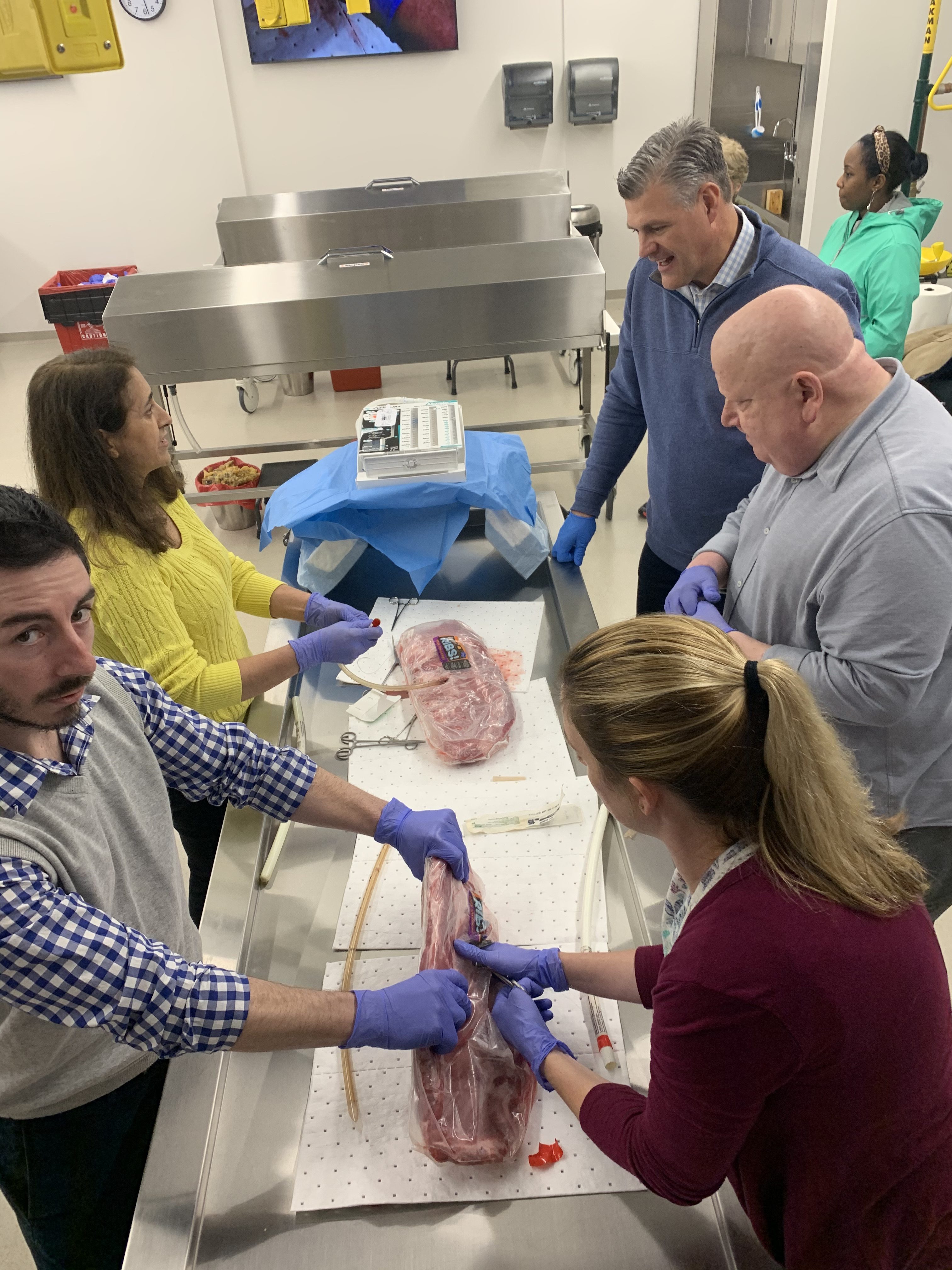
In a lab at Lipscomb University in 2020, nurse practitioners join health professionals in practising how to location a chest tube to correct a collapsed lung by snaking a rubber hose by a rack of pork ribs. The NPs, who function for American Physician Partners, will have to execute the procedure below a doctor’s supervision in advance of remaining allowed to do it on their very own. (Blake Farmer for KHN)

“Most of us didn’t go into medication to supervise an army of men and women that are not as very well skilled as we are,” Smolensky mentioned. “We want to take treatment of patients.”

‘I Guess We’re the Initially Guinea Pigs for Our ER’

Joshua Allen, a nurse practitioner at a modest Kentucky healthcare facility, snaked a rubber hose via a rack of pork ribs to follow inserting a upper body tube to take care of a collapsed lung.

It was 2020, and American Health practitioner Companions was restructuring the ER wherever Allen worked, lowering shifts from two medical professionals to just one. Once Allen had put 10 tubes beneath a doctor’s supervision, he would be allowed to do it on his have.

“I guess we’re the initial guinea pigs for our ER,” he stated. “If we do have a important trauma and numerous victims arrive in, there’s only a single medical professional there. … We need to be organized.”

Allen is a single of many midlevel practitioners discovering perform in crisis departments. Nurse practitioners and health practitioner assistants are among the the fastest-escalating occupations in the country, according to the U.S. Bureau of Labor Studies.

Usually, they have master’s degrees and get various a long time of specialized education but have drastically much less schooling than doctors. Several are permitted to diagnose sufferers and prescribe medication with minor or no supervision from a doctor, even though constraints range by condition.

The Neiman Institute found that the share of ER visits in which a midlevel practitioner was the primary clinician amplified by much more than 172{bf0515afdcaddba073662ceb89fbb62b6b1bf123143c0e06b788e1946e8c353f} concerning 2005 and 2020. A different examine, in the Journal of Unexpected emergency Drugs, reported that if trends keep on there may be equal quantities of midlevel practitioners and physicians in ERs by 2030.

There is tiny secret as to why. Federal info demonstrates unexpected emergency medicine physicians are compensated about $310,000 a calendar year on typical, while nurse practitioners and health practitioner assistants make less than $120,000. Commonly, hospitals can bill for treatment by a midlevel practitioner at 85{bf0515afdcaddba073662ceb89fbb62b6b1bf123143c0e06b788e1946e8c353f} the rate of a health care provider although paying out them considerably less than half as a lot.

Non-public fairness can make hundreds of thousands in the hole.

For example, Visualize after encouraged ERs to make use of “the the very least expensive resource” and address up to 35{bf0515afdcaddba073662ceb89fbb62b6b1bf123143c0e06b788e1946e8c353f} of patients with midlevel practitioners, according to a 2017 PowerPoint presentation. The presentation drew scorn on social media and disappeared from Envision’s web-site.

Visualize declined a request for a telephone interview. In a composed statement to KHN, spokesperson Aliese Polk mentioned the organization does not direct its health practitioner leaders on how to treatment for clients and called the presentation a “concept guide” that does not represent current sights.

American Medical professional Companions touted roughly the exact same staffing system in 2021 in reaction to the No Surprises Act, which threatened the company’s income by outlawing shock clinical expenses. In its private pitch to loan providers, the enterprise approximated it could cut pretty much $6 million by shifting a lot more staffing from medical professionals to midlevel practitioners.

Relevant Matters

Get in touch with Us

Post a Tale Idea