Trial begins for fitness influencer accused of scamming thousands of customers

The trial of a Texas fitness influencer accused of scamming thousands of customers and misleading those with eating disorders begins Tuesday.

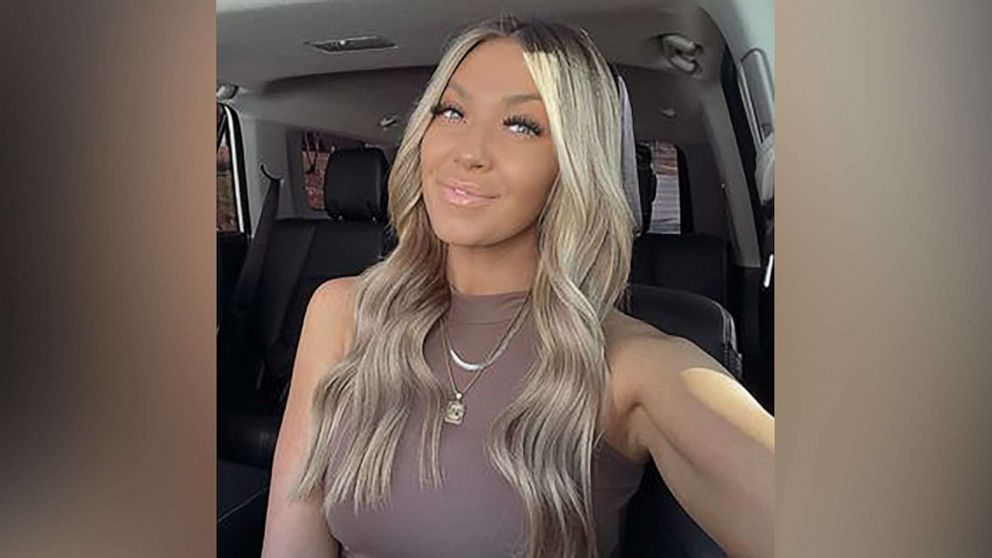
Brittany Dawn Davis, better known as Brittany Dawn, was sued by the state Attorney General’s Office in February 2022, accused of deceptive business practices by not delivering personalized fitness and nutrition plans.

According to the lawsuit, Davis charged customers $92 to $300 for her allegedly tailored plans and then failed to connect with them for their one-on-one coaching and check-ins, as promised.

Davis began her career in 2014 when she founded the company Brittany Dawn Fitness and quickly gained traction, the lawsuit said. She currently boasts 1.3 million followers on TikTok and about 467,000 on Instagram.

The lawsuit alleges that depending on the plan a customer purchased, they could receive daily or weekly training by email and one-on-one individualized coaching.

“However, the online nutrition and fitness plans delivered to consumers were not individualized,” the lawsuit states.
Trial begins for fitness influencer accused of scamming thousands of customers

Brittany Dawn Davis in a profile photo from her social media account.

realbrittanydawn/Instagram

Neither Davis not her attorney returned ABC News’ request for comment.

However, in court filings, Davis said she denies “generally every allegation” made by the Texas Attorney General’s Office.

According to the lawsuit, one customer only received a single email from Davis with no adjustments made to her plan. Another customer allegedly stopped receiving communication from Davis after two weeks.

Other customers received no responses or, if they did, they were generic, including phrases like “THAT’S MY GIRL! You’re killing it!” or “You’ve got this babe!” according to the lawsuit.

In addition to Davis’ alleged failure to provide coaching and check-ins, the lawsuit also states that she and her company “largely ignored consumer complaints.”

When complaints were addressed, only partial refunds were offered, according to the lawsuit.

A 2019 report from “Good Morning America” found that customers received anywhere from $50 refunds to full refunds if they signed an NDA.

Kenzie Andino told local ABC affiliate WFAA that she paid $300 for one of Davis’ plans in 2017 but says she quickly learned she wasn’t getting what she was promised.

“I knew what customized meant and that was not at all what I received,” she said. “In fact, the first document I received didn’t even have the right name on it. It was someone else’s name.”

Andino’s customized plan was a diet that had her eating just 900 calories a day. She told WFAA she sent Davis a long message addressing her concerns with her eating plan.

“I made sure to let her know that I was concerned,” she told WFAA. “My response that I got within — no lie — 45 seconds of sending it was ‘nice work babe’ and after that, I told her that I was done.”

The lawsuit also accuses Davis of misleading customers with eating disorders.

Davis posted videos on YouTube claiming she overcame her eating disorder with healthy eating and exercise, according to the lawsuit.

Although Davis claims she never accepted customers with eating disorders, at least 14 allege asking for refunds and specifically mention disorders, the lawsuit states.

One customer reported suffering from a restrictive eating disorder and that she was looking to increase her calorie intake only to receive an eating plan that was “significantly lower than what the consumer, who needed to gain weight, had reported,” according to the lawsuit.

After complaints of Davis’ business practices started circulating on social media in 2019, Davis posted a video to YouTube apologizing, but the video was “promptly” taken down, according to the lawsuit.

Davis appeared on “Good Morning America” in 2019 to address the criticism.

“I have such a heart for what I do and being in this industry,” Davis said. “I jumped into an industry that had no instruction manual. I’m basically going through uncharted territory and I’m doing the best that I can to the best of my ability.”

She continued, “I’m using this is a tool to learn and to grow as a professional and to move forward.”

The state is seeking damages between $250,000 and more than $1 million to cover civil penalties, attorneys’ fees and other costs.

The Texas Attorney General’s Office did not immediately return ABC News’ request for comment.

Council takes action to mitigate risk of medical devices shortage

Today the Council adopted a regulation which extends the deadline for the certification of medical devices. This measure aims to prevent that medical devices which cannot be certified by the initial cut-off date become unavailable for European patients.


Council takes action to mitigate risk of medical devices shortage

Today we have agreed on measures that will allow the industry to continue bringing essential medical devices to the market and ensure that patients have safe access to medical devices.

Acko Ankarberg Johansson, Swedish minister for health care

A staggered and conditional extension

Producers of medical devices will now have until 31 December 2027 for higher risk devices and until 31 December 2028 for medium and lower risk devices to meet the legal requirements.

The extension of the transition period will be granted under certain conditions. These ensure that only devices that are safe and for which manufacturers have already started the certification procedure will benefit from the additional time.

Removal of “sell-off” date

The regulation adopted today also reduces the risk of medical devices shortages by removing the “sell-off” date rule. The “sell-off” date is the end date after which devices already on the market but not yet with the final user should be withdrawn. Only devices that comply with the previous EU law on medical devices will benefit from this rule. Removing the “sell-off” date will allow safe medical devices to remain longer on the market.

Background and next steps

In April 2017, the Council and the European Parliament adopted two regulations to improve the safety of medical devices and in vitro diagnostic medical devices. Medical devices cover a broad array of products, ranging from hearing devices and wheelchairs to catheters and orthopaedic implants. One of the measures of the 2017 regulation is a more robust conformity assessment system of medical devices. The amending regulation adopted today does not change the requirements of the original regulations of 2017.

Under this system, by the end of the foreseen transition period of 26 May 2024, all medical devices have to conform with the new rules. But because, among other things, conformity assessment bodies suffer from capacity problems to (re)certify old and new medical devices there is a risk that at the end of the transition period a large share of devices will no longer be available to EU patients.

The decision to extend the implementation period will enter into force on the day of its publication in the Official Journal of the EU.

Visit the meeting page

Heart-healthy habits linked to longer life without chronic conditions

Heart-healthy habits linked to longer life without chronic conditionsShare on Pinterest
A study found that heart-healthy lifestyle habits described in the American Heart Association’s Life’s Essential 8, such as physical activity and quality sleep, are associated with a longer lifespan and more years spent free of chronic conditions such as type 2 diabetes and cancer. urbazon/Getty Images
  • The American Heart Association’s Life’s Essential 8 is a concept that defines cardiovascular health based on four modifiable behaviors, such as physical activity and sleep, and four modifiable biometric measures, such as weight, blood glucose, and blood lipid levels, that impact cardiovascular health.
  • The composite cardiovascular health score measured using the aforementioned eight metrics can help clinicians measure and monitor cardiovascular health to prevent or treat cardiovascular diseases.
  • A recent study showed that an optimal composite cardiovascular score based on the Life’s Essential 8 metrics was associated with longer life expectancy free of chronic conditions such as cancer and cardiovascular diseases.
  • An accompanying study showed that the decline in deaths due to cardiovascular disease contributed significantly to the increase in life expectancy associated with good cardiovascular health.

Two related studies recently presented at the American Health Association (AHA) conference suggest that optimal cardiovascular health (CVH) was associated with a longer chronic disease-free lifespan, reduced cardiovascular mortality, and increased total longevity.

These studies assessed CVH using the criteria defined by Life’s Essential 8, thus underscoring the validity and utility of cardiovascular health scores based on this construct as predictors of life expectancy and cardiovascular diseases (CVD).

Dr. Hao Ma, a biostatistical analyst at the Tulane University Obesity Research Center and an author of one of the studies, said:

“After decades of strong growth, the rise in US life expectancy has stagnated since 2010. The main reason for such a phenomenon is the poor cardiovascular health in the US population. Our study indicates that adhering to a high CVH, defined as the Life’s Essential 8 score, is related to a considerably increased life expectancy. Moreover, our findings lend support to the validity of the newly released Life’s Essentia 8 metrics in assessment and monitoring CVH in the general populations.”

In 2010, the American Heart Association (AHA) developed a prescription for health called Life’s Simple 7, consisting of seven measurable risk factors or metrics that together represented cardiovascular health. The AHA revised Life’Simple 7 to create Life’s Essential 8 in 2022 to improve the measurement and monitoring of cardiovascular health and facilitate cardiovascular disease prevention and treatment.

The eight metrics comprising the construct, Life’s Essential 8 include physical activity, diet, smoking and other forms of nicotine exposure, sleep, body mass index, blood glucose, blood lipids, and blood pressure. Each metric included in Life’s Essential 8 is measured on a continuous scale of 0-100. These individual metrics are used to calculate the composite or cumulative cardiovascular health score that also ranges from 0 to 100 points.

Although life expectancy has increased in the past few decades, it has been accompanied by an increase in the prevalence of chronic conditions, such as cardiovascular conditions and cancer. The combined effects of the metrics included in Life’s Essential 8 — such as being more active, quitting tobacco use and managing blood pressure — are associated with increased total life expectancy.

However, studies have not examined the association between the composite cardiovascular health score, calculated as defined by the updated Life’s Essential 8, and total life expectancy and disease-free life span.

Two studies recently presented at the AHA conference assessed whether ideal composite cardiovascular health scores were associated with increased life expectancy in the absence of chronic health conditions and reduced mortality due to cardiovascular diseases.

The first study examined whether the cardiovascular health score was associated with an increase in total life expectancy and life expectancy in the absence of chronic conditions.

The study analyzed data collected by the UK Biobank from more than 136,000 adults residing in the United Kingdom who, at the time of enrollment, did not have cardiovascular disease, diabetes, cancer, or dementia and had data on cardiovascular health scores.

The individuals were classified as having poor, intermediate, or ideal cardiovascular health based on the criteria defined by Life’s Essential 8. The researchers found that average life expectancy at 50 years of age was prolonged by 5.2 and 6.3 years in men and women with ideal CVH, respectively, compared with their counterparts with poor CVH.

Individuals with ideal CVH scores also had more years of life free of major chronic conditions, including diabetes, cardiovascular disease, dementia, and cancer, than those with poor CVH. Specifically, men and women with ideal CVH were expected to spend 75.9{bf0515afdcaddba073662ceb89fbb62b6b1bf123143c0e06b788e1946e8c353f} and 83.4{bf0515afdcaddba073662ceb89fbb62b6b1bf123143c0e06b788e1946e8c353f}, respectively, of their lives in good health, whereas their male and female counterparts with poor CVH were expected to spend 64.9{bf0515afdcaddba073662ceb89fbb62b6b1bf123143c0e06b788e1946e8c353f} and 69.4{bf0515afdcaddba073662ceb89fbb62b6b1bf123143c0e06b788e1946e8c353f} of their lives free of chronic disease.

Previous studies have shown that low socioeconomic status is associated with lower disease-free life expectancy. In the present study, researchers found that maintaining ideal cardiovascular health helped reduce the impact of low socioeconomic status on disease-free life expectancy.

The second study examined the impact of maintaining ideal cardiovascular health on potential improvements in life expectancy due to a decrease in cardiovascular deaths. The study analyzed data from 23,000 adults participating in the National Health and Nutrition Examination Survey (NHANES) between 2005 and 2018. Using a national death registry, the researchers determined that 1,359 participants died during the average follow-up period of 7.8 years.

Consistent with the first study, participants with ideal cardiovascular health had longer life expectancies than individuals with poor cardiovascular health. Specifically, the life expectancy of men and women with ideal CVH at 50 years of age was an average of 7.5 years and 8.9 years, respectively, longer than their counterparts with poor CVH.

Notably, 41.8{bf0515afdcaddba073662ceb89fbb62b6b1bf123143c0e06b788e1946e8c353f} and 44.1{bf0515afdcaddba073662ceb89fbb62b6b1bf123143c0e06b788e1946e8c353f} of the increase in life expectancy at 50 years of age in men and women with ideal CVH scores, respectively, could be attributed to a decline in deaths due to cardiovascular disease. Among ethnic groups, the CVH score was also associated with longer life expectancy in White and Black Americans, but not Mexican Americans.

Both studies also had a few limitations. Dr. Ma noted that the data on lifestyle factors such as diet and sleep patterns from the NHANES database were self-reported and hence, prone to errors. Moreover, the metrics used to measure cardiovascular health in both studies were assessed only at baseline, but not during the follow-up period.

Medical News Today also spoke with Dr. Alexandra Lajoie, a noninvasive cardiologist at Providence Saint John’s Health Center in Santa Monica, CA, who was not involved in the study.

“The results of these studies are not surprising. Research continues to show us that healthy lifestyle interventions are good for health outcomes, and often are even more important than prescription medications.”

Dr. Lajoie said it is possible to reverse some of the effects of not living a heart-healthy lifestyle earlier in life, but it’s better to consistently maintain a lifestyle that’s beneficial to one’s health.

“Of course the ideal would be to follow healthy habits from the start, but starting exercise, getting better sleep, and maintaining a healthybody weight improves blood pressure and blood sugar, and consequently reduces cardiovascular event risk, for decades beyond age 50,” she explained. “Quitting smoking is the best [thing] to improve heart health. After that it’s maintaining a regular exercise routine.

A Personal Trainer Shares her Favorite Cheap Healthy Foods

Inflation is really impacting food prices and, therefore, all our wallets are getting skinnier. Many of us have a tendency to assume that healthy food is expensive and it can be easy to feel frustrated when you feel like you have to choose between between saving money and eating healthy.

As a trainer, I believe that nutrition is crucial to good health and no one should have to skimp on that. There are a lot of affordable grocery items that are both healthy and inexpensive. Here are my tips for how to feed yourself — and your loved ones — delicious, nutritious meals that don’t break the bank.

A Personal Trainer Shares her Favorite Cheap Healthy Foods
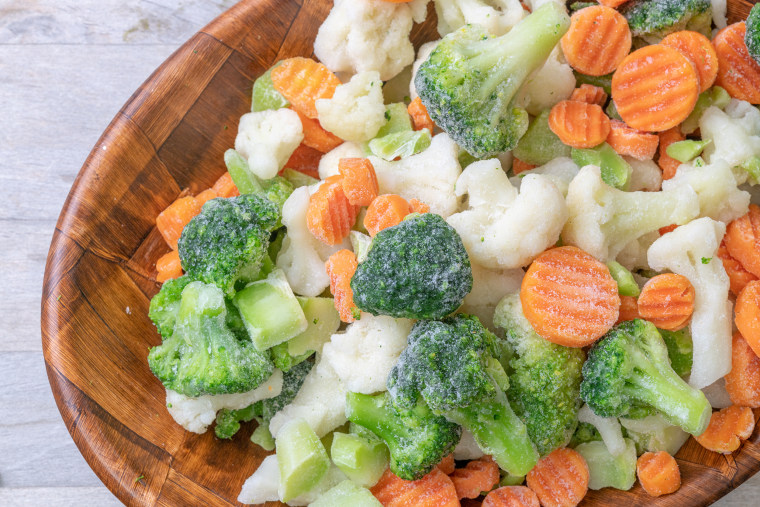
Contrary to popular belief, frozen veggies are not less nutritious than fresh vegetables.Roberto Machado Noa / Getty Images

A cheap and healthy grocery list

  • Frozen veggies: I buy whatever’s on sale because they’re as nutritious as fresh produce, but don’t spoil. I throw them into a bowl and microwave them or add them to a stirfry.
  • Frozen berries: Whatever type is on sale dictates my smoothie flavor for the week! I’m partial to raspberries — I love the sweetness with a little sour — but if pineapple chunks are on sale then I buy those instead. They also serve as ice so that my smoothies aren’t watered down, and frozen fruit doesn’t spoil like fresh fruit so I don’t have to worry about wasting it. Plus, some berries — like strawberries — are so packed with nutrients that dietitians call them super fruits!
  • Canned tuna: This is a super fast protein I can dump on top of salads or put on top of open-faced peppers with slices of pickles and cucumbers on top for a crunch.
  • Chickpeas: Canned beans are great to have on hand, and I’m partial to chickpeas because, being Lebanese, I can easily whip up hummus for a protein-packed snack, or I can put them in the oven with some seasoning for baked chickpeas as a snack or salad topper.
  • Rotisserie chicken: Shred this already-cooked chicken and make chicken tacos, chicken dip or a chicken stirfry.
  • Tofu: Sub in tofu instead of meat for a vegetarian meal or a Meatless Monday. Or instead of buying pricey eggs, scramble tofu which has a similar texture to scrambled eggs to make your next breakfast scramble! You can also add tofu to smoothies instead of protein powder. If you’re not sure how to cook tofu, check out our guide for how to cook tofu.
  • Lentils: Lentils are another meatless option to get in protein. Whether you make a stew, soup, or are simply looking for a non-meat protein option on top of a salad, these beans are great for your wallet and your protein intake!
  • Store-brand cheese: If you don’t feel bloated after eating cheese, check out non name-brand cheeses at your grocery store that are still reasonably priced. Use cheese as a snack for protein or as a topper for warm casseroles!
Spicy Tofu with red sauce.
Tofu is so versatile that you can use it in everything from smoothies to curries. Wheatfield / Getty Images/iStockphoto

Healthy recipes on a budget

If you want to put some of these ingredients to use right away, here are some delicious recipes to get you started.

Berry-Banana Smoothie

This smoothie calls for strawberries and blueberries, but you can use any frozen berry that’s on sale. You can also sub in spinach or another dark, leafy green for kale.

Spiced Roasted Chickpeas

ClarkandCompany / Getty Images

These chickpeas are super easy to make and you can use them in a multitude of ways. Roasted chickpeas make for a great salad topper, and they’re also a great protein-rich snack.

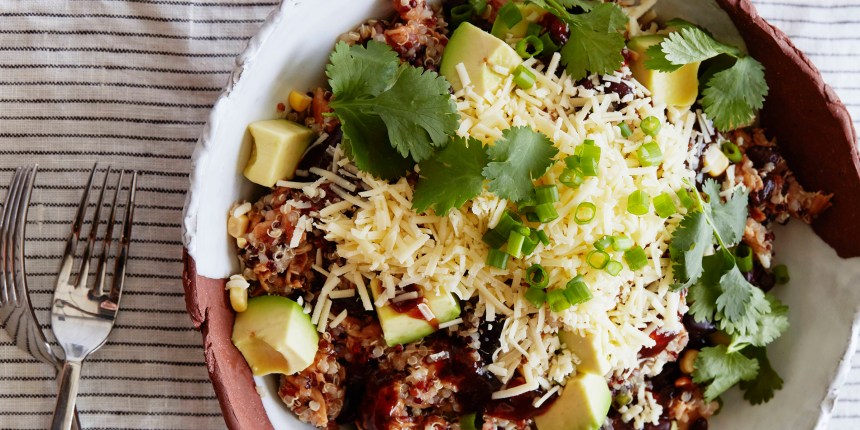
Barbecue Chicken Quinoa Salad

Courtesy Matt Armendariz

This barbecue rotisserie chicken salad makes for a nutrient-dense meal any time of day and using rotisserie chicken makes it easy to make.

Chickpea and Tuna Salad

Laura Vitale

This chickpea and tuna salad is healthy, delicious and it requires no cooking! Win-win-win.

More meal planning tips from a trainer

Teen mental health is in crisis, study shows. What can parents do?

Results from a recent Centers for Disease Control and Prevention survey add to the evidence that teen mental health is in crisis, with particularly concerning numbers surrounding teen girls. 

The survey found around 1 in 3 high school girls in the U.S. have seriously considered attempting suicide and more than half of teen girls, 57{bf0515afdcaddba073662ceb89fbb62b6b1bf123143c0e06b788e1946e8c353f}, reported feeling “persistently sad or hopeless” — a record high.

By contrast, 14{bf0515afdcaddba073662ceb89fbb62b6b1bf123143c0e06b788e1946e8c353f} of high school boys told the 2021 survey that they had seriously considered attempting suicide, up from 13{bf0515afdcaddba073662ceb89fbb62b6b1bf123143c0e06b788e1946e8c353f} in 2011. 

Among LGBQ+ students, close to 70{bf0515afdcaddba073662ceb89fbb62b6b1bf123143c0e06b788e1946e8c353f} said they experienced persistent feelings of sadness or hopelessness during the past year, more than 50{bf0515afdcaddba073662ceb89fbb62b6b1bf123143c0e06b788e1946e8c353f} had poor mental health during the past 30 days and almost 25{bf0515afdcaddba073662ceb89fbb62b6b1bf123143c0e06b788e1946e8c353f} attempted suicide during the past year.

Alyssa Mairanz, a licensed mental health counselor and owner of Empower Your Mind Therapy, says the numbers are distressing, yet unfortunately, she “wasn’t surprised.”

“There are a few things that teens nowadays deal with that older generations didn’t have to deal with,” Mairanz notes, including social media, which can lead to harmful comparisons and online bullying, as well as the impact of the COVID-19 pandemic on developing minds.

So what can parents do to make sure their teens are OK?

Know the line between normal and not

“There’s so many things that are typical with teens that aren’t necessarily cause for concern, like general moodiness (and) fighting with parents,” Mairanz says. “Parents don’t know when it’s cause for concern and what’s more normal, so I think understanding that line is super important.”

She says it may be a sign of something more serious if you see your teen…

  • is in intense, longer-lasting low moods
  • is becoming more isolated or withdrawn, including not wanting to socialize or see friends
  • is not wanting to get out of bed
  • is engaging in high risky behaviors, including physical aggression or intense substance use

Another sign that often goes under the radar? High perfectionism.

“A teen that’s really setting these very high, unrealistic standards for themselves in terms of anything — could be grades, friends, looks,” she says. “When it’s really that high, it’s definitely a warning sign. These can often lead to depression (and) suicidality.”

Discussing the results of the recent survey on CBS News “Prime Time,” Dr. Debra Houry, chief medical officer at the CDC, noted that changes in sleep and appetite can also be an indicator. 

Listen and validate

“When parents are more validating to their child and focus on what they need versus what maybe the parent is assuming, teenagers tend to be much more open and willing to come to their parents when they’re struggling,” Mairanz says.

So, instead of opening a dialogue the intention to provide solutions, which may look like this:

  • Responding to an upset teenager with, “Oh it’s fine,” “It’s not such a big deal” or “It’s all going to be OK.”
  • Or saying, “Let’s talk about how we can study better” or “Let’s create more intense notes” when a child does poorly on a test.

Mairanz suggests listening and validating, instead.

“Parents don’t necessarily even realize how their response to their teenagers can have an impact. … But a lot of times, the children really just need the emotional support. Because when they hear a solution, they hear, ‘OK, I’m not doing enough,’ rather than, ‘OK, this is a struggle and it’s understandable that you’re upset.'”

Houry says being as “open and nonjudgmental as possible” can help a child feel more comfortable coming to their parent.

Keep an eye on social media usage

Parents should look out for a “real codependency” between their kid and their phones, which can look like being on social media and not taking breaks, Mairanz advises.

“Especially if it’s impacting their ability to function, go to school, do their homework, be with friends… it’s important to try to make sure teens get a break from all of that,” she says.

Don’t be a stranger to your child’s circles

It’s important not only to talk to your child, but to know your child’s friends and their friends’ parents, Houry says. 

“That way you’re able to have an open communication with families around you, build that support system and have a good sense of where your child is and what they’re up to,” she explains. 

Don’t ignore a child asking for help

If a child asks for professional help, don’t brush it off. Experts say that’s a sign to take action. 

“Sometimes there’s still a stigma around therapy, especially with parents because (they) want their children to be OK and they take it very personally when we’re not,” Mairanz explains. “It’s unfortunately common for parents to be like, ‘You’re fine. This is just normal teenage stuff, you don’t need help.'”

If a child isn’t comfortable enough to ask for support, look out for signs they need professional help, including self-harm, increased substance use, withdrawing from school or a change in sociability. 

Make sure you’re OK too

While it’s important to focus on the teen, Mairanz says it’s also crucial for parents to realize they need to focus on themselves. 

“Whether it has to do with their own mental health issues or specifically around parenting, kids pick up a lot – so if a parent is really struggling, it’s important for them to deal with that,” she says. “Know that part of helping your teen is also helping yourself.”


If you or someone you know is in emotional distress or crisis, you can reach the 988 Suicide & Crisis Lifeline by calling or texting 988. You can also chat with the 988 Suicide & Crisis Lifeline here. 

For more information about mental health care resources and support, The National Alliance on Mental Illness (NAMI) HelpLine can be reached Monday through Friday, 10 a.m.–10 p.m. ET, at 1-800-950-NAMI (6264) or email info@nami.org.

Roy and Diana Vagelos Institute for Biomedical Research Education Launched at Columbia University with $175 Million Gift

With the COVID-19 pandemic highlighting the critical importance of biomedical research and new questions being raised about society’s capacity to generate world-changing scientific breakthroughs1, Roy and Diana Vagelos have made a $175 million gift to Columbia University to address this need. The Vagelos Institute for Biomedical Research Education created with this gift will be home to PhD students pursuing the most creative, potentially disruptive ideas in biomedical science, and will spur the training of more physician-scientists able to translate the latest paradigm-shifting discoveries into revolutionary new methods in patient care.  

logo

The gift will enable Columbia to create a new academic model that encourages and accelerates the intellectual risk-taking needed to make historic advances in health science research. Supportive career pathways, promising stability and academic freedom, are being developed to attract more students and junior faculty to this essential endeavor. Currently in the United States, PhD students, MDs in training, residents, fellows, and early-career physician-scientists who pursue a career in basic, translational or clinical research must contend with both financial challenges and professional uncertainty2.

By directly addressing and mitigating these obstacles, the Vagelos gift seeks to create an academic research environment conducive to bold experimentation and a sustained commitment to solving longstanding medical problems. Reducing the disproportionate financial burdens that deter historically marginalized groups from pursuing a career in science is a central pillar of this program.

“The financial support provided by Roy and Diana Vagelos to Columbia has been extraordinary, and so too is the leadership they provide through the values embodied in their philanthropy,” said Katrina Armstrong, Dean of the Columbia University Vagelos College of Physicians and Surgeons, and EVP for Health and Biomedical Sciences. “The Vagelos Institute for Biomedical Research Education will have an enormous impact in harnessing the power of science to transform clinical care, and I believe we will see similar initiatives started at other university medical schools. The reward for this effort will be unprecedented strides forward in curing disease and treating illness. It’s an opportunity—and a responsibility—we must embrace.”

The largest portion of the gift—$125 million—will establish an endowment to transform the prevailing approach for funding PhD students. This will provide Columbia trainees with greater freedom to explore different interests at the start of their careers. The remaining $50 million of the gift will support aspiring physician-scientists seeking to develop expertise in both fundamental biology and clinical medicine.

An external scientific advisory board of seasoned scientists and experts in graduate biomedical education will guide the development of these programs and of the new graduate biomedical curriculum tracks. The board is tasked with ensuring that Columbia University creates the optimal environment to nurture the growth of scientists who will shape the future of medicine. The initial group of board members includes Enrique M. De La Cruz, PhD, of the Yale School of Medicine; Tracy Johnson, PhD, of UCLA; William Kaelin Jr., MD, of the Dana-Farber Cancer Institute; and Shirley M. Tilghman, PhD, of Princeton University.

“This extraordinary generosity from Roy and Diana Vagelos continues their visionary support of education at the Vagelos College of Physicians and Surgeons, which so appropriately bears their name,” said Columbia University President Lee C. Bollinger. “It also continues their trailblazing efforts to rethink and strengthen the future of science and medical education at Columbia and around the world. For all of this, and so much more, we are extremely grateful.”

Roy and Diana Vagelos have been trailblazers in rethinking and strengthening the future of science and medical education at Columbia and around the world. Together with scholarship support from countless VP&S alumni, friends, and faculty, their transformative $250 million gift in 2017 made it possible for Columbia’s medical school to become the first in the nation to offer debt-free education to students. Their leadership precipitated a national movement among medical schools to eliminate student debt. The medical school was renamed the Vagelos College of Physicians and Surgeons as a tribute to their impact. This second transformational gift reflects the couple’s remarkable generosity and their deeply held values. It builds on a shared lifetime of charitable and compassionate action, particularly in their efforts to advance science, medical education, and better health care for all. For more information about Roy and Diana Vagelos, their respective professional accomplishments, and their prior giving to Columbia, please visit this page.

“We all know that continued scientific progress is the foundation for solving our most pressing medical problems,” said Dr. Vagelos. “Diana and I each vividly recall the difference that financial support made in creating a sense of freedom and instilling the confidence to pursue our passions early in our lives. We want to give others this same freedom by removing the obstacles facing researchers and scientists in training. The larger the number of talented researchers who are able to explore areas of discovery that capture their imaginations, the greater the impact they will have in changing medicine and improving health. It is our honor to give back.”