How health disparities map out across America

Targeting solutions

Healthcare organizations have leaned on several strategies to address access gaps.

Tools meant to connect to patients virtually, like telehealth, took off as the government relaxed regulations in response to the COVID-19 pandemic, and are now commonplace. Yet many in rural and low-income communities lack broadband internet service.

Major healthcare providers and other companies have expanded into alternative care sites such as retail stores and mobile clinics. Dollar General and CVS Health, for example, have the reach to thrive in underserved markets. However, only 10{bf0515afdcaddba073662ceb89fbb62b6b1bf123143c0e06b788e1946e8c353f} of patients used retail clinics last year, according to a Deloitte survey. And some consumers have trouble navigating the healthcare system without guidance.

In Mamou, Louisiana, a town of approximately 3,000 people in Evangeline Parish, an independent drugstore open since 1975 is struggling to provide for its longtime customers. In the past year, Reed’s Pharmacy has terminated long-standing contracts with insurers and pharmacy benefit managers and has transferred patients’ prescriptions to a Walmart in the next parish.

The drugstore couldn’t get by on what pharmacy benefit managers—often part of the same corporate families as insurers and chain drugstores—charge for the medications and pay for dispensing them, said Rebecca Cormier, pharmacist and co-owner.

“Grocery stores aren’t expected to buy bread for $1 and sell it for 50 cents, but that’s what they’re expecting us to do,” Cormier said.

Reed’s is one of two drugstores in Mamou. The other is on the campus of the 60-bed Savoy Medical Center on the edge of town.

Many of Reed’s customers have patronized the store their entire lives and lack the health literacy to navigate the healthcare system without help, Cormier said. Only 12{bf0515afdcaddba073662ceb89fbb62b6b1bf123143c0e06b788e1946e8c353f} of the town’s population has a college degree and one-quarter has disabilities, according to census data.

“Some of these people can’t maneuver a phone tree,” which are used by large companies, including chain drugstores, Cormier said. “We’ve been serving third and fourth generations of families over here. If you pick up the phone, you’re talking to a pharmacist and a person—you’re not pressing ‘one’ to talk to so-and-so.”

For some drugs, Reed’s managed to keep the cash price within $20 of what patients were paying with insurance, Cormier said. But for other medicines, including those treating the many locals with asthma and diabetes, the drugstore couldn’t solve the affordability problem.

The recent contract disputes leave those customers with fewer options, especially those without access to transportation, Cormier said.

“They don’t have a way to get out of town to get their medicine,” she said. “They’re going without their medicine because we can’t fill it. No one else in town is going to do it at a loss either, so they will just go without.”

Incentivizing transformation

Emerging market forces are shaping a framework of accountability and financial incentives that aim to close gaps in care. Government agencies and third-party accreditors are imposing standards for data collection, governance and quality research.

The Centers for Medicare and Medicaid Services now evaluates how providers incorporate health equity into strategic plans, data collection and analysis, and leadership. The agency also created a “birthing-friendly” designation to encourage hospitals to close maternal morbidity gaps. The Joint Commission, which accredits about 3,800 hospitals, has devised guidelines that include designating officers to lead efforts focused on eliminating disparities and screening patients for social determinants of health.

Health equity advocates also see promise in value-based payment models, but the transition has been slow and the arrangements are not deployed in the locations where they could make the greatest difference. The Medical Group Management Association reports that value-based care accounts for just 5.5{bf0515afdcaddba073662ceb89fbb62b6b1bf123143c0e06b788e1946e8c353f} to 14.74{bf0515afdcaddba073662ceb89fbb62b6b1bf123143c0e06b788e1946e8c353f} of physician office revenue. CMS is pushing to increase participation, especially for Medicare Advantage members.

Value-based arrangements pay providers a fixed amount of money per person, per month, and allow them to decide how to spend the money. The upfront investment enables providers to build teams based on patient needs and fund community health programs. That includes hiring community health workers, dietitians and social workers or offering screenings and mobile vaccination clinics.

To make it work, providers and payers have to coordinate data and care plans, negotiate risk levels and overhaul revenue models. This would mark a major shift from the fee-for-service model, and it presents significant financial and logistical challenges to providers that benefit from the status quo. Healthcare organizations also have to reach beyond medical care and invest in other interventions to be successful.

“Old habits die hard,” said Dr. Chris Dodd, chief medical officer at Franklin, Tennessee-based home health provider Emcara Health. “Health systems have been traditionally focused on building more hospitals and hiring more specialists and using [primary care providers] to just funnel patients to higher-cost services.”

CMS’ Center for Medicare and Medicaid Innovation reported in 2021 that pilot programs testing new payment models aren’t being implemented in low-income areas. The agency is working to mitigate this by experimenting with novel payment arrangements under Medicaid and prioritizing interventions in locales identified as underserved by the Center for Health Disparities Research at the University of Wisconsin-Madison.

More flexibility for spending money on social interventions is needed and the federal government should be specific about what kinds of risk-sharing arrangements are proper and what populations should be targeted, said Hugh Lytle, founder and CEO of Equality Health, a population risk management company that enables value-based care arrangements among Medicaid and Medicare beneficiaries.

“There’s more than enough money in the system to get better results, but the incentives, even under the current value-based care systems, really encourage cherry-picking of the healthy patients and dumping of the less healthy patients,” said Dr. David Ansell, senior vice president for community health equity at Rush University Medical Center in Chicago and co-founder of the Healthcare Anchor Network.

Top 5 ways ChatGPT can improve your fitness and nutrition journey

ChatGPT has been creating waves in the tech industry recently and revolutionizing how we approach fitness and nutrition. From virtual personal trainers to mobile apps and wearable technology, numerous tools now help individuals track and achieve their health and fitness goals. One such addition that can be repurposed to that endeavor is ChatGPT.

ChatGPT is a language model that can hold human-like conversations, making it the perfect companion for anyone on a fitness or nutrition journey. This article will explore the top five ways this language model can help you achieve your health and wellness goals.


How ChatGPT can help you in achieving fitness goals

The fitness and nutrition industry constantly evolves, with new trends and innovations emerging daily. One such innovation that has gained traction in recent years is using technology to enhance fitness and nutrition journeys.

With its ability to provide personalized fitness and nutrition advice, offer motivation and accountability, and connect users with professional trainers, ChatGPT has become a valuable tool for anyone looking to improve their physical and mental well-being.


1) Personalized fitness plans

youtube-cover

Chat GPT can help you create personalized fitness plans catering to your needs and preferences. By asking you a series of questions about your fitness goals, current fitness levels, and dietary habits, the chatbot can recommend exercises best suited for you. Additionally, it can monitor your progress based on your responses and provide feedback.


2) Nutritional guidance

youtube-cover

Nutrition is paramount for a healthy lifestyle. The GPT-3 based chatbot can help you make informed dietary choices. By providing information about the nutritional value of different foods, Chat GPT can help create a meal plan that meets your dietary needs. Additionally, it can provide healthy snack alternatives and suggest recipes that align with your fitness goals.


3) Motivation and accountability

youtube-cover

One of the biggest challenges individuals face when embarking on a fitness journey is staying motivated and accountable. Chat GPT can help you stay on track by providing daily reminders and motivation. Additionally, it can hold you accountable by monitoring your progress and encouraging you to stick to your fitness and nutrition goals.


4) Personalized workout plan

youtube-cover

ChatGPT can be an excellent resource for personalized workout planning. By asking questions about your fitness goals, current fitness levels, and any physical limitations, it can recommend exercises and create a tailored workout plan.

Chat GPT can also adjust your workout plan based on your progress, physical limitations, injuries, or shifts in your fitness goals.


5) Convenience and accessibility

youtube-cover

The chatbot is available 24/7, making it the perfect fitness companion for individuals with busy schedules. Additionally, Chat GPT can be accessed from anywhere, making it a convenient tool for frequent travelers. Providing personalized fitness and nutrition advice on the go, it can help you stay on track.


Conclusion

youtube-cover

In conclusion, Chat GPT is an innovative technology that has the potential to transform the fitness and nutrition industry. Boasting a plethora of impeccable features and tactful mechanics, it can be a valuable tool for anyone looking to enhance their well-being.

By utilizing AI, users can take control of their fitness journey and achieve their goals more efficiently and effectively.

Note: We may receive a small commission from the links included in the article.

Edited by Sijo Samuel Paul


Japanese Health Secrets Can Help Anyone Struggling With Weight Loss

  • Kaki Okumura is a Japanese wellness writer and illustrator who lived in the US until she was 12.
  • Okumura struggled with being overweight and tried numerous dieting tactics, but none of them worked.
  • Her book “Wa: The Art of Balance” will be released in March and focuses on 4 Japanese practices that helped her. 

This as-told-to essay is based on a conversation with Kaki Okumura, the author of “Wa: The Art of Balance,” a book set to be published on March 14. It’s been edited for length and clarity.

I remember looking down at the family photo and feeling my heart sink. I couldn’t help it. I was clearly the only one who was overweight.

I’m Japanese, but having been raised in the US until I was 12, I had found myself facing a health challenge that a lot of other Americans face: being overweight.

If my family had shared this trouble with me, I may not have felt so alone in my journey.

But my family just didn’t struggle in the way I did, perhaps because most of them lived in Japan — a country that is a leader in longevity and has very low rates of obesity. 

My parents were kind and never shamed me for my body, but I still couldn’t help but feel an intense amount of pressure to change the way I looked. So I embarked on a number of dieting tactics — I tried everything from calorie restriction and intermittent fasting to low-carb. Some worked, with varying levels of success, but none were sustainable.

At least, not until I moved to Japan.

I always had an image in my mind that people in Japan ate very healthfully — that they didn’t eat fried foods, meat, or ice cream — and most of their meals were composed of rice, fish, and steamed vegetables.

matcha desserts

Matcha desserts are one of the most popular treats in Japan.

Kaki Okumura


But after living there, I started to realize that Japan is just like any other developed country: they have snacks, they have fast food, and they certainly indulge in sweets. It was clear that Japanese people enjoyed these foods regularly too.

So what’s the secret? It’s in balance.

Since following these 4 principles, I have never struggled or worried about the way I ate. 

1. Moderation

One of the first things that people who visit Japan will say about the food is how small the portions are. When you go out to eat in Japan, you’ll probably be able to finish it in one sitting, while in the US you’re probably going to want a takeout box.

Japanese food

Portions served in Japanese restaurants are often just right.

Kaki Okumura


But these moderate portions are one of the key reasons why people in Japan often eat whatever they want — and many without rigorous exercise routines. When you eat in moderation, nothing has to be off-limits, and you can relax about eating cake at birthdays or steak to celebrate a job promotion. Consequently, we feel less stressed about food.

I came to realize that sustainable healthy eating is not about willpower or self-discipline, but it’s about being able to incorporate the foods we love, in moderation.

2. Variety

When you go to a Japanese restaurant in Japan, you often come across a meal set composed of rice, miso soup, a protein dish, and a few vegetable side dishes. The dishes can range from grilled fish and steamed spinach, to deep-fried chicken and a salad.

Japanese meal

Eating a variety of dishes in a meal helps to keep your diet balanced, and your mind happy.

Kaki Okumura


The key point is not so much the actual dish itself, but that there is such a wide variety of dishes in one meal. This way, people can easily get a variety of nutrients without having too much of any one thing.

We need carbohydrates, fats, fiber, and protein, but instead of having to overthink how to incorporate them together, the Japanese style embeds balance into each meal by having various mini dishes.

The variety also keeps meals interesting, so you don’t feel restricted or deprived of anything, while still eating everything your body requires.

3. Simplicity

I’ve found that vegetables are often treated as a necessary evil in the US. There is no shortage of recipes and articles that are worded like “How to make vegetables taste good” or “Vegetable dishes you’ll actually want to eat.”

With the assumption that vegetables don’t taste good, we end up with recipes that will do anything to mask the flavor — often with heavy amounts of salt, oil, or sugar.

Contrary to that, in Japan, the narrative around vegetables is the opposite: that they are delicious.

Japanese nabe

Popular dishes often have a significant variety and amount of vegetables included.

Kaki Okumura


It’s common for vegetable dishes to be seasoned lightly, often steamed or even raw, like the shredded cabbage that often comes with tonkatsu, Japanese pork cutlet.

Popular Japanese movies, for example Ghibli’s “My Neighbor Totoro”, have entire scenes of children eating plain, fresh, vegetables with delight.

totoro vegetables

Vegetables are not ingredients that Japanese children dread.

My Neighbor Totoro/Studio Ghibli


Once I started recognizing that the ingredients we use to cook are delicious, I started focusing on how to enhance and complement these flavors rather than mask them.

Sometimes, the most important ingredient is the one you leave out.

4. Self-compassion

This was the most difficult principle for me to adopt, but it was the most important.

When I would overeat, I would end up feeling bad about myself. Occasionally I might feel guilty, ashamed, or weak-willed.

An idea that helped me during moments like this was the Japanese phrase “kuchisabishii.” It’s a commonly used phrase that directly translates to “lonely mouth,” but it refers to boredom snacking, or when we eat without intention.

But kuchisabishii is less critical in nature than phrases like binge-eating, or compulsive overeating, because it recognizes that like loneliness, eating out of boredom is a very natural emotion.

Japanese meal

A simple home cooked meal that comforts the stomach as well as the heart.

Kaki Okumura


Instead of sitting in guilt and shame, by shaping experiences in which we may have eaten a bit too much as a forgiving experience, we can recognize and move on with kindness.

Living in Japan has shown me that healthy eating is less about self-discipline or willpower, which are not helpful in building lifelong habits, but it’s more importantly about finding a balance. Food is not just fuel, but it can be central to our culture, traditions, identity, and values.

I’ll be publishing a book in March of this year, called “Wa: The Art of Balance.” “Wa” — the Japanese word used to describe Japanese things — also means harmony, and represents the value of seeking balance to live a well-rounded life.

7 Ways to Eat a Healthy Diet Without Spending a Ton of Money

I not long ago went to a restaurant in Denver the place the Cobb salad was near to $20, while the burger and fries price all around $15. The value big difference in between more or less wholesome foodstuff is apparent pretty much almost everywhere you go, and the current economy is generating it much more and much more high priced to grocery store in basic, permit alone to take in healthily. 

Diet performs a significant position in your physical and psychological well being as it can reduce your hazard of coronary heart condition, fortify your immune system, build muscle mass, increase target and additional. A nutritious food plan can glance numerous unique means, and there is certainly absolutely nothing wrong with the occasional burger. The key is to take in a numerous and perfectly-rounded diet program, with lots of develop these kinds of as fruits and veggies — and these are some of the trickiest foods groups to get adequate of if you might be quick on time and revenue. 

That stated, it is really critical to make certain you get the vitamins and minerals you want to sustain a much healthier overall body and intellect. The guidelines beneath will aid you store and try to eat sensible so you can be healthful with no obtaining to shell out an arm and a leg. 

How to try to eat healthily on a funds

A freezer shelf with small bags of produce and a container of soup.

Qwart/Getty Illustrations or photos

Program meals wherever you anticipate leftovers 

System your meals ahead of time so you can consolidate the number of items you have to have to buy at the grocery store. Apps like Mealime or Paprika can assistance acquire some of the mental function out of food organizing.

The greater the foods you system, the more leftovers you get, the more income you preserve (and the considerably less of your tricky-gained healthier food stuff goes to waste). Leftovers can be place to use in various dishes or even saved in the freezer to consume at a later time. I like to conserve leftover taco meat for a taco salad or breakfast burrito the upcoming day. 

Make a grocery listing and stick to it

Make a grocery record holding rates in intellect, so you know you might be sticking to your price range. When in question on the rate of an item, overestimate or use a selling price comparison app to double check out, like Flipp or Grocery King. Give you an added $20 or so for adaptability in case you see a few more necessities you may possibly not have thought of. 

Otherwise, it’s crucial to adhere to your record. Prior to you know it, your extra products can establish to be additional high priced than you foresee, pushing you about funds. 

Buy canned or frozen deliver

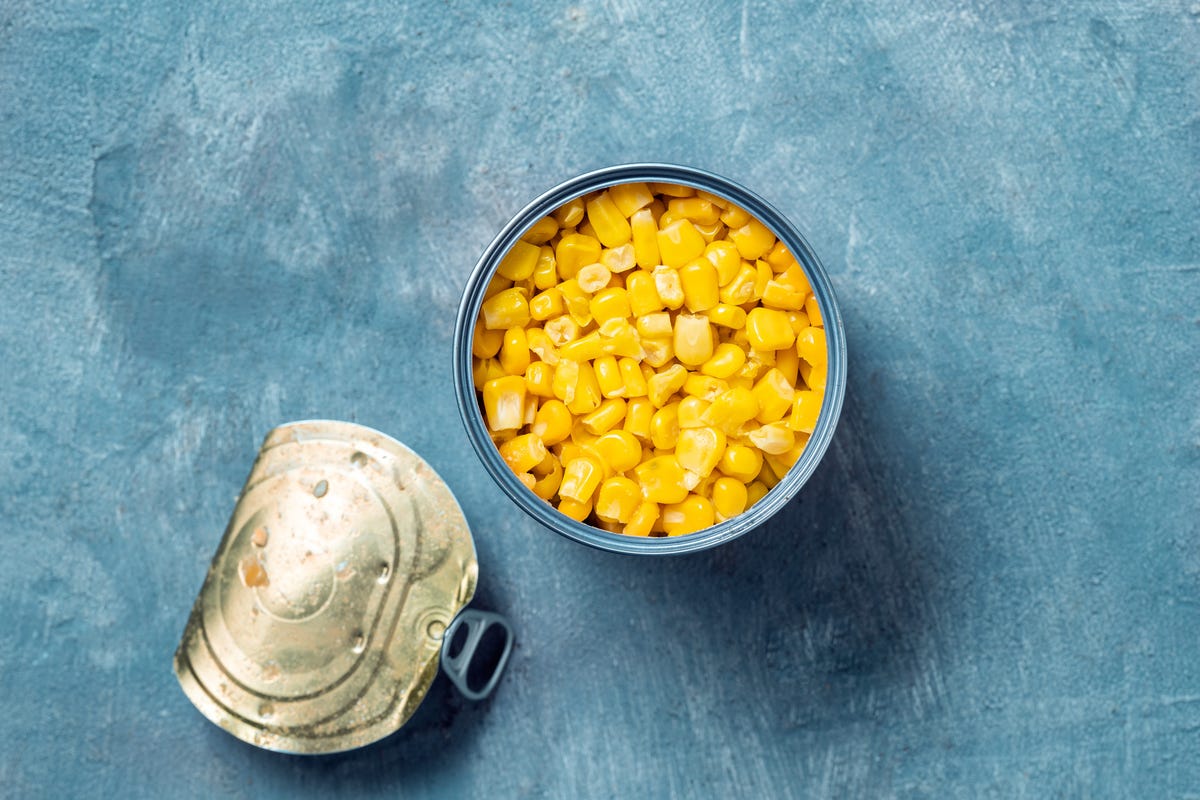
Canned and frozen food items might not be as delicious as the fresh things picked from your area farm, but they are just as nutritious and significantly much less high priced. You will have the similar amount of vitamins and minerals as you would if they had been new, and they final for a longer time in the freezer or can. Try out purchasing frozen or canned peas, corn, carrots, green beans, broccoli, cauliflower, spinach and fruit. Appear for merchandise totally free of extra sugar or salt.

Frozen deliver can usually be applied in the exact recipes as fresh deliver with a little tweaking. Canned generate, on the other hand, is already cooked, so it’s excellent to toss into stews, soups and casseroles.

An open can of corn.

Carlo A/Getty Photographs

Be part of grocery loyalty golf equipment for bargains

Grocery suppliers offer discounts on certain items if you have a membership with them, like Safeway, Kroger and Huge. It is also free of charge to be part of. You may have to offer details like cellphone number and email, but the cost savings are substantial and recognizable in your close full. 

Consider benefit of sales

Along the exact same lines, inventory up on products you know you are going to require when they’re on sale, like seltzer water and proteins. This in particular goes for products with extensive shelf life and freezer-welcoming foods. 

Adhere to the generic shop makes

We all know and adore our title manufacturers, but store-brand name merchandise are noticeably lower in price tag than the identify-brand name solutions such as condiments, bread, yogurt, frozen veggies and far more. For the most aspect, you can barely flavor the big difference and the cost savings can add up. For example, Customer Studies calculated you preserve all-around 62 to 72 p.c for each serving if you buy shop-manufacturer ketchup about Heinz. 

Improve your personal food 

If you have a inexperienced thumb, rising your personal foodstuff in a backyard garden will save you superior income on develop. You also have the benefit of owning your favorite fruits, vegetables and herbs in your have yard. Not to mention the environmental impression, these as lowering fossil gas emissions and plastic waste. 

Easy foods to expand for beginners include onions, peppers, cucumbers and herbs these as basil or parsley. You can even mature food from your kitchen area scraps for free, this kind of as celery, lettuce or scallions.

The information and facts contained in this posting is for instructional and informational needs only and is not supposed as well being or health-related tips. Normally talk to a physician or other experienced well being company relating to any inquiries you could have about a clinical condition or wellness objectives.

WHO’s on first. Biden’s treaty would put Americans’ health care last

NEWYou can now hear to Fox Information articles or blog posts!

President Joe Biden’s diplomats are negotiating a treaty with the Planet Well being Firm to market so-identified as world overall health equity. The premise is that in a pandemic or other all over the world disease emergency, People in america need to not get better or quicker health and fitness treatment than inhabitants of third-earth nations around the world. If Biden rams this by, Americans will experience and die needlessly.

Beneath the draft treaty, introduced in Geneva on Feb. 1, the U.S. will be obligated to hand above a whopping 20{bf0515afdcaddba073662ceb89fbb62b6b1bf123143c0e06b788e1946e8c353f} of its clinical materials, which include diagnostic checks, antiviral prescription drugs and vaccines, to WHO for global distribution. 

Article 10 of the treaty specifies this will be done in “true-time,” not following American requires are fulfilled. The U.S. will no lengthier be equipped to hurry therapies and vaccines to its personal citizens, prioritizing them prior to sending aid to other countries.

WHO’s on first. Biden’s treaty would put Americans’ health care last

The Environment Overall health Group symbol in Geneva, Switzerland, on Feb. 2, 2020. (Reuters/Denis Balibouse)

Grandma will have to wait around extended for her Paxlovid or other treatments for the reason that all those goods, now becoming stockpiled and compensated for by American taxpayers, will be delivered to Nigeria, Uruguay, Afghanistan and other underdeveloped nations. The WHO will get in touch with the pictures on which international locations get what materials.

EAST PALESTINE Inhabitants Suffer FROM BIDEN’S ‘AMERICA LAST’ Insurance policies

Treaty supporters skewer the U.S. for applying up most of the Paxlovid on Americans throughout the current pandemic and monopolizing early entry to vaccines. They assume People in america really should make their very own family’s health secondary to acquiring global fairness. 

Harvard University overall health specialist Jesse Bump states the treaty is built to accurate “the shameful and selfish steps of abundant nations around the world in the COVID pandemic.”

The head of the World Health Organization, Tedros Adhanom Ghebreyesus speaks during a media conference in Brussels on Feb. 18, 2022.

The head of the Environment Wellbeing Organization, Tedros Adhanom Ghebreyesus speaks through a media meeting in Brussels on Feb. 18, 2022. (Johanna Geron/Pool Image by means of AP, File)

Worse, the treaty suspends patent security for new vaccines and therapies any time the WHO declares a pandemic. Drug businesses will place the brakes on investing billions to develop long term antivirals and vaccines less than such a risk.

The treaty deplores “intellectual home” as a barrier to “scientific development for all.” Just the opposite is real. Exactly where would the globe have been in 2021 if Moderna and Pfizer hadn’t rushed to produce vaccines in buy to reap profits?

THIS IS THE Major SCANDAL IN AMERICAN History

Article 19 would involve the U.S. and other wealthy international locations to pay out a set share of GDP yearly into a WHO pandemic preparedness fund.

WHO previously collects sizable sums of income from the U.S. but sadly takes its orders from China. WHO’s subservience to China can make the treaty specially perilous.

Director Basic Tedros Adhanom Ghebreyesus kowtowed to China in January 2020 to deal with up the first coronavirus outbreak. Then, Ghebreyesus bowed to China’s refusal to cooperate with investigations of the pandemic’s supply. He also barred Taiwan from observing COVID meetings on China’s orders. Inspite of this, Anthony Fauci phone calls the professional-China Ghebreyesus his mate. Fauci’s fingerprints are all around this treaty.

A lot more worrisome is Biden’s acquiescence. When Ghebreyesus’ expression as director basic expired, Biden supported his re-election in its place of proposing a prospect who is not in China’s pocket. To hell with American passions.

Click on Below TO GET THE Impression Newsletter

Now, the proposed WHO treaty poses a new danger. It is a poisonous brew of confiscatory calls for for international wellness fairness merged with powering-the-scenes dictates from China. 

The treaty’s defenders assert that absolutely nothing would enable WHO to meddle in how the U.S. responds domestically to a pandemic. But the actual wording of Short article 4 proves otherwise. It states that every region will regulate its possess domestic health insurance policies offered these procedures “do not lead to problems to their peoples and other nations around the world.” You can travel a truck by means of that exception.

The draft treaty claims it will go into effect “provisionally” prior to each country’s legislature considers it. To block that finish-run all over the Structure, 19 Republican U.S. senators introduced a monthly bill Feb. 15 stating the treaty is not binding unless of course the Senate ratifies it.

Simply click Right here TO GET THE FOX News App

Biden, Fauci and other govt significant photographs pushing this treaty never have to stress that their family members members will be denied ventilators and medications when a pandemic strikes. They always go to the entrance of the line. But standard People in america want to discuss up forcefully and reject the idea that they ought to settle for a decreased common of treatment to encourage world wellness fairness.

The usa is a generous nation, but American sources need to be reserved to satisfy America’s needs very first, Biden’s “The usa Last” guidelines be damned.

Simply click Here TO Go through Extra FROM BETSY McCAUGHEY

How has American healthcare gone so wrong?

We all have terrible weeks. Mine recently built me marvel at the astonishing dysfunction of our healthcare program. In calling out the procedure I intend no disrespect to the gifted and heroic overachievers in nursing, pharmacy, medicine and the other providers who combat the procedure every working day on behalf of our people.

Inspite of these types of endeavours, the unhappy but undeniable simple fact is that our health care system — the way the U.S. distributes and pays for health care — makes it the most costly failed business in the historical past of human civilization.

Aspect of what established me off that week was a collection of examples of my patients’ chronic struggles to obtain mental wellness solutions. Just after many years of poor funding and a deluge of demand from customers considering the fact that the pandemic commenced, providers are in shorter offer. Shortage is coupled with boundaries imposed by insurance policy networks. Absent realistic accessibility to companies, major care medical practitioners like me turn out to be the psychiatrists of to start with and final vacation resort, pushing the bounds of our competence. But what else can we do?

A next component of the week’s grind was the most recent obstructions to drug therapy. The expenditures are so superior for so quite a few medicines that even insured people wrestle. Choose Ozempic. There is no generic, and it’s a money extend at nearly $900 a month, but it can help my diabetic clients — until eventually very last 7 days, when they couldn’t discover it. Why? Simply because of its recently recognized use for pounds decline. It’s suddenly so well known that pharmacies run out. How can a process enable wealthy men and women wanting to get rid of a number of lbs to use their income to elbow apart diabetics who really need to have the drug?

A third conspicuous failure of our healthcare system, looming in the track record every single week for medical professionals like me, is hospital funding. Hospitals have survived for a long time by collecting high expenses from industrial insurers to subsidize losses from managing Medicaid and Medicare sufferers. With a rise in the value of treatment, and a change toward patients on federal government strategies and away from non-public coverage, even the most prestigious and well managed hospitals, both equally locally and nationally, face an rising flood of red ink. A lot of are cutting fees sharply to protect solvency. In a rational system, the revenue that supports vital institutions like hospitals would not be issue to perennial fiscal crises.

These are only a several of the approaches that the U.S. healthcare system’s failures now weigh on physicians. Here’s anything else that ought to be haunting every single American: The charges of this failing program challenge comprehension. As a comparison, Planet War II properly established the benchmark for unrestrained general public spending, as the U.S. authorities poured nearly $6 trillion (in current pounds) into the armed service from 1940 to 1945. We now devote more than $4 trillion on health care each individual calendar year. What do we get for that staggering sum? Stats compiled by the Corporation for Financial Cooperation and Development explain to an embarrassing tale. On vital rankings this sort of as lifetime expectancy at delivery and fatalities from avoidable problems the U.S rated around the base.

Why has the U.S., the environment leader in drug and health care technologies, fallen so considerably powering? The reply is that the technique stopped serving the general public extensive back. It serves the needs of those people profiting from health care. Impressive lobbies symbolizing insurance policy companies, drug organizations, medical professional groups and others block meaningful reforms.

The insurance plan field poses the biggest obstacle. Its administrative overhead value is all around 17{bf0515afdcaddba073662ceb89fbb62b6b1bf123143c0e06b788e1946e8c353f} of profits, in comparison with Medicare, which spends only 2{bf0515afdcaddba073662ceb89fbb62b6b1bf123143c0e06b788e1946e8c353f} of functioning expenditures on administration. If a federal solitary-payer process — like “Medicare for all” — saved even 10{bf0515afdcaddba073662ceb89fbb62b6b1bf123143c0e06b788e1946e8c353f} of what insurers are wasting on administration, the further billions could revolutionize treatment. That sum could broaden mental wellbeing care, subsidize drug access and stabilize medical center funding.

As we fork out a lot more and a lot more for substandard care, increased consideration inevitably will be drawn to the system’s conspicuous weaknesses, particularly administrative squander. Conquering the special interests and resolving the problems will establish no tiny job. The inertia of our political procedure required the Depression to enact Social Protection. Increasing insurance access as a result of the Reasonably priced Care Act needed an inflow of legislative reformers impressed by the economical crisis of 2008.

I’m not sure what countrywide calamity will be expected to triumph over the standing quo this time, but American healthcare’s failures absolutely are mounting. When inescapable significant reform eventually occurs, people like me who make our living in healthcare ought to have input. But the patients who pay back the expenditures and live and die in our procedure ought to have modifications that would prioritize compassion about profit.

Daniel J. Stone tactics inner drugs in Beverly Hills.