WV Senate joins GOP effort to limit trans youth health care

CHARLESTON, W.Va. — West Virginia’s Republican supermajority Senate followed a growing national trend of GOP opposition to health care for transgender youth by passing a bill that would ban certain treatments and therapies, while approving a significant change to add exceptions for mental health.

The Senate version of the bill passed by a count of 30-2 on Friday was noteworthy in the addition of allowances for some transgender youth to continue receiving medical interventions, including hormone therapy, when they are considered at risk of self harm or suicide.

The bill faces steep opposition in the state House of Delegates, which will take up the amended Senate version. The GOP-dominated House last month passed a proposal including a ban on puberty-blocking medication and hormone therapy, with no exemptions for mental health.

Republican Gov. Jim Justice has not taken a public stance on the measure.

Lawmakers in West Virginia and other states advancing bans on transgender health care for youth and young adults often characterize gender-affirming treatments as medically unproven, potentially dangerous in the long term and a symptom of “woke” culture.

Every major medical organization, including the American Medical Association, the American Academy of Pediatrics and the American Psychiatric Association, supports gender-affirming care for youths.

The West Virginia Senate bill passed Friday would outlaw those under 18 from being prescribed hormone therapy and fully reversible medication suspending the physical changes of puberty, buying patients and parents time to make future decisions about hormones.

“These kids struggle, they have incredible difficulties,” said Majority Leader Tom Takubo, a pulmonologist, who urged support for mental health protections.

Takubo’s approved change would allow young people to access puberty blockers and hormone therapy if they are experiencing severe gender dysphoria, under certain circumstances.

Gender dysphoria is defined by medical professionals as severe psychological distress experienced by those whose gender identity differs from their sex assigned at birth.

The rate of suicide ideation for transgender youth in Virginia is three times higher than the rate for all youth in the state, according to research and data complied by WVU Medicine physicians using the West Virginia Youth Risk Behavior Survey.

During a speech on the Senate floor, Takubo referenced 17 peer-reviewed studies showing a significant decrease in the rates of suicide ideation and suicide attempts among youth with severe gender dysphoria who have access to medication therapy.

He found a supporter in Senate Health and Human Resources Committee Chair Sen. Mike Maroney, another trained physician, who said lawmakers would set “a dangerous precedent” by disregarding medical research in favor of political gain.

“Who are we, to win an election, to tell people how to practice medicine? To change treatments? It’s unbelievable,” the Republican said, adding that lawmakers wouldn’t apply the same standard for drugs for cancer or mental illness.

The legislation also includes a ban on gender-affirming surgery for minors, something medical professionals emphasize does not happen in West Virginia.

During Friday’s debate, Republican Sen. Eric Tarr repeated those concerns, saying the medical interventions doctors are practicing are too extreme and driven by “woke” culture.

“They’re trying to take pronouns out of our textbooks for kids,” Tarr said.

With Takubo’s change, a person under 18 would have to be diagnosed with severe gender dysphoria by at least two medical or mental health providers to access medication therapy. One would have to be a mental health provider or adolescent medicine specialist.

The dosage must be the lowest possible necessary to “treat the psychiatric condition and not for purposes of gender alteration,” according to the bill.

The providers must be specifically trained to diagnose and treat severe gender dysphoria in adolescents and would have to provide written testimony that medical interventions are necessary to prevent or limit self-harm or the possibility of self-harm.

The minor’s parents and guardians also would be required to give written consent to the treatments.

Hormonal therapy could not be provided to minors before the age of puberty, something West Virginia physicians say doesn’t happen anyway.

The House version of the bill passed last month 84-10, with all ‘no’ votes coming from the body’s shrinking delegation of Democrats. They accused GOP lawmakers of putting children’s lives at risk to score political points with the national conservative movement.

That version provides exceptions for individuals born with a “medically verifiable disorder” including people with “external biological sex characteristics that are irresolvably ambiguous” and for people taking treatments for infection, injury, disease, or disorder that has been “caused by or exacerbated by the performance of gender transition procedures.”

People also can access the treatment if they are in “imminent danger of death, or impairment of a major bodily function unless surgery is performed.”

Speaking against Takubo’s amendment Friday, Republican Sen. Mark Maynard said he didn’t see why any changes were necessary. He worried additions could make the state vulnerable to a lawsuit.

“This amendment would disintegrate the clarity of the bill in its very simple terms,” Maynard said. “These guardrails are already in this bill as it came to us from the House.”

The vote came a day after a crowd of protesters descended on the state Capitol, where cries of “trans kids matter” could be heard from the Senate chamber as lawmakers debated bills.

Democratic Del. Danielle Walker, the only openly LGBTQ member, led chants of the state motto: “Mountaineers are always free.”

“They are trying to come for trans kids in West Virginia, and they’re going to come for every single one of us next,” said Sam Green of Huntington, wearing a transgender pride flag draped around their shoulders while addressing the crowd.

Cecelia Moran, an 18-year-old high school student from Marion County, said she feared banning any kind of medically proven health care could result in more young people leaving West Virginia, one of only three states to lose population in the 2020 U.S. Census.

“I think a lot of young people already struggle to stay here and feel welcome here and are already planning on getting out of the state as soon as possible,” she said.

Her mother, Rebecca Moran, said the bill is “just completely unnecessary” and decisions about healthcare should be made by families and health care providers.

“This is not what’s harming our kids,” said Rebecca Moran, a city councilor in Fairmont. “There’s so many other things: homelessness, poverty.”

Inflation and money woes are forcing Americans to delay medical care : Shots

Inflation and money woes are forcing Americans to delay medical care : Shots

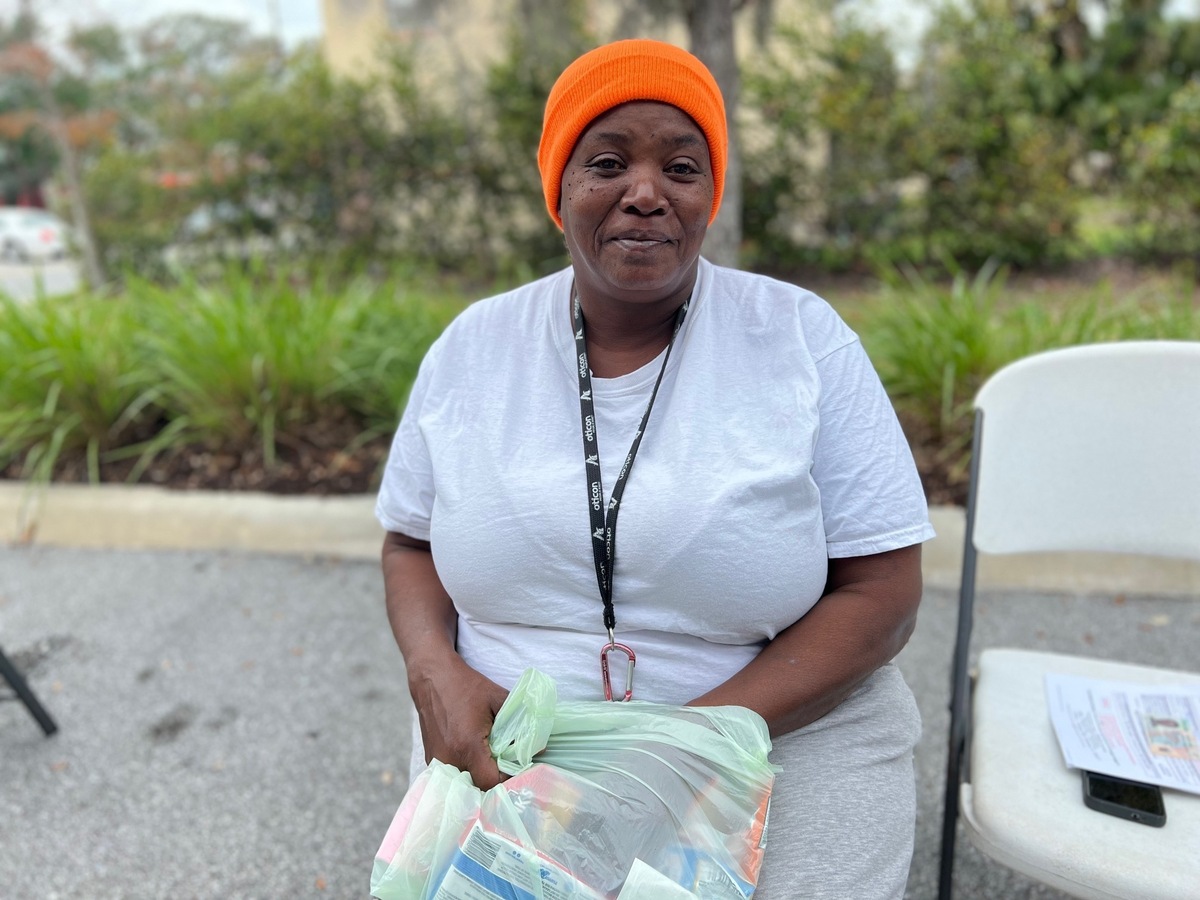
Substitute teacher Crystal Clyburn, 51, doesn’t have health insurance. She got her blood pressure checked at a health fair in Sarasota, Fla.

Stephanie Colombini/WUSF


hide caption

toggle caption

Stephanie Colombini/WUSF


Substitute teacher Crystal Clyburn, 51, doesn’t have health insurance. She got her blood pressure checked at a health fair in Sarasota, Fla.

Stephanie Colombini/WUSF

At a health-screening event in Sarasota, Florida, people milled around a parking lot waiting their turn for blood pressure or diabetes checks. The event was held in Sarasota’s Newtown neighborhood, a historically Black community.

Local resident Tracy Green, 54, joined the line outside a pink and white bus offering free mammograms.

“It’s a blessing, because some people, like me, are not fortunate and so this is what I needed,” she said.

Green said she wanted the exam because cancer runs in her family. And there’s another health concern: her breasts are large and cause her severe back pain. A doctor once recommended she get reduction surgery, she said, but she’s uninsured and can’t afford it.

In a recent Gallup poll, 38{bf0515afdcaddba073662ceb89fbb62b6b1bf123143c0e06b788e1946e8c353f} of Americans surveyed said they had put off medical treatment last year due to cost, up from 26{bf0515afdcaddba073662ceb89fbb62b6b1bf123143c0e06b788e1946e8c353f} in 2021. The new figure is the highest since Gallup started tracking the issue in 2001.

A survey by The Kaiser Family Foundation last summer showed similar results. It found people were most likely to delay dental care, followed by vision services and doctor’s office visits. Many didn’t take medications as prescribed.

The health screening event is part of an ongoing effort provide health services to low-income Floridians who are uninsured. Attendees could have their blood pressure checked or receive screenings for diabetes. A bus also delivered mammogram services.

Stephanie Colombini/WUSF


hide caption

toggle caption

Stephanie Colombini/WUSF


The health screening event is part of an ongoing effort provide health services to low-income Floridians who are uninsured. Attendees could have their blood pressure checked or receive screenings for diabetes. A bus also delivered mammogram services.

Stephanie Colombini/WUSF

The neighborhood screening event in Newtown — organized by the non-profit Multicultural Health Institute in partnership with a local hospital and other health groups — is part of an effort to fill in the coverage gap for low-income people.

Tracy Green explained that her teeth are in bad shape too, but dental care will also have to wait. She doesn’t have health insurance or a stable job. When she can, she finds occasional work as a day laborer through a local temp office.

“I only make like $60 or $70-something a day. You know that ain’t making no money,” said Green. “And some days you go in and they don’t have work.”

If she lived in another state, Green might have been able to enroll in Medicaid. But Florida is one of eleven remaining states that haven’t expanded the program to cover more working-age adults. With rent and other bills to pay, Green says her health is taking a backseat.

“I don’t have money to go to the dentist, nothing, it’s so expensive,” she said. “Now, to get one extraction, one tooth pulled, it’s like $200-300 that you don’t have. So I don’t know what to do. It’s like fighting a losing battle right now.”

Tracy Green, 54, joined the line outside a pink and white bus that offered free mammograms. Green said she wanted the exam because cancer runs in her family.

Stephanie Colombini/WUSF


hide caption

toggle caption

Stephanie Colombini/WUSF


Tracy Green, 54, joined the line outside a pink and white bus that offered free mammograms. Green said she wanted the exam because cancer runs in her family.

Stephanie Colombini/WUSF

In the Kaiser poll, 85 percent of uninsured adults said they found it difficult to pay for health care. Nearly half of insured respondents said they struggled with affordability as well.

The U.S. experienced record high inflation rates last year, and parts of Florida, including the nearby Tampa metro area, often fared even worse.

“We see an increasing desperation,” said Dr. Lisa Merritt, executive director of the Multicultural Health Institute.

The Institute, which helps people access low-cost care, is based in Newtown. The neighborhood, inland from Sarasota’s lavish beach communities, has many residents who live below the poverty line, lack insurance and face other barriers to consistent and affordable care.

“It’s very difficult for people to be concerned about abstract things like getting screenings, getting regular health maintenance, when they’re contending with the challenges of basic survival: food, shelter, transportation often,” Merritt said.

‘Horrible’ housing costs put squeeze on health needs

Merritt and her team of volunteers work to build trust with community residents who may not be aware that support is available. They help people apply for low-cost insurance coverage, free medication programs and other resources that can reduce treatment costs.

Volunteer Bonnie Hardy said the people she serves have many financial worries, but one thing tops the list.

“Right now? A place to stay,” said Hardy. “Housing is horrible.”

High housing costs have started to ease in recent months, but data shows rent in Sarasota has gone up nearly 50 percent since the pandemic began in 2020.

Hardy helps people find housing and connects them with programs that cover costs like utilities and security deposits. The goal is to help people stabilize their day-to-day lives, and that in itself can improve health, she said.

“Because they’re more comfortable now,” she said. “They feel like, hey the rent is paid, I can let my guard down, maybe I can go get the medical attention I need.”

Dr. Lisa Merritt and her team of volunteers work to build trust with community residents who are uninsured but may not be aware that support is available.

Daylina Miller/WUSF


hide caption

toggle caption

Daylina Miller/WUSF


Dr. Lisa Merritt and her team of volunteers work to build trust with community residents who are uninsured but may not be aware that support is available.

Daylina Miller/WUSF

Research shows putting off health care can lead to bigger problems.

The Gallup poll found 27{bf0515afdcaddba073662ceb89fbb62b6b1bf123143c0e06b788e1946e8c353f} of respondents delayed treatment due to costs even for “very or somewhat serious” conditions.

Another reason people may be holding off on treating medical issues is that they already have health care debt. An investigation from NPR and Kaiser Health News found about 100 million people in America had medical debt. About 1 in 8 owe more than $10,000, according to a KFF poll.

Treating cancers or chronic conditions like diabetes early can not only save lives, it can also be less expensive than treating advanced-stage illnesses, according to the Centers for Disease Control and Prevention.

Doctors at the health screening event in Newtown said it’s critical to help residents access preventive care.

At the health fair, substitute teacher Crystal Clyburn, 51, got a mammogram on the pink-and-white mobile bus and had her blood pressure checked. Clyburn doesn’t have health insurance and she relies on events like this to stay on top of her health.

“I just try to take advantage of whatever that’s out there, whatever that’s free,” she said. “You have to take care of yourself because you can look healthy and not even know you’re sick.”

After the cuff came off, a doctor told Clyburn her blood pressure was a little high. But then the doctor kept talking, and she smiled.

Although her pressure was high, it wasn’t high enough that she needed to take medication. She thanked him and left, relieved to know that was one expense she wouldn’t have to worry about. Not yet, anyway.

How major retailers are trying to change how America consumes health care

Illustration of a price tag in the shape of a red cross

Illustration: Sarah Grillo/Axios

Amazon, Walmart, CVS, Dollar General and other big retailers are elbowing their way into health care delivery, pushing a customized consumer experience driven by digital health products.

What’s happening: At its core, these companies are pulling together different tech-enabled services — urgent, primary, home and specialty care, pharmacy, and, in some cases, full integration with an insurer.

  • “Convenience is really front and center to those plays. They are trying to capture the attention of the patient when they already own that consumer,” Caroline Hofmann, head of emerging businesses at virtual specialty care company Thirty Madison.

Why it matters: A more user-friendly portal to the health system could lead to more engaged patients and better access to care in underserved areas. It could even yield a sustainable model for profitably offering better care for less money.

  • But the retailers’ forays are prompting growing anti-trust and privacy concerns, as well as fears of further erosion of the doctor-patient relationship once considered central to coordinated care.

What they are saying: “If you fast forward 10 years from now, people are not going to believe how primary care was administered,” said Amazon CEO Andy Jassy in a recent announcement about the company’s $3.9 billion acquisition of concierge medicine provider One Medical.

  • With that deal, which closed last month, Amazon brought in an on-demand virtual care services platform, more than 125 locations and a piece of the Medicare Advantage business.

Driving the news: Yesterday, Best Buy Health launched a hospital-at-home program with North Carolina-based Atrium Health. The tech retailer bought the remote patient monitoring company Current Health in 2021. Best Buy said it will provide patient education, its at-home care platform and devices, and technical support via specially-trained Geek Squad agents.

  • It came on the heels of Walmart Health announcing last week that it plans to nearly double the footprint of its in-store clinics, which offer primary, behavioral health vision and dental care. In the fall, Walmart also inked a 10-year Medicare Advantage deal with UnitedHealth Group.
  • In January, CVS Health announced a plan to buy Oak Street Health, a primary care group focused on Medicare patients. The pharmacy giant already owns insurer Aetna, pharmacy benefit manager CVS-Caremark, home health company Signify Health and health care service brands MinuteClinic and HealthHUB.
  • Also in January, Walgreens-backed primary care company VillageMD, scooped up more primary, specialty and urgent care investments, augmenting plans to open more than 500 full-service doctors’ offices in Walgreens locations,
  • Other companies like Rite Aid, Albertson’s, and Dollar General have launched programs in health care delivery.

Between the lines: Amazon, CVS and Walmart have made some of the most consequential moves by combining their massive retail footprints with assets like primary or urgent care sites, pharmacies and some sort of relationship with insurers, experts say.

  • “They’re all acquiring every piece of medicine,” Robert Pearl, a Stanford University professor and former CEO of The Permanente Medical Group, told Axios.
  • “Medicine as we know it will be very very different assuming they’re successful. They’re big companies, they’re smart companies.”

Be smart: Depending on the retailer, patients might have access to virtual care services, book appointments and fill prescriptions via an app.

  • They could get same-day care, get preventative services like vaccines and pick up their drugs in-store. A health worker might walk them down store aisles and guide them to healthy food purchases and wellness products.

In the first wave of this trend, retailers were more focused on urgent care or one-off visits for vaccines, said Jacob Effron, a principal at Redpoint Ventures.

  • “The criticism that could’ve been levied at that is that patients could just go for that ad hoc care and not have an ongoing relationship with a primary care doctor,” he said.
  • In recent months, retailers are investing in end-to-end primary care. “That’s what gets me increasingly excited about their role because there’s only so much you can do as the urgent care provider and much much more you can do when you have that longitudinal relationship between the doctor and a patient over time,” Effron said.

Between the lines: Each of these businesses also are clearly eyeing a very lucrative segment of health care: Medicare Advantage. More than half of eligible seniors are now covered by privately-run Medicare.

  • Medicare Advantage is attractive because its payment models are geared toward rewarding providers for wellness and prevention care. Payments are capped so there’s an incentive to use integrated care to keep people healthy rather than providing services when they are sick.
  • For some retailers, it’s similar to the Kaiser Permanente model, where the payer and provider are completely aligned, Pearl said. But the retailers could create an HMO on steroids.
  • “Why has Kaiser Permanente never really expanded nationally? It’s very hard to get enough of a population in a local area to provide it. You can’t hire enough specialists, enough doctors,” he said. “The beauty of the retail giants is how big they are. If you get every Amazon Prime member to join, they immediately have enough volume they need to put in place a high-functioning system.”

What to watch: How these businesses evolve.

  • Amazon until now has been mostly virtual in its offerings, Effron said. “It begs the question, will they do a similar model to what some of these others have done and put clinics in Whole Foods?”

The bottom line: This still makes up a very small segment of health care delivery — and may not solve the medical system’s biggest problems.

  • “These players ultimately have to deliver the same or better outcomes at a lower cost in order to be in-network and get recommended by payers as well as picked by the employers,” Hofmann said.
  • And, she said, they can certainly increase access. “It remains to be seen if they can really bend the cost curve,” she said.

Editor’s note: This story has been updated to correct the spelling of Caroline Hofmann’s name.

How health disparities map out across America

Targeting solutions

Healthcare organizations have leaned on several strategies to address access gaps.

Tools meant to connect to patients virtually, like telehealth, took off as the government relaxed regulations in response to the COVID-19 pandemic, and are now commonplace. Yet many in rural and low-income communities lack broadband internet service.

Major healthcare providers and other companies have expanded into alternative care sites such as retail stores and mobile clinics. Dollar General and CVS Health, for example, have the reach to thrive in underserved markets. However, only 10{bf0515afdcaddba073662ceb89fbb62b6b1bf123143c0e06b788e1946e8c353f} of patients used retail clinics last year, according to a Deloitte survey. And some consumers have trouble navigating the healthcare system without guidance.

In Mamou, Louisiana, a town of approximately 3,000 people in Evangeline Parish, an independent drugstore open since 1975 is struggling to provide for its longtime customers. In the past year, Reed’s Pharmacy has terminated long-standing contracts with insurers and pharmacy benefit managers and has transferred patients’ prescriptions to a Walmart in the next parish.

The drugstore couldn’t get by on what pharmacy benefit managers—often part of the same corporate families as insurers and chain drugstores—charge for the medications and pay for dispensing them, said Rebecca Cormier, pharmacist and co-owner.

“Grocery stores aren’t expected to buy bread for $1 and sell it for 50 cents, but that’s what they’re expecting us to do,” Cormier said.

Reed’s is one of two drugstores in Mamou. The other is on the campus of the 60-bed Savoy Medical Center on the edge of town.

Many of Reed’s customers have patronized the store their entire lives and lack the health literacy to navigate the healthcare system without help, Cormier said. Only 12{bf0515afdcaddba073662ceb89fbb62b6b1bf123143c0e06b788e1946e8c353f} of the town’s population has a college degree and one-quarter has disabilities, according to census data.

“Some of these people can’t maneuver a phone tree,” which are used by large companies, including chain drugstores, Cormier said. “We’ve been serving third and fourth generations of families over here. If you pick up the phone, you’re talking to a pharmacist and a person—you’re not pressing ‘one’ to talk to so-and-so.”

For some drugs, Reed’s managed to keep the cash price within $20 of what patients were paying with insurance, Cormier said. But for other medicines, including those treating the many locals with asthma and diabetes, the drugstore couldn’t solve the affordability problem.

The recent contract disputes leave those customers with fewer options, especially those without access to transportation, Cormier said.

“They don’t have a way to get out of town to get their medicine,” she said. “They’re going without their medicine because we can’t fill it. No one else in town is going to do it at a loss either, so they will just go without.”

Incentivizing transformation

Emerging market forces are shaping a framework of accountability and financial incentives that aim to close gaps in care. Government agencies and third-party accreditors are imposing standards for data collection, governance and quality research.

The Centers for Medicare and Medicaid Services now evaluates how providers incorporate health equity into strategic plans, data collection and analysis, and leadership. The agency also created a “birthing-friendly” designation to encourage hospitals to close maternal morbidity gaps. The Joint Commission, which accredits about 3,800 hospitals, has devised guidelines that include designating officers to lead efforts focused on eliminating disparities and screening patients for social determinants of health.

Health equity advocates also see promise in value-based payment models, but the transition has been slow and the arrangements are not deployed in the locations where they could make the greatest difference. The Medical Group Management Association reports that value-based care accounts for just 5.5{bf0515afdcaddba073662ceb89fbb62b6b1bf123143c0e06b788e1946e8c353f} to 14.74{bf0515afdcaddba073662ceb89fbb62b6b1bf123143c0e06b788e1946e8c353f} of physician office revenue. CMS is pushing to increase participation, especially for Medicare Advantage members.

Value-based arrangements pay providers a fixed amount of money per person, per month, and allow them to decide how to spend the money. The upfront investment enables providers to build teams based on patient needs and fund community health programs. That includes hiring community health workers, dietitians and social workers or offering screenings and mobile vaccination clinics.

To make it work, providers and payers have to coordinate data and care plans, negotiate risk levels and overhaul revenue models. This would mark a major shift from the fee-for-service model, and it presents significant financial and logistical challenges to providers that benefit from the status quo. Healthcare organizations also have to reach beyond medical care and invest in other interventions to be successful.

“Old habits die hard,” said Dr. Chris Dodd, chief medical officer at Franklin, Tennessee-based home health provider Emcara Health. “Health systems have been traditionally focused on building more hospitals and hiring more specialists and using [primary care providers] to just funnel patients to higher-cost services.”

CMS’ Center for Medicare and Medicaid Innovation reported in 2021 that pilot programs testing new payment models aren’t being implemented in low-income areas. The agency is working to mitigate this by experimenting with novel payment arrangements under Medicaid and prioritizing interventions in locales identified as underserved by the Center for Health Disparities Research at the University of Wisconsin-Madison.

More flexibility for spending money on social interventions is needed and the federal government should be specific about what kinds of risk-sharing arrangements are proper and what populations should be targeted, said Hugh Lytle, founder and CEO of Equality Health, a population risk management company that enables value-based care arrangements among Medicaid and Medicare beneficiaries.

“There’s more than enough money in the system to get better results, but the incentives, even under the current value-based care systems, really encourage cherry-picking of the healthy patients and dumping of the less healthy patients,” said Dr. David Ansell, senior vice president for community health equity at Rush University Medical Center in Chicago and co-founder of the Healthcare Anchor Network.

How has American healthcare gone so wrong?

We all have terrible weeks. Mine recently built me marvel at the astonishing dysfunction of our healthcare program. In calling out the procedure I intend no disrespect to the gifted and heroic overachievers in nursing, pharmacy, medicine and the other providers who combat the procedure every working day on behalf of our people.

Inspite of these types of endeavours, the unhappy but undeniable simple fact is that our health care system — the way the U.S. distributes and pays for health care — makes it the most costly failed business in the historical past of human civilization.

Aspect of what established me off that week was a collection of examples of my patients’ chronic struggles to obtain mental wellness solutions. Just after many years of poor funding and a deluge of demand from customers considering the fact that the pandemic commenced, providers are in shorter offer. Shortage is coupled with boundaries imposed by insurance policy networks. Absent realistic accessibility to companies, major care medical practitioners like me turn out to be the psychiatrists of to start with and final vacation resort, pushing the bounds of our competence. But what else can we do?

A next component of the week’s grind was the most recent obstructions to drug therapy. The expenditures are so superior for so quite a few medicines that even insured people wrestle. Choose Ozempic. There is no generic, and it’s a money extend at nearly $900 a month, but it can help my diabetic clients — until eventually very last 7 days, when they couldn’t discover it. Why? Simply because of its recently recognized use for pounds decline. It’s suddenly so well known that pharmacies run out. How can a process enable wealthy men and women wanting to get rid of a number of lbs to use their income to elbow apart diabetics who really need to have the drug?

A third conspicuous failure of our healthcare system, looming in the track record every single week for medical professionals like me, is hospital funding. Hospitals have survived for a long time by collecting high expenses from industrial insurers to subsidize losses from managing Medicaid and Medicare sufferers. With a rise in the value of treatment, and a change toward patients on federal government strategies and away from non-public coverage, even the most prestigious and well managed hospitals, both equally locally and nationally, face an rising flood of red ink. A lot of are cutting fees sharply to protect solvency. In a rational system, the revenue that supports vital institutions like hospitals would not be issue to perennial fiscal crises.

These are only a several of the approaches that the U.S. healthcare system’s failures now weigh on physicians. Here’s anything else that ought to be haunting every single American: The charges of this failing program challenge comprehension. As a comparison, Planet War II properly established the benchmark for unrestrained general public spending, as the U.S. authorities poured nearly $6 trillion (in current pounds) into the armed service from 1940 to 1945. We now devote more than $4 trillion on health care each individual calendar year. What do we get for that staggering sum? Stats compiled by the Corporation for Financial Cooperation and Development explain to an embarrassing tale. On vital rankings this sort of as lifetime expectancy at delivery and fatalities from avoidable problems the U.S rated around the base.

Why has the U.S., the environment leader in drug and health care technologies, fallen so considerably powering? The reply is that the technique stopped serving the general public extensive back. It serves the needs of those people profiting from health care. Impressive lobbies symbolizing insurance policy companies, drug organizations, medical professional groups and others block meaningful reforms.

The insurance plan field poses the biggest obstacle. Its administrative overhead value is all around 17{bf0515afdcaddba073662ceb89fbb62b6b1bf123143c0e06b788e1946e8c353f} of profits, in comparison with Medicare, which spends only 2{bf0515afdcaddba073662ceb89fbb62b6b1bf123143c0e06b788e1946e8c353f} of functioning expenditures on administration. If a federal solitary-payer process — like “Medicare for all” — saved even 10{bf0515afdcaddba073662ceb89fbb62b6b1bf123143c0e06b788e1946e8c353f} of what insurers are wasting on administration, the further billions could revolutionize treatment. That sum could broaden mental wellbeing care, subsidize drug access and stabilize medical center funding.

As we fork out a lot more and a lot more for substandard care, increased consideration inevitably will be drawn to the system’s conspicuous weaknesses, particularly administrative squander. Conquering the special interests and resolving the problems will establish no tiny job. The inertia of our political procedure required the Depression to enact Social Protection. Increasing insurance access as a result of the Reasonably priced Care Act needed an inflow of legislative reformers impressed by the economical crisis of 2008.

I’m not sure what countrywide calamity will be expected to triumph over the standing quo this time, but American healthcare’s failures absolutely are mounting. When inescapable significant reform eventually occurs, people like me who make our living in healthcare ought to have input. But the patients who pay back the expenditures and live and die in our procedure ought to have modifications that would prioritize compassion about profit.

Daniel J. Stone tactics inner drugs in Beverly Hills.

What Makes Health Care Workers Stay in Their Jobs?

Ask leaders of health care organizations about their top three challenges for the year ahead, and many answer, “Workforce, workforce, and workforce.” These leaders go on to say that they are struggling to recruit and retain caregivers of all types, that the costs are breaking their budgets, and that morale is at historic lows. As a direct result, every type of performance is suffering: financial, safety, and overall quality, including the patient experience.

With an air of desperation, organizations are trying many tactics, including awarding bonuses for signing, staying, and referring new recruits. They are implementing programs to reduce burnout like mindfulness training and investing in AI and other technologies that reduce administrative burden. All of these tactics to improve compensation and mitigate the deadening aspects of work have merit, but organizations should not rely upon them to create the loyalty and resilience needed for excellence in health care.

Our data on hundreds of thousands of physicians, nurses, and other caregivers in the United States shows that pride in their work and loyalty to their colleagues are the strongest correlates of their readiness to stay with their organization and continue showing up for work. Competitive pay and other support options are essential to recruiting caregivers, of course, but organizational culture, including a commitment to excellence, is what makes them stay.

Improving organizational culture is a leadership challenge that is more complex than finding the money to increase compensation or correcting the problems that cause unhappiness. After all, in life in general, happiness is something beyond the absence of unhappiness. The same is true in health care. For example, “service recovery” programs that quickly address patients’ complaints can mitigate their ire, but lack of ire does not equate to loyalty. Similarly, organizational responses to caregivers’ pain may prove that the leaders care, but it doesn’t mean that the caregivers will keep showing up and doing whatever it takes to meet their patients’ needs.

What does drive loyalty and resilience among caregivers? As is true in other industries during these difficult times, getting back to basics is crucial — and in health care that means focusing organizational culture on the noble cause of reducing patients’ suffering and then supporting caregivers in that work. Our data demonstrates that this is not wishful thinking; it is an operational imperative.

For example, we have analyzed the drivers of loyalty for 410,000 health care employees during the pandemic. In these analyses, we examine factors that correlate with employees’ expressing strong agreement with these two statements: “I would stay with this organization if offered a similar position elsewhere” and “I would like to be working at this organization three years from now.” For both metrics, there has been a marked decline across the country from 2020 to 2022 (on a 1-5 scale, from 4.15 to 4.00 for the first statement and from 3.93 to 3.78 for the latter).

But the patterns of change have not been the same in every organization and for every job type. There has been a “spreading of the pack,” with greater variation than in the past in measures of workforce engagement between organizations doing well and those doing poorly. The data suggests that leadership matters as never before — not just at the C-suite level but also at the front lines where managers really determine how organizational culture feels for employees. For example, there can be vast differences in how caregiver morale in two patient care units that are physically adjacent to each other but have different nurse managers.

Whatever variation exists among managers, there seems to be remarkable consistency in what matters to the people working for them. In our analyses, for all types of health care personnel, their organizations’ commitment to quality and patient-centered care was among the top drivers of their likelihood to stay. When employees gave their organization low ratings on these issues, they were more than six times as likely to say they were preparing to leave. These issues were important to security guards, maintenance, and clerical personnel as well as clinicians.

That finding may seem surprising at first glance, but as one hospital executive said to us, “It makes perfect sense. When patients feel mistreated, they don’t yell at the doctor very often; they take it out on the clerks and security guards. But when patients have a great experience, the clerks and security guards get to bask in the glow – and that makes them want to stay.”

For physicians, the top factors that correlated with their expressed likelihood of staying were whether they like their work, feel the organization is making good use of their skills, and the organizational culture. For example, if physicians felt that the organization did not have an inclusive culture, that increased their risk for considering leaving 5.5-fold. Competitive compensation packages are presumably critical to recruiting physicians, but culture is essential to retaining them.

Press Ganey’s data is completely consistent with the findings of a study of 20,627 physicians and advanced practice clinicians in 120 large U.S. health care organizations by Mark Linzer and his colleagues that was published last November in the JAMA Health Forum. It found that intent to leave had increased from 24{bf0515afdcaddba073662ceb89fbb62b6b1bf123143c0e06b788e1946e8c353f} in 2019 to more than 40{bf0515afdcaddba073662ceb89fbb62b6b1bf123143c0e06b788e1946e8c353f} in 2021 but identified several factors that mitigated the risk of burnout. In multivariate regression analyses, positive factors included feeling valued, good teamwork, and having values that are aligned with those of leaders.

Our data for physicians, nurses, and all types of personnel demonstrate a halo of positive effects that accompany these sources of caregiver pride. For example, these measures of overall “engagement” with the organization also correlate strongly with measures of safety culture, such as their confidence in the organization’s commitment to preventing and reporting adverse events — and those safety culture measures are associated with lower rates of safety events. In short, data confirms that excellence in all performance areas that drive business success are intertwined: patient experience, quality and safety, and the engagement of the workforce.

The implications of these findings for health care leaders are that they, of course, must listen carefully to grasp what issues are causing employees’ pain and fear and try to address them. But leaders must also listen to understand their employees’ hopes for what their work means to them and reinforce the aspirations that brought their employees to health care to begin with.

To do that, leaders must be clear about their values, their commitment to safety, the reduction of suffering, and a culture of respect and inclusion. They must prove their authenticity by committing to measuring how things are going on these issues, being transparent with the findings, and using them to improve. The result will be greater workforce loyalty and resilience, which will translate to better performance of all types.