WV Senate joins GOP effort to limit trans youth health care

CHARLESTON, W.Va. — West Virginia’s Republican supermajority Senate followed a growing national trend of GOP opposition to health care for transgender youth by passing a bill that would ban certain treatments and therapies, while approving a significant change to add exceptions for mental health.

The Senate version of the bill passed by a count of 30-2 on Friday was noteworthy in the addition of allowances for some transgender youth to continue receiving medical interventions, including hormone therapy, when they are considered at risk of self harm or suicide.

The bill faces steep opposition in the state House of Delegates, which will take up the amended Senate version. The GOP-dominated House last month passed a proposal including a ban on puberty-blocking medication and hormone therapy, with no exemptions for mental health.

Republican Gov. Jim Justice has not taken a public stance on the measure.

Lawmakers in West Virginia and other states advancing bans on transgender health care for youth and young adults often characterize gender-affirming treatments as medically unproven, potentially dangerous in the long term and a symptom of “woke” culture.

Every major medical organization, including the American Medical Association, the American Academy of Pediatrics and the American Psychiatric Association, supports gender-affirming care for youths.

The West Virginia Senate bill passed Friday would outlaw those under 18 from being prescribed hormone therapy and fully reversible medication suspending the physical changes of puberty, buying patients and parents time to make future decisions about hormones.

“These kids struggle, they have incredible difficulties,” said Majority Leader Tom Takubo, a pulmonologist, who urged support for mental health protections.

Takubo’s approved change would allow young people to access puberty blockers and hormone therapy if they are experiencing severe gender dysphoria, under certain circumstances.

Gender dysphoria is defined by medical professionals as severe psychological distress experienced by those whose gender identity differs from their sex assigned at birth.

The rate of suicide ideation for transgender youth in Virginia is three times higher than the rate for all youth in the state, according to research and data complied by WVU Medicine physicians using the West Virginia Youth Risk Behavior Survey.

During a speech on the Senate floor, Takubo referenced 17 peer-reviewed studies showing a significant decrease in the rates of suicide ideation and suicide attempts among youth with severe gender dysphoria who have access to medication therapy.

He found a supporter in Senate Health and Human Resources Committee Chair Sen. Mike Maroney, another trained physician, who said lawmakers would set “a dangerous precedent” by disregarding medical research in favor of political gain.

“Who are we, to win an election, to tell people how to practice medicine? To change treatments? It’s unbelievable,” the Republican said, adding that lawmakers wouldn’t apply the same standard for drugs for cancer or mental illness.

The legislation also includes a ban on gender-affirming surgery for minors, something medical professionals emphasize does not happen in West Virginia.

During Friday’s debate, Republican Sen. Eric Tarr repeated those concerns, saying the medical interventions doctors are practicing are too extreme and driven by “woke” culture.

“They’re trying to take pronouns out of our textbooks for kids,” Tarr said.

With Takubo’s change, a person under 18 would have to be diagnosed with severe gender dysphoria by at least two medical or mental health providers to access medication therapy. One would have to be a mental health provider or adolescent medicine specialist.

The dosage must be the lowest possible necessary to “treat the psychiatric condition and not for purposes of gender alteration,” according to the bill.

The providers must be specifically trained to diagnose and treat severe gender dysphoria in adolescents and would have to provide written testimony that medical interventions are necessary to prevent or limit self-harm or the possibility of self-harm.

The minor’s parents and guardians also would be required to give written consent to the treatments.

Hormonal therapy could not be provided to minors before the age of puberty, something West Virginia physicians say doesn’t happen anyway.

The House version of the bill passed last month 84-10, with all ‘no’ votes coming from the body’s shrinking delegation of Democrats. They accused GOP lawmakers of putting children’s lives at risk to score political points with the national conservative movement.

That version provides exceptions for individuals born with a “medically verifiable disorder” including people with “external biological sex characteristics that are irresolvably ambiguous” and for people taking treatments for infection, injury, disease, or disorder that has been “caused by or exacerbated by the performance of gender transition procedures.”

People also can access the treatment if they are in “imminent danger of death, or impairment of a major bodily function unless surgery is performed.”

Speaking against Takubo’s amendment Friday, Republican Sen. Mark Maynard said he didn’t see why any changes were necessary. He worried additions could make the state vulnerable to a lawsuit.

“This amendment would disintegrate the clarity of the bill in its very simple terms,” Maynard said. “These guardrails are already in this bill as it came to us from the House.”

The vote came a day after a crowd of protesters descended on the state Capitol, where cries of “trans kids matter” could be heard from the Senate chamber as lawmakers debated bills.

Democratic Del. Danielle Walker, the only openly LGBTQ member, led chants of the state motto: “Mountaineers are always free.”

“They are trying to come for trans kids in West Virginia, and they’re going to come for every single one of us next,” said Sam Green of Huntington, wearing a transgender pride flag draped around their shoulders while addressing the crowd.

Cecelia Moran, an 18-year-old high school student from Marion County, said she feared banning any kind of medically proven health care could result in more young people leaving West Virginia, one of only three states to lose population in the 2020 U.S. Census.

“I think a lot of young people already struggle to stay here and feel welcome here and are already planning on getting out of the state as soon as possible,” she said.

Her mother, Rebecca Moran, said the bill is “just completely unnecessary” and decisions about healthcare should be made by families and health care providers.

“This is not what’s harming our kids,” said Rebecca Moran, a city councilor in Fairmont. “There’s so many other things: homelessness, poverty.”

Inside America’s youth mental health crisis

Kids in the U.S. and around the world are in crisis. 

More than 60{bf0515afdcaddba073662ceb89fbb62b6b1bf123143c0e06b788e1946e8c353f} of children with depression don’t get any mental health treatment, according to Mental Health America. Pair that statistic with the fact that about 80{bf0515afdcaddba073662ceb89fbb62b6b1bf123143c0e06b788e1946e8c353f} of the United States has a severe shortage of child psychiatrists, and the picture becomes clear: there is a growing mental health crisis in the United States and beyond. 

thumbnail-kid-in-crisis-full-screen-website.png

That’s why CBS News and local CBS-owned television stations spent more than six months exploring the sources of the problem, as well as solutions across the country that could address it. This is a collection of the reporting by CBS journalists, committed to the well-being of our kids.  

Documenting kids’ personal struggles

“Bring darkness into the light,” said filmmaker Noemi Weis. 

That’s the goal of her documentary, “Connecting the Dots,” which features young people from around the world candidly talking about their struggles with mental health and the need to be supported. 

“We need to listen in a way that is with open eyes and with providing a safe space, providing no judgment,” Weis told CBS News.  “As much as we believe that we are in a world where we are all connected, the disconnect is huge. The isolation, the loneliness needed to be addressed.” 

CBS News licensed the documentary for an exclusive release nationwide on its streaming platforms Wednesday night. The film will be available to view on demand following the streaming event.

The filmmaker created facilitator guides, in partnership with UNICEF, for youth, parents, educators, mental health professionals, and others to watch the documentary and discuss it.

Seeking mental health help 

If you or someone you know is in crisis, get help from the Suicide and Crisis Lifeline by calling or texting 988. 

In addition, help is available from the National Alliance on Mental Illness, or NAMI. Call the NAMI Helpline at 800-950-6264 or text “HelpLine” to 62640. There are more than 600 local NAMI organizations and affiliates across the country, many of which offer free support and education programs. 

Read more from CBS News and local stations

CBS News will continue to update this page as we publish more stories about youth mental health in the coming days.

Fearing Daniel might harm himself, his parents took him to the only place they could: the emergency room. After seven days in the ER, Daniel was discharged; hospital staff felt he was no longer in danger. His parents disagreed. Read more

Young people are increasingly turning to social media platforms like TikTok to diagnose their mental health struggles and often getting misinformation. A California psychology professor has gained a million followers on TikTok by debunking wellness advice that could do more harm than good. Read more

Jamie Howard, senior clinical psychologist at the Child Mind Institute, joins “CBS Mornings” to discuss the youth mental health crisis and shares tips on how parents can have an open conversation with their teens about mental health and social media. Read more  

In a city with near daily gun violence, the sound of police sirens and the roar of emergency vehicles often become a part of life in some high-crime areas, leaving the ear-piercing noise nearly ignored. For those young people who are becoming more of the victims of gun violence, their trauma seeps through and is ever-present. Read more

A tragedy in the San Francisco Bay Area was the spark a group of California teens needed to do something about breaking the stigma associated with youth mental illness and how to react in an emotional crisis. Read more

Taking a break from social media – even a short one – can have a powerful impact on the self-esteem of young women. Researchers at Colorado College conducted a study with teenage girls, and found that just three days off social media led to significant improvements in body image. Read more

On a piece of land on Chicago’s West Side, the community group BUILD Inc. has done just that. “We’ve got a whole new building,” said David Rodriguez, a BUILD member. “We’ve got a second floor finally.” Read more

Behind the hustle and bustle of Manhattan, and tucked away beneath another busy school day, there’s a break — 45 tranquil minutes in the basement of New Design High School on the Lower East Side.

It’s where kids forget about calculus and chemistry and clear their minds through yoga. Read more

Transgender youth health care bans have a new target: adults

Lawmakers in at minimum 3 states this 12 months have submitted legislation meant to restrict accessibility to gender-affirming wellness treatment for men and women as outdated as 26, an escalation of a struggle waged nationwide final calendar year more than regardless of whether minors ought to be equipped to entry particular prescription remedies and techniques.

Expenses filed this year in Oklahoma, South Carolina and Virginia aim to bar state well being care companies from recommending or administering solutions like puberty blockers, hormones and gender-affirming surgeries to clients youthful than 21, signaling an aggravation in the fight about transgender overall health treatment.

Another Oklahoma bill filed this thirty day period would prohibit older people up to 25 from acquiring gender-affirming care in one of the most serious and restrictive bans launched to date. The state’s proposed “Millstone Act,” which gets its name from a Bible verse about punishing grownups who damage youngsters, would also block Oklahoma’s Medicaid program from giving coverage for “gender transition procedures” to folks youthful than 26.

“I don’t think it was at any time about youngsters,” Erin Reed, an unbiased legislative researcher, advised The Hill this week, referring to point out and federal attempts to ban gender-affirming treatment more than the previous two decades.

GOP legislators’ arguments against transgender well being treatment have in the earlier centered all-around a have to have to defend young children from alleged predatory health professionals and “woke” gender ideology. Charges filed across the place final yr utilized inflammatory and deceptive rhetoric to disparage gender-affirming treatment for youth with titles like the “Save Adolescents from Experimentation Act” and the “Protect Children’s Innocence Act.”

“These adult bans display that which is not what it was about,” Reed mentioned. “It’s about banning treatment totally. It’s about forcing transgender persons back in the closet.”

Point out legislators have not moved absent from youth overall health treatment bans fully, and dozens of costs searching for to ban gender-affirming treatment completely for minors have by now been introduced in much more than 10 states this calendar year.

Reed extra that she’s skeptical whether or not legislators sponsoring adult well being care bans this year hope these steps to move as penned. It is possible, she stated, that lawmakers are concentrating on older folks to make youth health and fitness care bans show up less serious and additional palatable.

“This is, in component, a way that they are trying to make it less difficult to move gender-affirming care bans for smaller teams in the inhabitants,” she mentioned.

Efforts to prohibit transgender adults’ accessibility to wellbeing care lean intensely on claims from so-named “gender-critical” organizations that youthful individuals ought to not be recognized as grownups right before they transform 25, when the human mind is thought to reach entire maturity.

Point out GOP lawmakers in Missouri final year weighed extending a proposed youth health and fitness care ban to grownups below 25, arguing that men and women even into their early 20s are not able to absolutely consent to gender-affirming interventions.

That and similar claims have been disputed by professional medical professionals and doctors with knowledge treating transgender youth, and a number of inquiries have observed that affirming a boy or girl or adolescent’s gender id can boost their mental wellness results into adulthood.

Passing regulations to hold off well being care considered medically essential by most main health-related associations is also dangerous, in accordance to Dr. Meredithe McNamara, an assistant professor of pediatrics at Yale College, and runs the danger of worsening costs of panic, despair and suicidality between transgender youth and youthful grown ups having difficulties with gender dysphoria.

Just about 20 {bf0515afdcaddba073662ceb89fbb62b6b1bf123143c0e06b788e1946e8c353f} of transgender and nonbinary 13- to 24-year-olds surveyed very last 12 months by The Trevor Project, a main LGBTQ youth suicide avoidance business, reported they had tried suicide in the previous yr. Much less than a 3rd said their gender identity was affirmed at home.

For McNamara, who treats transgender youth aged 11-25, the principal problem with grownup well being care bans lies with folks below 21 — or 26, in Oklahoma’s scenario — who are currently getting gender-affirming health-related treatment.

“There are folks now on therapy, dwelling as their reliable selves and suffering from aid from gender dysphoria who facial area forcible detransition,” she stated.

None of the proposed measures include things like language or provisions that explicitly tackle transgender youth and youthful older people by now obtaining medicines like hormones or puberty blockers.

Attempts to restrict gender-affirming health treatment for grownups also possibility backfiring by restricting the freedoms of people today who can lawfully vote, drink a beer and go to war. They also discriminate centered on sexual intercourse and transgender status, according to Chase Strangio, deputy director for transgender justice at the American Civil Liberties Union LGBTQ & HIV Venture, generating them unconstitutional.

“It’s not about defending any person,” Strangio claimed of recent legislative attempts to limit gender-affirming care. “It’s about an opposition to trans identification.”

Youth ambassadors train for a future in public health : Shots

Youth ambassadors train for a future in public health : Shots

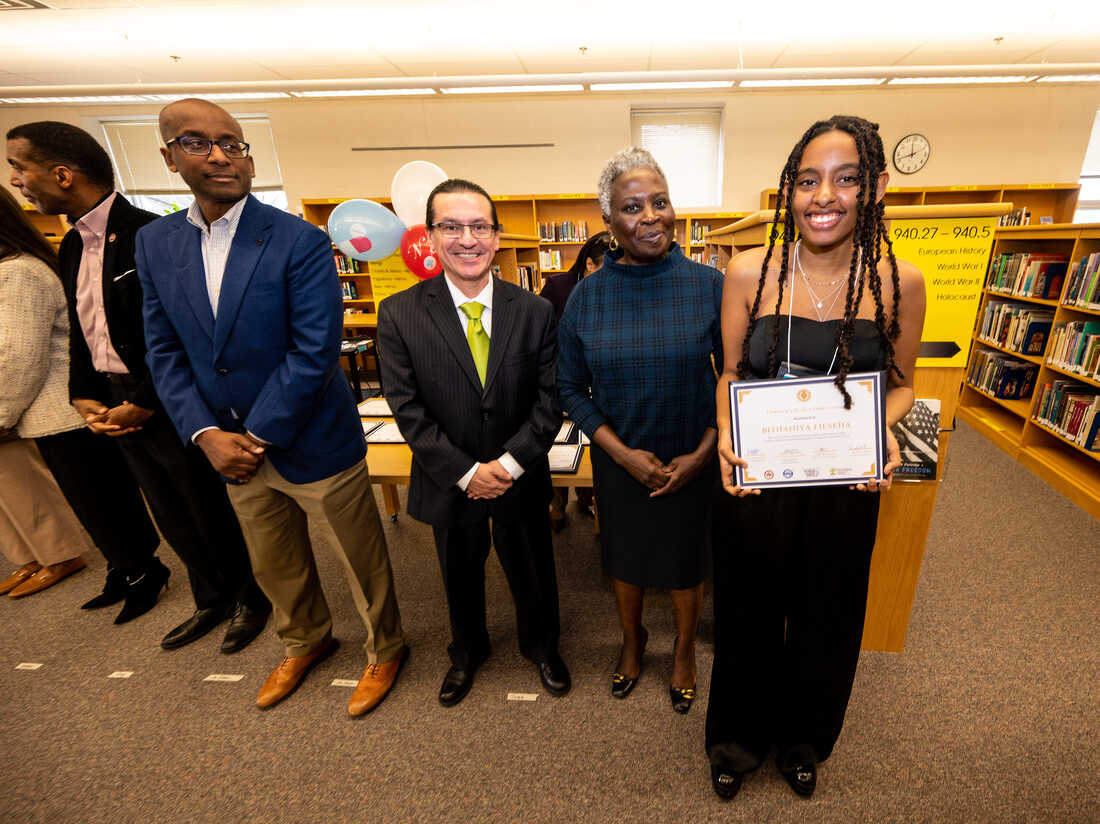
Bithaniya Fieseha, a high school senior, graduates from the Youth Public Health Ambassador program run by the Fairfax County Health Department at West Springfield High School in Fairfax County, Va.

Will Schermerhorn/Fairfax County Health Department


hide caption

toggle caption

Will Schermerhorn/Fairfax County Health Department


Bithaniya Fieseha, a high school senior, graduates from the Youth Public Health Ambassador program run by the Fairfax County Health Department at West Springfield High School in Fairfax County, Va.

Will Schermerhorn/Fairfax County Health Department

Of all the things she could have done on her summer vacation, Bithaniya Fieseha, a senior at West Springfield High School in Fairfax County, Va., decided to study chronic disease, mental health and contact tracing. Some of her friends didn’t understand the appeal.

“I feel like people are like, ‘You wasted your summer,’ ” she says. “But I enjoyed it. I really enjoyed meeting up with everyone, going through the struggle.”

She practiced taking temperatures, weight and blood pressure readings on her family. Fieseha topped it off with an internship at a local health clinic.

Her hard work paid off. On a recent Saturday morning, Fieseha became one of 14 high school students to graduate from the Youth Public Health Ambassador program run by the Fairfax County Health Department. It trains teenagers from underserved communities to become health workers and prepares them for potential careers in public health. The coursework was designed by the Morehouse School of Medicine.

“I think this program gives us a voice because, as minorities, we’re able to see those disparities” in our own surroundings, says Nayla Bonilla, a junior at Justice High School, “I saw that there were so many different avenues into medicine and things we can do in the future that can help our communities thrive.”

The training aims to help shore up the public health workforce, which is in bad shape as the COVID-19 pandemic enters its fourth year. A wave of retirements is expected to further strain health departments over the next few years.

“We need to not only attract people into the fields of healthcare and public health, but we need to attract people of color,” says Dr. Gloria Addo-Ayensu, director of the Fairfax County Health Department, “We need people from our Black and Brown communities to engage in the field so they are able to explain to their communities what health is all about.”

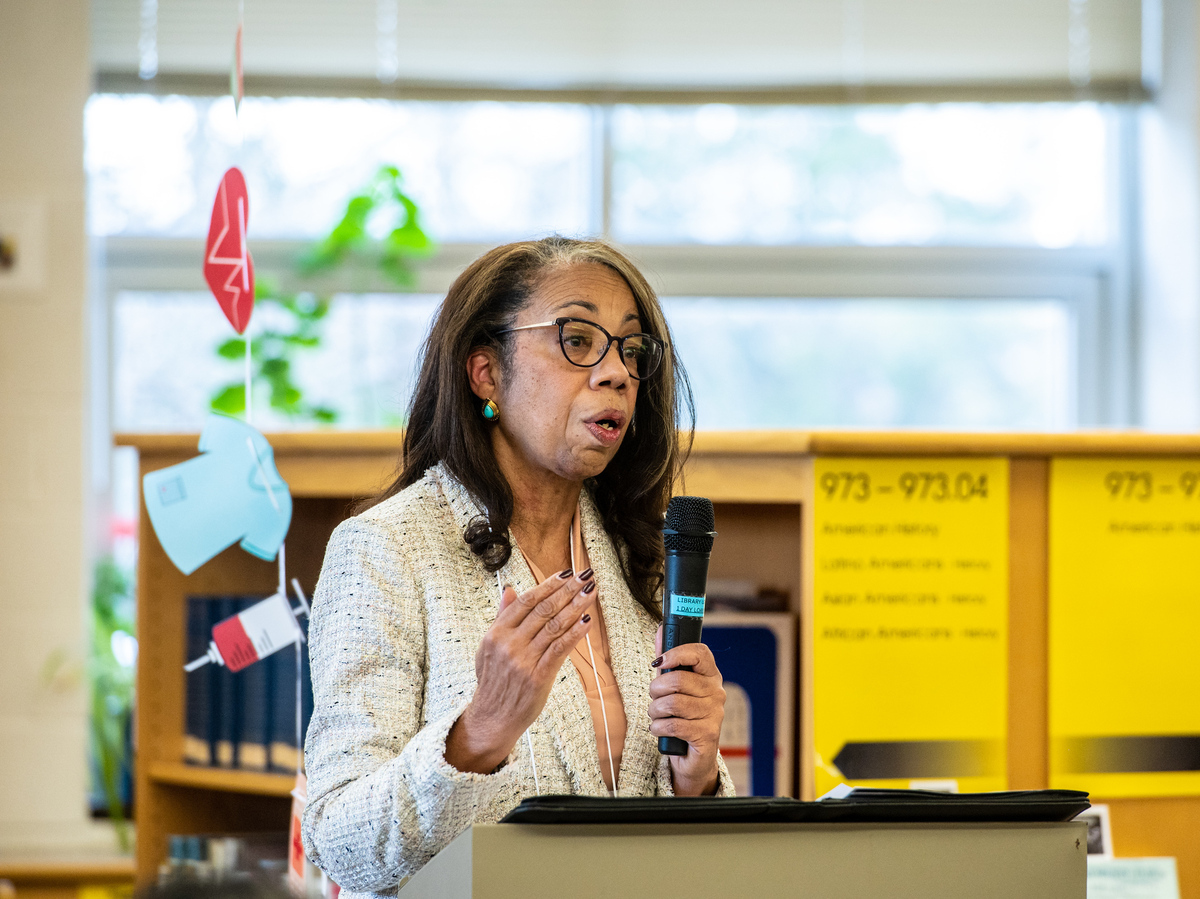
Dr. Gloria Addo-Ayensu, director of the Fairfax County Health Department, spoke with students graduating from the Public Health Youth Ambassador Program at the John Lewis High School library.

Will Schermerhorn/Fairfax County Health Department


hide caption

toggle caption

Will Schermerhorn/Fairfax County Health Department


Dr. Gloria Addo-Ayensu, director of the Fairfax County Health Department, spoke with students graduating from the Public Health Youth Ambassador Program at the John Lewis High School library.

Will Schermerhorn/Fairfax County Health Department

Training gives teens a leg up on future health careers

The health department is working with Edu-Futuro, a local nonprofit, to recruit students with an interest in medicine from Fairfax high schools and help start their career paths.

“At the end of the day, it’s that they successfully enroll in a college or a postsecondary institution, where they will be able to get a degree in a health-related career – and then four years later, they get their first professional job,” says Jorge Figueredo, Edu-Futuro’s director.

Jorge Figueredo, director at the nonprofit Edu-Futuro, tells students that the Youth Ambassador Program sets them on a path to careers in health.

Will Schermerhorn/Fairfax County Health Department


hide caption

toggle caption

Will Schermerhorn/Fairfax County Health Department


Jorge Figueredo, director at the nonprofit Edu-Futuro, tells students that the Youth Ambassador Program sets them on a path to careers in health.

Will Schermerhorn/Fairfax County Health Department

The program focuses on Hispanic, African-American and African students from low-income families. In Fairfax County, as in much of the country, these racial and ethnic minority groups were hardest hit by COVID.

“There were some real challenges around health literacy,” says Anthony Mingo, director of community health development at the Fairfax County Health Department. Mixed messages at the start of the pandemic blended with historical mistrust in medical institutions. “It created a miserable stew of misinformation,” he says.

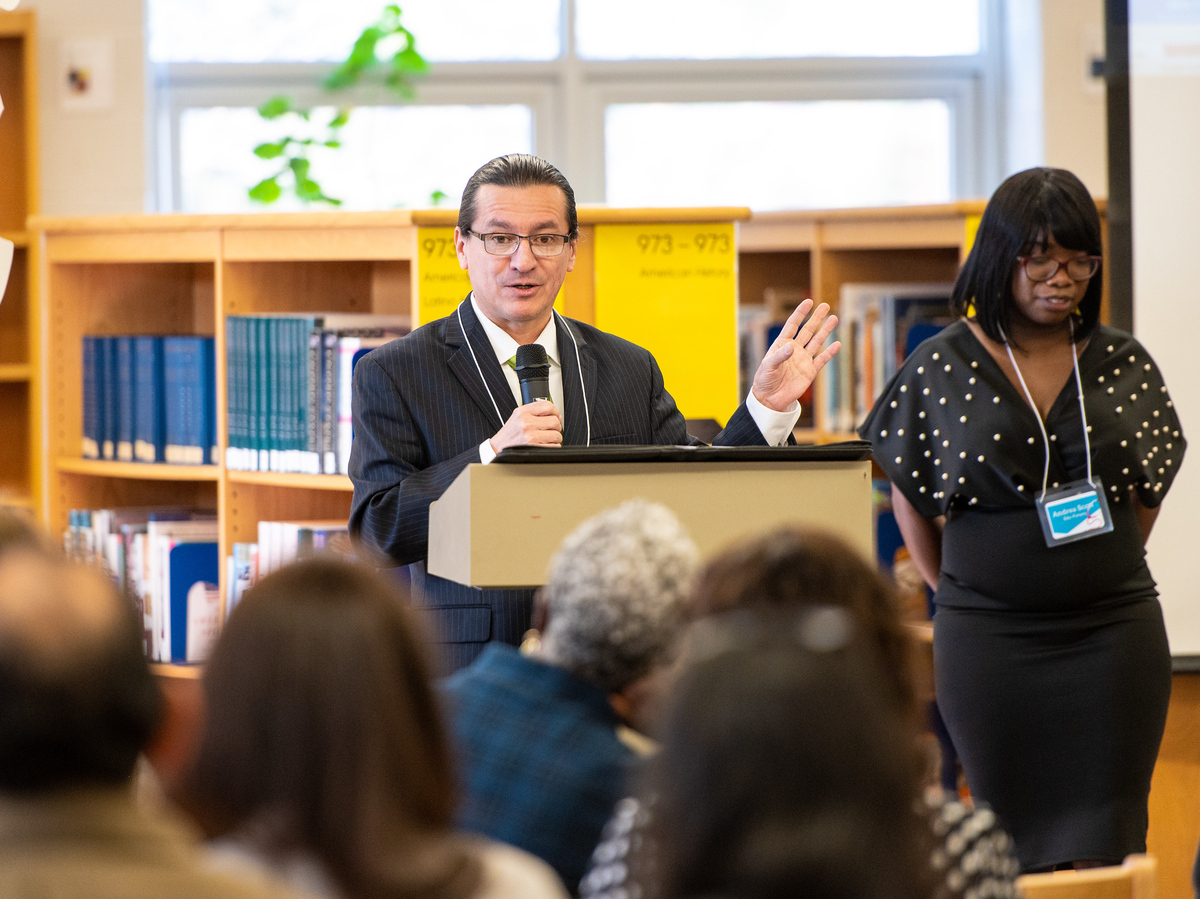
Anthony Mingo (center), from the Fairfax Health Department, implored students to consider careers that serve their communities, flanked by Jorge Figueredo from Edu-Futuro (left) and program manager Andrea Scott (right).

Will Schermerhorn/Fairfax County Health Department


hide caption

toggle caption

Will Schermerhorn/Fairfax County Health Department


Anthony Mingo (center), from the Fairfax Health Department, implored students to consider careers that serve their communities, flanked by Jorge Figueredo from Edu-Futuro (left) and program manager Andrea Scott (right).

Will Schermerhorn/Fairfax County Health Department

The new youth ambassadors are fired up about public health. Fieseha found the links between environment and health illuminating. “If you don’t have access to a grocery store, you’re more willing to buy [fast food] because that is the closest food source you have, which contributes to diabetes and high blood pressure,” she says. “How we access our food, how we make income – we don’t realize how much of an impact that makes to our mental health and our physical health.”

Learning about some shady episodes from the history of medicine helped Bonilla understand how the medical field lost trust with some groups.

“[The lessons] were talking about the history of ethical considerations, which I really hadn’t thought about, like the cancer cells from a patient that were used without their consent,” she says, “And it just made me think how minority groups were really taken advantage of for medical research.”

Bonilla plans to organize a health fair to address health disparities; she thinks she might become a pediatrician, to better serve Spanish-speaking kids and parents. Fieseha plans to start an urban garden at her school and wants to become a global advocate for HIV/AIDS in Africa and particularly Ethiopia, where her family is from.

Federal funding to boost health literacy

Both are among the first graduates in the pilot program, which expects to have trained ninety students as health workers by next summer. With a budget of around $240,000, according to the health department, it’s a small sliver in a two-year, $3.8 million Fairfax County-wide project to improve access to COVID information and boost health literacy among vulnerable groups.

The federal government is providing the funding. Fairfax County is one of 73 local governments to receive a grant under a $250 million initiative from the Department of Health and Human Services last year. Each grantee is trying out its own approaches to improve health understanding in their communities, says Roslyn Holliday Moore, deputy program director for HHS’s Office of Minority Health.

Roslyn Holliday Moore, from the U.S. Department of Health and Human Services, says the Youth Public Health Ambassador Program can be adapted to other places.

Will Schermerhorn/Fairfax County Health Department


hide caption

toggle caption

Will Schermerhorn/Fairfax County Health Department


Roslyn Holliday Moore, from the U.S. Department of Health and Human Services, says the Youth Public Health Ambassador Program can be adapted to other places.

Will Schermerhorn/Fairfax County Health Department

The hope is that projects, like Fairfax County’s Youth Ambassador training, can be adapted elsewhere. “For those who are looking at whether people are able to trust, sustain the trust, engage others, this is more than successful,” Holliday Moore says, “And it’s not hard to replicate.”

Holliday Moore addresses a small crowd of parents and students gathered at a high school library for a graduation ceremony. “Do not give up, stay the course,” she says. “You are creating a future here.”

Afterward, there is applause and tears of joy. A Peruvian dance champion performs a traditional dance. An assistant principal sings a line from Bob Marley’s Three Little Birds and assures students he isn’t worried about a thing — with them at the helm.

After some long, bleak pandemic years, everyone in the room is glad to be celebrating teens getting their start in public health.

Christopher Thompson, assistant principal at the John R. Lewis High School, tells students that he’s confident in a future where they’re in charge.

Will Schermerhorn/Fairfax County Health Department


hide caption

toggle caption

Will Schermerhorn/Fairfax County Health Department


Christopher Thompson, assistant principal at the John R. Lewis High School, tells students that he’s confident in a future where they’re in charge.

Will Schermerhorn/Fairfax County Health Department

Multiple Demographic Disparities in Cardiovascular Risk After Pediatric and Youth Cancer

Multiple Demographic Disparities in Cardiovascular Risk After Pediatric and Youth Cancer

MedicalResearch.com Interview with:

Amy Berkman, MDDepartment of Pediatrics Duke University School of Medicine

Dr. Berkman

Amy Berkman, MD
Department of Pediatrics
Duke University School of Medicine

MedicalResearch.com: What is the background for this study?

Response: Cancer incidence in adolescents and young adults (AYAs, aged 15-39 years at diagnosis) is increasing, with approximately 90,000 new diagnoses annually in the US. Improvements in 5-year survival have led to a growing population of survivors of AYA cancer, currently estimated at >600,000 survivors. Survivors are at increased risk of treatment related chronic conditions including cardiovascular disease (CVD).

We wanted to determine whether certain sociodemographic and medical history factors further increase the risk of CVD in AYA cancer survivors and also compare risk of CVD between AYA cancer survivors and the general population.

MedicalResearch.com: What are the main findings?

Response:  We found that male sex, Black race, household income <$50K/year, and current or former smoking were all associated with increased risk of CVD in AYA cancer survivors. Additionally, performing any moderate to vigorous intensity physical activity was associated with lower CVD risk.

Compared to the general population, the risk of CVD was significantly higher in survivors by sex, race/ethnicity, income, education, smoking status, and physical activity.

MedicalResearch.com: What should readers take away from your report?

Response: These results highlight the importance of long-term surveillance of adolescents and young adults after cancer treatment to ensure that appropriate screenings are initiated to reduce the risk of CVD and to promote healthy behavioral changes, such as physical activity, which impact long-term CVD outcomes.

MedicalResearch.com: What recommendations do you have for future research as a results of this study?

Response: Further studies are needed to better understand the trajectory of health behavior change, to determine barriers to healthcare access, and to identify opportunities for intervention in AYA cancer survivors.

Citation:

Berkman, AM, Andersen, CR, Roth, ME, Gilchrist, SC. Cardiovascular disease in adolescent and young adult cancer survivors: impact of sociodemographic and modifiable risk factors. Cancer. 2022; 1– 11. https://doi.org/10.1002/cncr.34505

The information on MedicalResearch.com is provided for educational purposes only, and is in no way intended to diagnose, cure, or treat any medical or other condition. Always seek the advice of your physician or other qualified health and ask your doctor any questions you may have regarding a medical condition. In addition to all other limitations and disclaimers in this agreement, service provider and its third party providers disclaim any liability or loss in connection with the content provided on this website.


207