
What Dr. Simi tells us about Mexico’s healthcare crisis

He sports a bushy white mustache and a bit of a gut. He dances to reggaeton in cities and towns across Mexico. He has 2 million followers on TikTok and at concerts is routinely passed into the arms of pop stars. His face even adorns a mountainside.

He is Dr. Simi, the cartoon mascot of Farmacias Similares, Mexico’s largest drugstore chain, with more than 8,500 locations across the country. His ubiquity speaks to the company’s round-the-clock marketing strategy but also something darker: the failure of the Mexican government to deliver on its promise of healthcare for all.

Medicines are often in short supply in public clinics, where it can take weeks to get an appointment with a primary care doctor.

A woman with long dark hair sits at a computer terminal. On the desk are dolls of a man in a lab coat

At Farmacias Similares’ corporate headquarters, an employee sits at her desk adorned with Dr. Simi dolls and stickers.

(Luis Antonio Rojas / For The Times)

Farmacias Similares helps fill the gap with cheap generics and $2 doctor visits. The chain says its clinics next to each location provided 136 million appointments last year.

Many pharmacies feature an employee in a Dr. Simi padded bodysuit waving to passersby and engaging in antics such as challenging the cow mascot of Mexico’s Alpura milk brand to a dance-off.

A group of people dressed as mustachioed characters in different costumes pose for a photo

Various Dr. Simis pose for a photo at an event in 2022 to celebrate the company reaching its target of 8,000 pharmacies.

(Farmacias Similares)

At the company’s headquarters in Mexico City, a mural shows Dr. Simi with a raised arm declaring: “To serve God and the people!”

Dozens of employees there answer calls to the “Simitel” hotline that provides free access to doctors, nutritionists and psychologists — and for those who press “1” to Dr. Simi himself.

Operators who have perfected the mascot’s cheerful nasal voice answer several hundred calls a day by reading a joke from a binder or simply offering a friendly ear. Alberto González, who has played Dr. Simi for nearly 17 years, cherishes callers such as 27-year-old Luis, who dialed in more than a decade ago to talk about his parents’ divorce and still phones every few weeks.

A man sits at a workstation. Behind him is a poster of a mustachioed character and the words Bienvenidos a Similandia

Alberto González, who takes on the role of Dr. Simi on the company’s hotline, waits for calls from people who want to chat with the mascot.

(Luis Antonio Rojas / For The Times)

The operators never break character.

“Hello, hello! How are you?” goes the script. “You’re talking to Dr. Simi. Who is calling me?”

::

In 1997, Mexico began requiring drugs to be labeled by their active ingredient rather than a name brand. The idea was to increase confidence in medications and open up the market to generic drugs.

The new rules were a business opportunity for Victor González Torres, whose family company had long manufactured drugs for the government health system.

That year, he founded Farmacias Similares. The name is a reference to generics, which were advertised with the slogan “The same, but cheaper.”

Promising “up to 75{bf0515afdcaddba073662ceb89fbb62b6b1bf123143c0e06b788e1946e8c353f} in savings,” the company launched a marketing campaign that presented the chain as coming to the rescue of poor Mexicans and pushed back against transnational pharmaceutical companies that disparaged generics.

A mural along a set of stairs depicts a man holding a note near other people

A mural depicting Victor González Torres, the founder of Farmacias Similares, at the company’s headquarters.

(Luis Antonio Rojas / For The Times)

González wanted a mascot with the right combination of goofiness and wisdom. After rejecting several ideas from an advertising company, his team found an artist who designed the winner: a simple black-and-white drawing of a doctor joyfully holding up his arms. The inspiration came from a famous movie character from the 1940s, Don Susanito Peñafiel y Somellera.

Dr. Simi first appeared in newspaper advertisements. He then took shape as an animated cartoon and a puppet on television, happily explaining why the public should trust generics.

A woman holds a blue sign outside a storefront, near a passerby

An employee holds a sign advertising a sale outside the first Farmacias Similares pharmacy in Mexico City.

(Luis Antonio Rojas / For The Times)

Before long, Dr. Simis were dancing on the sidewalks. The company created a comic called “The adventures of Dr. Simi” and a band of “Simichicas,” well-known actresses and models who traveled with the founder and promoted new products such as the “Simicondom.” “SimiInsurance” offered medical treatment for a premium.

One of the chain’s key moves was to open clinics — which are operated by a sister company — alongside its pharmacies.

The cheap clinics made healthcare more accessible to the tens of millions of street vendors, taxi drivers and others working in the country’s informal sector. It was a population excluded from public health insurance systems — in apparent breach of the Mexican Constitution, which was modified in 1983 to make healthcare a universal right.

A masked man in a white coat holds a syringe near a masked woman seated on an examination table

A doctor prepares an injection for Carmen Maldonado, a regular patient at his clinic next to a Farmacias Similares pharmacy.

(Luis Antonio Rojas / For The Times)

Like some political parties, the chain also handed out free rice and offered social assistance in poor neighborhoods.

Its populist strategy worked. By 2003, Farmacias Similares had roughly 1,000 locations and was looking abroad.

The government healthcare system expanded substantially the next year under a new program known as Seguro Popular that offered health insurance to workers in the informal economy. But that didn’t appear to stall the growth of Farmacias Similares. Catering to hourly workers who couldn’t afford to take time off to travel to public health centers, the chain placed its pharmacies on busy streets, often near bus stops, and grew rapidly by offering franchises.

By operating on a massive scale and manufacturing many of its own drugs, the company cut costs further and passed on the savings to customers.

“Victor González Torres and Farmacias Similares executed a tremendously effective strategy,” said Michael Chu, a Harvard business professor who has studied the chain.

González’s profile was growing too. Long encouraging people to call him Dr. Simi, he did not hide his desire for prestige, declaring once that he wanted to be remembered as a revolutionary like Che Guevara.

He butted heads with officials in the public health system after alleging corruption in its drug-purchasing practices and campaigned for president as a write-in candidate in the 2006 election.

“Poor people can have power in a country where there are so many,” he said in an interview at the time. “They can choose a president.”

The company has also waded through a fair share of controversy. González’s brother was the founder of Mexico’s Ecological Green Party, which in 2010 faced accusations of conflict of interest after sponsoring legislation to provide people with vouchers for medications in private pharmacies. The media dubbed it the “Simi law.”

The law failed to pass, but Farmacias Similares continue to grow amid the government’s faltering attempts to improve the public health system.

More than a quarter of the population lacked access to care in 2020, according to the government’s most recent estimate.

That same year, President Andrés Manuel López Obrador replaced Seguro Popular with a new program he promised would reduce corruption. But it has been beset by medicine shortages that experts attribute to bureaucracy and the COVID-19 pandemic. The government is currently transitioning to yet another program.

As a result, clinics next to private drugstores have been booming and are now thought to serve roughly a fifth of the population. Farmacias Similares opens nearly two new locations a day on average.

Carmen Maldonado, who owns a shop that sells artisanal honey and cheeses, recently dropped by Farmacias Similares’ first store — located in Mexico City’s Portales neighborhood — to buy cold medication and antibiotic injections, which a doctor administered at the clinic next door. A sign outside advertised birth control, oxygen and blood sugar readings, stitches and ear cleanings.

Maldonado could opt to use the public system, but the clinic is near her home and she’s been seeing this doctor for 20 years.

“He’s like the family doctor,” she said.

::

In November 2021, a 19-year-old high school student named Avril Christelle Vega Martinez was on her way to a concert in Mexico City when she stepped into a Farmacias Similares to pick up some hand sanitizer.

She had also been looking for a Dr. Simi doll, so she was happy to find the store had one left in stock. The dolls come in different guises — including boxer, mariachi and fireman — but the one she bought was the classic version: Dr. Simi in his lab coat.

Plush dolls sit on a bookcase in the shape of the letters C and S, next to a larger version of the mustachioed character

A variety of Dr. Simi dolls fill the bookshelf of an employee at Farmacias Similares’ headquarters.

(Luis Antonio Rojas / For The Times)

Vega had taken the doll out of her backpack at the concert — Norwegian electro-pop singer Aurora Aksnes — when an idea popped into her head.

“I suddenly thought of the idea of maybe giving it as a present to Aurora,” she recalled. “Dr. Simi is a symbol of Mexican culture. We grew up seeing Dr. Simis dancing everywhere.”

And so she passed the doll up through the crowd until someone flung it onto the stage. Aurora picked up Dr. Simi and hugged him to her chest.

Captured on video, the incident went viral on social media, and it wasn’t long before Dr. Simi dolls were routinely being thrown onstage at concerts of pop stars including Dua Lipa and Rosalía. Joining in on the fun, a former chief justice of Mexico’s Supreme Court “ruled” on TikTok that doing so isn’t a crime.

The publicity was good news for Farmacias Similares. Dolls were selling so fast that the company boosted monthly production to 40,000 from 12,000. When one was left at a memorial for Queen Elizabeth II in Edinburgh last year, Mexican media outlets thought it newsworthy enough to cover.

The company carefully guards Dr. Simi’s image. The more than 1,000 staffers who wear Dr. Simi bodysuits are forbidden to speak to the public while in costume in order to preserve the character’s identity. One benefit of the job: lessons in dancing salsa, cumbia and the Simi pasito.

A communications team works a night shift to produce seven television shows a week, bringing in specialists to discuss anxiety and stress, as well as staffers from different areas to explain their jobs. Employees keep a close eye on social media, tracking down for an interview members of the public who have helped Dr. Simi go viral.

The company also promotes its brand through what Victor González Herrera, the son of the founder, called “conscious capitalism” — funding natural disaster relief, tree planting and food assistance for the hungry.

In December, the company raffled 25 cars to customers to mark its 25th anniversary. Before the winners collected their new car keys, pharmacy employees launched into the corporate anthem:

We have the courage
Dr. Simi has the heart
What we offer
We do with love

With pharmacies in all of Mexico’s 32 states and more than 400 in Chile, the company aims to reach its target of 10,000 pharmacies in the next five years and ultimately become the largest chain in the world.

“Simi has simply become necessary,” said Victor González Herrera, who recently took over as head of an umbrella group that includes the pharmacies and the clinics.

Health experts have warned that while the pharmacy clinics can treat immediate illness, they are not ideal for chronic conditions.

“Can it be a business that does good? Without a doubt,” said Dr. Andrés Castañeda, who coordinates health issues for Nosotrxs, a Mexican organization that promotes citizen participation in public policies. “But the health system can’t leave things 100{bf0515afdcaddba073662ceb89fbb62b6b1bf123143c0e06b788e1946e8c353f} in the hands of clinics adjacent to pharmacies.”

One problem is that the care may not be consistent, because the doctors tend to come and go.

But Cori Hayden, an anthropologist at UC Berkeley who recently published a book on Farmacias Similares called “The Spectacular Generic,” said that many people have resigned themselves to “something is better than nothing” when the state fails to provide healthcare.

“It’s a force. It’s wild,” she said of the chain. “It’s totally wild.”

But its true power remains something of a mystery, because Farmacias Similares keeps its sales figures private.

“It’s a gray area,” said Jorge Perichart, director of the National Assn. of Sales Executives of the Pharmaceutical Industry. “We don’t know what we’re competing against.”

::

Four people look out of an upstairs opening in their home, which painted in blue with black stripes

A family peers out from a home in the “Simi Neighborhood.”

(Luis Antonio Rojas / For The Times)

About 30 miles north of the center of Mexico City, in a mountainside community in the municipality of Ecatepec, the homes have bare concrete floors and tin roofs. Access to running water is a luxury.

For Farmacias Similares, the Lomas de San Carlos neighborhood was not just a symbol of neglect: It was a canvas.

Last year, the company sent in representatives offering residents food assistance and free house painting. Then painters got to work on 305 houses.

The result was an advertisement for Farmacias Similares visible from the nearby highway.

White houses make up a man’s bushy mustache, pink houses his tongue, and black-striped houses the three wiry hairs on each side of his head.

It was, of course, Dr. Simi.

A view of homes in a neighborhood painted to depict the likeness of a cartoon character with a white mustache

Hundreds of houses in the municipality of Ecatepec have been painted to form a mega-mural of Dr. Simi.

(Luis Antonio Rojas / For The Times)

The company — which also remodeled the community center, built a vegetable garden and opened two new pharmacies nearby — dubbed Lomas de San Carlos “Simi Neighborhood.” Reporters rushed to cover the story.

“No one has ever paid this much attention to us,” said Hortencia Olivares Ramos, whose home was painted blue — the background of the mural.

At the mountain’s peak, Eva Ojeda López lives with her husband and four children in a house painted to match the hairs on Dr. Simi’s balding head.

The stay-at-home mother buys her hypertension pills at Farmacias Similares when the public pharmacies run out and frequents the company’s clinics for basic ailments such as colds.

Ojeda swore that the arugula from the new community garden lowered her cholesterol levels. One of her daughters read the book that Farmacias Similares gifted the family: the founder’s autobiography, “My Life Is a Struggle.”

Another daughter Johana, 18, joked about how some of her neighbors lived by Simi’s tongue or his eyes.

“We consider ourselves a part of Dr. Simi,” she said.
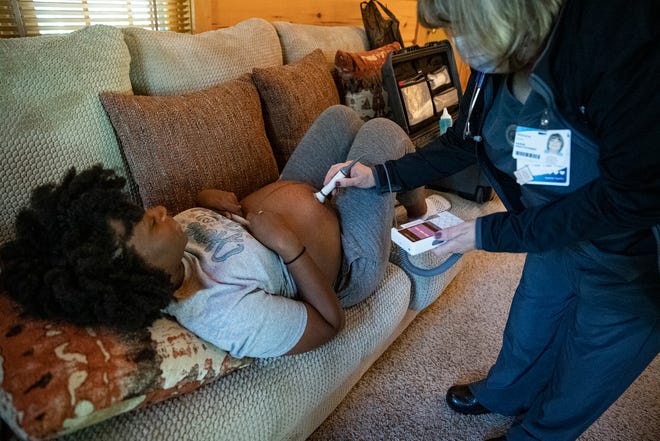
Remove roadblocks to medical care by nurse practitioners in Indiana

As a physician who provides health care to Hoosiers every day, it’s clear that our state is facing a mounting crisis of care. There simply aren’t enough physicians to meet the skyrocketing patient demand, and many of us are retiring. For years, I’ve worked with advanced practice registered nurses (APRNs) to provide patients with safe, high-quality care. It’s time for the state legislature to remove the legislative roadblocks that prevent patients from choosing APRNs as their health care providers.

Across our state, the physician shortage is having detrimental effects on Hoosiers’ health. Health care costs are up and health outcomes are down. We hear every day that patients are having difficulty scheduling appointments for routine care. The lack of prenatal care is driving up infant mortality rates across our state. Kids devastated by the pandemic can’t get the mental health care they need. The status quo isn’t cutting it anymore and policymakers need to make a change.

Patient Burnout Is a Simmering Public Health Crisis

You haven’t been feeling well lately. You’re more tired than usual, a bit sluggish. You wonder if there’s something wrong with your diet. Or maybe you’re anemic? You call your primary-­care doctor’s office to schedule an appointment. They inform you the next available appointment is in three weeks.

So, you wait.

And then you wait some more.

And then, when you arrive on the day of your appointment, you wait even more.

You fill out the mountain of required paperwork, but the doctor still isn’t ready to see you. You flip through a magazine for a while, then scroll through your phone until you’re finally called. You wait a little longer in a scratchy paper gown, then talk to your physician—if you can call it talking, since she’s mostly staring at a computer screen—for all of 10 minutes before you’re back out in the lobby with a lab order to have your blood tested.

Then you call to set up your blood test, and the waiting process starts over.

A few weeks after you get your results, a bill arrives in the mail. You’re charged hundreds of dollars for the blood work. The appointment was over in minutes, but your bank account will feel the effects for a long time.


More from TIME


Going to the doctor may never be a fun experience, but surely it can be better than it is right now. In 2019, even before the COVID-19 pandemic rocked the foundations of health care, an Ipsos survey found that 43{bf0515afdcaddba073662ceb89fbb62b6b1bf123143c0e06b788e1946e8c353f} of Americans were unsatisfied with their medical system, far more than the 22{bf0515afdcaddba073662ceb89fbb62b6b1bf123143c0e06b788e1946e8c353f} of people in the U.K. and 26{bf0515afdcaddba073662ceb89fbb62b6b1bf123143c0e06b788e1946e8c353f} of people in Canada who were unsatisfied with theirs. By 2022, three years into the pandemic, just 12{bf0515afdcaddba073662ceb89fbb62b6b1bf123143c0e06b788e1946e8c353f} of U.S. adults said health care was handled “extremely” or “very” well in the U.S., according to a poll from the Associated Press–NORC Center for Public Affairs Research.

Americans pay a premium for the care they rate so poorly. The U.S. spends more per capita on health care than any other developed country in the world but has subpar health outcomes. Average life expectancy is lower in the U.S. than in other wealthy nations, and about 60{bf0515afdcaddba073662ceb89fbb62b6b1bf123143c0e06b788e1946e8c353f} of U.S. adults have a chronic disease. About 10{bf0515afdcaddba073662ceb89fbb62b6b1bf123143c0e06b788e1946e8c353f} of the population doesn’t have health insurance.

And the customer service sucks. U.S. patients are tired of waiting weeks or months for appointments that are over in minutes. They’re tired of high prices and surprise bills. They’re tired of providers who treat them like electronic health record entries, rather than people.

That could dissuade them from getting medical care at all—and if that happens, America may get a whole lot sicker than it already is. Patients are, in a phrase, burned out.


Primary care is supposed to be the bedrock of the U.S. medical system. In theory, patients get annual physicals so doctors can assess their overall health and detect any red flags (or refer them to specialists who can) before those warning signs become full-blown chronic disease. While experts debate whether everyone needs a checkup each year, studies show that on balance, patients who regularly see a physician tend to be healthier and live longer than those who don’t.

Yet about a quarter of American adults don’t have a primary-care provider, and, as of 2021, almost 20{bf0515afdcaddba073662ceb89fbb62b6b1bf123143c0e06b788e1946e8c353f} hadn’t seen any doctor during the past year. There are many barriers: it can take weeks to get an appointment, particularly in more rural areas where fewer doctors practice, and visits can be costly even for people with insurance. Research shows that during the past year, financial strain caused about 40{bf0515afdcaddba073662ceb89fbb62b6b1bf123143c0e06b788e1946e8c353f} of U.S. adults to delay or go without medical care.

Plus, people just don’t like going. A third of participants in one 2015 study said they had avoided going to the doctor because they found it unpleasant, citing factors like rude or inattentive providers, long wait times, and difficulty finding a convenient appointment. Many people also skipped appointments during the COVID-19 pandemic, largely because of office closures and fears of the virus—but one study found that people were more likely to forgo doctor’s visits during the pandemic if they’d had previous poor experiences with health care. People of color, women, and people who are overweight frequently report feeling mistreated by their doctors.

Jen Russon, a 48-year-old English teacher and mother of two from Florida, says she can’t remember a single positive experience she’s had with a doctor. She struggles to square the $400 her family pays in monthly insurance costs with what she characterizes as a rushed and underwhelming care experience that pales in comparison with the attention her pets get at the veterinarian. “I wish we could see our vet instead, because they really spend a lot of time” with their patients, she says.

Part of the problem may go back to the way doctors are trained, says Jennifer Taber, an associate professor of psychological sciences at Kent State University and a co-author of the 2015 study on doctor avoidance. U.S. medical schools do an excellent job of teaching students how to practice medicine. But, she argues, they aren’t always as good at preparing students to be doctors, with all the interpersonal complexity that entails. “Patients won’t necessarily want to go back to doctors they don’t like,” she says. Even small gestures, like making eye contact with or leaning toward a patient as they speak, can help build a strong rapport, Taber says.

The pandemic certainly hasn’t improved bedside manner. It’s pushed nearly every element of medical care to the brink and prompted some providers to leave the profession entirely, worsening existing personnel shortages and contributing to an epidemic of physician burnout. According to one recent survey, 30{bf0515afdcaddba073662ceb89fbb62b6b1bf123143c0e06b788e1946e8c353f} of U.S. physicians said they felt burned out in late 2022, and about as many said they’d considered leaving the profession in the previous six months.

Physician burnout only adds to patient burnout, says Dr. Bengt Arnetz, a professor at the Michigan State University College of Human Medicine who researches how to improve primary care. “Providers feel stressed, burned out, less empathetic. A lot of times they don’t engage the patient, and the patient wants to be engaged,” Arnetz says.

But these problems didn’t start with the pandemic, says Lori Knutson, executive director of the Whole Health Institute, a nonprofit focused on improving health care delivery. “We should all be honest,” she says, “about the fact that health care has been slowly imploding for a period of time.”


It’s impossible to explain problems with U.S. health care without talking about insurance. U.S. patients pay more out of pocket for health care than people in other wealthy, developed countries, most of which offer some form of universal health coverage.

The insurance system is also endlessly confusing, says Dr. Ateev Mehrotra, a professor of health care policy at Harvard Medical School. Doctors may not know how much the tests they’re recommending cost, particularly when every patient has a different type and level of coverage, so surprise bills are common—and so hard to understand that patients often have to spend hours on the phone seeking clarity from their insurance providers. One 2020 study estimated that dealing with insurance companies costs the U.S. more than $20 billion annually in lost productivity.

How doctors get paid affects the patient experience too. Many health systems pay physicians based on how many appointments and procedures they squeeze in, which rewards lightning-fast visits over those that are “about the whole person and not just what’s wrong with them,” Knutson says. This system can also incentivize doctors to recommend tests and procedures that aren’t strictly necessary, which leads to extra costs and hassle for patients and added strain on the health care system.

Here, too, insurance is part of the problem. Doctors in primary care or family medicine often make significantly less than specialists, in part because their services are reimbursed at lower rates. That dissuades some medical-school graduates—particularly those saddled with debts—from entering general medicine, which contributes to shortages in the medical fields patients are most likely to need on a regular basis. When there aren’t enough doctors to go around, appointments get scarcer and physicians become overworked, rushing from appointment to appointment and drowning in paperwork.

Some simple solutions exist. In a study published in 2020, Arnetz and his colleagues analyzed what happened when one small medical clinic made minor tweaks to its operations, such as reassigning some of the main provider’s administrative duties to nurses or medical assistants and adding short team meetings to delegate tasks for the day. After two weeks, the clinic scored higher than a comparison clinic on measures of efficiency, contributing to better patient and provider satisfaction.

Traditional medical offices could also take cues from the services patients are increasingly gravitating toward, says Pearl McElfish, who researches health services at the University of Arkansas for Medical Sciences. Patients who can afford it are flocking to startups offering perks like same-day appointments and flat-rate monthly memberships. And one 2018 study co-authored by Mehrotra found that visits to urgent-care clinics, where patients can walk in instead of waiting for weeks, increased by more than 100{bf0515afdcaddba073662ceb89fbb62b6b1bf123143c0e06b788e1946e8c353f} from 2008 to 2015 among privately insured U.S. adults. (During roughly the same period, primary-care visits dropped 24{bf0515afdcaddba073662ceb89fbb62b6b1bf123143c0e06b788e1946e8c353f}.) During the pandemic, urgent-care centers only became more popular—as did telehealth.

“Currently [the traditional system] isn’t meeting the needs of many patients,” Mehrotra says. “Patients are voting with their feet and going to these other care sites.”

The trouble with convenience-first medical care, however, is that it’s often issue-specific. If you go in to get a flu shot, you’ll get that vaccine and then be on your way. The clinician is unlikely to make sure you’re up to date on your other shots or perform recommended screenings—the kind of preventive care that can fend off bigger issues down the line. On the other hand, these newer options can “put pressure on existing providers to be a bit more patient-centric,” Mehrotra says.

Traditional medical offices could make some changes right away, without waiting for big structural overhauls, he says. They could offer “walk-in only” hours to treat people without appointments, text patients when the doctor is ready to see them, and include clear explanations on bills so patients understand what they’re paying for. Even small shifts like these could make significant differences to patients.

The stakes are high. Ashley, who is 35 and asked to use only her first name to protect her privacy, has a gene mutation that heightens her risk of breast cancer and is supposed to get an annual mammogram and two ultrasounds per year. But she has to move frequently for her job in academia and hasn’t had her tests done in four years because she got so fed up with the arduous process of finding new doctors, transferring medical records, and dealing with insurance every time she moves. “The barriers were enough that I just kept putting it off,” she says.

Burned-out patients may retreat from the institutions that made them feel that way. Ashley says she’s considering a preventive double mastectomy—a surgery she may have needed anyway because of her genetic predisposition, but one made more appealing by her desire to stop dealing with “pain in the butt” medical appointments. Russon, from Florida, says she’s felt tempted to cancel her family’s insurance and go to the doctor only when absolutely necessary, though she’s never acted on the urge. Other patients, however, may walk away from the health care system entirely. It may not be the wisest or healthiest response, but it’s a human one.

More Must-Reads From TIME


Write to Jamie Ducharme at jamie.ducharme@time.com.

How to Create a Better Consumer Market for U.S. Health Care

Measures to make prices extra transparent ended up excellent steps in the push to produce a lot more competition in health and fitness care. But they do not do what is vital to build a vivid consumer market in which sufferers would actively store around for the greatest selling prices. Four additional ways that would make a large big difference contain: (1) drive treatment companies to specify their prices for a record of standardized, buyer-targeted bundles of expert services tied to total episodes of clinical interventions (2) demand all companies to take part in this bundled pricing method (3) mandate that the charges posted for these providers be readily available to all sufferers, irrespective of their insurance policy position and (4) make sure that individuals who decide on provider companies that demand price ranges that are below what their insurance programs will pay out can maintain the cost savings.

Wellness treatment selling price transparency is that exceptional plan initiative that elicits aid across the partisan divide in the United States. The broad political consensus behind the expected disclosure of relevant pricing led administrations of each parties to concern regulations by means of the Centers for Medicare and Medicaid Services (CMS) that pressure the healthcare treatment and insurance coverage sectors to write-up on the net an abundance of previously concealed pricing data. It is expected that companies and other payers, with enable from technologies companies, will use the data to push competition by extracting reduce expenses, where by possible, and that well being care vendors will be incentivized to disclose clinical results to justify ongoing differences in the costs they charge for their companies.

Although these steps are welcome, what would be certainly transformative would be steps that stimulate sufferers to significantly extra actively store all around for the finest charges. Facilities and clinicians would then develop into delicate to charging more than their rivals (and therefore forcing their clients to pay back far more). Unfortunately, irrespective of progress, a client-pushed transformation is unlikely to transpire without the need of more regulatory adjustments. In this short article, which is based mostly on our analyze for the American Organization Institute (AEI), we give a small list of refinements to the latest policies that would deal with this deficiency — that would strengthen value competitors by building it less difficult for patients to location the optimum-benefit providers of products and services and reap the full  benefit of any personal savings.

The require for better pricing discipline in the wellness sector is evident. In December, CMS launched its estimates of nationwide health and fitness expenses for 2021, and, though the pace of escalation slowed as opposed to 2020, the over-all development stays alarming. At 18.3{bf0515afdcaddba073662ceb89fbb62b6b1bf123143c0e06b788e1946e8c353f} of GDP, the United States devotes considerably and absent the most means to well being usage of any superior financial system (Germany is a distant second at 12.8{bf0515afdcaddba073662ceb89fbb62b6b1bf123143c0e06b788e1946e8c353f}). Irrationally superior price ranges are a important resource of the U.S.’s price issue.

The two primary political events in the United States generally disagree on overall health care (Democrats favor regulation and Republicans extra buyer option) having said that, forced disclosure of appropriate rates appeals to the two sides. This is due to the fact it brings together rulemaking (i.e., the CMS administrator’s potential to impact how providers supply their services by way of its requirements) and purchaser protection with enhanced marketplace ailments (i.e., more finish and clear price tag details for clients) to enable for far more competitiveness focused on optimizing outcomes per greenback invested. Further, leaders of both functions want to stop abusive billing practices (e.g., unanticipated superior out-of-community healthcare expenses), which have compelled hundreds of thousands of their constituents to fork out exorbitant sums further than what their insurance policies programs will cover. Original legislative successes in this place contain the No Surprises Act, which gives novel consumer protections. Enacted in 2020, it went into result in January 1, 2022.

CMS guidelines, started off beneath the Obama and Trump administrations and more created by Biden officers, mirror the wide curiosity in wellness care cost transparency. First successes have included policies necessitating hospitals to publicly display costs for 300 shoppable services and overall health insurance coverage designs to submit the prices they pay out for in-network solutions. Shortly-to-be implemented expense-sharing estimates, obtainable by way of online resources and based on overall health coverage coverage, are also promising and will further shift industry electricity away from the facilities and institutions that have benefited from authorized cost secrecy.

Although the new disclosure requirements are very long overdue, they are not adequately consumer targeted to triumph over the important impediments that avert people from actively shopping for companies centered on value. Two big obstacles not addressed by existing guidelines are noteworthy: a pricing technique tied to jargon-laden insurance plan billing codes, which are challenging for customers to navigate, and an insurance policy program that prevents consumers from benefiting fully when picking reduced-priced support providers mainly because the insurers keep the personal savings.

To set customers in the driver’s seat, CMS, doing the job with Congress, can handle the two via 4 refinements to the present-day policies.

1. Specify standardized solutions.

Healthcare care providers must be compelled to specify their price ranges for a checklist of standardized, customer-centered bundles of providers tied to full episodes of medical interventions. These bundles of services must act as the minimum amount — as identified by medical doctor consensus — desired to supply a presented intervention. “Add-on” companies and innovations could be supplied for added charges centered on specific physicians’ choices. Even though development has been built in building, or defining, these types of bundles (e.g., the standardized childbirth bundle designed by the Bree Collaborative in the state of Washington), they are not still employed to assistance people shop for wanted treatment.

Presented the complexity of professional medical treatment, it is unrealistic to be expecting sufferers to decide what is or is not medically vital for them to get superior or keep wholesome. For occasion, it is unclear to the average individual what is expected for a prosperous knee or hip substitute or a profitable childbirth. Which lab exams really should be bought, and how frequently? Which imaging scientific tests? What about clinic or other facility expenses and the ancillary providers connected to quite a few procedures (these kinds of as anesthesia)?

Clear, “all in” prices for a standardized record of providers expected to absolutely finish a scientific intervention would tackle this problem and empower clients. With standardization, they could see clearly the whole rate of the scientific bundles and make apples-to-apples comparisons. The charges charged by competing networks of providers would be specifically similar simply because the clinical services involved in what is remaining priced would be the exact.

2. Make service provider participation mandatory.

All suppliers really should be demanded to take part in this bundled pricing process to guarantee the sector is populated with multiple options for patients. If only 1 network presents a bundled selling price, and its normal opponents are authorized to opt out, the market place will not work. Further, companies need to be needed to article their selling prices at typical intervals (these types of as by December 1 for relevant pricing through the subsequent calendar calendar year) so that individuals have faith that the posted price ranges are precise and up to day.

3. Make the identical prices accessible to absolutely everyone.

The price ranges posted for these companies should really be “walk up” charges out there to all people, irrespective of their insurance standing. In today’s market, pricing for numerous expert services is applicable only to the enrollees inside of certain insurance ideas, and the variation in negotiated premiums is huge, which implies the probable dimensions of the current market is scaled-down than it would be if all consumers had accessibility to the companies at the identical specified costs. This rule would not prevent preferential pricing for some coverage strategies  it would merely call for vendors of providers to specify a value that applies to all consumers irrespective of their insurance coverage protection.

4. Make sure shoppers enjoy the advantages.

For cost competitors to do the job as prepared, individuals must respect that value searching can be financially rewarding. Now, coverage styles stifle incentives for shoppers by creating them largely price insensitive. Just after they have previously compensated the needed copay and deductible, the insurance provider ordinarily pays the entire price, so the consumer is not anxious about searching for the finest cost.

This impediment to a client-pushed market place can be set by demanding insurers to make out there to their enrollees the dollar worth of their median out-of-community premiums for the products and services coated by the standardization rules cited above. Clients could then utilize those people payments from their insurers to any service provider of their selecting. If shoppers find company providers that demand prices that are below what their coverage options will pay out, they would get to maintain the excess greenback worth. This prerequisite would really encourage competitors based mostly on rate as effectively as excellent and reward amenities and physician tactics that are willing to cost decreased price ranges for their companies. An more choice would be to permit people to spot the bucks saved by deciding on lessen-priced companies into tax-absolutely free wellbeing cost savings accounts (HSAs) for foreseeable future use.

Although the main beneficiaries of these adjustments would be shoppers, much more vigorous price tag competitiveness possible would produce savings to businesses and insurers over time too. The rates revealed in a consumer-pushed market would demonstrate that reduced pricing is achievable as a result of improved levels of competition pushed by transparency in any setting, such as the employer insurance policies sector.

• • •

Procuring for treatment primarily based on cost is not doable in numerous situations, but it could implement to about 40{bf0515afdcaddba073662ceb89fbb62b6b1bf123143c0e06b788e1946e8c353f} per cent of all shelling out on health-related treatment. For discrete interventions (these kinds of as quite a few typical surgical procedures) and for regime treatment and management of continual ailments, vigorous levels of competition, created on pricing standardization and incentives, would disrupt the marketplace for the far better. Level of competition centered on high quality could then completely flourish.

The principles now in position are a important advancement more than what existed earlier, but they are not a entire reply. Policymakers must be willing to choose the next ways and make it possible for people to enjoy their rightful position.

How Amazon’s healthcare strategy has evolved

Amazon has not been shy about its intentions to disrupt health care. 

The tech giant’s $3.9 billion acquisition of most important care enterprise One Clinical, which closed Wednesday, is the latest in a sequence of moves from a firm identified to stake its claim in health care.

In a letter announcing the One particular Health care acquisition, Amazon CEO Andy Jassy claimed the enterprise has been referred to as on by its clients to “radically increase the health care expertise.”

Here is a glimpse at Amazon’s recent record in health care dating again to 2018 such as discontinued tasks, existing offerings and what could possibly be next. 

Misses

Splashy announcements haven’t usually yielded favourable final results for Amazon. The organization launched a health care-precise enterprise known as Haven in early 2018 with JPMorgan Chase & Co. and Berkshire Hathaway.

Haven was an employer-led coalition concentrated on decreasing expenditures by using the three companies’ collective bargaining electricity to negotiate selling prices with suppliers. But Haven disbanded in January 2021, 6 months after CEO Dr. Atul Gawande stepped down from the firm. The companies did not have the economies of scale to tip the equilibrium when it arrives to health care, authorities reported at the time.

A different employer-focused flop was Amazon Care. The company was introduced in 2019 as a virtual health clinic for businesses enrolled in Amazon wellbeing insurance coverage strategies. The services grew to become obtainable to all buyers in 2021 and added a behavioral wellbeing component in August 2022. But a couple weeks later on, the firm shuttered the service after Amazon’s health care main Neil Lindsay reported the offering was not total sufficient for big company prospects.

“We’ve determined that Amazon Care is not the right extended-expression option for our enterprise shoppers,” Lindsay wrote in an electronic mail to staff.

Pharmacy

In June 2018, Amazon acquired on-line pharmacy PillPack for $753 million. Initially, Amazon presented drug discounts to its Primary customers but PillPack would ultimately provide as the basis for its Amazon Pharmacy provider.

Amazon Pharmacy launched in November 2020 and authorized Prime associates throughout 45 states to have entry to unrestricted, no cost two-day deliveries of prescription medications and drug pricing transparency equipment. The pharmacy service has considering that expanded to customers in all 50 states with or devoid of a Key membership but nevertheless limits discounts to associates.

Past month, the corporation announced RxPass, a generic drug membership service aimed at buyers with common problems like large blood strain, acid reflux or stress and anxiety. The medication delivery company costs $5 for every month for Key members. 

RxPass will focus on people today with continual conditions who have to have various prescription drugs and spend for them out-of-pocket. 

Christina Farr, an investor at San Francisco-centered enterprise funds company OMERS Venture, mentioned launching RxPass was unsurprising provided the firm’s wide logistics networks and PillPack acquisition.

Amazon Clinic

In November 2022, Amazon launched virtual wellbeing giving Amazon Clinic in 32 states, permitting people to entry third-celebration telehealth companies for non-urgent wellbeing problems ranging from sinusitis to urinary tract bacterial infections. Patients can mail prescriptions to any pharmacy like Amazon’s in-household pharmacy provider. 

The assistance operates as a “virtual health storefront” giving customers entry to 3rd-bash telehealth companies. HealthTap, a digital key treatment service provider, and SteadyMD, a telehealth company operating in all 50 states, have mentioned solutions in several states and disorders.

The services does not settle for insurance coverage for visits but end users can decide on to use health personal savings accounts for payment. Amazon claimed expenditures of appointments will be shared with users beforehand.

Just one Medical 

Amazon’s $3.9 billion acquisition of One particular Medical is the company’s most recent and possibly most sizeable transfer.

Amazon introduced its intent to obtain the primary care provider in July. The offer drew interest from federal regulators and took seven months to close. With the offer finalized, Amazon inherits One Medical’s 836,000 users and 221 medical offices throughout 27 markets, in accordance to regulatory filings by Just one Medical’s guardian corporation 1Life Health care. 

By attaining A single Medical’s in-particular person clinics, Amazon substantially raises the expert services it is really in a position to supply sufferers, stated Jacob Effron, principal at undertaking money firm Redpoint Ventures. Effron reported the tech big is making an attempt to develop an conclude-to-end affected person encounter in a way that can scale quickly.

It could also direct to an extension of brick-and-mortar storefronts, professionals say. 

“Following the qualified prospects of other retail, I imagine we’ll see some collaboration of this [One Medical] storefront with other storefronts they very own [such as Whole Foods],” said Nathan Ray, a lover in consultancy West Monroe’s health care and lifestyle sciences exercise.

Competition is predicted to warmth up as more large retailers search to grow in health care products and services by way of key treatment choices. Before this thirty day period, CVS Wellness introduced it will get main treatment service provider Oak Road Health and fitness in a $10.6 billion deal. And Walgreens subsidiary VillageMD agreed in November to get Summit Health and fitness-CityMD for $8.9 billion.

AWS endeavors 

Amazon’s healthcare get to is also obvious in its endeavours to bring healthcare facility facts to the cloud, an area professionals say will keep on to improve as on-site info middle environments come to be ever more antiquated. Amazon World-wide-web Products and services retains 24.3{bf0515afdcaddba073662ceb89fbb62b6b1bf123143c0e06b788e1946e8c353f} of the world healthcare cloud current market, in accordance to current market exploration firm Insider Intelligence.

The cloud computing division of Amazon introduced Amazon Omics in December, explained as a “objective-designed managed services” intended to enable bioinformaticians and biomedical scientists shop, question, and analyze genomic, transcriptomic, proteomic and other info to progress scientific discovery and produce new diagnostics and therapeutics.

Amazon reported the aim of the service is to “allow massive-scale investigation and collaborative study for companies to examine omics knowledge with function-designed information shops, scalable workflows, and multimodal analytics.” Amazon Omics stores data—and thus expenses customers—according to the quantity of gigabases the platform ingests. This features “value predictability” regardless of whether or not the sequences are from quick-read through or lengthy-read through instruments, in accordance to AWS.

What is next?

Amazon has not commented precisely on what could come following Just one Clinical but specialists have their viewpoints. Ray stated forming associations with payers is possible to be important as the firm results in being a lot more deeply intertwined in health care.

“The concept right here is not to crack what you just acquired,” Ray said. “They’re going to [need] some expanded romance with how [their suite] works with payers.” 

Other gurus said the organization could start to address price tag transparency. 

“The dilemma of how substantially does it price tag has continue to not been solved. Nobody even appreciates,” Farr mentioned. “I assume that’s in which they’re going. A lot of the moves they have produced by now get them some of the knowledge to start out putting that collectively.”

Farr highlighted the strong interactions A person Healthcare has with overall health systems as a way to see the true fees of major care referrals. Amazon could pair that data with knowledge it has from prescriptions and expenditures to develop a fuller photo of patient care fees.

Ray reported there could be a less difficult motive for the company’s healthcare technique.

“[Connecting] strategically the points they’re accomplishing in health care is it’s possible the erroneous way of considering about it. Just believe about each and every of these [initiatives] as maximizing [profit] until they have to hook up.”

This story 1st appeared in Electronic Wellness Small business & Technological innovation.

Bringing Medicaid behind bars has wide bipartisan support : Shots

Bringing Medicaid behind bars has wide bipartisan support : Shots

When he was in prison, Lee Reed was in agonizing back pain. His doctors there told him he needed back surgery, but because he was so close to his release date, they said he’d have to get it done on the outside. Reed saw that surgery as his ticket to being able to get a job and effectively reenter society.

Amy Osborne for Tradeoffs


hide caption

toggle caption

Amy Osborne for Tradeoffs


When he was in prison, Lee Reed was in agonizing back pain. His doctors there told him he needed back surgery, but because he was so close to his release date, they said he’d have to get it done on the outside. Reed saw that surgery as his ticket to being able to get a job and effectively reenter society.

Amy Osborne for Tradeoffs

Lee Reed spent his first night after getting out of a state prison sleeping in the stairwell of a parking garage in downtown San Francisco.

Just a few days shy of his 62nd birthday, Reed had nowhere else to go. During his two decades in prison, his mom and wife had died, and he’d lost touch with most of his family.

“I had nothing. I had nobody,” Reed said.

But he wasn’t alone on that first night. He had the same companion he’d had for years: agonizing back pain.

“Imagine somebody standing on your foot, and you can’t stop that pain,” Reed said. “It’s going to be there when you wake up. It’s going to be there when you go to sleep. Half the time I never even got out of bed while I was in prison because I couldn’t stand up, it was so painful.”

Reed’s doctors in prison told him he needed back surgery, but because he was so close to his release date, they said he’d have to get it done on the outside. Reed saw that surgery as his ticket to being able to get a job and effectively reenter society.

But without health insurance or a support network, being able to do any kind of work seemed impossible as he laid down in the concrete stairwell, his prison-issued walker his only blanket.

“I was tired, and I was literally ready to give up,” Reed said.

Medicaid can be a bridge to a healthy life outside

Around 600,000 people leave prison in the U.S. every year, and another 10 million are released from county jails. Like Reed, many of them suffer from chronic physical, mental and substance use conditions. Research shows they are also at an extremely high risk of hospitalization and death; one study from Washington state found that recently incarcerated people were 12 times more likely to die in their first two weeks after release from prison than the general population.

That’s why in January, federal health officials for the first time signed off on having Medicaid pay for services for some people in state or local jails, prisons or juvenile facilities. The goal is to use the time before someone leaves a corrections facility to connect them with medical providers in the community and limit any disruption in their care as they transition out of incarceration.

Most people who are incarcerated are eligible for Medicaid based on their low income, but a provision known as the “inmate exclusion policy” prohibits federal Medicaid dollars from being spent on a person’s care while incarcerated. (The only exception is for an overnight hospital stay.) Many counties and states try to connect people to Medicaid as soon as they’re released, but it can be a bureaucratic nightmare, and even if it works, people often have other priorities like finding a job, food and a place to live.

Some states like Arizona require private Medicaid plans to connect with incarcerated people before they are released, which state officials say helps individuals get care more quickly when they get out. And small pilot programs in California and New Mexico showed offering care coordination before release led to more primary care visits, less recidivism and fewer ER trips. But the inmate exclusion policy remains a significant barrier.

In 2018, Congress directed federal health officials to help states figure out a better transition plan for people leaving incarceration. Since then, 15 states from across the political spectrum have asked the Centers for Medicare and Medicaid Services to let them test what would happen if they turned Medicaid on before people leave jail, prison and juvenile facilities. In January, California became the first state to get the green light.

“We hope that what we are approving today is an exciting model for what we are able to partner [on] with states across the country,” said Dan Tsai, deputy administrator and director of the Center for Medicaid and CHIP Services at CMS.

States are taking differing approaches

All of the proposals pending before CMS share a common goal: bridging care between incarceration and the community for the more than 10 million people who leave incarceration each year. Many policymakers also see this as a way to improve health equity — people of color are disproportionately incarcerated in the U.S.

In theory, getting people connected to care sooner and keeping them on their medications should improve health outcomes and, over time, help state Medicaid programs save money, because fewer people will end up needing expensive hospital and ER visits. But with limited previous experience to guide them, states are having to guess at the best way to use finite Medicaid dollars when it comes to who should receive these new benefits, what benefits they should receive and when those benefits should start.

“If you are providing and paying for the Medicaid services, you want to ensure that you are focused on those that truly need it,” said California Medicaid Director Jacey Cooper.

Most states, including California, would limit eligibility to incarcerated people with documented health needs, such as chronic physical and mental health conditions or substance use disorder. Cooper estimates around 70{bf0515afdcaddba073662ceb89fbb62b6b1bf123143c0e06b788e1946e8c353f} of people incarcerated in California meet this criteria.

In West Virginia and Kentucky, only people with a substance use disorder would be eligible, as part of those states’ broader efforts to address addiction. Research shows drug overdose is one of the most common ways people die after leaving prison, with studies suggesting returning prisoners are 40 to 129 times more likely to fatally overdose in their first two weeks after release.

Rhode Island, Vermont, Washington and Oregon would offer pre-release services to everyone in jail and prison who is eligible for Medicaid.

“The odds are so high that people in that situation are going to need the support that it didn’t seem to make sense to us to be trying to distinguish who did and who did not meet some threshold or have a particular condition,” said Amy Katzen, the director of policy and strategy for Rhode Island’s Medicaid program.

Rhode Island is one of four states — along with Massachusetts, Utah and Vermont — that would offer people soon to leave jails and state prisons the same Medicaid benefits as anyone else in the community.

“This is going to be so complicated to implement,” said Mike Levine, director of MassHealth, Massachusetts’ Medicaid program. “When we finally do, there’s something to be said for just if you are a MassHealth member, you’re getting the MassHealth benefit.”

The other 11 states would offer a more limited set of services for people in the weeks or months before they leave incarceration, focused on transitioning someone back into the community. Services would include connecting them to new doctors, making sure they can get their prescriptions filled and helping them find housing.

In most of these states’ proposals, services like addiction treatment and daily medications would continue to be provided and paid for by the jail or prison. However, Rahul Gupta, the director of the White House Office of National Drug Control Policy, said on Tuesday that states would be required at a minimum to provide mental health and drug treatment services in this pre-release period. CMS would not confirm Gupta’s statement and said the agency plans to release further guidance for states soon.

Some advocates believe Medicaid should take a larger role in health care during incarceration, pointing to numerous reports of inadequate and negligent health care behind bars.

“I’ve seen people wither away — literally, people who were 280 pounds solid, healthy-looking individuals, wither all the way down to skin and bones. And that was because something that they had was diagnosed late or was misdiagnosed in the beginning,” said Khalil Cumberbatch, who served 6½ years in a New York prison before becoming the director of strategic partnerships at the Council on Criminal Justice.

For now, states are unwilling to go that far. Most are asking for Medicaid to start paying for services 30 days before someone is released, but a few have asked for more, including California, which has been approved to start coverage 90 days pre-release. Medicaid Director Cooper said that’s a more realistic window to build a trusting clinical relationship with someone, get all their appointments set up and make sure they have everything they need before they’re released.

Medicaid experts suggested the quickest way for the other 14 states to win CMS approval may be to follow California’s lead on these questions, but they believe federal health officials might want to let states make different choices so they can gather more evidence about what works best.

Implementation challenges await

In California, the first incarcerated people won’t receive Medicaid services until April 2024, Cooper said, with full implementation expected to take until 2026. That’s in part due to the daunting task of integrating the health care and criminal justice systems. The state asked for and received $561 million from the federal government to help providers and correctional facilities build up the infrastructure to do things like share data and bill appropriately.

Massachusetts’ Mike Levine said his team has been working closely with law enforcement and corrections officials for years. “You can’t wait to engage correctional partners when it’s time to implement,” Levine said. “They have to be involved in the policy design because this is going to require so much change within their workflows and their daily business that they have to be at the table.”

Advocates insist that people who are incarcerated or formerly incarcerated need to be included in these conversations too. “If we want people to use that Medicaid card to engage in services in the community, we need to ask them, what is it you need? How can we support you best in coming home?” said Shira Shavit, a professor of family and community medicine at the University of California San Francisco and executive director of the Transitions Clinic Network, which specializes in caring for people post-incarceration.

Including those perspectives, Shavit said, could prevent unintended consequences, like people becoming less likely to engage with Medicaid because they see it as a part of a criminal justice system they don’t trust.

Help came late, but Reed has hope for the future

This entire conversation is coming too late for Lee Reed. No one reached out to him before he got out of prison. He spent two days sleeping in that parking garage stairwell before a security guard pointed him toward a nearby homeless shelter.

A few weeks later, a doctor at the shelter restarted Reed’s medications for diabetes and high blood pressure, and referred him to a specialist who scheduled his back surgery for early 2023 — more than six months after Reed had been released from prison.

Six months after he was released, Reed finally got his back surgery. He’s in less pain now, but he’s still homeless, jobless and struggling to find purpose in his life.

Amy Osborne for Tradeoffs


hide caption

toggle caption

Amy Osborne for Tradeoffs


Six months after he was released, Reed finally got his back surgery. He’s in less pain now, but he’s still homeless, jobless and struggling to find purpose in his life.

Amy Osborne for Tradeoffs

But his pain continued to get worse. The constant agony and Reed’s inability to support himself took a toll on his mental health, occasionally making him wonder if his life was worth living.

“Who would want to live this? This is horrible, man,” he said. “I can’t do anything to protect myself. I can’t do anything to feed myself. How the hell am I a man?”

The doctor at the shelter referred Reed to Shira Shavit’s Transitions program at the Southeast Family Health Center, a community clinic run by the San Francisco Department of Public Health. Shavit prescribed a medication patch for Reed’s back and scheduled follow-up appointments for his diabetes. The program also gave him a bag of groceries, a bus card and ordered him a winter coat.

“When people come out of prison, they have so many needs,” Shavit said. “[We’re] just trying to bring people to the starting line to kind of get them to where they need to be to then even start to be able to become successful in the community.”

Reed finally got his surgery at the end of January, the day after CMS approved California’s request to bring Medicaid behind bars. He’s in less pain now and dreams of moving back to Arkansas to spend time with his grandchildren.

But his challenges are far from over. He’s still living at the homeless shelter without a job and struggling to find purpose. He said if someone had reached out to him before he left prison and helped him get his surgery sooner, there’s a better chance he’d be supporting himself by now.

“I’m trying to keep a positive attitude on everything because my whole world feels like it’s falling apart,” he said a week after his surgery. “I have no control over my own life right now. I’m just like a child. I’m just helpless.”

This story comes from the health policy podcast Tradeoffs. Dan Gorenstein is Tradeoffs’ executive editor, and Ryan Levi is a reporter/producer for the show, where a version of this story first appeared.