WV Senate joins GOP effort to limit trans youth health care

CHARLESTON, W.Va. — West Virginia’s Republican supermajority Senate followed a growing national trend of GOP opposition to health care for transgender youth by passing a bill that would ban certain treatments and therapies, while approving a significant change to add exceptions for mental health.

The Senate version of the bill passed by a count of 30-2 on Friday was noteworthy in the addition of allowances for some transgender youth to continue receiving medical interventions, including hormone therapy, when they are considered at risk of self harm or suicide.

The bill faces steep opposition in the state House of Delegates, which will take up the amended Senate version. The GOP-dominated House last month passed a proposal including a ban on puberty-blocking medication and hormone therapy, with no exemptions for mental health.

Republican Gov. Jim Justice has not taken a public stance on the measure.

Lawmakers in West Virginia and other states advancing bans on transgender health care for youth and young adults often characterize gender-affirming treatments as medically unproven, potentially dangerous in the long term and a symptom of “woke” culture.

Every major medical organization, including the American Medical Association, the American Academy of Pediatrics and the American Psychiatric Association, supports gender-affirming care for youths.

The West Virginia Senate bill passed Friday would outlaw those under 18 from being prescribed hormone therapy and fully reversible medication suspending the physical changes of puberty, buying patients and parents time to make future decisions about hormones.

“These kids struggle, they have incredible difficulties,” said Majority Leader Tom Takubo, a pulmonologist, who urged support for mental health protections.

Takubo’s approved change would allow young people to access puberty blockers and hormone therapy if they are experiencing severe gender dysphoria, under certain circumstances.

Gender dysphoria is defined by medical professionals as severe psychological distress experienced by those whose gender identity differs from their sex assigned at birth.

The rate of suicide ideation for transgender youth in Virginia is three times higher than the rate for all youth in the state, according to research and data complied by WVU Medicine physicians using the West Virginia Youth Risk Behavior Survey.

During a speech on the Senate floor, Takubo referenced 17 peer-reviewed studies showing a significant decrease in the rates of suicide ideation and suicide attempts among youth with severe gender dysphoria who have access to medication therapy.

He found a supporter in Senate Health and Human Resources Committee Chair Sen. Mike Maroney, another trained physician, who said lawmakers would set “a dangerous precedent” by disregarding medical research in favor of political gain.

“Who are we, to win an election, to tell people how to practice medicine? To change treatments? It’s unbelievable,” the Republican said, adding that lawmakers wouldn’t apply the same standard for drugs for cancer or mental illness.

The legislation also includes a ban on gender-affirming surgery for minors, something medical professionals emphasize does not happen in West Virginia.

During Friday’s debate, Republican Sen. Eric Tarr repeated those concerns, saying the medical interventions doctors are practicing are too extreme and driven by “woke” culture.

“They’re trying to take pronouns out of our textbooks for kids,” Tarr said.

With Takubo’s change, a person under 18 would have to be diagnosed with severe gender dysphoria by at least two medical or mental health providers to access medication therapy. One would have to be a mental health provider or adolescent medicine specialist.

The dosage must be the lowest possible necessary to “treat the psychiatric condition and not for purposes of gender alteration,” according to the bill.

The providers must be specifically trained to diagnose and treat severe gender dysphoria in adolescents and would have to provide written testimony that medical interventions are necessary to prevent or limit self-harm or the possibility of self-harm.

The minor’s parents and guardians also would be required to give written consent to the treatments.

Hormonal therapy could not be provided to minors before the age of puberty, something West Virginia physicians say doesn’t happen anyway.

The House version of the bill passed last month 84-10, with all ‘no’ votes coming from the body’s shrinking delegation of Democrats. They accused GOP lawmakers of putting children’s lives at risk to score political points with the national conservative movement.

That version provides exceptions for individuals born with a “medically verifiable disorder” including people with “external biological sex characteristics that are irresolvably ambiguous” and for people taking treatments for infection, injury, disease, or disorder that has been “caused by or exacerbated by the performance of gender transition procedures.”

People also can access the treatment if they are in “imminent danger of death, or impairment of a major bodily function unless surgery is performed.”

Speaking against Takubo’s amendment Friday, Republican Sen. Mark Maynard said he didn’t see why any changes were necessary. He worried additions could make the state vulnerable to a lawsuit.

“This amendment would disintegrate the clarity of the bill in its very simple terms,” Maynard said. “These guardrails are already in this bill as it came to us from the House.”

The vote came a day after a crowd of protesters descended on the state Capitol, where cries of “trans kids matter” could be heard from the Senate chamber as lawmakers debated bills.

Democratic Del. Danielle Walker, the only openly LGBTQ member, led chants of the state motto: “Mountaineers are always free.”

“They are trying to come for trans kids in West Virginia, and they’re going to come for every single one of us next,” said Sam Green of Huntington, wearing a transgender pride flag draped around their shoulders while addressing the crowd.

Cecelia Moran, an 18-year-old high school student from Marion County, said she feared banning any kind of medically proven health care could result in more young people leaving West Virginia, one of only three states to lose population in the 2020 U.S. Census.

“I think a lot of young people already struggle to stay here and feel welcome here and are already planning on getting out of the state as soon as possible,” she said.

Her mother, Rebecca Moran, said the bill is “just completely unnecessary” and decisions about healthcare should be made by families and health care providers.

“This is not what’s harming our kids,” said Rebecca Moran, a city councilor in Fairmont. “There’s so many other things: homelessness, poverty.”

Ethan Parke: Senate bill offers health insurance to legislators, but not to other Vermonters

Commentaries are feeling pieces contributed by viewers and newsmakers. VTDigger strives to publish a selection of sights from a broad selection of Vermonters. Commentaries give voice to local community customers and do not depict VTDigger’s views. To submit a commentary, stick to the recommendations in this article.

This commentary is by Ethan Parke of Montpelier, a previous member of the Vermont Well being Policy Council, a co-founder of Vermont Consumers’ Campaign for Well being, and a present-day board member of Vermont Wellness Treatment for All. 

Ethan Parke: Senate bill offers health insurance to legislators, but not to other Vermonters

The Senate Governing administration Functions Committee has taken up S.39, which would “make customers of the Normal Assembly suitable for the Condition employees’ overall health profit approach at no cost….” 

This comes at a time when a lot of citizen advocates have been pleading with legislators to critically take into consideration extending publicly financed most important care to all Vermont people. A Household bill, H.156, and a Senate bill, S.74, would do just that, but each bills absence support from committee chairs and/or legislative management, and hence are unlikely to be reviewed.

Possibly the irony of this scenario is lost on legislators. An alarming percentage of Vermonters are now categorised as underinsured, which means that a serious health issues or injuries would toss them into personal personal bankruptcy. Medicaid eligibility is slated to be tightened this spring as a end result, the number of uninsured Vermonters will undoubtedly quickly rise.

Major care clinicians are leaving the career, dismayed to deal with people who hold off or self-ration treatment, and discouraged by ever-rising administrative complexity and inadequate reimbursement.

Obtaining backed insurance policies on Vermont Health and fitness Link is not a viable solution for several people today, which include probably for some legislators. Otherwise, S.39 would not have been introduced. For working Vermonters who do not qualify for Medicaid, the Wellbeing Join rates are normally unaffordable, and the large deductibles imply that these programs do not deal with primary care, or even issues like a damaged arm, an asthma assault, or a perform-up for chest soreness. 

The sponsors of S.39 are keen to deal with this challenge for them selves, beginning up coming January. Regretably, the relaxation of us will proceed to wait.

It’s not that legislators shouldn’t have entry to cost-effective health and fitness treatment. Of program they need to, but all Vermonters are equally deserving. In truth, in 2011 the Legislature passed into legislation a theory that wellness treatment need to be universal and publicly funded. Isn’t it self-serving then for lawmakers to now put their own well being treatment wants forward of individuals of their constituents?

The Joint Fiscal Place of work was requested to estimate the price to taxpayers if legislators were being presented the state employees’ health insurance coverage. These strategies value $12,500 a yr for a solitary man or woman, $25,000 a calendar year for two people, and $34,000 a calendar year for a spouse and children. S.39 states that the insurance coverage would be presented “at no cost” to legislators, but the Joint Fiscal Business office based mostly its estimate on an 80/20 expense break up in between the state and the legislator, as is usual for point out staff members. 

If 50 per cent of legislators signed up and paid out 20 percent of the premiums, the JFO analyst explained the tax revenue demanded for the state share would be amongst $900,000 and $2.5 million a calendar year, depending on the combine of person and relatives strategies.

How else could possibly such funds be spent? $2 million could shell out for 10,000 dental cleanings and program oral examinations for Vermonters who deficiency access to dental care, and dental treatment is commonly cited as the most pressing need between equally insured and uninsured Vermonters. Alternatively, $2 million could pay back for 10,000 key care visits to keep track of and take care of substantial blood pressure, diabetes, and other popular problems.

Write-up 7 of the Vermont Structure states that “government is, or should to be, instituted for the common reward, protection, and safety of the persons, nation, or local community, and not for the distinct emolument or benefit of any single particular person, family, or established of individuals who are a portion only of that group.” 

S.39 contradicts the spirit of Write-up 7 and presents gain and security to a distinct class, when disregarding the identical requirements of the common folk.

The option is not to deny the advantages, protection and safety of condition law to legislators, but to publicly fund wellbeing treatment for all 645,000 Vermonters. H.156 and S.74 would established us on a path to attain that, when S.39, the bill in the Senate Government Operations Committee, would protect only 180 individuals who inhabit the Statehouse for four and a 50 {bf0515afdcaddba073662ceb89fbb62b6b1bf123143c0e06b788e1946e8c353f} months a year.

Bernie Sanders chairs Senate committee looking to fix the health worker shortage : Shots

Bernie Sanders chairs Senate committee looking to fix the health worker shortage : Shots

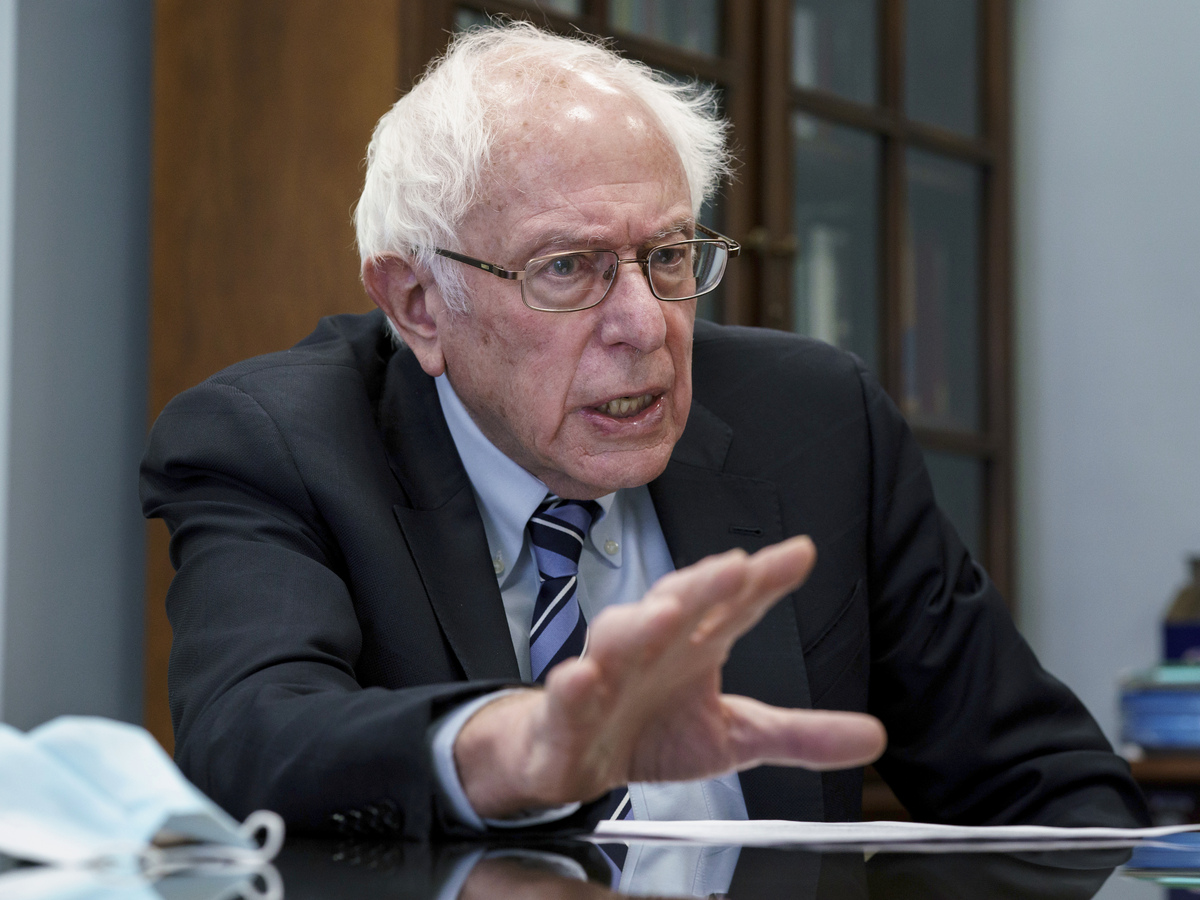
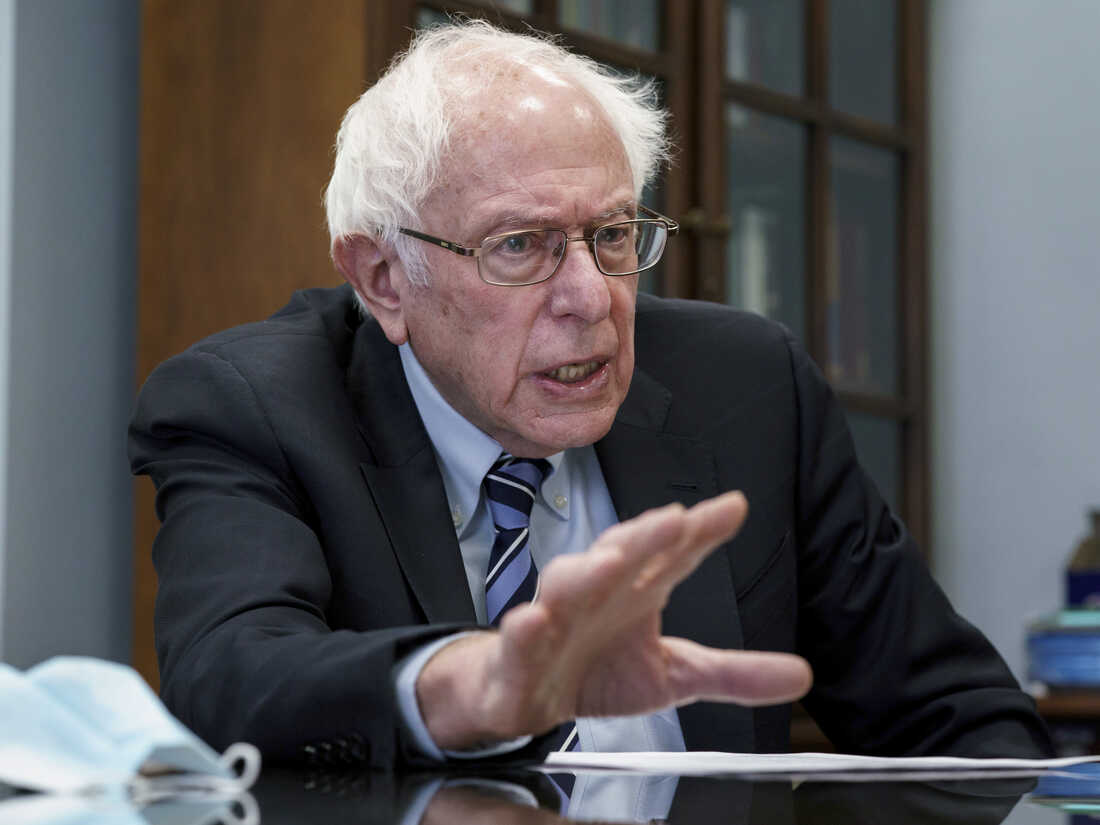
Sen. Bernie Sanders, I-Vt., is chairing the Senate’s top health committee which is focused on solving the U.S. health care worker shortage.

J. Scott Applewhite/AP


hide caption

toggle caption

J. Scott Applewhite/AP


Sen. Bernie Sanders, I-Vt., is chairing the Senate’s top health committee which is focused on solving the U.S. health care worker shortage.

J. Scott Applewhite/AP

Senators are eying the growing shortage of health care workers in the United States as one of the few problems where there is room for bipartisan solutions, even in a deeply divided Congress gearing up for a presidential election cycle.

The shortage that’s only worsened since the pandemic is a prescription for skyrocketing costs, suffering, and unnecessary death, warned Sen. Bernie Sanders, I-Vt., who is the new chairman of the Senate’s top health committee. He spoke in his committee’s first hearing last week.

“We are going to produce legislation, and I think people will be surprised about the level of bipartisan supporters,” Sanders said in a brief interview during a break from the hearing. He called for the committee to “produce something meaningful.”

The shortage of health care workers of all sorts is a widespread problem, but is especially acute in rural areas and minority communities. Sanders pointed to the startling numbers of Americans living in medical care deserts to illustrate the point. There are nearly 100 million people who don’t have easy access to a primary care physician, almost 70 million with no dentist at hand, and some 158 million people who have few local mental health providers, Sanders said.

The COVID pandemic contributed to the nation’s existing worker shortage as many left the workforce as the crisis worsened. Some contracted the virus themselves, and large numbers of health care providers died. An investigation by KHN and The Guardian revealed more than 3,600 health workers in the United States died during the pandemic’s first year alone. Many others got burnt out or sought higher-paying jobs elsewhere.

“Despite all of our health care spending, we don’t have enough doctors, nurses, nurse practitioners, dentists, dental hygienists, pharmacists, mental health providers, and other medical professionals,” Sanders said, pointing to data that suggest the nation faces a shortfall of about 450,000 nurses and 120,000 doctors in the coming years, and 100,000 dentists now.

While Democrats and Republicans alike acknowledged the shortages hobbling care for hundreds of millions of Americans, any legislative solution must pass not only the Senate Health, Education, Labor and Pensions Committee, but also the full Senate and House of Representatives.

Far-right House Republicans have threatened to go so far as forcing the federal government to default on its debts as they demand spending cuts, and high government spending on health care could make new legislation a ripe target.

Sen. Bill Cassidy of Louisiana, the committee’s top Republican who is also a doctor, cited a few programs the committee is responsible for updating this year, such as an expiring program that trains many of the nation’s pediatricians. He said funding should reflect what works in the health care system and come “with the appropriate spending offsets.”

“We have to make sure that we’re not wasting the money we’re trying to productively spend,” he said.

None of the senators in the hearing disagreed with the fundamental problem that too many medical professionals are leaving their fields and that educational institutions are not graduating enough new ones to replace them and meet the growing needs of an aging population.

Members on both sides of the aisle recognized growing levels of burnout in the medical professions; increased threats faced by health care workers; the costs and challenges of working underserved areas; and financial incentives that steer younger professionals toward more lucrative specialties and higher-income areas.

Senators agreed on some strategies to boost numbers of health workers, such as encouraging more lower-cost educational options like community college and ensuring that existing programs are extended this year, such as the National Health Service Corps that trains doctors for underserved areas and graduate education programs.

A whiff of partisan thinking drifted into the conversation, with some Republicans focused more on decrying government interference in health care. Sen. Mitt Romney, R-Utah, suggested the State Department should do a better job clearing foreign students and practitioners to immigrate here. Cassidy raised electronic health records requirements as a contributor to physician burnout, saying they consume too much time.

Even in those areas, there were signs lawmakers could agree. Sen. Tim Kaine, D-Va., also raised the idea of unjamming the immigrant backlog.

Sen. Rand Paul, R-Ky., said vaccine requirements were an impediment. Sen. Roger Marshall, R-Kan., raised regulations barring some surprise medical bills as harmful to doctors.

“I think the fact that the committee has made this the first hearing means a number of us have bills. We may try to take a bunch of them up together and see if we can combine them into something,” said Kaine, pointing in particular to the idea of expanding loan forgiveness for people willing to go into areas with shortages. “I think there’s great prospects for bipartisan progress on this.”

Some of the senators credited Sanders with the initial progress toward a compromise. He spent his first weeks in his post meeting with committee members from both parties to identify areas of bipartisan agreement.

Sen. Lisa Murkowski, R-Alaska, said Sanders reached out to meet with her and discuss her priorities. They both named workforce shortages as a top issue, she said, adding, “We’ve got good stuff to work on.”

“In my conversation with him just on the floor this week, about what we might be able to do with the workforce issue, I think he was kind of probing to see if we could put together some efforts to just focus on these workforce shortages,” Murkowski told KHN. “There is a great deal of interest in legislating in this space.”

“What it’s going to look like, I can’t tell you yet,” she added.

“We are going to produce legislation,” Sanders said as the hearing ended. “I don’t do hearings for the sake of hearings.”

KHN (Kaiser Health News) is a national newsroom that produces in-depth journalism about health issues. Together with Policy Analysis and Polling, KHN is one of the three major operating programs at KFF (Kaiser Family Foundation). KFF is an endowed nonprofit organization providing information on health issues to the nation.