Eastern District of Kentucky | Medical Equipment Company Pays $7 Million to Resolve False Claims Act Allegations

LEXINGTON, Ky.— United Seating and Mobility, LLC, d/b/a Numotion (Numotion) has paid $7 million to resolve civil allegations that it made false statements in connection with claims for reimbursement it submitted to Kentucky Medicaid, two of Kentucky Medicaid’s Managed Care Organization contractors (MCOs), MO HealthNet (Missouri Medicaid), and D.C. Medicaid.

Numotion is a national supplier of durable medical equipment (DME), such as hospital beds, manual wheelchairs, power wheelchairs and accessories, and gait trainers.  The investigation involved DME that was “manually priced” by Medicaid payors in Kentucky, Missouri, and D.C.  Those Medicaid programs reimbursed manually priced DME based on the cost Numotion actually paid the manufacturer for the equipment.  Specifically, in Kentucky, reimbursement is based on “a manufacturer’s actual charges” billed to Numotion, or the “invoice price;” in Missouri, reimbursement is based on the “actual invoice of cost;” and in D.C., reimbursement is based on “original documentation reflecting all discounts.”

In the Settlement Agreement, the United States alleged that Numotion did not disclose all discounts Numotion received from, or the cost Numotion actually paid to, DME manufacturers when submitting claims for manually priced DME to Kentucky Medicaid, two Kentucky Medicaid MCOs (Aetna Better Health of Kentucky and WellCare of Kentucky), MO HealthNet, and D.C. Medicaid.  Numotion’s failure to disclose all discounts, or the actual cost paid, resulted in these Medicaid programs paying Numotion higher reimbursements than it was entitled to receive.  The United States contended that the conduct violated the False Claims Act, 31 U.S.C. § 3729(a)(1)(B), a federal law that prohibits knowingly making or using a false statement material to a false claim for reimbursement. 

As part of the settlement, Numotion also entered into a 5-year Corporate Integrity Agreement (CIA) with the U.S. Department of Health and Human Services Office of Inspector General.  The CIA requires, among other things, that Numotion implement a centralized risk assessment program, as part of its compliance program, and hire an Independent Review Organization to complete annual reviews of some of its Medicare and Medicaid claims.

“By hiding or failing to disclose discounts, to receive higher reimbursement from Medicaid programs across the country, Numotion prioritized its financial incentives, to the detriment of these Medicaid programs,” said Carlton S. Shier, IV, United States Attorney for the Eastern District of Kentucky.  “Whenever the valuable resources of government health care programs are improperly dissipated to those who are not entitled, it diminishes the ability of these programs to meet the needs of their beneficiaries.  We remain committed to doing our part to protect these programs from fraud, waste, and abuse and to preserve the taxpayer money that supports them.”

“When health care companies do not follow federal health care billing requirements, the integrity of those safety net programs can be undermined,” said Special Agent in Charge Tamala E. Miles of the U.S. Department of Health and Human Services Office of Inspector General.  “Working with our law enforcement partners, the dedicated work of OIG’s investigators and attorneys has again resulted in the recovery of taxpayer dollars and better protection against improper billing in the future.”

The settlement resolves a lawsuit originally brought by L. Richard Parkey, a former Numotion employee, under the qui tam, or whistleblower, provisions of the False Claims Act.  Under those provisions, a private party can file an action on behalf of the United States and receive a portion of any recovery. As part of this resolution, Parkey will receive approximately $1.05 million of the settlement amount.

This case was investigated by the U.S. Department of Health and Human Services, Office of Inspector General.  Assistant United States Attorney Jennifer A. Williams handled the matter for the United States.

The case is United States ex rel. L. Richard Parkey v. United Seating and Mobility, LLC d/b/a Numotion, Case No. 3:17-cv-53-GFVT.  The claims resolved by the settlement are allegations only, and there has been no determination of liability.


– END –

Consuming this variety of bread may help reduce belly fat, says study

Bread is a staple food item in most kitchens across the globe. But did you ever link this common go-to breakfast or snack item with reduced belly fat? Well, according to recent research, whole-grain wheat bread may be linked to a reduction in belly fat or visceral fat obesity. A study published in Plant Foods for Human Nutrition, carried out a randomised controlled trial on 50 Japanese people to investigate the effect of the consumption of bread. “It was investigated whether a diet in which refined wheat bread (RW diet) was substituted by whole grain wheat bread (WW diet) would reduce visceral fat obesity in Japanese subjects,” stated the abstract of the study.

The Body Mass Index of the 50 participants was over the normal 23.5kg per metre square range, and they were divided into two groups. While one group of subjects was asked to consume refined wheat bread, the others had to take whole-grain wheat bread. After 3 months, the scholars found that visceral fat or belly fat had reduced significantly in the whole wheat bread group.

The results, thus, indicated that the consumption of whole wheat bread could be helpful for those watching their weight. “WW diet led to significant and safe reductions in VFA in subjects with BMI greater than or equal to 23 kg/m2. WW diet may contribute to preventing visceral fat obesity,” read the study.

How does whole wheat bread help in the reduction of visceral fat?

Before answering that question, let’s understand what exactly visceral fat is. According to experts, it is the fat that surrounds the internal organs and is linked to an increased risk of health problems like heart disease, diabetes, and certain cancers.

Commenting on the study, Sameena Ansari – Senior Dietitian and Nutritionist, CARE Hospitals, Hi-Tec City, Hyderabad, said, “Soluble fibre, like the one found in whole grain wheat bread, can help reduce visceral fat by binding to bile acids in the gut and preventing their reabsorption. This leads to the liver having to produce more bile acids which, in turn, uses up more cholesterol and ultimately leads to a reduction in overall cholesterol levels. Eating whole-grain wheat bread can also help you avoid highly processed and refined foods, which can contribute to weight gain and increased visceral fat. Whole grains are a good source of fibre, vitamins, and minerals, which are essential for overall health and well-being. In addition, choosing whole grain foods can also help regulate blood sugar levels, which is important for reducing the risk of developing type 2 diabetes”.

Consuming this variety of bread may help reduce belly fat, says study Soluble fibre, like the one found in whole grain wheat bread, can help reduce visceral fat by binding to bile acids in the gut and preventing their reabsorption. (Pic source: Pixabay)

She, however, added that reducing visceral fat requires a combination of healthy habits, including eating a balanced diet that is rich in whole grains, fruits, vegetables, lean proteins, and healthy fats, while also engaging in regular exercise and managing stress levels.

“It’s important to note that simply adding whole grain wheat bread to your diet may not be enough to achieve significant results and that it’s crucial to adopt an overall healthy lifestyle to effectively reduce visceral fat,” she told indianexpress.com.

Not everyone can opt for whole wheat bread

While whole wheat bread can aid weight loss, it might not be advised for everyone. Ansari explained, “People who need a low-fiber or low-carbohydrate diet may need to limit whole wheat bread. While it is by no means an unhealthy food, it may not be compatible with these special diets, especially in large quantities. People with celiac disease or non-celiac gluten sensitivity will also need to keep whole wheat bread off the menu, since wheat contains gluten”.

📣 For more lifestyle news, follow us on Instagram | Twitter | Facebook and don’t miss out on the latest updates!

Healthy Meal Plan for March 6, 2023

Welcome to Start TODAY. Sign up for our free Start TODAY newsletter to receive daily inspiration sent to your inbox. Then, join us on the Start TODAY Facebook group for tips and motivation, to connect with others following the plan — and to get real-time advice from trainer Stephanie Mansour!

You asked, we answered! Hundreds of Start TODAY members told us they wanted more healthy, balanced meal ideas to help them reach their health goals. This dietitian-designed meal plan gives you the flexibility to ease into a new month — all while learning the building blocks of healthy eating.

What to Eat This Week, March 6, 2023

Here’s a blueprint for easy meal prep this week. You’ll see that breakfasts are a mix of some make-ahead meals and some morning-of options. Lunches also utilize the mix-and-match strategy using store bought items like rotisserie chicken or simple roasted chickpeas and vegetables. While we’ve offered five different dinner options, you can streamline the menu by making enough for leftovers. From easy one-pot and sheet-pan dinners to a better-for-you version of a Chinese takeout favorite, we’ve got you covered this week.

Healthy Meal Plan for March 6, 2023

Breakfast

Make breakfast a no brainer. Create a simple list of go-to options or make-ahead meals that make mornings easier or simply mix-and-match these recipe ideas:

Easy Egg Bites

Ghazalle Badiozamani / Instant Loss Eat Real, Lose Weight: How I Lost 125 Pounds–Includes 100+ Recipes

Berry-Banana Smoothie

Whole Grain Waffles with Fruit

Toast a frozen whole grain waffle and spread with ricotta cheese or Greek yogurt — you can have fruit on top or on the side.

Lunch

Roasting a batch of your favorite vegetables is the key to easy lunchtime meal prep. Then, buy a rotisserie chicken (or roast your own!) to make two easy lunches on Monday and Tuesday — and then roast up some chickpeas for easy salad and veggie bowls later in the week. Make these dishes your own by leaning into easy seasonings like everything but the bagel seasoning, Italian and Greek seasoning, dried herbs and spices, lemon, pesto, low-sugar marinara sauce, tahini, and coconut aminos or lower-sodium soy sauce.

Perfect Roast Vegetables

Claudia Totir / Getty Images

Roasted Chicken

TODAY

Spiced Roasted Chickpeas

ClarkandCompany / Getty Images

  • Rotisserie Chicken Sandwich: Serve on whole-grain bread with your favorite fixings and vegetables on the side.
  • Rotisserie Chicken and Roasted Veggie Bowl: Use any roasted veggies and whole grains you like and flavor with any easy seasoning.
  • Green Salad With Roasted Vegetables and Chickpeas: Use any veggies (such as arugula and roasted veggies) and flavor with any easy seasoning.
  • Roasted Chickpea Veggie Bowl: Use any roasted veggies and whole grains (think brown rice, farro or quinoa) you like and flavor with any easy seasoning.
  • Canned or Boxed Soup — see serving suggestions.

Dinner

Below, we’ve put together some of our favorite healthy recipes on TODAY.com to make meal planning easier — feel free to swap out recipes for different days of the week, or make enough of one dish to serve as leftovers to save time on another night.

 Lemon Tarragon Chicken

FitMenCook(TM)

The dish uses lemon zest, a little olive oil and a handful of fresh tarragon — it’s a simple 3-ingredient mixture that wows the tastebuds. It warms the soul, awakens the senses and, perhaps most importantly, can be made in 20 minutes. Serve it with brown rice and vegetables.

Slow-Cooker Minestrone Soup

Casey Barber / TODAY

This slow-cooker soup keeps things hearty with cubes of tender potatoes, snappy green beans, and creamy cannelini beans, but you can always take your cue from the Italians and use this recipe as an excuse to cook up the odds and ends in your refrigerator’s crisper. Serve the soup with either an open-faced veggie-burger melt or avocado toast on a slice of whole-grain bread.

Eggplant with Tomato, Broccolini and Mozzarella

Courtesy Adam Friedlander

This sheet-pan dinner is a great way to eat a ton of vegetables — serve with whole wheat or bean-based pasta and jarred marinara sauce.

Mexican Quinoa Stew

Romel Bruno

Loaded with beans, quinoa and veggies, this Mexican-inspired stew is guaranteed to make your mouth water — plus, it’s vegan if you omit the cheese garnish! Serve with warmed tortillas or tortilla chips from this snack list.

No-Sugar Ginger Beef and Broccoli

Kevin Curry

You’ll get all the flavor of your favorite takeout with less salt — and no added sugar! Serve with this dish with microwavable brown rice, cauliflower rice, or a blend of each.

Snacks

Snacks that contain whole food sources of protein and fiber offer a winning formula that keeps you full for hours. Here are a few ideas:

  • Sliced cucumbers with olive tapenade.
  • Baby carrots with hummus or guacamole.
  • Sliced apple with a slice of cheese.
  • Sliced pears with nut or seed butter.
  • Plain or lower-sugar Greek yogurt with berries or grapes.

Secrecy shrouds troubled state psychiatric hospital in Montana : Shots

Secrecy shrouds troubled state psychiatric hospital in Montana : Shots

Jennifer Mitchell thumbs through her husband’s medical records from his time at the Montana State Hospital. Records show doctors took Mitchell’s husband off some of his congestive heart failure medications. Mitchell says she was never consulted.

Aaron Bolton/Montana Public Radio


hide caption

toggle caption

Aaron Bolton/Montana Public Radio


Jennifer Mitchell thumbs through her husband’s medical records from his time at the Montana State Hospital. Records show doctors took Mitchell’s husband off some of his congestive heart failure medications. Mitchell says she was never consulted.

Aaron Bolton/Montana Public Radio

BUTTE, Mont. — Jennifer Mitchell remembered getting a call nearly two years ago that her 69-year-old husband, Bill, had crashed his car and had been committed to the Montana State Hospital, the state-run psychiatric hospital for adults about 20 miles from their home in Butte.

Physicians thought Bill Mitchell had dementia and could be a danger to himself or others, according to medical records. But once he was admitted, his wife really began to worry. She couldn’t visit him because of covid-19 restrictions, and she couldn’t get details about the care or the medicine he was receiving.

“I tried to get an idea of what he was taking, not taking. I could not get answers,” Jennifer said.

When Bill was discharged after 60 days, Jennifer discovered he had been taken off some of his congestive heart failure medications. A month later, he went into cardiac arrest and was moved to hospice care. He died on July 30, 2021, a day after his 70th birthday.

The psychiatric hospital in southwestern Montana has been under scrutiny since the federal Centers for Medicare & Medicaid Services decertified it in April 2022 following investigations into patient deaths and assaults. Federal officials found in the investigations that the hospital had failed to meet Medicare’s “basic health and safety requirements.”

Mitchell said that she was infuriated by the lack of transparency around her husband’s care and that she hoped decertification would force a change for the better. But it’s had the opposite effect. When federal oversight and funding of the Montana State Hospital was removed, so too was the ability of the public to learn details surrounding patient deaths and injuries.

Between April’s decertification and the end of December, five Montana State Hospital patients have experienced severe injuries requiring immediate medical care or hospitalization, and there have been eight substantiated abuse and neglect reports, Montana Department of Public Health and Human Services spokesperson Jon Ebelt said.

Six patients died in that period in the 174-bed hospital, though Ebelt declined to say how many deaths were investigated or if any deaths were deemed preventable.

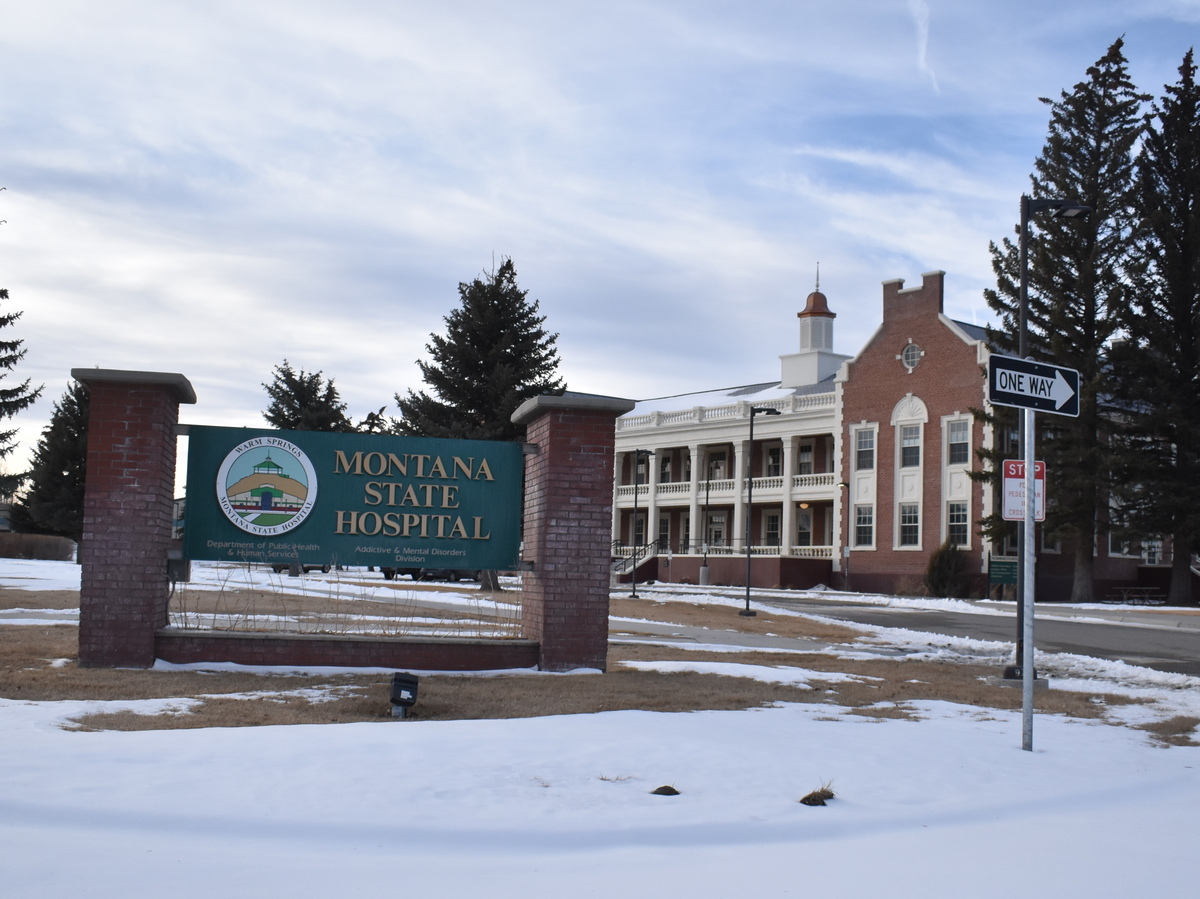
The Montana State Hospital in Warm Springs, Montana, lost federal funding in April 2022 after an investigation into four patient deaths and a violent patient-on-patient assault.

Aaron Bolton/Montana Public Radio


hide caption

toggle caption

Aaron Bolton/Montana Public Radio


The Montana State Hospital in Warm Springs, Montana, lost federal funding in April 2022 after an investigation into four patient deaths and a violent patient-on-patient assault.

Aaron Bolton/Montana Public Radio

The circumstances surrounding all those incidents are not publicly known. That’s because, unlike federal investigations, state-level investigations are not public record.

The state health department denied a public records request for all investigations into Montana State Hospital patient deaths, injuries, and assaults since losing federal certification. Ebelt cited a Montana law that says any records about providing treatment to the seriously mentally ill are confidential and privileged.

States vary widely in what information about abuse and neglect at state-run medical facilities is made public, said David Hutt, deputy executive director for legal services for the National Disability Rights Network.

Hutt noted that the lack of transparency at the Montana State Hospital is unique because it lost federal certification and oversight, which is extremely rare.

State-hired contractors have produced public reports highlighting improvements at the Montana State Hospital, such as a reduction in falls among geriatric patients. But those reports don’t disclose information related to patient deaths, severe injuries, or substantiated abuse and neglect cases, which had led to decertification in the first place.

The lack of information frustrates some lawmakers as they consider state health officials’ and Republican Gov. Greg Gianforte’s request for a $300 million appropriation to overhaul the state’s mental health system and a nearly $20 million request for capital improvements and CMS recertification efforts at the state hospital.

“We’ve stabilized MSH since that decertification with a change in leadership and with no significant increase in deaths, serious injuries, or substantiated abuse or neglect allegations,” state health department Director Charlie Brereton told state senators during his recent confirmation hearing.

State Democratic Rep. Mary Caferro, who serves on committees considering funding requests and other legislation to reform the state hospital, likened the current level of oversight at the state hospital to the fox watching the henhouse.

“The legislature, when we have good information, thorough information, we make better policy that’s in the best interest of the people we represent,” Caferro said.

Mental health experts agree with Caferro.

“We should know the answers to whether people in the hospital are safe,” said Ben Miller, a clinical psychologist and former president of Well Being Trust, a national foundation focused on mental health care.

A bill that passed through the Montana Senate and is before the House would automatically send all abuse and neglect reports at the state hospital to Disability Rights Montana within five days of an incident. The nonprofit is the federally designated advocacy and watchdog organization for people with disabilities in the state. It recently released a report detailing how some patients were discharged to homeless shelters.

Bernie Franks-Ongoy, the organization’s executive director, said that Disability Rights Montana hopes to be able to share general information from the reports with lawmakers and the public, but noted that state law significantly limits what can be made public. Caferro said she’ll seek to amend the bill to make redacted versions of the reports available to lawmakers and the public.

The Montana Mental Disabilities Board of Visitors also has regular access to the facility and patient records, but its last inspection of the state hospital was in 2019 and the next inspection isn’t expected until next year.

Some lawmakers call the oversight adequate.

“I don’t worry so much about the administration at the hospital hiding anything because they really do have the light shown on them constantly with [Disability Rights Montana] and the Board of Visitors,” said Republican Rep. Bob Keenan, who chairs the committee considering funding requests for the state hospital and the state’s mental health system.

Jennifer Mitchell looks through pictures of travels with her husband, Bill. After Bill was discharged from the Montana State Hospital, Jennifer discovered he was taken off some of his congestive heart failure medications. He later suffered a cardiac arrest and died in hospice care.

Aaron Bolton/Montana Public Radio


hide caption

toggle caption

Aaron Bolton/Montana Public Radio


Jennifer Mitchell looks through pictures of travels with her husband, Bill. After Bill was discharged from the Montana State Hospital, Jennifer discovered he was taken off some of his congestive heart failure medications. He later suffered a cardiac arrest and died in hospice care.

Aaron Bolton/Montana Public Radio

Keenan and Gianforte blame the current conditions at the facility and loss of CMS certification at the state hospital on prior Democratic administrations. Federal officials noted serious deficiencies at the Montana State Hospital in 2017, but federal officials later deemed those issues resolved.

If lawmakers approve the mental health funding requests, the administration plans to open two lower-level mental health facilities in the coming years to reduce demand at the state hospital. However, the hospital would remain a key fixture of Montana’s mental health system, according to state health officials. Mental health advocates and many lawmakers agree the state hospital should be saved.

Jennifer Mitchell, the woman whose husband died shortly after his discharge from the state hospital, thinks the hospital is beyond repair and worries more patients will die at the facility. She reflected on how hospital officials frequently changed her husband’s medication in response to his depression and refusal to eat, and said she believes her husband would still be alive today if he hadn’t been committed there.

“There were just so many little mistakes or little things that could have been different, and it would have been a totally different outcome,” she said.

This story is from of NPR’s partnership with Montana Public Radio and KHN. KHN (Kaiser Health News) is a national newsroom that produces in-depth journalism about health issues.

China releases ‘landmark’ document on ethics reviews of life sciences, medical research involving humans

China releases ‘landmark’ document on ethics reviews of life sciences, medical research involving humans

Chinese scientist He Jiankui presents his gene-editing experiment at the Second International Summit on Human Genome Editing in Hong Kong on Wednesday. Photo: AFP

China released a national regulation on ethics reviews of life sciences and medical research involving humans, which experts take as a “landmark document” since the illegal human genome editing case by the controversial scientists He Jiankui in 2018.

Life sciences and medical research involving humans includes research activities using humans’ biological samples and data to conduct research activities involving reproduction, growth, development and aging through physical, chemical, biological and traditional Chinese medicine methods. 

It also covers experiments on human bodies with new technologies or new products, according to the regulation released on the website of the National Health Commission (NHC) on Monday.  

Compared with the previous version released in 2016, the newly revised regulation expands the application scope from only medical institutes to colleges as well as scientific research institutes and clarifies regulatory duties of various related authorities, according to an explanation on the document by the NHC.

It also allows institutes that had not set up ethics review commissions to entrust a capable commission to conduct ethics reviews. Companies can also entrust a capable commission to conduct ethics reviews or supervision of a project. 

The new regulation also gives detailed rules on the specific steps of the ethics review.    

It stressed that ethics review commissions should regularly conduct reviews of life sciences and medical research involving humans and organize educating and training sessions for related research fellows, students and management personnel. 

Ethics reviews should also be carried out timely under an emergency situation. For example, during the outbreak of an epidemic, such reviews should be conducted within 72 hours, with equal requirements in normal times. 

Life sciences and medical research involving humans should be of scientific and social value and special attention should be paid to the research concerning fertilized eggs, embryos, fetuses or those that could be affected by assisted reproductive technology, the regulation noted.  

Experts reached by the Global Times hailed the new regulation, saying it is a “landmark regulatory document” since the illegal human genome editing case by the controversial scientist He Jiankui in 2018. 

In 2018, He, a genome-editing researcher at the Southern University of Science and Technology of China in Shenzhen, Guangdong Province, shocked the world as he claimed to have created the world’s first genetically modified humans.

He was sentenced to three years in prison in December 2019 for illegally conducting human embryo gene-editing intended for reproduction. He was reportedly released from prison in April 2022.

He made a high-profile comeback in early February as he attended an academic seminar focusing on the social values of CRISPR technology, sparking heated discussion on the ethical issues of scientific development. 

He caught public attention again last week as the Immigration Department of Hong Kong Special Administrative Region on February 22 invalidated the Top Talent Pass visa it had issued to He for “false statements” less than a day after He told media he had obtained the visa. 

What Makes Health Care Workers Stay in Their Jobs?

Ask leaders of health care organizations about their top three challenges for the year ahead, and many answer, “Workforce, workforce, and workforce.” These leaders go on to say that they are struggling to recruit and retain caregivers of all types, that the costs are breaking their budgets, and that morale is at historic lows. As a direct result, every type of performance is suffering: financial, safety, and overall quality, including the patient experience.

With an air of desperation, organizations are trying many tactics, including awarding bonuses for signing, staying, and referring new recruits. They are implementing programs to reduce burnout like mindfulness training and investing in AI and other technologies that reduce administrative burden. All of these tactics to improve compensation and mitigate the deadening aspects of work have merit, but organizations should not rely upon them to create the loyalty and resilience needed for excellence in health care.

Our data on hundreds of thousands of physicians, nurses, and other caregivers in the United States shows that pride in their work and loyalty to their colleagues are the strongest correlates of their readiness to stay with their organization and continue showing up for work. Competitive pay and other support options are essential to recruiting caregivers, of course, but organizational culture, including a commitment to excellence, is what makes them stay.

Improving organizational culture is a leadership challenge that is more complex than finding the money to increase compensation or correcting the problems that cause unhappiness. After all, in life in general, happiness is something beyond the absence of unhappiness. The same is true in health care. For example, “service recovery” programs that quickly address patients’ complaints can mitigate their ire, but lack of ire does not equate to loyalty. Similarly, organizational responses to caregivers’ pain may prove that the leaders care, but it doesn’t mean that the caregivers will keep showing up and doing whatever it takes to meet their patients’ needs.

What does drive loyalty and resilience among caregivers? As is true in other industries during these difficult times, getting back to basics is crucial — and in health care that means focusing organizational culture on the noble cause of reducing patients’ suffering and then supporting caregivers in that work. Our data demonstrates that this is not wishful thinking; it is an operational imperative.

For example, we have analyzed the drivers of loyalty for 410,000 health care employees during the pandemic. In these analyses, we examine factors that correlate with employees’ expressing strong agreement with these two statements: “I would stay with this organization if offered a similar position elsewhere” and “I would like to be working at this organization three years from now.” For both metrics, there has been a marked decline across the country from 2020 to 2022 (on a 1-5 scale, from 4.15 to 4.00 for the first statement and from 3.93 to 3.78 for the latter).

But the patterns of change have not been the same in every organization and for every job type. There has been a “spreading of the pack,” with greater variation than in the past in measures of workforce engagement between organizations doing well and those doing poorly. The data suggests that leadership matters as never before — not just at the C-suite level but also at the front lines where managers really determine how organizational culture feels for employees. For example, there can be vast differences in how caregiver morale in two patient care units that are physically adjacent to each other but have different nurse managers.

Whatever variation exists among managers, there seems to be remarkable consistency in what matters to the people working for them. In our analyses, for all types of health care personnel, their organizations’ commitment to quality and patient-centered care was among the top drivers of their likelihood to stay. When employees gave their organization low ratings on these issues, they were more than six times as likely to say they were preparing to leave. These issues were important to security guards, maintenance, and clerical personnel as well as clinicians.

That finding may seem surprising at first glance, but as one hospital executive said to us, “It makes perfect sense. When patients feel mistreated, they don’t yell at the doctor very often; they take it out on the clerks and security guards. But when patients have a great experience, the clerks and security guards get to bask in the glow – and that makes them want to stay.”

For physicians, the top factors that correlated with their expressed likelihood of staying were whether they like their work, feel the organization is making good use of their skills, and the organizational culture. For example, if physicians felt that the organization did not have an inclusive culture, that increased their risk for considering leaving 5.5-fold. Competitive compensation packages are presumably critical to recruiting physicians, but culture is essential to retaining them.

Press Ganey’s data is completely consistent with the findings of a study of 20,627 physicians and advanced practice clinicians in 120 large U.S. health care organizations by Mark Linzer and his colleagues that was published last November in the JAMA Health Forum. It found that intent to leave had increased from 24{bf0515afdcaddba073662ceb89fbb62b6b1bf123143c0e06b788e1946e8c353f} in 2019 to more than 40{bf0515afdcaddba073662ceb89fbb62b6b1bf123143c0e06b788e1946e8c353f} in 2021 but identified several factors that mitigated the risk of burnout. In multivariate regression analyses, positive factors included feeling valued, good teamwork, and having values that are aligned with those of leaders.

Our data for physicians, nurses, and all types of personnel demonstrate a halo of positive effects that accompany these sources of caregiver pride. For example, these measures of overall “engagement” with the organization also correlate strongly with measures of safety culture, such as their confidence in the organization’s commitment to preventing and reporting adverse events — and those safety culture measures are associated with lower rates of safety events. In short, data confirms that excellence in all performance areas that drive business success are intertwined: patient experience, quality and safety, and the engagement of the workforce.

The implications of these findings for health care leaders are that they, of course, must listen carefully to grasp what issues are causing employees’ pain and fear and try to address them. But leaders must also listen to understand their employees’ hopes for what their work means to them and reinforce the aspirations that brought their employees to health care to begin with.

To do that, leaders must be clear about their values, their commitment to safety, the reduction of suffering, and a culture of respect and inclusion. They must prove their authenticity by committing to measuring how things are going on these issues, being transparent with the findings, and using them to improve. The result will be greater workforce loyalty and resilience, which will translate to better performance of all types.