G2, the largest tech marketplace, named Trainerize the leading software for personal trainers for each season in 2022
VANCOUVER, BC, March 2, 2023 /PRNewswire/ — Trainerize, the fitness coaching software empowering personal trainers and fitness businesses to better engage with their members, is delighted to announce its recognition as the best personal training software from the community, marketplace, business and review platform, G2 all throughout 2022.
Trainerize
Trainerize was the winner of G2’s award for Best Personal Training Software in every season in 2022, claiming the #1 position in Winter, Spring, Summer, and Fall.
The criteria for this particular recognition consists of review scores from the G2 user community and data aggregated from online sources and social networks. The points process takes into account how well the fitness software can empower fitness professionals to keep track of client information, create training and nutrition plans, schedule meetings/training sessions, and easily manage online client payments.
Trainerize exceeded all of the necessary criteria and proved to be an excellent solution for coaches to manage client fitness, nutrition and habit programming in one place. In addition, Trainerize aids its users with keeping track of their clients’ progress and increasing client engagement.
Throughout 2022, the Trainerize platform was also awarded with several other badges from G2 under various categories, including: Best Usability, Best Results, Best Relationship and Users Most Likely To Recommend.
Speaking after G2’s Winter award winners were announced, Trainerize Platform President, Sharad Mohan said, “for Trainerize to be recognized as a Leader in Personal Training Software is not only gratifying, but extremely motivating. This award is based on real-life consumer reviews and feedback, which not only makes it so much more meaningful, but also tells us that what we’re doing at Trainerize is working. So we’re going to keep doing it—and more. We’ll keep delivering the kind of platform personal trainers and fitness businesses both want and need—and that their clients and members love using.”
About Trainerize
Trainerize is a client engagement mobile app and software that allows fitness businesses and fitness professionals to expand their reach beyond their physical spaces, better connect with clientele, build meaningful relationships, and digitize the training experience. Fitness businesses use Trainerize to boost member engagement through digital services as well as attract new members by tapping into the market of online training. To learn more, visit www.trainerize.com.
About ABC Fitness Solutions
ABC Fitness (ABC) is the market leading software and services provider for fitness businesses globally. Building upon a legacy of excellence, ABC enables fitness operators of all sizes, anywhere in the world to transform their vision of fitness into reality. Whether a boutique studio, international franchise, regional club chain, local gym, or personal trainer, ABC provides the industry insights, technology, and innovation to partner for growth long-term. Our club management solutions simplify business operations while unveiling opportunities for further development and evolution. We are the only software provider to be able to support fitness businesses from conception all the way through to high-scale growth internationally, delivering reliability and quality at scale.
Founded in 1981, ABC has grown its global capabilities and expanded its integrated solution suite through the development of best-of-breed platforms such as IGNITE, Trainerize, Glofox, EVO, as well as other leading solutions. ABC helps over 35 million members around the world and processes over $8.8B+ in payments annually for 24,000 clubs in over 92 countries. ABC Fitness Solutions is a Thoma Bravo portfolio company; a leading private equity firm focused on investing in high-growth software and technology companies. Learn more at abcfitness.com or thomabravo.com.
Media Contact Laura Dunlop Marketing Director, Trainerize 778.953.2489 354793@email4pr.com
BRYAN, Texas (KBTX) – In a recently leased warehouse on Texas Avenue in Bryan, Chosen BCS, a faith-based, community-oriented organization is working to be a lifeline to those in need of durable medical equipment.
The nonprofit is set to open in the next month and has already started to collect new and gently used medical equipment like wheelchairs, canes, walkers, hospital beds, and more, all to distribute to people in need.
Chosen is an international ministry based out of Erie, PA with local distribution and collection sites across the country.
Longtime Brazos County resident Sara Hadley is the director of Chosen BCS Pavilion Texas. Once operational, she says the ministry aims to bridge the gap for people needing medical supplies.
“Medical equipment is essential for the care and well-being of many individuals. Unfortunately, many people cannot afford it or have limited access to it,” says Hadley. “Chosen seeks to offer a beacon of hope and lifeline to those who need medical devices to enable them to live their best life.”
“There are no boxes to check, no income or insurance requirements, or timelines to fulfill. Locally, we distribute everything from gauze to hospital beds to anyone who expresses a need for our staff,” said Hadley.
The Brazos County District 2 Volunteer Fire Department recently made the first donation to Chosen BCS.
“Excited to see Chosen B/CS take what we were doing with our medical supply loan closet to the next level to serve the entire county, and then some,” the district said in a social media post.
Hadley says the hearts this team has for God and His people is the most inspiring and the driving force behind bringing this ministry to the Brazos Valley.
For more information on Chosen BCS and how you can get involved call 979-204-1104
Much is known about the heart-health benefits of adopting a Mediterranean-style diet, with its heavy focus on whole grains, fruits, vegetables, fish and healthy oils. But what about the rest of the Mediterranean lifestyle?
Short of lounging on the beaches of southern Italy or an island in Greece, could adopting the focus on relaxed, familial dining, afternoon naps and strong communal bonds also improve health?
A group of researchers explored what would happen if middle-aged and older British adults—who live about 1,500 miles northwest of the Mediterranean Sea and its convivial way of life—adopted not just the dietary but also the physical activity and social habits of their southern neighbors. And they found that the more they adhered to this lifestyle, the lower their risk of dying from cancer, cardiovascular disease and other health conditions.
The findings, presented Feb. 28 at the American Heart Association’s Epidemiology, Prevention, Lifestyle and Cardiometabolic Health conference in Boston, are considered preliminary until full results are published in a peer-reviewed journal.
“This study suggests that adopting a Mediterranean lifestyle adapted to the local characteristics of non-Mediterranean populations is possible and can be part of a healthy lifestyle,” said the study’s senior researcher, Mercedes Sotos-Prieto, an assistant professor in the department of preventive medicine and public health at the Autonomous University of Madrid, Spain. She also is an adjunct professor at the Harvard T.H. Chan School of Public Health in Boston.
Prior research has shown the Mediterranean-style eating pattern helps protect against cardiovascular disease, lowering the risk for heart attacks and strokes. In this latest study, researchers analyzed the impact of other Mediterranean lifestyle factors—including physical activity, rest, social habits and conviviality—on 110,799 middle-aged and older adults living in England, Scotland and Wales.
Participants were drawn from the UK Biobank, a multi-center, population-based study of people ages 40 to 75 who were free of cancer and cardiovascular disease when they enrolled between 2009 and 2012. They were followed until 2021.
A 25-point MEDLIFE index was used to score their adherence to the Mediterranean lifestyle. The index was broken down into three blocks: Mediterranean food consumption (12 points), which looked at what people ate; Mediterranean dietary habits (7 points), which looked at additional factors such as whether they snacked, added salt to their meals or preferred whole grains to refined grains; and other lifestyle factors (6 points).
The last block included questions on whether people ate meals with family and friends (conviviality); engaged in physical activity with others, for example by going on walks together; how often they met with family and friends (social habits); and how much sleep they got, both at night and through naps (rest).
After a median follow-up time of 9.4 years, death records were used to compare death rates for cancer, cardiovascular disease and all other causes between those with higher and lower MEDLIFE index scores. The analysis showed the more people adhered to the Mediterranean lifestyle, the lower their risk of dying from cancer or from any cause.
Specifically, compared to those with the lowest MEDLIFE index scores, adults with the highest adherence to the Mediterranean lifestyle had a 29{bf0515afdcaddba073662ceb89fbb62b6b1bf123143c0e06b788e1946e8c353f} lower risk of dying from any cause and a 28{bf0515afdcaddba073662ceb89fbb62b6b1bf123143c0e06b788e1946e8c353f} lower risk of dying from cancer. Higher scores for each of the three blocks of the MEDLIFE index were associated with lower cancer and all-cause death risks. Higher scores for the third block, related to lifestyle activities, also were associated with lower cardiovascular death risks.
The study highlights the important roles community and social engagement play in good health, said Marie-Pierre St-Onge, an associate professor of medicine and director of the Center of Excellence for Sleep and Circadian Research at Columbia University in New York City.
“The Mediterranean lifestyle involves interactions with others,” she said, a component that is particularly important for people as they age. Studies have shown social isolation may increase a person’s risk of having or dying from a heart attack or stroke.
The findings emphasize why “we should be paying attention to other aspects of lifestyle, beyond just physical activity,” said St-Onge, who was not involved in the study. “Maybe we need to look at more and more of these social factors.”
One thing the study did not explore and would be of interest in future studies is the impact of stress, she said. “When you think about the Mediterranean lifestyle, you think about living at a slower pace, but this study does not seem to capture that.”
Citation:
Mediterranean lifestyle, not just diet, may greatly improve health (2023, March 1)
retrieved 2 March 2023
from https://medicalxpress.com/news/2023-03-mediterranean-lifestyle-diet-greatly-health.html
This document is subject to copyright. Apart from any fair dealing for the purpose of private study or research, no
part may be reproduced without the written permission. The content is provided for information purposes only.
Kids in the U.S. and around the world are in crisis.
More than 60{bf0515afdcaddba073662ceb89fbb62b6b1bf123143c0e06b788e1946e8c353f} of children with depression don’t get any mental health treatment, according to Mental Health America. Pair that statistic with the fact that about 80{bf0515afdcaddba073662ceb89fbb62b6b1bf123143c0e06b788e1946e8c353f} of the United States has a severe shortage of child psychiatrists, and the picture becomes clear: there is a growing mental health crisis in the United States and beyond.
That’s why CBS News and local CBS-owned television stations spent more than six months exploring the sources of the problem, as well as solutions across the country that could address it. This is a collection of the reporting by CBS journalists, committed to the well-being of our kids.
Documenting kids’ personal struggles
“Bring darkness into the light,” said filmmaker Noemi Weis.
That’s the goal of her documentary, “Connecting the Dots,” which features young people from around the world candidly talking about their struggles with mental health and the need to be supported.
“We need to listen in a way that is with open eyes and with providing a safe space, providing no judgment,” Weis told CBS News. “As much as we believe that we are in a world where we are all connected, the disconnect is huge. The isolation, the loneliness needed to be addressed.”
CBS News licensed the documentary for an exclusive release nationwide on its streaming platforms Wednesday night. The film will be available to view on demand following the streaming event.
The filmmaker created facilitator guides, in partnership with UNICEF, for youth, parents, educators, mental health professionals, and others to watch the documentary and discuss it.
Seeking mental health help
If you or someone you know is in crisis, get help from the Suicide and Crisis Lifeline by calling or texting 988.
In addition, help is available from the National Alliance on Mental Illness, or NAMI. Call the NAMI Helpline at 800-950-6264 or text “HelpLine” to 62640. There are more than 600 local NAMI organizations and affiliates across the country, many of which offer free support and education programs.
Read more from CBS News and local stations
CBS News will continue to update this page as we publish more stories about youth mental health in the coming days.
Fearing Daniel might harm himself, his parents took him to the only place they could: the emergency room. After seven days in the ER, Daniel was discharged; hospital staff felt he was no longer in danger. His parents disagreed. Read more
Young people are increasingly turning to social media platforms like TikTok to diagnose their mental health struggles and often getting misinformation. A California psychology professor has gained a million followers on TikTok by debunking wellness advice that could do more harm than good. Read more
Jamie Howard, senior clinical psychologist at the Child Mind Institute, joins “CBS Mornings” to discuss the youth mental health crisis and shares tips on how parents can have an open conversation with their teens about mental health and social media. Read more
In a city with near daily gun violence, the sound of police sirens and the roar of emergency vehicles often become a part of life in some high-crime areas, leaving the ear-piercing noise nearly ignored. For those young people who are becoming more of the victims of gun violence, their trauma seeps through and is ever-present. Read more
A tragedy in the San Francisco Bay Area was the spark a group of California teens needed to do something about breaking the stigma associated with youth mental illness and how to react in an emotional crisis. Read more
Taking a break from social media – even a short one – can have a powerful impact on the self-esteem of young women. Researchers at Colorado College conducted a study with teenage girls, and found that just three days off social media led to significant improvements in body image. Read more
On a piece of land on Chicago’s West Side, the community group BUILD Inc. has done just that. “We’ve got a whole new building,” said David Rodriguez, a BUILD member. “We’ve got a second floor finally.” Read more
Behind the hustle and bustle of Manhattan, and tucked away beneath another busy school day, there’s a break — 45 tranquil minutes in the basement of New Design High School on the Lower East Side.
It’s where kids forget about calculus and chemistry and clear their minds through yoga. Read more
Chris Hacker
Chris Hacker is an investigative data journalist at CBS News.
Virginia lawmakers have decided not to move forward with legislation that would officially apologize for the state-sanctioned misuse of Black body parts over the past two centuries.
As far back as the 1800s, Old Dominion allowed medical professionals to conduct research on African-American bodies, living and dead, without their or their family’s permission. Some politicians were hoping in vain the state legislature would own up to exploitation.
However, on Friday, Feb. 17, the Rules subcommittee of Virginia’s House of Delegates voted 4-1 to lay SJ 274 on the table. This act, according to the Virginia Mercury, indefinitely killed the resolution.
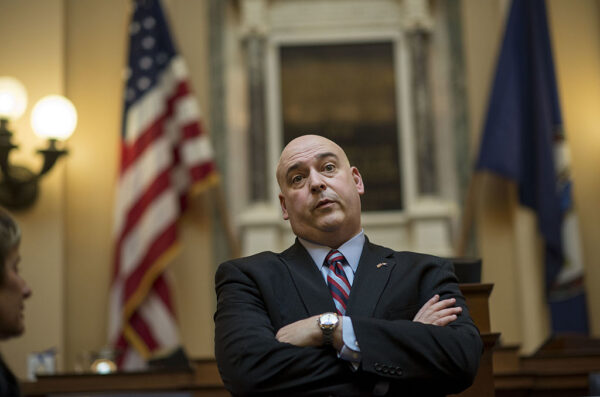
RICHMOND, VA – FEBRUARY 3: Delegate Todd Gilbert, left, a Virginia republican representing the Shenandoah district, talks to fellow delegates on the House floor of the Virginia State Capitol in Richmond, Virginia, Monday, February 3, 2014. (Melina Mara/The Washington Post via Getty Images)
Four Republicans among the subcommittee’s five members, House Majority Leader Terry Kilgore, Speaker Todd Gilbert, Del. Barry Knight, and Del. Kathy Byron, shut it down.
Titled “Unethical use of Black bodies by medical institutions; acknowledging with profound regret,” the bill was introduced by Democratic Sen. Jennifer B. Boysko of Fairfax.
During her presentation of the bill, she said it was important to acknowledge the past wrongs perpetrated by the government in order to heal wounds created by those wrongdoings.
Gilbert, one of the Republicans who voted against the resolution, said during the meeting, “I feel like there are thousands upon thousands of equally painful and hurtful and regrettable stories that could be told about how we treated one another, how Black Americans were treated for a very long time in this country. And I just worry that there’s no end to these resolutions, and maybe that’s the intent, I don’t know.”
One example of this was when the Medical College of Virginia hired grave robbers to steal Black bodies for medical experimentation in the 1800s when they did not have cadavers available for research.
“But certainly,” he continued. “If it helps for me to acknowledge that fact, that there are these many, many hurtful, painful memories and events and actions that hurt so many people, you know, I’m doing that publicly right now.”
“I just don’t know in the way of legislation how we contribute to that healing by acknowledging one or two a year at a time. That’s my main concern,” he concluded.
After the bill was not affirmed, Boysko said, “I think it’s important that we address problems so we can move forward collaboratively. We know there are Black people who live in Virginia and around the country who are suspicious of health care because of what has happened in the past.”
Adding, “Our bill would have at least admitted that and given people a small peace of mind.”
Phillip Thompson, the former president of the Loudoun NAACP, believed the resolution would pass because it was supported by many in the senate already, unanimously being passed in that branch of government. However, the House of Delegates proved to be a barrier to the measure.
He said, “I thought it had a chance because it’s a very innocuous bill. We weren’t asking for reparations, nothing like that; we just wanted a real apology.”
Thompson also added that he believes it was so difficult to persuade African-Americans to get the COVID-19 vaccine because of the mistrust born out of the nation’s history of medical mistreatment, including The Tuskegee Experiment.
From 1932 to 1972, about 400 African-American men with syphilis participated in The Tuskegee Study of Untreated Syphilis in the Negro Male by the United States Public Health Service
According to the Centers for Disease Control and Prevention, the study initially involved 600 Black men (399 with syphilis, and 201 who did not have the disease). Participants were told they were being treated for “bad blood” but never had informed consent collected.
Despite being in the study, which looked at the sexually transmitted disease, anemia, and fatigue, the men were never offered penicillin to treat their syphilis. Instead, for research purposes, they were allowed to suffer.
“When the COVID vaccines first came out in my community, a lot of African-Americans didn’t want to take those vaccines because they thought that it was like the Tuskegee experiment,” Thompson explained. “Back in the ’30s and 40s, young kids were told don’t stray too far because the body snatchers will get you.”
Boysko explained in her bill presentation that this kind of warning was plausible.
She reminded the group that in April 1994, nine of the 53 bodies discovered in Richmond’s East Marshall Street Well dug up on Virginia Commonwealth University’s MCV Campus were discovered to be mostly from Black children. The human bones found at the well are believed to have been discarded in the 1800s by medical staff.
“Many of us still don’t trust the system, and when you look at history, that distrust is justified,” Thompson said.
In September, Virginia Commonwealth University formally apologized for its discarding of Black bodies after dissections. It also issued an apology to the family of Bruce Tucker, a Black Virginia laborer whose heart was removed after his condition was deemed too severe in 1968.
He sports a bushy white mustache and a bit of a gut. He dances to reggaeton in cities and towns across Mexico. He has 2 million followers on TikTok and at concerts is routinely passed into the arms of pop stars. His face even adorns a mountainside.
He is Dr. Simi, the cartoon mascot of Farmacias Similares, Mexico’s largest drugstore chain, with more than 8,500 locations across the country. His ubiquity speaks to the company’s round-the-clock marketing strategy but also something darker: the failure of the Mexican government to deliver on its promise of healthcare for all.
Medicines are often in short supply in public clinics, where it can take weeks to get an appointment with a primary care doctor.
At Farmacias Similares’ corporate headquarters, an employee sits at her desk adorned with Dr. Simi dolls and stickers.
(Luis Antonio Rojas / For The Times)
Farmacias Similares helps fill the gap with cheap generics and $2 doctor visits. The chain says its clinics next to each location provided 136 million appointments last year.
Many pharmacies feature an employee in a Dr. Simi padded bodysuit waving to passersby and engaging in antics such as challenging the cow mascot of Mexico’s Alpura milk brand to a dance-off.
Various Dr. Simis pose for a photo at an event in 2022 to celebrate the company reaching its target of 8,000 pharmacies.
(Farmacias Similares)
At the company’s headquarters in Mexico City, a mural shows Dr. Simi with a raised arm declaring: “To serve God and the people!”
Dozens of employees there answer calls to the “Simitel” hotline that provides free access to doctors, nutritionists and psychologists — and for those who press “1” to Dr. Simi himself.
Operators who have perfected the mascot’s cheerful nasal voice answer several hundred calls a day by reading a joke from a binder or simply offering a friendly ear. Alberto González, who has played Dr. Simi for nearly 17 years, cherishes callers such as 27-year-old Luis, who dialed in more than a decade ago to talk about his parents’ divorce and still phones every few weeks.
Alberto González, who takes on the role of Dr. Simi on the company’s hotline, waits for calls from people who want to chat with the mascot.
(Luis Antonio Rojas / For The Times)
The operators never break character.
“Hello, hello! How are you?” goes the script. “You’re talking to Dr. Simi. Who is calling me?”
::
In 1997, Mexico began requiring drugs to be labeled by their active ingredient rather than a name brand. The idea was to increase confidence in medications and open up the market to generic drugs.
The new rules were a business opportunity for Victor González Torres, whose family company had long manufactured drugs for the government health system.
That year, he founded Farmacias Similares. The name is a reference to generics, which were advertised with the slogan “The same, but cheaper.”
Promising “up to 75{bf0515afdcaddba073662ceb89fbb62b6b1bf123143c0e06b788e1946e8c353f} in savings,” the company launched a marketing campaign that presented the chain as coming to the rescue of poor Mexicans and pushed back against transnational pharmaceutical companies that disparaged generics.
A mural depicting Victor González Torres, the founder of Farmacias Similares, at the company’s headquarters.
(Luis Antonio Rojas / For The Times)
González wanted a mascot with the right combination of goofiness and wisdom. After rejecting several ideas from an advertising company, his team found an artist who designed the winner: a simple black-and-white drawing of a doctor joyfully holding up his arms. The inspiration came from a famous movie character from the 1940s, Don Susanito Peñafiel y Somellera.
Dr. Simi first appeared in newspaper advertisements. He then took shape as an animated cartoon and a puppet on television, happily explaining why the public should trust generics.
An employee holds a sign advertising a sale outside the first Farmacias Similares pharmacy in Mexico City.
(Luis Antonio Rojas / For The Times)
Before long, Dr. Simis were dancing on the sidewalks. The company created a comic called “The adventures of Dr. Simi” and a band of “Simichicas,” well-known actresses and models who traveled with the founder and promoted new products such as the “Simicondom.” “SimiInsurance” offered medical treatment for a premium.
One of the chain’s key moves was to open clinics — which are operated by a sister company — alongside its pharmacies.
The cheap clinics made healthcare more accessible to the tens of millions of street vendors, taxi drivers and others working in the country’s informal sector. It was a population excluded from public health insurance systems — in apparent breach of the Mexican Constitution, which was modified in 1983 to make healthcare a universal right.
A doctor prepares an injection for Carmen Maldonado, a regular patient at his clinic next to a Farmacias Similares pharmacy.
(Luis Antonio Rojas / For The Times)
Like some political parties, the chain also handed out free rice and offered social assistance in poor neighborhoods.
Its populist strategy worked. By 2003, Farmacias Similares had roughly 1,000 locations and was looking abroad.
The government healthcare system expanded substantially the next year under a new program known as Seguro Popular that offered health insurance to workers in the informal economy. But that didn’t appear to stall the growth of Farmacias Similares. Catering to hourly workers who couldn’t afford to take time off to travel to public health centers, the chain placed its pharmacies on busy streets, often near bus stops, and grew rapidly by offering franchises.
By operating on a massive scale and manufacturing many of its own drugs, the company cut costs further and passed on the savings to customers.
“Victor González Torres and Farmacias Similares executed a tremendously effective strategy,” said Michael Chu, a Harvard business professor who has studied the chain.
González’s profile was growing too. Long encouraging people to call him Dr. Simi, he did not hide his desire for prestige, declaring once that he wanted to be remembered as a revolutionary like Che Guevara.
He butted heads with officials in the public health system after alleging corruption in its drug-purchasing practices and campaigned for president as a write-in candidate in the 2006 election.
“Poor people can have power in a country where there are so many,” he said in an interview at the time. “They can choose a president.”
The company has also waded through a fair share of controversy. González’s brother was the founder of Mexico’s Ecological Green Party, which in 2010 faced accusations of conflict of interest after sponsoring legislation to provide people with vouchers for medications in private pharmacies. The media dubbed it the “Simi law.”
The law failed to pass, but Farmacias Similares continue to grow amid the government’s faltering attempts to improve the public health system.
More than a quarter of the population lacked access to care in 2020, according to the government’s most recent estimate.
That same year, President Andrés Manuel López Obrador replaced Seguro Popular with a new program he promised would reduce corruption. But it has been beset by medicine shortages that experts attribute to bureaucracy and the COVID-19 pandemic. The government is currently transitioning to yet another program.
As a result, clinics next to private drugstores have been booming and are now thought to serve roughly a fifth of the population. Farmacias Similares opens nearly two new locations a day on average.
Carmen Maldonado, who owns a shop that sells artisanal honey and cheeses, recently dropped by Farmacias Similares’ first store — located in Mexico City’s Portales neighborhood — to buy cold medication and antibiotic injections, which a doctor administered at the clinic next door. A sign outside advertised birth control, oxygen and blood sugar readings, stitches and ear cleanings.
Maldonado could opt to use the public system, but the clinic is near her home and she’s been seeing this doctor for 20 years.
“He’s like the family doctor,” she said.
::
In November 2021, a 19-year-old high school student named Avril Christelle Vega Martinez was on her way to a concert in Mexico City when she stepped into a Farmacias Similares to pick up some hand sanitizer.
She had also been looking for a Dr. Simi doll, so she was happy to find the store had one left in stock. The dolls come in different guises — including boxer, mariachi and fireman — but the one she bought was the classic version: Dr. Simi in his lab coat.
A variety of Dr. Simi dolls fill the bookshelf of an employee at Farmacias Similares’ headquarters.
(Luis Antonio Rojas / For The Times)
Vega had taken the doll out of her backpack at the concert — Norwegian electro-pop singer Aurora Aksnes — when an idea popped into her head.
“I suddenly thought of the idea of maybe giving it as a present to Aurora,” she recalled. “Dr. Simi is a symbol of Mexican culture. We grew up seeing Dr. Simis dancing everywhere.”
And so she passed the doll up through the crowd until someone flung it onto the stage. Aurora picked up Dr. Simi and hugged him to her chest.
Captured on video, the incident went viral on social media, and it wasn’t long before Dr. Simi dolls were routinely being thrown onstage at concerts of pop stars including Dua Lipa and Rosalía.Joining in on the fun, a former chief justice of Mexico’s Supreme Court “ruled” on TikTok that doing so isn’t a crime.
The publicity was good news for Farmacias Similares. Dolls were selling so fast that the company boosted monthly production to 40,000 from 12,000. When one was left at a memorial for Queen Elizabeth II in Edinburgh last year, Mexican media outlets thought it newsworthy enough to cover.
The company carefully guards Dr. Simi’s image. The more than 1,000 staffers who wear Dr. Simi bodysuits are forbidden to speak to the public while in costume in order to preserve the character’s identity. One benefit of the job: lessons in dancing salsa, cumbia and the Simi pasito.
A communications team works a night shift to produce seven television shows a week, bringing in specialists to discuss anxiety and stress, as well as staffers from different areas to explain their jobs. Employees keep a close eye on social media, tracking down for an interview members of the public who have helped Dr. Simi go viral.
The company also promotes its brand through what VictorGonzález Herrera, the son of the founder, called “conscious capitalism” — funding natural disaster relief, tree planting and food assistance for the hungry.
In December, the company raffled 25 cars to customers to mark its 25th anniversary. Before the winners collected their new car keys, pharmacy employees launched into the corporate anthem:
We have the courage Dr. Simi has the heart What we offer We do with love
With pharmacies in all of Mexico’s 32 states and more than 400 in Chile, the company aims to reach its target of 10,000 pharmacies in the next five years and ultimately become the largest chain in the world.
“Simi has simply become necessary,” said Victor González Herrera, who recently took over as head of an umbrella group that includes the pharmacies and the clinics.
Health experts have warned that while the pharmacy clinics can treat immediate illness, they are not ideal for chronic conditions.
“Can it be a business that does good? Without a doubt,” said Dr. Andrés Castañeda, who coordinates health issues for Nosotrxs, a Mexican organization that promotes citizen participation in public policies. “But the health system can’t leave things 100{bf0515afdcaddba073662ceb89fbb62b6b1bf123143c0e06b788e1946e8c353f} in the hands of clinics adjacent to pharmacies.”
One problem is that the care may not be consistent, because the doctors tend to come and go.
But Cori Hayden, an anthropologist at UC Berkeley who recently published a book on Farmacias Similares called “The Spectacular Generic,” said that many people have resigned themselves to “something is better than nothing” when the state fails to provide healthcare.
“It’s a force. It’s wild,” she said of the chain. “It’s totally wild.”
But its true power remains something of a mystery, because Farmacias Similares keeps its sales figures private.
“It’s a gray area,” said Jorge Perichart, director of the National Assn. of Sales Executives of the Pharmaceutical Industry. “We don’t know what we’re competing against.”
::
A family peers out from a home in the “Simi Neighborhood.”
(Luis Antonio Rojas / For The Times)
About 30 miles north of the center of Mexico City, in a mountainside community in the municipality of Ecatepec, the homes have bare concrete floors and tin roofs. Access to running water is a luxury.
For Farmacias Similares, the Lomas de San Carlos neighborhood was not just a symbol of neglect: It was a canvas.
Last year, the company sent in representatives offering residents food assistance and free house painting. Then painters got to work on 305 houses.
The result was an advertisement for Farmacias Similares visible from the nearby highway.
White houses make up a man’s bushy mustache, pink houses his tongue, and black-striped houses the three wiry hairs on each side of his head.
It was, of course, Dr. Simi.
Hundreds of houses in the municipality of Ecatepec have been painted to form a mega-mural of Dr. Simi.
(Luis Antonio Rojas / For The Times)
The company — which also remodeled the community center, built a vegetable garden and opened two new pharmacies nearby — dubbed Lomas de San Carlos “Simi Neighborhood.” Reporters rushed to cover the story.
“No one has ever paid this much attention to us,” said Hortencia Olivares Ramos, whose home was painted blue — the background of the mural.
At the mountain’s peak, Eva Ojeda López lives with her husband and four children in a house painted to match the hairs on Dr. Simi’s balding head.
The stay-at-home mother buys her hypertension pills at Farmacias Similares when the public pharmacies run out and frequents the company’s clinics for basic ailments such as colds.
Ojeda swore that the arugula from the new community garden lowered her cholesterol levels. One of her daughters read the book that Farmacias Similares gifted the family: the founder’s autobiography, “My Life Is a Struggle.”
Another daughter Johana, 18, joked about how some of her neighbors lived by Simi’s tongue or his eyes.
“We consider ourselves a part of Dr. Simi,” she said.