
Consuming this variety of bread may help reduce belly fat, says study

Bread is a staple food item in most kitchens across the globe. But did you ever link this common go-to breakfast or snack item with reduced belly fat? Well, according to recent research, whole-grain wheat bread may be linked to a reduction in belly fat or visceral fat obesity. A study published in Plant Foods for Human Nutrition, carried out a randomised controlled trial on 50 Japanese people to investigate the effect of the consumption of bread. “It was investigated whether a diet in which refined wheat bread (RW diet) was substituted by whole grain wheat bread (WW diet) would reduce visceral fat obesity in Japanese subjects,” stated the abstract of the study.

The Body Mass Index of the 50 participants was over the normal 23.5kg per metre square range, and they were divided into two groups. While one group of subjects was asked to consume refined wheat bread, the others had to take whole-grain wheat bread. After 3 months, the scholars found that visceral fat or belly fat had reduced significantly in the whole wheat bread group.

The results, thus, indicated that the consumption of whole wheat bread could be helpful for those watching their weight. “WW diet led to significant and safe reductions in VFA in subjects with BMI greater than or equal to 23 kg/m2. WW diet may contribute to preventing visceral fat obesity,” read the study.

How does whole wheat bread help in the reduction of visceral fat?

Before answering that question, let’s understand what exactly visceral fat is. According to experts, it is the fat that surrounds the internal organs and is linked to an increased risk of health problems like heart disease, diabetes, and certain cancers.

Commenting on the study, Sameena Ansari – Senior Dietitian and Nutritionist, CARE Hospitals, Hi-Tec City, Hyderabad, said, “Soluble fibre, like the one found in whole grain wheat bread, can help reduce visceral fat by binding to bile acids in the gut and preventing their reabsorption. This leads to the liver having to produce more bile acids which, in turn, uses up more cholesterol and ultimately leads to a reduction in overall cholesterol levels. Eating whole-grain wheat bread can also help you avoid highly processed and refined foods, which can contribute to weight gain and increased visceral fat. Whole grains are a good source of fibre, vitamins, and minerals, which are essential for overall health and well-being. In addition, choosing whole grain foods can also help regulate blood sugar levels, which is important for reducing the risk of developing type 2 diabetes”.

Consuming this variety of bread may help reduce belly fat, says study Soluble fibre, like the one found in whole grain wheat bread, can help reduce visceral fat by binding to bile acids in the gut and preventing their reabsorption. (Pic source: Pixabay)

She, however, added that reducing visceral fat requires a combination of healthy habits, including eating a balanced diet that is rich in whole grains, fruits, vegetables, lean proteins, and healthy fats, while also engaging in regular exercise and managing stress levels.

“It’s important to note that simply adding whole grain wheat bread to your diet may not be enough to achieve significant results and that it’s crucial to adopt an overall healthy lifestyle to effectively reduce visceral fat,” she told indianexpress.com.

Not everyone can opt for whole wheat bread

While whole wheat bread can aid weight loss, it might not be advised for everyone. Ansari explained, “People who need a low-fiber or low-carbohydrate diet may need to limit whole wheat bread. While it is by no means an unhealthy food, it may not be compatible with these special diets, especially in large quantities. People with celiac disease or non-celiac gluten sensitivity will also need to keep whole wheat bread off the menu, since wheat contains gluten”.

📣 For more lifestyle news, follow us on Instagram | Twitter | Facebook and don’t miss out on the latest updates!
Harvard Study Links a Variety of Healthy Eating Patterns to a Lower Risk of Premature Death

By

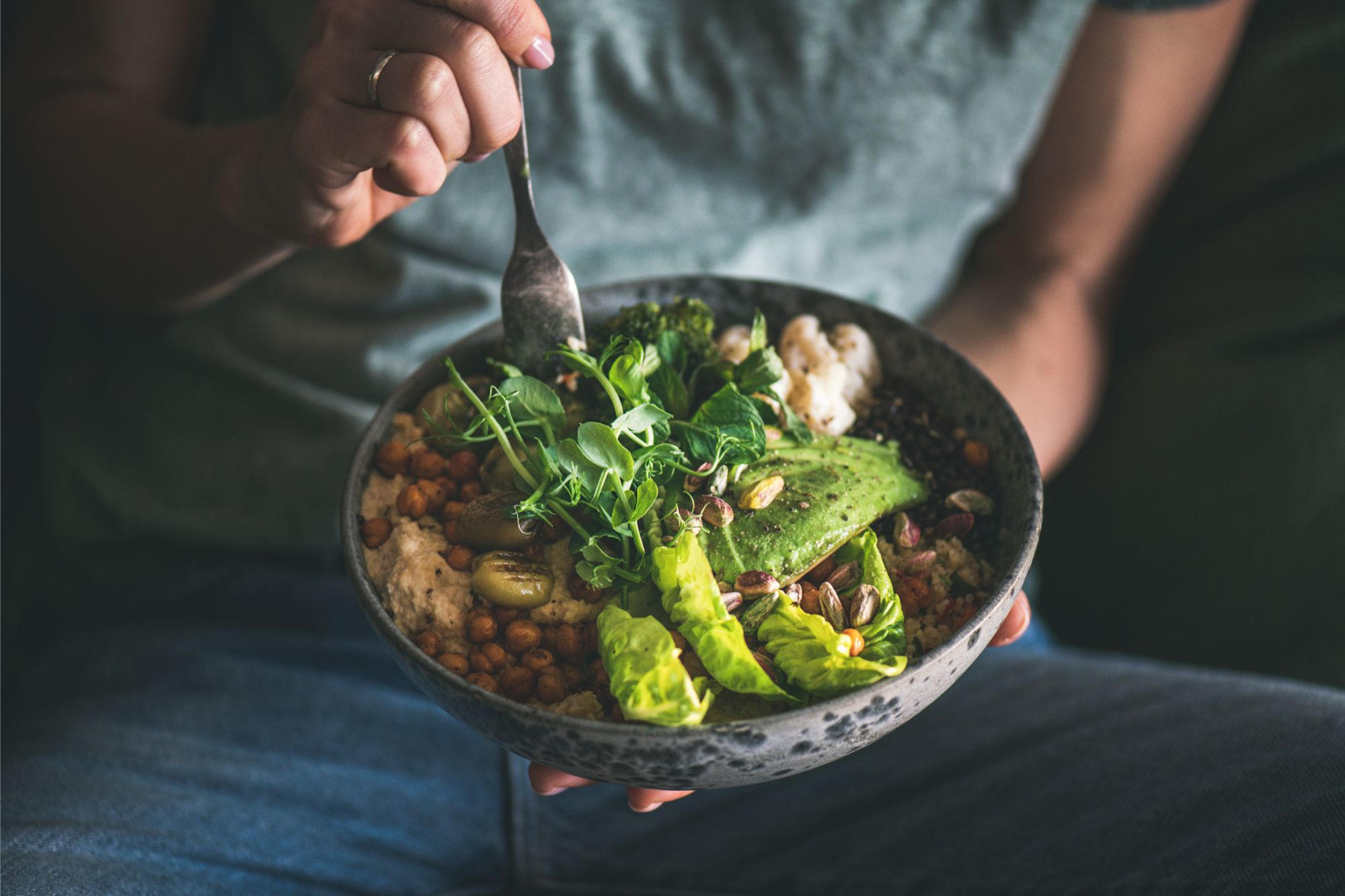
Eating Healthy Vegan Food

The Dietary Tips for People outlines four balanced taking in designs: Healthier Having Index 2015, Alternate Mediterranean Eating plan, Healthful Plant-based mostly Diet program Index, and Alternate Wholesome Having Index. These styles encourage a balanced eating plan with emphasis on fruits, greens, complete grains, nutritious fats, and moderation of saturated and trans fats, additional sugars, and sodium.

A Harvard analyze finds healthful ingesting patterns decrease threat of untimely demise. Researchers found participants who adopted at minimum 1 of four balanced eating patterns experienced diminished danger of loss of life from any bring about, together with cardiovascular sickness, cancer, and respiratory ailment, in contrast to individuals with decreased adherence. The review is regular with the Dietary Guidelines for The united states, which suggests a number of nutritious having styles.

“The Dietary Rules for Us citizens are intended to supply science-primarily based dietary suggestions that encourages superior well being and lowers big chronic disorders. Thus, it is important to look at the associations involving DGAs-suggested dietary styles and prolonged-expression overall health results, primarily mortality,” mentioned corresponding creator Frank Hu, Fredrick J. Stare Professor of Nutrition and Epidemiology and chair of the Department of Nutrition.

The was not long ago published in JAMA Inner Drugs.

Number of scientific studies have evaluated irrespective of whether larger adherence to the DGAs-advised nutritional designs is related with lengthy-expression possibility of total and cause-particular mortality. The researchers employed wellness details collected in excess of 36 a long time from 75,230 women collaborating in the Nurses’ Well being Examine and 44,085 gentlemen in the Wellbeing Gurus Adhere to-up Examine. All participants were being totally free of cardiovascular sickness or most cancers at the beginning of the examine and concluded nutritional questionnaires each individual four a long time. Their information and facts was scored based mostly on each of the 4 nutritional pattern indexes (Healthier Ingesting Index 2015, Alternate Mediterranean Diet plan, Healthful Plant-based mostly Diet plan Index, and Alternate Nutritious Feeding on Index). All share critical factors which include total grains, fruits, vegetables, nuts, and legumes, even though other elements vary across unique taking in designs.

A bigger score on at minimum one of the indexes was associated with a lower risk of premature death from all brings about, and from cardiovascular disorder, cancer, and respiratory condition. Increased scores on the AMED and the AHEI were involved with a lower chance of dying from neurogenerative illness. The results were being regular for non-Hispanic white, non-Hispanic Black, and Hispanic people today.

The present-day DGAs (2015–2020) advise numerous healthy having styles that can be adapted to specific food traditions and preferences. An updated version of the Guidelines is unveiled each and every 5 years by the U.S. Departments of Health and Human Providers (HHS) and Agriculture (USDA).

“It is essential to assess adherence to DGAs-encouraged feeding on patterns and wellness results, such as mortality, so that well timed updates can be created,” explained Hu. “Our conclusions will be worthwhile for the 2025-2030 Dietary Rules Advisory Committee, which is remaining shaped to evaluate existing proof encompassing various ingesting styles and health and fitness outcomes.”

Reference: “Healthy Consuming Styles and Threat of Whole and Bring about-Certain Mortality” by Zhilei Shan, MD, Ph.D., Fenglei Wang, Ph.D., Yanping Li, MD, Ph.D., Megu Y. Baden, MD, Ph.D., Shilpa N. Bhupathiraju, Ph.D., Dong D. Wang, MD, ScD, Qi Sun, MD, ScD, Kathryn M. Rexrode, MD, MPH, Eric B. Rimm, ScD, Lu Qi, MD, Ph.D., Fred K. Tabung, Ph.D., Edward L. Giovannucci, Ph.D., Walter C. Willett, MD, DrPH, JoAnn E. Manson, MD, DrPH, Qibin Qi, Ph.D. and Frank B. Hu, MD, Ph.D., 9 January 2022, JAMA Inside Medication.
DOI: 10.1001/jamainternmed.2022.6117

The analyze was funded by the NHLBI Division of Intramural Investigation.