ChatGPT Could Help Answer Health Questions, Per Study

As more consumers turn to the newly available ChatGPT for health advice, researchers are eager to see whether the information provided by the artificial intelligence chatbot is reliable and accurate. A new study conducted by researchers at the University of Maryland School of Medicine (UMSOM) indicates that the answers generated provide correct information the vast majority of the time; sometimes, though, the information is inaccurate or even fictitious.

ChatGPT Could Help Answer Health Questions, Per Study

From left, Paul Yi, MD and Jean Jeudy, MD.

Findings were published today in the journal Radiology.

In February 2023, UMSOM researchers created a set of 25 questions related to advice on getting screened for breast cancer. They submitted each question to ChatGPT three times to see what responses were generated. (The chatbot is known for varying its response each time a question is posed.) Three radiologists fellowship-trained in mammography evaluated the responses; they found that the responses were appropriate for 22 out of the 25 questions. The chatbot did, however, provide one answer based on outdated information. Two other questions had inconsistent responses that varied significantly each time the same question was posed.

“We found ChatGPT answered questions correctly about 88 percent of the time, which is pretty amazing,” said study corresponding author Paul Yi, MD, assistant professor of diagnostic radiology and nuclear medicine at UMSOM and director of the UM Medical Intelligent Imaging Center (UM2ii). “It also has the added benefit of summarizing information into an easily digestible form for consumers to easily understand.” ChatGPT correctly answered questions about the symptoms of breast cancer, who is at risk, and questions on the cost, age, and frequency recommendations concerning mammograms.

The downside is that it is not as comprehensive in its responses as what a person would normally find on a Google search. “ChatGPT provided only one set of recommendations on breast cancer screening, issued from the American Cancer Society, but did not mention differing recommendations put out by the Centers for Disease Control and Prevention (CDC) or the US Preventative Services Task Force (USPSTF),” said study lead author Hana Haver, MD, a radiology resident at University of Maryland Medical Center.

In one response deemed by the researchers to be inappropriate, ChatGPT provided an outdated response to planning a mammogram around COVID-19 vaccination. The advice to delay a mammogram for four to six weeks after getting a COVID-19 shot was changed in February 2022, and the CDC endorses the USPSTF guidelines, which don’t recommend waiting. Inconsistent responses were given to questions concerning an individual’s personal risk of getting breast cancer and on where someone could get a mammogram.

“We’ve seen in our experience that ChatGPT sometimes makes up fake journal articles or health consortiums to support its claims,” said Dr. Yi. “Consumers should be aware that these are new, unproven technologies, and should still rely on their doctor, rather than ChatGPT, for advice.”

He and his colleagues are now analyzing how ChatGPT fares for lung cancer screening recommendations and identifying ways to improve the recommendations made by ChatGPT to be more accurate and complete – as well as understandable to those without a high level of education.

“With the rapid evolution of ChatGPT and other large language models, we have a responsibility as a medical community to evaluate these technologies and protect our patients from potential harm that may come from incorrect screening recommendations or outdated preventive health strategies,” said Mark T. Gladwin, MD, dean, University of Maryland School of Medicine, vice president for medical affairs, University of Maryland, Baltimore, and the John Z. and Akiko K. Bowers Distinguished Professor.

Jean Jeudy, MD, professor of diagnostic radiology and nuclear medicine and radiology vice chair of informatics at UMSOM was a co-author on the study. Researchers from the Massachusetts General Hospital and the Johns Hopkins University School of Medicine also participated in this study. The study was funded by the individual institutions.

About the University of Maryland School of Medicine

Now in its third century, the University of Maryland School of Medicine was chartered in 1807 as the first public medical school in the United States. It continues today as one of the fastest growing, top-tier biomedical research enterprises in the world — with 46 academic departments, centers, institutes, and programs, and a faculty of more than 3,000 physicians, scientists, and allied health professionals, including members of the National Academy of Medicine and the National Academy of Sciences, and a distinguished two-time winner of the Albert E. Lasker Award in Medical Research. With an operating budget of more than $1.3 billion, the School of Medicine works closely in partnership with the University of Maryland Medical Center and Medical System to provide research-intensive, academic, and clinically based care for nearly 2 million patients each year. The School of Medicine has nearly $600 million in extramural funding, with most of its academic departments highly ranked among all medical schools in the nation in research funding. As one of the seven professional schools that make up the University of Maryland, Baltimore campus, the School of Medicine has a total population of nearly 9,000 faculty and staff, including 2,500 students, trainees, residents, and fellows. The combined School of Medicine and Medical System (“University of Maryland Medicine”) has an annual budget of over $6 billion and an economic impact of nearly $20 billion on the state and local community. The School of Medicine, which ranks as the 8th highest among public medical schools in research productivity (according to the Association of American Medical Colleges profile) is an innovator in translational medicine, with 606 active patents and 52 start-up companies. In the latest U.S. News & World Report ranking of the Best Medical Schools, published in 2021, the UM School of Medicine is ranked #9 among the 92 public medical schools in the U.S., and in the top 15 percent (#27) of all 192 public and private U.S. medical schools. The School of Medicine works locally, nationally, and globally, with research and treatment facilities in 36 countries around the world. Visit medschool.umaryland.edu

Moral injury in modern medicine and how to heal health care workers

Indication up for the On Position newsletter here. 

The United States has the biggest for-financial gain wellbeing treatment system in the earth.

Extra and more wellness care pros say that they’re remaining compelled to make decisions that are terrible for sufferers.

“We not only sense that we are unable to offer what we know the affected individual requirements. But we truly feel complicit in a revenue-1st process which is asking us to act in techniques that put gain higher than what’s ideal for the affected individual.”

And that sales opportunities medical doctors to experience from ethical accidents.

Today, On Level: Ethical injuries in contemporary medication.

Friends

Dr. Wendy Dean, previous crisis home health practitioner and psychiatrist. President and co-founder of the non-earnings The Ethical Injuries of Health care. Author of the new e-book If I Betray These Phrases: Moral Personal injury in Drugs and Why It can be So Difficult for Clinicians to Put Sufferers Very first. (@WDeanMD)

Also Showcased

Dr. Jessica, OB-GYN in Pennsylvania.

Dr. Jamie Wooldridge, pediatric pulmonologist.

Dr. Elena Perea, healthcare facility psychiatrist in western North Carolina.

Job interview Highlights

On initially signals of moral injury in modern day drugs

Dr. Wendy Dean: “I felt these from the time that I entered into medication, but actually in excess of the previous 10 years or so, it would seem to have intensified. And I feel the only reason that I could see that so evidently was mainly because I was no for a longer period training. So I had a little bit of means to phase away and to consider a broader look at. And so I could check out my colleagues throughout the country who had been struggling and claimed, like Jessica, I continue to enjoy my individuals, I really like the medication I exercise, but it is really almost everything else that is acquiring in the way that is definitely grinding me down.”

What’s producing ethical harm in wellness treatment?

Dr. Wendy Dean: “Each individual time that we are questioned to attend to a thing that is not our patients’ finest fascination. So, for instance, when we have to transform away, we have to transform our backs in order to fill in the digital health-related document. That feels like a compact turning away from our sufferers, taking treatment of our corporation instead of having care of them. When we have to invest an hour obtaining a prior authorization for treatment that we know they ought to have. That feels like we’re turning in direction of the enterprise of drugs and having treatment of it instead than using treatment of our patients. It really is not any a single significant egregious issue. It can be many, a lot of lesser. Cuts, shall we say, loss of life by a thousand cuts, not one massive damage.”

On the troubles for health and fitness treatment pros

Dr. Wendy Dean: “The expenditures of wellness treatment and turning into effective are section of what drives this. But the other problem for clinicians as a total is that the corporatization of care has led to a change in the place decisions are built rather than becoming built by clinicians who perform at the bedside, irrespective of whether they’re nurses or physicians, they’re becoming shifted into administration, higher administration or into the C-suite. And it is not infrequent that the folks who are at those people stages could not at any time have been a clinician. And so, striving to make choices for individuals on the front strains gets more challenging. And it could be much less closely linked to what will perform for them.”

Are any of these selections practical or even on the horizon?

Dr. Wendy Dean: “There are locations that are that are using some of individuals actions. And, for illustration, the FTC has presently started having action on health and fitness care process consolidation. They’re hunting at it not just from the affected individual perspective and irrespective of whether or not it will be much less expensive for them to receive care in the procedure. But also searching at it from a workforce point of view, what will be the effect on the staff in the place?

“So, for instance, in Albany, New York, lots of of the crisis rooms there are contracted with just one single health-related team, one particular for profit unexpected emergency doctor team, an unexpected emergency doctor who is not happy there, won’t be able to move without the need of actually going themselves and their family due to the fact there is a monopoly on crisis care there.

“So breaking that monopoly, breaking the noncompete clauses that preserve medical professionals from going throughout town, they have to go across the county or throughout the state. There are a large amount of alternatives that we can choose, but we have to be eager to make those people adjustments.”

Ebook Excerpt

Excerpt from If I Betray These Terms by Dr. Wendy Dean. All legal rights reserved. Not to be republished without the need of authorization of the publisher, Steerforth Push.

Apple’s crucial new iPhone warning about potential health risk

Apple is putting out a warning to all Apple iphone consumers who have pacemakers or other implanted clinical units to make certain that they are trying to keep their units at least six inches absent from their chests. 

Here’s what we know so considerably.

Click on TO GET KURT’S CYBERGUY Newsletter WITH Rapid Recommendations, TECH Evaluations, Safety ALERTS AND Straightforward HOW-TO’S TO MAKE YOU SMARTER

Why really should I retain my Apple iphone absent from my chest?

The motive Apple is putting this discover out for persons with pacemakers is that the magnets and electromagnetic fields inside of an Iphone product may perhaps interfere with the machines’ functions.

Apple to start with began putting out warnings like this in Oct 2020 when the American Heart Association warned about the magnets within just the Iphone 12 devices. The magnets in these products had been potent adequate to modify the timing of the pacemaker or even deactivate a defibrillator’s features, which could set a human being with a pacemaker at danger for heart failure or a stroke.

Apple’s crucial new iPhone warning about potential health risk

Persons with pacemakers should really hold their Apple equipment away from their chests, the firm warns. (CyberGuy.com)

ARE YOUR Techniques Fully OFF FOR YOUR 2023 Conditioning Goals?

What other units need to I maintain at a distance?

If you happen to be anyone with a pacemaker, you ought to continue to keep the pursuing units at a distance from your upper body as they have magnets or factors and radios that emit electromagnetic fields.

AirPods and scenarios

  • AirPods and charging case
  • AirPods Professional and charging situation
  • AirPods Max and Good Scenario

Apple Look at and add-ons

  • Apple Look at
  • Apple Check out bands with magnets
  • Apple Observe magnetic charging components

HomePod

iPad and equipment

  • iPad
  • iPad mini
  • iPad Air
  • iPad Professional
  • iPad Wise Handles and Smart Folios
  • iPad Good Keyboard and Sensible Keyboard Folio
  • Magic Keyboard Folio
  • Magic Keyboard for iPad

VOICE CLONING IS THE NEW WEAPON IN SCAMMERS’ ARSENAL FOR Relatives Unexpected emergency Schemes

Iphone and MagSafe add-ons

Mac and add-ons

  • Mac mini
  • Mac Professional
  • MacBook Air
  • MacBook Pro
  • iMac
  • Apple Pro Display XDR

Beats

  • Beats Flex
  • Beats Studio Buds
  • BeatsX
  • Powerbeats Pro
  • UrBeats3

THE MOST Critical SOS Tool At any time Designed

What if the font is far too compact for me at a distance?

If you have to maintain your Iphone at a distance however then battle to read what’s on your monitor, you can alter the dimension of your font by next these steps.

  • Open up your Settings app
  • Click on Screen & Brightness 
  • Tap Textual content Size 
  • Use the slider at the base to alter the measurement of your font

Do you have other tips for trying to keep your Iphone at a length? Allow us know under.

Simply click Listed here TO GET THE FOX News App

For much more of my guidelines, subscribe to my free of charge CyberGuy Report E-newsletter by viewing CyberGuy.com/Newsletter. 

Copyright 2023 CyberGuy.com. All rights reserved.  

Millions will lose health insurance starting Saturday. But they might not know it.

Tens of millions of men and women will start to eliminate their wellbeing insurance on Saturday, as five states start off the unwinding of a pandemic-era protection that held people today from currently being eradicated from the Medicaid rosters.

In the course of the general public wellbeing crisis, states ended up needed to continue to keep persons on Medicaid without the frequently annually reapplication system normally in spot. But now that the general public well being emergency is winding down, so are the Medicaid rolls.

“We are now in a position in just a few of times exactly where states can start to disenroll men and women — to redo their rosters for Medicaid — and this steady protection need is no for a longer period heading to be in put,” Dr. Avenel Joseph, vice president of plan for the Robert Wooden Johnson Foundation, informed ABC News.

The concern that Joseph and other advocates are worried about is that not adequate individuals know they are about to get kicked off their protection.

For Jeffrey Jackson, a 62-yr-previous Medicaid beneficiary in Arkansas who faces dropping that protection in a matter of days, that could be a “nightmare.”

Arkansas is a person of the five states that will get started taking away people today from coverage on April 1, together with Arizona, Idaho, South Dakota and New Hampshire.

Millions will lose health insurance starting Saturday. But they might not know it.

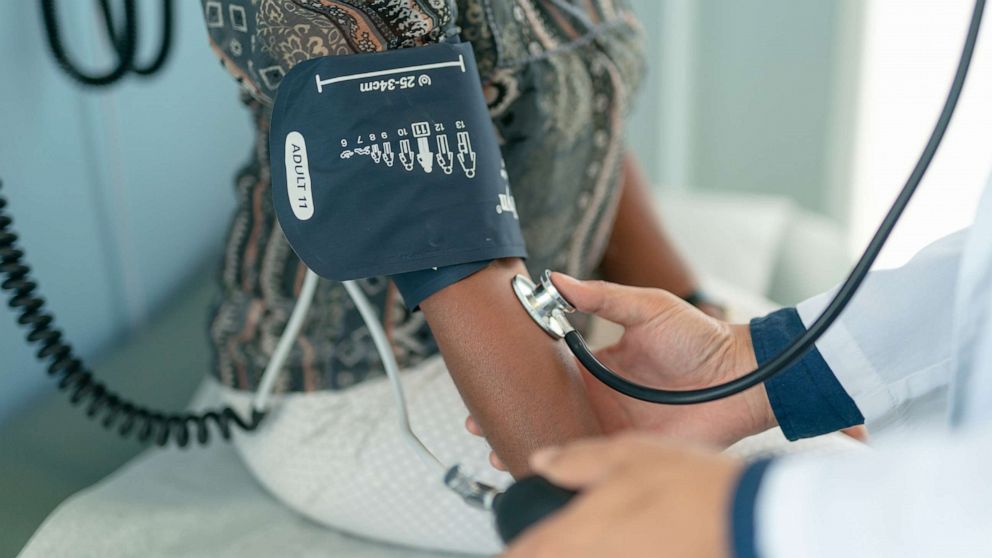
A lady sits on an examination table in a clinic while a health treatment qualified checks her blood force.

Stock Photograph/Getty Photographs

Without having Medicaid, Jackson’s economic selections would have to come down to “regardless of whether I would take in or regardless of whether I will get my treatment.”

Jackson reported he’ll have to meet up with with his medical practitioners to inquire them what drugs he can do with no.

“We’ll seem at what’s remaining and then I’ll say I will search at the value and what I can manage or won’t be able to afford,” Jackson told ABC Information.

Regardless of the dire stakes, losing Medicaid is a common trouble that employed to happen every year just before the pandemic — the normal man or woman on Medicaid acquired about 10 months of coverage a calendar year, for the reason that of something termed “churn,” which frequently takes place when bureaucratic hurdles drive folks out of the procedure for explanations as easy as lacking a letter in the mail or relocating.

According to estimates from KFF, a nonpartisan nonprofit that stories on nationwide overall health issues, around 65{bf0515afdcaddba073662ceb89fbb62b6b1bf123143c0e06b788e1946e8c353f} of men and women who do get disenrolled end up uninsured for a portion of the following yr.

Receiving again on wellness insurance policy can be difficult, Joseph mentioned.

“It’s not just like you check out a box and you can get again on Medicaid the subsequent working day. The procedure of having re-enrolled in Medicaid, even when you might be suitable, can just take months. And during that period of time of time, folks — folks but also their households, and children in specific — can slide as a result of the cracks,” Joseph stated.

The Office of Wellness and Human Providers estimates that this time all over, following a few many years with no “churn” in the system, around 7 million Us citizens who even now qualify for Medicaid will get rid of rewards.

An additional 8 million will get rid of coverage because they no longer qualify and need outreach to understand where they can enroll in other, reduced-value govt wellness plans through the Affordable Care Act, according to HHS.

“What we’ve heard from Medicaid directors across the states is this is the major shifting of insurance coverage for persons since the Very affordable Care Act was put in location over 10 a long time back,” Joseph said. “This is a significant endeavor.”

“And with that sort of movement,” Joseph said, “susceptible people will fall by way of the cracks.”

How George Bernard Shaw brought the drama of health care to the stage

This week in 1927, the curtain fell on a Broadway creation of George Bernard Shaw’s medical drama, “The Doctor’s Predicament.” Shaw – who is most well known for writing “Pygmalion” – was an Irishman by birth, a socialist by challenging expertise and a firmly dedicated Londoner. He wrote the engage in in 1905, while peeved at his individual physicians and the professional medical occupation in basic.

“The Doctor’s Dilemma” advocates for a socialized technique of wellbeing care shipping and a removing of the gain motive from health care observe. The engage in dramatizes a predicament professional by posh medical doctor Sir Colenso Ridgeon, who has a one dose of a curative elixir and two clients who could gain from it. On the a person hand is a gifted artist named Louis Dubedat who grifts income from his acquaintances and cheats on his loving wife Jennifer on the other, a devoted but poor medical doctor who serves the underprivileged irrespective of their capability to pay out. To make ethical matters even worse, Colenso falls hopelessly in like with Jennifer.

Shaw pulls out all the stops with a comic condition that poses a considerably further problem: How does one particular quantify the value of yet another person’s lifestyle and who is even skilled to do so reasonably and justly?

Study A lot more: How ‘Raisin in the Sun’ creator Lorraine Hansberry described what it meant to be ‘young, gifted and black’

“The Doctor’s Dilemma” first hit the boards at the Royal Court Theatre in London’s storied West End on Nov. 20, 1906. The engage in ran for only 50 performances, at a time when a Shaw byline did not however guarantee very long strains of ticket-consumers.

How George Bernard Shaw brought the drama of health care to the stage

Two German actors in “The Doctor’s Dilemma” in 1938. Photo by Imagno/ Getty Visuals

Just 21 many years afterwards, when saying the 1927-28 revival, The New York Situations opined: “One should bear in mind that Mr. Shaw then was not rated as he is now. His status has grown with the gradual whitening of his nice crimson beard his fame in equally England and The usa is now so wonderful that any enjoy of his is just about confirmed a run. It was not usually as a result.”

When Shaw complained about the commodification of wellness care, he was crafting about cottage industries of incompetent and impotent non-public practitioners who did far better monetarily by offering ineffective nostrums and incompetent theories. Today we see commodification in all the strategies that health care is run by large industries.

Study Much more: The unsuccessful Broadway musical I want each and every professional medical university student could see

Cautious of doctors of all stripes, Shaw was a strict vegetarian and vociferous wellbeing nut. Coming out of the fog of the most substantial and highly-priced pandemic of our lifetimes, we might ponder how Shaw predicted the value of globalizing community well being, combating infectious ailments, and educating men and women to dwell much healthier lives, including far better more sustainable, calorie-helpful, tobacco-, liquor-, toxin- and drug-cost-free eating plans. However, even he was not immune to the entice of a famous medical professional promoting his possess wellness merchandise.

When on a voyage around the environment in 1936, Shaw manufactured a unique end to Dr. John Harvey Kellogg’s sanitarium in Miami Springs, Florida. The two gentlemen — a single famous for producing a healthier way of living he called “biologic living” and co-creator of Corn Flakes, and the other the world’s most renowned living playwright — sat down for lunch, followed by a lengthy consultation and health-related assessment. Amid the flashes of photographers’ cameras, the two men sipped freshly squeezed orange juice.

The next day, Kellogg described that he was involved about the playwright’s lower purple blood mobile count (40 percent significantly less than regular, at 3,000,000) and hemoglobin (30 percent deficient at 71 mg/dl).

Kellogg And Shaw

Dr. John Harvey Kellogg in dialogue with IGeorge Bernard Shaw in Miami in 1936. Photo by Archive Pics/ Getty Images

These conclusions were being the result of Shaw’s diet program excluding red meat (and, that’s why, ample iron) in his diet plan. Even though an improve in iron-prosperous, environmentally friendly, leafy veggies, these as spinach, would without doubt assist Shaw reach a usual blood stability and truly feel superior, the medical professional suggested a different, marginally shady, way to obtain people finishes.

Go through Much more: How Dr. Kellogg’s entire world-renowned health spa created him a wellness titan

He prescribed his newest foodstuff invention, a product he identified as “Food Ferrin,” which was a concentrated extract of spinach that supplied a day’s worthy of of iron in a teaspoonful or two. The option would be to ingest a pound of spinach each day. “I am sending you a bottle of this,” Kellogg wrote Shaw, “and if you think worthwhile to make use of it, I will gladly see that you have a larger offer.”

The check out — and the plug for Food items Ferrin — was broadly described in publications ranging from the Miami Herald to The New York Occasions and the Literary Digest. The medical professional stroked Shaw’s moi with a prediction that he would very easily dwell to be 100 (Shaw died in 1950 at the age of 94).

Kellogg further more pontificated to the reporters recording his each individual word that he sincerely hoped that “my tips may possibly establish of some company to the most distinguished of living Englishmen,” hence presenting a new doctor’s predicament: the most marketable health practitioner in America giving free samples of his latest foray into fortified foods to the profession’s finest critic.

States warn of health care worker shortage as they prep for next pandemic

As the worst of the COVID-19 pandemic appears to fade in the rearview mirror, public health departments are already preparing for the next threat, noting that they have built better operational infrastructure, but caution that budget cutbacks and a health care worker shortage may be putting the country at risk.

The World Health Organization has warned that the accelerating pace of climate change, deforestation and globalization means that it isn’t a matter of if, but when the next pandemic will strike. Even in the midst of the COVID-19 pandemic, state and local health departments were forced to grapple with yet another emergency last summer, with the emergence of the monkeypox (now known as mpox), outbreak.

At least 13 state health departments and 11 hospital associations told ABC News that chronic staffing shortages and new threats to funding may undermine their ability to swiftly respond to future pandemic threats.

“Without the personnel to do the hard work of analyzing data, interviewing cases, tracing contacts, testing specimens, and performing other essential public health activities, our nation is less prepared in some ways than it was before 2020,” Dr. Jay Varma, director of the Cornell Center for Pandemic Prevention and Response told ABC News.

The American Hospital Association has called federal lawmakers to reauthorize the Pandemic and All Hazards Preparedness Act to strengthen the Strategic National Stockpile, to fund the Hospital Preparedness Program, and require more collaboration between the federal government and stakeholders to build national data infrastructure.

Health care worker shortage

After a grueling three years caring for patients on the front lines of the COVID-19 pandemic, nurses continue to leave the health care sector en masse, according to state health departments and state hospital associations, sparking widespread shortages nationwide that states warn may lead to an inability to care for patients during a new outbreak.

Before the pandemic, Georgia was already dealing with a nursing staffing shortage. Now, with not enough nurses graduating in the state, the governor has created a statewide healthcare workforce commission to increase the hospital workforce, according to Anna Adams, the executive vice president, external affairs of the Georgia Hospital Association, a nonprofit trade group.

States warn of health care worker shortage as they prep for next pandemic

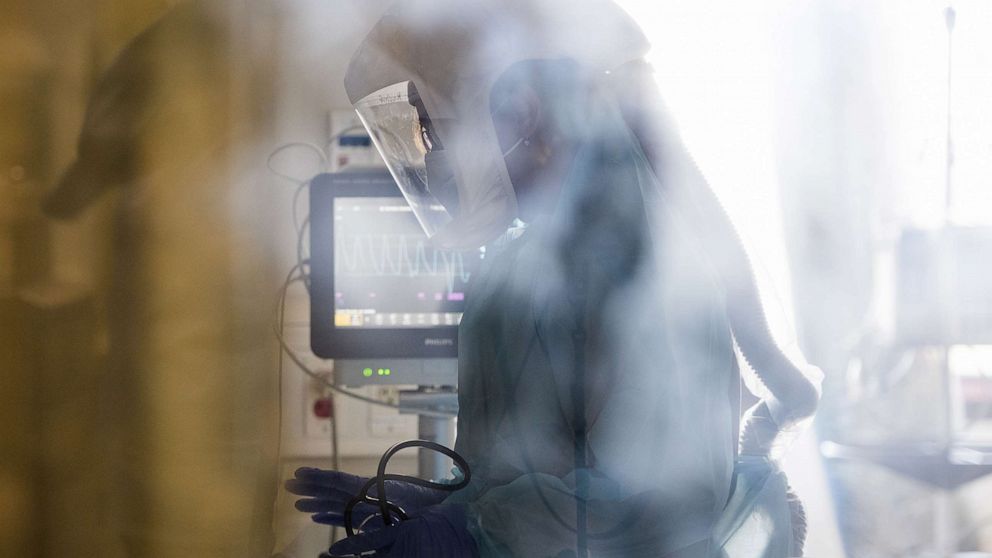
A nurse tends to a patient inside the COVID-19 unit of Salinas Valley Memorial Hospital in Salinas, Calif., Sept. 2, 2021.

Bloomberg via Getty Images, FILE

Part of the issue, health and hospital association officials from several states told ABC News, was the recurring cycle of worker shortages leading to increased labor costs – with turnover driving higher expenses to hire and recruit new staff.

“Now, nurses and others are leaving health care altogether, to companies that have signing bonuses and very high hourly rates. And so all of a sudden, hospitals are in a position where the only way we’re going to have an adequate nursing force is to work with the nurse traveler agencies,” said Brian Peters, CEO of the Michigan Health & Hospital Association.

In addition, some hospitals are experiencing negative profit margins, making less money in relation to their own expenses compared to before the pandemic. California health officials, for example, noted that over half of hospitals in the state already had unsustainable margins before the pandemic. This worsened during the COVID-19 pandemic as the state’s total hospital expenses rose 15{bf0515afdcaddba073662ceb89fbb62b6b1bf123143c0e06b788e1946e8c353f} in just one year. According to state officials, California hospitals are losing money on operations.

Funding in flux

Early in the COVID crisis, as case counts exploded and deaths began to creep up, public health departments received hundreds of billions of dollars in funding from the federal government to support their work. But most of that money was earmarked to respond to the emergency — not to shore up public health permanently. Now, many are warning that the flood of money could transition to a trickle without renewal of some of the federal funds, which could lead them to cut contractual employees and reduce some of their initiatives.

“Funding comes in on specific diseases,” said Susan Kansagra, North Carolina’s state health officer. “When that disease goes away, funding goes away. We’re left rebuilding.”

Most state public health departments significantly expanded their workforce in the early days of the pandemic, and they have larger staffs now than in 2019. But many of those hires were temporary positions, including some epidemiologists and behavioral scientists. Washington, for example, stated that even now, 30{bf0515afdcaddba073662ceb89fbb62b6b1bf123143c0e06b788e1946e8c353f} of its current workforce were in time-limited positions.

There is also high turnover in the public health sector. The Virginia Department of Health noted that about a third of its workforce had minimal work experience prior to 2019, whereas now 40{bf0515afdcaddba073662ceb89fbb62b6b1bf123143c0e06b788e1946e8c353f} has less than two years of know-how on the job. Many experienced public health workers left their jobs in the past few years, often because of the political blowback and pressures from far-right groups opposed to things like masks and vaccines, state health officials told ABC News.

While most state health officials interviewed by ABC News shared they may need to tighten their ranks amid lower funding support, some felt confident in being able to revamp their workforce should another crisis arise.

“The takeaway for us is that we have worked through rapid hiring, onboarding, and training processes, so that we could do it again if needed,” the Utah Department of Health and Human Services said to ABC News in a statement.

Identifying the next threat

With the rise of at-home tests and dwindling contact-tracing programs, public health departments have shifted their attention to different methods of identifying where COVID-19 is spreading most and detecting any new diseases that may pose a threat.

Wastewater has become a key tool for epidemiologists to quickly identify where pockets of the community may be experiencing a greater number of COVID-19 cases than usual. Most state health departments contacted by ABC News noted they had integrated a wastewater surveillance system and were tracking old and new threats.

PHOTO: An employee collects a wastewater sample to monitor COVID-19 in Tucson, Ariz., Aug. 31, 2020.

An employee collects a wastewater sample to monitor COVID-19 in Tucson, Ariz., Aug. 31, 2020.

Bloomberg via Getty Images, FILE

Nevada officials shared that the state built “a viral respiratory surveillance program to expand upon influenza surveillance efforts to help understand what respiratory viruses are circulating, the magnitude of these viruses within communities, and the overall severity of the viral illnesses” with a team set to monitor data for early detection for potential surges.

Most states also developed dashboards to inform the public of case numbers and hospitalizations statistics as well as avenues to collect vaccine data or notify contacts of someone sick of an exposure. Those tools are in place and ready for future disease threats, so health department wouldn’t have to start from scratch.

“We’ve created forums for sharing information throughout the three years to ensure that we can continue to respond to COVID-19, and also that we will be ready in the future,” said Nicole Stallings, chief external affairs officer at the Maryland Hospital Association.

Experience counts, say health departments

State health department officials reached by ABC News overwhelmingly said their experience responding to COVID-19 means they are better prepared to react to a new health threat than in 2019.

“We’re better trained, better staff, better equipped and managed, more responsive, and experienced personnel, our information systems are much more robust. So, I think, at this point, and recognizing that all capabilities atrophied over time, but at this point, we’re much better prepared than we were in 2019,” said Robert Mauskapf, director of the office of emergency preparedness at the Virginia Department of Health.

Still, some public health experts remained skeptical, noting that budget and staffing problems — and even cultural shifts — will make it harder to respond to future threats.

Many states, for example, have passed or are considering laws that would prohibit mask mandates or vaccine requirements — both tools that helped protect people against the spread of COVID-19.

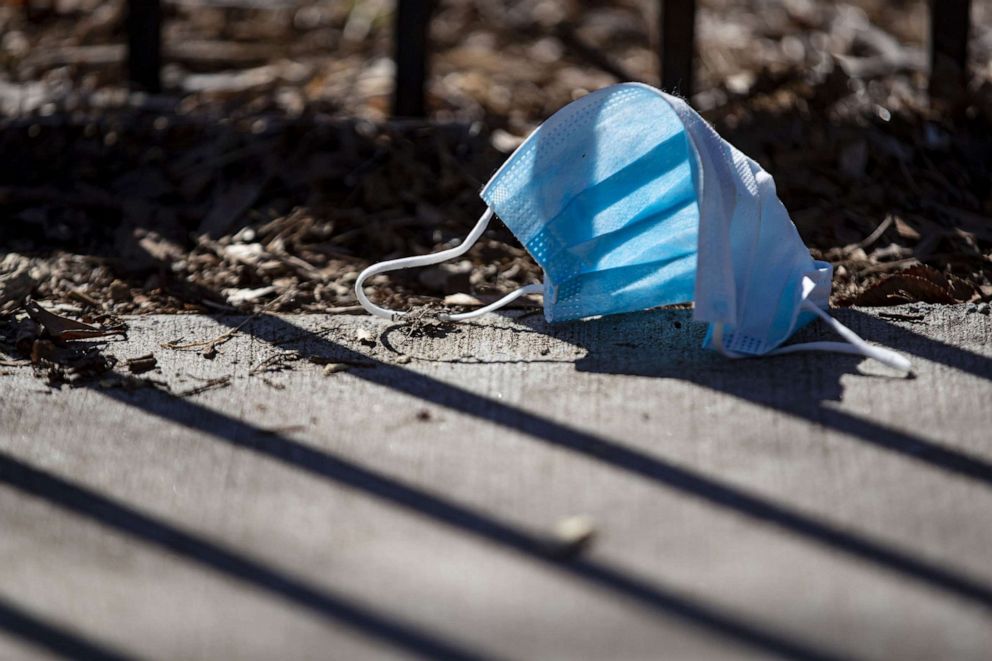
PHOTO: A discarded surgical mask, April 26, 2022, in Chicago.

A discarded surgical mask, April 26, 2022, in Chicago.

Chicago Tribune via Getty Images, FILE

So even though health departments know the strategies that helped during the COVID-19 pandemic, they might not have the ability to implement them as successfully going forward.

“Federal, state, and local health departments have far fewer personnel today than they did before [the pandemic]. This is a consequence of public health staff being chronically over-worked and underpaid, public health officials being verbally attacked on social media, including by elected officials, and a broad national narrative that public health is somehow incompetent,” Varma said.

ABC’s John Brownstein, Ph.D., Sony Salzman, John Santucci, Nicole Wetsman, Emma Egan, Sara Avery, Alexandra Myers and Soorin Kim contributed to this report.