ChatGPT Could Help Answer Health Questions, Per Study

As more consumers turn to the newly available ChatGPT for health advice, researchers are eager to see whether the information provided by the artificial intelligence chatbot is reliable and accurate. A new study conducted by researchers at the University of Maryland School of Medicine (UMSOM) indicates that the answers generated provide correct information the vast majority of the time; sometimes, though, the information is inaccurate or even fictitious.

ChatGPT Could Help Answer Health Questions, Per Study

From left, Paul Yi, MD and Jean Jeudy, MD.

Findings were published today in the journal Radiology.

In February 2023, UMSOM researchers created a set of 25 questions related to advice on getting screened for breast cancer. They submitted each question to ChatGPT three times to see what responses were generated. (The chatbot is known for varying its response each time a question is posed.) Three radiologists fellowship-trained in mammography evaluated the responses; they found that the responses were appropriate for 22 out of the 25 questions. The chatbot did, however, provide one answer based on outdated information. Two other questions had inconsistent responses that varied significantly each time the same question was posed.

“We found ChatGPT answered questions correctly about 88 percent of the time, which is pretty amazing,” said study corresponding author Paul Yi, MD, assistant professor of diagnostic radiology and nuclear medicine at UMSOM and director of the UM Medical Intelligent Imaging Center (UM2ii). “It also has the added benefit of summarizing information into an easily digestible form for consumers to easily understand.” ChatGPT correctly answered questions about the symptoms of breast cancer, who is at risk, and questions on the cost, age, and frequency recommendations concerning mammograms.

The downside is that it is not as comprehensive in its responses as what a person would normally find on a Google search. “ChatGPT provided only one set of recommendations on breast cancer screening, issued from the American Cancer Society, but did not mention differing recommendations put out by the Centers for Disease Control and Prevention (CDC) or the US Preventative Services Task Force (USPSTF),” said study lead author Hana Haver, MD, a radiology resident at University of Maryland Medical Center.

In one response deemed by the researchers to be inappropriate, ChatGPT provided an outdated response to planning a mammogram around COVID-19 vaccination. The advice to delay a mammogram for four to six weeks after getting a COVID-19 shot was changed in February 2022, and the CDC endorses the USPSTF guidelines, which don’t recommend waiting. Inconsistent responses were given to questions concerning an individual’s personal risk of getting breast cancer and on where someone could get a mammogram.

“We’ve seen in our experience that ChatGPT sometimes makes up fake journal articles or health consortiums to support its claims,” said Dr. Yi. “Consumers should be aware that these are new, unproven technologies, and should still rely on their doctor, rather than ChatGPT, for advice.”

He and his colleagues are now analyzing how ChatGPT fares for lung cancer screening recommendations and identifying ways to improve the recommendations made by ChatGPT to be more accurate and complete – as well as understandable to those without a high level of education.

“With the rapid evolution of ChatGPT and other large language models, we have a responsibility as a medical community to evaluate these technologies and protect our patients from potential harm that may come from incorrect screening recommendations or outdated preventive health strategies,” said Mark T. Gladwin, MD, dean, University of Maryland School of Medicine, vice president for medical affairs, University of Maryland, Baltimore, and the John Z. and Akiko K. Bowers Distinguished Professor.

Jean Jeudy, MD, professor of diagnostic radiology and nuclear medicine and radiology vice chair of informatics at UMSOM was a co-author on the study. Researchers from the Massachusetts General Hospital and the Johns Hopkins University School of Medicine also participated in this study. The study was funded by the individual institutions.

About the University of Maryland School of Medicine

Now in its third century, the University of Maryland School of Medicine was chartered in 1807 as the first public medical school in the United States. It continues today as one of the fastest growing, top-tier biomedical research enterprises in the world — with 46 academic departments, centers, institutes, and programs, and a faculty of more than 3,000 physicians, scientists, and allied health professionals, including members of the National Academy of Medicine and the National Academy of Sciences, and a distinguished two-time winner of the Albert E. Lasker Award in Medical Research. With an operating budget of more than $1.3 billion, the School of Medicine works closely in partnership with the University of Maryland Medical Center and Medical System to provide research-intensive, academic, and clinically based care for nearly 2 million patients each year. The School of Medicine has nearly $600 million in extramural funding, with most of its academic departments highly ranked among all medical schools in the nation in research funding. As one of the seven professional schools that make up the University of Maryland, Baltimore campus, the School of Medicine has a total population of nearly 9,000 faculty and staff, including 2,500 students, trainees, residents, and fellows. The combined School of Medicine and Medical System (“University of Maryland Medicine”) has an annual budget of over $6 billion and an economic impact of nearly $20 billion on the state and local community. The School of Medicine, which ranks as the 8th highest among public medical schools in research productivity (according to the Association of American Medical Colleges profile) is an innovator in translational medicine, with 606 active patents and 52 start-up companies. In the latest U.S. News & World Report ranking of the Best Medical Schools, published in 2021, the UM School of Medicine is ranked #9 among the 92 public medical schools in the U.S., and in the top 15 percent (#27) of all 192 public and private U.S. medical schools. The School of Medicine works locally, nationally, and globally, with research and treatment facilities in 36 countries around the world. Visit medschool.umaryland.edu

Hospital shutdown in Pennsylvania spurs questions about private equity in health care

After a car accident last month, Latifa Dixon, a mother of two, arrived at the emergency room at Delaware County Memorial Hospital in suburban Philadelphia only to learn the ER had just shut down. Twenty-eight-year-old Cecilia Vizuete, who was having trouble feeding her one-year-old daughter because of a breast infection, said she was told by a security guard to search Google Maps for another hospital. Shirley Posey arrived there suffering from shortness of breath and tightness in her chest.

“This was the closest hospital to me and I needed help,” Posey said when CBS News met her outside Delaware County Memorial. Posey later recovered, but not until she raced to an urgent care, collapsed, and was transported by ambulance to another hospital. 

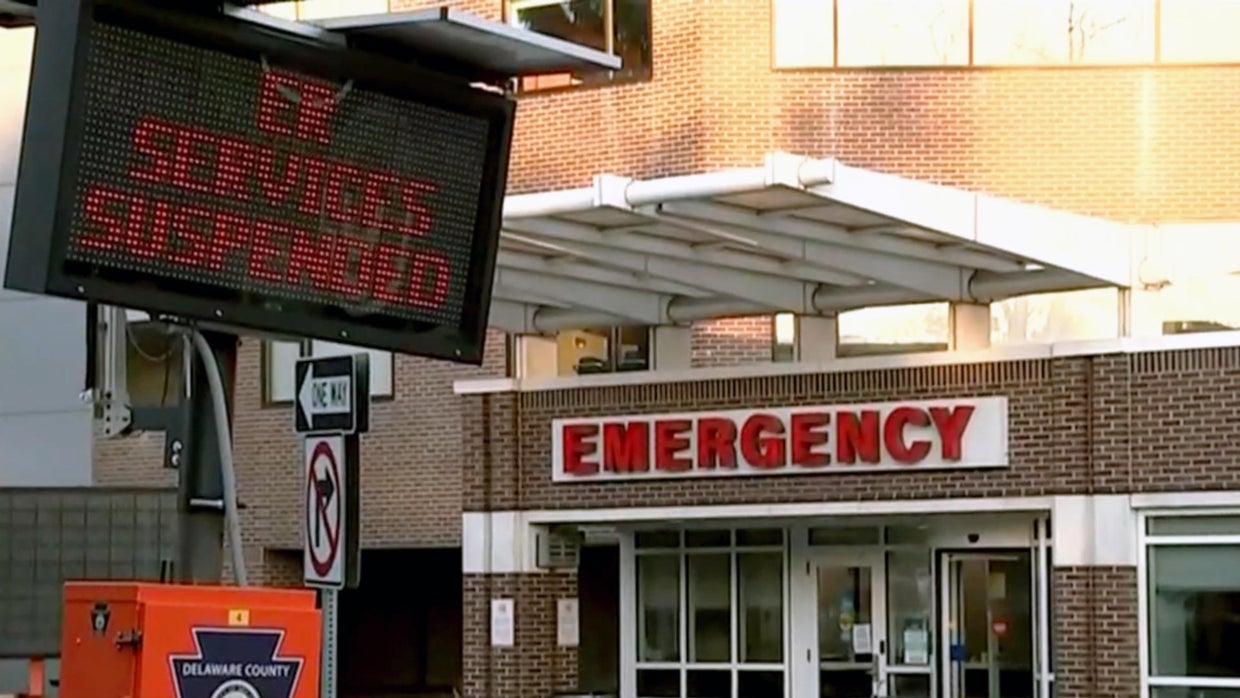
For nearly a century, Delaware County Memorial delivered babies, treated trauma and tended to the critically ill. That all changed earlier this year, when its current owners, a Los Angeles-based for-profit company called Prospect Medical Holdings, began cutting services at the 168-bed hospital in Upper Darby, Pennsylvania. First the maternity ward went, then the operating rooms and the I.C.U., and then, last month, the emergency department closed its doors to the community’s nearly 85,000 residents. 

The shutdown has raised questions about the role of private equity as it piles into the health care space, snapping up everything from local doctors’ practices to specialty clinics, even hospices. According to the consultancy Bain & Company, private equity firms posted a record year for deal volume in health care in 2021, with the total value of those deals topping $150 billion. 

Backed by private equity investment, Prospect Medical Holdings rapidly grew to own 20 hospitals in six states by 2018. In 2016, it bought Crozer Health, a nonprofit Pennsylvania health system that was in danger of failing. 

A CBS News investigation found that of those 20 hospitals owned by Prospect Medical, five have closed. In addition to Delaware County Memorial, Prospect Medical has suspended all services at Springfield, another acute care hospital in the same Pennsylvania health system. It also closed three hospitals in a San Antonio health system it purchased in 2012. 

In court proceedings, Prospect Medical argues it is not seeking to close Delaware County Memorial for good. In a statement to CBS News, the company said it is working to transition the hospital to a “100 patient facility for those in need of behavioral health and other services.” As part of the plan, the hospital will lose inpatient “acute care services,” which includes the lone emergency room in the community of Upper Darby. 

“There aren’t resources nearby and so we find that people wait longer to go to the hospital,” county official Monica Taylor told CBS News chief medical correspondent Dr. Jon LaPook, adding that closing what’s considered a safety-net hospital will hit the area’s low-income population hardest.

“We wouldn’t see a hospital closing down if this were a more affluent area,” said Taylor. “It leaves a gaping hole in this community that is going to be very hard and very difficult to fill.”

“What they cared about was making money”

In a presentation provided to Delaware County officials, Prospect Medical cited struggles with high labor costs, record inflation for supplies and pharmaceuticals, and the strain of the COVID-19 pandemic for its decision. Taylor said she believes the company has not been upfront, and has been reluctant to share its financials with the county.

“I had the sense they were not giving us all the information,” Taylor said. 

Prospect Medical has faced scrutiny before. In 2019, Rhode Island Attorney General Peter Neronha’s office investigated a proposed company transaction. Prospect Medical owns two hospitals in the state, that Neronha said were “in real danger of closing” because of the debt Prospect Medical had taken on. 

“This had nothing to do with the pandemic,” Neronha told CBS News. “Hospitals all over the country were facing the pandemic … but the problems here were exacerbated, frankly, by greed.”

Neronha invoked state law to force Prospect Medical to turn over its finances. A ruling by the attorney general’s office found the company put “every hospital in its system…at risk of reduction of services, sale or closure.”

“They didn’t care about health care,” Neronha said. “What they cared about was making money for their investors.”

Neronha hired two different outside experts to follow the money and discovered one reason why Prospect Medical was experiencing financial strain. In 2018, company owners took out a $1.12 billion loan, using proceeds to pay themselves and their private equity shareholders a $457 million dividend, according to the company’s financial statements, obtained by Neronha’s office in the course of the investigation.

“It’d be like a homeowner going to a bank, taking out a $100,000 loan, and instead of using it to invest in their property or pay for their kids to go to college, what they did was they just basically stuck it in their pockets as cash,” Neronha told CBS News. 

The company’s financial statements revealed that to pay back that $1.12 billion loan, Prospect Medical sold the land and the buildings from hospitals they owned in California, Connecticut and Pennsylvania to a real estate investment trust for $1.386 billion. The documents show Prospect Medical then leased those hospitals back from the real estate investment trust. 

“So now you’re even in a worse position because you have no equity any longer,” Neronha said. “You don’t own anything that you can then go to the bank and use as collateral to raise more money when you need it.”  

In Delaware County, that lease-back arrangement instead meant the health system was saddled with $35 million a year in rent.

hospital-closed.jpg
Delaware County Memorial Hospital in Upper Darby, Pennsylvania, was closed in November 2022 after being bought by a private equity firm, Prospect Medical Holdings.

CBS News


CBS News submitted detailed questions to Prospect Medical about these financial decisions, including about the $457 million dividend and the lease-back arrangement. The company, through a spokesman, declined to answer those questions. 

“They are drawing the value out of these hospitals as they would money from a piggy bank,” said Eileen O’Grady, campaign director with the Private Equity Stakeholder Project, a nonprofit organization that has raised concerns about Prospect Medical to attorneys general in the six states where the company owned hospitals. “Meanwhile, the company’s owners have made out like bandits.”

Neronha’s office confirmed to CBS News that the Prospect Medical CEO’s personal share of the $457 million dividend was about $90 million. 

“What they’ve done is extremely evil”

One of the early investors in Prospect Medical’s 2016 purchase of the Pennsylvania health system told CBS News that the company entered into the arrangement as the only bidder and  “last hope for these failing hospitals.” When the purchase was announced, local officials said it came with a promise: to invest $200 million to “dramatically increase…service to the community.” 

“They tried to tell us that they were going to run us the same way,” said emergency nurse Angela Neopolitano, who worked at Delaware County Memorial for 41 years. Instead Neopolitano, who was president of the local nurses’ union, says Prospect Medical dismantled the hospital piece by piece, leading to longer waits in the emergency room and forcing staff to transfer more patients to other hospitals.

“They kept on cutting services,” Neopolitano said. “Things wouldn’t get fixed. Our elevator in  the back of the emergency room had been broken for over a year. When they closed the I.C.U., that was the knife in my heart.” 

Neopolitano said at one point, the credit cards used by paramedics within the health system to fill their ambulances with fuel were disabled because Prospect Medical “didn’t pay their bill.”

The company did not respond to questions about its specific investments at Delaware County Memorial, but in an annual report said it had lived up to its commitment to invest $200 million in Crozer Health. 

The company did not respond to a question about whether it neglected to pay fuel bills for ambulances, which was first reported in an investigation of the company by ProPublica. The company told ProPublica a company credit card was rejected because it had a charge limit as a security measure, and it increased the limit when it was brought to their attention to ensure there was not a disruption of services. 

Now, the company has pivoted to a plan to convert Delaware County Memorial into a behavioral health facility. An executive with the hospital told the Philadelphia Inquirer last week that the new incarnation would not be “a moneymaker… but we go from losing $18 million a year to making $3 million and providing needed services to the community.” 

The  shut down of Delaware County Memorial in September has sparked a legal battle which has drawn in Pennsylvania’s attorney general and governor-elect Josh Shapiro.

In October, a judge granted an emergency injunction to keep the hospital open. Yet weeks later, the state’s health department shut it down anyway, after Prospect Medical notified the department of staffing issues. 

In a statement to CBS News, Prospect Medical said the ongoing litigation limits what it can say, but that the company is communicating with state health officials about its “multiple efforts to address those staffing issues.” The company has pledged to save the facility by turning it into a “desperately needed 100-patient facility for those in need of behavioral health and other services.” 

Next week, a judge will hear arguments over whether to require Prospect Medical to find a way to re-open the hospital’s doors. Shapiro’s office has asked  the judge to hold Prospect Medical in contempt and to fine it $100,000 for every day it does not resolve the staffing issues. 

Neopolitano told CBS News she thinks that the $457 million dividend Prospect Medical’s owners and private equity investors paid themselves should have gone back into the hospitals and into the community. 

“What they’ve done is extremely evil, in my words,” said Neopolitano of Prospect Medical. “To gain a dollar, you maybe destroyed lives, maybe even ended lives, because they can’t get the help they need.”

Five questions: FSU exercise physiologist works to help individuals achieve optimal performance

Five questions: FSU exercise physiologist works to help individuals achieve optimal performance
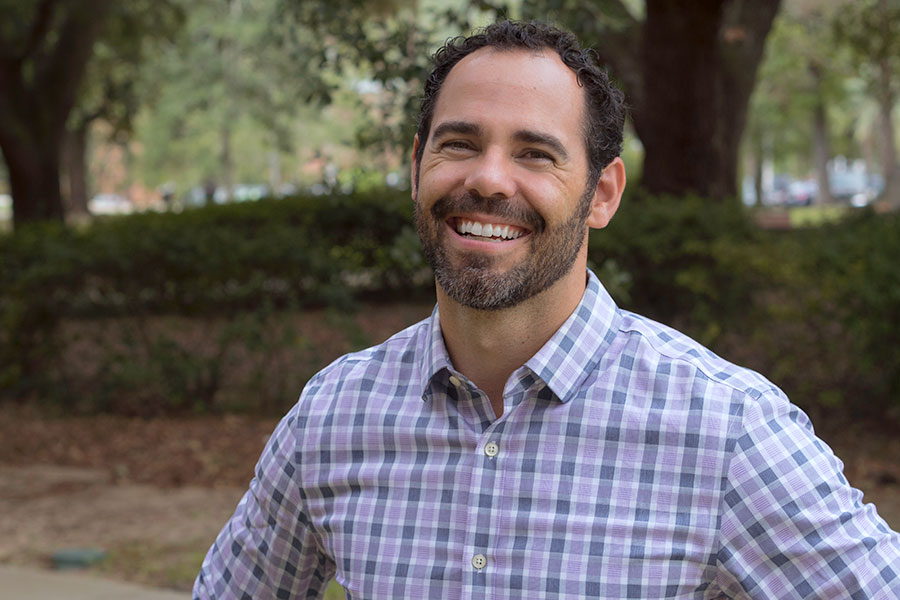
Michael Ormsbee, a professor in the College of Health and Human Sciences

Professor of Nutrition and Integrative Physiology Michael Ormsbee first became interested in how the body performs as a high school athlete, an interest that blossomed into a full-time career.

As a professor and director of Florida State University’s Institute of Sports Sciences and Medicine, or ISSM, he has worked with both individuals who are competing at the highest levels of athletic competition and those who are trying to improve their overall health.

He answered five questions about how he came to work in this field and his latest projects.

What first drew you to the field of exercise physiology and nutrition?

I grew up in an active household and played sports my entire life. I began training as a young teen and was always competing at the President’s Physical Fitness Tests that were held annually in middle and high school. My older brother was the same way and began to read some of the old school muscle and fitness magazines for fun. I was fortunate to then go on to college and play ice hockey. Around that time, I took an introduction to exercise physiology class as a freshman and had a professor that made me love the material and want to learn more. I was hooked.

How have your perspectives changed since you started working in the field? Or are there areas you are more interested in now as opposed to when you started?

My view has changed from a “me focused” approach to a more altruistic approach to asking research questions. I was at first, of course, interested in learning more about exercise and nutrition to improve my own personal performance on the ice or in the weight room. Later that morphed into a focus on how to help others achieve a high level of performance, be it for athletes to be bigger, faster and stronger or for the general population to be healthier, fit and happy. I suppose some of my interests shifted also to older populations as I got older too. In recent years, we have also become more focused on wearable technologies for sport, female physiology and sleep science. However, the underlying focus has always been to use nutrition and exercise to improve health, body composition and performance of any of the populations that we study.

You recently took over as director of the Institute of Sports Sciences and Medicine. What do you see as the role or mission of that institute going forward?

The vision I have for the institute is to make it the top authority in sport science, performance nutrition and sports medicine globally. We have some great momentum nationally and some collaborations internationally, but there is a need to expand our reach. In this new role, I hope to more fully incorporate interested researchers and research programs from both athletics and from medicine. We have traction in both areas, but I will be looking to expand our collaborations and reach. Simultaneously, I hope to provide improved experiences for students to not only learn about the theory of exercise and nutrition science, but to put it into practice. We are now re-opening our successful community outreach program to allow pay-for-service testing so that the community can have an “athlete experience” and get data to improve their own health such as fitness level, lactate threshold, aerobic capacity, body fat and muscle mass, or simply run on our anti-gravity treadmill.

This growth mindset will help to, first, gain visibility on campus and in our community and also open up research collaboration opportunities that did not exist before.

In addition to your work looking at how elite athletes can achieve optimal performance, you also are working on a project about how some of these principles can be applied to individuals struggling with health issues such as obesity and potentially Type 2 diabetes. Can you talk a little bit about how these different types of projects intersect or how one might help inform the other?

Yes, I have been fortunate to work with athletes, the general population and clinical populations. While these may sound like completely different research areas, they all fit under our primary umbrella of human performance nutrition research. For me, I think improving performance is equally impressive whether it is to simply take a few more steps, to be able to climb a flight of stairs, to improve body composition or translate it into actual on-field performance changes. Performance should not be limited to athletes; we all need to perform in life and at work. So, while our populations vary, our end goal is usually quite similar.

Currently we are working on projects with FSU athletes, firefighters, obese and diabetic individuals, and active older adults. What fascinates me constantly is the cross-talk between traditional medicine and sports nutrition. For example, there are a number of instances where a sports nutrition product is now used in clinical populations and vice versa. To give one example, creatine supplementation began in athletes but is now used in a plethora of clinical conditions with success. Likewise, there are modified starches that were developed for a clinical condition called glycogen storage disease that are now used by athletes.

The beauty of our work is that it is highly engaging for the scientist and is translatable for the physician, athlete or coach.

Where do you see your research going forward? Do you have any specific plans for ISSM or your personal research agenda that you’d like to share?

I am beginning to meet with other top research facilities and directors of other institutes that are similar to ours to understand what works and what does not. That will ultimately translate into an updated mission, increased collaboration with highly funded institutes or centers and improved recognition worldwide. I’m excited to bring in new faculty to the institute (we are currently hiring an assistant professor of sports nutrition) and creating more internal and external affiliates to focus on areas such as female physiology, warfighter/first responder resilience, sleep medicine, elite athletics and sports medicine.

/Public Release. This material from the originating organization/author(s) may be of a point-in-time nature, edited for clarity, style and length. The views and opinions expressed are those of the author(s).View in full here.