06 Dec Multiple Demographic Disparities in Cardiovascular Risk After Pediatric and Youth Cancer
MedicalResearch.com Interview with:
Dr. Berkman
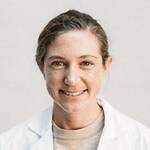
Amy Berkman, MD Department of Pediatrics Duke University School of Medicine
MedicalResearch.com: What is the background for this study?
Response: Cancer incidence in adolescents and young adults (AYAs, aged 15-39 years at diagnosis) is increasing, with approximately 90,000 new diagnoses annually in the US. Improvements in 5-year survival have led to a growing population of survivors of AYA cancer, currently estimated at >600,000 survivors. Survivors are at increased risk of treatment related chronic conditions including cardiovascular disease (CVD).
We wanted to determine whether certain sociodemographic and medical history factors further increase the risk of CVD in AYA cancer survivors and also compare risk of CVD between AYA cancer survivors and the general population.
MedicalResearch.com: What are the main findings?
Response: We found that male sex, Black race, household income <$50K/year, and current or former smoking were all associated with increased risk of CVD in AYA cancer survivors. Additionally, performing any moderate to vigorous intensity physical activity was associated with lower CVD risk.
Compared to the general population, the risk of CVD was significantly higher in survivors by sex, race/ethnicity, income, education, smoking status, and physical activity.
MedicalResearch.com: What should readers take away from your report?
Response: These results highlight the importance of long-term surveillance of adolescents and young adults after cancer treatment to ensure that appropriate screenings are initiated to reduce the risk of CVD and to promote healthy behavioral changes, such as physical activity, which impact long-term CVD outcomes.
MedicalResearch.com: What recommendations do you have for future research as a results of this study?
Response: Further studies are needed to better understand the trajectory of health behavior change, to determine barriers to healthcare access, and to identify opportunities for intervention in AYA cancer survivors.
Citation:
Berkman, AM, Andersen, CR, Roth, ME, Gilchrist, SC. Cardiovascular disease in adolescent and young adult cancer survivors: impact of sociodemographic and modifiable risk factors. Cancer. 2022; 1– 11. https://doi.org/10.1002/cncr.34505
The information on MedicalResearch.com is provided for educational purposes only, and is in no way intended to diagnose, cure, or treat any medical or other condition. Always seek the advice of your physician or other qualified health and ask your doctor any questions you may have regarding a medical condition. In addition to all other limitations and disclaimers in this agreement, service provider and its third party providers disclaim any liability or loss in connection with the content provided on this website.
After a car accident last month, Latifa Dixon, a mother of two, arrived at the emergency room at Delaware County Memorial Hospital in suburban Philadelphia only to learn the ER had just shut down. Twenty-eight-year-old Cecilia Vizuete, who was having trouble feeding her one-year-old daughter because of a breast infection, said she was told by a security guard to search Google Maps for another hospital. Shirley Posey arrived there suffering from shortness of breath and tightness in her chest.
“This was the closest hospital to me and I needed help,” Posey said when CBS News met her outside Delaware County Memorial. Posey later recovered, but not until she raced to an urgent care, collapsed, and was transported by ambulance to another hospital.
For nearly a century, Delaware County Memorial delivered babies, treated trauma and tended to the critically ill. That all changed earlier this year, when its current owners, a Los Angeles-based for-profit company called Prospect Medical Holdings, began cutting services at the 168-bed hospital in Upper Darby, Pennsylvania. First the maternity ward went, then the operating rooms and the I.C.U., and then, last month, the emergency department closed its doors to the community’s nearly 85,000 residents.
The shutdown has raised questions about the role of private equity as it piles into the health care space, snapping up everything from local doctors’ practices to specialty clinics, even hospices. According to the consultancy Bain & Company, private equity firms posted a record year for deal volume in health care in 2021, with the total value of those deals topping $150 billion.
Backed by private equity investment, Prospect Medical Holdings rapidly grew to own 20 hospitals in six states by 2018. In 2016, it bought Crozer Health, a nonprofit Pennsylvania health system that was in danger of failing.
A CBS News investigation found that of those 20 hospitals owned by Prospect Medical, five have closed. In addition to Delaware County Memorial, Prospect Medical has suspended all services at Springfield, another acute care hospital in the same Pennsylvania health system. It also closed three hospitals in a San Antonio health system it purchased in 2012.
In court proceedings, Prospect Medical argues it is not seeking to close Delaware County Memorial for good. In a statement to CBS News, the company said it is working to transition the hospital to a “100 patient facility for those in need of behavioral health and other services.” As part of the plan, the hospital will lose inpatient “acute care services,” which includes the lone emergency room in the community of Upper Darby.
“There aren’t resources nearby and so we find that people wait longer to go to the hospital,” county official Monica Taylor told CBS News chief medical correspondent Dr. Jon LaPook, adding that closing what’s considered a safety-net hospital will hit the area’s low-income population hardest.
“We wouldn’t see a hospital closing down if this were a more affluent area,” said Taylor. “It leaves a gaping hole in this community that is going to be very hard and very difficult to fill.”
“What they cared about was making money”
In a presentation provided to Delaware County officials, Prospect Medical cited struggles with high labor costs, record inflation for supplies and pharmaceuticals, and the strain of the COVID-19 pandemic for its decision. Taylor said she believes the company has not been upfront, and has been reluctant to share its financials with the county.
“I had the sense they were not giving us all the information,” Taylor said.
Prospect Medical has faced scrutiny before. In 2019, Rhode Island Attorney General Peter Neronha’s office investigated a proposed company transaction. Prospect Medical owns two hospitals in the state, that Neronha said were “in real danger of closing” because of the debt Prospect Medical had taken on.
“This had nothing to do with the pandemic,” Neronha told CBS News. “Hospitals all over the country were facing the pandemic … but the problems here were exacerbated, frankly, by greed.”
Neronha invoked state law to force Prospect Medical to turn over its finances. A ruling by the attorney general’s office found the company put “every hospital in its system…at risk of reduction of services, sale or closure.”
“They didn’t care about health care,” Neronha said. “What they cared about was making money for their investors.”
Neronha hired two different outside experts to follow the money and discovered one reason why Prospect Medical was experiencing financial strain. In 2018, company owners took out a $1.12 billion loan, using proceeds to pay themselves and their private equity shareholders a $457 million dividend, according to the company’s financial statements, obtained by Neronha’s office in the course of the investigation.
“It’d be like a homeowner going to a bank, taking out a $100,000 loan, and instead of using it to invest in their property or pay for their kids to go to college, what they did was they just basically stuck it in their pockets as cash,” Neronha told CBS News.
The company’s financial statements revealed that to pay back that $1.12 billion loan, Prospect Medical sold the land and the buildings from hospitals they owned in California, Connecticut and Pennsylvania to a real estate investment trust for $1.386 billion. The documents show Prospect Medical then leased those hospitals back from the real estate investment trust.
“So now you’re even in a worse position because you have no equity any longer,” Neronha said. “You don’t own anything that you can then go to the bank and use as collateral to raise more money when you need it.”
In Delaware County, that lease-back arrangement instead meant the health system was saddled with $35 million a year in rent.
Delaware County Memorial Hospital in Upper Darby, Pennsylvania, was closed in November 2022 after being bought by a private equity firm, Prospect Medical Holdings.
CBS News
CBS News submitted detailed questions to Prospect Medical about these financial decisions, including about the $457 million dividend and the lease-back arrangement. The company, through a spokesman, declined to answer those questions.
“They are drawing the value out of these hospitals as they would money from a piggy bank,” said Eileen O’Grady, campaign director with the Private Equity Stakeholder Project, a nonprofit organization that has raised concerns about Prospect Medical to attorneys general in the six states where the company owned hospitals. “Meanwhile, the company’s owners have made out like bandits.”
Neronha’s office confirmed to CBS News that the Prospect Medical CEO’s personal share of the $457 million dividend was about $90 million.
“What they’ve done is extremely evil”
One of the early investors in Prospect Medical’s 2016 purchase of the Pennsylvania health system told CBS News that the company entered into the arrangement as the only bidder and “last hope for these failing hospitals.” When the purchase was announced, local officials said it came with a promise: to invest $200 million to “dramatically increase…service to the community.”
“They tried to tell us that they were going to run us the same way,” said emergency nurse Angela Neopolitano, who worked at Delaware County Memorial for 41 years. Instead Neopolitano, who was president of the local nurses’ union, says Prospect Medical dismantled the hospital piece by piece, leading to longer waits in the emergency room and forcing staff to transfer more patients to other hospitals.
“They kept on cutting services,” Neopolitano said. “Things wouldn’t get fixed. Our elevator in the back of the emergency room had been broken for over a year. When they closed the I.C.U., that was the knife in my heart.”
Neopolitano said at one point, the credit cards used by paramedics within the health system to fill their ambulances with fuel were disabled because Prospect Medical “didn’t pay their bill.”
The company did not respond to questions about its specific investments at Delaware County Memorial, but in an annual report said it had lived up to its commitment to invest $200 million in Crozer Health.
The company did not respond to a question about whether it neglected to pay fuel bills for ambulances, which was first reported in an investigation of the company by ProPublica. The company told ProPublica a company credit card was rejected because it had a charge limit as a security measure, and it increased the limit when it was brought to their attention to ensure there was not a disruption of services.
Now, the company has pivoted to a plan to convert Delaware County Memorial into a behavioral health facility. An executive with the hospital told the Philadelphia Inquirer last week that the new incarnation would not be “a moneymaker… but we go from losing $18 million a year to making $3 million and providing needed services to the community.”
The shut down of Delaware County Memorial in September has sparked a legal battle which has drawn in Pennsylvania’s attorney general and governor-elect Josh Shapiro.
In October, a judge granted an emergency injunction to keep the hospital open. Yet weeks later, the state’s health department shut it down anyway, after Prospect Medical notified the department of staffing issues.
In a statement to CBS News, Prospect Medical said the ongoing litigation limits what it can say, but that the company is communicating with state health officials about its “multiple efforts to address those staffing issues.” The company has pledged to save the facility by turning it into a “desperately needed 100-patient facility for those in need of behavioral health and other services.”
Next week, a judge will hear arguments over whether to require Prospect Medical to find a way to re-open the hospital’s doors. Shapiro’s office has asked the judge to hold Prospect Medical in contempt and to fine it $100,000 for every day it does not resolve the staffing issues.
Neopolitano told CBS News she thinks that the $457 million dividend Prospect Medical’s owners and private equity investors paid themselves should have gone back into the hospitals and into the community.
“What they’ve done is extremely evil, in my words,” said Neopolitano of Prospect Medical. “To gain a dollar, you maybe destroyed lives, maybe even ended lives, because they can’t get the help they need.”
Jon LaPook
Dr. Jonathan LaPook is the chief medical correspondent for CBS News.
With hundreds of five-star reviews, Fitat60.com is rapidly gaining momentum with those over 60.
MELBOURNE, AUSTRALIA, December 6, 2022 /EINPresswire.com/ — Having just turned two years old, Fitat60 has recently hit a few big milestones. An innovative online fitness and nutrition program designed specifically for people 60 and over, the site is celebrating 10,000 members and an average 4.4 rating on Trustpilot, while November was its biggest month yet. According to Editor-in-Chief Matthew Morgan, the business is gearing up for even greater success in 2023.
“Fitat60 is really taking off,” says Morgan. “I can’t say that we’re totally surprised, because we really did our homework to find out what people over 60 were looking for, but we’re delighted by all the positive comments we’ve been receiving.”
The idea for the business came at the beginning of the pandemic, when people started turning to the internet to find ways to get fit and stay healthy. With most programs focusing on a younger audience, there was an obvious gap in the market for the over sixty crowd.
“When we conducted our research, we were astonished to learn that most over-sixties are far from being the stereotypical elderly folks we see in the media. They are not, for the most part, grey-haired, hunched over or immobilized by bad backs and bad knees—quite the contrary, in fact. Feeling good, positive about life and with plenty of energy, the majority are always on the lookout for ways to improve their health and well-being. Not that they don’t have ailments or issues—they do, but it doesn’t define them. As many of our clients say: 60 is the new 40!”
Focusing squarely on the needs of those people, Fitat60 offers a four-part program:
• Nutrition: an extensive range of recipes and meal plans to show that eating healthy doesn’t have to mean eating without flavor.
• Fitness: easy-to-follow videos conducted by certified personal trainers, catering for all levels of fitness.
• Mind: tips and tricks to keep an active mind and a positive outlook.
• Medical: help to explain GPs advice, and practical pointers on how to put this advice into practice.
“60 is the new 40!” Morgan concludes. “We invite you to invest in your greatest asset—yourself—by joining our program!”
Founded by Lyndal Payne and Matthew Morgan in 2020, Fitat60 is an Australian-based online fitness and nutrition program for people over the age of 60. On a mission to find and develop the best and relevant products, programs and supplements with no corners cut, the owners have a decade’s worth of experience in building and producing online fitness and nutrition content and video production.
Matthew Morgan Fitat60 +61438568902 ext. matt@fitat60.com
Joe Rogan slammed “fat professors” who defend unhealthy lifestyles in a Saturday episode of “The Joe Rogan Experience.”
“F— off fat professors, f— off, you guys are unhealthy, it’s not in any way good,” Rogan said.
Rogan’s guest was fitness influencer Derek of the “More Plates, More Dates” YouTube channel, where the two appeared to reference a document from the University of British Columbia in Canada. The document defended the removal of nutritional information from menus because putting the number of calories next to an item can be “triggering” for some students.
“It can be triggering for those with disordered eating habits or eating disorders,” the document to students read. “For those of us who have a rocky relationship with food, either in the past or present, it can be triggering when we are presented with caloric information, and it can affect our ability to repair our relationship with food. By stepping away from nutrition information, we can place a greater focus on the enjoyment of food and creating a satisfying experience.”
OBESTIY: MORE THAN HALF OF YOUNG ADULTS ARE OVERWEIGHT, STUDY SAYS
Podcast giant Joe Rogan has arguably become world-famous by having honest conversations with guests about a variety of topics. (Photo by: Vivian Zink/Syfy/NBCU Photo Bank/NBCUniversal via Getty Images)
Derek described how the university “removed all of the nutritional information apparently from the foods the students were getting on their meal plans, because it was ‘too triggering’ to show the calories.”
He continued, “it presents this f—ed up scenario where you can’t even self-regulate, even the individuals who want to stay at a healthy weight, you can’t even figure out what the f— you’re eating.”
PEOPLE ARE LOSING WEIGHT FOR THE HEALTH BENEFITS, NOT FOR PHYSICAL APPEARENCE: MAYO CLINIC SURVEY
Rogan recalled a viral video showing a female professor, “talking about [how] avoiding certain foods is just ‘fatphobic’ and ‘it’s not based in science.’” He also remembered the woman saying, “you shouldn’t deny yourself donuts” and “to call some food ‘junk food’ is incorrect.”
Obese person measuring his belly. (Credit: iStock)
“How are you ever speaking publicly on this?” Rogan wondered.
Rogan criticized the idea that people are disturbed by “actual data” presented about the foods they are choosing to eat, and suggested that it, “doesn’t mean anybody should tell you what you should or shouldn’t do, but you should know.”
The host suggested that by demonizing basic information, “they’re raising the most non-resilient people possibly known to man, where every single micro-aggression, every single thing that can trigger you, all those are removed, and you are just raw and vulnerable.”
Spotify reportedly pays podcasting giant Joe Rogan “at least” $200 million. (Photo by Ronald Martinez/Getty Images | REUTERS/Lucas Jackson/File Photo/File Photo)
CLICK HERE TO GET THE FOX NEWS APP
“We’ll protect you in this university system, and then spit you out into the world where you will then infect corporations with this ideology-and that is what we’re experiencing,” he added.
“It’s wild how the shift to comfort mentality has very much become commonplace,” Derek responded. “I feel like this is partially why men’s testosterone levels are dropping too-just like the lifestyle and encouragement to be a sedentary piece of s— who is offended and insulted by literally everything, none of this is conducive to masculinity.”
Alexander Hall is an associate editor for Fox News Digital. Story tips can be sent to Alexander.hall@fox.com.
ATLANTA — Earlier this year, top leadership at the Centers for Disease Control and Prevention began a monumental task: turning the sprawling, labyrinthine organization known for its highly specialized, academically focused scientific research into a sleek, flexible public health response agency primed to serve the American public. It’s an attempt to keep the CDC from repeating the mistakes it made while responding to covid-19.
But agency veterans, outside public health officials, and workplace organization experts said the current workplace structure could be a major barrier to that goal. Like directors before her, agency head Dr. Rochelle Walensky spends a considerable amount of time away from the CDC’s headquarters in Atlanta. The agency has also embraced a workplace flexibility program that has allowed most of its scientists to stay remote.
As of October, 10,020 of the CDC’s 12,892 full-time employees — 78{bf0515afdcaddba073662ceb89fbb62b6b1bf123143c0e06b788e1946e8c353f} of the full-time workforce — were allowed to work remotely all or part of the time, according to data that KHN obtained via a Freedom of Information Act request.
Experts said the lack of face-to-face work will likely be a substantial obstacle to the top leadership’s effort to overhaul the agency after its failures during the pandemic — a botched testing rollout, confusing safety guidance, the slow release of scientific research, and a loss of public trust.
They also wondered whether Walensky, who frequently works remotely while traveling, can bring about that change from afar and whether a virtual workforce might experience more challenges battling infectious diseases than one working together in person.
“One of the things that a really strong new leader would do is they’d be visible, they’d be walking the halls, they’d have the open door,” said Pamela Hinds, a professor of management science and engineering at Stanford University. “That’s much harder to accomplish when nobody’s there.”
Key to the effort to reform the CDC is changing its institutional culture, which the agency says is at the core of all its work — from how it interacts with other agencies to how it shares its research. Walensky has said the CDC needs to be faster and nimbler in the face of emergencies and more communicative, both internally and with the public.
A flexible, responsive, and collaborative culture thrived not too long ago — during the Obama administration, when the agency handled crises such as the H1N1 flu pandemic and the Zika virus outbreak, said Dr. Stephen Cochi, who worked at the CDC for four decades before retiring this year. “I would like to see every effort made to try to restore that culture to the extent possible, because CDC will potentially lose some of its excellence if it can’t,” he said.
Changes, such as the transition to a largely remote workforce and a ballooning bureaucracy, he said, made it “almost impossible to get anything done” in his later years at the agency.
Chris Collins, a professor at Cornell University’s School of Industrial and Labor Relations, said that institutional culture includes “the unwritten rules of how work gets done” and that those are hard to learn in a remote work environment.
A largely remote workplace, Collins said, can lead to weaker social connections among staffers, which can ultimately result in less understanding of and investment in the institution’s values. A loss of personal interaction can also suppress innovation. “If you believe great new ideas come from people bumping ideas up against each other, you want to try and create an environment where that happens as often as possible,” he said.
A document that outlines the CDC’s policy and that was last updated in April says remote work can help recruit and retain staffers, keep workers happy, and reduce the cost of leased office space. It followed updated guidance from the U.S. Office of Personnel Management encouraging agencies across the federal government to consider remote work options for staff, considering their utility during the covid-19 pandemic.
As of early 2020, much of the workforce of the FDA and the National Institutes of Health was working remotely. Today, the NIH is mostly back in the office, but the FDA said many of its employees continue to work remotely when possible. And while the White House COVID-19 Task Force huddled in the early days of the pandemic and held in-person news conferences, its briefings became largely remote events.
Still, Walensky has recently faced pointed skepticism about the workforce flexibility policy from lawmakers, who questioned her ability to remake the CDC with a dispersed staff.
“People at the CDC are working well, they’re working hard, and they don’t necessarily need to be on-site in Atlanta,” Walensky responded. “In fact, oftentimes, they’re more productive off-site.”
Walensky added that agency staff deployments are common and that many lab staffers, who can’t work from home, are reporting to CDC offices.
Leading the agency also isn’t a traditional office job.
“The role of CDC director has historically involved a significant amount of official travel around the globe; requiring the director to be mobile and able to work from anywhere,” Jason McDonald, a CDC spokesperson, said in a statement. “Dr. Walensky splits her time between CDC domestic sites around the country, Washington, D.C., state health departments, and internationally where CDC has a presence in 60 countries.”
KHN spoke with multiple CDC employees working remotely. They declined to speak on the record because of concerns about job security.
They said the remote work policy had no impact on their work but acknowledged that reduced opportunities for in-person interaction could make some CDC staff members feel less connected to their managers and peers — and to the agency’s mission.
That lack of personal connection can lead to a lack of trust, which can keep important conversations from happening, said Hinds, the Stanford professor. “We’re much more willing to be open, ask difficult questions, bring up problems when we have actually sat down with somebody face-to-face and gotten to know them a little bit better,” she said.
A remote work environment also makes it harder for an incoming leader who has no experience inside an organization to truly understand its quirks, Hinds said. Walensky was an external hire and worked at Massachusetts General Hospital before her appointment as CDC director. And booking time for a video or phone call with a new boss to help them learn about an institution is “a big hurdle,” Hinds said, compared with bumping into them in the hallway or at the coffee cart.
In her early days working at the CDC, Dr. Anne Schuchat said, she relished informal interactions with co-workers and called such unscheduled time creative and productive. “I think you lose some things when you don’t have the informal mentoring and the visibility, perhaps the greater sensitivity to who’s struggling, who needs help,” Schuchat said.
She spent more than three decades at the agency, including two stints as acting director, before retiring in summer 2021. Her departure came on the heels of that of another high-level CDC official, Dr. Nancy Messonnier.
Schuchat said that working remotely part time was encouraged at the CDC before the pandemic because of a lack of office space. She said she imagined that many staffers were indeed more productive while working remotely, despite the possible costs to the agency’s culture.
Many people have fled the U.S. public health workforce in recent years, burned out from the covid-19 response. Public health experts said that keeping talent requires offering benefits such as remote work — especially when it’s hard to offer competitive salaries — and getting staffers to believe in an agency’s mission.
But, the experts said, in-person interactions can lead to strong allegiances and investment in an organization, which can translate to better retention.
“They generally want to feel like their work is important and that they’re valued,” said Dr. Manisha Juthani, who has led the Connecticut Department of Public Health since July 2021. “And the workplace allows for that a little bit more so than just sitting in front of the computer.”
Walensky has said that transforming the CDC’s culture from one that’s methodical and academic to one that’s focused on quick action won’t be easy. Other experts agree on the need for the pivot.
“They tend to be an agency that studies things and then, in their own sweet time, responds, versus being an emergency response agency,” said Dr. Georges Benjamin, executive director of the American Public Health Association.
Overhauling that culture will be a big challenge, with high stakes, for the agency tasked with protecting the public health of all Americans. Benjamin said the CDC would likely have made its pandemic stumbles even if staffers hadn’t been working remotely. But coming to terms with those mistakes — and rebuilding the agency to keep them from happening in the future — could be easier and more sustainable if more people were working together in person, he said.
“How do you become part of a culture, how do you become part of a holistic organization, if you’re not together?” he said. “While I’m not disturbed that they’re not back, my advice is to get there as quickly as they can.”
Women were underrepresented in COVID-19 treatment clinical trials, and some racial and ethnic groups were underrepresented in COVID-19 prevention trials, according to a new meta-analysis conducted by Fred Hutchinson Cancer Center in collaboration with researchers from Beijing and London.
The study, published Dec. 5 in JAMA Internal Medicine, identified system-wide differences in representation among several key demographic groups in COVID-19 prevention and treatment trials in the U.S.
“To our knowledge, this is the first study to comprehensively examine demographic representation across the landscape of both COVID-19 prevention and treatment trials over the first two years of this pandemic,” said Hong Xiao, Ph.D., researcher in the Public Health Sciences Division at Fred Hutch and the lead author for the study.
By the numbers
Overall, the meta-analysis examined 122 U.S.-based clinical trials for COVID-19 vaccines or treatments, involving more than 175,000 participants. The selected trials were those registered on ClinicalTrials.gov or published in PubMed from October 2019 to February 2022.
Only studies that provided data about enrolled participants by sex, race or ethnicity were analyzed in this study. Representation rates from trials were compared to expected rates in the U.S. COVID-19 population.
Takeaways
Key findings from their review included:
Sex, race, and ethnicity were reported in 89.3{bf0515afdcaddba073662ceb89fbb62b6b1bf123143c0e06b788e1946e8c353f}, 77.9{bf0515afdcaddba073662ceb89fbb62b6b1bf123143c0e06b788e1946e8c353f}, and 71.3{bf0515afdcaddba073662ceb89fbb62b6b1bf123143c0e06b788e1946e8c353f} of U.S.-based COVID-19 clinical trials, respectively, suggesting there was a meaningful gap for many studies in this important aspect of trial reporting.
Female participants were underrepresented in treatment trials (85{bf0515afdcaddba073662ceb89fbb62b6b1bf123143c0e06b788e1946e8c353f} of expected participants) but were well represented in COVID-19 prevention trials.
Black and Asian individuals were underrepresented in COVID-19 prevention trials (53.7{bf0515afdcaddba073662ceb89fbb62b6b1bf123143c0e06b788e1946e8c353f} and 64.4{bf0515afdcaddba073662ceb89fbb62b6b1bf123143c0e06b788e1946e8c353f} of expected participants, respectively), but were well represented in COVID-19 treatment trials.
Hispanic individuals were overrepresented in treatment trials (more than 200{bf0515afdcaddba073662ceb89fbb62b6b1bf123143c0e06b788e1946e8c353f} of expected participants).
Author commentary
The study authors noted that female participants historically have been underrepresented in clinical trials in general for various reasons. Pregnant women have routinely been excluded from clinical trials; as such, women of reproductive age may have had greater concerns about how developmental COVID-19 treatments would affect their health and current or future fertility.
The authors also speculated that Hispanic overrepresentation might have occurred for several reasons, including the fact that one-third of the U.S.-based COVID-19 trial sites were in California, Texas and Florida—areas with large Hispanic populations. Additionally, COVID-19 treatment trials were typically conducted among inpatient populations, which may have disproportionately affected Hispanic populations due to a lack of primary care and increased risk for COVID-associated hospitalizations.
“In many instances, our findings highlight achievements in the successful enrollment of historically underrepresented patients. However, our findings also underscore that despite efforts to eliminate sex, racial and ethnic disparities, gaps in reporting and differences in representation in U.S.-based COVID-19 trials have persisted,” said Joseph M. Unger, Ph.D., MS, Fred Hutch biostatistician and health services researcher and the study’s senior author. “Clearly, more progress needs to occur to fully close these gaps and achieve greater diversity among participants.”
Equitable access
“This vital work by Fred Hutch researchers and their collaborators highlights the ongoing disparities in who accesses and enrolls in clinical research,” added Rachel Bender Ignacio, MD, medical director of the COVID-19 Clinical Research Center at Fred Hutch. “We must remain laser-focused on ensuring that clinical-trial participation is representative of the general population, which both requires trust in and access to research, and also ensures that the products of that research are acceptable to and appropriate for everyone.”
Xiao, Unger and the rest of the study authors concluded that additional strategies are needed to ensure that all trial sponsors, whether federally supported or industry-funded, are held accountable for appropriate representation of females and racial and ethnic groups in clinical trials.
Citation:
Large-scale review of COVID-19 clinical trials highlights multiple disparities (2022, December 5)
retrieved 5 December 2022
from https://medicalxpress.com/news/2022-12-large-scale-covid-clinical-trials-highlights.html
This document is subject to copyright. Apart from any fair dealing for the purpose of private study or research, no
part may be reproduced without the written permission. The content is provided for information purposes only.