
Leading American medical journal continues to omit Black research, reinforcing a legacy of racism in medical knowledge

The leading U.S. medical journal, read regularly by doctors of all specialties, systematically ignores an equally reputable and rigorous body of medical research that focuses on Black Americans’ health.

The American Medical Association created a segregated “whites only” environment more than 100 years ago to prohibit Black physicians from joining their ranks. This exclusionary and racist policy prompted the creation in 1895 of the National Medical Association, a professional membership group that supported African American physicians and the patients they served. Today, the NMA represents more than 30,000 medical professionals.

In 2008, the AMA publicly apologized and pledged to right the wrongs that were done through decades of racism within its organization. Yet our research shows that despite that public reckoning 15 years ago, the opinion column of the AMA’s leading medical journal does not reflect the research and editorial contributions by NMA members.

Invisibility in the opinion column of one of the most prominent medical journals in the U.S. is another form of subtle racism that continues to lessen the importance of equitable medical care and health issues for Black and underserved communities.

As rhetoricians and researchers who study scientific communication, we look at the ways scientific writing perpetuates or addresses racial inequity. Our recent study traced how research is referenced by medical professionals and colleagues, known as citations, of flagship journals of the NMA and AMA: the Journal of the National American Association and the Journal of the American Medical Association.

Invisible research

Our research began with a question: Has the AMA’s 2008 apology had any effect on the frequency with which JAMA opinion writers draw on insights and research of JNMA scholars and authors?

We studied opinion columns, also referred to as editorials, precisely because they are useful indicators of current and future research as well as priorities and agendas. The purpose of editorials is to critically analyze and sift through various opinions and evidence. Effective editorials in scientific journals are especially rich forums for debate within the medical community.

Medical publications like JNMA and JAMA do not simply convey knowledge. They also establish professional community values through the topics that are studied and who is credited for ideas related to research. When writers choose to reference or cite another scholar, they are acknowledging and highlighting that expertise.
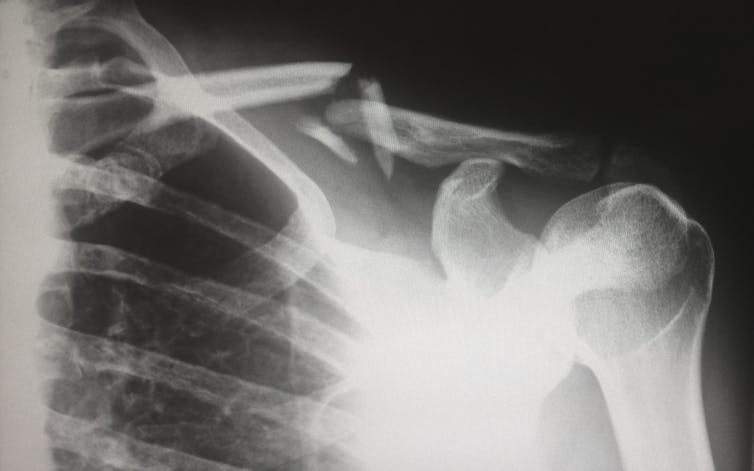
Leading American medical journal continues to omit Black research, reinforcing a legacy of racism in medical knowledge
Influential medical journals serve to inform and shape health care.
Harlie Raethel for Unsplash

As such, citations play an important role in the visibility of research. Articles and authors with more citations are more likely to have a greater effect on the scientific community and patient care. Opinion pieces can shape the broader conversation among medical professionals, and citations can widen that circle of communication.

Invisible racism

We traced how frequently JAMA and JNMA opinion writers referenced one another from 2008 to 2021 by reviewing the 117 opinion pieces published in JNMA and 1,425 published in JAMA during this 13-year period. We found that JAMA opinion columns have continued to, in effect, uphold racial bias and segregation by ignoring JNMA findings.
A Black medical professional adjusts gloves in front of a mirror.
The work of Black medical proessionals is being overlooked in national medical journals.
Piron Guillaume for Unsplash, CC BY-ND

Even when focusing on race, racism and health disparities, topics that JNMA has explored in great detail, JAMA opinion columns did not reference JNMA colleagues or research. Only two JNMA articles were credited and referenced in the 1,425 JAMA opinion pieces that we reviewed.

Editors at JAMA did not respond to our requests for their comments on our analysis.

Racial equity in medicine

The story of the AMA and NMA is not only a reminder of the racist history of medicine. It demonstrates how the expertise of Black professionals and researchers continues to be ignored today. The lack of JNMA citations in JAMA research undercuts the AMA’s own work on racial equity and potentially compromises the quality of medical knowledge published in its journals.

For example, a recent study in the Proceedings of the National Academy of Sciences found that scientists from underrepresented groups innovate, or contribute novel scientific findings, at a higher rate than those from majority groups.

An article published in the weekly medical journal of the Public Library of Science noted that diverse research teams are often more successful in developing new knowledge to help treat women and underrepresented patients with greater precision.

Dissolving systemic bias

One way to intentionally tackle racial bias and segregation in medical knowledge is by deliberately referencing Black researchers and their work. To change this dynamic of racial bias, medical journals must pay attention to how much and how often the Black medical establishment is referenced. Health issues in underserved communities would likely become more visible and achieve greater quality of care in keeping with the AMA’s commitment to social justice.

Journal editors could tell writers and editorial staff to prioritize citation practices. Individual authors might conduct research and evaluate their reading habits to intentionally include research from the Black medical community.

However, this work must go beyond individuals. Undoing decades of collective habits and embedded racism requires collaborations that work across systems, institutions and disciplines.
One hand holds a bottle of pills and the other hand holds three white pills.
Racial disparities in health care often result in lower-quality medical treatment and worse health care outcomes for Black Americans.
Towfiqu Barbhuiya for Unsplash, CC BY-ND

For example, libraries, databases, and search engines that help researchers find and evaluate medical publications might review today’s research tools. It is hard to contribute to a research conversation if your work is invisible or can’t be found.

Many tools, like impact factors, rank research according to how influential it is. If research begins in a category of less importance, it can be harder for the technology to rank it equitably. JNMA’s work was already marginalized when the tools that rank research were developed.

Thus, search results can hinder efforts of individual authors to work toward equitable citation practices. Black researchers and their research of Black health were excluded from the beginning, and existing systems of sharing knowledge and drawing attention to important studies incorporate that structural racism.

The AMA apology in 2008 and its recent progress on addressing racism in its publication process are promising steps. Influential medical journals serve to inform and shape health care. Who is referenced in these journals matters to the medical establishment, research funders and, ultimately, to the patients that are served by innovations in medicine.

Attention to citation can help reduce systemic bias in medical knowledge to achieve greater fairness in health care and, in the long run, help increase attention and resources that will help solve health issues in underserved communities.
Virginia Republicans Vote Against Apology for Misusing Black Bodies for Medical Research, Citing ‘No-End’ to Number of Amends Needed

Virginia lawmakers have decided not to move forward with legislation that would officially apologize for the state-sanctioned misuse of Black body parts over the past two centuries.

As far back as the 1800s, Old Dominion allowed medical professionals to conduct research on African-American bodies, living and dead, without their or their family’s permission. Some politicians were hoping in vain the state legislature would own up to exploitation.

However, on Friday, Feb. 17, the Rules subcommittee of Virginia’s House of Delegates voted 4-1 to lay SJ 274 on the table. This act, according to the Virginia Mercury, indefinitely killed the resolution.

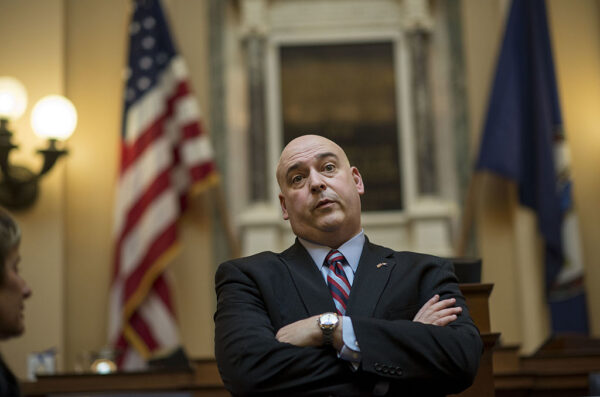
Virginia House Speaker
RICHMOND, VA – FEBRUARY 3: Delegate Todd Gilbert, left, a Virginia republican representing the Shenandoah district, talks to fellow delegates on the House floor of the Virginia State Capitol in Richmond, Virginia, Monday, February 3, 2014. (Melina Mara/The Washington Post via Getty Images)

Four Republicans among the subcommittee’s five members, House Majority Leader Terry Kilgore, Speaker Todd Gilbert, Del. Barry Knight, and Del. Kathy Byron, shut it down.

Titled “Unethical use of Black bodies by medical institutions; acknowledging with profound regret,” the bill was introduced by Democratic Sen. Jennifer B. Boysko of Fairfax.

During her presentation of the bill, she said it was important to acknowledge the past wrongs perpetrated by the government in order to heal wounds created by those wrongdoings.

Gilbert, one of the Republicans who voted against the resolution, said during the meeting, “I feel like there are thousands upon thousands of equally painful and hurtful and regrettable stories that could be told about how we treated one another, how Black Americans were treated for a very long time in this country. And I just worry that there’s no end to these resolutions, and maybe that’s the intent, I don’t know.”

One example of this was when the Medical College of Virginia hired grave robbers to steal Black bodies for medical experimentation in the 1800s when they did not have cadavers available for research.

“But certainly,” he continued. “If it helps for me to acknowledge that fact, that there are these many, many hurtful, painful memories and events and actions that hurt so many people, you know, I’m doing that publicly right now.”

“I just don’t know in the way of legislation how we contribute to that healing by acknowledging one or two a year at a time. That’s my main concern,” he concluded.

After the bill was not affirmed, Boysko said, “I think it’s important that we address problems so we can move forward collaboratively. We know there are Black people who live in Virginia and around the country who are suspicious of health care because of what has happened in the past.”

Adding, “Our bill would have at least admitted that and given people a small peace of mind.” 

Phillip Thompson, the former president of the Loudoun NAACP, believed the resolution would pass because it was supported by many in the senate already, unanimously being passed in that branch of government. However, the House of Delegates proved to be a barrier to the measure.

He said, “I thought it had a chance because it’s a very innocuous bill. We weren’t asking for reparations, nothing like that; we just wanted a real apology.”

Thompson also added that he believes it was so difficult to persuade African-Americans to get the COVID-19 vaccine because of the mistrust born out of the nation’s history of medical mistreatment, including The Tuskegee Experiment.

From 1932 to 1972, about 400 African-American men with syphilis participated in The Tuskegee Study of Untreated Syphilis in the Negro Male by the United States Public Health Service

According to the Centers for Disease Control and Prevention, the study initially involved 600 Black men (399 with syphilis, and 201 who did not have the disease). Participants were told they were being treated for “bad blood” but never had informed consent collected.

Despite being in the study, which looked at the sexually transmitted disease, anemia, and fatigue, the men were never offered penicillin to treat their syphilis. Instead, for research purposes, they were allowed to suffer.

“When the COVID vaccines first came out in my community, a lot of African-Americans didn’t want to take those vaccines because they thought that it was like the Tuskegee experiment,” Thompson explained. “Back in the ’30s and 40s, young kids were told don’t stray too far because the body snatchers will get you.”

Boysko explained in her bill presentation that this kind of warning was plausible.

She reminded the group that in April 1994, nine of the 53 bodies discovered in Richmond’s East Marshall Street Well dug up on Virginia Commonwealth University’s MCV Campus were discovered to be mostly from Black children. The human bones found at the well are believed to have been discarded in the 1800s by medical staff.

“Many of us still don’t trust the system, and when you look at history, that distrust is justified,” Thompson said.

In September, Virginia Commonwealth University formally apologized for its discarding of Black bodies after dissections. It also issued an apology to the family of Bruce Tucker, a Black Virginia laborer whose heart was removed after his condition was deemed too severe in 1968.

Health officials discuss medical wrongs against Black community

The instances of Henrietta Lacks and the U.S. Community Overall health Provider Syphilis Analyze members are oftentimes referenced all through discussions about the Black community’s distrust of the health and fitness care procedure.

Henrietta Lacks was a Black lady with cervical most cancers whose cells have been unknowingly taken, employed and distributed by Johns Hopkins University for medical investigate in 1951. Lack’s cells, usually recognised as “HeLa” cells, contributed to scientific breakthroughs, like the examine of the human genome, testing of the outcomes of radiation and the growth of polio and COVID-19 vaccines.

For a long time, pseudonyms like Helen Lane and Helen Larsen have been utilized to conceal the real origin of “HeLa” cells. Her title grew to become regarded in the 1970s when loved ones users have been asked for blood samples for investigation.

The wonderful-granddaughter of Lacks, Veronica Robinson, claims that her great-grandmother’s tale has led her to advocate for her spouse and children and underrepresented communities. She recalled her attempts to lower vaccine hesitancy through the pandemic.

“I affect plan modify and I bridge the gap between science and local community,” Robinson stated. “Right now, creating believe in has been incredibly important to the issue in which it can be detrimental to people’s lives. If we never start to create have faith in, if we continue to keep sweeping heritage under the rug, we can never ever go ahead.”

Lillie Tyson Head’s father, Freddie Lee Tyson, was a participant in the deceptive U.S. Public Wellness Company Syphilis analyze that resulted in the fatalities of some of the men, such as their wives and little ones.

Tyson Head is the president of the Voices for Our Fathers Legacy Basis, an firm founded by descendants of men utilized in the analyze.

“If we as Black and brown people want to improve the narrative of disparities in overall health and the racial program that has brought about a large amount of pain and injustice, we want to start possessing this dialogue,” explained Tyson Head. “If you are not at the desk, you are on the menu.”

Watson reported he hopes the Tuskegee gathering can assist the All of Us application advance and set principles into action by “moving from assure to development.”

“We’ve promised a good deal about what scientific study can do and about what the worth of exploration is, but we want to start out to advance that operate,” Watson explained. “We need to have to increase the study pipeline to guarantee that there is scientists that are asking the queries that reflect the variety of the group.”


For additional information, together with how to join “All of Us,” stop by https://allofus.nih.gov/.

The Atlanta Journal-Constitution and Report for America are partnering to include extra journalists to protect subject areas significant to our local community. Please assistance us fund this significant get the job done at ajc.com/give

Racist Doctors and Organ Thieves: Why So Many Black People Distrust the Health Care System

Discrimination, lack of access, mistrust and mistreatment aren’t unique to Black Americans; Latinos and other minority groups experience it, too. Poor people often wait longer for worse care in underfunded, understaffed — and often de facto racially segregated — public hospitals and clinics than richer, better-insured people. And they know it.

Growing up in Detroit, Michael Winans, now in his early 40s, was “too busy getting by” to pay attention to a syphilis experiment that ended before he was born. But distrust of the medical establishment flowed in his family. His grandmother survived a stroke but died during routine follow-ups; the family suspected sub-par care. Later, his mother hesitated when she needed fibroid surgery. When she finally went in, she ended up with an unexpected hysterectomy. Winans knows that sometimes happens, that the less invasive operation isn’t always enough. But was it necessary for his mother? He wonders.

“When you grow up in a predominantly Black town like Detroit, you can go much of your life without really interacting with someone of another race,” he says. “If the first time is when you have a health issue … you ask yourself, ‘Does this person care for me? Or see me as a number?’ It’s another level of potential trepidation or concern.”

The Black American experience is getting particular scrutiny right now, along with hopes for change. Some of the people interviewed for this story were more optimistic than others about progress. But none saw the health system as color-blind.

“People see that I’m Black before they notice — if they ever get to the point that they notice — that I have a PhD.,” says Cara James, who ran the Office of Minority Health at the Centers for Medicare and Medicaid Services during the Obama administration. James, who also previously led work on racial disparities at the Kaiser Family Foundation, is now the president and CEO of Grantmakers in Health, which works with foundations and philanthropies to improve health care.

Things may have gotten better since the days when James would carefully select which suit to wear as she accompanied her grandmother, an agricultural worker in the South with little formal education, to medical appointments. But they haven’t improved enough.

“We are human,” she says, “We have perceptions and biases about others.”

Those biases can be subtle — or not.

When Matthew Thompson, a financial officer at a reproductive health organization in Texas, fell ill soon after relocating to Austin a few years back, he didn’t yet have a regular doctor but managed to get an appointment with someone. That doctor, who was white, took one look at Thompson, a 40-something Black male, and on the basis of a brief examination and blood pressure reading, diagnosed him with hypertension and handed him a prescription.

“He was a white doctor … he gave the whole speech about genetics and race,” Thompson recalls.

But most health differences between Black people and white people are not genetic; many are socioeconomic or the result of inequality or the lingering distrust that might deter a Black patient from seeking care earlier.

That doctor was right that hypertension is common in Black men. The problem is that Thompson didn’t have it. The doctor treated a stereotype, not a person.

Ironically, trust — tragically misplaced trust — was part of what allowed the Tuskegee study to go on for 40 long years. That’s according to Lillie Tyson Head, who leads the Voices for Our Fathers Legacy Foundation, an organization created by the descendants of those who suffered. The men, like her father, Freddie Lee Tyson, who was born with syphilis, were told they had “bad blood,” not syphilis. And they trusted those men in white coats who kept studying them, untreated, endangering them, their wives and their children.

“Those men were trusting,” says Tyson Head, 78, a retired schoolteacher. “They went forth thinking they would be treated. And they were still trusting for over 40 years.”

The troubling legacy of a Black woman’s cells

Ethical concerns over her cells, the most widely used in research, are in the spotlight as family seeks reparation

The troubling legacy of a Black woman’s cellsIn the opaque world of scientific research, HeLa cells are legendary. These cells mark one of the most significant milestones in the history of modern medical research, because it was the first time in decades that scientists were able to keep human cells alive in culture.

While other cells died eventually, HeLa cells were amazing: they reproduced every 24 hours and never stopped doing so, thus becoming the first immortal cells grown in a laboratory.

They have been used in research over a wide spectrum and were instrumental in developing drugs for an astonishing range of diseases, from influenza and herpes to leukaemia and Parkinson’s.

Jonas Salk’s life-saving polio vaccine would not have been possible without HeLa cells. And they also became a multimillion-dollar industry for some companies.

Yet, for decades, the racial origin of the most famous human cell was kept hidden from the world—and from her family.

The remarkably prolific and resilient cells were taken from the cervical tumour of a young Black woman, Henrietta Lacks—hence the name HeLa—who was being treated at Johns Hopkins Hospital in Baltimore, US, for a virulent form of cervical cancer.

Lacks was a young mother of five when she died in 1951 at the age of 31. Her cells were collected by George Gey, a prominent cancer and virus researcher, who ran a nearby tissue laboratory.

Lacks did not know that her cells were being taken for culture, nor was her’s or her family’s permission sought before or after her death.

It was not until 1981 that the origin of HeLa was credited to her, and her family learned of this by accident. This and the subsequent story of how her family was used for further research, again without their knowledge or consent, has sparked a debate on an individual’s right over their genetic material and also the ethics over its use by researchers and commercial organisations.

There is also a lawsuit by Lacks’ heirs, who are seeking compensation from laboratories that made millions from the sale of HeLa cells. For a start, they have filed a case against Thermo Fisher Scientific, accusing it of selling Lacks’ cellular material, developing and manufacturing cellular products incorporating HeLa cells, and seeking intellectual property (IP) rights on them.

This implies they are staking IP rights on her genetic material. The nub of the case is that the company appropriated Lacks’ genetic material for its own gain without payment, permission or approval from the Lacks Estate or family.

The family had previously sought payment from Johns Hopkins and the suit against Thermo Fisher mentions “the unlawful conduct” of its doctors. Johns Hopkins is categorical that it has “never sold or profited from the discovery or distribution of HeLa cells” and does not own the rights to the cell line.

“Rather, Johns Hopkins offered HeLa cells freely and widely for scientific research.” The controversial point here is whether the hospital and Gey acted unethically or illegally in taking tissue from Lacks’ cervical tumour.


Read


The hospital says that at the time, tissue samples were drawn from all patients regardless of race and socio-economic status, and no formal consent was required. The institution points out that it was one of only a handful to have treated poor African-Americans in the early decades of the last century.

Johns Hopkins has made some amends by naming a building on its campus after Lacks, because it acknowledges “the HeLa cell line has been critical to numerous advances in medicine.”

Other institutions have made monetary reparation. A high-profile six-figure donation (exact amount was not disclosed) was made by Howard Hughes Medical Institute to the Henrietta Lacks Foundation in 2020.

The institution said it was done to “acknowledge Henrietta for the use of HeLa cells and to acknowledge that the cells were gained inappropriately”. Observers are hoping the gesture by the institution, which is a major funder of basic biomedical research, will set an example for other research outfits.

The HeLa case came into public focus only after Rebecca Skloot published The Immortal Life of Henrietta Lacks, a personalised memoir and scientific account of the life and afterlife of the Black woman who made the most significant contribution to the fight against a host of diseases.

The book, which highlighted racial discrimination and exploitation of African-Americans, was made into a film starring Oprah Winfrey. Skloot also set up the foundation, which gives grants to people who have unknowingly been part of historic medical research studies and to their families who did not benefit from the work.

It supports families of Black men who, from 1932 to 1972, were part of a callous US government experiment to observe the effects of untreated syphilis. The men were given placebos and sham treatment but were told they were receiving free healthcare.

World Health Organization (WHO) chief Tedros Adhanom Ghebreyesus has done much to make reparation and to highlight the inherent racial and other inequalities in medical care.

Over the past year, he has bestowed the WHO Director-General’s Award on Lacks in recognition of the “world-changing legacy of this Black American woman” and more recently on October 16, he appointed the Lacks family as WHO Goodwill Ambassadors for Cervical Cancer Elimination. The appointment is a recognition of their efforts to champion cervical cancer prevention and to preserve the memory of their ancestor.

In a stark reminder of persistent inequities, Ghebreyesus noted that Lacks’ cells were foundational in the development of human papillomavirus (HPV) vaccines that can eliminate the same cancer that took her life, and yet in countries with the highest burden of cervical cancer, these vaccines were not adequately available.

So, too, with COVID-19 therapies and many other life-saving innovations developed with the miraculous HeLa cells. Although the cells were used in COVID-19 research, tools to stop the disease are not being shared with low- and middle-income countries.

He would, or should, have made scientists and research organisations uncomfortable when he pointed out how much some people benefited from the cells.

“Fortunes have been made, science has advanced, Nobel Prizes have been won and most importantly, many lives have been saved. No doubt, Henrietta would have been pleased that her suffering has saved others.”

Tedros said by honouring Lacks, WHO acknowledges the importance of reckoning with past injustices and advancing racial equity in health and science. In this, he was endorsing the call of many that science must right historical wrongs of the past. Nothing must be taken from a person without consent.

This was first published in the November 16-30, 2022 edition of Down To Earth 


Michelle Obama says she had to ease nation into a first lady with Black hair: ‘Let me keep my hair straight. Let’s get health care passed’

Michelle Obama says she intentionally waited until she left the White House to finally wear her hair in braids, suggesting that the country was “just getting adjusted” to a Black woman as first lady.

“They ain’t ready for it!” Obama told Ellen DeGeneres on Tuesday, as she kicked off a nationwide book tour in Washington to promote her new self-help book and memoir “The Light We Carry.”

“The code of ethics at a workplace, as Black women we deal with it, the whole thing about do you show up with your natural hair?” Obama said.

“Braids, ya’ll!” Obama exclaimed to applause from the sold-out crowd, as she motioned to her hairstyle.

“We gotta ease up on the people,” Obama quipped about how she wore her hair while living in the executive mansion.

“They tripped out when Barack wore a tan suit,” Obama continued, referring to the then-president’s 2014 sartorial choice that quickly became a viral sensation.

“The great indignity, the scandal of the Obama administration,” the former first lady said with a laugh.

Dramatizing what she imagined the reaction would’ve been if she debuted braids while in the White House, Obama took on the tone of her critics and said, “Remember when she wore braids? Those are terrorist braids! Those are revolutionary braids!”

“Let me keep my hair straight,” Obama continued. “Let’s get health care passed.”

Obama said she’d sometimes tease her team by mentioning a desire to switch up her look.

“I would get my staff all worried, too. I was like, ‘I was thinking about getting braids,’” Obama chuckled as she stroked her hair.

“That’s the African American experience,” Obama said, “but women in offices that are worried, ‘Should I wear skirts? Should I wear pantyhose?’ I hate pantyhose.”

“But when you’re carrying all this other stuff, this mask, these differences and you’re trying to do your job, it’s just an extra burden on overcoming,” she told DeGeneres.

Obama’s appearance at the Warner Theatre coincided with former President Trump’s announcement on Tuesday in Florida that he was launching a 2024 White House bid. No mention was made of Trump by name at the event, but Obama did reflect on the “painful” experience of his 2016 victory.

“You don’t want to make this personal, but as I write in the book, it hurt. It hurt because you wonder was it a rebuke of the eight years, the sacrifice we made? Was it complacency? What was it?” Obama, 58, said.

“We sacrificed a lot to make that set of changes and because not enough people voted, that was that.”

In the early days of the COVID-19 pandemic, Obama said, “You’re looking at the world and you’re looking at the world literally fall apart before your very eyes. And for us, it was particularly painful because we knew this would happen.”

“I mean, if you — if you guys recall, I said, ‘Don’t vote for this guy.”

“I have to say, and I should have listened to you, I regret voting for him,” DeGeneres, an outspoken Trump critic, deadpanned. “I thought he was a good guy,” DeGeneres joked.

Saying while she didn’t want to “talk too much politics,” Obama told the audience, “The truth is, we have a vested interest in making sure that more people feel seen.”

“That more people feel like they have a stake in what’s going on. People need jobs, they need housing, they need to feel like they can get ahead, they need to feel like they have a stake in this world and then they won’t tear it apart,” she said.

“They won’t tear it apart with racism, or with violence, or with crime because it’s theirs.”

—Updated at 10:50 a.m.