
Leading American medical journal continues to omit Black research, reinforcing a legacy of racism in medical knowledge

The leading U.S. medical journal, read regularly by doctors of all specialties, systematically ignores an equally reputable and rigorous body of medical research that focuses on Black Americans’ health.

The American Medical Association created a segregated “whites only” environment more than 100 years ago to prohibit Black physicians from joining their ranks. This exclusionary and racist policy prompted the creation in 1895 of the National Medical Association, a professional membership group that supported African American physicians and the patients they served. Today, the NMA represents more than 30,000 medical professionals.

In 2008, the AMA publicly apologized and pledged to right the wrongs that were done through decades of racism within its organization. Yet our research shows that despite that public reckoning 15 years ago, the opinion column of the AMA’s leading medical journal does not reflect the research and editorial contributions by NMA members.

Invisibility in the opinion column of one of the most prominent medical journals in the U.S. is another form of subtle racism that continues to lessen the importance of equitable medical care and health issues for Black and underserved communities.

As rhetoricians and researchers who study scientific communication, we look at the ways scientific writing perpetuates or addresses racial inequity. Our recent study traced how research is referenced by medical professionals and colleagues, known as citations, of flagship journals of the NMA and AMA: the Journal of the National American Association and the Journal of the American Medical Association.

Invisible research

Our research began with a question: Has the AMA’s 2008 apology had any effect on the frequency with which JAMA opinion writers draw on insights and research of JNMA scholars and authors?

We studied opinion columns, also referred to as editorials, precisely because they are useful indicators of current and future research as well as priorities and agendas. The purpose of editorials is to critically analyze and sift through various opinions and evidence. Effective editorials in scientific journals are especially rich forums for debate within the medical community.

Medical publications like JNMA and JAMA do not simply convey knowledge. They also establish professional community values through the topics that are studied and who is credited for ideas related to research. When writers choose to reference or cite another scholar, they are acknowledging and highlighting that expertise.
Leading American medical journal continues to omit Black research, reinforcing a legacy of racism in medical knowledge
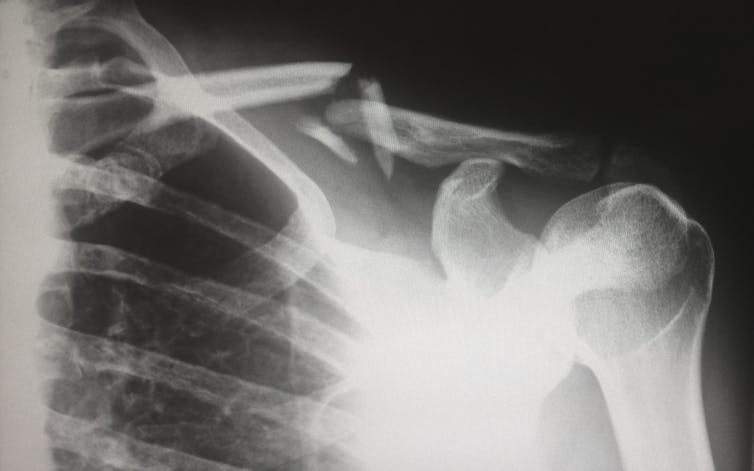
Influential medical journals serve to inform and shape health care.
Harlie Raethel for Unsplash

As such, citations play an important role in the visibility of research. Articles and authors with more citations are more likely to have a greater effect on the scientific community and patient care. Opinion pieces can shape the broader conversation among medical professionals, and citations can widen that circle of communication.

Invisible racism

We traced how frequently JAMA and JNMA opinion writers referenced one another from 2008 to 2021 by reviewing the 117 opinion pieces published in JNMA and 1,425 published in JAMA during this 13-year period. We found that JAMA opinion columns have continued to, in effect, uphold racial bias and segregation by ignoring JNMA findings.

A Black medical professional adjusts gloves in front of a mirror.
The work of Black medical proessionals is being overlooked in national medical journals.
Piron Guillaume for Unsplash, CC BY-ND

Even when focusing on race, racism and health disparities, topics that JNMA has explored in great detail, JAMA opinion columns did not reference JNMA colleagues or research. Only two JNMA articles were credited and referenced in the 1,425 JAMA opinion pieces that we reviewed.

Editors at JAMA did not respond to our requests for their comments on our analysis.

Racial equity in medicine

The story of the AMA and NMA is not only a reminder of the racist history of medicine. It demonstrates how the expertise of Black professionals and researchers continues to be ignored today. The lack of JNMA citations in JAMA research undercuts the AMA’s own work on racial equity and potentially compromises the quality of medical knowledge published in its journals.

For example, a recent study in the Proceedings of the National Academy of Sciences found that scientists from underrepresented groups innovate, or contribute novel scientific findings, at a higher rate than those from majority groups.

An article published in the weekly medical journal of the Public Library of Science noted that diverse research teams are often more successful in developing new knowledge to help treat women and underrepresented patients with greater precision.

Dissolving systemic bias

One way to intentionally tackle racial bias and segregation in medical knowledge is by deliberately referencing Black researchers and their work. To change this dynamic of racial bias, medical journals must pay attention to how much and how often the Black medical establishment is referenced. Health issues in underserved communities would likely become more visible and achieve greater quality of care in keeping with the AMA’s commitment to social justice.

Journal editors could tell writers and editorial staff to prioritize citation practices. Individual authors might conduct research and evaluate their reading habits to intentionally include research from the Black medical community.

However, this work must go beyond individuals. Undoing decades of collective habits and embedded racism requires collaborations that work across systems, institutions and disciplines.

One hand holds a bottle of pills and the other hand holds three white pills.
Racial disparities in health care often result in lower-quality medical treatment and worse health care outcomes for Black Americans.
Towfiqu Barbhuiya for Unsplash, CC BY-ND

For example, libraries, databases, and search engines that help researchers find and evaluate medical publications might review today’s research tools. It is hard to contribute to a research conversation if your work is invisible or can’t be found.

Many tools, like impact factors, rank research according to how influential it is. If research begins in a category of less importance, it can be harder for the technology to rank it equitably. JNMA’s work was already marginalized when the tools that rank research were developed.

Thus, search results can hinder efforts of individual authors to work toward equitable citation practices. Black researchers and their research of Black health were excluded from the beginning, and existing systems of sharing knowledge and drawing attention to important studies incorporate that structural racism.

The AMA apology in 2008 and its recent progress on addressing racism in its publication process are promising steps. Influential medical journals serve to inform and shape health care. Who is referenced in these journals matters to the medical establishment, research funders and, ultimately, to the patients that are served by innovations in medicine.

Attention to citation can help reduce systemic bias in medical knowledge to achieve greater fairness in health care and, in the long run, help increase attention and resources that will help solve health issues in underserved communities.


Focus on NFL star’s care belies medical racism in US

As a historian of health care racism, I have watched the overwhelming media response to NFL participant Damar Hamlin’s coronary heart-stopping on-subject damage with a mix of uneasiness and disbelief. On the main cable information channels, the startling collapse of the Buffalo Payments security and the clinical drama that followed were being the only the tale on the air. For these networks, the televised around-loss of life knowledge of an NFL participant was the only news well worth observing.

An vital component of the televised narrative focused on the condition-of-the-art health-related treatment that was created accessible to the elite athlete in whom the crew experienced built a sizeable expense. For illustration, the NFL’s “emergency action plan” coordinated the professional medical staff of both equally teams who administered CPR to Hamlin and appeared to have restored heart purpose on the subject. An automated external defibrillator was on site. Twenty-five health-related specialists were being current to utilize their competencies to an unexpected emergency that may possibly crop up. The affected individual was taken by ambulance to a Amount 1 trauma medical center only a couple miles from the stadium.

As a person who has researched the health-related treatment offered to young African American adult males who do not belong to the elites of athletics or amusement, I have uncovered the sentimental appeals and amped-up media protection of this youthful Black athlete’s ordeal nothing fewer than disturbing. Why has health care empathy been inflated into an exaggerated and semi-counterfeit issue about the clinical peril of a 24-12 months-old youthful Black guy? Why did media executives determine that this televised performance of racially built-in health-related compassion was vital?

No just one familiar with the day-to-day racism of the American health care system can enjoy the entire world-class medical know-how afforded to Hamlin with no thinking of his anonymous Black friends, male and feminine, whose encounters with health care staff are commonly traumatizing and demoralizing.

Any individual who doubts the fact of “systemic racism” in key American establishments require only study by the health-related literature of the past 30 decades. There are hundreds of experiences of Black professional medical cons relating to both of those racial wellness disparities and, a lot more ominously, racial remedy disparities

that variety throughout the spectrum of healthcare specialties. These remedy disparities can involve both of those the behaviors of professional medical staff and the professional medical therapies they present. That suggests there are numerous younger Black patients who are not very likely to be welcomed into the ER and the ICU like sports activities stars: The sickle-cell sufferer seeking painkillers who is turned absent as a drug-seeker. The youthful Black male with cerebral agony who is stigmatized as a gangbanger and is still left undiagnosed. The young Black affected person who encounters racial bias in the administration of fatal sepsis. The youthful Black affected individual who is handled by an inexperienced surgeon. The Black boy or girl who is “adultified” and denied stress and anxiety-reducing remedies during anesthesia.

The most egregious racial scandal of American drugs is the actuality that, compared with in the NFL, structured drugs has in no way created “emergency action plans” to dismantle racially differential diagnoses and treatment plans that do health-related harm. The management has overlooked the infiltration of racist folklore into clinical specialties ranging from obstetrics to psychiatry. It does not study, allow alone consider to control, the racially motivated physicians’ patterns.

 that can injure Black sufferers. And our health care universities seem to do very small to get ready medical learners to do improved.

In this context, the media’s great exhibit of problem for the health care standing of Hamlin reveals the totally anomalous character of this health-related party. The exclusive treatment he is obtaining creates the non permanent illusion of racially integrated medication and well being equity that does not exist for the vast the vast majority of Black Us citizens. This utopian fantasy of superb clinical treatment for Black people today is as illusory as the make-feel racial integration of the sports globe alone.

John Hoberman is a professor at The College of Texas at Austin and the writer of “Black & Blue: The Origins and Effects of Professional medical Racism.” He has taught race and drugs classes since 2001.

Should racism and discrimination be viewed as public health threats? A new study argues they should

LONDON — Racism and discrimination must be acknowledged as public health threats in the fight to address global health disparities, according to a new study.

As part of the four-paper series published in The Lancet medical journal Thursday, researchers from countries around the world, including the U.S., U.K., Brazil and India, carried out a major review of scientific literature and used data from hundreds of articles in recent years.

The tendency among health professionals has been to explain unequal health outcomes on either genetics or economic conditions, according to the study’s authors. But in order to tackle racial health inequities, racism and discrimination themselves should be classified as public health threats globally, the authors say.

“Racism has always been a public health threat,” Alexandre White, assistant professor of sociology and the history of medicine at John Hopkins University School of Medicine, told ABC News. “It has emerged time and time again, especially over the last 10 to 15 years.”

Research into the intersection of race and health disparities has advanced in recent years, particularly in the U.S. According to the U.S. Centers for Disease Control and Prevention almost every two in three pregnancy-related deaths are preventable. A 2020 report found that non-Hispanic Black women experienced a higher pregnancy-related mortality rate — a disparity placing them nearly three times more at risk of dying due to pregnancy-related causes compared to non-Hispanic white women.

The report’s authors also found evidence of disproportionate impact from the pandemic, vaccine inequality and climate change on minority groups.

Should racism and discrimination be viewed as public health threats? A new study argues they should

“This study is tremendously important [as] it sheds light on the fundamental role that racism, xenophobia and forms of discrimination actually play on health, both from a structural level and generational level over time,” White said. “But also fundamentally since the COVID-19 pandemic we’ve seen the ways in which, especially racism and xenophobia, affects who gets sick, how seriously and why.”

The study also reports that racial biases in health care can lead to a stress response — affirming previous studies that found discrimination, whether overt or covert, can lead to chronic stress responses which can affect human neurological and immune systems. That chronic stress response can lead to lower life expectancies and is associated with other health complications such as anxiety, depression and heart disease.

“It’s not only because of racism at the individual interpersonal level,” Dr. Abi Deivanayagam, a public health doctor, researcher, activist and one of the study’s authors, told ABC News. “It’s racism in the way that our society is structured. And that’s very real. And it’s really important that we acknowledge this in a medical journal like The Lancet so that health people recognize that this is something this is our duty of care to patients. And our care really has to go beyond the individual to making sure that our systems are safe for our patients.”

Although discrimination against minority groups comes in different forms around the world according to such factors as race, ethnicity and religion, a pattern of worse health outcomes for minority groups can be seen globally.

According to Deivanayagam, the study has drawn two major conclusions.

“One thing is that there is evidence globally that shows that racism, xenophobia and discrimination affect a range of different health outcomes, and that this is embedded across different levels of society and that it affects people across the course of their lives ranging from COVID-19, to vaccines, to actually getting health care access,” she told ABC News. “The second thing is that we need to get to the root cause of this. And the way we do that as health professionals is to recognize that racism, xenophobia and discrimination are actually a public health threat.”

Tackle systemic racism to diversify health care and clinical research

Tackle systemic racism to diversify health care and clinical research

Health-equity researcher Tung Nguyen guides several anti-racism efforts at the University of California, San Francisco.Credit: Susan Merrell

Decolonizing science

Science is steeped in injustice and exploitation. Scientific insights from marginalized people have been erased, natural-history specimens have been taken without consent and genetics data have been manipulated to back eugenics movements. Without acknowledgement and redress of this legacy, many people from minority ethnic groups have little trust in science and certainly don’t feel welcome in academia — an ongoing barrier to the levels of diversity that many universities claim to pursue.

In the next of a short series of articles about decolonizing the biosciences, Tung Nguyen, who was appointed associate vice-chancellor for research inclusion, diversity, equity and anti-racism at University of California, San Francisco (UCSF) in September, offers advice for reforms in health research. Nguyen, a health-equity researcher who is also the director of the UCSF Asian American Research Center on Health, says anti-racism efforts start with engaging underserved communities and nurturing diverse trainees in health research and health care.

I studied medicine because I didn’t see health care and health research addressing the needs of the Asian community in the San Francisco Bay area — the part of California where I moved, as an 11-year-old non-English speaker, when my family emigrated from Vietnam. For the past 20 years, I’ve been doing health-equity research, focusing on cancer interventions.

In this country, the health-research world has many aspects that are anti-Asian. A lack of data on one racial identity is always a sign of racism because it essentially means that a portion of the population is invisible. For example, we know that about one-third to one-half of Asian Americans don’t speak English well enough to take a medical survey conducted in English. The ‘Asian’ responses to such a survey will include only English speakers; in addition, all of the ‘Asian’ respondents will be lumped together, despite the diversity of Asian cultures.

Lack of urgency

Although some institutions are trying to hire diverse candidates, there is a fundamental lack of urgency when it comes to addressing systemic racism. The issues I’ve mentioned are all structural problems. I think that there can be no systematic change without engaging everyone involved — from medical-department heads to members of the communities that institutions purportedly serve.

In 2020, my colleagues and I created an anti-racism task force at the University of California, San Francisco. Using a community-engagement approach, we convened a committee of 25 members, including institutional and community leaders, staff, faculty members and trainees. Over the course of a year, we solicited information throughout the university and produced a report with 160 recommendations — ranging from funding for research that investigates the structures that sustain racism, to conducting more community engagement in scholarship.

Most institutions are too top-down. I’ve learnt that the academic hierarchy is a basic challenge to doing equity work on campuses. White men tend to be over-represented among faculty members, whereas non-faculty staff members tend to include more women and under-represented minority groups. We make sure the staff and faculty members meet and are mindful of — and acknowledge — the power dynamics that exist. Otherwise, our efforts wouldn’t be inclusive.

To better diversify recruitment of study participants, in 2021, my colleagues and I created the Research Action Group for Equity, or RAGE — an acronym we deliberately chose because we are angry about the lack of minority-health data and participation, and we want to make things uncomfortable for the powers that be. RAGE works with the UCSF Clinical & Translational Science Institute to make sure that recruitment is an inclusive process. We engage community leaders who are bicultural or bilingual to provide translation support or address cultural concerns.

If my colleagues and I can diversify the health-care workforce at UCSF, we can definitely improve the economic status of diverse communities as well as the reach of biomedical research into those communities. We have a US National Institutes of Health BUILD award to address the lack of diversity among biomedical researchers. If you want minority students and trainees, you have got to go to where they are. In our case, we recruited trainees from San Francisco State University, a Hispanic-focused, minority-serving institution. We trained these junior research and health professionals to become, for example, clinical research coordinators to manage studies and conduct experiments.

This expands the job opportunities available to these trainees and diversifies participation in research. But when people talk about efforts to increase the numbers of early-career scholars from diverse backgrounds, I hate the term ‘pipeline programme’. ‘Pipeline’ implies that you have to fit into a pipeline to begin with and you come out the other end, where the system wants you to come out. Furthermore, if the pipeline is producing a steady stream of talented PhDs from under-represented communities but the system does not increase the number of senior roles these people hold, it’s not a pipeline problem. Instead, it’s a dam problem — pun intended; there are structural barriers to workplace diversity that need to be removed.

UCSF has its own continuing challenges in terms of anti-racism efforts, but the institution has been transparent. It has a dashboard that highlights racial, ethnic and gender diversity among faculty members, staff and trainees. The situation fluctuates, and the numbers have never been great for typically under-represented groups in medicine, such as Black and Hispanic people. But it’s important that the problem be visible so that we can actually improve.

It’s frustrating that successful diversity, equity and inclusivity programmes often don’t get sustained. Under-represented groups are used to people coming in with money and then leaving. I have helped to develop the AEIOU principles, which will be the foundation of my work as the newly appointed associate vice-chancellor for research inclusion, diversity, equity and anti-racism. A is for accountability and anti-racism, E is for engagement, I is for individual-centred institutional change, O is opportunity, and U is unity. These principles are key to making progress against racism. The system has to change for under-represented groups to be successful, and that requires an increase in opportunities. Oppressive structures maintain oppression by making people perceive a zero-sum game — if someone wins, someone else has to lose. To increase diversity, equity and justice, we need to quit pitting one group against another.

This interview has been edited for length and clarity.

Poll: Many Americans Don’t Believe Systemic Racism Exists | Healthiest Communities Health News

In spite of the disproportionate toll the COVID-19 pandemic and its financial fallout have experienced on communities of colour, more than 40{bf0515afdcaddba073662ceb89fbb62b6b1bf123143c0e06b788e1946e8c353f} of People in america are unconvinced that systemic racism exists in the U.S., according to new study results from U.S. News & Entire world Report and The Harris Poll.

Amongst countless numbers of individuals surveyed, almost a quarter documented they did not believe there is systemic racism in The usa, though yet another 17{bf0515afdcaddba073662ceb89fbb62b6b1bf123143c0e06b788e1946e8c353f} stated they have been not sure. At 47{bf0515afdcaddba073662ceb89fbb62b6b1bf123143c0e06b788e1946e8c353f}, almost 50 {bf0515afdcaddba073662ceb89fbb62b6b1bf123143c0e06b788e1946e8c353f} of white Us citizens remained unconvinced, even though persons of color have been much far more possible to affirm that systemic racism exists in the region. Additional than 80{bf0515afdcaddba073662ceb89fbb62b6b1bf123143c0e06b788e1946e8c353f} of Black or African American respondents consider it does, as nicely as a lot more than 70{bf0515afdcaddba073662ceb89fbb62b6b1bf123143c0e06b788e1946e8c353f} of Asian or Pacific Islander respondents and almost 70{bf0515afdcaddba073662ceb89fbb62b6b1bf123143c0e06b788e1946e8c353f} of Hispanics.

The study was conducted on the web inside of the U.S. by The Harris Poll from Oct. 21 to Oct. 30 amongst a nationally representative sample of 4,085 U.S. grownups, with a margin of mistake of ±1.91{bf0515afdcaddba073662ceb89fbb62b6b1bf123143c0e06b788e1946e8c353f}. Its results occur as the country proceeds to grapple with racial and ethnic disparities in foundational parts like work, poverty, housing and well being treatment, and amid a world pandemic that authorities believe that has strike minority communities more durable in huge aspect owing to systemic inequities in individuals very same kinds of spots.

“The stark disparity of the COVID-19 pandemic and the uprising in response to the murder of George Floyd undeniably exposed the racial inequities in the nation’s economic, wellness treatment, and legal justice systems and establishments, and ignited a crystal clear need for racial justice,” claims Marc Morial, president and CEO of civil legal rights organization the National City League.

Even as a the greater part of People imagine systemic racism exists in the country, the U.S. Information/Harris Poll survey outcomes mirror differences in viewpoint among racial and ethnic groups pertaining to its function in generating disparities and the want for it to be tackled. Between Black or African American respondents, for instance, 80{bf0515afdcaddba073662ceb89fbb62b6b1bf123143c0e06b788e1946e8c353f} strongly or relatively agree that systemic racism is responsible for disparities in regions this kind of as well being and funds, compared with just 62{bf0515afdcaddba073662ceb89fbb62b6b1bf123143c0e06b788e1946e8c353f} of whites. Overall, 66{bf0515afdcaddba073662ceb89fbb62b6b1bf123143c0e06b788e1946e8c353f} of respondents strongly or fairly agree that systemic racism is dependable for such challenges.

Half of Black or African American respondents surveyed also claimed that they “strongly agree” it’s crucial for modern society to handle the impacts of discriminatory practices, this sort of as redlining or voter suppression, that disadvantage some People. That compares with 36{bf0515afdcaddba073662ceb89fbb62b6b1bf123143c0e06b788e1946e8c353f} of whites and 37{bf0515afdcaddba073662ceb89fbb62b6b1bf123143c0e06b788e1946e8c353f} of respondents all round.

Diversified sights also have been apparent on study questions concerning economic and place of work disparities. In accordance to a 2021 report by consulting agency McKinsey & Co., the median yearly wage for Black staff is approximately 30{bf0515afdcaddba073662ceb89fbb62b6b1bf123143c0e06b788e1946e8c353f} lessen – or about $10,000 significantly less – than the wage for white staff, with occupational disparities in Black illustration and shell out primary to an yearly wage hole of all around $220 billion.

Yet even though two-thirds of respondents to the U.S. News/Harris Poll survey disagreed strongly or rather with the idea that wage gaps are not a issue in the U.S., Black respondents at 43{bf0515afdcaddba073662ceb89fbb62b6b1bf123143c0e06b788e1946e8c353f} had been more likely to strongly disagree, compared with 32{bf0515afdcaddba073662ceb89fbb62b6b1bf123143c0e06b788e1946e8c353f} of whites and the same or similar shares of Asians or Pacific Islanders and Hispanics.

Likewise, even though 64{bf0515afdcaddba073662ceb89fbb62b6b1bf123143c0e06b788e1946e8c353f} of all adults surveyed disagreed with the assertion that “workplace discrimination is not a trouble in the U.S.,” 43{bf0515afdcaddba073662ceb89fbb62b6b1bf123143c0e06b788e1946e8c353f} of Black respondents strongly disagreed, when compared with just 27{bf0515afdcaddba073662ceb89fbb62b6b1bf123143c0e06b788e1946e8c353f} of whites, 29{bf0515afdcaddba073662ceb89fbb62b6b1bf123143c0e06b788e1946e8c353f} of Hispanics and 34{bf0515afdcaddba073662ceb89fbb62b6b1bf123143c0e06b788e1946e8c353f} of Asians or Pacific Islanders.

In the meantime, only about 1-fifth to one-quarter of respondents total noted they assumed corporations experienced place in a “very fantastic effort” around the earlier two a long time to progress racial fairness by way of rising awareness about racial bias and microaggressions, recruiting and retaining minority talent, minimizing shell out disparities, or escalating racial variety in managerial or other management roles.

In Could, an analysis from company knowledge company Equilar observed that just 15{bf0515afdcaddba073662ceb89fbb62b6b1bf123143c0e06b788e1946e8c353f} of board seats for businesses bundled in the Russell 3000 index – which measures the efficiency of the 3,000 biggest publicly held corporations by marketplace capitalization in the U.S. – ended up held by ethnically diverse directors at the stop of 2021.

More than 50 {bf0515afdcaddba073662ceb89fbb62b6b1bf123143c0e06b788e1946e8c353f} of respondents general to the U.S. News/Harris Poll study explained they think organization alternatively than the federal government was more very likely to make a constructive affect in their neighborhood, even as 53{bf0515afdcaddba073662ceb89fbb62b6b1bf123143c0e06b788e1946e8c353f} of individuals of color considered the government as much more most likely to have a optimistic effects compared to 42{bf0515afdcaddba073662ceb89fbb62b6b1bf123143c0e06b788e1946e8c353f} of white respondents.

At the same time, the two whites and persons of shade experienced less believe in in govt at any amount to make meaningful improvements in advancing equity than they did in institutions these kinds of as compact firms, nonprofits, and academic and health care entities. Amid folks of coloration, 73{bf0515afdcaddba073662ceb89fbb62b6b1bf123143c0e06b788e1946e8c353f} of respondents reliable smaller businesses to some degree to progress equity – the greatest level of assist supplied to a array of establishments that also provided companies and spiritual groups – as did 78{bf0515afdcaddba073662ceb89fbb62b6b1bf123143c0e06b788e1946e8c353f} of whites.

As to what improvements respondents would like to see, groups differed on what situation – if solved straight away – would have an quick good effects on their neighborhood. Although inexpensive health and fitness treatment was outlined among the the major three issues by just about every racial or ethnic group, it was the No. 1 problem for whites and Asian or Pacific Islander respondents. Among both Black and Hispanic respondents, criminal offense and gun violence had been shown as No. 1, adopted by very affordable overall health treatment for Black respondents and housing insecurity and affordability between Hispanics.

In more polling done by The Harris Poll immediately after this past Election Working day, the economy topped worries between both white respondents and people of color: 88{bf0515afdcaddba073662ceb89fbb62b6b1bf123143c0e06b788e1946e8c353f} of whites and 81{bf0515afdcaddba073662ceb89fbb62b6b1bf123143c0e06b788e1946e8c353f} of persons of color explained they were being really or fairly concerned about the economic climate and inflation, with 85{bf0515afdcaddba073662ceb89fbb62b6b1bf123143c0e06b788e1946e8c353f} of whites and 78{bf0515afdcaddba073662ceb89fbb62b6b1bf123143c0e06b788e1946e8c353f} of individuals of color stating the same about a prospective U.S. economic recession. Notably, 81{bf0515afdcaddba073662ceb89fbb62b6b1bf123143c0e06b788e1946e8c353f} of whites expressed concern about criminal offense premiums in the U.S., in contrast with 76{bf0515afdcaddba073662ceb89fbb62b6b1bf123143c0e06b788e1946e8c353f} of men and women of coloration.