
Leading American medical journal continues to omit Black research, reinforcing a legacy of racism in medical knowledge

The leading U.S. medical journal, read regularly by doctors of all specialties, systematically ignores an equally reputable and rigorous body of medical research that focuses on Black Americans’ health.

The American Medical Association created a segregated “whites only” environment more than 100 years ago to prohibit Black physicians from joining their ranks. This exclusionary and racist policy prompted the creation in 1895 of the National Medical Association, a professional membership group that supported African American physicians and the patients they served. Today, the NMA represents more than 30,000 medical professionals.

In 2008, the AMA publicly apologized and pledged to right the wrongs that were done through decades of racism within its organization. Yet our research shows that despite that public reckoning 15 years ago, the opinion column of the AMA’s leading medical journal does not reflect the research and editorial contributions by NMA members.

Invisibility in the opinion column of one of the most prominent medical journals in the U.S. is another form of subtle racism that continues to lessen the importance of equitable medical care and health issues for Black and underserved communities.

As rhetoricians and researchers who study scientific communication, we look at the ways scientific writing perpetuates or addresses racial inequity. Our recent study traced how research is referenced by medical professionals and colleagues, known as citations, of flagship journals of the NMA and AMA: the Journal of the National American Association and the Journal of the American Medical Association.

Invisible research

Our research began with a question: Has the AMA’s 2008 apology had any effect on the frequency with which JAMA opinion writers draw on insights and research of JNMA scholars and authors?

We studied opinion columns, also referred to as editorials, precisely because they are useful indicators of current and future research as well as priorities and agendas. The purpose of editorials is to critically analyze and sift through various opinions and evidence. Effective editorials in scientific journals are especially rich forums for debate within the medical community.

Medical publications like JNMA and JAMA do not simply convey knowledge. They also establish professional community values through the topics that are studied and who is credited for ideas related to research. When writers choose to reference or cite another scholar, they are acknowledging and highlighting that expertise.
Leading American medical journal continues to omit Black research, reinforcing a legacy of racism in medical knowledge
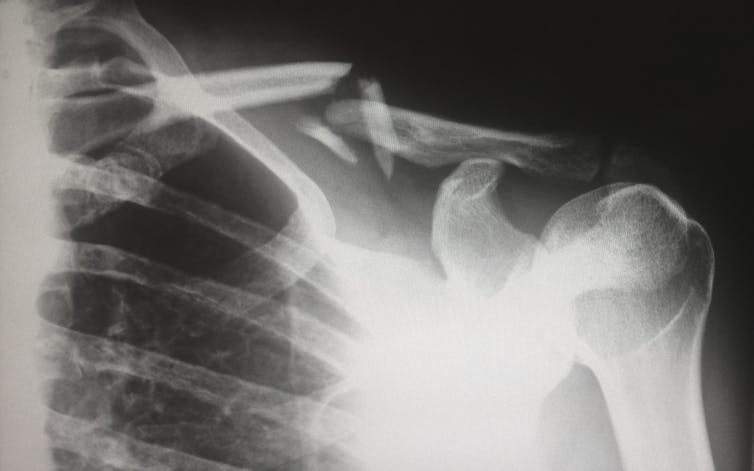
Influential medical journals serve to inform and shape health care.
Harlie Raethel for Unsplash

As such, citations play an important role in the visibility of research. Articles and authors with more citations are more likely to have a greater effect on the scientific community and patient care. Opinion pieces can shape the broader conversation among medical professionals, and citations can widen that circle of communication.

Invisible racism

We traced how frequently JAMA and JNMA opinion writers referenced one another from 2008 to 2021 by reviewing the 117 opinion pieces published in JNMA and 1,425 published in JAMA during this 13-year period. We found that JAMA opinion columns have continued to, in effect, uphold racial bias and segregation by ignoring JNMA findings.

A Black medical professional adjusts gloves in front of a mirror.
The work of Black medical proessionals is being overlooked in national medical journals.
Piron Guillaume for Unsplash, CC BY-ND

Even when focusing on race, racism and health disparities, topics that JNMA has explored in great detail, JAMA opinion columns did not reference JNMA colleagues or research. Only two JNMA articles were credited and referenced in the 1,425 JAMA opinion pieces that we reviewed.

Editors at JAMA did not respond to our requests for their comments on our analysis.

Racial equity in medicine

The story of the AMA and NMA is not only a reminder of the racist history of medicine. It demonstrates how the expertise of Black professionals and researchers continues to be ignored today. The lack of JNMA citations in JAMA research undercuts the AMA’s own work on racial equity and potentially compromises the quality of medical knowledge published in its journals.

For example, a recent study in the Proceedings of the National Academy of Sciences found that scientists from underrepresented groups innovate, or contribute novel scientific findings, at a higher rate than those from majority groups.

An article published in the weekly medical journal of the Public Library of Science noted that diverse research teams are often more successful in developing new knowledge to help treat women and underrepresented patients with greater precision.

Dissolving systemic bias

One way to intentionally tackle racial bias and segregation in medical knowledge is by deliberately referencing Black researchers and their work. To change this dynamic of racial bias, medical journals must pay attention to how much and how often the Black medical establishment is referenced. Health issues in underserved communities would likely become more visible and achieve greater quality of care in keeping with the AMA’s commitment to social justice.

Journal editors could tell writers and editorial staff to prioritize citation practices. Individual authors might conduct research and evaluate their reading habits to intentionally include research from the Black medical community.

However, this work must go beyond individuals. Undoing decades of collective habits and embedded racism requires collaborations that work across systems, institutions and disciplines.

One hand holds a bottle of pills and the other hand holds three white pills.
Racial disparities in health care often result in lower-quality medical treatment and worse health care outcomes for Black Americans.
Towfiqu Barbhuiya for Unsplash, CC BY-ND

For example, libraries, databases, and search engines that help researchers find and evaluate medical publications might review today’s research tools. It is hard to contribute to a research conversation if your work is invisible or can’t be found.

Many tools, like impact factors, rank research according to how influential it is. If research begins in a category of less importance, it can be harder for the technology to rank it equitably. JNMA’s work was already marginalized when the tools that rank research were developed.

Thus, search results can hinder efforts of individual authors to work toward equitable citation practices. Black researchers and their research of Black health were excluded from the beginning, and existing systems of sharing knowledge and drawing attention to important studies incorporate that structural racism.

The AMA apology in 2008 and its recent progress on addressing racism in its publication process are promising steps. Influential medical journals serve to inform and shape health care. Who is referenced in these journals matters to the medical establishment, research funders and, ultimately, to the patients that are served by innovations in medicine.

Attention to citation can help reduce systemic bias in medical knowledge to achieve greater fairness in health care and, in the long run, help increase attention and resources that will help solve health issues in underserved communities.

The troubling legacy of a Black woman’s cells

Ethical concerns over her cells, the most widely used in research, are in the spotlight as family seeks reparation

The troubling legacy of a Black woman’s cellsIn the opaque world of scientific research, HeLa cells are legendary. These cells mark one of the most significant milestones in the history of modern medical research, because it was the first time in decades that scientists were able to keep human cells alive in culture.

While other cells died eventually, HeLa cells were amazing: they reproduced every 24 hours and never stopped doing so, thus becoming the first immortal cells grown in a laboratory.

They have been used in research over a wide spectrum and were instrumental in developing drugs for an astonishing range of diseases, from influenza and herpes to leukaemia and Parkinson’s.

Jonas Salk’s life-saving polio vaccine would not have been possible without HeLa cells. And they also became a multimillion-dollar industry for some companies.

Yet, for decades, the racial origin of the most famous human cell was kept hidden from the world—and from her family.

The remarkably prolific and resilient cells were taken from the cervical tumour of a young Black woman, Henrietta Lacks—hence the name HeLa—who was being treated at Johns Hopkins Hospital in Baltimore, US, for a virulent form of cervical cancer.

Lacks was a young mother of five when she died in 1951 at the age of 31. Her cells were collected by George Gey, a prominent cancer and virus researcher, who ran a nearby tissue laboratory.

Lacks did not know that her cells were being taken for culture, nor was her’s or her family’s permission sought before or after her death.

It was not until 1981 that the origin of HeLa was credited to her, and her family learned of this by accident. This and the subsequent story of how her family was used for further research, again without their knowledge or consent, has sparked a debate on an individual’s right over their genetic material and also the ethics over its use by researchers and commercial organisations.

There is also a lawsuit by Lacks’ heirs, who are seeking compensation from laboratories that made millions from the sale of HeLa cells. For a start, they have filed a case against Thermo Fisher Scientific, accusing it of selling Lacks’ cellular material, developing and manufacturing cellular products incorporating HeLa cells, and seeking intellectual property (IP) rights on them.

This implies they are staking IP rights on her genetic material. The nub of the case is that the company appropriated Lacks’ genetic material for its own gain without payment, permission or approval from the Lacks Estate or family.

The family had previously sought payment from Johns Hopkins and the suit against Thermo Fisher mentions “the unlawful conduct” of its doctors. Johns Hopkins is categorical that it has “never sold or profited from the discovery or distribution of HeLa cells” and does not own the rights to the cell line.

“Rather, Johns Hopkins offered HeLa cells freely and widely for scientific research.” The controversial point here is whether the hospital and Gey acted unethically or illegally in taking tissue from Lacks’ cervical tumour.


Read


The hospital says that at the time, tissue samples were drawn from all patients regardless of race and socio-economic status, and no formal consent was required. The institution points out that it was one of only a handful to have treated poor African-Americans in the early decades of the last century.

Johns Hopkins has made some amends by naming a building on its campus after Lacks, because it acknowledges “the HeLa cell line has been critical to numerous advances in medicine.”

Other institutions have made monetary reparation. A high-profile six-figure donation (exact amount was not disclosed) was made by Howard Hughes Medical Institute to the Henrietta Lacks Foundation in 2020.

The institution said it was done to “acknowledge Henrietta for the use of HeLa cells and to acknowledge that the cells were gained inappropriately”. Observers are hoping the gesture by the institution, which is a major funder of basic biomedical research, will set an example for other research outfits.

The HeLa case came into public focus only after Rebecca Skloot published The Immortal Life of Henrietta Lacks, a personalised memoir and scientific account of the life and afterlife of the Black woman who made the most significant contribution to the fight against a host of diseases.

The book, which highlighted racial discrimination and exploitation of African-Americans, was made into a film starring Oprah Winfrey. Skloot also set up the foundation, which gives grants to people who have unknowingly been part of historic medical research studies and to their families who did not benefit from the work.

It supports families of Black men who, from 1932 to 1972, were part of a callous US government experiment to observe the effects of untreated syphilis. The men were given placebos and sham treatment but were told they were receiving free healthcare.

World Health Organization (WHO) chief Tedros Adhanom Ghebreyesus has done much to make reparation and to highlight the inherent racial and other inequalities in medical care.

Over the past year, he has bestowed the WHO Director-General’s Award on Lacks in recognition of the “world-changing legacy of this Black American woman” and more recently on October 16, he appointed the Lacks family as WHO Goodwill Ambassadors for Cervical Cancer Elimination. The appointment is a recognition of their efforts to champion cervical cancer prevention and to preserve the memory of their ancestor.

In a stark reminder of persistent inequities, Ghebreyesus noted that Lacks’ cells were foundational in the development of human papillomavirus (HPV) vaccines that can eliminate the same cancer that took her life, and yet in countries with the highest burden of cervical cancer, these vaccines were not adequately available.

So, too, with COVID-19 therapies and many other life-saving innovations developed with the miraculous HeLa cells. Although the cells were used in COVID-19 research, tools to stop the disease are not being shared with low- and middle-income countries.

He would, or should, have made scientists and research organisations uncomfortable when he pointed out how much some people benefited from the cells.

“Fortunes have been made, science has advanced, Nobel Prizes have been won and most importantly, many lives have been saved. No doubt, Henrietta would have been pleased that her suffering has saved others.”

Tedros said by honouring Lacks, WHO acknowledges the importance of reckoning with past injustices and advancing racial equity in health and science. In this, he was endorsing the call of many that science must right historical wrongs of the past. Nothing must be taken from a person without consent.

This was first published in the November 16-30, 2022 edition of Down To Earth