
Inside the largely unregulated market for bodies donated to science: “It’s harder to sell hot dogs on a cart”

Watch the CBS Reports documentary “Body Brokers” in the video player above. 


Every year, an estimated 20,000 people donate their bodies to science for the purpose of medical research and education. But unlike organ donation, these body parts can be bought and sold for profit — a market with very few federal regulations.

Special Agent Paul Micah Johnson, an investigator for the FBI’s Detroit Division, has spent the last decade looking into what he called a “vast gray and black market of dead human bodies.”

The Uniform Anatomical Gift Act, a statute adopted by 47 states, is one of the few regulations governing the non-transplant tissue industry. It outlines the standards for body donation, and most significantly, it requires that donors, or their loved ones, must provide informed consent before donation takes place. 

These consent agreements between donors and tissue banks typically stipulate that the body will be used for research and education — but what that means in practice can vary.

“Medical research and education, particularly education, is a vague term and it is not clearly defined even in the Uniform Anatomical Gift Act,” says Johnson. “The misleading of families across the industry is quite common.”
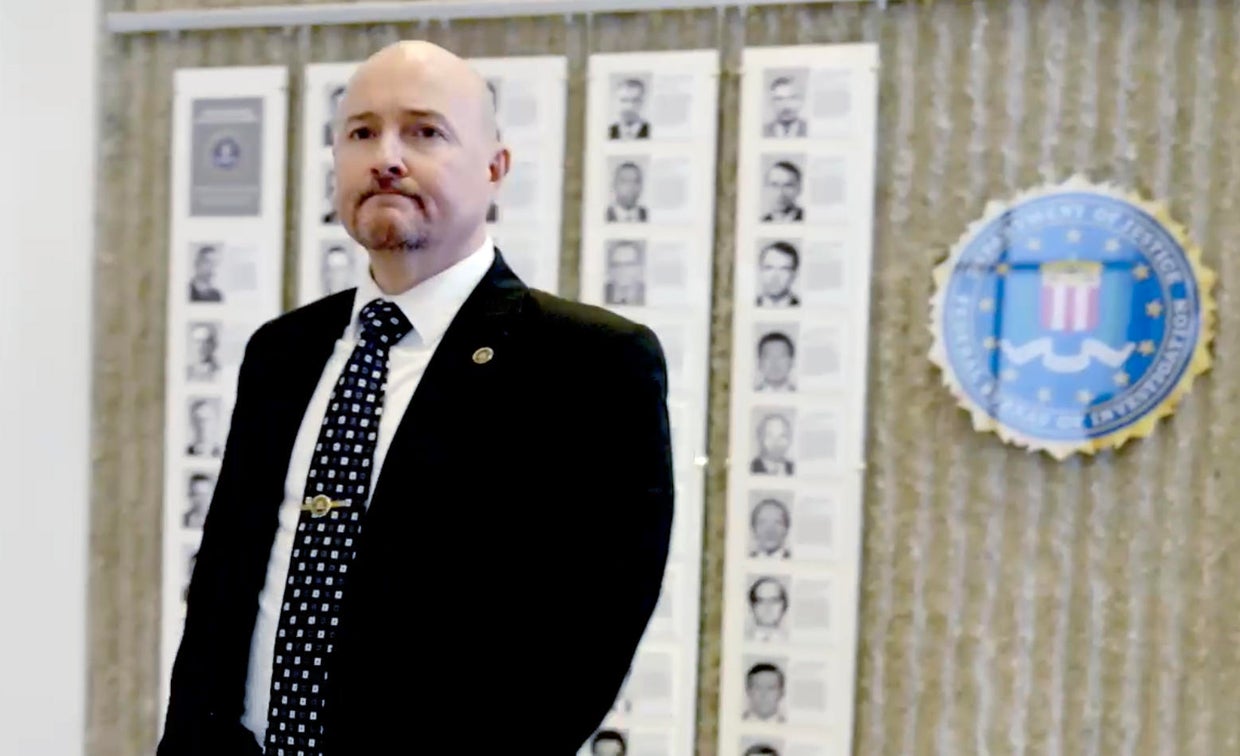
johnson-fbi.jpg
Special Agent Paul Micah Johnson

CBS News


While most donors consent to donation for research and education, legally, the agreements can include addendums that allow for donors to be used for “non-medical projects” that can include “crime scene investigation” and “vehicle safety.”

Steve Hansen had always wanted to be an organ donor, but when he died in 2012 from cirrhosis of the liver, doctors said his organs were not healthy enough to be transplanted. Steve’s wife Jill Hansen says hospice workers at the time suggested whole body donation as an alternative.

“What I envisioned was him being in some medical facility,” Hansen says. “I just thought, what a great candidate for them to learn about the results of alcoholism and what it does to a body.”
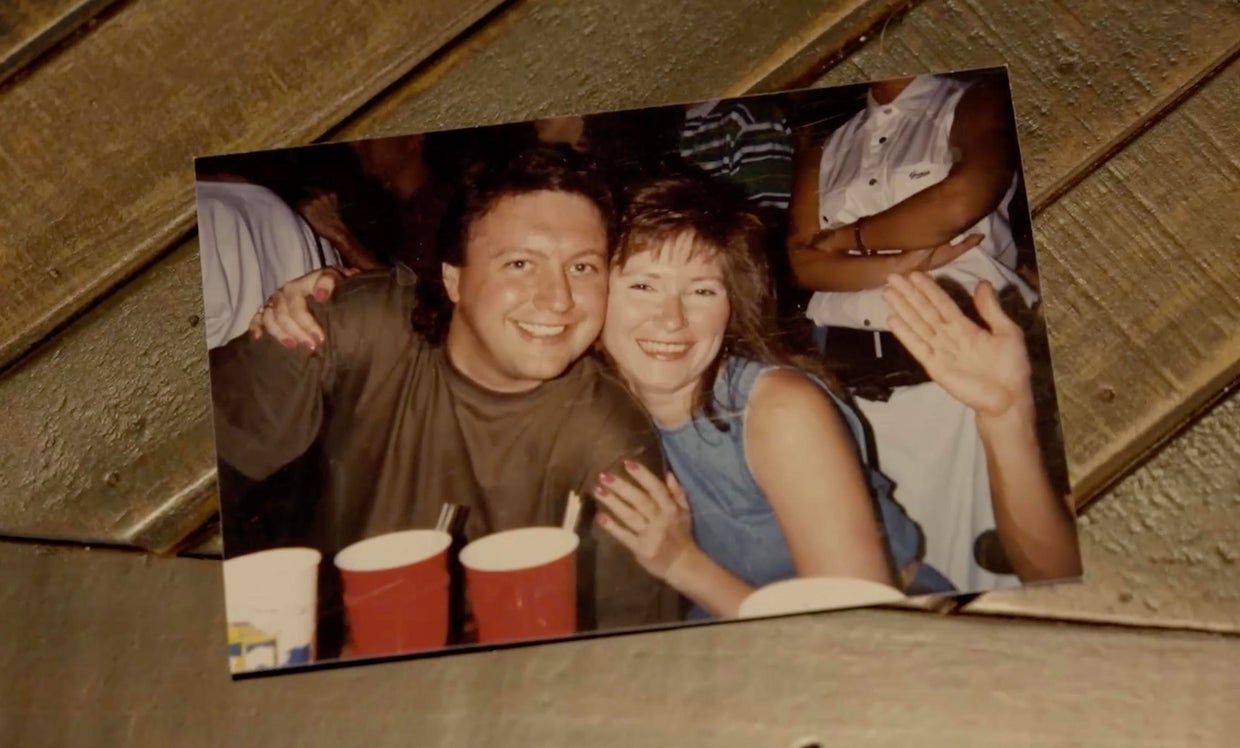
hansens.jpg
Steve and Jill Hansen

CBS News


Steve’s body was eventually sent to the Biological Resource Center in Phoenix, Arizona, which then sold his remains to the Department of Defense. 

“They told me specifically that my husband had been used as a crash test dummy in a simulated Humvee explosion,” Hansen says.

Hansen’s husband’s body was sold by Biological Resource Center founder Stephen Gore to the DOD without her consent. Court records showed that those donors were used in a variety of military and ballistics testing, with some resulting in “the complete mutilation and desecration of the donor’s body.”

“I was devastated,” Hansen says. “I would’ve never done it if I had known. I just kept telling him I was sorry.” 

When the FBI raided Gore’s warehouse in 2014, they found conditions of the donors’ remains so abhorrent that agents “required trauma therapy due to the disturbing, graphic scene they encountered.”

Gore pleaded guilty to Illegal Control of an Enterprise for violating donor consent agreements and was sentenced to four years probation and one year in jail. Because there are few laws defining ethical treatment of remains, no charges were filed relating to the warehouse conditions.

Disturbing evidence also emerged during Special Agent Johnson’s investigation into body broker Arthur Rathburn, whose Detroit warehouse was later described by investigators as a “house of horrors.”

“He cut up bodies with a chainsaw. He cut up bodies with a bandsaw,” Johnson says. “He had a bucket filled with brown liquid that had fetuses and human brains floating in it.”

As in the case with Gore, prosecutors had no way of charging Rathburn for how donors’ bodies were treated. Rathburn was ultimately sentenced in 2018 to nine years in prison for falsifying his donor’s medical information in order to fraudulently sell bodies infected with hepatitis and HIV.

“He had trash cans filled with human heads,” Johnson says. “Just the disrespectful way of treating the remains. And yet we prosecuted him for fraud.”

In 2009, Donor Referral Services owner Philip Guyett Jr., pleaded guilty to wire fraud for falsifying medical information in order to offload tissue designated for transplant with infectious or communicable diseases. He was sentenced to eight years in prison.

“As I told the judge, I had no business being in this business,” Guyett says in an interview with CBS News. “A person with no medical experience, no funeral director’s license, was able to open up a whole body donation program, take possession of a human body, dismember it, send it throughout the nation without any type of licensing oversight. It’s harder to sell hot dogs on a cart than it is to get into this business.” 
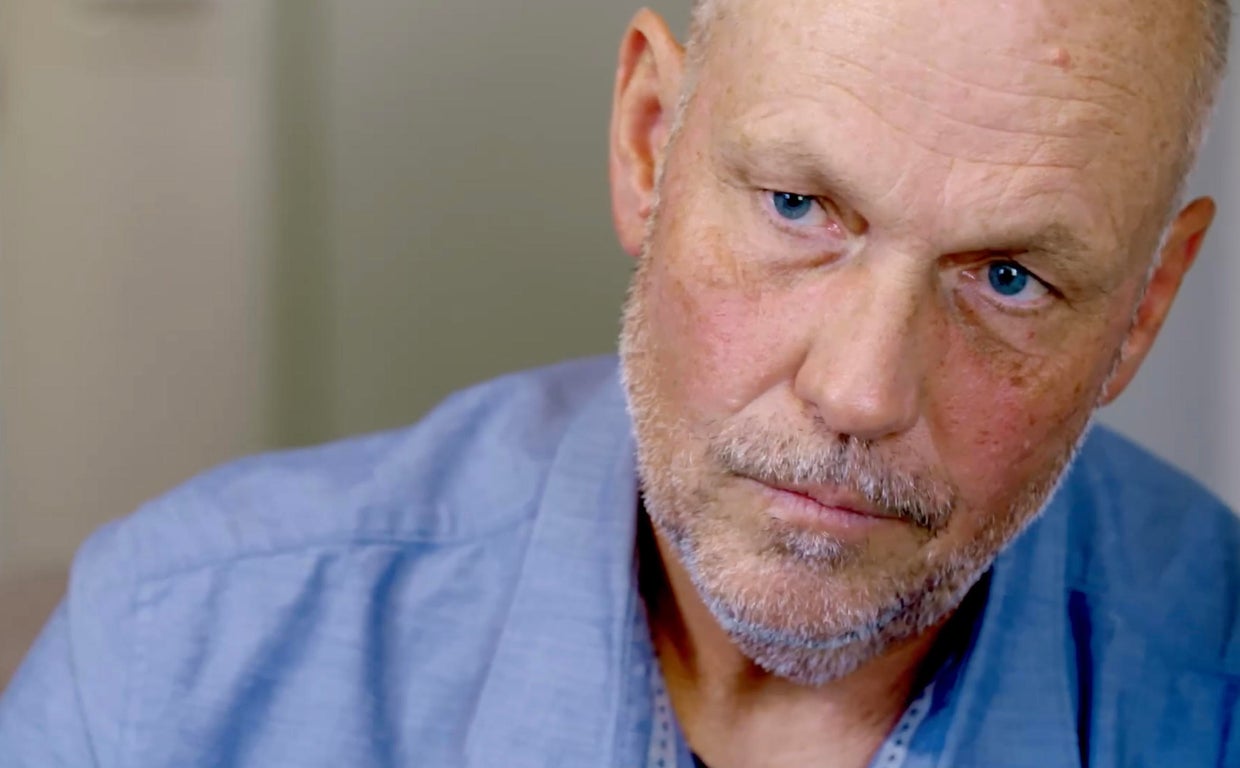
guyett.jpg
Philip Guyett Jr.

CBS News


Before opening his own tissue bank, Guyett got his start running a university’s Willed Body Program, overseeing the donations of bodies for research education. 

In the wake of industry controversies, some tissue bankers have been working to promote trust with potential donors. 

Garland Shreves is the founder of Research For Life, a non-transplant tissue bank based in Phoenix that distributes body parts for use towards the advancement of science in lifesaving fields like first-responder training, medical device development and surgical practice. 

“I don’t think we can ever lose sight of the fact that these are human beings and they have so graciously donated their body to the advancement of medicine,” Shreves says. “Whole body donation and my organization, through the wonderful gift of that donor, makes it possible for us to have the innovative medicine that we do today in this country.” 

Shreves says the best way to clean up the industry is transparency. 

paramedic-training.jpg
Paramedic training at Research For Life

CBS News


“Bad actors are bad for business. If the consumer is being harmed by a business that’s not operating at a very high level of professionalism, everyone in the industry suffers,” he  says. “It is that transparency, the sunlight, the disinfectant, if you will. It’s what we need to do as an industry and we haven’t done enough of it.”

Johnson says the whole body donation industry is necessary for the advancement of science, and that it is vital the industry works to restore the public’s trust. 

“It would be nice if there was one playbook for everyone. And so that would ideally be federal and it would cover everyone that deals with human body parts — for-profit, nonprofit, all of them under one set of rules.”

In September 2022, a body broker bill was introduced in the U.S. Senate which would impose federal regulations on the process of body donation, but no vote has been scheduled.
Virginia Republicans Vote Against Apology for Misusing Black Bodies for Medical Research, Citing ‘No-End’ to Number of Amends Needed

Virginia lawmakers have decided not to move forward with legislation that would officially apologize for the state-sanctioned misuse of Black body parts over the past two centuries.

As far back as the 1800s, Old Dominion allowed medical professionals to conduct research on African-American bodies, living and dead, without their or their family’s permission. Some politicians were hoping in vain the state legislature would own up to exploitation.

However, on Friday, Feb. 17, the Rules subcommittee of Virginia’s House of Delegates voted 4-1 to lay SJ 274 on the table. This act, according to the Virginia Mercury, indefinitely killed the resolution.

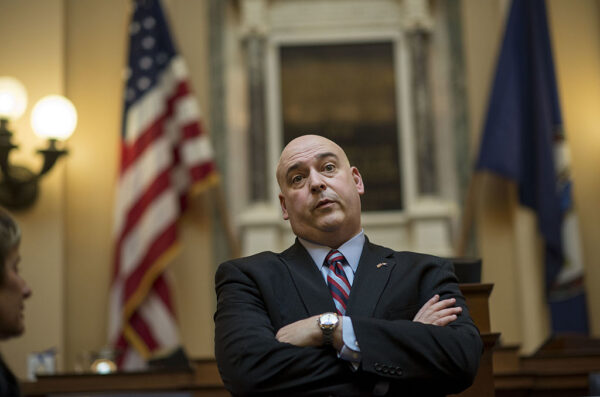
Virginia House Speaker
RICHMOND, VA – FEBRUARY 3: Delegate Todd Gilbert, left, a Virginia republican representing the Shenandoah district, talks to fellow delegates on the House floor of the Virginia State Capitol in Richmond, Virginia, Monday, February 3, 2014. (Melina Mara/The Washington Post via Getty Images)

Four Republicans among the subcommittee’s five members, House Majority Leader Terry Kilgore, Speaker Todd Gilbert, Del. Barry Knight, and Del. Kathy Byron, shut it down.

Titled “Unethical use of Black bodies by medical institutions; acknowledging with profound regret,” the bill was introduced by Democratic Sen. Jennifer B. Boysko of Fairfax.

During her presentation of the bill, she said it was important to acknowledge the past wrongs perpetrated by the government in order to heal wounds created by those wrongdoings.

Gilbert, one of the Republicans who voted against the resolution, said during the meeting, “I feel like there are thousands upon thousands of equally painful and hurtful and regrettable stories that could be told about how we treated one another, how Black Americans were treated for a very long time in this country. And I just worry that there’s no end to these resolutions, and maybe that’s the intent, I don’t know.”

One example of this was when the Medical College of Virginia hired grave robbers to steal Black bodies for medical experimentation in the 1800s when they did not have cadavers available for research.

“But certainly,” he continued. “If it helps for me to acknowledge that fact, that there are these many, many hurtful, painful memories and events and actions that hurt so many people, you know, I’m doing that publicly right now.”

“I just don’t know in the way of legislation how we contribute to that healing by acknowledging one or two a year at a time. That’s my main concern,” he concluded.

After the bill was not affirmed, Boysko said, “I think it’s important that we address problems so we can move forward collaboratively. We know there are Black people who live in Virginia and around the country who are suspicious of health care because of what has happened in the past.”

Adding, “Our bill would have at least admitted that and given people a small peace of mind.” 

Phillip Thompson, the former president of the Loudoun NAACP, believed the resolution would pass because it was supported by many in the senate already, unanimously being passed in that branch of government. However, the House of Delegates proved to be a barrier to the measure.

He said, “I thought it had a chance because it’s a very innocuous bill. We weren’t asking for reparations, nothing like that; we just wanted a real apology.”

Thompson also added that he believes it was so difficult to persuade African-Americans to get the COVID-19 vaccine because of the mistrust born out of the nation’s history of medical mistreatment, including The Tuskegee Experiment.

From 1932 to 1972, about 400 African-American men with syphilis participated in The Tuskegee Study of Untreated Syphilis in the Negro Male by the United States Public Health Service

According to the Centers for Disease Control and Prevention, the study initially involved 600 Black men (399 with syphilis, and 201 who did not have the disease). Participants were told they were being treated for “bad blood” but never had informed consent collected.

Despite being in the study, which looked at the sexually transmitted disease, anemia, and fatigue, the men were never offered penicillin to treat their syphilis. Instead, for research purposes, they were allowed to suffer.

“When the COVID vaccines first came out in my community, a lot of African-Americans didn’t want to take those vaccines because they thought that it was like the Tuskegee experiment,” Thompson explained. “Back in the ’30s and 40s, young kids were told don’t stray too far because the body snatchers will get you.”

Boysko explained in her bill presentation that this kind of warning was plausible.

She reminded the group that in April 1994, nine of the 53 bodies discovered in Richmond’s East Marshall Street Well dug up on Virginia Commonwealth University’s MCV Campus were discovered to be mostly from Black children. The human bones found at the well are believed to have been discarded in the 1800s by medical staff.

“Many of us still don’t trust the system, and when you look at history, that distrust is justified,” Thompson said.

In September, Virginia Commonwealth University formally apologized for its discarding of Black bodies after dissections. It also issued an apology to the family of Bruce Tucker, a Black Virginia laborer whose heart was removed after his condition was deemed too severe in 1968.

Moffat County Locals: Ashleigh Seely builds healthy bodies, happy hearts

Moffat County Locals: Ashleigh Seely builds healthy bodies, happy hearts
Dan and Ashleigh Seely and their sons David, 9, Hyram, 8, and Jonathan, 6, appreciate the holidays. Dan and
Ashleigh have been the proprietors and operators of Trapper Health given that 2014 and do the job with community
customers in lots of elements of increasing conditioning.

Courtesy photograph

Retaining properly-remaining is more than just setting up a muscular physique. It’s about taking in suitable, remaining mentally match, and a good deal of out of doors engagement.

But, if you’ve received Ashleigh Seely aiding you on your well being journey, you previously knew all that.

Seely is a well known component of the health entire world in Moffat County at many degrees.


She and her spouse Dan have owned Trapper Fitness considering that 2014, purchasing the longtime exercise place from Jim and Barb Gregoire with the objective of preserving the group in condition.

Along with encouraging many others arrived her own journey.


“The evolution of my job has arrive down to specifically using risks and embracing options even when it is scary,” she claimed.

She and her partner became personalized trainers for Trapper, and she also received certification for coaching women’s health, and bodybuilding, as nicely as overseeing clients’ nourishment.

The employees at Trapper has also expanded since the Seelys took around the company.

“We’ve grown with staff members and class instructors from two in 2014 to eight for 2022, which will allow us to manage out the tasks and offer an array of classes to children, teenagers and grownups,” she said.

Ashleigh explained she enjoys currently being equipped to support not only grownups but also teenagers and little ones develop much better bodies. Her employees is furthermore in that same frame of mind.

“They go previously mentioned and further than to be a light to people with accidents or elderly just needing to stay cell,” she stated. “Everything we do is geared toward top folks to a nutritious way of living and longevity. A good deal of times we pair a consumer with a class and custom made nourishment so that they get a well-rounded strategy to set them up for general very well-staying . The variations we see in their general performance and improvement are astounding. I have my staff members to thank for that.”

The Seelys also have coached Craig Parks and Recreation sports and Undesirable Canines Youth Wrestling and created diet ideas for athletes with Moffat County Superior College and Colorado Northwestern Neighborhood College.

Most recently, Ashleigh stepped up to head the MCHS girls wrestling method, which has witnessed a robust begin in its very first thirty day period.

Ashleigh and Dan are also mom and dad to three sons: David, 9, Hyram, 8, and Jonathan, 6.

“Beyond our professions we try to stay related to the community via our children’s education and pursuits as a father or mother consultant from Sunset Elementary for the Moffat County Activities Council,” Ashleigh said.

The Seely spouse and children holidays incorporates several traditions, such as cutting down a specially picked Xmas tree, church companies, and holiday feasts.

A bonfire and night time sledding session on New Year’s Eve are other points the family members is anticipating as they partake in the outside splendor of the region.

Ashleigh noted that the proximity to numerous leisure alternatives is something she treasures about Moffat County, which she described as a “safe haven for room and solitude.”

She credited faith in God and the really like of her spouse and children with holding her heading every single working day.

“Without their guidance and inspiration existence would be empty,” Ashleigh explained. “Dan has been the mastermind and driving power at the rear of our just about every company go and good rock for our household dynamics. He’s created up our enterprises and contributed to the group in accomplishing so. He’s helped the growth in this neighborhood. But my young children are the true MVP’s, the GOATS, and all-close to finest. We delight in living in Moffat County and respect this good group so pretty considerably. We are extremely blessed to get in touch with this dwelling.”