
Bernie Sanders chairs Senate committee looking to fix the health worker shortage : Shots

Bernie Sanders chairs Senate committee looking to fix the health worker shortage : Shots

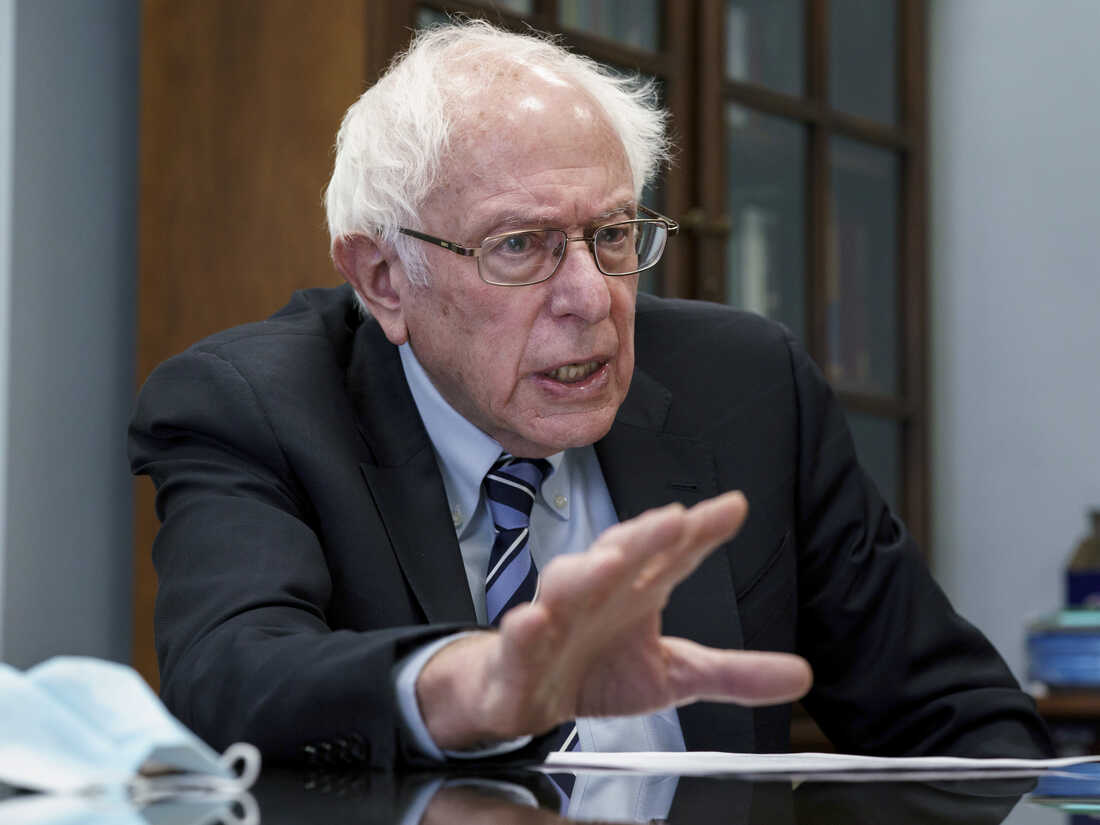
Sen. Bernie Sanders, I-Vt., is chairing the Senate’s top health committee which is focused on solving the U.S. health care worker shortage.

J. Scott Applewhite/AP


hide caption

toggle caption

J. Scott Applewhite/AP
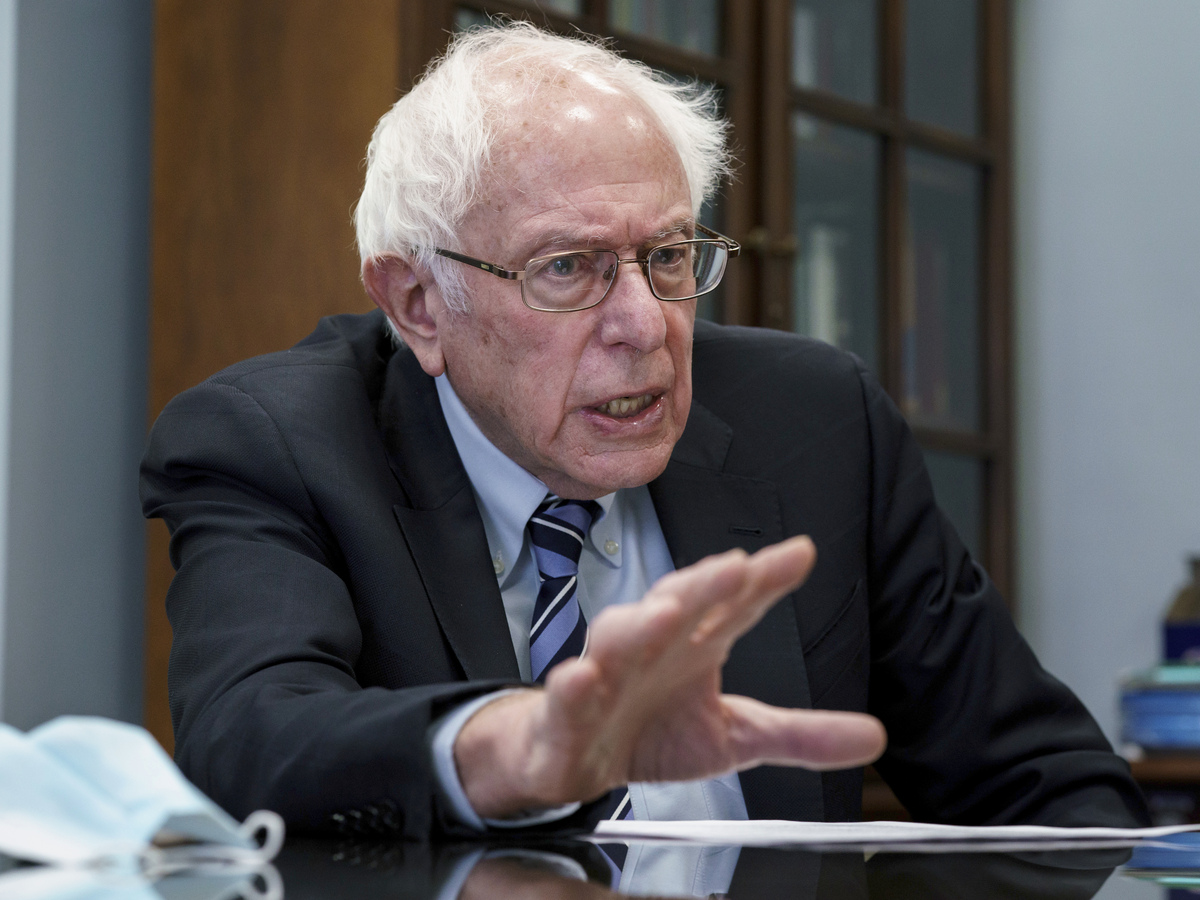

Sen. Bernie Sanders, I-Vt., is chairing the Senate’s top health committee which is focused on solving the U.S. health care worker shortage.

J. Scott Applewhite/AP

Senators are eying the growing shortage of health care workers in the United States as one of the few problems where there is room for bipartisan solutions, even in a deeply divided Congress gearing up for a presidential election cycle.

The shortage that’s only worsened since the pandemic is a prescription for skyrocketing costs, suffering, and unnecessary death, warned Sen. Bernie Sanders, I-Vt., who is the new chairman of the Senate’s top health committee. He spoke in his committee’s first hearing last week.

“We are going to produce legislation, and I think people will be surprised about the level of bipartisan supporters,” Sanders said in a brief interview during a break from the hearing. He called for the committee to “produce something meaningful.”

The shortage of health care workers of all sorts is a widespread problem, but is especially acute in rural areas and minority communities. Sanders pointed to the startling numbers of Americans living in medical care deserts to illustrate the point. There are nearly 100 million people who don’t have easy access to a primary care physician, almost 70 million with no dentist at hand, and some 158 million people who have few local mental health providers, Sanders said.

The COVID pandemic contributed to the nation’s existing worker shortage as many left the workforce as the crisis worsened. Some contracted the virus themselves, and large numbers of health care providers died. An investigation by KHN and The Guardian revealed more than 3,600 health workers in the United States died during the pandemic’s first year alone. Many others got burnt out or sought higher-paying jobs elsewhere.

“Despite all of our health care spending, we don’t have enough doctors, nurses, nurse practitioners, dentists, dental hygienists, pharmacists, mental health providers, and other medical professionals,” Sanders said, pointing to data that suggest the nation faces a shortfall of about 450,000 nurses and 120,000 doctors in the coming years, and 100,000 dentists now.

While Democrats and Republicans alike acknowledged the shortages hobbling care for hundreds of millions of Americans, any legislative solution must pass not only the Senate Health, Education, Labor and Pensions Committee, but also the full Senate and House of Representatives.

Far-right House Republicans have threatened to go so far as forcing the federal government to default on its debts as they demand spending cuts, and high government spending on health care could make new legislation a ripe target.

Sen. Bill Cassidy of Louisiana, the committee’s top Republican who is also a doctor, cited a few programs the committee is responsible for updating this year, such as an expiring program that trains many of the nation’s pediatricians. He said funding should reflect what works in the health care system and come “with the appropriate spending offsets.”

“We have to make sure that we’re not wasting the money we’re trying to productively spend,” he said.

None of the senators in the hearing disagreed with the fundamental problem that too many medical professionals are leaving their fields and that educational institutions are not graduating enough new ones to replace them and meet the growing needs of an aging population.

Members on both sides of the aisle recognized growing levels of burnout in the medical professions; increased threats faced by health care workers; the costs and challenges of working underserved areas; and financial incentives that steer younger professionals toward more lucrative specialties and higher-income areas.

Senators agreed on some strategies to boost numbers of health workers, such as encouraging more lower-cost educational options like community college and ensuring that existing programs are extended this year, such as the National Health Service Corps that trains doctors for underserved areas and graduate education programs.

A whiff of partisan thinking drifted into the conversation, with some Republicans focused more on decrying government interference in health care. Sen. Mitt Romney, R-Utah, suggested the State Department should do a better job clearing foreign students and practitioners to immigrate here. Cassidy raised electronic health records requirements as a contributor to physician burnout, saying they consume too much time.

Even in those areas, there were signs lawmakers could agree. Sen. Tim Kaine, D-Va., also raised the idea of unjamming the immigrant backlog.

Sen. Rand Paul, R-Ky., said vaccine requirements were an impediment. Sen. Roger Marshall, R-Kan., raised regulations barring some surprise medical bills as harmful to doctors.

“I think the fact that the committee has made this the first hearing means a number of us have bills. We may try to take a bunch of them up together and see if we can combine them into something,” said Kaine, pointing in particular to the idea of expanding loan forgiveness for people willing to go into areas with shortages. “I think there’s great prospects for bipartisan progress on this.”

Some of the senators credited Sanders with the initial progress toward a compromise. He spent his first weeks in his post meeting with committee members from both parties to identify areas of bipartisan agreement.

Sen. Lisa Murkowski, R-Alaska, said Sanders reached out to meet with her and discuss her priorities. They both named workforce shortages as a top issue, she said, adding, “We’ve got good stuff to work on.”

“In my conversation with him just on the floor this week, about what we might be able to do with the workforce issue, I think he was kind of probing to see if we could put together some efforts to just focus on these workforce shortages,” Murkowski told KHN. “There is a great deal of interest in legislating in this space.”

“What it’s going to look like, I can’t tell you yet,” she added.

“We are going to produce legislation,” Sanders said as the hearing ended. “I don’t do hearings for the sake of hearings.”

KHN (Kaiser Health News) is a national newsroom that produces in-depth journalism about health issues. Together with Policy Analysis and Polling, KHN is one of the three major operating programs at KFF (Kaiser Family Foundation). KFF is an endowed nonprofit organization providing information on health issues to the nation.

Texas’ shortage of mental health care professionals is getting worse


How this happened

Workforce stress and burnout

insurance companies want you to ‘die as quickly as possible’

This medical doctor has misplaced his tolerance with the US health care process.

Just one health practitioner has long gone viral on TikTok just after revealing the unattractive fact that most overall health insurance plan corporations allegedly want you to “die as promptly as attainable.”

The TikTok was posted Thursday and had racked up virtually just one million views.

“Healthcare providers never treatment about you,” stated Dr. Glaucomflecken grimly. “They really don’t care.”

Glaucomflecken lists off many insurance firms together with United Healthcare, Aetna, Cigna and Blue cross as the major responsible types.

“They want to extract as substantially income as attainable from your balanced overall body,” ongoing the medical doctor. “Then when you’re no lengthier healthy, they want you to die as immediately as doable, to make room for other funds-manufacturing bodies so…have a excellent working day.”

Dr. Glaucomflecken’s comments appear as wellness insurance coverage companies raked in a huge profit during the COVID-19 pandemic which trigger coverage price ranges to soar dramatically.


insurance companies want you to ‘die as quickly as possible’
Glaucomflecken lists off several coverage corporations which include United Health care, Aetna, Cigna and Blue cross as the primary responsible types.
@drglaucomflecken/TikTok

"They want to extract as much money as possible from your healthy body,” continued the doctor. "Then when you’re no longer healthy, they want you to die as quickly as possible, to make room for other money-producing bodies so…have a great day.”
“They want to extract as considerably revenue as feasible from your balanced human body,” continued the doctor. “Then when you are no more time healthful, they want you to die as promptly as feasible, to make space for other revenue-making bodies so…have a terrific working day.”
@drglaucomflecken/TikTok

In addition, Federal legislation involves hospitals and insurance plan organizations to deliver sufferers with the details of how a great deal they are currently being billed.

“Insurers want to make absolutely sure they are negotiating the greatest discounts they can for their associates, to make certain their solutions have aggressive rates, claimed chief government of America’s Health Insurance plan Plans Matt Eyles to the New York Periods.

The Put up achieved out to Dr. Glaucomflecken for remark.


Dr. Glaucomflecken's comments come as health insurance companies raked in a massive profit during the COVID-19 pandemic which cause policy prices to soar drastically.
Dr. Glaucomflecken’s responses come as health and fitness insurance policy companies raked in a significant gain during the COVID-19 pandemic which bring about plan price ranges to soar drastically.
@drglaucomflecken/TikTok

Numerous of the doc’s commenters agreed with him.

“I get the job done in oncology. you 100{bf0515afdcaddba073662ceb89fbb62b6b1bf123143c0e06b788e1946e8c353f} correct,” reported one person.

“As another person who functions in health insurance policies verification—yes,” mentioned yet another.

“The more time I’m in medication the additional clear this reality is,” a third human being explained.

The health care system rethinks obesity

Illustration of a measuring tape around a pill bottle.

Illustration: Shoshana Gordon/Axios

Medical practitioners and healthcare authorities are top a rapid cultural shift all over weight problems, viewing it as a sickness instead than a life style preference.

Why it issues: That change is opening new treatment plans and better treatment — but also new controversies above who can access people solutions and how most effective to use them.

What they’re indicating: “Obesity is a very prevalent continual disease characterised by excessive body fat accumulation or distribution that presents a threat to well being and calls for daily life-long care. Nearly every process in the human body is influenced by weight problems,” 6 obesity advocacy businesses lately wrote in a joint statement.

  • “Each individual human being with weight problems need to have accessibility to evidence-primarily based treatment method.”

Driving the news: An present course of diabetes drugs has demonstrated massive promise for bodyweight decline, supplying a ray of hope to the tens of millions of Americans with obesity.

Indeed, but: Numerous insurers, which include Medicare, will not include those medications for fat decline. And they can be unaffordable with out insurance plan coverage.

  • Wegovy, which is permitted for excess weight reduction underneath specified ailments, has a list selling price of $1,349 for a month’s offer.
  • “A the vast majority of my clients can’t afford to fork out $1,300 a month, specifically for a medicine that they require to be on extensive phrase,” Veronica Johnson, an being overweight specialist at Northwestern Drugs in Chicago, explained to NBC News.

The other facet: Kristine Develop, a spokesperson for America’s Wellness Insurance Designs, not long ago told Axios that the therapies have constraints and “have not but been tested to function perfectly for very long-expression weight management and can have troubles and adverse impacts on people.”

  • The exact class of medicine also can be misused. Some electronic wellbeing startups are advertising and prescribing the medicine to persons who are not over weight, the Wall Street Journal claimed this week.

Concerning the strains: The remedy landscape is switching fast for little ones as nicely as grownups.

  • New advice launched final month by the American Academy of Pediatrics endorses versus delaying obesity treatment method for little ones, and argues that doctors ought to be proactive about strategies like intense health and fitness actions and way of living treatment and, in some instances, prescription medicine or surgery.
  • But the guidance is currently drawing pushback. Ingesting disorder professionals, for illustration, are warning that it could backfire, NPR described this week.
  • “We operate the danger of executing major damage to young ones who are 6 or 8 by telling them that they have a disease … only dependent on their body weight standing,” Kim Dennis, an taking in ailment professional, informed NPR.

What we’re viewing: An uncommon array of interest teams is now pushing for Medicare to protect the drugs for obesity, STAT studies.

  • And more broadly, the existence of an successful cure raises massive queries about how to protect against yet another prescription drug from getting usually misused — and how to harmony obtain to weight problems cure towards the threats of perpetuating a stigma.

New estimates for retirement health care costs may be too low

Most Americans underestimate their health care costs in retirement, and that’s a problem because those future bills may turn out to be considerably higher than you expect.

A 65-year old man enrolled in Medicare with a Medigap plan will need to stash away $166,000 for medical expenses to have a good chance (90{bf0515afdcaddba073662ceb89fbb62b6b1bf123143c0e06b788e1946e8c353f}) of covering his projected health care costs in retirement, according to new research from the Employee Benefit Research Institute (EBRI), a nonprofit, nonpartisan organization. Due to longer life spans, a 65-year-old woman will need $197,000.

And those may be lowball estimates, experts say, underscoring the need for workers to focus either on ways to reduce those overall costs or use every tool to save up enough.

“Medicare does not cover all health care costs,” Paul Fronstin, director of health benefits research at EBRI, told Yahoo Finance. “As a result, many Medicare beneficiaries purchase Medigap or enroll in Medicare Advantage plans to help offset the out-of-pocket costs of health care. They also enroll in Part D prescription drug plans. The combination of premiums for supplement coverage and out-of-pocket expenses can put a huge strain on the finances of Medicare beneficiaries.”

New estimates for retirement health care costs may be too low

EBRI

For seniors enrolled in Medicare Advantage plans, the savings targets are typically lower, according to the report. A 65-year-old man enrolled in Medicare Advantage who has median drug expenditures and an average usage of health care services will need to save $96,000 to have a 9-in-10 chance of meeting medical bills in retirement. Meanwhile, a 65-year-old woman will need $113,000.

The EBRI report also factors in a provision of the Inflation Reduction Act that caps annual out-of-pocket Medicare Part D prescription drug outlays starting in 2025, so that no enrollee will pay more than $2,000 out of pocket per year.

That limit will affect 50 million Americans with Medicare Part D, and may guard enrollees from soaring costs. This provision will directly benefit the 1.4 million Medicare patients who spend more than $2,000 on medications each year, including people who need high-cost cancer drugs, according to an analysis from the Kaiser Family Foundation (KFF), a nonprofit organization.

‘Wildly conservative’

Importantly, this EBRI analysis does not weigh the potential costs of long-term-care expenses and other bills not covered by Medicare such as dental and vision care. These are often overlooked when planning for retirement.

The EBRI analysis does not weigh the potential costs of long-term-care expenses and other bills not covered by Medicare such as dental and vision care. (Getty Creative)

The EBRI analysis does not weigh the potential costs of long-term-care expenses and other bills not covered by Medicare such as dental and vision care. (Getty Creative)

“Planning the cost of health care is one of the hardest jobs,” Mary Johnson, policy analyst for The Senior Citizens League, told Yahoo Finance. “Not only do retirees need to save enough to replace about 70{bf0515afdcaddba073662ceb89fbb62b6b1bf123143c0e06b788e1946e8c353f} of pre-retirement earnings — just to live on — but we need to plan carefully for much larger sums once we get older and need more care in addition to just health care, such as to pay for aides to help with activities of daily living, cooking, cleaning or maintaining a home.”

“We are not wired to think this way,” Johnson said.

It also doesn’t take into account the fact that many people retire before becoming eligible for Medicare at 65 and typically shell out for their health insurance plan expenses out of their own pocket for a few retirement years. In EBRI’s 2022 Retirement Confidence Survey of 2,677 adults which included 1,132 retirees, over one in four (29{bf0515afdcaddba073662ceb89fbb62b6b1bf123143c0e06b788e1946e8c353f}) expected to retire at 70 or beyond or not at all, yet 62 was the median reported retirement age.

“These EBRI projections are wildly conservative,” Melinda Caughill, co-founder of the Medicare advice website 65 Incorporated, told Yahoo Finance. “This is unfortunately just the tip of the iceberg. We’re freaking out in this country because there’s the expectation for people that health care in retirement is free and should be free. But it’s not, and it’s not going to be. I wish there was a health care money tree, but there isn’t.”

‘Moving not for sunshine or palm trees’

These findings, conservative or not, should be a warning for Americans who still have years to retirement to consider contributing to a health savings account (HSA) To be eligible, though, you must be enrolled in a high-deductible health care plan.

For 2023, the annual inflation-adjusted limit on HSA contributions for self-only coverage under a high-deductible health plan will be $3,850, up from $3,650 in 2022. The HSA contribution limit for family coverage will be $7,750, up from $7,300.

Your HSA contribution with your employer can be made through an automatic payroll deduction where the funds are directed from your paycheck, tax-free, into an HSA. You can also add funds directly to your HSA at any time. While these contributions aren’t tax-free, they are deductible on your tax return. Some employers match contributions to HSAs similar to employer-provided retirement savings accounts. You can also open an account as a self-employed freelancer or business owner.

“From a tax perspective, a HSA is the best thing out there,” Fronstin previously told Yahoo Finance. “It benefits from a triple tax advantage. It’s the only account that lets somebody put money in on a tax-free basis, lets it build up tax-free, and lets it come out tax-free for qualified health care expenses.”

Another way to lower your future health care cost needs is by working longer. If workers receiving health benefits — and a paycheck — from their employer choose to work past age 65 and postpone enrollment in Medicare Parts B and D, they will need to have socked away less than EBRI researchers’ savings estimates, according to the report.

Happy mature executive assisting her younger coworker who is working on a computer in the office.
The number of those 65-and-older still on the job has been on the rise and is projected to increase further from a participation rate of 18.9{bf0515afdcaddba073662ceb89fbb62b6b1bf123143c0e06b788e1946e8c353f} in 2021 to 21.5{bf0515afdcaddba073662ceb89fbb62b6b1bf123143c0e06b788e1946e8c353f} in 2031, according to the (Getty Creative)

The number of those 65-and-older still on the job, however, has been on the rise and is projected to increase further from a participation rate of 18.9{bf0515afdcaddba073662ceb89fbb62b6b1bf123143c0e06b788e1946e8c353f} in 2021 to 21.5{bf0515afdcaddba073662ceb89fbb62b6b1bf123143c0e06b788e1946e8c353f} in 2031, according to the Bureau of Labor Statistics.

Finally, here’s another sizable cost-cutter for retirees eyeing relocating for their next chapter. Health care costs “vary incredibly based on where you live,” Caughill said.

In 2022, according to the Missouri Economic Research and Information Center’s Cost of Living Data series, health care costs in Maryland, for instance, were lower than in Florida or Arizona.

“What’s $100,000 in Arkansas can be $200,000 in Illinois or Wisconsin,” Caughill said. “Retirees should be moving not for sunshine or palm trees, but for health care costs.”

Kerry is a Senior Reporter and Columnist at Yahoo Finance. Follow her on Twitter @kerryhannon.

Click here for the latest economic news and economic indicators to help you in your investing decisions

Read the latest financial and business news from Yahoo Finance

Download the Yahoo Finance app for Apple or Android

Follow Yahoo Finance on Twitter, Facebook, Instagram, Flipboard, LinkedIn, and YouTube.

CommonSpirit to purchase 5 Steward Health Care hospitals

CommonSpirit Wellbeing, a Chicago-centered nonprofit program, is shopping for 5 hospitals to increase its western U.S. footprint, regardless of a difficult running setting that carries on to weigh on the healthcare business.

CommonSpirit said on Wednesday it will acquire Steward Well being Care’s Utah destinations, which include more than 35 clinics and five hospitals—Davis Healthcare facility and Medical Center in Layton Jordan Valley Medical Middle in West Jordan Jordan Valley Professional medical Heart-West Valley Campus Mountain Level Professional medical Heart in Lehi and Salt Lake Regional Professional medical Middle in Salt Lake City—for an undisclosed total.

Centennial, Colorado-primarily based Centura Wellness will manage the operations.

The transaction is envisioned to shut afterwards this calendar year.

“While bittersweet, this transition will let Steward to reinvest in our worth-based mostly care design and maximize its impact in other locations while also enabling Centura to leverage its extraordinary scale to greatly enhance care and strengthen results for patients in Utah,” Steward CEO Dr. Ralph de la Torre claimed in a information release.

For-revenue process HCA Health care seemed to get the 5 hospitals in 2021 to broaden its Utah existence, but it called off the proposed offer fewer than a 12 months afterwards amid opposition from the Federal Trade Commission. 

The announcement adopted Tuesday’s information that CommonSpirit and Alamonte Springs, Florida-based AdventHealth would end their longtime Centura Health and fitness joint undertaking, which was fashioned in 1996 and has achieved its “natural maturity,” according to the health and fitness units. CommonSpirit agreed to work 15 of Centura’s 20 overall hospitals in Colorado and western Kansas. 

Also on Wednesday, CommonSpirit reported a net income of $200 million for the 2nd quarter of its 2023 fiscal calendar year, which finishes June 30. That’s a 45{bf0515afdcaddba073662ceb89fbb62b6b1bf123143c0e06b788e1946e8c353f} increase in contrast with a yr back, with a $719 million strengthen from expenditure revenue. 

On the other hand, quarterly running losses totaled $474 million, thanks in part to a 5.4{bf0515afdcaddba073662ceb89fbb62b6b1bf123143c0e06b788e1946e8c353f} decrease in internet client profits. CommonSpirit attributed the success to the COVID-19 pandemic, higher labor expenditures and inflation, alongside with a cybersecurity attack it uncovered in October that affected additional than 600,000 folks. 

Profits fell 6.6{bf0515afdcaddba073662ceb89fbb62b6b1bf123143c0e06b788e1946e8c353f} to $8.3 billion, and operating costs also declined 2.1{bf0515afdcaddba073662ceb89fbb62b6b1bf123143c0e06b788e1946e8c353f} to $8.77 billion. Prices for salaries and added benefits arrived to $4.51 billion, in contrast with $4.59 billion in the exact quarter in fiscal year 2022.