
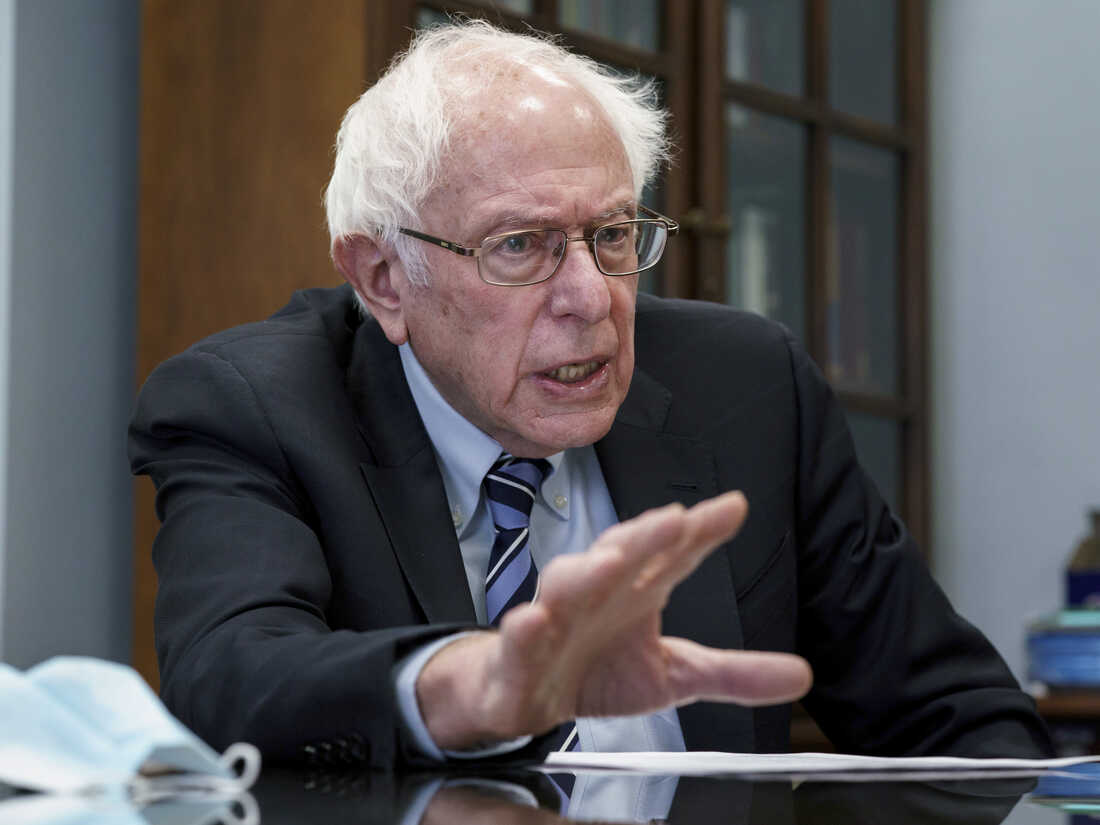

Sen. Bernie Sanders, I-Vt., is chairing the Senate’s top health committee which is focused on solving the U.S. health care worker shortage.
J. Scott Applewhite/AP
hide caption
toggle caption
J. Scott Applewhite/AP
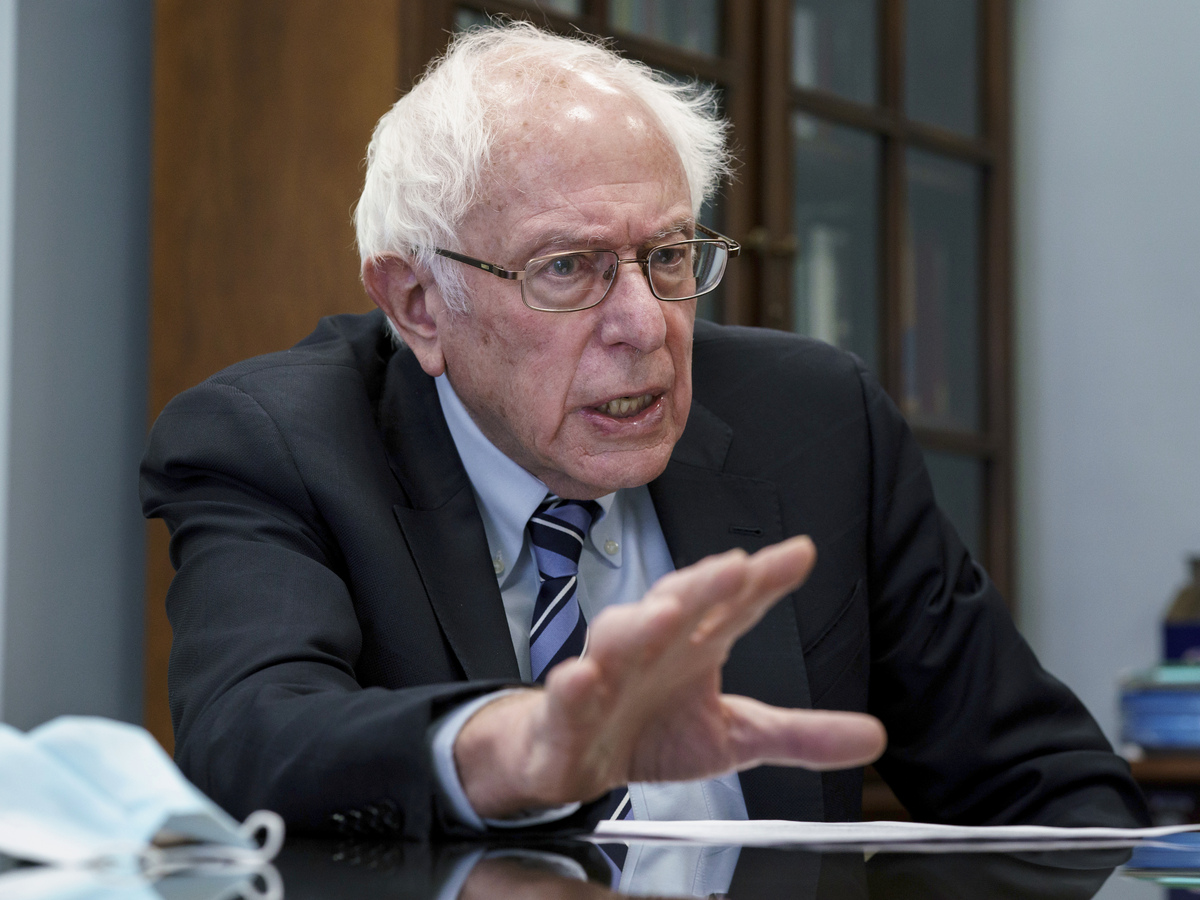
Sen. Bernie Sanders, I-Vt., is chairing the Senate’s top health committee which is focused on solving the U.S. health care worker shortage.
J. Scott Applewhite/AP
Senators are eying the growing shortage of health care workers in the United States as one of the few problems where there is room for bipartisan solutions, even in a deeply divided Congress gearing up for a presidential election cycle.
The shortage that’s only worsened since the pandemic is a prescription for skyrocketing costs, suffering, and unnecessary death, warned Sen. Bernie Sanders, I-Vt., who is the new chairman of the Senate’s top health committee. He spoke in his committee’s first hearing last week.
“We are going to produce legislation, and I think people will be surprised about the level of bipartisan supporters,” Sanders said in a brief interview during a break from the hearing. He called for the committee to “produce something meaningful.”
The shortage of health care workers of all sorts is a widespread problem, but is especially acute in rural areas and minority communities. Sanders pointed to the startling numbers of Americans living in medical care deserts to illustrate the point. There are nearly 100 million people who don’t have easy access to a primary care physician, almost 70 million with no dentist at hand, and some 158 million people who have few local mental health providers, Sanders said.

The COVID pandemic contributed to the nation’s existing worker shortage as many left the workforce as the crisis worsened. Some contracted the virus themselves, and large numbers of health care providers died. An investigation by KHN and The Guardian revealed more than 3,600 health workers in the United States died during the pandemic’s first year alone. Many others got burnt out or sought higher-paying jobs elsewhere.
“Despite all of our health care spending, we don’t have enough doctors, nurses, nurse practitioners, dentists, dental hygienists, pharmacists, mental health providers, and other medical professionals,” Sanders said, pointing to data that suggest the nation faces a shortfall of about 450,000 nurses and 120,000 doctors in the coming years, and 100,000 dentists now.
While Democrats and Republicans alike acknowledged the shortages hobbling care for hundreds of millions of Americans, any legislative solution must pass not only the Senate Health, Education, Labor and Pensions Committee, but also the full Senate and House of Representatives.
Far-right House Republicans have threatened to go so far as forcing the federal government to default on its debts as they demand spending cuts, and high government spending on health care could make new legislation a ripe target.
Sen. Bill Cassidy of Louisiana, the committee’s top Republican who is also a doctor, cited a few programs the committee is responsible for updating this year, such as an expiring program that trains many of the nation’s pediatricians. He said funding should reflect what works in the health care system and come “with the appropriate spending offsets.”
“We have to make sure that we’re not wasting the money we’re trying to productively spend,” he said.
None of the senators in the hearing disagreed with the fundamental problem that too many medical professionals are leaving their fields and that educational institutions are not graduating enough new ones to replace them and meet the growing needs of an aging population.
Members on both sides of the aisle recognized growing levels of burnout in the medical professions; increased threats faced by health care workers; the costs and challenges of working underserved areas; and financial incentives that steer younger professionals toward more lucrative specialties and higher-income areas.
Senators agreed on some strategies to boost numbers of health workers, such as encouraging more lower-cost educational options like community college and ensuring that existing programs are extended this year, such as the National Health Service Corps that trains doctors for underserved areas and graduate education programs.
A whiff of partisan thinking drifted into the conversation, with some Republicans focused more on decrying government interference in health care. Sen. Mitt Romney, R-Utah, suggested the State Department should do a better job clearing foreign students and practitioners to immigrate here. Cassidy raised electronic health records requirements as a contributor to physician burnout, saying they consume too much time.
Even in those areas, there were signs lawmakers could agree. Sen. Tim Kaine, D-Va., also raised the idea of unjamming the immigrant backlog.
Sen. Rand Paul, R-Ky., said vaccine requirements were an impediment. Sen. Roger Marshall, R-Kan., raised regulations barring some surprise medical bills as harmful to doctors.
“I think the fact that the committee has made this the first hearing means a number of us have bills. We may try to take a bunch of them up together and see if we can combine them into something,” said Kaine, pointing in particular to the idea of expanding loan forgiveness for people willing to go into areas with shortages. “I think there’s great prospects for bipartisan progress on this.”
Some of the senators credited Sanders with the initial progress toward a compromise. He spent his first weeks in his post meeting with committee members from both parties to identify areas of bipartisan agreement.
Sen. Lisa Murkowski, R-Alaska, said Sanders reached out to meet with her and discuss her priorities. They both named workforce shortages as a top issue, she said, adding, “We’ve got good stuff to work on.”
“In my conversation with him just on the floor this week, about what we might be able to do with the workforce issue, I think he was kind of probing to see if we could put together some efforts to just focus on these workforce shortages,” Murkowski told KHN. “There is a great deal of interest in legislating in this space.”
“What it’s going to look like, I can’t tell you yet,” she added.
“We are going to produce legislation,” Sanders said as the hearing ended. “I don’t do hearings for the sake of hearings.”
KHN (Kaiser Health News) is a national newsroom that produces in-depth journalism about health issues. Together with Policy Analysis and Polling, KHN is one of the three major operating programs at KFF (Kaiser Family Foundation). KFF is an endowed nonprofit organization providing information on health issues to the nation.
