ChatGPT, OpenAI’s popular AI chatbot, has quickly become an integral part of several users’ lives. The free-to-use online tool has changed how we access internet-based content, thus revolutionizing popular trends, including fitness and nutrition.
In 2023, people are way more aware of their well-being and constantly strive towards maintaining a healthy life. More often than believing their instincts, internet users tirelessly explore the mysteries of weight loss and sustainable healthy diets. However, access to health and nutrition-related tips and tricks has seemingly become easier, thanks to ChatGPT.
With ChatGPT in place, enthusiasts can now access free on-point answers to all their health and fitness-related questions. All they have to do is type in their query and wait for the intelligent model to crawl through the most reliable websites to provide a complete solution.
How reliable is ChatGPT, and how has it affected the personalized fitness and nutrition industry?
ChatGPT is one of the most popular language processing tools due to its simple interface and arguably limitless use cases. It can produce natural language-based text and can be used to answer fact-based questions, automate tasks, generate suggestions, translate language, and more.
When it comes to fitness and nutrition, ChatGPT can not only tackle health-related questions but also provide personalized suggestions. For example, users can request OpenAI’s celebrated language model to generate a diet plan or workout schedule for a busy day. It can also generate plans based on a health condition or body state.
There are numerous human-operated fitness and nutrition-based services that offer customized plans to interested users, as well as close guidance to help achieve their goals. Such services, while helpful, usually run on subscriptions or memberships and cost a lot of money.
While the internet is always available at one’s disposal, it’s difficult to pinpoint the necessary pointers from an ocean of information, which is exactly where OpenAI comes to the rescue.
Numerous health-conscious people may want access to free, personalized nutrition and exercise recommendations they can follow from the comfort of their homes. All they have to do is type in their requirements for a tailored plan, and the language model will generate it within seconds, thus saving hours of research and extra effort.
How to ask ChatGPT for a meal plan?
Here are some examples of how users can get started:
Please give me a seven-day meal plan. I am X years old and need to lose/gain weight.
Please give me a seven-day non-vegetarian/vegetarian meal plan, but include/exclude eggs/beef/chicken/dairy/etc.
Please give a seven-day exercise plan. I am X years old and diabetic/other health conditions if any.
Simply make sure to state all the requirements in detail. If the generated results aren’t favorable, you can also ask the tool to regenerate the answers with the additional details mentioned. The more details you add, the better the answer you get, thus offering a “personalized” plan for your fitness or nutritional needs.
While it is definitely a convenient way to gather information, it’s also important to remember that ChatGPT isn’t always accurate with answers. Despite massive efforts to minimize AI-generated mistakes, users may notice false or invalid information while using the tool.
As a result, it is always recommended to consult a qualified healthcare professional if the person has a unique requirement. If you want to start exercising for the first time or have a health condition requiring medical intervention, depending on artificial intelligence may not be the best option for you.
Note that general or internet-based advice may not apply to some users. Also, verify the information that AI-based tools provide before imbibing them.
ChatGPT’s unbound access to numerous data points allows users to access some of the most efficient solutions to their problems within seconds. It is definitely prone to errors at times, but human beings aren’t immune to making mistakes, either.
Under proper supervision and factual verification, ChatGPT is definitely capable of revolutionizing the fitness and nutrition industry by saving users hours of precious time and their hard-earned money.
Note: We may receive a small commission from the links included in the article.
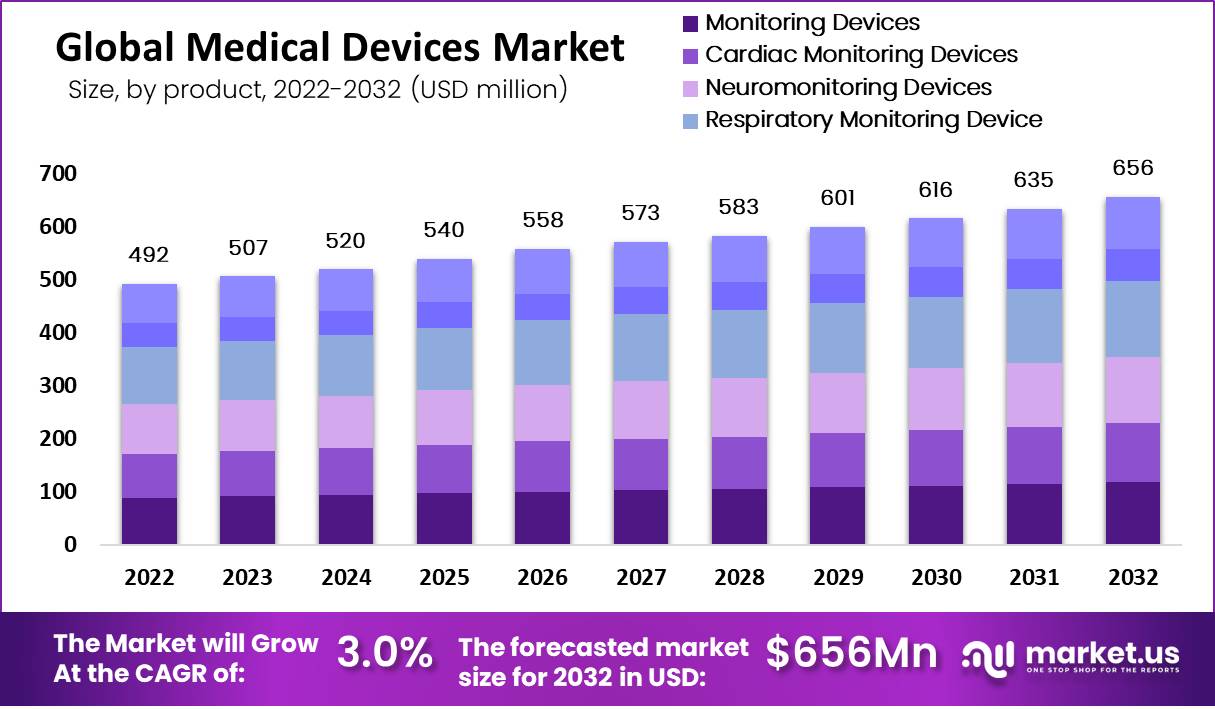
Pune, March 01, 2023 (GLOBE NEWSWIRE) — According to Market.us, the global medical devices market accounted for USD 492 billion in 2022 and is projected to reach USD 656 billion by 2032, exhibiting a CAGR of 3.0{bf0515afdcaddba073662ceb89fbb62b6b1bf123143c0e06b788e1946e8c353f} in the forecast period (2023-2032).
Medical devices are used to diagnose and treat diseases or injuries. These devices can be used to treat illnesses or improve patients’ quality of life. FDA (Food and Drug Administration) classifies medical devices into three classes: Class I, Class II, and Class III. Because they have the most regulatory controls, Class I and II require special labeling. These are the ones that sustain or support human life. These include an implant endosseous and an external defibrillator. Medical device establishments are those that manufacture medical devices. These devices include in-vitro diagnosis and diagnostic imaging devices.
By product, the In-Vitro Diagnostics segment (IVD) is expected to have the highest CAGR during the forecast period due to the increasing use of real-time diagnostic testing for diagnosing infectious and chronic diseases.
By end-user, the hospitals & clinics segment dominated the market in 2022 because of the rising healthcare spending, better healthcare infrastructure, and an attractive reimbursement policy.
In 2022, North America dominated the market with the highest revenue share of 43{bf0515afdcaddba073662ceb89fbb62b6b1bf123143c0e06b788e1946e8c353f} due to the high treatment rates, supportive government initiatives for early diagnosis of diseases, and the increasing adoption of technologically advanced devices.
Asia-Pacific is expected to grow at the highest CAGR between 2023-2032 due to the increasing patient population suffering from chronic diseases and improving healthcare infrastructure.
Complex surgeries and growing numbers are driving this market. In addition, the market for medical devices is expected to grow due to technological advancements in medical technology, brain monitoring devices, and government initiatives.
Factors affecting the growth of the medical devices industry?
Several factors can affect the growth of the medical devices industry. Some of these factors include:
Technological Advancements: Advanced technologies like artificial intelligence (AI) and wearable medical equipment are becoming increasingly prevalent in the medical devices market nowadays. This is propelling the market growth positively.
Rising chronic diseases: The increasing cases of chronic diseases like cancer, diabetes, etc., will raise the patient population. A sedentary lifestyle is a major reason behind this. This is boosting the market’s expansion.
Increasing healthcare expenditure: The increasing per capita healthcare expenditure in developing and developed countries means more opportunities for medical devices, which is positively affecting market growth.
Growing awareness about diseases: The growing awareness about infectious diseases and chronic conditions means that individuals are taking necessary treatments readily. This is abetting the market growth positively.
Remote diagnosis, treatment, and monitoring of patients are possible now because of technologies like remote patient monitoring devices, artificial Intelligence (AI), wearable devices, and electronic health records. Patients can be monitored at their homes and hospitals via contactless technology. This is crucial in controlling COVID-19. Both patients and doctors can have an EHR for their patients. This means they don’t need to deal with traditional paperwork that must be sent through multiple people involved in the treatment. Patients and doctors can view the data on their own devices as well as those of other doctors.
Medical device manufacturers are seeking ways to reuse production lines to produce high-demand supplies to fight against the coronavirus. These products include hand soaps, ventilators, personal protective equipment (PPE), face masks, and other medical supplies. AirCo, a liquor producer, has shifted its focus to hand sanitizers. INKSmith Canada also produces face shields. It was a startup that made technology tools and designs more accessible for children.
Due to rising rates of chronic medical conditions and the treatment of those suffering from them, the healthcare system across different countries is facing immense pressure. This has led to a significant rise in the cost of treating these conditions. Hospital inpatient costs are significantly higher than the hospital charges for those treated at home. Additionally, longer hospital stays can result in a higher economic burden. A recent randomized study comparing hospital patients with those in home care showed that home care management costs decreased by 19{bf0515afdcaddba073662ceb89fbb62b6b1bf123143c0e06b788e1946e8c353f}. There has been an increase in the preference for home healthcare services due to increasing economic burdens and a growing elderly population. Home healthcare services are becoming more popular in developed countries due to the increasing efforts of key players and healthcare agencies to develop and launch simple-to-use medical devices, such as portable and wearable devices for chronic illnesses. Shimmer Research, a world leader in wearable technology applications, introduced Verisense Pulse+ in March 2021. This sensor is designed for Verisense platforms and provides photoplethysmographs and galvanic skin reactions. This device measures the heart rate and oxygen saturation of clinical trial patients and their activity levels and sleep levels.
Market Growth
Living a lifestyle that leads to physical inactivity can increase the risk of developing heart disease. This will likely increase the demand for medical devices as more heart surgeries are performed to clear blocked arteries. This will help to boost the market growth. This market is expanding because companies focus on creating advanced products and using different business strategies, such as acquisitions or partnerships, to maintain their market position.
Regional Analysis
Regional analysis shows that North America is expected to continue to be the largest market in medical devices. This market dominance is due to the rising prevalence of chronic disease, high healthcare spending, and key players’ presence. Canada’s growing elderly population will likely boost market growth during the forecast period. According to United Nations Population Fund statistics for 2022, Canada has a large population aged between 15 and 64. This group makes up approximately 65{bf0515afdcaddba073662ceb89fbb62b6b1bf123143c0e06b788e1946e8c353f} of Canada’s total population. According to the same source, 19{bf0515afdcaddba073662ceb89fbb62b6b1bf123143c0e06b788e1946e8c353f} of Canadians are expected to reach 65 by 2022. Geriatrics are more susceptible to developing chronic conditions such as respiratory disease, cardiopulmonary disease, and orthopedic disorders. This trend over the forecast period is anticipated drive market growth. A rising number of chronic conditions such as stroke, heart disease, and cardiovascular disease has increased cardiopulmonary bypass procedures; therefore, medical devices have seen a significant increase in demand. According to American Heart Association, the United States is predicted to have a 6.8{bf0515afdcaddba073662ceb89fbb62b6b1bf123143c0e06b788e1946e8c353f} heart disease prevalence by 2021, 1.8{bf0515afdcaddba073662ceb89fbb62b6b1bf123143c0e06b788e1946e8c353f} higher than the overall population. This will help to increase demand for medical devices that improves diagnosis and treatment. This will likely boost the market’s growth over the forecast period.
Competitive Landscape
The global medical devices market is fragmented because of the presence of many market players on both a regional and global level. With its extensive product range and international reputation, Medtronic holds the largest market share. Most industry players invest heavily in Research and Development (R&D), which is used to develop new products and improve existing product lines. They also invest a lot in growing their global distributor networks, allowing businesses to diversify product offerings.
Have Queries? Speak to an expert, or To Download/Request a Sample, Click here.
Sedentary lifestyles and other factors increase chronic diseases like diabetes, cancer, and other infections. Through various awareness programs, healthcare agencies worldwide are trying to improve the speed of diagnosis and treatment. Due to the increasing prevalence of these conditions, the number of people who need diagnostic tests and procedures is on the rise. For example, the International Diabetes Federation stated that 537 million people were diagnosed with diabetes in 2021. IDF states this number will rise to 643 million in 2030 and 783 million by 2045.
According to the American Cancer Society, the number of new cancer cases in 2021 was 1.9 million. In addition, there is a rising demand for orthotic or ophthalmic procedures due to increasing numbers of joint fractures and poor vision in the elderly. Osteoarthritis Alliance 2021 data shows that the incidence of knee osteoarthritis is highest in those between 45 and 65 years old. About 45{bf0515afdcaddba073662ceb89fbb62b6b1bf123143c0e06b788e1946e8c353f} of osteoarthritis patients are 65 years old or older. Along with these factors, higher per capita healthcare spending in developing and emerging countries and better reimbursement policies drive an increasing number of patients seeking treatment and diagnosis. This is driving demand for medical devices.
Due to rising rates of chronic medical conditions and the treatment of those suffering from them, the healthcare system across different countries is facing immense pressure. This has led to a significant rise in the cost of treating these conditions. Hospital inpatient costs are significantly higher than the hospital charges for those treated at home. Additionally, longer hospital stays can result in a higher economic burden Shimmer Research, a world leader in wearable technology applications, introduced Verisense Pulse+ in March 2021. This sensor is designed for Verisense platforms and provides photoplethysmographs and galvanic skin reactions. It also has an inertial measurement unit. This device measures the heart rate and oxygen saturation of clinical trial patients. It can also measure their activity levels and sleep levels.
Market Restraints
Most likely, new products and services will be more expensive due to regulatory changes. Data protection is affected by these regulatory changes. These regulatory changes can also affect equipment approval procedures. The US Food and Drug Administration (FDA) has requested additional clinical information. This information is needed to support safety claims and efficacy claims regarding medical devices such as endoscopies. Due to the potential loss of revenue due to delayed product releases and the higher costs associated with the stringent approval process, investments in product development have been under pressure. This can have a negative effect on the growth of medical device and equipment markets.
Market Opportunities
The largest medical device market segmented by type is In-vitro Diagnostics. Hospitals and clinics will benefit the most from the segmented market for medical devices by the end user. With US$ 55,700 million, the USA is anticipated to be the world’s largest medical device market. According to the Business Research Company, medical device companies should concentrate on disposable medical products, contactless medical devices, portable medical devices, and wearable medical gadgets.
A recent randomized study comparing hospital patients with those in home care showed that home care management costs decreased by 19{bf0515afdcaddba073662ceb89fbb62b6b1bf123143c0e06b788e1946e8c353f}. There has been an increase in the preference for home healthcare services due to increasing economic burdens and a growing elderly population. In addition, home healthcare services are becoming more popular in developed countries due to the increasing efforts of key players and healthcare agencies to develop and launch simple-to-use medical devices, such as portable and wearable devices for chronic illnesses. These factors are creating ample amount of opportunities for the market.
In-Vitro Diagnostics (IVD) is expected to experience a higher CAGR. This is due to the increasing usage of real-time diagnostic tests to accurately diagnose chronic or infectious diseases such as diabetes, cancer, HIV/AIDS, etc. In addition, the increased demand for medical devices, such as gloves and masks, surgical lights, and fetal monitors, led to the other segments holding a dominant position in 2022. The wound management segment is expected to grow significantly due to the increased investment made by medical device companies into new wound devices and bioactive therapies. Minimally Invasive Surgery is predicted to grow because of technological advancements in surgical robots and increased use by healthcare providers. Due to the increasing number of patients suffering from different cardiac and orthopedic conditions, orthopedic and cardiovascular devices will likely continue growing rapidly. Market growth for medical devices is anticipated to be driven by the increasing incidence of diabetes and retinal disorders in the population.
End-User Insight
This segment’s notable growth can be attributed primarily to rising healthcare spending, improved healthcare infrastructure, and a favorable reimbursement policy. According to the WHO report on healthcare infrastructure, most developing countries have less than 1 million hospital beds. These countries invest heavily in healthcare infrastructure development. As a result, healthcare infrastructure spending is expected to increase over the forecast period.
FDA granted Abbott’s recall of its imaging catheter a Class 1 label in May 2022 because of vascular injury risks.
In January 2022, The US gave FDA approval to Mediatric’s Intellis rechargeable neurostimulator and Vanta recharge-free neurostimulator used for treating chronic pain caused by diabetic peripheral neuropathy.
Siemens Healthineers AG launched NAEOTOM Alpha in November 2021, which is the world’s first CT scanner that uses photon-counting technology cleared for clinical use in Europe and the US.
In August 2021, Johnson & Johnson introduced VELYS digital surgery. The robot-assisted option for total knee arthroplasty in the United States is now available.
Browse More Related Reports:
About Us:
Market.US (Powered by Prudour Pvt Ltd) specializes in in-depth market research and analysis and has been proving its mettle as a consulting and customized market research company, apart from being a much sought-after syndicated market research report-providing firm. Market.US provides customization to suit any specific or unique requirement and tailor-makes reports as per request. We go beyond boundaries to take analytics, analysis, study, and outlook to newer heights and broader horizons.
In their study, researchers followed 13,720 women for 20 years to analyze their risk of developing dementia. They examined Medicare claims at the end of the study to determine who received a diagnosis.
The women received a score for seven health factors, with 0 corresponding to “poor” and 7 as “excellent.” The average score at the beginning of the study was 4.3. At the 10-year follow-up, it was 4.2.
At the 20-year follow-up, 1,771 women had been diagnosed with dementia.
After adjusting for factors such as age and education, the researchers found that for every increase of one point in overall score, the participant’s risk of dementia decreased by 6{bf0515afdcaddba073662ceb89fbb62b6b1bf123143c0e06b788e1946e8c353f}.
One limitation of the study is that researchers did not receive information that allowed them to see how changes in healthy habits, such as quitting smoking, influenced the risk of dementia.
The findings also have not been published yet in a peer-reviewed journal.
The researchers used the American Heart Association’s “Life’s Simple 7” lifestyle habits for their study.
Those seven factors are:
“The good news is, this isn’t an all-or-nothing situation,” said Dr. Joel Salinas, a behavioral neurologist and researcher at NYU Langone Health and chief medical officer at Isaac Health in New York.
“You don’t need to be the healthiest person. Even if people have a good score in one or two areas, they are receiving some benefit. Any improvements incrementally improve your long-term health,” he told Healthline.
“If you change your habits, you will receive some health benefits. The earlier you make those changes,” Salinas added. “The longer you keep the new habits, the better. The intent is to find an easy way to keep track of your health.”
“Dementia is an overall decline in cognitive ability, usually impacting short-term memory (learning/recall new information) and another cognitive ability (or more), such as decline in executive skills (organization, decision making) or language, or visual-spatial skills,” says Karen Miller PhD, a neuropsychologist and geropsychologist as well as the senior director of the Brain Wellness and Lifestyle Programs at Pacific Neuroscience Institute in California.
“In dementia, these declines typically impact one’s ability to be completely independent (i.e., the person may have difficulty managing finances or medications, difficulty/impairment in driving, etc.),” she told Healthline.
Women make up about two-thirds of people with dementia, including Alzheimer’s disease, according to a 2021 report.
One reason is that women live longer than men and dementia typically appears after age 80. Other possible explanations, according to Cognitive Vitality, a program of the Alzheimer’s Drug Discovery Foundation, include:
Higher education is associated with lower rates of dementia. Many older women today were not afforded the same educational opportunities as men.
Dementia is linked to depression, and more women have depression than men
People who exercise are less likely to develop dementia and women exercise less than men
When women develop dementia, they decline faster than men do. Therefore, they can have a more severe illness.
Dementia occurs when neurons in the brain stop working or interacting with other brain cells, according to the National Institute of Aging.
Everyone loses some neurons as they age, but people with dementia have a more significant loss.
While many people over 85 have dementia, it is not considered a normal part of aging.
Alzheimer’s disease is the most common form of dementia, but it is not the only one.
A few other types of dementia include the following:
Some people can have a combination of two or more types of dementia.
Signs and symptoms of dementia include:
Experiencing memory loss, poor judgment, and confusion.
Difficulty speaking, understanding, and expressing thoughts, or reading and writing.
Wandering and getting lost in a familiar neighborhood.
Trouble handling money responsibly and paying bills.
Repeating questions.
Using unusual words to refer to everyday objects.
Taking longer to complete routine daily tasks.
Losing interest in normal daily activities or events.
Hallucinating or experiencing delusions or paranoia.
Acting impulsively.
Losing balance and problems with movement
It is important to note when symptoms are worsening, experts say.
“When people start noticing these symptoms, in themselves or a loved one, it may be time to see a doctor. The same is true for new changes, new symptoms, or a worsening of previous symptoms. There are some treatments – that can’t cure or reverse the damage. Still, they can possibly slow the progression of the disease, such as aducanumab and lecanemab,” Salinas said. “New treatments are another reason to see a doctor.”
Long partial to heavy lunchtime platters of meat and rice, Asim al-Shammari has recently turned to lighter fare from a self-described diet restaurant, swayed by Saudi Arabia’s anti-obesity push.
Roughly one in five Saudi adults is obese, according to an in-depth study published by the World Bank last year that described the problem as “alarming”.
The Global Obesity Observatory places the kingdom at number 17 in its international rankings of obesity prevalence, three slots below the United States and near neighbours Qatar and Kuwait.
But the Vision 2030 reform agenda spearheaded by Crown Prince Mohammed bin Salman includes goals for bringing down both obesity and diabetes by the decade’s end.
The effort is being helped by a raft of new restaurants offering healthier alternatives to some traditional Saudi fare, including the spot where al-Shammari, a financial analyst, tucked into a plate of chicken, rice and carrots one recent afternoon.
“I used to eat burgers, shawarma or kabsa while I was at work,” said the 28-year-old, referring to a rice dish usually served on large shared plates.
“This increased obesity, especially with eight-hour office work and lack of movement.”
Lifestyle changes
For decades, Saudis have spent much of their free time in restaurants and shopping malls, and food was a chief source of entertainment in the kingdom, where high temperatures limit outdoor activities for much of the year.
In 2019, the health ministry started requiring restaurants to include calorie information on menus to encourage healthy eating.
Fast food options – from international favourites like McDonald’s to local chains like Al Baik – remain ubiquitous in the kingdom’s main cities, but they are starting to face more varied competition.
Saad al-Hader, a 25-year-old doctor, said he used to bring meals from home so he could eat something besides junk food, but the proliferation of new health-conscious eateries has made his life easier.
“The popularity of these restaurants and the fact that they are close to workplaces, makes it easier to stick to healthy eating,” he told AFP as he dined on salmon and grilled potatoes.
A growing number of restaurants are offering meal plans that send salads and other healthy meals to clients’ homes and workplaces.
One such plan provides a meal a day for a month for 450 Saudi riyals ($120).
Basil Chehayeb, a Lebanese national who runs a restaurant called Reshape in the Saudi capital Riyadh, said he had opened two new branches in the past 18 months to keep up with demand.
The restaurant provides meals each day to about 500 subscribers, most of whom are Saudis.
“Saudis have changed their lifestyle and are now attending sports clubs and eating healthy foods,” he said.
Targeting the youth
Efforts by restaurants and other private sector businesses to promote healthy eating have been supplemented by other health-minded interventions.
The Saudi Sports for All Federation now organises regular events like the Riyadh Marathon, which this year drew thousands of runners to the streets of Riyadh.
Officials have also begun work on a 135-kilometre (85-mile) Sports Boulevard in the capital featuring foot, cycle and horse-riding paths.
Beginning with the current academic year, the Saudi health ministry has banned the sale of soft drinks in schools.
The message seems to be getting through, at least among young people, said public health consultant Lamia al-Brahim.
“Obesity is a serious health problem” but “it is very noticeable now that health awareness is increasing among the young generation,” she said.
“Societal behaviour changes need a long time, and these efforts start from within the home, then the school and then the government agencies.”
This story includes discussions of suicide. If you or someone you know is in crisis, you can get help from the Suicide and Crisis lifeline by calling or texting 988.
While most kids his age were wrapping up their junior year of high school, Daniel was in a box.
“It was like I was sitting in a gigantic FedEx box being shipped somewhere,” he said. “But like, add one bed and the door had to be closed at all times.”
Daniel’s years of mental health struggles, stretching back into his early childhood, came to a head in early 2022. His often-uncontrollable emotional outbursts became unmanageable; he was “unraveling,” his parents said.
CBS News is only using the first names of former patients interviewed for this story to protect their privacy.
Fearing Daniel might harm himself, his parents took him to the only place they could: the emergency room. After seven days in the ER, Daniel was discharged; hospital staff felt he was no longer in danger. His parents disagreed.
“We were like no, no, no, he is so not ready,” his mom Kathe said. “We’ve been waiting and waiting, but he is not ready.”
Daniel’s therapist even wrote a letter to the hospital saying he wasn’t ready to be released. But the hospital said he needed to go home.
Ten days later, he was back in the ER — this time at another nearby hospital, where he would stay for 19 days.
“There’s barely any room in the [hospital] room to walk around,” Daniel, now 18, said. “So I was just sitting on my bed all of the time. I had some rough times there, like it was really difficult to, like, stay put, you know, and that’s what they expected [me] to do.”
Read more: Inside America’s youth mental health crisis
Instead of the intensive mental health care he needed, Daniel said he got very little help while in the room.
“Dan, rightfully so, he was like, what am I doing here?” Kathe said. “This is not help. You promised help. Where’s the help?”
“Severe shortage”
Stories similar to Daniel’s are growing more common in the U.S., fueled by a critical shortage of doctors, therapists and resources to address the needs of kids in crisis.
In Massachusetts, the number of kids landing in ERs for mental health treatment soared 200{bf0515afdcaddba073662ceb89fbb62b6b1bf123143c0e06b788e1946e8c353f}-400{bf0515afdcaddba073662ceb89fbb62b6b1bf123143c0e06b788e1946e8c353f} during the pandemic. That same trend is reflected across the country: a 2021 study found the number of kids stuck in ERs awaiting treatment tripled between 2019 and 2021.
“I do think it is very bad,” said Dr. Muniya Khanna, research scientist at Children’s Hospital Philadelphia and a former faculty member at the University of Pennsylvania’s Department of Psychiatry. “Suicide is now the number two leading cause of death in children 10 to 24. And this trajectory is only getting worse after the COVID pandemic. And so, we are absolutely in a crisis.”
Experts say it’s a demand and supply issue: demand for mental health services has increased after the pandemic and the supply of trained staff hasn’t increased enough to fulfill the needs.
Forty U.S. states and Puerto Rico all have “severe” shortages of child psychiatrists, according to data from the American Academy of Child and Adolescent Psychiatry (AACAP) analyzed by CBS News. Only the District of Columbia reported having enough child and adolescent psychiatrists to meet AACAP standards.
RELATED: Half of all Texas school districts have no mental health services
Amid this lack of formal mental health treatment options, ERs have become the last and only option for many families, according to numerous mental health experts interviewed by CBS News.
“Kids languish for days, weeks, sometimes even over a year in children’s hospitals around the country,” said Zach Zaslow, vice president of advocacy and community health at Children’s Hospital Colorado. “This is not just a Colorado problem, and it happens because there’s nowhere else that’s safe for them to go.”
In Colorado, Michaela, who grew up in foster homes, told CBS News she tried get a special therapist to address her anger, anxiety and depression nearly a dozen times.
“I would be crying out for help,” Michaela said. “I would say I need support. And it wouldn’t happen until I came to a point where it was too late to really come back and not make a bad decision that in the end would hurt me.”
Michaela said she tried to hurt herself, including several suicide attempts, over those years. She said the system in its current form does not do enough for young people until they reach a crisis point.
“I think it’s really hard to get into a good therapist or just a therapist in general,” Michaela said. “It doesn’t matter if they’re good or bad.”
Michaela said she had a total of eight ER visits for mental health crises, and often left the ER without seeing a therapist. The few times she did meet with a mental health expert, she said her therapy was cut short.
“It did cause me to have to go back [to the ER] again like less than a year later just because I didn’t get the help that I needed,” said Michaela. “And I think it was partly because I left too early.”
Michaela, who is now 20, said she is proud that she’s “beat the odds” and survived. She now sits on a youth advisory board as part of a partnership between the University of Colorado and Children’s Hospital Colorado.
“It definitely made me feel like all of that pain and suffering that I had to go through wasn’t a waste,” said Michaela. “Because now I can be the voice of power for so many other young people who are stuck in the same situation that I was and give them hope that I didn’t have then.”
A revolving door at ERs
Experts told CBS News the use of ERs as stopgap mental health treatment measures simply doesn’t work.
“For anybody who’s been in an emergency department for more than a few hours, it is not an ideal place to be,” said Dr. Kevin Carney, an emergency room physician at Children’s Hospital Colorado.
Massachusetts General Hospital in Boston, where Daniel stayed for 19 days, acknowledged the problem, saying in a statement to CBS News that “shortages [of proper mental health treatment options] have forced youth in crisis — and their families — to turn to their local emergency departments where ongoing capacity challenges may mean waiting for days or weeks for appropriate inpatient care to become available.”
For kids in crisis, ER visits can make matters even worse.
A December 2022 American Academy of Pediatrics study found more than a quarter of children who went to ERs for mental health issues were hospitalized — either in ERs or in mental health facilities — within six months. And about 26.5{bf0515afdcaddba073662ceb89fbb62b6b1bf123143c0e06b788e1946e8c353f} were back in the ER within a week.
Dr. Sandra DeJong, a psychiatrist and the secretary with the American Psychiatric Association, said if kids don’t get proper care early, their condition can rapidly get worse.
“My fear is that we really have significant risk for the future,” DeJong said. “Because if we don’t address the needs of particularly young people now, then they are going to grow up to be people who are diminished and don’t have the capacity to function in the way that they could have if they had gotten the treatment.
“And frankly, they’re going to be expensive to care for because if they go untreated, there are situations that are likely to get worse and then they will need higher intensity care. It’s just not an effective way to approach the problem.”
Meanwhile, more and more kids find themselves in crisis. Suicide attempts by teen girls jumped more than 51{bf0515afdcaddba073662ceb89fbb62b6b1bf123143c0e06b788e1946e8c353f} between 2019 and 2021, according to a study by the CDC. And a recent study published in the journal JAMA Pediatrics found the number of suicide attempts by overdose reported to poison control centers more than doubled between 2000 and 2020.
The number of kids with mental health issues coming to the ER “has been unrelenting,” said Zaslow.
“And it’s not acceptable,” he added. “It means ultimately, at the end of the day, that there are kids waiting for those beds every single minute as soon as one frees up.”
Dr. Taylor Louden, medical director at Cook Children’s Medical Center in Fort Worth, Texas, said that in recent years he’s seen more and more young patients come into his ER for mental health problems.
“We are seeing even younger and younger kids, 8-, 9-year-olds — ages of my kids,” said Louden. “Some are expressing that they want to hurt themselves that they want to die and it’s really tough to hear.”
Not only are there more kids showing up in ERs, Louden said, but they’re staying longer, too.
“No one should ever be in an ER longer than a few hours,” he said. “That means that the system is broken, in my mind.”
Inside an ER’s psych room
04:04
“It’s not acceptable”
Numerous experts CBS News interviewed said serious investments are needed to increase the mental health resources available to kids in crisis.
CBS News went to the person in charge of the system in the U.S.: Health and Human Services Secretary Xavier Becerra, who said “we have to do a lot” to fix the problem.
“It wasn’t until recently that you could get an insurer who actually gave you access to mental health services,” Becerra said. “And we still have a system where mental health is what you get at a primary care physician when you go to a family doctor.
“That’s got to change. Mental health, it’s got to be part of primary health, not something where you get a referral to a specialist.”
When asked about children getting stuck in ERs rather than proper mental health treatment facilities, Becerra said it was “not acceptable.”
“It’s not care,” Becerra said. “It’s housing them until we can get somebody who could give them professional help. They’re crying out and shame on us that we haven’t prepared.”
Becerra pointed out that several states and the federal government are investing billions of dollars into mental health care. And last summer, the Biden White House announced $300 million to expand mental health services in schools.
“That’s where the president last year in the State of the Union and again, double down this year has said, Congress, we’ve got to step up, we’ve got to finish the job of making sure that mental health is treated like any other aspect of health,” Becerra said.
But doctors Khanna and DeJong both said much of this federal spending comes in the form of one-time grants that will eventually expire.
“Now it’s really time to start investing time and resources on all levels for making that happen more on a regular basis,” said Khanna.
Attracting more people to work in youth mental health must be part of the equation, DeJong said.
“You can build all the beds and clinics in the world,” DeJong said. “But if you don’t have enough people to staff them, which is a real problem right now, we’re not going to meet the needs that we’re facing.”
Secretary Becerra agreed.
“You just got to put your money where your mouth is. And President Joe Biden is trying to put his money there,” Becerra said. “We need now the partnership with Congress to make it happen.”
HHS Secretary Xavier Becerra speaks about youth mental health crisis
06:53
Some aren’t waiting on the federal government to help, instead trying new approaches in attempts to address this crisis and meet young people where they are.
One of those approaches comes in the form of a youth advisory group at Children’s Hospital Colorado. The advisory group consists of teenagers who regularly meet to give advice to therapists and hospital officials about how to meet the needs of young people.
Another new approach: construction of a new, first-of-its-kind facility at the Cherry Creek School District outside Denver that will combine a mental health medical facility and a school when it’s completed in the fall of 2023.
When kids in crisis leave ERs
Finding help after a hospital stay can be even more challenging.
The Academy of Pediatrics study found just 31.2{bf0515afdcaddba073662ceb89fbb62b6b1bf123143c0e06b788e1946e8c353f} of children had a mental health follow-up visit within seven days of leaving the hospital and only about half had a mental health follow-up with a specialist within 30 days of leaving the hospital.
“I think what is very distressing about this mental health crisis that we’re facing is that while we very much take as part of our responsibility to make sure that we are keeping kids safe and stabilizing them when they’re in crisis or have harmed themselves,” Dr. Carney said. “The very hard thing is knowing that at that point I can’t do anything else for that child.”
Dr. Glenda Wrenn Gordon knows those statistics firsthand: she and her 18-year-old son lived them.
Wrenn Gordon said even though she’s an Atlanta-area psychiatrist herself, she was surprised by the effort she had to put in to find help for her son in crisis after she got him to the ER. She said she thought she knew what to do, but still found the system of finding and getting care post-hospital visit to be daunting.
“We moved very quickly through the ER because I knew exactly what to say and how to say it to get us where we needed to go,” she said. “I was extremely frustrated for how hard it was. I was thinking about these other families. What hope do they have and what it must be like?”
When asked what she fears most if the system is not changed, Wrenn Gordon was blunt.
“We will continue to bury our children,” she said.
Atlanta psychiatrist struggles to find help for her son
02:56
If you or someone you know is in crisis, get help from the Suicide and Crisis Lifeline by calling or texting 988.
In addition, help is available from the National Alliance on Mental Illness, or NAMI. Call the NAMI Helpline at 800-950-6264 or text “HelpLine” to 62640. There are more than 600 local NAMI organizations and affiliates across the country, many of which offer free support and education programs.
Share on PinterestPictured, the injectable gel being tested on a microfabricated circuit. Image credit: Thor Balkhed.
Studying the brain is difficult, and often involves invasive techniques, such as using a probe, to gain information about electrical signaling.
This means our understanding of exactly how brain signaling works is limited, which has implications for basic science and medical research.
A research team has discovered a way to inject an enzyme-containing gel into zebrafish brains, which triggers a reaction that causes it to turn into an electrode.
This can be used to measure electrical cell signaling in the brain, which could have further clinical and research applications in the future.
Studying the brain is notoriously difficult. Sampling it in a living person is next to impossible, probing it is invasive, and getting drugs to cross the blood-brain barrier to observe how it behaves, challenging.
One of the most important breakthroughs in biology in the past decade has been harnessing the ability to influence stem cells, either embryonic or human stem cells, to form particular cell types.
Researchers have cultured these to form mini-organ models or organoids.
Organoids have proved particularly useful for studying the brain, and the different types of cells that the brain and nervous system are made from.
For example, one of the earliest uses of organoids was to develop a model of a person’s brain using induced pluripotent adult stem cells from their skin.
One area of current research focuses on seeing if models recreate the structures that develop naturally. So far, researchers have created brain organoids that demonstrate eye-like structures, and others that were able to integrate with rats’ brains, and even heal injured areas of tissue.
In addition to this area of study, there is also work being done to study brain cells in vitro, or in a Petri dish, using induced pluripotent stem cells, to gain greater insight into how brain cells or neurons work.
Last year, a debate was launched when scientists from University College London in the United Kingdom and the start-up Cortical Labs, announced they had developed DishBrain, which integrated brain cells onto computing devices using multiple electrodes.
They used this device to “teach” neurons how to play the computer game Pong, and published the results in Neuron.
This emerging area of research, known as “bioelectronics,” can also give us an insight into how brain cells work. Brain and nerve cells work by transmitting electrical activity and using these for cell signaling, as well as signaling using chemical cell signaling used by other cells.
By being able to merge electronics with nerve cells, we can measure cell signaling in a less invasive way than what is currently required when using a brain probe to measure electrical activity, for example.
Less invasive techniques may not only be more ethical but they might produce more reliable results, as there is less chance of interference from the invasive technique itself.
One of the biggest challenges facing those trying to merge electronics and living tissues is making the structure compatible: One is animal and one is mineral, after all.
Most of the recent advances in this area take place on silicone structures, or on specially designed films in a Petri dish, but these are difficult to merge with living tissues.
Recently, a group of scientists based in Sweden has created an injectable gel that undergoes polymerization — a kind of crosslinking — which allows it to act as an electrode and carry electrical signals.
The process was demonstrated in zebrafish brains and leeches, and the research findings outlined in a paper published in the journal Science.
In the paper, researchers describe how they created an “injectable cocktail gel” containing an enzyme that triggers a signaling cascade that leads to the polymerization, or linking, of other molecules in the “cocktail” in the presence of lactate, which occurs naturally in the body, and in the central nervous system.
The linking of the molecules that occurs allows them to conduct electrical signals, meaning that the gel forms an electrode when in contact with chemicals that naturally exist in the brain.
Researchers tested how resilient the electrode that had been formed was to harsh environments, and also tested its biocompatibility and found no negative effects on the zebrafish, said lead author Dr. Xenofon Strakosas, principal research engineer in the Laboratory of Organic Electronics at Linköping University, Norrköping, Sweden in an interview with Medical News Today.
The experiments were a proof of concept, he explained:
“Next week, we have collaborations with more advanced animal models like mice and rats and stuff. In the beginning, we optimized these processes in zebrafish and leeches to deduce animal modeling to prove that this can be biocompatible [and] will not interfere with the normal functional sort of the models.”
“For example, in the zebrafish, we didn’t see any side effects. So this was the proof of concept. And now we are moving towards different applications,” Dr. Strakosas noted.
The electrode formed in the brain by the gel could be attached to devices that record electrical signaling, shedding light on the ways that these cells signal with each other.
Though the gel has not been tested on heart tissue, it could have some applications in studying electrical signaling in the heart, Dr. Strakosas explained.
Dr. Brett Kagan, chief scientific officer of Cortical Labs, which was behind the DishBrain discovery reported last year, who was not involved in the current research, told MNT in an email:
“This is an exciting step forward in interfacing with living brain and other electrically active tissues for research purposes, with evidence for being able to investigate less accessible regions less invasive than is typically done.”
“While much more work is still required even for this to be commonly implemented in animal research, it is possible that it may even provide a basis for future developments that could one day lead to more complex applications of this approach even in humans,” Dr. Kagan added.