Intermountain Health joins medical research initiative

Utah-based Intermountain Health has been selected to join a nationwide initiative working to speed up implementation of potentially groundbreaking research in health care.

Intermountain is one of 42 health care organizations brought on board by the National Patient-Centered Outcomes Research Institute to contribute to the Health Systems Implementation Initiative.

Providing up to $500,000 for an initial project that helps to prepare health care organizations with future strategies, the Health Systems Implementation Initiative aims to accelerate the use of published research, cutting down what Intermountain said is an estimated 17-year lag between publishing medical research and its use in health care facilities.

Further funding for health care systems involved in the initiative will be provided if health care organizations support other projects promoting evidence from the National Patient-Centered Outcomes Research Institute.

With every implemented project, health care organizations can receive funds ranging from $500,000 to $5 million.

Dr. JP Valin, the chief clinical officer at Intermountain Health, said, “We believe that every patient … deserves to get the best care and the treatment and the most up-to-date and state of the art care that’s being delivered.”

He said the 17-year lag from the time medical research is conducted to when it’s implemented in a facility is because of the process to learn new practices.

Currently, to keep up to date on new treatment and care, Valin said, medical professionals read through journals and attend conferences, which can be a somewhat lengthy process. Then, the research can begin to seep into medical training to benefit patients.

Intermountain has been putting forward an effort to share information faster. Intermountain, Valin said, “has done that through the work of its Healthcare Delivery Institute, which we’ve had for decades now, as well as our clinical programs work.”

Intermountain’s ability to quickly share information has been nationally recognized, and the contribution to the Health Systems Implementation Initiative will only further encourage the sharing of health care research, Valin said.

The Health Systems Implementation Initiative aims to create a platform where researchers from around the country can share their findings, deploying best-care practices in a facility where health care professionals can gather and share more information to improve patients’ health, said Valin.

Valin said, “Then we can publish that (information) and share that more broadly around the country.”

Participants in the Health Systems Implementation Initiative represent 800 hospitals nationwide, serving nearly a quarter of the U.S. population.

Including academic medical centers, community-based systems, integrated health care delivery and finance systems, safety net health systems, faith-based systems, public health care delivery systems, and a medical center within the Veterans Health Administration, the Health Systems Implementation Initiative is taking “groundbreaking” steps, said Nakela Cook, executive director of the National Patient-Centered Outcomes Research Institute.

Cook said these steps will “lay the groundwork for future expansion and broader implementation by demonstrating pathways to uptake and sharing lessons learned across health systems.”

This sharing and implementation of medical research has “never been done on this scale before across the country,” Valin said.

Valin hopes to continue implementing life-changing research to benefit patients nationwide.

Roy and Diana Vagelos Institute for Biomedical Research Education Launched at Columbia University with $175 Million Gift

With the COVID-19 pandemic highlighting the critical importance of biomedical research and new questions being raised about society’s capacity to generate world-changing scientific breakthroughs1, Roy and Diana Vagelos have made a $175 million gift to Columbia University to address this need. The Vagelos Institute for Biomedical Research Education created with this gift will be home to PhD students pursuing the most creative, potentially disruptive ideas in biomedical science, and will spur the training of more physician-scientists able to translate the latest paradigm-shifting discoveries into revolutionary new methods in patient care.  

logo

The gift will enable Columbia to create a new academic model that encourages and accelerates the intellectual risk-taking needed to make historic advances in health science research. Supportive career pathways, promising stability and academic freedom, are being developed to attract more students and junior faculty to this essential endeavor. Currently in the United States, PhD students, MDs in training, residents, fellows, and early-career physician-scientists who pursue a career in basic, translational or clinical research must contend with both financial challenges and professional uncertainty2.

By directly addressing and mitigating these obstacles, the Vagelos gift seeks to create an academic research environment conducive to bold experimentation and a sustained commitment to solving longstanding medical problems. Reducing the disproportionate financial burdens that deter historically marginalized groups from pursuing a career in science is a central pillar of this program.

“The financial support provided by Roy and Diana Vagelos to Columbia has been extraordinary, and so too is the leadership they provide through the values embodied in their philanthropy,” said Katrina Armstrong, Dean of the Columbia University Vagelos College of Physicians and Surgeons, and EVP for Health and Biomedical Sciences. “The Vagelos Institute for Biomedical Research Education will have an enormous impact in harnessing the power of science to transform clinical care, and I believe we will see similar initiatives started at other university medical schools. The reward for this effort will be unprecedented strides forward in curing disease and treating illness. It’s an opportunity—and a responsibility—we must embrace.”

The largest portion of the gift—$125 million—will establish an endowment to transform the prevailing approach for funding PhD students. This will provide Columbia trainees with greater freedom to explore different interests at the start of their careers. The remaining $50 million of the gift will support aspiring physician-scientists seeking to develop expertise in both fundamental biology and clinical medicine.

An external scientific advisory board of seasoned scientists and experts in graduate biomedical education will guide the development of these programs and of the new graduate biomedical curriculum tracks. The board is tasked with ensuring that Columbia University creates the optimal environment to nurture the growth of scientists who will shape the future of medicine. The initial group of board members includes Enrique M. De La Cruz, PhD, of the Yale School of Medicine; Tracy Johnson, PhD, of UCLA; William Kaelin Jr., MD, of the Dana-Farber Cancer Institute; and Shirley M. Tilghman, PhD, of Princeton University.

“This extraordinary generosity from Roy and Diana Vagelos continues their visionary support of education at the Vagelos College of Physicians and Surgeons, which so appropriately bears their name,” said Columbia University President Lee C. Bollinger. “It also continues their trailblazing efforts to rethink and strengthen the future of science and medical education at Columbia and around the world. For all of this, and so much more, we are extremely grateful.”

Roy and Diana Vagelos have been trailblazers in rethinking and strengthening the future of science and medical education at Columbia and around the world. Together with scholarship support from countless VP&S alumni, friends, and faculty, their transformative $250 million gift in 2017 made it possible for Columbia’s medical school to become the first in the nation to offer debt-free education to students. Their leadership precipitated a national movement among medical schools to eliminate student debt. The medical school was renamed the Vagelos College of Physicians and Surgeons as a tribute to their impact. This second transformational gift reflects the couple’s remarkable generosity and their deeply held values. It builds on a shared lifetime of charitable and compassionate action, particularly in their efforts to advance science, medical education, and better health care for all. For more information about Roy and Diana Vagelos, their respective professional accomplishments, and their prior giving to Columbia, please visit this page.

“We all know that continued scientific progress is the foundation for solving our most pressing medical problems,” said Dr. Vagelos. “Diana and I each vividly recall the difference that financial support made in creating a sense of freedom and instilling the confidence to pursue our passions early in our lives. We want to give others this same freedom by removing the obstacles facing researchers and scientists in training. The larger the number of talented researchers who are able to explore areas of discovery that capture their imaginations, the greater the impact they will have in changing medicine and improving health. It is our honor to give back.”

The Seven Deadly Sins of Biomedical Research

The risks of gain-of-function research on pandemic potential pathogens such as SARS and MERS outweigh the benefits. Greater oversight of biosafety, biosecurity, and biorisk management in laboratories must be done by an independent national agency that doesn’t perform or fund research.


Like Icarus flying too close to the sun, some scientists working in laboratories have been pushing the fates by creating pathogens (i.e., microbes that make people sick) that are more dangerous than those occurring in nature. Other scientists and policy experts, myself included, have joined forces to call for improved oversight, and, in some cases, the banning of “gain-of-function” research on pandemic potential pathogens also called “enhanced potential pandemic pathogens research” (ePPP). Gain-of-function research involves giving microbes such as bacteria and viruses enhanced capabilities that they might not normally possess in nature. This research currently receives almost no national or international oversight. Not all gain-of-function research is dangerous—for example, turning harmless bacteria into insulin-making machines is beneficial and cost-effective for treating diabetes and most biomedical research has resulted in substantial improvements in medicine and public health. However, the subfraction of gain-of-function research that enhances the risks posed by pandemic potential pathogens such as avian influenza (H5N1) virus or SARS-CoV deserves closer scrutiny and oversight.

With a case fatality rate of approximately 56 percent, the H5N1 avian influenza virus is much deadlier than SARS-CoV-2, which has an estimated case fatality rate below 2 percent. The H5N1 avian influenza virus first emerged in Hong Kong in 1997 from infected birds, but it was unable to spread readily from mammal-to-mammal.

Once a pathogen gains the ability to spread easily from mammal-to-mammal, the risks of it spreading to humans increases. Enter Ron Fouchier, a virologist from Erasmus Medical Center in the Netherlands. In 2011, he and his colleagues decided to give the H5N1 avian influenza virus the enhanced capability of airborne spread between mammals. Fouchier wanted to see what mutations the virus might need to acquire to start a pandemic. He chose ferrets as the experimental animal, because they are susceptible to influenza viruses and develop influenza respiratory disease like humans. The experiments were performed in a Biosafety Level 3 (BSL-3) laboratory, one step below the highest containment laboratories (BSL 4) that feature containment rooms and spacesuits. After introducing mutations into the virus, Fouchier performed serial passages: a form of selective breeding of the virus in ferrets to obtain novel mutant viruses that are efficiently transmitted by aerosol from mammal to mammal.

The most prevalent reason asserted for conducting gain-of-function research on pandemic potential pathogens is to be able to predict future pandemics. In other words, by creating novel pandemic potential pathogens in laboratories, scientists like Fouchier would be able to recognize them in the wild before they spilled over from animals into humans.

That’s the theoretical argument, anyway.

In practice, their reasoning is flawed. To more clearly illustrate this analysis, let’s examine weather forecasting. Predicting hurricanes is a purely observational exercise that implements satellite data. Scientists don’t manipulate clouds to see what conditions are needed to start hurricanes. They use atmospheric and climate models instead. In a similar fashion, scientists could employ artificial intelligence and machine learning tools to predict viral evolution instead of manipulating viruses in laboratories. This entails that risky gain-of-function research on pandemic potential pathogens is not a necessity in predicting future pandemics.

Concerns about risky research prompted the National Academy of Sciences (NAS) to issue a report in 2004 titled “Biotechnology Research in an Age of Terrorism,” listing seven “experiments of concern,” recognized as the “seven deadly sins,” that should not be pursued if they could create pathogens that are not already present in nature.

These experiments include:

  1. Demonstrating how to make a vaccine ineffective
  2. Developing a pathogen’s resistance to antibiotics or antiviral agents
  3. Enhancing a pathogen’s virulence (i.e., lethality) or making a non-lethal microbe lethal
  4. Increasing the transmissibility of a pathogen (e.g., making a non-airborne pathogen airborne)
  5. Altering the host range of a pathogen by increasing the number of species it can infect
  6. Enabling a pathogen to evade diagnostic testing
  7. Enabling a biological agent or toxin to be weaponized

The avian influenza (H5N1) virus studies involving ferrets involved experiments 4 and 5 in the list. According to the NAS, these experiments should not have been done.

In the case of SARS-CoV-2, the causative agent of the COVID-19 pandemic, the jury is still out regarding how the virus developed and how it spread from animals to humans. But understanding the origins of the virus is imperative to the development of effective policies and procedures that can reduce the likelihood of such a catastrophe from happening again. Both SARS and MERS, which emerged in 2003 and 2012, respectively, had extensive clinical specimen evidence (i.e., bodily fluids) from animals and humans demonstrating natural spillover events. Clinical specimen evidence includes either the virus itself or antibodies that bodies make to attack the virus, like microscopic missiles.

For example, palm civets (i.e., exotic mammals eaten as delicacies) sold at an animal market in Guangdong, China were found to harbor viruses that were 99.8 percent identical to the SARS virus found in humans; and 80 percent of palm civets tested positive with antibodies to the SARS virus. Blood tests of almost 800 people in the Guangdong Province found that individuals who traded palm civets had the highest antibody positivity rates to SARS compared to everyone else.

Similarly with MERS, archived blood specimens from dromedary camels dating back decades throughout the Middle East, parts of Asia, and North and East Africa tested positive for MERS antibodies, providing the evidence that the virus had been circulating in the animals for a long time. From 2012 to 2013, a study of over 10,000 healthy adults from all thirteen provinces of Saudi Arabia found MERS antibodies in 0.15 percent of the samples. People who worked with camels had much higher rates of MERS antibodies compared to the general population. Specifically, camel shepherds had MERS antibody rates fifteen times higher, and for slaughterhouse workers, a whopping twenty-three times higher rate than the public.

In other words, the key evidence for natural spillover for both SARS and MERS was clinical specimens from occupational exposures. Working with animals that harbor zoonotic pathogens (microbes that can spread from animals to humans) increased spillover risk in the animal workers. A One Health approach integrating human, animal, and environmental surveillance is essential for monitoring future natural spillover events.

In contrast to SARS and MERS, neither the SARS-CoV-2 virus nor antibodies to the virus have been reported in animals or animal workers. No studies involving clinical specimens have been published in the medical literature that fulfills the criteria for a natural spillover event. In early 2020, George Gao, a former director of the Chinese Center for Disease Control and Prevention, and his colleagues conducted a non-peer reviewed study that found 0 out of 457 clinical specimens taken from 18 species of animals in the live animal market in Wuhan contained the virus. The Chinese conducted surveys of thousands of people to assess the rates of antibody prevalence to SARS-CoV-2 in the general population. Unfortunately, none of these studies included occupational data, eliminating a critical factor in determining natural spillover risk. In addition, no studies have been published examining SARS-CoV-2 antibody rates in laboratory workers at the Wuhan Institute of Virology (WIV). The window to assess differences in rates between the laboratory workers and the public when such differences would still exist closed in early 2020.

The public record, however, indicates that SARS-CoV-2 was genetically manipulated at the Wuhan Institute of Virology. In 2016–17, researchers at WIV constructed novel chimeric SARS-related coronaviruses that combined the spike genes of different SARS-related coronaviruses. A chimera possesses genetic material from two different organisms. The spike protein of SARS-CoV-2, which is used like a key to enter cells, has a highly unusual feature called a “furin cleavage site” that is not present in the more than 200 other known SARS-related (e.g., Sarbeco) coronaviruses, making it highly infectious. While furin cleavage sites occur naturally in many other coronaviruses, the SARS-CoV-2 furin cleavage site has a particularly unique sequence of amino acids. This feature has been the subject of much debate with some scientists demanding a full investigation into possible laboratory origins, while others stress that there is no evidence.

Science must be transparent to maintain its legitimacy. An immense debate such as this warrants a full investigation into the virus’ origins, especially since there is no compelling evidence for a natural spillover event. Stonewalling such an investigation engenders suspicion.

To prevent future catastrophic pandemics, my colleagues and I propose improvements in protections at national and international levels in biosafety, biosecurity, and biorisk management. Biosafety and biosecurity protect against accidental and deliberate release of pathogens in laboratories, respectively. In the United States there are currently no regulations, only guidelines pertaining to biosafety. There is a law for biosecurity called the Select Agent Rule, but this legislation only applies to several dozen human, livestock, and crop pathogens and biological toxins that are considered high risk for bioweapon use.

Biorisk management involves risk-benefit assessments of proposed high-risk research on dangerous pathogens that might qualify as one of the “seven experiments of concern.” From 2014 to 2016, the US government imposed a pause in federal funding for gain-of-function research on SARS, MERS, and influenza viruses. As with biosafety and biosecurity, the same federal agencies that perform and fund gain-of-function research of pandemic potential pathogens are also in charge of biorisk management. An inherent conflict of interest exists, and the system is opaque without public scrutiny or input.

In all three cases—biosafety, biosecurity, and biorisk management—oversight must be conducted by an independent national agency that does not perform or fund research. Oversight regulations should be transparent, enforced, and harmonized at the international level. Given the uncertainty surrounding the origins of SARS-CoV-2, it is prudent to cover all bases in developing policies to prevent another catastrophic COVID-19 pandemic.

. . .

Laura H. Kahn is a physician, author, educator, and consultant. For almost twenty years she was a research scholar at the Program in Science and Global Security at Princeton University. She is currently completing a book using a One Health framework to examine coronaviruses.

Image Credits: Wikimedia, NIAID Integrated Research Facility

Bacteria-killing viruses could combat antibiotic resistance, says UK scientist | Medical research

The use of experimental therapies based on bacteria-killing viruses needs to be rapidly scaled up in the NHS to combat the worsening threat of antibiotic resistance, one of the UK’s leading scientists has said.

Prof Martha Clokie, who has pioneered research into bacteriophages, or phages, at the University of Leicester, said the approach was helping a growing number of patients in compassionate use cases, and could become a routine treatment in future for conditions such as chronic UTIs and diabetic foot ulcers.

Clokie will be the director of the UK’s first phage library, due to open at Leicester next month, which she says will help fast-track the use of phages in the NHS and pave the way for the large clinical trials required for phages to become licensed treatments.

“The risk from antibiotic resistance is dire and getting worse … I find it really shocking,” Clokie said. “Unless we have clinical trials, phages won’t become mainstream as a medicine, and that’s where we’re aiming.”

Phages work by infecting bacteria cells and killing them, but they are very specific in which infections they can target. They have been used successfully in a growing number of one-off cases, including a British teenager who was dying from an intractable lung infection and was treated at Great Ormond Street in 2019.

Q&A

What are bacteriophages?

Show

Bacteriophages, or phages, are incredibly small viruses, just a few nanometres across. They are normally harmless to humans, but can be deadly for bacteria.

Phages work by penetrating the bacterial membrane and replicating inside the cell until it bursts open, killing the bacterium and releasing more phages. The key to harnessing them therapeutically is to find phages that are extremely efficient at killing the strains of bacteria causing particular infections.

In clinic, they can be inhaled through a nebuliser, sprayed on to the skin or taken orally, depending on the type of infection. To date, patients have typically been given bespoke therapies, but in future it is hoped that off-the-shelf cocktails of phages could be used to treat common infections, such as E coli and C difficile.

Thank you for your feedback.

“I get fairly regular emails from doctors and patients wanting phages,” Clokie said. “Doctors have gone from being completely disinterested to ‘give me the phages now’ … There are people who need phages now because they’re dying.”

Clokie’s lab is preparing a phage cocktail for the doctor of a London-based patient with a chronic UTI, who is allergic to antibiotics and so does not have other treatment options. However, these one-off cases typically involve scientists spending months in the lab designing expensive, bespoke treatments.

“There’s always several months scrambling around trying to find the right phages,” she said. “The idea of having this systematic, well-curated collection is that … doctors will be able to access the right phages straight away.”

Students working in the lab at the University of Leicester
Students working in the lab at the University of Leicester. Photograph: Christopher Thomond/The Guardian

The lab already has a collection of about 2,000 phages stored in a freezer at -80C, and it hopes to increase this by about 1,000 samples each year. Phages occur ubiquitously in nature, but phage-hunting involves tracking down the ones that efficiently kill infection-causing strains.

“Wherever you have high numbers of bacteria, by definition you’ll have high numbers of phages,” Clokie said. “The most common place people look is human sewage.”

Clokie’s students have been sent out to dredge muddy estuaries and piles of horse muck in the quest for new species. A set of phages extracted from slime in a stream in Bradgate Park, Leicester, were found to be particularly good at targeting biofilms, which are often seen in chronic bladder infections and are among those under consideration for treating the London-based patient.

“It starts off incredibly low-tech,” Clokie said. But the advent of AI-based approaches means scientists are increasingly aiming to predict phage characteristics based on genetic sequencing, and how multiple phages might interact.

skip past newsletter promotion

Petri dishes in the lab
Petri dishes in the lab. Photograph: Christopher Thomond/The Guardian

Clokie said that despite a growing awareness of the threat of antibiotic resistance over the past decade, the outlook had not improved and doctors were reporting an expanding list of infections showing multi-drug resistance, including E coli, pneumonia, gonorrhoea and the stomach bug shigella.

A critical problem, she said, was the weak economic incentives for pharmaceutical companies to develop new antibiotics, given the increasingly restricted use of the drugs. In recent years, several companies have redirected R&D efforts into more lucrative areas such as cancer drugs, despite the growing threat of resistance.

“People will be cured of cancer but die of sepsis,” Clokie said. “There’s a really interesting disconnect between how much people are prepared to pay for drugs for autoimmune diseases or cancer and what they’re prepared to pay for antibiotics.”

Clokie is among those calling for an update to regulations created with conventional drugs in mind, to make it easier to carry out trials that could pave the way for wider use of phages. “At the moment, you need a willing doctor who is prepared to put phages into a patient as an unlicensed medicine and if something goes wrong they’ll get their licence removed,” she said.

In future, cocktails could be designed to treat common infections rather than specific strains in individual patients. Clokie said the growing use of phages in agriculture – as an alternative to chlorine spray in potato production – shows that costs are not prohibitive.

“They’re not going to replace antibiotics but they can be used to protect and preserve our antibiotics,” she said. “We can use them in chronic settings and we can use them in combination with antibiotics. I see it being a really useful complementary treatment.”

China releases ‘landmark’ document on ethics reviews of life sciences, medical research involving humans

China releases ‘landmark’ document on ethics reviews of life sciences, medical research involving humans

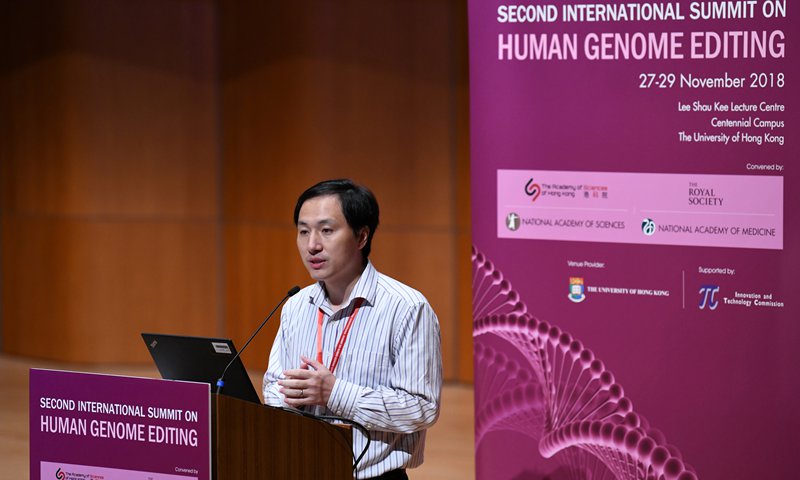
Chinese scientist He Jiankui presents his gene-editing experiment at the Second International Summit on Human Genome Editing in Hong Kong on Wednesday. Photo: AFP

China released a national regulation on ethics reviews of life sciences and medical research involving humans, which experts take as a “landmark document” since the illegal human genome editing case by the controversial scientists He Jiankui in 2018.

Life sciences and medical research involving humans includes research activities using humans’ biological samples and data to conduct research activities involving reproduction, growth, development and aging through physical, chemical, biological and traditional Chinese medicine methods. 

It also covers experiments on human bodies with new technologies or new products, according to the regulation released on the website of the National Health Commission (NHC) on Monday.  

Compared with the previous version released in 2016, the newly revised regulation expands the application scope from only medical institutes to colleges as well as scientific research institutes and clarifies regulatory duties of various related authorities, according to an explanation on the document by the NHC.

It also allows institutes that had not set up ethics review commissions to entrust a capable commission to conduct ethics reviews. Companies can also entrust a capable commission to conduct ethics reviews or supervision of a project. 

The new regulation also gives detailed rules on the specific steps of the ethics review.    

It stressed that ethics review commissions should regularly conduct reviews of life sciences and medical research involving humans and organize educating and training sessions for related research fellows, students and management personnel. 

Ethics reviews should also be carried out timely under an emergency situation. For example, during the outbreak of an epidemic, such reviews should be conducted within 72 hours, with equal requirements in normal times. 

Life sciences and medical research involving humans should be of scientific and social value and special attention should be paid to the research concerning fertilized eggs, embryos, fetuses or those that could be affected by assisted reproductive technology, the regulation noted.  

Experts reached by the Global Times hailed the new regulation, saying it is a “landmark regulatory document” since the illegal human genome editing case by the controversial scientist He Jiankui in 2018. 

In 2018, He, a genome-editing researcher at the Southern University of Science and Technology of China in Shenzhen, Guangdong Province, shocked the world as he claimed to have created the world’s first genetically modified humans.

He was sentenced to three years in prison in December 2019 for illegally conducting human embryo gene-editing intended for reproduction. He was reportedly released from prison in April 2022.

He made a high-profile comeback in early February as he attended an academic seminar focusing on the social values of CRISPR technology, sparking heated discussion on the ethical issues of scientific development. 

He caught public attention again last week as the Immigration Department of Hong Kong Special Administrative Region on February 22 invalidated the Top Talent Pass visa it had issued to He for “false statements” less than a day after He told media he had obtained the visa. 

Virginia Republicans Vote Against Apology for Misusing Black Bodies for Medical Research, Citing ‘No-End’ to Number of Amends Needed

Virginia lawmakers have decided not to move forward with legislation that would officially apologize for the state-sanctioned misuse of Black body parts over the past two centuries.

As far back as the 1800s, Old Dominion allowed medical professionals to conduct research on African-American bodies, living and dead, without their or their family’s permission. Some politicians were hoping in vain the state legislature would own up to exploitation.

However, on Friday, Feb. 17, the Rules subcommittee of Virginia’s House of Delegates voted 4-1 to lay SJ 274 on the table. This act, according to the Virginia Mercury, indefinitely killed the resolution.

Virginia House Speaker
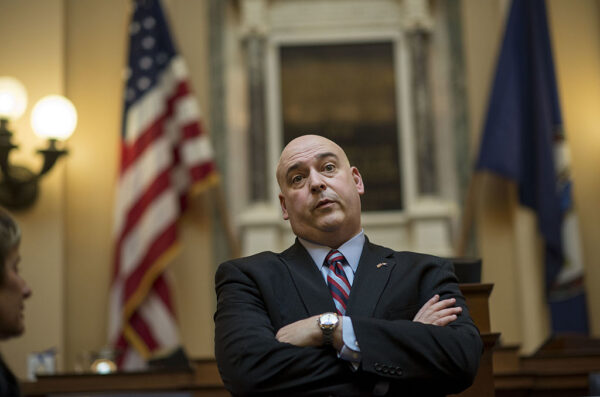
RICHMOND, VA – FEBRUARY 3: Delegate Todd Gilbert, left, a Virginia republican representing the Shenandoah district, talks to fellow delegates on the House floor of the Virginia State Capitol in Richmond, Virginia, Monday, February 3, 2014. (Melina Mara/The Washington Post via Getty Images)

Four Republicans among the subcommittee’s five members, House Majority Leader Terry Kilgore, Speaker Todd Gilbert, Del. Barry Knight, and Del. Kathy Byron, shut it down.

Titled “Unethical use of Black bodies by medical institutions; acknowledging with profound regret,” the bill was introduced by Democratic Sen. Jennifer B. Boysko of Fairfax.

During her presentation of the bill, she said it was important to acknowledge the past wrongs perpetrated by the government in order to heal wounds created by those wrongdoings.

Gilbert, one of the Republicans who voted against the resolution, said during the meeting, “I feel like there are thousands upon thousands of equally painful and hurtful and regrettable stories that could be told about how we treated one another, how Black Americans were treated for a very long time in this country. And I just worry that there’s no end to these resolutions, and maybe that’s the intent, I don’t know.”

One example of this was when the Medical College of Virginia hired grave robbers to steal Black bodies for medical experimentation in the 1800s when they did not have cadavers available for research.

“But certainly,” he continued. “If it helps for me to acknowledge that fact, that there are these many, many hurtful, painful memories and events and actions that hurt so many people, you know, I’m doing that publicly right now.”

“I just don’t know in the way of legislation how we contribute to that healing by acknowledging one or two a year at a time. That’s my main concern,” he concluded.

After the bill was not affirmed, Boysko said, “I think it’s important that we address problems so we can move forward collaboratively. We know there are Black people who live in Virginia and around the country who are suspicious of health care because of what has happened in the past.”

Adding, “Our bill would have at least admitted that and given people a small peace of mind.” 

Phillip Thompson, the former president of the Loudoun NAACP, believed the resolution would pass because it was supported by many in the senate already, unanimously being passed in that branch of government. However, the House of Delegates proved to be a barrier to the measure.

He said, “I thought it had a chance because it’s a very innocuous bill. We weren’t asking for reparations, nothing like that; we just wanted a real apology.”

Thompson also added that he believes it was so difficult to persuade African-Americans to get the COVID-19 vaccine because of the mistrust born out of the nation’s history of medical mistreatment, including The Tuskegee Experiment.

From 1932 to 1972, about 400 African-American men with syphilis participated in The Tuskegee Study of Untreated Syphilis in the Negro Male by the United States Public Health Service

According to the Centers for Disease Control and Prevention, the study initially involved 600 Black men (399 with syphilis, and 201 who did not have the disease). Participants were told they were being treated for “bad blood” but never had informed consent collected.

Despite being in the study, which looked at the sexually transmitted disease, anemia, and fatigue, the men were never offered penicillin to treat their syphilis. Instead, for research purposes, they were allowed to suffer.

“When the COVID vaccines first came out in my community, a lot of African-Americans didn’t want to take those vaccines because they thought that it was like the Tuskegee experiment,” Thompson explained. “Back in the ’30s and 40s, young kids were told don’t stray too far because the body snatchers will get you.”

Boysko explained in her bill presentation that this kind of warning was plausible.

She reminded the group that in April 1994, nine of the 53 bodies discovered in Richmond’s East Marshall Street Well dug up on Virginia Commonwealth University’s MCV Campus were discovered to be mostly from Black children. The human bones found at the well are believed to have been discarded in the 1800s by medical staff.

“Many of us still don’t trust the system, and when you look at history, that distrust is justified,” Thompson said.

In September, Virginia Commonwealth University formally apologized for its discarding of Black bodies after dissections. It also issued an apology to the family of Bruce Tucker, a Black Virginia laborer whose heart was removed after his condition was deemed too severe in 1968.