Tackle systemic racism to diversify health care and clinical research

Tackle systemic racism to diversify health care and clinical research

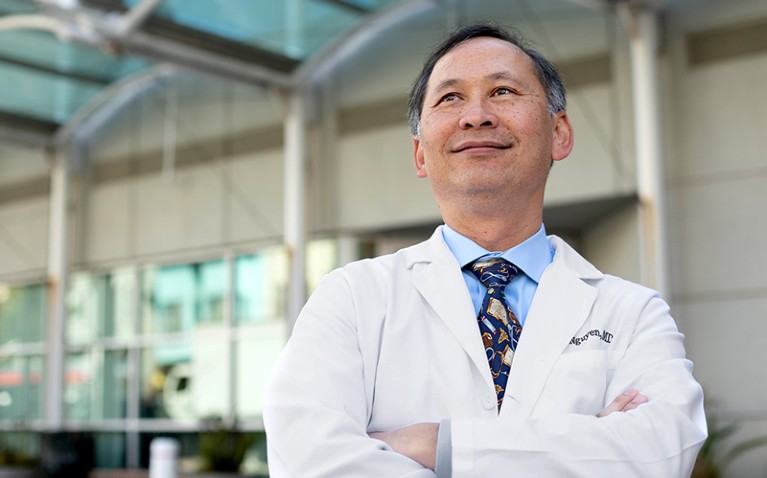
Health-equity researcher Tung Nguyen guides several anti-racism efforts at the University of California, San Francisco.Credit: Susan Merrell

Decolonizing science

Science is steeped in injustice and exploitation. Scientific insights from marginalized people have been erased, natural-history specimens have been taken without consent and genetics data have been manipulated to back eugenics movements. Without acknowledgement and redress of this legacy, many people from minority ethnic groups have little trust in science and certainly don’t feel welcome in academia — an ongoing barrier to the levels of diversity that many universities claim to pursue.

In the next of a short series of articles about decolonizing the biosciences, Tung Nguyen, who was appointed associate vice-chancellor for research inclusion, diversity, equity and anti-racism at University of California, San Francisco (UCSF) in September, offers advice for reforms in health research. Nguyen, a health-equity researcher who is also the director of the UCSF Asian American Research Center on Health, says anti-racism efforts start with engaging underserved communities and nurturing diverse trainees in health research and health care.

I studied medicine because I didn’t see health care and health research addressing the needs of the Asian community in the San Francisco Bay area — the part of California where I moved, as an 11-year-old non-English speaker, when my family emigrated from Vietnam. For the past 20 years, I’ve been doing health-equity research, focusing on cancer interventions.

In this country, the health-research world has many aspects that are anti-Asian. A lack of data on one racial identity is always a sign of racism because it essentially means that a portion of the population is invisible. For example, we know that about one-third to one-half of Asian Americans don’t speak English well enough to take a medical survey conducted in English. The ‘Asian’ responses to such a survey will include only English speakers; in addition, all of the ‘Asian’ respondents will be lumped together, despite the diversity of Asian cultures.

Lack of urgency

Although some institutions are trying to hire diverse candidates, there is a fundamental lack of urgency when it comes to addressing systemic racism. The issues I’ve mentioned are all structural problems. I think that there can be no systematic change without engaging everyone involved — from medical-department heads to members of the communities that institutions purportedly serve.

In 2020, my colleagues and I created an anti-racism task force at the University of California, San Francisco. Using a community-engagement approach, we convened a committee of 25 members, including institutional and community leaders, staff, faculty members and trainees. Over the course of a year, we solicited information throughout the university and produced a report with 160 recommendations — ranging from funding for research that investigates the structures that sustain racism, to conducting more community engagement in scholarship.

Most institutions are too top-down. I’ve learnt that the academic hierarchy is a basic challenge to doing equity work on campuses. White men tend to be over-represented among faculty members, whereas non-faculty staff members tend to include more women and under-represented minority groups. We make sure the staff and faculty members meet and are mindful of — and acknowledge — the power dynamics that exist. Otherwise, our efforts wouldn’t be inclusive.

To better diversify recruitment of study participants, in 2021, my colleagues and I created the Research Action Group for Equity, or RAGE — an acronym we deliberately chose because we are angry about the lack of minority-health data and participation, and we want to make things uncomfortable for the powers that be. RAGE works with the UCSF Clinical & Translational Science Institute to make sure that recruitment is an inclusive process. We engage community leaders who are bicultural or bilingual to provide translation support or address cultural concerns.
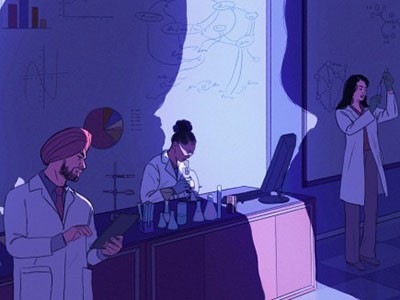
If my colleagues and I can diversify the health-care workforce at UCSF, we can definitely improve the economic status of diverse communities as well as the reach of biomedical research into those communities. We have a US National Institutes of Health BUILD award to address the lack of diversity among biomedical researchers. If you want minority students and trainees, you have got to go to where they are. In our case, we recruited trainees from San Francisco State University, a Hispanic-focused, minority-serving institution. We trained these junior research and health professionals to become, for example, clinical research coordinators to manage studies and conduct experiments.

This expands the job opportunities available to these trainees and diversifies participation in research. But when people talk about efforts to increase the numbers of early-career scholars from diverse backgrounds, I hate the term ‘pipeline programme’. ‘Pipeline’ implies that you have to fit into a pipeline to begin with and you come out the other end, where the system wants you to come out. Furthermore, if the pipeline is producing a steady stream of talented PhDs from under-represented communities but the system does not increase the number of senior roles these people hold, it’s not a pipeline problem. Instead, it’s a dam problem — pun intended; there are structural barriers to workplace diversity that need to be removed.

UCSF has its own continuing challenges in terms of anti-racism efforts, but the institution has been transparent. It has a dashboard that highlights racial, ethnic and gender diversity among faculty members, staff and trainees. The situation fluctuates, and the numbers have never been great for typically under-represented groups in medicine, such as Black and Hispanic people. But it’s important that the problem be visible so that we can actually improve.

It’s frustrating that successful diversity, equity and inclusivity programmes often don’t get sustained. Under-represented groups are used to people coming in with money and then leaving. I have helped to develop the AEIOU principles, which will be the foundation of my work as the newly appointed associate vice-chancellor for research inclusion, diversity, equity and anti-racism. A is for accountability and anti-racism, E is for engagement, I is for individual-centred institutional change, O is opportunity, and U is unity. These principles are key to making progress against racism. The system has to change for under-represented groups to be successful, and that requires an increase in opportunities. Oppressive structures maintain oppression by making people perceive a zero-sum game — if someone wins, someone else has to lose. To increase diversity, equity and justice, we need to quit pitting one group against another.

This interview has been edited for length and clarity.

What medical mysteries can teach us about getting better health care

Comment

You are reading our weekly Well+Being newsletter. Sign up here to get it delivered to your inbox every Thursday.

Who doesn’t love a good mystery?

For 15 years, medical reporter Sandra G. Boodman has chased down the most unusual, quirkiest and weirdest medical cases for her monthly Medical Mysteries series. Recent stories have focused on a teenager who couldn’t wake up, a woman wrongly diagnosed with ALS, and an entire family and guest felled by a strange flu-like illness.

I checked in with Sandra to find out more about how she writes the column and the lessons we can learn from it.

Here’s our edited conversation.

Q. How do you choose your ideas?

A: It has to be something I haven’t written about. It has to be a solved case. I need to know the ultimate diagnosis. Even though it’s a solved case, there has to be a mystery. And there has to be a human story.

Q. Once you pick a case, how do you report it?

A: I ask for a chronology of events and medical records that confirm the diagnosis. The medical records and chronology enable me to see whether, indeed, this is a mystery, whether it unfolded in an interesting way. Will this be an interesting case?

Then, I interview the patient, sometimes the parent, sometimes the spouse. The last step is to talk to the doctor who made the diagnosis or the current treating physicians. Any step along the way, the process can fail.

Q. Do you write about unsolved cases?

A. No, it has to be a solved case. A lot of people write to me and say, “I have this problem, can you help me?” Unfortunately, that’s not what I do. I did once write about a lawyer in Detroit who had gone to the undiagnosed-disease program at the National Institutes of Health. He’s seen more than 100 doctors and still doesn’t have an answer. But I thought his case was so unusual and interesting, I did make an exception that time.

Q. What are some of your most memorable medical mysteries?

A: I wrote about a family that kept getting recurrent strep throat. They couldn’t figure it out. An enterprising veterinarian got involved. It turned out their cat may have been the vector. When they finally treated the cat, nobody has had strep.

One of the weirder ones — there was a woman who had serious kidney and heart problems. It turned out she was eating too much licorice. That was really odd.

And I still vividly remember a State Department worker who had terrible itching on her head at night. She had even been worked up for a type of cancer. She had seen multiple dermatologists. It turned out she had head lice for an entire year. How did they miss that? That was really stunning.

Q. What have you learned about the medical system from writing about medical mysteries?

A. Medical care has become increasingly specialized. Doctors are familiar with a small slice of what’s going on, yet diagnosis is an inherently complex process. I also think time pressures are worsening. It’s like: “You’ve got 10 minutes. Go.” That’s not going to work with a complicated problem.

I also think sometimes patients are not good at describing the problems. The people who tend to do better are organized and can describe their symptoms in a way that is intelligible for a doctor.

Q. What’s your best advice to patients for getting better medical care?

A. Primary-care doctors can really help a patient. I often see people who go right to specialists. They may not have a primary-care doctor, or they use urgent care when they’re sick. That can be problematic. People really undervalue the role of a good primary-care doctor.

Sign up for the Well+Being newsletter, your source of expert advice and simple tips to help you live well every day

The 2022 Well+Being Gift Guide

Need a gift idea? The Well+Being team shared our favorite finds for cooking, exercising, spending time at home, improving our mental health, presents for your pets and more.

Some gifts are practical and affordable; others are definite splurges. I just bought air fryers for my family members because our Eating Lab columnist Anahad O’Connor recommended it. Runners will appreciate the perfect running shorts recommended by fitness writer Kelyn Soong. Amanda Morris, who writes about disability, suggested hearing-aid jewelry. Reporter Teddy Amenabar has found the perfect traveling coffee mug.

There are lots to choose from, and every item brought us closer to living healthy, fulfilled lives. We hope they do the same for you and your loved ones this year.

Please let us know how we are doing. Email me at wellbeing@washpost.com.

Jay Leno gives health update as he’s seen behind the wheel for first time after being released from hospital

Jay Leno was in his happy place once again as he was spotted for the first time cruising down the street in a silver 2002 Mercedes-Benz just one day after being released from the Grossman Burn Center.

Leno was released from the West Hills hospital on Monday after a 10-day stay where he received multiple surgeries for third-degree burns to his face, chest and hands from a fire that broke out at his garage in Burbank.

“Everything’s OK,” Leno said while laughing. He admitted that he’s ready to go back to work, too, and will be “performing Sunday at the Comedy Magic Club.” When told to get some rest, Leno quipped, “Yeah, I need barbecue.”

Leno looked completely at ease driving down the street despite the traumatic event nearly two weeks ago when he was sprayed with gasoline while working on one of his vintage vehicles and a fire ignited, causing serious damage to his body.

JAY LENO REVEALS BURNS FROM FIRE, RELEASED FROM HOSPITAL

Jay Leno gives health update as he’s seen behind the wheel for first time after being released from hospital

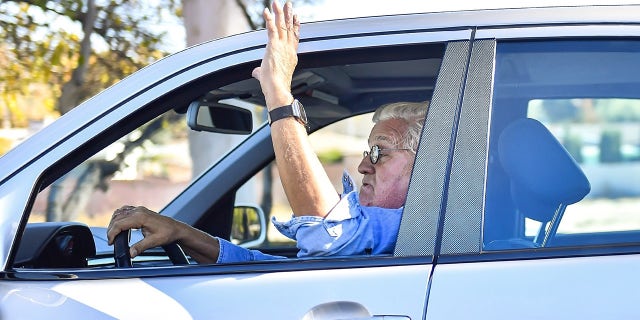
Jay Leno shows scarred marks on his hands and face while driving a silver Mercedes in Los Angeles on Tuesday, Nov. 22, 2022.
(The Mega Agency / BACKGRID)

The car connoisseur had burns across the left side of his face and showed had deep scabs on his hands as he held onto the steering wheel while on a joyride in L.A.

JAY LENO’S DOCTOR GIVES UPDATE AFTER HE SUFFERED ‘SERIOUS BURNS’ IN GASOLINE FIRE

He wore a pair of black circular glasses and his trademark blue denim long-sleeve over a white T-shirt as he cruised down the street with his windows rolled down.

Dr. Peter Grossman was “optimistic that he will make a full recovery” and said in a release provided to Fox News Digital that he was “pleased with Jay’s progress.”

Jay Leno held his arm out of the car window while on a joyride one day after leaving the burn center.

Jay Leno held his arm out of the car window while on a joyride one day after leaving the burn center.
(The Mega Agency / BACKGRID)

Jay Leno gets behind the wheel of a 2002 Mercedes-Benz one day after leaving the burn center.

Jay Leno gets behind the wheel of a 2002 Mercedes-Benz one day after leaving the burn center.
(The Mega Agency / BACKGRID)

“Jay would like to let everyone know how thankful he is for the care he received, and is very appreciative of all of the well wishes,” the Grossman Burn Center said in a statement.

JAY LENO ‘SPRAYED WITH GAS’ WHEN STEAM CAR IGNITED AT BURBANK GARAGE; FIRE OFFICIALS RESPONDED TO EMERGENCY

“He is looking forward to spending Thanksgiving with his family and friends and wishes everyone a wonderful holiday.”

Leno had at least two surgeries while at the burn center, one was a “surgical excision and grafting procedure.” He also required the use of a hyperbaric chamber to help provide better blood flow and decrease bacteria.

Jay Leno was spotted on a trip around town, his first sighting in public since a traumatic car fire.

Jay Leno was spotted on a trip around town, his first sighting in public since a traumatic car fire.
(The Mega Agency / BACKGRID)

Jay Leno sustained minor injuries from a car fire last week, and was easing back into normal life.

Jay Leno sustained minor injuries from a car fire last week, and was easing back into normal life.
(The Mega Agency / BACKGRID)

Beverly Hills Dermatologist Dr. Jason Emer told Fox News Digital it is “essential to do immediate treatment to protect the skin barrier and help it repair itself” following injuries sustained similar to Leno’s burns. “In this case, when you have a true burn on the skin with pigmentation issues and textural damage, you need skincare plus aggressive laser treatments and at home LED light therapy.”

CLICK HERE TO SIGN UP FOR THE ENTERTAINMENT NEWSLETTER

He noted that a combination of “deep microneedling radio frequency to stimulate new collagen production” combined with “skin barrier repair and pigmentation blending” could benefit a burn victim.

“These treatments, in combination, would treat the skin at every level and help it remodel to normal, fresh, healthy skin over time,” Emer said.

Burbank Fire Department Battalion Chief Dave Burke released an incident report to Fox News Digital that revealed officials responded to the “emergency medical call” on Saturday, Nov. 12 at 12:28 p.m.

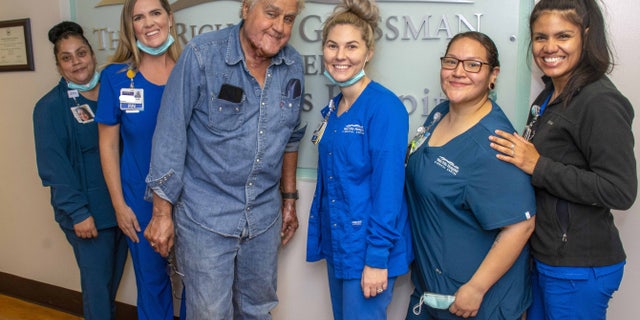
Jay Leno is shown saying goodbye to the Grossman Burn Center care team.

Jay Leno is shown saying goodbye to the Grossman Burn Center care team.
(Grossman Burn Center)

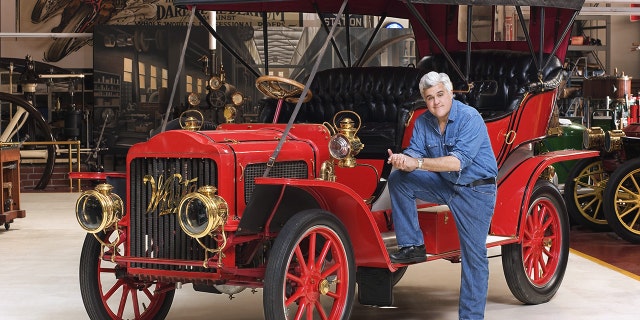
Jay Leno has hundreds of rare and vintage cars, and posed with a 1908 steam car.

Jay Leno has hundreds of rare and vintage cars, and posed with a 1908 steam car.
(Paul Drinkwater/NBCU Photo Bank)

Shortly after the incident, Leno said in a statement to Fox News Digital, “I got some serious burns from a gasoline fire. I am OK. Just need a week or two to get back on my feet.”

CLICK HERE TO GET THE FOX NEWS APP

Leno has long been a connoisseur of car culture. He worked as a mechanic while rising through the ranks as a stand-up comedian, and he now owns more than 280 unique vehicles.

The impressive collection of rare, antique and vintage cars is reportedly worth from $50 million to $100 million, but estimates vary due to predictions in what some rare cars could sell for. On “Jay Leno’s Garage,” Leno chats with car enthusiasts about favorite makes and models, in addition to showing off his prized collection of cars, motorcycles and all-terrain vehicles.

Fox News Digital’s Larry Fink contributed to this report.

Ask Amy: Wonderful health care professional has patient wishing they could be friends

Dear Amy: I am a happily married, 54-year-old woman. I have a great primary medical provider.

“Rebecca” is a nurse practitioner in a large practice. I’ve been going to her for about four years.

Rebecca is personable, interesting, authentic, and has an easy and fun sense of humor. She asks about my family, vacations, etc., and seems to just be a good person.

From day one, I leave every medical appointment wanting to be friends with her. We just seem to have a compatible energy and sort of “click.”

At my most recent pre-op appointment, she greeted me with a huge smile and a very enthusiastic, “I’m SO glad you’re finally able to have this surgery! I’m SO happy for you!”

I have no idea if this is just her typical “bedside manner,” but I was quite touched.

I have a good group of girlfriends, and I deeply value friendship as one of life’s great joys.

If Rebecca were not my doctor, I would invite her to coffee, and be open to either making a new friend – or not.

But given the boundaries of this relationship, is there any way to figure out if we could be friends, or if this is just how she is with all her patients?

And ethically, CAN a doctor and patient become friends?

If so, it would be worth switching to a different provider in the practice, but I don’t want to make that switch for nothing.

– What’s Appropriate?

Wellness Checked

Dear Checked: The most “appropriate” and ethical stance is for everyone to stay in their boxes; “Rebecca” remaining your excellent and humane health care provider, and you remaining her grateful patient.

The warm personal rapport you two share enhances your medical care: you feel comfortable and communicate well – she obviously listens, remembers details about your life, and cares about you.

Despite the standard of maintaining boundaries, practitioners and patients do step out of these boxes because they are human beings and sometimes human beings just click. The OB who delivers the premature baby becomes a family friend; the oncology nurse administering chemo connects with a survivor.

Making a bid for friendship with your health care provider is somewhat risky because doing so might shift the dynamic between you.

If you want to take a stab at friendship outside the office, do not ask her for coffee (that’s a little too intimate).

Contact her via email (not through the patient portal), and invite her to a group event along with other friends – a fundraiser, hike, or performance.

She can then accept or demur based on her own comfort-level, and your professional rapport will be preserved.

Dear Amy: My mother-in-law and I have not always seen eye-to-eye on everything, but we are cordial and appreciate one another.

As the grandkids have gotten older and there is less of a reason to communicate, I find I am unsure when or if to call her.

When I have called in the past to chat, she seems happy to talk to me, but she never calls me.

I feel like I should assume if she never calls me, she must not want to talk to me. In fact, once when she was going through a tough time, she actually told me that I didn’t “need” to call her.

However, she lives alone and is getting older, and I occasionally wonder how she is doing.

I do remind my husband to call from time to time, and he does.

We see her in-person once every month or two, and she has other family members and friends who live closer and see her more frequently.

– Unreturned Caller

Dear Caller: I think these calls you make are important – even if you always initiate. As she gets older, they will be vital ways to check in.

Your mother-in-law may be shy, or a little intimidated. Some people have an actual aversion to making telephone calls – it’s a sort of inertia that can be hard to overcome. From what you write, it seems that she also doesn’t call her son. Keep it up; it’s the right thing to do.

Dear Amy: “Concerned in Suburban Chicagoland” wrote that her 13-year-old daughter burst out laughing and left the room when these parents told her that they were divorcing.

I thought I was the only teen who laughed at the worst possible moment. When my folks dramatically told me my grandmother died, I burst out laughing.

A short time later I realized that this weird response was mainly because I was overwhelmed. I still miss Nana.

— Missing Her

Dear Missing: Laughing in response to loss seems strange, but it does happen.

You can email Amy Dickinson at askamy@amydickinson.com or send a letter to Ask Amy, P.O. Box 194, Freeville, NY 13068.

13 Foods You Should Eat for Optimal Kidney Health

Think of your kidneys like filters that rid your body of all the things you don’t want. These two fist-sized, bean-shaped organs filter your blood. In doing so, they remove toxins and excess fluids while keeping your levels of potassium, sodium and more in check. At the same time, they produce hormones that help to regulate everything from your blood pressure to your bone strength. Long story short: Your kidneys do a lot. 

So much, in fact, that they can get overtaxed. Roughly one in seven Americans has chronic kidney disease, which can cause waste and fluid buildup in your body. Worse yet, most people with CKD don’t know they have it. 

Poor eating habits heighten your risk for CKD. But when you eat the best foods for your kidneys, the reverse can be true. Since certain foods are good for kidneys, what you eat can help to protect your kidney health. 

Best foods for healthy kidneys

These are our top picks for foods to add to your diet for optimal kidney health.

1. Fatty fish 

Fish delivers protein, and when you choose a fatty fish like tuna, salmon or trout, you’re also getting omega-3 fatty acids. According to the National Kidney Foundation, omega-3 fats may help reduce fat levels (triglycerides) in the blood and may also lower blood pressure.

If you have CKD, you may need to keep an eye on the phosphorus and potassium levels of the fish you choose. The National Kidney Foundation has a chart you can use to determine levels in specific types of fish. Although, it’s best to consult with your doctor.

2. Cabbage 

This nutrient-dense vegetable is low in both potassium and sodium while packing in fiber, vitamins C and K and more. 

Plus, cabbage is versatile. You can use it in salads and slaws, but you can also use it as a wrap for tacos, sandwiches and more. 

3. Bell peppers 

Like cabbage, bell peppers pack in lots of good nutrients with low levels of potassium. With them, you get vitamins B6, B9, C and K, plus fiber. And they deliver antioxidants, too. 

You can slice them and eat them with dips or roast them up and add them to dinner. 

Red bed pepper on cutting board with hands and knife slicing it

Jacobs Stock Photography/Getty Images

4. Cranberries 

Cranberries help to prevent urinary tract infections. While these usually stay in your bladder, they can travel up to your kidney, making kidney problems worse. Fortunately, regularly consuming cranberries can help you avoid this unwelcome situation. 

Plus, cranberries have antioxidants that can help to fight inflammation, and they can boost your heart and digestive health. It turns out, these tart berries aren’t just for the Thanksgiving table. 

5. Blueberries 

We’ve talked about some of the best foods for kidneys, but you can take it a step further. The question is: what foods help repair kidneys? Blueberries deliver here. 

With high levels of antioxidants and loads of vitamin C and fiber, blueberries are all-around healthy. They can also help to reduce inflammation and support bone health, reversing some of the issues that can come with CKD. 

6. Dark, leafy greens 

Still wondering what foods help repair kidneys? You can turn to dark, leafy greens like spinach or kale. They deliver so many nutrients that they can help you get key vitamins and minerals, plus immunity-boosting benefits. 

Be advised, though, that greens can come with a decent amount of potassium. If you have CKD, talk to your doctor before adding more of these to your diet. 

7. Olive oil

Rich in antioxidants and healthy fatty acids, olive oil can boost your overall wellness. A study from the University of Harvard, found that olive oil may lower cholesterol levels and the risk of cardiovascular disease, dementia and some types of cancer.

Beyond all this, it can help you add flavor to dishes without turning to salt or butter. 

To get more antioxidants, choose unrefined or cold-pressed olive oil that’s virgin or extra virgin. 

8. Garlic 

Another antioxidant-rich, inflammation-fighting food, garlic also contains a specific compound called allicin. For people with CKD, allicin — an active compound found in garlic — worked just as effectively to help protect kidney health as a prescription drug. If you’re looking for the best foods for kidneys, garlic has to make the list. 

Plus, it’s an excellent way to add flavor even when you’re skimping on salt. 

9. Onions 

From the same family as garlic, onions give you another excellent and salt-free way to add flavor (bonus points if you saute them in olive oil). Onions also deliver important nutrients like vitamins B6 and C, manganese and copper. 

They also contain quercetin, a chemical that can help your body fight cancer, and organic sulfur compounds that can reduce your risk of high blood pressure, stroke and heart disease. 

10. Cauliflower 

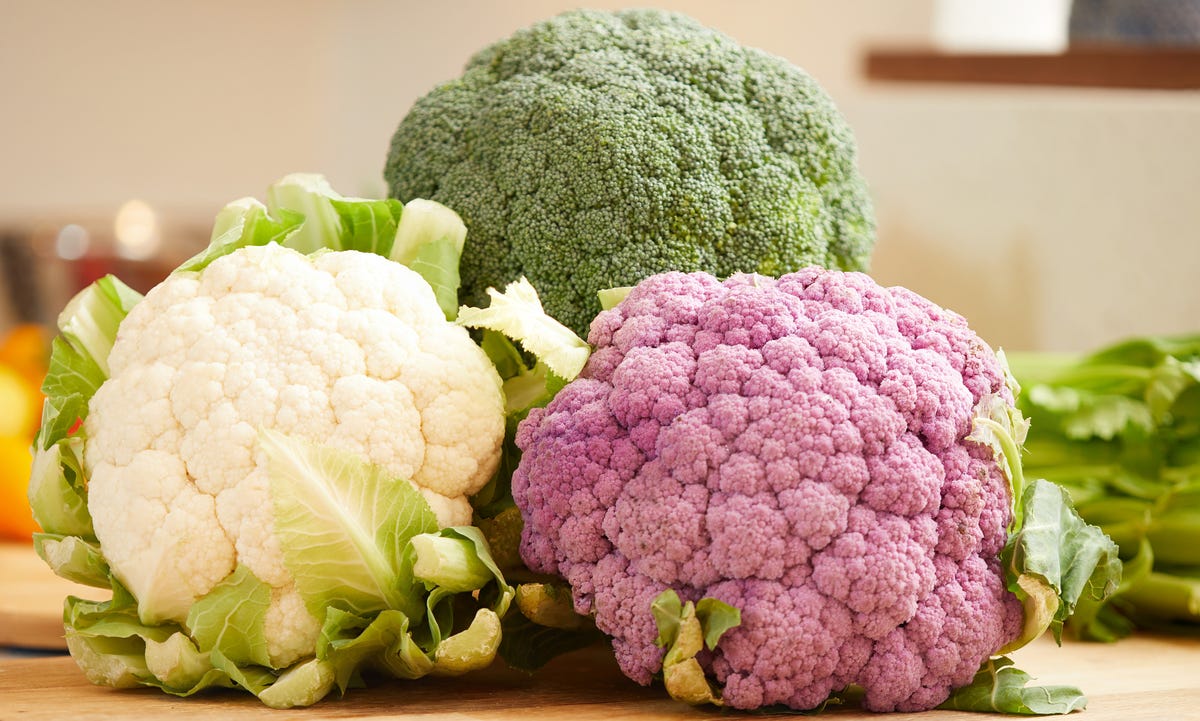
Cauliflower brings the crunch, paired with plenty of vitamins C, B6, B9 and K, along with fiber. It also contains compounds your body can use to neutralize certain toxins — a big help when your kidneys aren’t doing their best filtration work. 

Cauliflower does contain some potassium and phosphorus, though, so while it makes the list of foods good for kidneys, people with CKD may want to moderate their intake. 

Green, white and purple cauliflowers on cutting board

Thanasis/Getty Images

11. Egg whites 

Egg whites are specifically recommended for people with kidney problems. They give you a way to increase your protein levels — which can be especially important with later-stage CKD, and especially if you’re on dialysis. 

12. Arugula 

Arugula is packed with nutrients your body needs like magnesium, iron, calcium and vitamins A, B9, C and K. Plus, it’s antioxidant-rich and has glucosinolates, which can help your body protect itself against a range of cancer types. 

You can eat arugula raw (it’s a great salad base), but you can also sprinkle it over whatever you’re whipping up. It’s great on pizzas, in omelets and in pastas, for example. 

13. Apples 

Apples deliver the cancer-fighting quercetin and fiber that can help to keep your cholesterol and blood sugar at healthy levels. And they’ve got plenty of antioxidants. 

Better yet, they’re easy to work into your diet. Leave a bowl of apples on your counter and you’ll have a kidney-healthy grab-and-go snack whenever you need one. 

The information contained in this article is for educational and informational purposes only and is not intended as health or medical advice. Always consult a physician or other qualified health provider regarding any questions you may have about a medical condition or health objectives.

people’s health cannot be held hostage

This winter will be life-threatening for millions of people in Ukraine. 

The devastating energy crisis, the deepening mental health emergency, constraints on humanitarian access and the risk of viral infections will make this winter a formidable test for the Ukrainian health system and the Ukrainian people, but also for the world and its commitment to support Ukraine. 

The country is facing a therma-crisis on top of a perma-crisis brought on by the war and the pandemic. 

Half of Ukraine’s energy infrastructure is either damaged or destroyed. This is already having knock-on effects on the health system and on people’s health.

Put simply, this winter will be about survival.

WHO has so far verified 703 attacks on health since the war began 9 months ago. This is a breach of international humanitarian law and the rules of war. 

Continued attacks on health and energy infrastructure mean hundreds of hospitals and health-care facilities are no longer fully operational – lacking fuel, water and electricity to meet basic needs.   

Maternity wards need incubators; blood banks need refrigerators; intensive care beds need ventilators; and all require energy. 

To focus the world’s attention on this situation is why I am here on my 4th visit this year and just days after the largest wave of missile strikes across the country – to meet officials, health workers and patients and offer WHO’s unwavering support to the Ministry of Health, to the government and to the Ukrainian people. 

And to express my gratitude and respect for Ukraine’s doctors, nurses and other health workers, who continue to show their heroism.      

What we know is that hundreds of thousands of premises across the country – including private homes, schools and hospitals – have no gas supplies, essential not only for cooking but also for heating. 

Today, 10 million people – a quarter of the population – are without power.    

Temperatures are predicted to plummet as low as -20 ˚C in parts of the country.

As desperate families try to stay warm, many will be forced to turn to alternative heating methods, like burning charcoal or wood, or using generators fuelled by diesel, or electric heaters. These bring health risks, including exposure to toxic substances that are harmful for children, older people and those with respiratory and cardiovascular conditions, as well as accidental burns and injuries. 

We expect 2–3 million more people to leave their homes in search of warmth and safety. They will face unique health challenges, including respiratory infections such as COVID-19, pneumonia and influenza, and the serious risk of diphtheria and measles in under-vaccinated populations.  

All of this is taking its toll on the mental health of Ukrainians. This week, the war enters its 9th month, and already some 10 million people are at risk of mental disorders such as acute stress, anxiety, depression, substance use and post-traumatic stress disorder, or PTSD. 

By training health-care workers on how to provide mental health services, WHO has so far reached 1400 people with severe mental health conditions across Ukraine.

Tens of thousands of psychosocial support and mental health consultations have been held for health-care workers and the general public, including by mobile mental health teams who go out to the community to offer care. This wouldn’t be possible without the tireless support of the First Lady, Her Excellency Ms Olena Zelenska, whom I thank for our meeting earlier today. 

I have also met with the Prime Minister, His Excellency Mr Denys Shmyhal, and the Minister of Health, Mr Viktor Liashko, with whom I discussed energy supply, preparing for the winter, and perhaps most crucially, meeting critical health needs in both newly regained and occupied areas.   

And this brings me to my next point – humanitarian access. 

The war has impacted both access to health-care and supply lines for the flow of humanitarian aid. Ukraine needs sustained resources to see the health system through the winter and beyond, points that will be high on the agenda at next month’s Ukraine Conference in Paris, under the leadership of President Macron and President Zelenskyy. 

I am very concerned for 17 000 HIV patients in Donetsk, who may soon run out of critical antiretroviral drugs that help keep them alive. I am urgently calling for the creation of a humanitarian health corridor into all newly regained and occupied areas. WHO and our partners are ready to mobilize at a moment’s notice. 

I reiterate my call on both parties to allow urgent humanitarian access to meet people’s health needs.

Access to health care cannot be held hostage.  

Finally, let’s not forget that people are more likely to acquire viral respiratory infections in the winter than other seasons. Like in the rest of Europe, the many sub-variants of Omicron are also circulating in Ukraine. However, with low basic vaccination rates, let alone boosters, millions of Ukrainians have waning or no immunity to COVID-19. Couple that with an expected surge in seasonal influenza and difficulties in accessing health services, and this could spell disaster for vulnerable people.

We are helping Ukraine’s health system prepare for the winter. This includes emergency repairs to health facilities and heating infrastructure, and energy maintenance. 

We are also providing prefabricated structures in newly regained areas, portable heating devices with fuel, survival blankets, diesel generators and ambulances. 

Ukraine’s health system is facing its darkest days in the war so far. Having endured more than 700 attacks, it is now also a victim of the energy crisis. It is being squeezed from all sides and the ultimate casualty is the patient. 

In the short term, we must find practical solutions that allow health-care services to continue through the winter as best as they can. But this is not a sustainable scenario. This war must end, before the health system and the health of the Ukrainian nation are compromised any further.