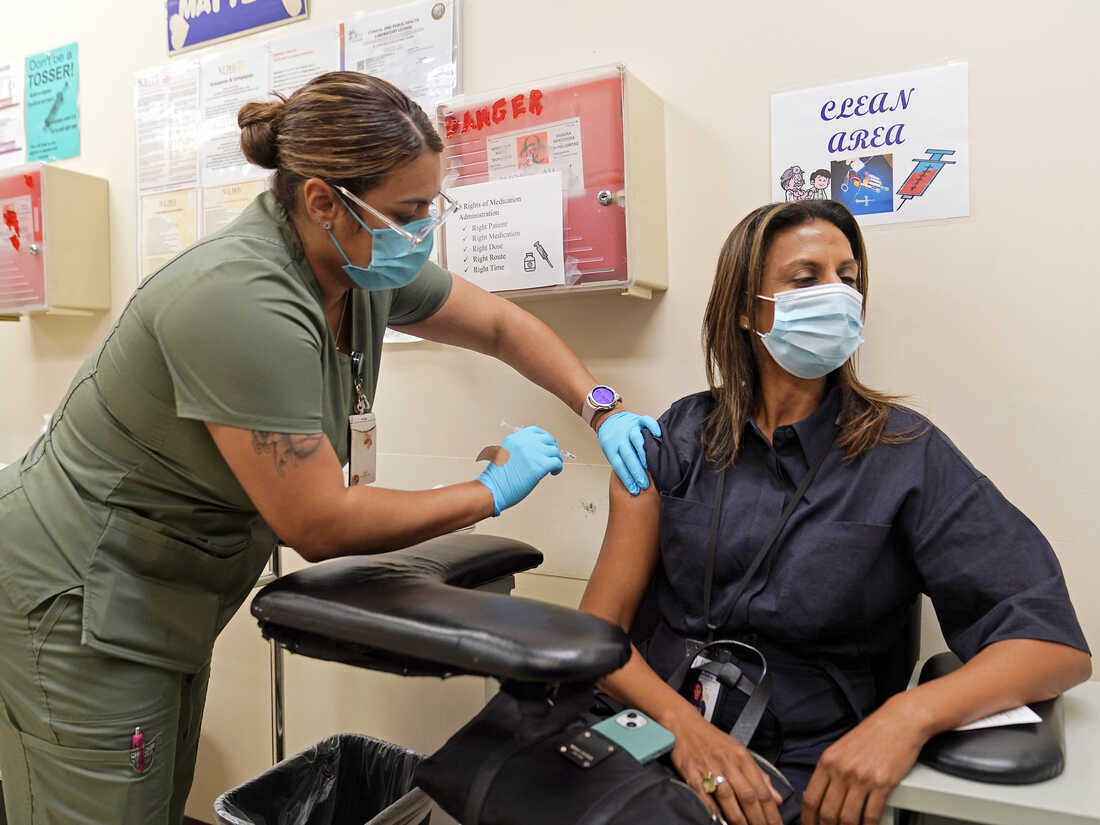
Millions of New Yorkers will feel health care change as COVID emergency ends. Here’s how.

Some federal pandemic-era policies that were put in place to make it easier to get health care and to minimize the spread of COVID-19 will get rolled back in the coming months. That will affect how New Yorkers access COVID-19 tests, health insurance, telehealth services and much more.

Most notably, millions of New Yorkers who were allowed to remain on Medicaid without scrutiny during the pandemic will be re-evaluated for eligibility starting in April. This move will restore a cycle of disenrollment and reenrollment that’s known to generate interruptions in health care among low-income communities. In New York state, some of the nearly 8 million enrollees will be kicked off of the public health insurance program by July, although state officials said many will likely qualify for other types of subsidized health coverage.

Free COVID-19 tests could also soon be harder to come by as insurance coverage requirements expire. President Joe Biden announced last week that he will allow the public health emergency around COVID-19 to end on May 11. The state of emergency was first declared under former President Donald Trump in January 2020 and has been renewed continuously ever since by the U.S. Health and Human Services Secretary.

A range of COVID-era policies were put in place and set to last only as long as the public health emergency was in effect – including the rule that health plans must cover the full cost of a COVID-19 test in most cases.

Along the way, federal policymakers added some safeguards to prevent these health care provisions from abruptly ending all at once. Some policies – including rules around Medicaid enrollment – have been decoupled from the public health emergency and will sunset on their own timelines.

“There was a concern that if this all happened at once, that could be even more disruptive,” said Cynthia Cox, director of the program on the Affordable Care Act at the health policy nonprofit KFF. “It’s still going to be the case that in the next year or so there will be a lot of changes to coverage, to access to care, and to cost.”

In some cases, state or local officials are stepping in to ensure that key resources are not cut off. For instance, as some insurance plans prepare to start charging patients for COVID tests, NYC Health + Hospitals and the city’s Test & Treat Corps have been working to expand the locations where people can pick up take-home tests for free.

Here’s what to expect as some of the pandemic-era health care policies are unwound.

COVID-19 testing and treatment

Free COVID tests were a centerpiece of the effort to minimize coronavirus spread by detecting cases early. Federal legislation passed in spring 2020 required health plans to cover most in-person testing without any patient copays, although some health care providers sought to get around those rules. As of January 2022, most plans also had to pay for members to get up to eight home testing kits per month.

When the public health emergency ends in May, private health plans and Medicare will no longer be required to cover the full cost of in-person or at-home COVID tests. Some plans may opt to restrict testing to in-network doctors or pharmacies, Cox said. Practically speaking, this means people with private plans will likely still have coverage for COVID-19 tests but may have to pay a copay or only go to certain health care providers.

Cox added that less insurance coverage for at-home tests might affect how widely available they are or how frequently they’re used. “If you’re not able to afford enough tests, then you might not be testing before you visit an elderly or vulnerable loved one,” Cox said. “Or you might not be testing your way out of COVID isolation or masking.”

New York’s Medicaid program will continue providing free at-home COVID-19 tests through September 2024, in accordance with federal guidance, said Cadence Acquaviva, a spokesperson for the state health department. She added that Medicaid will also continue to cover free in-person testing and did not specify an expiration date.

New Yorkers lineup to receive a free COVID-19 test kit in Bronx, Dec. 23, 2021.

Tayfun Coskun/Anadolu Agency via Getty Images

Free tests will still be widely available in New York City, though. Home testing kits are currently being offered at more than 280 walk-up sites, including libraries and rec centers. Those locations, along with in-person testing sites, are listed on the city’s COVID-19 testing page.

Paxlovid and other COVID-19 treatments that are purchased by the federal government will remain free for all patients as long supplies last, according to KFF. PBS reported that the medication could be transferred to the commercial market later this year. At least for now, New Yorkers who test positive for COVID-19 can get free home delivery of Paxlovid and other treatments by calling a city hotline at 212-268-4319.

COVID-19 vaccines

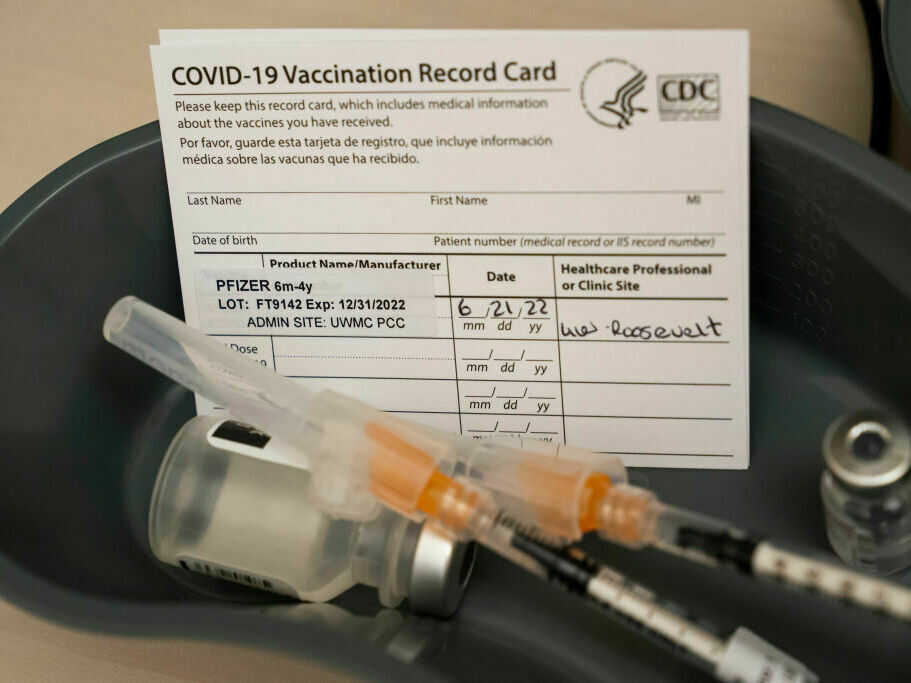
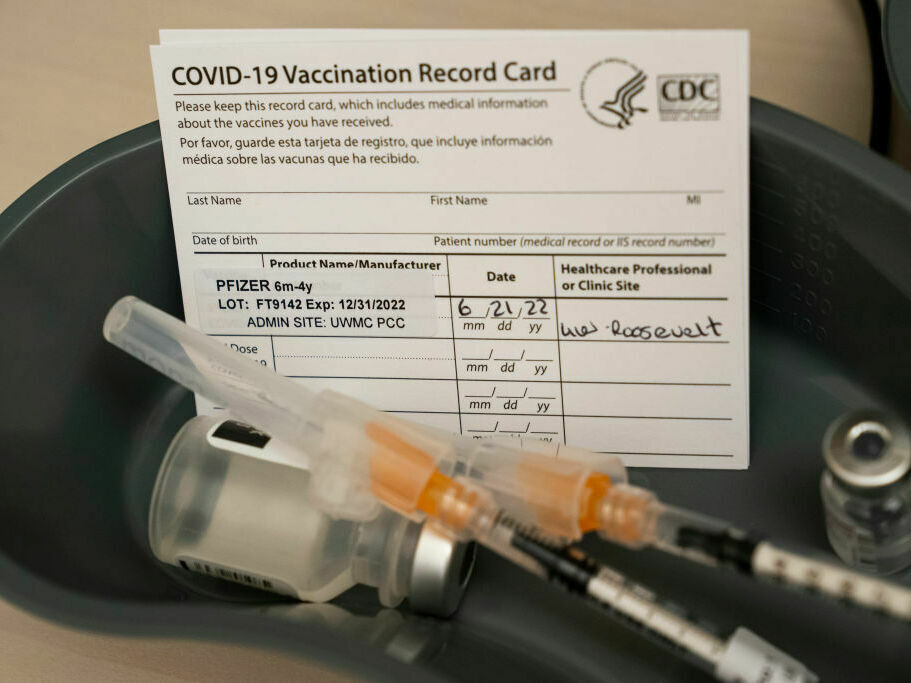
Vaccines will still be free for everyone, regardless of insurance status, as long as federal supplies last, according to KFF. Once the federal supply runs out, COVID vaccines will likely still be free under most health plans because of rules put in place under the Affordable Care Act. Those who are uninsured could start having to pay.

Medicaid enrollment

During the pandemic, many New Yorkers who lost jobs or income signed up for Medicaid, a largely free health plan for low-income residents. And many of those new enrollees were able to stay on the plan without facing an annual review of their eligibility.

That’s because New York took advantage of an increase in federal funding for Medicaid that was available on the condition that states refrained from terminating enrollment for most members or implementing any new restrictions on who qualified – a rule that foiled some of Gov. Andrew Cuomo’s plans to shrink Medicaid early in the pandemic.

As a result, the state’s Medicaid enrollment grew from 6.1 million members in March 2020 to 7.8 million members in December 2022 – a 27{bf0515afdcaddba073662ceb89fbb62b6b1bf123143c0e06b788e1946e8c353f} increase. More than half of this rise came from New York City, where enrollment jumped from 3.3 million to 4.3 million, according to data from the state Department of Health.

Then in December, Congress passed the Consolidated Appropriations Act of 2023, laying out a pathway for states to “unwind” both their continuous Medicaid coverage and their reliance on enhanced federal funding. The 6.2{bf0515afdcaddba073662ceb89fbb62b6b1bf123143c0e06b788e1946e8c353f} increase in federal matching funds for the program that was put in place during the pandemic will be reduced to 1.5{bf0515afdcaddba073662ceb89fbb62b6b1bf123143c0e06b788e1946e8c353f} by the end of this year.

The legislation indicated that states could begin moving people off Medicaid in April, but the New York State Department of Health said that’s when plans would first start reviewing people’s eligibility and New Yorkers wouldn’t begin losing coverage until July.

Gov. Kathy Hochul acknowledged in the executive budget that Medicaid enrollment is unlikely to drop back to pre-pandemic levels.

Eligibility checks will also start up again for the children enrolled in Child Health Plus, and those enrolled in New York’s Essential Plan, which provides free or cheap coverage to those with low incomes who don’t qualify for Medicaid.

Gov. Kathy Hochul acknowledged in the executive budget she released last week that Medicaid enrollment is unlikely to drop back to pre-pandemic levels. Last year, Hochul expanded eligibility by raising the income limits for seniors and people with disabilities and allowing undocumented immigrants over 65 to enroll.

“New York state has set forth a goal of transparent messaging that will minimize the number of New Yorkers at risk of losing their Medicaid, Child Health Plus, or Essential Plan coverage,” said Acquaviva, the state health department spokesperson.

She said the state aims to transition people who lose Medicaid coverage onto other plans, and many will likely still qualify for income-based subsidies.

Telehealth

Telehealth exploded during the pandemic, and the federal government put some policies in place to make it easier to provide and access. Some of those policies will end with the public health emergency, while others will be extended.

During the pandemic, the federal government said it would hold off on enforcing federal rules around patient privacy if health care providers violated them “in the good faith provision of telehealth” during the COVID-19 public health emergency. Health care providers have been allowed to use popular applications such as FaceTime or Zoom to provide telehealth services during the emergency, rather than being limited to technology that strictly complies with the Health Insurance Portability and Accountability Act, better known as HIPAA.

Regular enforcement of HIPAA compliance with regard to telehealth will resume when the public health emergency ends in May, according to KFF. That means the types of technologies that can be used to visit with your doctor remotely will be more limited.

For Medicare patients, some of the telehealth coverage afforded during the pandemic will remain in place at least through the end of next year, thanks to the recent passage of the Consolidated Appropriations Act of 2023. That includes the provision expanding the types of clinicians who can provide telemedicine. Private plans will generally continue to have discretion over the types of telehealth services they cover.

During the pandemic, health care providers were allowed to prescribe controlled substances such as Ritalin and Klonopin via telemedicine. That was particularly beneficial for New Yorkers addicted to opioids, who were able to get started on the treatment medication buprenorphine with a simple telephone call. But after May 11, in-person visits will be required, according to KFF.

The New York state health department “is reviewing potential options to continue using telemedicine to treat and prescribe to New Yorkers battling opioid use disorder” beyond the public health emergency, said Ruddy Cort, a spokesperson for the agency.

Long COVID diagnosis puts extra strain on family caregivers : Shots

Long COVID diagnosis puts extra strain on family caregivers : Shots

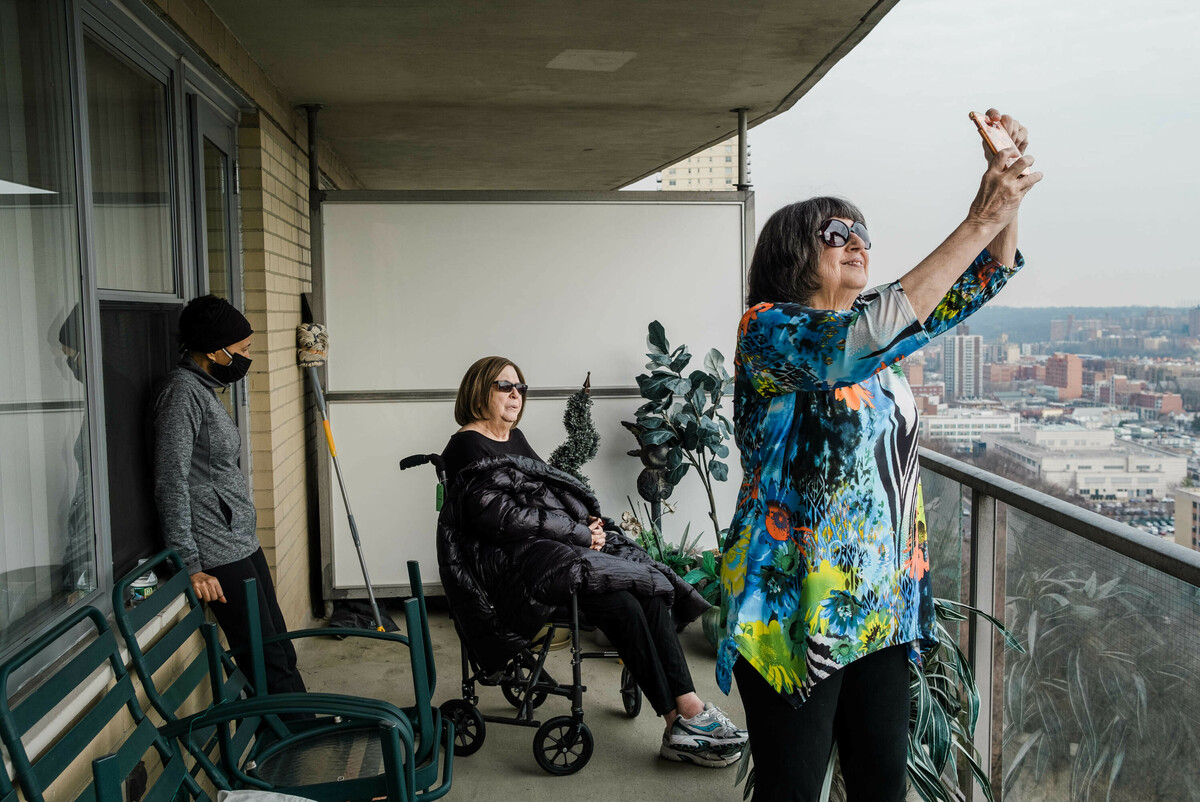
Louise Salant (right), 72, and her aunt Eileen Salant (center), 86, both got very sick with COVID-19 in 2020. And as Eileen developed long COVID symptoms, so too did Louise, who struggled with fatigue and shortness of breath while also managing her aunt’s care. Nearly three years later, home health aides like Elfnesh Legesse (left) help Louise take care of her aunt.

Gabriela Bhaskar for NPR


hide caption

toggle caption

Gabriela Bhaskar for NPR


Louise Salant (right), 72, and her aunt Eileen Salant (center), 86, both got very sick with COVID-19 in 2020. And as Eileen developed long COVID symptoms, so too did Louise, who struggled with fatigue and shortness of breath while also managing her aunt’s care. Nearly three years later, home health aides like Elfnesh Legesse (left) help Louise take care of her aunt.

Gabriela Bhaskar for NPR

For Louise Salant, long COVID has meant new stress, new responsibilities, and multiple medical crises to manage. It’s transformed her life.

But there’s a twist. She’s had to deal with this condition not just as a patient but also as a caregiver for her 86-year-old aunt Eileen Salant, who has coped with long COVID’s disabling symptoms for almost three years.

Eileen and Louise both caught an acute bout of COVID-19 in March of 2020. Eileen had been taking care of her brother, who was admitted to a New York City hospital with heart failure during those dark days of the early pandemic. He got COVID there, and died from his infection with the virus. Both aunt and niece also became very ill.

It was early days of the pandemic in New York, and hospitals were so crowded that Louise was told to stay home and fight out the illness on her own. Meanwhile, Eileen was hospitalized and stayed there all spring, including two months on a ventilator. After that, she spent five months at a rehab hospital. She finally came home to her apartment in Riverdale, the Bronx, the day before Thanksgiving in 2020 — but she was very weak.

Eileen and Louise both got COVID-19 in the early days of the pandemic in New York. Eileen ended up on a ventilator for two months and then spent five months in a rehab hospital. Louise fought the illness at home as hospitals started filling up.

Gabriela Bhaskar for NPR


hide caption

toggle caption

Gabriela Bhaskar for NPR


Eileen and Louise both got COVID-19 in the early days of the pandemic in New York. Eileen ended up on a ventilator for two months and then spent five months in a rehab hospital. Louise fought the illness at home as hospitals started filling up.

Gabriela Bhaskar for NPR

“She could barely sit up in bed, couldn’t hold a fork,” says Louise, who lives a 10-minute taxi ride away.

Over the years, Louise, now 72, has worked at various times as an art therapist, taught piano to children and adults and done medical interviewing for a cancer research team. But when COVID hit, all that ground to a halt. Though she hadn’t always been emotionally close to her aunt, she says, she took on the caregiving role, “because someone needed to” — even as she, too, dealt with her own symptoms of long COVID, including crushing fatigue and shortness of breath.

An overwhelming need

Louise Salant set about organizing home aides, occupational therapy and physical therapy for her aunt and oversaw all other aspects of the older woman’s care. She had to learn to deliver injections of blood thinning medicine, then trained the aides to do it too. For months, she kept track of Eileen’s expenses, maintained all her medical information and patient history, and ran all her errands.

She found that being a caregiver for someone with long COVID, as for other serious and chronic medical conditions, is not just being an aide. It’s running the patient’s life. “Every single day, there’s something she’d need,” Louise says. “I was dealing with the pharmacy, dealing with the doctor, keeping her schedule. And when I’m not there, I’d worry. I have to always be available on the phone.”

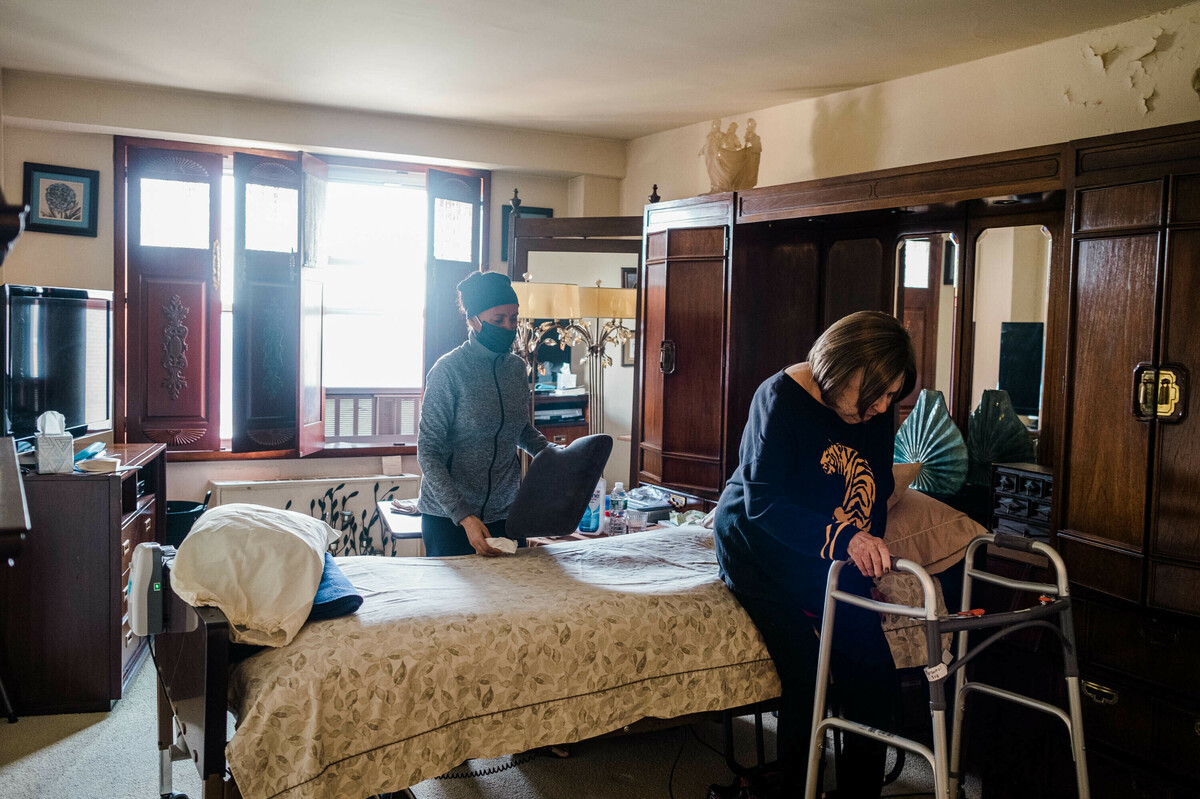
Louise began managing all aspects of her aunt’s life while dealing with her own debilitating fatigue. She hired and trained home health aides, made doctor’s appointments for Eileen, and picked up prescriptions from the pharmacy.

Gabriela Bhaskar for NPR


hide caption

toggle caption

Gabriela Bhaskar for NPR


Louise began managing all aspects of her aunt’s life while dealing with her own debilitating fatigue. She hired and trained home health aides, made doctor’s appointments for Eileen, and picked up prescriptions from the pharmacy.

Gabriela Bhaskar for NPR

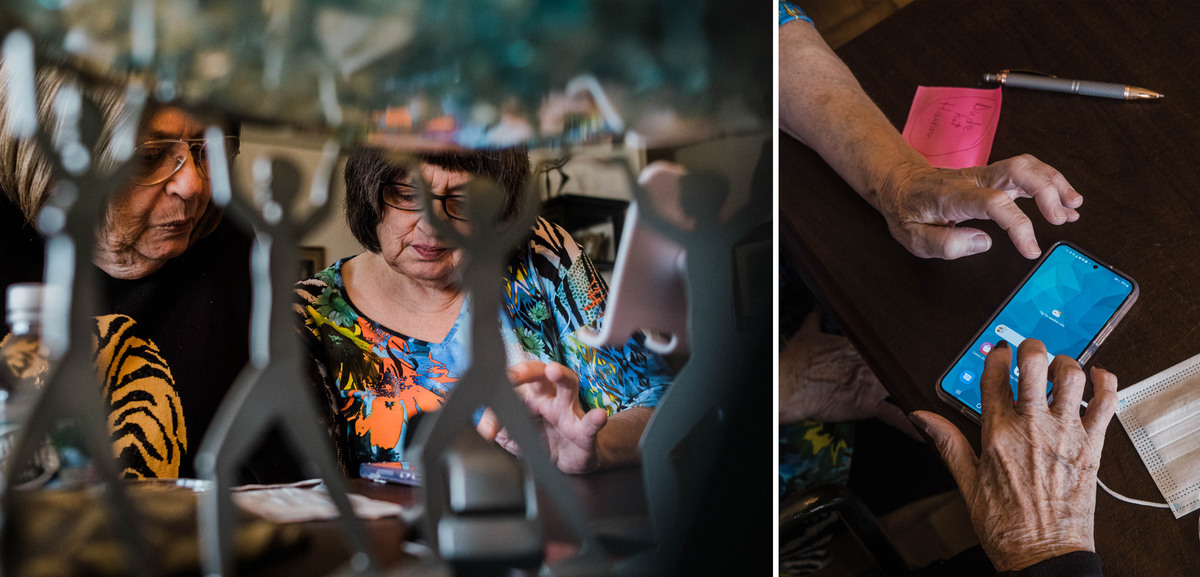
Eileen recently got a new phone; Louise showed her how to use it.

Gabriela Bhaskar for NPR


hide caption

toggle caption

Gabriela Bhaskar for NPR


Eileen recently got a new phone; Louise showed her how to use it.

Gabriela Bhaskar for NPR

Between 8 and 23 million Americans are thought to have long COVID — meaning they have long-lasting symptoms that endure or arise months after infection, such as difficulty concentrating (“brain fog”), extreme tiredness, anxiety and shortness of breath. But there is no solid estimate of how many need caregiving help. Stats from one clinic hint at the size of the problem: Out of the 1,782 patients seen at the Penn Medicine Post-COVID Assessment and Recovery Clinic between June 2020 and January 2023, about one-fifth said they felt uncomfortable dealing with daily activities like driving, shopping, or using public transit, suggesting the need for a caregiver.

And, like roughly 40{bf0515afdcaddba073662ceb89fbb62b6b1bf123143c0e06b788e1946e8c353f} of U.S. caregivers, Louise had her own chronic health problems to manage. It was the exhaustion of long COVID that almost took her under, especially in the first months of caregiving. After three or so hours of helping her aunt, she says, “this sickening feeling would come over my whole body, and I’d have to go home. I’d be in bed sick for two or three days.” In August 2021, Louise got a new inhaler from her lung doctor that helped her breathe better and started to give her more energy.

Why caregiving is harder when the medical condition is new and poorly understood

Stories like the Salants’ reveal another unfortunate reality about dealing with a complex chronic disease like long COVID, in contrast to an illness with a more straightforward diagnosis: Meeting the demands of the health care system itself can be a major burden. Because the medical condition is new and poorly understood, patients often consult multiple specialists who order a long sequence of tests to rule out other illnesses. Caregivers must schedule each of those visits, often go with the patient to the test, and often need to follow up with multiple physicians about the results.

Louise sorts through Eileen’s medications. “She’s been wonderful to me,” Eileen says of Louise. “Like a daughter would help her mother.”

Gabriela Bhaskar for NPR


hide caption

toggle caption

Gabriela Bhaskar for NPR

With unpredictable symptoms that can wax and wane mysteriously, long COVID also requires exceptionally good record-keeping, in order to provide doctors with new clues. But because the disease often causes fatigue and brain fog, some patients can’t keep track for themselves. They rely on friends or family for help.

“The family caregiver becomes the care manager, advocating and managing the system,” the late John Schall, former CEO of the Caregiver Action Network, an education and advocacy nonprofit, told us last year. “And you’re doing it by guesswork. Nobody tells you what to look for.”

In interviews with a half-dozen family caregivers of people with long COVID, the complexity of managing care emerged again and again. Judith Friedman, a Brooklyn mom who is helping her adult daughter who has long COVID, maintains a list of 14 doctors she consults regularly or periodically and another list that includes 10 daily prescription drugs, plus supplements and other as-needed medications her daughter takes.

Slowly, over time, Eileen began regaining her strength. By March 2022, she was able to venture out with Louise, for adventures beyond the neighborhood.

Gabriela Bhaskar for NPR


hide caption

toggle caption

Gabriela Bhaskar for NPR


Slowly, over time, Eileen began regaining her strength. By March 2022, she was able to venture out with Louise, for adventures beyond the neighborhood.

Gabriela Bhaskar for NPR

The task can be overwhelming even for experts. Tonya LaGrange has helped her husband Brent LaGrange since 2020 through a huge range of problems stemming from long COVID, including heart arrhythmias, joint pain, neurological problems and difficulty breathing. During doctors’ appointments, she is his advocate and backstop, making sure nothing gets forgotten and details don’t get lost. “It’s probably why he’s still alive now,” LaGrange says. “I’ve been able to intervene when he slips through the cracks.”

In 2020, at the peak of her husband’s illness, she was always doing something for his care, she says, whether it was emailing case managers during the day, or monitoring his breathing at night to wake him up when he would especially struggle. It’s not quite as intense now as it once was, she says, but she is still always “on” — juggling phone calls, appointments and follow-ups in between the demands of her job as the director of rehabilitation at a skilled nursing facility.

Even though LaGrange works in health care herself (including training as a physical therapist), and all her husband’s doctors are in one health system she finds care management a challenge. “I know how the field works, I know the system, I know the terminology, and we’re having trouble,” she says. “What about people who don’t have the education I have? It’s devastating.”

Caregivers need support, too

Louise says her own long COVID symptoms have finally mostly eased. She says she took on the caregiving role for her aunt when COVID-19 hit them both, “because someone needed to.”

Gabriela Bhaskar for NPR


hide caption

toggle caption

Gabriela Bhaskar for NPR


Louise says her own long COVID symptoms have finally mostly eased. She says she took on the caregiving role for her aunt when COVID-19 hit them both, “because someone needed to.”

Gabriela Bhaskar for NPR

About half of all family caregivers say they take the lead in coordinating their ill loved one’s care, according to surveys from AARP. And while hands-on caregiving can be emotionally rewarding, dealing with forms, bills and scheduling generally isn’t, says Jennifer Olsen, CEO of the Rosalynn Carter Institute for Caregivers. “It’s challenging to spend half your day on the phone with insurance to make sure you have the right justification for the right test,” she says. “Caregiving project management is something we don’t talk about.”

These responsibilities add to the strain of worrying about a loved one’s health and keeping the household running too. It can be intense, says Sheria Robinson-Lane, assistant professor at the University of Michigan School of Nursing, who studies caregiving. “One family member might have taken care of paying the bills, and now this person has to learn all those tasks, which wasn’t part of the division of labor,” she adds. “That causes stress.”

Louise rests on the couch while visiting Eileen at her apartment in the Bronx. Naps were a regular part of each caregiving day a couple of years ago, when Louise could only function about three hours a day, she says. A new inhaler she was prescribed in August 2021 helped her breathe better, and gave her more energy.

Gabriela Bhaskar for NPR


hide caption

toggle caption

Gabriela Bhaskar for NPR


Louise rests on the couch while visiting Eileen at her apartment in the Bronx. Naps were a regular part of each caregiving day a couple of years ago, when Louise could only function about three hours a day, she says. A new inhaler she was prescribed in August 2021 helped her breathe better, and gave her more energy.

Gabriela Bhaskar for NPR

Robinson-Lane recommends that caregivers move quickly to reinforce their own emotional support systems, whether that’s friends, family or, ideally, a professional counselor. Local senior centers can often help people who aren’t necessarily elderly, she adds: Advice and connections may be available for those over 55, or for disabled people of any age. Simply talking to your insurance provider can also point the way to assistance: “In my experience they’re incredibly helpful once you get someone on the phone,” says Robinson-Lane.

The next chapter of care

By the late winter of 2021, months after she first came home from the rehab hospital, Eileen Salant started feeling stronger, and by April of that year she was able to venture out to the kosher deli in her neighborhood. By March of 2022, with the help of her niece Louise, the two took longer adventures — taxi trips to Nordstrom and Saks Fifth Avenue in Manhattan. “I was just determined to get out,” Eileen says.

Later that month, she had a major setback, and was hospitalized again for a week. But thanks to Louise’s help, and the support of paid caregivers at home, Eileen eventually bounced back.

Louise says that despite the difficult circumstances, she and her aunt have become closer these past few years.

Gabriela Bhaskar for NPR


hide caption

toggle caption

Gabriela Bhaskar for NPR


Louise says that despite the difficult circumstances, she and her aunt have become closer these past few years.

Gabriela Bhaskar for NPR

“She’s been wonderful to me,” Eileen says of Louise. “Like a daughter would help her mother.” Despite the difficulty of the last few years, the two are closer now, Louise says, and have come to respect and love each other.

Louise has advice for other long-COVID caregivers: Find a doctor who is knowledgeable about the disease, or at least willing to learn more about it. She also recommends the online patient-support group Survivor Corps. “The best resource is other people,” Louise says.

Other family caregivers praise the Body Politic COVID-19 support group. And LaGrange recommends simply finding someone to talk to who is not part of the family — perhaps a friend or a therapist.

Although specific treatments for long COVID are elusive so far, many people do eventually recover on their own. The biggest study so far found that long COVID symptoms endured an average of 9 months for people who’d been hospitalized with COVID-19, and 4 months for those who hadn’t needed hospitalization .

Louise also reports that her long-COVID symptoms have finally eased, and she, too, is feeling better. The overwhelming fatigue seems to be gone, although she’s still tired, and she even started teaching piano again for one nearby family.

She’s been able to step back a little bit from her daily responsibilities in caring for her aunt, although she knows that could change at any moment. She still sleeps with her phone by her bed, she says — but now at least she sleeps through the night.

Kat McGowan is a freelance writer in California focused on caregiving. This story was produced with support from the Alicia Patterson Foundation.

U.S. winter COVID surge is mild and fading fast : Shots

U.S. winter COVID surge is mild and fading fast : Shots

Immunity Individuals acquired by means of vaccination or by way of prior an infection with the SARS-CoV-2 virus may account for the lighter than anticipated COVID surge in the U.S. this winter, scientists say.

David Ryder/Getty Photos


conceal caption

toggle caption

David Ryder/Getty Pictures


Immunity People obtained through vaccination or by way of prior an infection with the SARS-CoV-2 virus might account for the lighter than anticipated COVID surge in the U.S. this winter, researchers say.

David Ryder/Getty Visuals

This winter’s COVID-19 surge in the U.S. appears to be fading without hitting almost as challenging as several experienced feared.

“I believe the worst of the wintertime resurgence is about,” says Dr. David Rubin, who’s been tracking the pandemic at the PolicyLab at Kid’s Medical center of Philadelphia.

No one predicted this winter’s surge to be as undesirable as the past two. But each the flu and RSV arrived roaring back again seriously early this slide. At the similar time, the most contagious omicron subvariant still took off just as the holiday seasons arrived in late 2022. And most persons were acting like the pandemic was around, which allowed all a few viruses to unfold promptly.

So there have been huge fears of hospitals getting completely confused once again, with many people today acquiring seriously unwell and dying.

But that is not what occurred.

“This virus continues to throw 210-mile-for each-hour curve balls at us. And it appears to defy gravity or logic at times,” suggests Michael Osterholm, who heads the Center for Infectious Condition Research and Policy at the University of Minnesota.

“Folks all assumed we would see key transmission. Very well, just about every time we assume we have some explanation to think we know what it really is heading to do, it does not do that,” Osterholm says.

‘The worst’ of the surge of COVID, flu and RSV may possibly be more than

Infections, hospitalizations and deaths did improve in the U.S. soon after New Year’s. But the number of men and women catching the virus and obtaining hospitalized and dying from COVID soon started to slide again and have all been dropping now for weeks, according to the most up-to-date facts from the Centers for Sickness Manage and Avoidance.

The drop flu and RSV waves carry on to fade far too. And so the worst seems to be like it really is possibly above, a lot of public health experts say.

“I am glad to say that we didn’t have as significantly of a crush of bacterial infections as numerous considered was doable, which is quite welcome news,” says Jennifer Nuzzo, who heads the Pandemic Middle at Brown College.

The huge dilemma is: Why? Numerous factors might have performed a roll.

A person risk could be that men and women averted crowds, wore a mask and took other safety measures a lot more than public overall health authorities had anticipated they would. But that would not actually appear to be the situation.

May well ‘viral interference’ perform a position?

A further probability is “viral interference,” which is a principle that sometimes when a particular person gets infected with a person virus, their immune response could protect them from finding contaminated with a further virus. So maybe RSV and flu crowded out COVID in the same way COVID crowded out all those other viral infections at a variety of periods above the last two a long time.

“At this place, I feel which is extra of a guess fairly than really good proof,” Nuzzo suggests. “But if it is really correct, that could possibly necessarily mean we may well be additional inclined to viewing a rise in bacterial infections when these viruses are not all around.”

Nuzzo and other industry experts suspect as an alternative that the main cause the COVID surge is ebbing is all the immunity we’ve all crafted up from prior infections, and/or the COVID vaccinations lots of of us have been given.

“We have what I would get in touch with now a far better immunity barrier,” says Dr. Carlos Del Rio, an infectious illness expert at Emory College who heads the Infectious Disease Modern society of America.

“Between vaccinations and prior infection I consider all of us are in a unique area than we were being prior to,” he suggests. “All of us, if not thoroughly secured, we are considerably greater safeguarded. And that immunologic wall is true.”

Why COVID-19 continues to be a substantial threat

But none of this suggests the region would not have to get worried about COVID any more. Additional than 400 individuals are even now dying each and every day from COVID-19. Which is considerably fewer than the thousands who died throughout the darkest days of the past two winter surges. But it really is nonetheless several more people today than die from the flu each individual day, for instance.

“Make no mistake: COVID-19 stays a considerable community wellness danger,” Nuzzo states. “That has not changed. And the fact that we are nevertheless losing hundreds of people a day to this virus is deeply troubling. So we shouldn’t have to acknowledge that stage of ailment and death that we are observing.”

William Hanage, an epidemiologist at the Harvard T.H. Chan Faculty of General public Wellness, agrees.

“It can be over and above dilemma that modern society has moved into a phase the place the pandemic is for most of us if not over then surely tranquil. And that’s a terrific factor. Extensive may perhaps it continue being so,” Hanage states. “Is it the case that there is no preventable suffering? No. There is even now preventable struggling and loss of life.”

Most of the individuals dying are aged, numerous of whom have not been given the latest booster towards COVID-19. So acquiring them boosted could help a great deal. And the immunity the relaxation of us have built up could preserve fading. That indicates quite a few of the rest of us could at some issue will need to get a further booster to enable further reduce the risk from COVID.

An additional wave of flu could nonetheless strike this year, general public wellness industry experts note, and the danger carries on that still another new, even a lot more perilous variant of SARS-CoV-2 could arise.

“This virus is not carried out with us still,” Osterholm states.

House ignores White House objections, votes to end COVID health emergency

The House on Tuesday disregarded opposition from President Joe Biden and voted to conclusion the general public wellness crisis associated to COVID-19, profitable some aid from Household Democrats on a next invoice that would stop the government’s need that federal overall health treatment workers must be vaccinated towards COVID.

The two expenses – the Pandemic is Over Act and the Independence for Wellbeing Treatment Personnel Act – had been prepared by Republicans very last 7 days and late Monday, the White Household introduced that it will terminate the countrywide COVID emergency on May perhaps 11. The White Dwelling also announced its opposition to the two expenditures up for a vote nowadays.

But Republicans pressed in advance anyway and simply handed equally steps inspite of the GOP’s slim bulk in the Property.

BIDEN TELLS CONGRESS HE’LL Finish COVID-19 EMERGENCIES ON May perhaps 11

House ignores White House objections, votes to end COVID health emergency

President Biden’s White Dwelling urged opposition to charges that would conclusion the COVID-19 community wellness crisis and the vaccination necessity for federal well being employees, but some Democrats dismissed that advice.
(AP Photo / Evan Vucci / File)

The Pandemic is Over Act, which would close the community health and fitness crisis, passed 220-210 in a vote that noticed each Republican vote for it and each individual Democrat vote towards it. But the Flexibility for Wellbeing Treatment Employees Act, which would close the vaccination requirement for federal health treatment employees, passed 227-203 with enable from seven Democrats.

These Democrat votes arrived even nevertheless Democrat leaders on the Home flooring argued towards both equally payments. Rep. Frank Pallone, D-N.J., said he opposes the Pandemic is Above Act due to the fact it would “abruptly and irresponsibly stop the COVID-19 community health emergency almost right away,” and Democrats on the flooring similarly argued from the invoice to finish the vaccine prerequisite.

MCCARTHY SETS UP VOTES TO DISMANTLE BIDEN’S COVID Unexpected emergency: ‘THE PANDEMIC IS OVER’

Department of Health and Human Services Secretary Xavier Becerra

Office of Overall health and Human Products and services Secretary Xavier Becerra
(AP / File)

Aid between Democrats for retaining a substantial condition of crisis similar to COVID has waned in the months considering the fact that President Biden said in an job interview that the “pandemic is over.” Late previous calendar year, the Democrat-led House and Senate each approved a defense coverage invoice that needed the Pentagon to stop its COVID-19 vaccine mandate – that bill handed conveniently in the House in a 350-80 vote.

Nonetheless, the White Property mentioned this week that it opposes the GOP try to eliminate the vaccination requirement for wellbeing care staff and explained Biden would veto the monthly bill if it handed the Dwelling and the Senate.

“Whilst COVID-19 is no lengthier the disruptive danger that it at the time was, it will make no perception for Congress to reverse this protection for vulnerable sufferers, as properly as our well being treatment staff who have supplied so considerably to guard us,” the White House stated.

NEWSOM SUED Above COVID ‘MISINFORMATION’ Regulation THAT Medical practitioners SAY TRAMPLES Initial Amendment Legal rights

Biden said he would veto the bill ending the public health emergency if it were passed by Congress.

Biden claimed he would veto the monthly bill ending the public wellness crisis if it were handed by Congress.
(AP Image / Carolyn Kaster / File)

But the White Dwelling stopped small of saying it would veto the monthly bill to close the community overall health unexpected emergency (PHE), even while it mentioned it opposes that invoice.

Click Below TO GET THE FOX Information App

“If the PHE ended up instantly terminated, it would sow confusion and chaos into this important wind-down,” the White Residence explained. “Because of to this uncertainty, tens of millions of People in america could be at hazard of abruptly losing their well being insurance policy, and states could be at threat of getting rid of billions of pounds in funding.”

FDA Experts Are Still Puzzled Over Who Should Get Which Covid Shots and When

At a meeting to simplify the nation’s covid vaccination plan, the FDA’s panel of specialists could agree on only one particular factor: Info is woefully missing about how generally unique teams of Americans want to be vaccinated. That information hole has contributed to common skepticism, undervaccination, and ultimately needless fatalities from covid-19.

The committee voted unanimously Thursday to help the FDA’s proposal for all vaccine-makers to undertake the similar strain of the virus when producing improvements in their vaccines, and suggested they may meet in May possibly or June to select a pressure for the vaccines that would be rolled out this tumble.

However, the panel users disagreed with the FDA’s proposal that all people get at least 1 shot a calendar year, saying much more details was required to make such a declaration. Many panelists famous that in new research, only about a 3rd of people hospitalized with a constructive covid examination in fact were there because of covid health issues. Which is since all people getting into a medical center is examined for covid, so fatalities of sufferers with incidental bacterial infections are counted as covid deaths even when it is not the lead to.

The industry experts questioned the rationale for annual photographs for everybody, presented that latest vaccines do not seem to safeguard versus an infection for much more than a couple months. Yet even a single booster appears to protect against demise and hospitalization in most people today, besides for the quite previous and persons with particular health care ailments.

“We need to have the CDC to notify us just who is getting hospitalized and dying of this virus — the ages, vulnerability, the style of immune compromise, and no matter if they had been handled with antivirals. And we need to have immunological details to point out who’s at danger,” stated Dr. Paul Offit, director of the Vaccine Schooling Center and a pediatrician at Children’s Medical center of Philadelphia. “Only then can we decide who will get vaccinated with what and when.”

Offit and many others have expressed frustration over the deficiency of crystal clear authorities messaging on what the public can hope from covid vaccines. When common boosters could possibly be vital for keeping the elderly and medically frail out of the healthcare facility, he claimed, the yearly boosters prompt by the Fda and the drug businesses could not be vital for everybody.

“The intention is to maintain men and women out of the healthcare facility,” he stated. “For the vulnerable, it would be essential for vaccines to preserve up with circulating strains. But for the general populace, we by now have a vaccine that stops hospitalization.”

Other panelists reported the government needs to force exploration tougher to get much better vaccines. Pamela McGinnis, a retired formal of the National Institutes of Overall health, said she had trouble detailing to her two youthful-adult sons why they immediately obtained ill after venturing out to bars a single night only months after having their bivalent booster.

“‘Think how sick you would have gotten if you weren’t totally vaccinated’ is not a good message,” she mentioned. “I’m not guaranteed ‘You would have landed in the hospital’ resonates with recipients of the condition.”

Associates of the FDA’s advisory committee have been irked in the latest months, saying the agency didn’t existing them with all the data it experienced on the bivalent vaccine in advance of it was unveiled in September. And some critics have said the Fda should have instructed drug companies to involve only the more recent strains of the virus in the shot.

Asked about that Thursday, Jerry Weir, a senior Food and drug administration vaccine officer, mentioned his “gut feeling” was that a vaccine matched to a single omicron pressure would have done far better than the bivalent shot, which also consists of the authentic covid pressure. “But the real issue is the place we’re headed,” he claimed, “and I do not know the respond to.”

Potentially the most important presentation Thursday was from Heather Scobie, who retains tabs on covid at the Centers for Condition Command and Avoidance. She reported that less than fifty percent of Us residents 65 and more mature experienced gotten the most up-to-date booster, and that only two-thirds of that age group had gotten even a single booster.

Nonetheless proof continues to mount that it’s primarily the aged who are at really serious possibility from covid. Dying prices from the illness have declined in each and every age group other than those people more than 75 due to the fact April, in spite of the uptick in new strains. Except for the extremely old, the dying charge has hovered about 1 in 100,000 due to the fact April. Before in 2022, infants 6 months old and more youthful have been hospitalized and died at relatively significant prices. Vaccination stages in the 4-and-beneath team hover at about 10{bf0515afdcaddba073662ceb89fbb62b6b1bf123143c0e06b788e1946e8c353f}.

Though acknowledging the FDA’s motivation to regularize its covid vaccine policy, panel customers claimed it is nevertheless too early to know for positive whether or not covid will surge only in the winter season, like flu, respiratory syncytial virus, and other respiratory bacterial infections.

“For the following couple of decades we may possibly not know how normally we have to have to make a strain change in the vaccine,” said Dr. Steven Pergam, professional medical director of an infection avoidance at the Seattle Cancer Treatment Alliance. Or even if individuals who are not in poor overall health or aged have to have extra boosters.

One vaccine-maker represented at the conference, Novavax, reported it would have to have to know by the stop of March which pressure to include things like in its vaccine for slide. Companies with mRNA vaccines like Pfizer and Moderna can adjust their formulation speedier, but their solutions aren’t clearly better than Novavax’s.

All three of those vaccine-makers discovered at the meeting that they are establishing one-dose vials or prefilled syringes. Up to now, they’ve shipped their vaccines in multidose vials, but considering that the governing administration has run out of revenue to acquire vaccines, individual pediatricians might get them in the long run. Because the vaccine ought to be utilised swiftly as soon as a vial is open, doctors are leery of squandering vaccine and dropping income.

KHN (Kaiser Well being Information) is a countrywide newsroom that creates in-depth journalism about well being difficulties. With each other with Policy Assessment and Polling, KHN is 1 of the 3 significant functioning systems at KFF (Kaiser Loved ones Basis). KFF is an endowed nonprofit business offering info on health and fitness concerns to the nation.

USE OUR Information

This tale can be republished for free of charge (particulars).

COVID vaccine strategy to get an overhaul by FDA : Shots

COVID vaccine strategy to get an overhaul by FDA : Shots

Licensed vocational nurse Denise Saldana vaccinates Pri DeSilva, associate director of Individual and Corporate Giving, with a fourth Pfizer COVID-19 vaccine booster at the Dr. Kenneth Williams Health Center in Los Angeles, Nov. 1, 2022.

Damian Dovarganes/AP


hide caption

toggle caption

Damian Dovarganes/AP


Licensed vocational nurse Denise Saldana vaccinates Pri DeSilva, associate director of Individual and Corporate Giving, with a fourth Pfizer COVID-19 vaccine booster at the Dr. Kenneth Williams Health Center in Los Angeles, Nov. 1, 2022.

Damian Dovarganes/AP

The Food and Drug Administration is considering a major shift in the nation’s COVID-19 vaccine strategy.

The goal is to simplify vaccination against COVID and perhaps adopt an approach similar to what is used for the flu vaccine, with annual updates to match whatever strain of the virus is circulating. This is according to a federal official who spoke under the condition of anonymity because they were not authorized to speak publicly.

NPR reported the proposed shift early Monday morning, and later Monday the FDA outlined it publicly in a set of documents released in advance of a meeting Thursday of the agency’s Vaccine and Related Biological Products Advisory Committee (VRBPAC). The committee will vote on the agency’s proposal.

Currently, people who want to be fully vaccinated against COVID have to first get their primary vaccinations — two shots of the original vaccine spaced weeks apart. That’s followed at least two months later by a booster, currently the bivalent shot that’s tailored to protect against omicron.

Under the new approach, most people would be advised to simply get whatever the latest version of the vaccine is annually each fall like the flu vaccine. They wouldn’t have to worry about how many shots they’ve already gotten and which one they got when. Those who still need to receive two doses initially, such as young children and older people, would use the same formulation for all three shots.

Vaccine makers would update the annual shot through a process that would begin each spring to try a match the vaccine as closely as possible to whatever variant will likely be dominant in the coming winter. That’s how the flu vaccine is formulated each year.

“FDA anticipates conducting an assessment of SARS-CoV-2 strains at least annually and to engage VRBPAC in about early June of each year regarding strain selection for the fall season,” the FDA wrote in its briefing document, adding that updated vaccines would be readied for use by September each year.

The agency notes that if a more dangerous COVID variant were to emerge, it might reconsider the vaccine strain at other times of the year on an “as-needed and emergent basis.”

Some immunologists and vaccine researchers say simplifying the process along the lines of the flu vaccine is appropriate at this point in the pandemic. However, many questions remain about emerging booster strategy.

“As far as the tools that we have right now, I think it just makes the most sense to plan to update each year as close as we can to the currently circulating variant,” says Deepta Bhattacharya, an immunologist at the University of Arizona. “So I think all the things the FDA is considering make a lot of sense.”

Questions about efficacy of updated shots

There’s an intense debate about the wisdom of updating the COVID vaccines regularly to try to match new variants. Some researchers question whether that really makes the vaccines more effective. They also argue that the low demand for the latest booster shows the public has little appetite for continued boosting with the vaccines, even if they’ve been updated with new strains.

“The public is voting with their arms if you will and said, ‘No. I’m not going to get this. This doesn’t make sense to us,'” says Dr. Gregory Poland, a vaccine researcher at the Mayo Clinic.

While endorsing continued boosters for those at high risk, such as the elderly, some question whether the current bivalent vaccines updated to target omicron have enhanced protection compared to the original vaccines. Most people are still well-protected against severe disease by the immunity they already have, they say.

“We have no solid data about the performance of the bivalent boosters,” says John Moore, an immunologist at Weill Cornell Medical College. “The hard evidence is lacking, and the evidence that is out there is at the very least inconclusive and to me trends towards saying the bivalent boosters were little if no better.”

Moore and others argue that the virus is changing so fast that it’s pointless to constantly try to match the vaccines to the latest variants.

“We shouldn’t really be chasing these variants, which are evanescent and are often gone by the time you’ve created the vaccine,” says Dr. Paul Offit of the University of Pennsylvania, one of the FDA’s advisers.

Offit and others also question whether everyone will necessarily need to be boosted regularly, or just those at high risk, like the elderly.

Arguments for alternate vaccine strategies

Critics of the FDA’s proposed new strategy argue that it would be better to invest in developing better vaccines that might be more appealing to people, and in campaigns to get more people vaccinated. Better vaccines could include those that could keep people from catching the virus in the first place not just from getting seriously ill — such as a nasal spray vaccine. Or perhaps vaccines that provide longer protection or are administered in pill form, to make them more acceptable to the needle-averse.

“Particularly now when Congress is not allocating new funds for COVID response, we have to be especially judicious in how we spend our money and what would be most cost-effective,” says Dr. Celine Gounder, a senior fellow at the Kaiser Family Foundation. “It’s unclear whether updating the booster formulations and repeatedly boosting people is the most effective approach to controlling COVID at this stage.”

Another concern some researchers have is that the FDA continues to rely on antibody levels to test vaccine efficacy.

“I think we need to raise the bar and require more evidence of clinical efficacy,” says Dr. Eric Rubin, a professor of immunology and infectious diseases at Harvard who is also a member of the advisory committee. For instance, Rubin says the FDA should require proof the updated vaccines are actually reducing the risk of getting infected, getting sick, hospitalized and dying.

Others say updating the vaccines make sense to make sure people are as well-protected as possible while researchers continue to try to develop new vaccines.

“Even if you don’t have a booster that matches 100{bf0515afdcaddba073662ceb89fbb62b6b1bf123143c0e06b788e1946e8c353f} what’s circulating, you will have a booster that matches 75{bf0515afdcaddba073662ceb89fbb62b6b1bf123143c0e06b788e1946e8c353f} to 80{bf0515afdcaddba073662ceb89fbb62b6b1bf123143c0e06b788e1946e8c353f} to 90{bf0515afdcaddba073662ceb89fbb62b6b1bf123143c0e06b788e1946e8c353f} of what’s circulating,” says David Martinez, an immunologist at the University of North Carolina, Chapel Hill. “And that will be good enough. It would probably benefit most people.”

The FDA looks ahead to endemic COVID

Some researchers think it’s too soon to rely on annual boosters. COVID hasn’t quite settled into a seasonal pattern like the flu, they note, and the SARS-CoV2 virus is changing more quickly than the flu virus. So people may need to be boosted more frequently, especially since protection against severe disease may only last about four to six months, they say.

“We’re going to be reaching that pretty soon with the early adopters of the bivalent boosters, like myself,” says Dr. Peter Hotez, co-director of the Center for Vaccine Development at Texas Children’s Hospital and dean of the National School of Tropical Medicine at Baylor College of Medicine. “I don’t know if an annual strategy is going to cut it.”

The FDA’s plan comes as COVID appears to be moving toward becoming an endemic disease. That doesn’t mean it’s going away or it’s not a threat anymore. The disease will continue to be a threat for the foreseeable future, making many people sick and even potentially killing hundreds a day, making it a major public health problem and a leading cause of death, health experts say.

But unless some more dangerous version of the virus suddenly emerges, the world might finally be settling into a more predictable co-existence with the virus. The federal official NPR spoke to says the goal of the new vaccine strategy is to make the vaccines, which are the major weapon for protecting ourselves, simpler and hopefully therefore more appealing. The latest boosters have found very few takers.

The thinking is that at this point in the pandemic the overwhelming majority of people have a significant levels of immunity, either from having gotten vaccinated and boosted, or infected one of more times, or both. And while that immunity appears to protect most people from severe disease, that protection does appear to fade with time.

The FDA is also considering making the shots interchangeable. That way people wouldn’t have to worry which brand they’re getting. Again, the change is aimed at making COVID shots more like the flu shots. People don’t typically worry about the brand of the flu vaccine they receive.

The vaccine would still be administered at different doses for different ages. And very young children and older people would still get two shots each year, much like the flu vaccine.

If the FDA advisory committee endorses the approach Thursday, the FDA would work with the vaccine companies and Centers for Disease Control and Prevention to finalize the details. And the FDA advisers would meet again in the spring to pick the specific strain or strains of the virus the new shots should target.