


Louise Salant (right), 72, and her aunt Eileen Salant (center), 86, both got very sick with COVID-19 in 2020. And as Eileen developed long COVID symptoms, so too did Louise, who struggled with fatigue and shortness of breath while also managing her aunt’s care. Nearly three years later, home health aides like Elfnesh Legesse (left) help Louise take care of her aunt.
Gabriela Bhaskar for NPR
hide caption
toggle caption
Gabriela Bhaskar for NPR
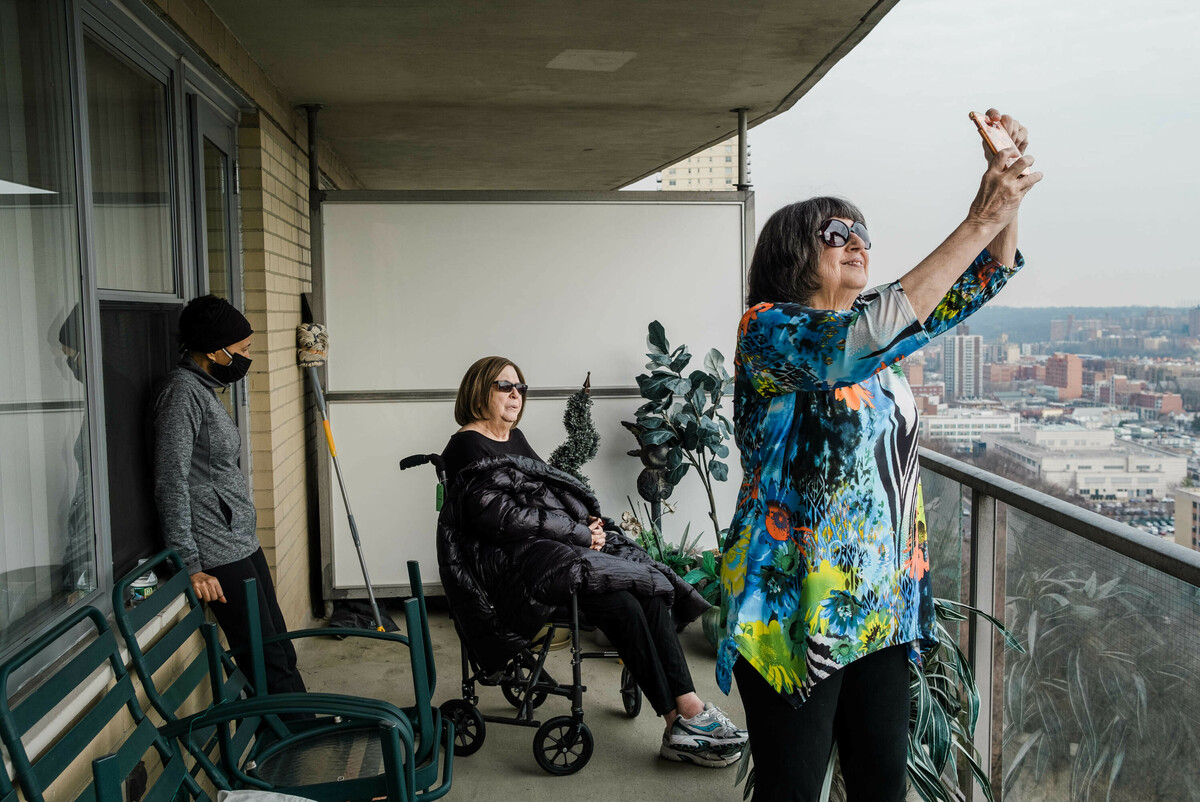
Louise Salant (right), 72, and her aunt Eileen Salant (center), 86, both got very sick with COVID-19 in 2020. And as Eileen developed long COVID symptoms, so too did Louise, who struggled with fatigue and shortness of breath while also managing her aunt’s care. Nearly three years later, home health aides like Elfnesh Legesse (left) help Louise take care of her aunt.
Gabriela Bhaskar for NPR
For Louise Salant, long COVID has meant new stress, new responsibilities, and multiple medical crises to manage. It’s transformed her life.
But there’s a twist. She’s had to deal with this condition not just as a patient but also as a caregiver for her 86-year-old aunt Eileen Salant, who has coped with long COVID’s disabling symptoms for almost three years.
Eileen and Louise both caught an acute bout of COVID-19 in March of 2020. Eileen had been taking care of her brother, who was admitted to a New York City hospital with heart failure during those dark days of the early pandemic. He got COVID there, and died from his infection with the virus. Both aunt and niece also became very ill.
It was early days of the pandemic in New York, and hospitals were so crowded that Louise was told to stay home and fight out the illness on her own. Meanwhile, Eileen was hospitalized and stayed there all spring, including two months on a ventilator. After that, she spent five months at a rehab hospital. She finally came home to her apartment in Riverdale, the Bronx, the day before Thanksgiving in 2020 — but she was very weak.

Eileen and Louise both got COVID-19 in the early days of the pandemic in New York. Eileen ended up on a ventilator for two months and then spent five months in a rehab hospital. Louise fought the illness at home as hospitals started filling up.
Gabriela Bhaskar for NPR
hide caption
toggle caption
Gabriela Bhaskar for NPR

Eileen and Louise both got COVID-19 in the early days of the pandemic in New York. Eileen ended up on a ventilator for two months and then spent five months in a rehab hospital. Louise fought the illness at home as hospitals started filling up.
Gabriela Bhaskar for NPR
“She could barely sit up in bed, couldn’t hold a fork,” says Louise, who lives a 10-minute taxi ride away.
Over the years, Louise, now 72, has worked at various times as an art therapist, taught piano to children and adults and done medical interviewing for a cancer research team. But when COVID hit, all that ground to a halt. Though she hadn’t always been emotionally close to her aunt, she says, she took on the caregiving role, “because someone needed to” — even as she, too, dealt with her own symptoms of long COVID, including crushing fatigue and shortness of breath.
An overwhelming need
Louise Salant set about organizing home aides, occupational therapy and physical therapy for her aunt and oversaw all other aspects of the older woman’s care. She had to learn to deliver injections of blood thinning medicine, then trained the aides to do it too. For months, she kept track of Eileen’s expenses, maintained all her medical information and patient history, and ran all her errands.
She found that being a caregiver for someone with long COVID, as for other serious and chronic medical conditions, is not just being an aide. It’s running the patient’s life. “Every single day, there’s something she’d need,” Louise says. “I was dealing with the pharmacy, dealing with the doctor, keeping her schedule. And when I’m not there, I’d worry. I have to always be available on the phone.”

Louise began managing all aspects of her aunt’s life while dealing with her own debilitating fatigue. She hired and trained home health aides, made doctor’s appointments for Eileen, and picked up prescriptions from the pharmacy.
Gabriela Bhaskar for NPR
hide caption
toggle caption
Gabriela Bhaskar for NPR

Louise began managing all aspects of her aunt’s life while dealing with her own debilitating fatigue. She hired and trained home health aides, made doctor’s appointments for Eileen, and picked up prescriptions from the pharmacy.
Gabriela Bhaskar for NPR

Eileen recently got a new phone; Louise showed her how to use it.
Gabriela Bhaskar for NPR
hide caption
toggle caption
Gabriela Bhaskar for NPR
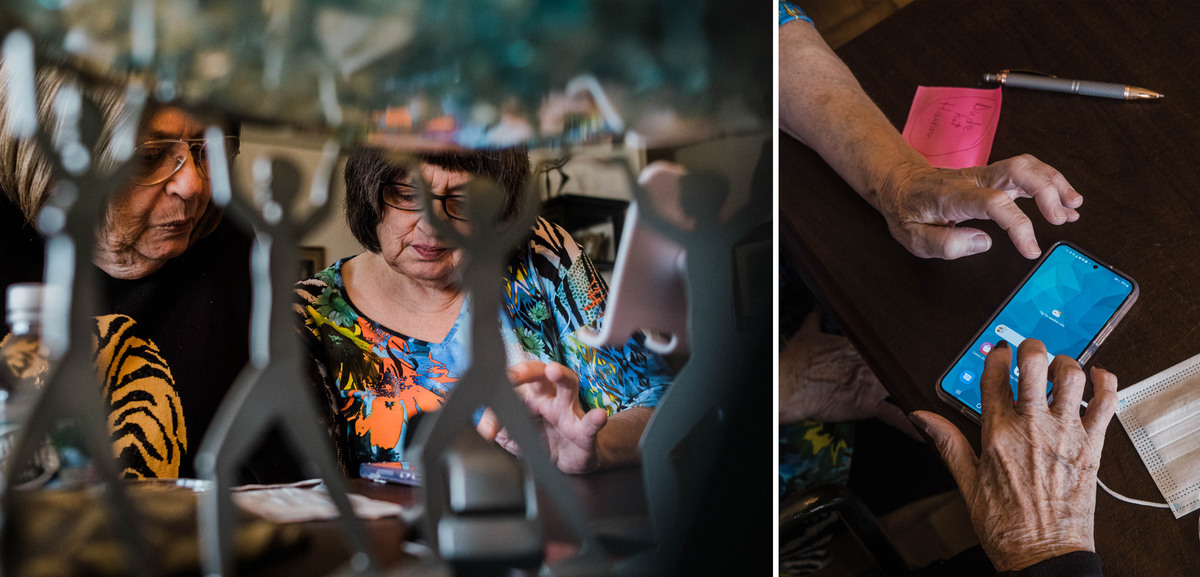
Eileen recently got a new phone; Louise showed her how to use it.
Gabriela Bhaskar for NPR
Between 8 and 23 million Americans are thought to have long COVID — meaning they have long-lasting symptoms that endure or arise months after infection, such as difficulty concentrating (“brain fog”), extreme tiredness, anxiety and shortness of breath. But there is no solid estimate of how many need caregiving help. Stats from one clinic hint at the size of the problem: Out of the 1,782 patients seen at the Penn Medicine Post-COVID Assessment and Recovery Clinic between June 2020 and January 2023, about one-fifth said they felt uncomfortable dealing with daily activities like driving, shopping, or using public transit, suggesting the need for a caregiver.

And, like roughly 40{bf0515afdcaddba073662ceb89fbb62b6b1bf123143c0e06b788e1946e8c353f} of U.S. caregivers, Louise had her own chronic health problems to manage. It was the exhaustion of long COVID that almost took her under, especially in the first months of caregiving. After three or so hours of helping her aunt, she says, “this sickening feeling would come over my whole body, and I’d have to go home. I’d be in bed sick for two or three days.” In August 2021, Louise got a new inhaler from her lung doctor that helped her breathe better and started to give her more energy.
Why caregiving is harder when the medical condition is new and poorly understood
Stories like the Salants’ reveal another unfortunate reality about dealing with a complex chronic disease like long COVID, in contrast to an illness with a more straightforward diagnosis: Meeting the demands of the health care system itself can be a major burden. Because the medical condition is new and poorly understood, patients often consult multiple specialists who order a long sequence of tests to rule out other illnesses. Caregivers must schedule each of those visits, often go with the patient to the test, and often need to follow up with multiple physicians about the results.

Louise sorts through Eileen’s medications. “She’s been wonderful to me,” Eileen says of Louise. “Like a daughter would help her mother.”
Gabriela Bhaskar for NPR
hide caption
toggle caption
Gabriela Bhaskar for NPR
With unpredictable symptoms that can wax and wane mysteriously, long COVID also requires exceptionally good record-keeping, in order to provide doctors with new clues. But because the disease often causes fatigue and brain fog, some patients can’t keep track for themselves. They rely on friends or family for help.
“The family caregiver becomes the care manager, advocating and managing the system,” the late John Schall, former CEO of the Caregiver Action Network, an education and advocacy nonprofit, told us last year. “And you’re doing it by guesswork. Nobody tells you what to look for.”
In interviews with a half-dozen family caregivers of people with long COVID, the complexity of managing care emerged again and again. Judith Friedman, a Brooklyn mom who is helping her adult daughter who has long COVID, maintains a list of 14 doctors she consults regularly or periodically and another list that includes 10 daily prescription drugs, plus supplements and other as-needed medications her daughter takes.

Slowly, over time, Eileen began regaining her strength. By March 2022, she was able to venture out with Louise, for adventures beyond the neighborhood.
Gabriela Bhaskar for NPR
hide caption
toggle caption
Gabriela Bhaskar for NPR
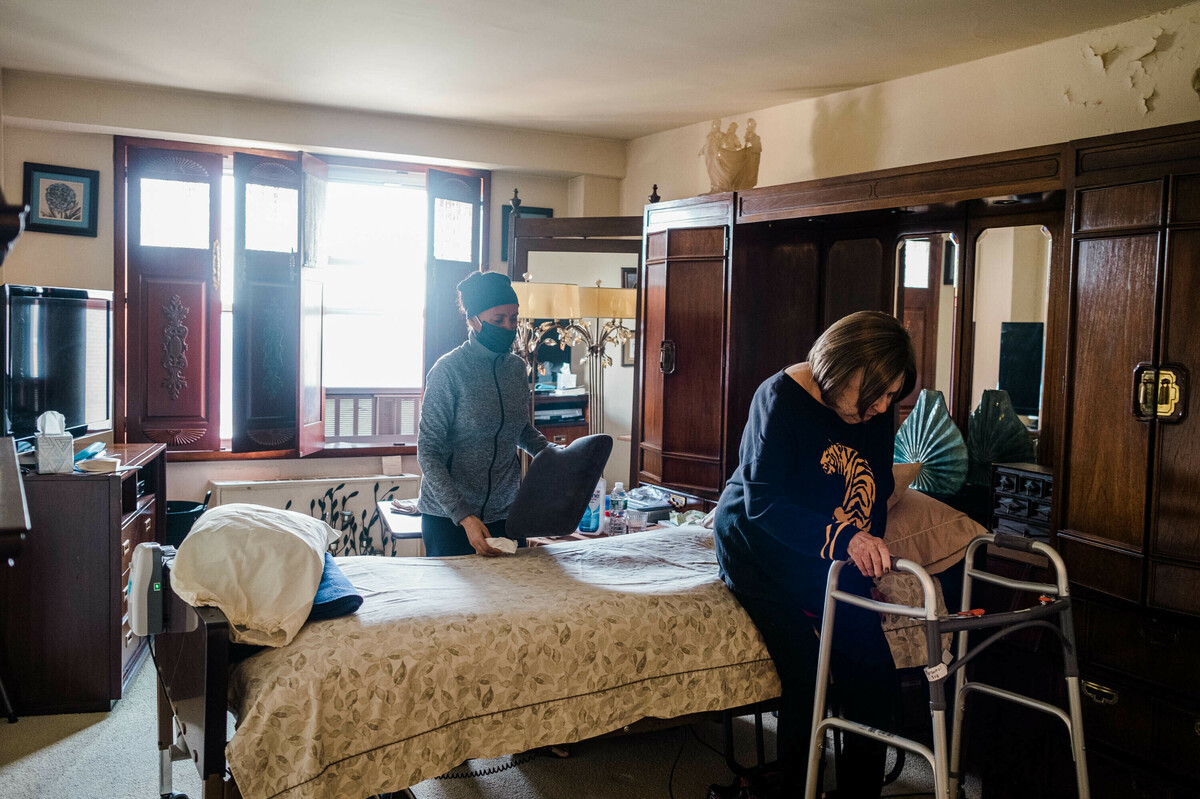
Slowly, over time, Eileen began regaining her strength. By March 2022, she was able to venture out with Louise, for adventures beyond the neighborhood.
Gabriela Bhaskar for NPR
The task can be overwhelming even for experts. Tonya LaGrange has helped her husband Brent LaGrange since 2020 through a huge range of problems stemming from long COVID, including heart arrhythmias, joint pain, neurological problems and difficulty breathing. During doctors’ appointments, she is his advocate and backstop, making sure nothing gets forgotten and details don’t get lost. “It’s probably why he’s still alive now,” LaGrange says. “I’ve been able to intervene when he slips through the cracks.”
In 2020, at the peak of her husband’s illness, she was always doing something for his care, she says, whether it was emailing case managers during the day, or monitoring his breathing at night to wake him up when he would especially struggle. It’s not quite as intense now as it once was, she says, but she is still always “on” — juggling phone calls, appointments and follow-ups in between the demands of her job as the director of rehabilitation at a skilled nursing facility.

Even though LaGrange works in health care herself (including training as a physical therapist), and all her husband’s doctors are in one health system she finds care management a challenge. “I know how the field works, I know the system, I know the terminology, and we’re having trouble,” she says. “What about people who don’t have the education I have? It’s devastating.”
Caregivers need support, too

Louise says her own long COVID symptoms have finally mostly eased. She says she took on the caregiving role for her aunt when COVID-19 hit them both, “because someone needed to.”
Gabriela Bhaskar for NPR
hide caption
toggle caption
Gabriela Bhaskar for NPR

Louise says her own long COVID symptoms have finally mostly eased. She says she took on the caregiving role for her aunt when COVID-19 hit them both, “because someone needed to.”
Gabriela Bhaskar for NPR
About half of all family caregivers say they take the lead in coordinating their ill loved one’s care, according to surveys from AARP. And while hands-on caregiving can be emotionally rewarding, dealing with forms, bills and scheduling generally isn’t, says Jennifer Olsen, CEO of the Rosalynn Carter Institute for Caregivers. “It’s challenging to spend half your day on the phone with insurance to make sure you have the right justification for the right test,” she says. “Caregiving project management is something we don’t talk about.”
These responsibilities add to the strain of worrying about a loved one’s health and keeping the household running too. It can be intense, says Sheria Robinson-Lane, assistant professor at the University of Michigan School of Nursing, who studies caregiving. “One family member might have taken care of paying the bills, and now this person has to learn all those tasks, which wasn’t part of the division of labor,” she adds. “That causes stress.”

Louise rests on the couch while visiting Eileen at her apartment in the Bronx. Naps were a regular part of each caregiving day a couple of years ago, when Louise could only function about three hours a day, she says. A new inhaler she was prescribed in August 2021 helped her breathe better, and gave her more energy.
Gabriela Bhaskar for NPR
hide caption
toggle caption
Gabriela Bhaskar for NPR

Louise rests on the couch while visiting Eileen at her apartment in the Bronx. Naps were a regular part of each caregiving day a couple of years ago, when Louise could only function about three hours a day, she says. A new inhaler she was prescribed in August 2021 helped her breathe better, and gave her more energy.
Gabriela Bhaskar for NPR
Robinson-Lane recommends that caregivers move quickly to reinforce their own emotional support systems, whether that’s friends, family or, ideally, a professional counselor. Local senior centers can often help people who aren’t necessarily elderly, she adds: Advice and connections may be available for those over 55, or for disabled people of any age. Simply talking to your insurance provider can also point the way to assistance: “In my experience they’re incredibly helpful once you get someone on the phone,” says Robinson-Lane.
The next chapter of care
By the late winter of 2021, months after she first came home from the rehab hospital, Eileen Salant started feeling stronger, and by April of that year she was able to venture out to the kosher deli in her neighborhood. By March of 2022, with the help of her niece Louise, the two took longer adventures — taxi trips to Nordstrom and Saks Fifth Avenue in Manhattan. “I was just determined to get out,” Eileen says.
Later that month, she had a major setback, and was hospitalized again for a week. But thanks to Louise’s help, and the support of paid caregivers at home, Eileen eventually bounced back.

Louise says that despite the difficult circumstances, she and her aunt have become closer these past few years.
Gabriela Bhaskar for NPR
hide caption
toggle caption
Gabriela Bhaskar for NPR

Louise says that despite the difficult circumstances, she and her aunt have become closer these past few years.
Gabriela Bhaskar for NPR
“She’s been wonderful to me,” Eileen says of Louise. “Like a daughter would help her mother.” Despite the difficulty of the last few years, the two are closer now, Louise says, and have come to respect and love each other.
Louise has advice for other long-COVID caregivers: Find a doctor who is knowledgeable about the disease, or at least willing to learn more about it. She also recommends the online patient-support group Survivor Corps. “The best resource is other people,” Louise says.
Other family caregivers praise the Body Politic COVID-19 support group. And LaGrange recommends simply finding someone to talk to who is not part of the family — perhaps a friend or a therapist.

Although specific treatments for long COVID are elusive so far, many people do eventually recover on their own. The biggest study so far found that long COVID symptoms endured an average of 9 months for people who’d been hospitalized with COVID-19, and 4 months for those who hadn’t needed hospitalization .
Louise also reports that her long-COVID symptoms have finally eased, and she, too, is feeling better. The overwhelming fatigue seems to be gone, although she’s still tired, and she even started teaching piano again for one nearby family.
She’s been able to step back a little bit from her daily responsibilities in caring for her aunt, although she knows that could change at any moment. She still sleeps with her phone by her bed, she says — but now at least she sleeps through the night.
Kat McGowan is a freelance writer in California focused on caregiving. This story was produced with support from the Alicia Patterson Foundation.





/cloudfront-us-east-1.images.arcpublishing.com/dmn/GTIC4GNDZRB75EV73C2KXNIP44.jpg "Perot family donates M to UT Southwestern dual-degree program for medical researchers")