Tumor organoid biobank-new platform for medical research

  • Pan, W. et al. The molecular subtypes of triple negative breast cancer were defined and a ligand-receptor pair score model was constructed by comprehensive analysis of ligand-receptor pairs. Front. Immunol. 13, 982486. https://doi.org/10.3389/fimmu.2022.982486 (2022).

    Article 
    CAS 

    Google Scholar
     

  • Wang, X. et al. Cross-talk of four types of RNA modification proteins with adenosine reveals the landscape of multivariate prognostic patterns in breast cancer. Front. Genet. 13, 943378. https://doi.org/10.3389/fgene.2022.943378 (2022).

    Article 
    CAS 

    Google Scholar
     

  • Sweed, D. et al. The clinicopathological and prognostic factors of hepatocellular carcinoma: A 10-year tertiary center experience in Egypt. World J. Surg. Oncol. 20, 298. https://doi.org/10.1186/s12957-022-02764-2 (2022).

    Article 

    Google Scholar
     

  • Cheng, C., Feng, X., Li, X. & Wu, M. Robust analysis of cancer heterogeneity for high-dimensional data. Stat. Med. 41, 5448–5462. https://doi.org/10.1002/sim.9578 (2022).

    Article 

    Google Scholar
     

  • Abdelraouf, E. M. et al. Annexin A2 (AnxA2) association with the clinicopathological data in different breast cancer subtypes: A possible role for AnxA2 in tumor heterogeneity and cancer progression. Life Sci. 308, 120967. https://doi.org/10.1016/j.lfs.2022.120967 (2022).

    Article 
    CAS 

    Google Scholar
     

  • Elbadawy, M. et al. Anti-cancer activity of amorphous curcumin preparation in patient-derived colorectal cancer organoids. Biomed. Pharmacother. 142, 112043. https://doi.org/10.1016/j.biopha.2021.112043 (2021).

    Article 
    CAS 

    Google Scholar
     

  • Elbadawy, M. et al. Anti-tumor effect of trametinib in bladder cancer organoid and the underlying mechanism. Cancer Biol. Ther. 22, 357–371. https://doi.org/10.1080/15384047.2021.1919004 (2021).

    Article 
    CAS 

    Google Scholar
     

  • Boj, S. F. et al. Organoid models of human and mouse ductal pancreatic cancer. Cell 160, 324–338. https://doi.org/10.1016/j.cell.2014.12.021 (2015).

    Article 
    CAS 

    Google Scholar
     

  • Clevers, H. Modeling development and disease with organoids. Cell 165, 1586–1597. https://doi.org/10.1016/j.cell.2016.05.082 (2016).

    Article 
    CAS 

    Google Scholar
     

  • Lancaster, M. A. & Huch, M. Disease modelling in human organoids. Dis. Model Mech. 12, dmm039347. https://doi.org/10.1242/dmm.039347 (2019).

    Article 
    CAS 

    Google Scholar
     

  • Huang, Y. et al. Air pollution, genetic factors, and the risk of lung cancer: A prospective study in the UK biobank. Am. J. Respir. Crit. Care Med. 204, 817–825. https://doi.org/10.1164/rccm.202011-4063OC (2021).

    Article 
    CAS 

    Google Scholar
     

  • Jacob, F. et al. A patient-derived glioblastoma organoid model and biobank recapitulates inter- and intra-tumoral heterogeneity. Cell 180, 188-204.e22. https://doi.org/10.1016/j.cell.2019.11.036 (2020).

    Article 
    CAS 

    Google Scholar
     

  • Said, M. A., Verweij, N. & van der Harst, P. Associations of combined genetic and lifestyle risks with incident cardiovascular disease and diabetes in the UK Biobank study. JAMA Cardiol. 3, 693–702. https://doi.org/10.1001/jamacardio.2018.1717 (2018).

    Article 

    Google Scholar
     

  • Muller, D. C., Johansson, M. & Brennan, P. Lung cancer risk prediction model incorporating lung function: Development and validation in the UK Biobank prospective cohort study. J. Clin. Oncol. 35, 861–869. https://doi.org/10.1200/JCO.2016.69.2467 (2017).

    Article 

    Google Scholar
     

  • Wang, Q. L., Ness-Jensen, E., Santoni, G., Xie, S. H. & Lagergren, J. Development and validation of a risk prediction model for esophageal squamous cell carcinoma using cohort studies. Am. J. Gastroenterol. 116, 683–691. https://doi.org/10.14309/ajg.0000000000001094 (2021).

    Article 

    Google Scholar
     

  • Takahashi, Y. et al. A refined culture system for human induced pluripotent stem cell-derived intestinal epithelial organoids. Stem Cell Rep. 10, 314–328. https://doi.org/10.1016/j.stemcr.2017.11.004 (2018).

    Article 
    CAS 

    Google Scholar
     

  • Noguchi, T. K. et al. Generation of stomach tissue from mouse embryonic stem cells. Nat. Cell Biol. 17, 984–993. https://doi.org/10.1038/ncb3200 (2015).

    Article 
    CAS 

    Google Scholar
     

  • McCracken, K. W., Howell, J. C., Wells, J. M. & Spence, J. R. Generating human intestinal tissue from pluripotent stem cells in vitro. Nat. Protoc. 6, 1920–1928. https://doi.org/10.1038/nprot.2011.410 (2011).

    Article 
    CAS 

    Google Scholar
     

  • Sato, T. et al. Single Lgr5 stem cells build crypt-villus structures in vitro without a mesenchymal niche. Nature 459, 262–265. https://doi.org/10.1038/nature07935 (2009).

    Article 
    ADS 
    CAS 

    Google Scholar
     

  • van de Wetering, M. et al. Prospective derivation of a living organoid biobank of colorectal cancer patients. Cell 161, 933–945. https://doi.org/10.1016/j.cell.2015.03.053 (2015).

    Article 
    CAS 

    Google Scholar
     

  • Vlachogiannis, G. et al. Patient-derived organoids model treatment response of metastatic gastrointestinal cancers. Science 359, 920–926. https://doi.org/10.1126/science.aao2774 (2018).

    Article 
    ADS 
    CAS 

    Google Scholar
     

  • Fujii, M. et al. A colorectal tumor organoid library demonstrates progressive loss of niche factor requirements during tumorigenesis. Cell Stem Cell 18, 827–838. https://doi.org/10.1016/j.stem.2016.04.003 (2016).

    Article 
    CAS 

    Google Scholar
     

  • Kraiczy, J. et al. DNA methylation defines regional identity of human intestinal epithelial organoids and undergoes dynamic changes during development. Gut 68, 49–61. https://doi.org/10.1136/gutjnl-2017-314817 (2019).

    Article 
    CAS 

    Google Scholar
     

  • Zachos, N. C. et al. Human enteroids/colonoids and intestinal organoids functionally recapitulate normal intestinal physiology and pathophysiology. J. Biol. Chem. 291, 3759–3766. https://doi.org/10.1074/jbc.R114.635995 (2016).

    Article 
    CAS 

    Google Scholar
     

  • Saksena, S. Nonpharmacologic therapy for tachyarrhythmias: The tower of Babel revisited?. Pacing Clin. Electrophysiol. 11, 93–97. https://doi.org/10.1111/j.1540-8159.1988.tb03932.x (1988).

    Article 
    CAS 

    Google Scholar
     

  • Xu, R., Zhou, X., Wang, S. & Trinkle, C. Tumor organoid models in precision medicine and investigating cancer-stromal interactions. Pharmacol. Ther. 218, 107668. https://doi.org/10.1016/j.pharmthera.2020.107668 (2021).

    Article 
    CAS 

    Google Scholar
     

  • Kim, J., Koo, B. K. & Knoblich, J. A. Human organoids: Model systems for human biology and medicine. Nat. Rev. Mol. Cell Biol. 21, 571–584. https://doi.org/10.1038/s41580-020-0259-3 (2020).

    Article 
    CAS 

    Google Scholar
     

  • Dekkers, J. F. et al. Characterizing responses to CFTR-modulating drugs using rectal organoids derived from subjects with cystic fibrosis. Sci. Transl. Med. 8, 344ra84. https://doi.org/10.1126/scitranslmed.aad8278 (2016).

    Article 
    CAS 

    Google Scholar
     

  • Sugimoto, S. et al. Reconstruction of the human colon epithelium in vivo. Cell Stem Cell. 22, 171-176.e5. https://doi.org/10.1016/j.stem.2017.11.012 (2018).

    Article 
    CAS 

    Google Scholar
     

  • Driehuis, E., Kretzschmar, K. & Clevers, H. Establishment of patient-derived cancer organoids for drug-screening applications. Nat. Protoc. 15, 3380–3409. https://doi.org/10.1038/s41596-020-0379-4 (2020).

    Article 
    CAS 

    Google Scholar
     

  • Maenhoudt, N. et al. Developing organoids from ovarian cancer as experimental and preclinical models. Stem Cell Rep. 14, 717–729. https://doi.org/10.1016/j.stemcr.2020.03.004 (2020).

    Article 
    CAS 

    Google Scholar
     

  • Lu, Z., Nie, B., Zhai, W. & Hu, Z. Delineating the longitudinal tumor evolution using organoid models. J. Genet. Genom. 48, 560–570. https://doi.org/10.1016/j.jgg.2021.06.010 (2021).

    Article 

    Google Scholar
     

  • Wang, Z. et al. The Fibrillin-1/VEGFR2/STAT2 signaling axis promotes chemoresistance via modulating glycolysis and angiogenesis in ovarian cancer organoids and cells. Cancer Commun. 42, 245–265. https://doi.org/10.1002/cac2.12274 (2022).

    Article 
    CAS 

    Google Scholar
     

  • Rao, S., Hossain, T. & Mahmoudi, T. 3D human liver organoids: An in vitro platform to investigate HBV infection, replication and liver tumorigenesis. Cancer Lett. 506, 35–44. https://doi.org/10.1016/j.canlet.2021.02.024 (2021).

    Article 
    CAS 

    Google Scholar
     

  • Yoshida, S., Miwa, H., Kawachi, T., Kume, S. & Takahashi, K. Generation of intestinal organoids derived from human pluripotent stem cells for drug testing. Sci. Rep. 10, 5989. https://doi.org/10.1038/s41598-020-63151-z (2020).

    Article 
    ADS 
    CAS 

    Google Scholar
     

  • d’Aldebert, E. et al. Characterization of human colon organoids from inflammatory bowel disease patients. Front. Cell Dev. Biol. 8, 363. https://doi.org/10.3389/fcell.2020.00363 (2020).

    Article 

    Google Scholar
     

  • Min, S., Kim, S. & Cho, S. W. Gastrointestinal tract modeling using organoids engineered with cellular and microbiota niches. Exp. Mol. Med. 52, 227–237. https://doi.org/10.1038/s12276-020-0386-0 (2020).

    Article 
    CAS 

    Google Scholar
     

  • den Hertog, J. & de Laat, S. W. Hubrecht Institute Centennial: From embryos to stem cells. Dev. Biol. 428, 261–263. https://doi.org/10.1016/j.ydbio.2017.02.004 (2017).

    Article 
    CAS 

    Google Scholar
     

  • Rabouille, C. & Deschamps, J. On the shoulders of Hubrecht: From embryos to stem cells. Dev. Biol. 428, 264–272. https://doi.org/10.1016/j.ydbio.2016.10.005 (2017).

    Article 
    CAS 

    Google Scholar
     

  • Reddelle, A. K. Innovation in brain tumor treatment: A nurse perspective. Cureus 13, e20037. https://doi.org/10.7759/cureus.20037 (2021).

    Article 

    Google Scholar
     

  • Ostrom, Q. T. et al. CBTRUS statistical report: Primary brain and other central nervous system tumors diagnosed in the United States in 2011–2015. Neuro Oncol. 20, 1–86. https://doi.org/10.1093/neuonc/noy131 (2018).

    Article 

    Google Scholar
     

  • Ostrom, Q. T., Cioffi, G., Waite, K., Kruchko, C. & Barnholtz-Sloan, J. S. CBTRUS statistical report: Primary brain and other central nervous system tumors diagnosed in the United States in 2014–2018. Neuro Oncol. 23, 1–105. https://doi.org/10.1093/neuonc/noab200 (2018).

    Article 

    Google Scholar
     

  • Yang, P. et al. Management and survival rates in patients with glioma in China (2004–2010): A retrospective study from a single-institution. J. Neurooncol. 113, 259–266. https://doi.org/10.1007/s11060-013-1103-9 (2013).

    Article 
    CAS 

    Google Scholar
     

  • Helguera, G. et al. Visualization and quantification of cytotoxicity mediated by antibodies using imaging flow cytometry. J. Immunol. Methods 368, 54–63. https://doi.org/10.1016/j.jim.2011.03.003 (2011).

    Article 
    CAS 

    Google Scholar
     

  • Darmanis, S. et al. Single-cell RNA-Seq analysis of infiltrating neoplastic cells at the migrating front of human glioblastoma. Cell Rep. 21, 1399–1410. https://doi.org/10.1016/j.celrep.2017.10.030 (2017).

    Article 
    CAS 

    Google Scholar
     

  • Neftel, C. et al. An integrative model of cellular states, plasticity, and genetics for glioblastoma. Cell 178, 835-849.e21. https://doi.org/10.1016/j.cell.2019.06.024 (2019).

    Article 
    CAS 

    Google Scholar
     

  • Patel, A. P. et al. Single-cell RNA-seq highlights intratumoral heterogeneity in primary glioblastoma. Science 344, 1396–1401. https://doi.org/10.1126/science.1254257 (2014).

    Article 
    ADS 
    CAS 

    Google Scholar
     

  • Mandel, J. J. et al. Inability of positive phase II clinical trials of investigational treatments to subsequently predict positive phase III clinical trials in glioblastoma. Neuro Oncol. 20, 113–122. https://doi.org/10.1093/neuonc/nox144 (2018).

    Article 
    CAS 

    Google Scholar
     

  • Abdullah, K. G. et al. Establishment of patient-derived organoid models of lower-grade glioma. Neuro Oncol. 24, 612–623. https://doi.org/10.1093/neuonc/noab273 (2022).

    Article 
    CAS 

    Google Scholar
     

  • Si, Y. F. et al. A study on the value of narrow-band imaging (NBI) for the general investigation of a high-risk population of nasopharyngeal carcinoma (NPC). World J. Surg. Oncol. 16, 126. https://doi.org/10.1186/s12957-018-1423-5 (2018).

    Article 

    Google Scholar
     

  • Chen, Y. P. et al. Nasopharyngeal carcinoma. Lancet 394, 64–80. https://doi.org/10.1016/S0140-6736(19)30956-0 (2019).

    Article 

    Google Scholar
     

  • Thamboo, A., Patel, V. S. & Hwang, P. H. 5-year outcomes of salvage endoscopic nasopharyngectomy for recurrent nasopharyngeal carcinoma. J. Otolaryngol. Head Neck Surg. 50, 12. https://doi.org/10.1186/s40463-020-00482-x (2021).

    Article 

    Google Scholar
     

  • Chen, W. et al. Long noncoding RNA cytoskeleton regulator RNA promotes cell invasion and metastasis by titrating miR-613 to regulate ANXA2 in nasopharyngeal carcinoma. Cancer Med. 9, 1209–1219. https://doi.org/10.1002/cam4.2778 (2020).

    Article 
    CAS 

    Google Scholar
     

  • Wang, X. W. et al. Establishment of a patient-derived organoid model and living biobank for nasopharyngeal carcinoma. Ann. Transl. Med. 10, 526. https://doi.org/10.21037/atm-22-1076 (2022).

    Article 
    CAS 

    Google Scholar
     

  • Yan, H. H. N. et al. Organoid cultures of early-onset colorectal cancers reveal distinct and rare genetic profiles. Gut 69, 2165–2179. https://doi.org/10.1136/gutjnl-2019-320019 (2020).

    Article 
    CAS 

    Google Scholar
     

  • Yao, Y. et al. Patient-derived organoids predict chemoradiation responses of locally advanced rectal cancer. Cell Stem Cell 26, 17-26.e6. https://doi.org/10.1016/j.stem.2019.10.010 (2020).

    Article 
    CAS 

    Google Scholar
     

  • Geevimaan, K. et al. Patient-derived organoid serves as a platform for personalized chemotherapy in advanced colorectal cancer patients. Front. Oncol. 12, 883437. https://doi.org/10.3389/fonc.2022.883437 (2022).

    Article 

    Google Scholar
     

  • Mo, S. et al. Patient-derived organoids from colorectal cancer with paired liver metastasis reveal tumor heterogeneity and predict response to chemotherapy. Adv. Sci. 9, e2204097. https://doi.org/10.1002/advs.202204097 (2022).

    Article 
    CAS 

    Google Scholar
     

  • Laoukili, J. et al. Peritoneal metastases from colorectal cancer belong to Consensus Molecular Subtype 4 and are sensitised to oxaliplatin by inhibiting reducing capacity. Br. J. Cancer 126, 1824–1833. https://doi.org/10.1038/s41416-022-01742-5 (2022).

    Article 
    CAS 

    Google Scholar
     

  • Usui, T. et al. Hedgehog signals mediate anti-cancer drug resistance in three-dimensional primary colorectal cancer organoid culture. Int. J. Mol. Sci. 19, 1098. https://doi.org/10.3390/ijms19041098 (2018).

    Article 
    CAS 

    Google Scholar
     

  • Yao, L. et al. Application of tumoroids derived from advanced colorectal cancer patients to predict individual response to chemotherapy. J. Chemother. https://doi.org/10.1080/1120009X.2022.2045827 (2022).

    Article 

    Google Scholar
     

  • Herpers, B. et al. Functional patient-derived organoid screenings identify MCLA-158 as a therapeutic EGFR × LGR5 bispecific antibody with efficacy in epithelial tumors. Nat. Cancer 3, 418–436. https://doi.org/10.1038/s43018-022-00359-0 (2022).

    Article 
    CAS 

    Google Scholar
     

  • Yan, H. H. N. et al. A comprehensive human gastric cancer organoid biobank captures tumor subtype heterogeneity and enables therapeutic screening. Cell Stem Cell 23, 882-897.e11. https://doi.org/10.1016/j.stem.2018.09.016 (2018).

    Article 
    CAS 

    Google Scholar
     

  • Schütte, M. et al. Molecular dissection of colorectal cancer in pre-clinical models identifies biomarkers predicting sensitivity to EGFR inhibitors. Nat. Commun. 8, 14262. https://doi.org/10.1038/ncomms14262 (2017).

    Article 
    ADS 
    CAS 

    Google Scholar
     

  • Mohammadian, M., Allah Bakeshei, K. & Mohammadian-Hafshejani, A. International epidemiology of liver cancer: Geographical distribution, secular trends and predicting the future. J. Prev. Med. Hyg. 61, E259–E289. https://doi.org/10.15167/2421-4248/jpmh2020.61.2.1244 (2020).

    Article 
    CAS 

    Google Scholar
     

  • Nuciforo, S. et al. Organoid models of human liver cancers derived from tumor needle biopsies. Cell Rep. 24, 1363–1376. https://doi.org/10.1016/j.celrep.2018.07.001 (2018).

    Article 
    CAS 

    Google Scholar
     

  • Rawla, P., Sunkara, T. & Gaduputi, V. Epidemiology of pancreatic cancer: Global trends, etiology and risk factors. World J. Oncol. 10, 10–27. https://doi.org/10.14740/wjon1166 (2019).

    Article 

    Google Scholar
     

  • Saad, A. M., Turk, T., Al-Husseini, M. J. & Abdel-Rahman, O. Trends in pancreatic adenocarcinoma incidence and mortality in the United States in the last four decades; a SEER-based study. BMC Cancer 18, 688. https://doi.org/10.1186/s12885-018-4610-4 (2018).

    Article 

    Google Scholar
     

  • Patel, N., Khorolsky, C. & Benipal, B. Incidence of pancreatic adenocarcinoma in the United States from 2001 to 2015: A United States cancer statistics analysis of 50 states. Cureus 10, e3796. https://doi.org/10.7759/cureus.3796 (2018).

    Article 

    Google Scholar
     

  • Gordon-Dseagu, V. L., Devesa, S. S., Goggins, M. & Stolzenberg-Solomon, R. Pancreatic cancer incidence trends: Evidence from the Surveillance, Epidemiology and End Results (SEER) population-based data. Int. J. Epidemiol. 47, 427–439. https://doi.org/10.1093/ije/dyx232 (2018).

    Article 

    Google Scholar
     

  • Wong, M. C. S. et al. Global temporal patterns of pancreatic cancer and association with socioeconomic development. Sci. Rep. 7, 3165. https://doi.org/10.1038/s41598-017-02997-2 (2017).

    Article 
    ADS 
    CAS 

    Google Scholar
     

  • Farrell, J. J. Prevalence, diagnosis and management of pancreatic cystic neoplasms: Current status and future directions. Gut Liver 9, 571–589. https://doi.org/10.5009/gnl15063 (2015).

    Article 

    Google Scholar
     

  • Basar, O. & Brugge, W. R. My treatment approach: Pancreatic cysts. Mayo Clin. Proc. 92, 1519–1531. https://doi.org/10.1016/j.mayocp.2017.06.017 (2017).

    Article 

    Google Scholar
     

  • Beato, F. et al. Establishing a living biobank of patient-derived organoids of intraductal papillary mucinous neoplasms of the pancreas. Lab. Invest. 101, 204–217. https://doi.org/10.1038/s41374-020-00494-1 (2021).

    Article 

    Google Scholar
     

  • Huang, B. et al. Molecular characterization of organoids derived from pancreatic intraductal papillary mucinous neoplasms. J. Pathol. 252, 252–262. https://doi.org/10.1002/path.5515 (2020).

    Article 
    CAS 

    Google Scholar
     

  • Hirt, C. K. et al. Drug screening and genome editing in human pancreatic cancer organoids identifies drug-gene interactions and candidates for off-label treatment. Cell Genom. 2, 100095. https://doi.org/10.1016/j.xgen.2022.100095 (2022).

    Article 
    CAS 

    Google Scholar
     

  • Demyan, L. et al. Pancreatic cancer patient-derived organoids can predict response to neoadjuvant chemotherapy. Ann. Surg. 276, 450–462. https://doi.org/10.1097/SLA.0000000000005558 (2022).

    Article 

    Google Scholar
     

  • Driehuis, E. et al. Pancreatic cancer organoids recapitulate disease and allow personalized drug screening. Proc. Natl. Acad. Sci. U S A 116, 26580–26590. https://doi.org/10.1073/pnas.1911273116 (2019).

    Article 
    ADS 
    CAS 

    Google Scholar
     

  • Vaes, R. D. W. et al. Generation and initial characterization of novel tumour organoid models to study human pancreatic cancer-induced cachexia. J. Cachexia Sarcopenia Muscle 11, 1509–1524. https://doi.org/10.1002/jcsm.12627 (2020).

    Article 

    Google Scholar
     

  • Kawasaki, K. et al. An organoid biobank of neuroendocrine neoplasms enables genotype-phenotype mapping. Cell 183, 1420-1435.e21. https://doi.org/10.1016/j.cell.2020.10.023 (2020).

    Article 
    CAS 

    Google Scholar
     

  • Bray, F. et al. GLOBOCAN estimates of incidence and mortality worldwide for 36 cancers in 185 countries. CA Cancer J. Clin. 68, 394–424. https://doi.org/10.3322/caac.21492(2018) (2018).

    Article 

    Google Scholar
     

  • Sun, X., Bao, J. & Shao, Y. Mathematical modeling of therapy-induced cancer drug resistance: Connecting cancer mechanisms to population survival rates. Sci. Rep. 6, 22498. https://doi.org/10.1038/srep22498 (2016).

    Article 
    ADS 
    CAS 

    Google Scholar
     

  • Kaur, P., Garg, T., Rath, G., Murthy, R. S. & Goyal, A. K. Surfactant-based drug delivery systems for treating drug-resistant lung cancer. Drug Deliv. 23, 727–738. https://doi.org/10.3109/10717544.2014.935530 (2016).

    Article 
    CAS 

    Google Scholar
     

  • Zhang, Z. et al. Establishment of patient-derived tumor spheroids for non-small cell lung cancer. PLoS ONE 13, e0194016. https://doi.org/10.1371/journal.pone.0194016 (2018).

    Article 
    CAS 

    Google Scholar
     

  • Kim, S. Y. et al. Modeling clinical responses to targeted therapies by patient-derived organoids of advanced lung adenocarcinoma. Clin. Cancer Res. 27, 4397–4409. https://doi.org/10.1158/1078-0432.CCR-20-5026 (2021).

    Article 
    CAS 

    Google Scholar
     

  • Li, Y. F. et al. Patient-derived organoids of non-small cells lung cancer and their application for drug screening. Neoplasma 67, 430–437. https://doi.org/10.4149/neo_2020_190417N346 (2020).

    Article 
    CAS 

    Google Scholar
     

  • Calandrini, C. et al. An organoid biobank for childhood kidney cancers that captures disease and tissue heterogeneity. Nat. Commun. 11, 1310. https://doi.org/10.1038/s41467-020-15155-6 (2020).

    Article 
    ADS 
    CAS 

    Google Scholar
     

  • Kamat, A. M. et al. Bladder cancer. Lancet 388, 2796–2810. https://doi.org/10.1016/S0140-6736(16)30512-8 (2016).

    Article 

    Google Scholar
     

  • Knowles, M. A. & Hurst, C. D. Molecular biology of bladder cancer: New insights into pathogenesis and clinical diversity. Nat. Rev. Cancer 15, 25–41. https://doi.org/10.1038/nrc3817 (2015).

    Article 
    CAS 

    Google Scholar
     

  • Lerner, S. P. et al. Summary and recommendations from the national cancer institute’s clinical trials planning meeting on novel therapeutics for non-muscle invasive bladder cancer. Bladder Cancer 2, 165–202. https://doi.org/10.3233/BLC-160053 (2016).

    Article 

    Google Scholar
     

  • Lee, S. H. et al. Tumor evolution and drug response in patient-derived organoid models of bladder cancer. Cell 173, 515-528.e17. https://doi.org/10.1016/j.cell.2018.03.017 (2018).

    Article 
    CAS 

    Google Scholar
     

  • Weber, C. A biobank for bladder cancer. Nat. Cell Biol. 20, 634. https://doi.org/10.1038/s41556-018-0114-3 (2018).

    Article 
    CAS 

    Google Scholar
     

  • Mullenders, J. et al. Mouse and human urothelial cancer organoids: A tool for bladder cancer research. Proc. Natl. Acad. Sci. U S A 116, 4567–4574. https://doi.org/10.1073/pnas.1803595116 (2019).

    Article 
    ADS 
    CAS 

    Google Scholar
     

  • Elbadawy, M. et al. Establishment of a novel experimental model for muscle-invasive bladder cancer using a dog bladder cancer organoid culture. Cancer Sci. 110, 2806–2821. https://doi.org/10.1111/cas.14118 (2019).

    Article 
    CAS 

    Google Scholar
     

  • Elbadawy, M. et al. Establishment of an experimental model of normal dog bladder organoid using a three-dimensional culture method. Biomed. Pharmacother. 151, 113105. https://doi.org/10.1016/j.biopha.2022.113105 (2022).

    Article 

    Google Scholar
     

  • Nuhn, P. et al. Update on systemic prostate cancer therapies: Management of metastatic castration-resistant prostate cancer in the era of precision oncology. Eur. Urol. 75, 88–99. https://doi.org/10.1016/j.eururo.2018.03.028 (2019).

    Article 

    Google Scholar
     

  • Beshiri, M. L. et al. A PDX/organoid biobank of advanced prostate cancers captures genomic and phenotypic heterogeneity for disease modeling and therapeutic screening. Clin. Cancer Res. 24, 4332–4345. https://doi.org/10.1158/1078-0432.CCR-18-0409 (2018).

    Article 
    CAS 

    Google Scholar
     

  • Lõhmussaar, K. et al. Patient-derived organoids model cervical tissue dynamics and viral oncogenesis in cervical cancer. Cell Stem Cell 28, 1380-1396.e6. https://doi.org/10.1016/j.stem.2021.03.012 (2021).

    Article 
    CAS 

    Google Scholar
     

  • Drost, J. et al. Sequential cancer mutations in cultured human intestinal stem cells. Nature 521, 43–47. https://doi.org/10.1038/nature14415 (2015).

    Article 
    ADS 
    CAS 

    Google Scholar
     

  • Matano, M. et al. Modeling colorectal cancer using CRISPR-Cas9-mediated engineering of human intestinal organoids. Nat. Med. 21, 256–262. https://doi.org/10.1038/nm.3802 (2015).

    Article 
    CAS 

    Google Scholar
     

  • Ferlay, J. et al. Cancer incidence and mortality worldwide: Sources, methods and major patterns in GLOBOCAN 2012. Int. J. Cancer 136, E359–E386. https://doi.org/10.1002/ijc.29210 (2015).

    Article 
    CAS 

    Google Scholar
     

  • Nelson, L. et al. A living biobank of ovarian cancer ex vivo models reveals profound mitotic heterogeneity. Nat. Commun. 11, 822. https://doi.org/10.1038/s41467-020-14551-2 (2020).

    Article 
    ADS 
    CAS 

    Google Scholar
     

  • DeSantis, C. E. et al. Breast cancer statistics, 2019. CA Cancer J. Clin. 69, 438–451. https://doi.org/10.3322/caac.21583 (2019).

    Article 

    Google Scholar
     

  • Nik-Zainal, S. et al. Landscape of somatic mutations in 560 breast cancer whole-genome sequences. Nature 534, 47–54. https://doi.org/10.1038/nature17676 (2016).

    Article 
    ADS 
    CAS 

    Google Scholar
     

  • Dekkers, J. F. et al. Long-term culture, genetic manipulation and xenotransplantation of human normal and breast cancer organoids. Nat. Protoc. 16, 1936–1965. https://doi.org/10.1038/s41596-020-00474-1 (2021).

    Article 
    CAS 

    Google Scholar
     

  • Sachs, N. et al. A living biobank of breast cancer organoids captures disease heterogeneity. Cell 172, 373-386.e10. https://doi.org/10.1016/j.cell.2017.11.010 (2018).

    Article 
    CAS 

    Google Scholar
     

  • Mazzucchelli, S. et al. Establishment and morphological characterization of patient-derived organoids from breast cancer. Biol. Proced. Online 21, 12. https://doi.org/10.1186/s12575-019-0099-8 (2019).

    Article 
    CAS 

    Google Scholar
     

  • Shu, D. et al. Organoids from patient biopsy samples can predict the response of BC patients to neoadjuvant chemotherapy. Ann. Med. 54, 2581–2597. https://doi.org/10.1080/07853890.2022.2122550 (2022).

    Article 
    CAS 

    Google Scholar
     

  • Kim, J. et al. Genomic characteristics of triple-negative breast cancer nominate molecular subtypes that predict chemotherapy response. Mol. Cancer Res. 18, 253–263. https://doi.org/10.1158/1541-7786.MCR-19-0453 (2020).

    Article 
    CAS 

    Google Scholar
     

  • Bhatia, S. et al. Patient-derived triple-negative breast cancer organoids provide robust model systems that recapitulate tumor intrinsic characteristics. Cancer Res. 82, 1174–1192. https://doi.org/10.1158/0008-5472.CAN-21-2807 (2022).

    Article 
    CAS 

    Google Scholar
     

  • Francies, H. E., Barthorpe, A., McLaren-Douglas, A., Barendt, W. J. & Garnett, M. J. Drug sensitivity assays of human cancer organoid cultures. Methods Mol. Biol. 1576, 339–351. https://doi.org/10.1007/7651_2016_10 (2019).

    Article 
    CAS 

    Google Scholar
     

  • Liu, H. D., Xia, B. R., Jin, M. Z. & Lou, G. Organoid of ovarian cancer: Genomic analysis and drug screening. Clin. Transl. Oncol. 22, 1240–1251. https://doi.org/10.1007/s12094-019-02276-8 (2020).

    Article 
    CAS 

    Google Scholar
     

  • Pasch, C. A. et al. Patient-derived cancer organoid cultures to predict sensitivity to chemotherapy and radiation. Clin. Cancer Res. 25, 5376–5387. https://doi.org/10.1158/1078-0432.CCR-18-3590 (2019).

    Article 
    CAS 

    Google Scholar
     

  • Kong, J. et al. Network-based machine learning in colorectal and bladder organoid models predicts anti-cancer drug efficacy in patients. Nat. Commun. 11, 5485. https://doi.org/10.1038/s41467-020-19313-8 (2020).

    Article 
    ADS 
    CAS 

    Google Scholar
     

  • Ganesh, K. et al. A rectal cancer organoid platform to study individual responses to chemoradiation. Nat. Med. 25(10), 1607–1614. https://doi.org/10.1038/s41591-019-0584-2 (2019).

    Article 
    CAS 

    Google Scholar
     

  • Chew, N. J. et al. Evaluation of FGFR targeting in breast cancer through interrogation of patient-derived models. Breast Cancer Res. 23, 82. https://doi.org/10.1186/s13058-021-01461-4 (2021).

    Article 
    CAS 

    Google Scholar
     

  • Ding, S. et al. Patient-derived micro-organospheres enable clinical precision oncology. Cell Stem Cell 29, 905-917.e6. https://doi.org/10.1016/j.stem.2022.04.006 (2022).

    Article 
    CAS 

    Google Scholar
     

  • Yu, C. et al. ARID1A loss derepresses a group of human endogenous retrovirus-H loci to modulate BRD4-dependent transcription. Nat. Commun. 13, 3501. https://doi.org/10.1038/s41467-022-31197-4 (2022).

    Article 
    ADS 
    CAS 

    Google Scholar
     

  • Martinelli, I. et al. Brain and retinal organoids for disease modeling: The importance of in vitro blood-brain and retinal barriers studies. Cells 11, 1120. https://doi.org/10.3390/cells11071120 (2022).

    Article 
    CAS 

    Google Scholar
     

  • Jabs, J. et al. Screening drug effects in patient-derived cancer cells links organoid responses to genome alterations. Mol. Syst. Biol. 13, 955. https://doi.org/10.15252/msb.20177697 (2017).

    Article 
    CAS 

    Google Scholar
     

  • Park, S. E., Georgescu, A. & Huh, D. Organoids-on-a-chip. Science 364, 960–965. https://doi.org/10.1126/science.aaw7894 (2019).

    Article 
    ADS 
    CAS 

    Google Scholar
     

  • Michl, J., Park, K. C. & Swietach, P. Evidence-based guidelines for controlling pH in mammalian live-cell culture systems. Commun. Biol. 2, 144. https://doi.org/10.1038/s42003-019-0393-7 (2019).

    Article 

    Google Scholar
     

  • Gonzalez-Exposito, R. et al. CEA expression heterogeneity and plasticity confer resistance to the CEA-targeting bispecific immunotherapy antibody cibisatamab (CEA-TCB) in patient-derived colorectal cancer organoids. J. Immunother. Cancer 7, 101. https://doi.org/10.1186/s40425-019-0575-3 (2019).

    Article 

    Google Scholar
     

  • Zhao, H., Jiang, E. & Shang, Z. 3D co-culture of cancer-associated fibroblast with oral cancer organoids. J. Dent. Res. 100, 201–208. https://doi.org/10.1177/0022034520956614 (2021).

    Article 
    CAS 

    Google Scholar
     

  • Staab, J. F., Lemme-Dumit, J. M., Latanich, R., Pasetti, M. F. & Zachos, N. C. Co-culture system of human enteroids/colonoids with innate immune cells. Curr. Protoc. Immunol. 131, e113. https://doi.org/10.1002/cpim.113 (2020).

    Article 
    CAS 

    Google Scholar
     

  • Morgan, K. M., Riedlinger, G. M., Rosenfeld, J., Ganesan, S. & Pine, S. R. Patient-derived xenograft models of non-small cell lung cancer and their potential utility in personalized medicine. Front. Oncol. 7, 2. https://doi.org/10.3389/fonc.2017.00002 (2017).

    Article 

    Google Scholar
     

  • Luo, X. et al. Hydrogel-based colorectal cancer organoid co-culture models. Acta Biomater. 132, 461–472. https://doi.org/10.1016/j.actbio.2020.12.037 (2021).

    Article 
    CAS 

    Google Scholar
     

  • Murphy, S. V. & Atala, A. 3D bioprinting of tissues and organs. Nat. Biotechnol. 32, 773–785. https://doi.org/10.1038/nbt.2958 (2014).

    Article 
    CAS 

    Google Scholar
     

  • Xu, F. et al. A three-dimensional in vitro ovarian cancer coculture model using a high-throughput cell patterning platform. Biotechnol. J. 6, 204–212. https://doi.org/10.1002/biot.201000340 (2011).

    Article 
    CAS 

    Google Scholar
     

  • Skardal, A. et al. Multi-tissue interactions in an integrated three-tissue organ-on-a-chip platform. Sci. Rep. 7(1), 8837. https://doi.org/10.1038/s41598-017-08879-x (2017).

    Article 
    ADS 
    CAS 

    Google Scholar
     

  • Buqué, A. & Galluzzi, L. Modeling tumor immunology and immunotherapy in mice. Trends Cancer 4, 599–601. https://doi.org/10.1016/j.trecan.2018.07.003 (2018).

    Article 
    CAS 

    Google Scholar
     

  • Li, Q. et al. Developing covalent protein drugs via proximity-enabled reactive therapeutics. Cell 182, 85-97.e16. https://doi.org/10.1016/j.cell.2020.05.028 (2020).

    Article 
    CAS 

    Google Scholar
     

  • Curvello, R., Alves, D., Abud, H. E. & Garnier, G. A thermo-responsive collagen-nanocellulose hydrogel for the growth of intestinal organoids. Mater. Sci. Eng. C 124, 112051. https://doi.org/10.1016/j.msec.2021.112051 (2021).

    Article 
    CAS 

    Google Scholar
     

  • Nagle, P. W., Plukker, J. T. M., Muijs, C. T., van Luijk, P. & Coppes, R. P. Patient-derived tumor organoids for prediction of cancer treatment response. Semin. Cancer Biol. 53, 258–264. https://doi.org/10.1016/j.semcancer.2018.06.005 (2018).

    Article 
    CAS 

    Google Scholar
     

  • Hirokawa, Y. et al. Low-viscosity matrix suspension culture enables scalable analysis of patient-derived organoids and tumoroids from the large intestine. Commun. Biol. 4, 1067. https://doi.org/10.1038/s42003-021-02607-y (2021).

    Article 
    CAS 

    Google Scholar
     

  • Fujii, M. et al. Human intestinal organoids maintain self-renewal capacity and cellular diversity in niche-inspired culture condition. Cell Stem Cell 23, 787-793.e6. https://doi.org/10.1016/j.stem.2018.11.016 (2018).

    Article 
    CAS 

    Google Scholar
     

  • Hoffmann, K. et al. Stable expansion of high-grade serous ovarian cancer organoids requires a low-Wnt environment. EMBO J. 39, e104013. https://doi.org/10.15252/embj.2019104013 (2020).

    Article 
    CAS 

    Google Scholar
     

  • Utta, D., Heo, I. & Clevers, H. Disease modeling in stem cell-derived 3D organoid systems. Trends Mol. Med. 23, 393–410. https://doi.org/10.1016/j.molmed.2017.02.007 (2017).

    Article 
    CAS 

    Google Scholar
     

  • Lensink, M. A. et al. Organoids for personalized treatment of Cystic Fibrosis: Professional perspectives on the ethics and governance of organoid biobanking. J. Cyst Fibros. 20, 443–451. https://doi.org/10.1016/j.jcf.2020.11.015 (2021).

    Article 

    Google Scholar
     

  • Lensink, M. A., Boers, S. N., Gulmans, V. A., Jongsma, K. R. & Bredenoord, A. L. Mini-gut feelings: Perspectives of people with cystic fibrosis on the ethics and governance of organoid biobanking. Pers. Med. 18, 241–254. https://doi.org/10.2217/pme-2020-01 (2021).

    Article 

    Google Scholar
     

  • Trump vows to punish doctors, hospitals that provide gender-affirming care to transgender minors

    Former President Trump, in a online video produced Tuesday on his social media platform, vowed to punish medical practitioners who offer gender-affirming wellbeing care to minors if he is reelected up coming year, wading into a contentious discussion that has captured the focus of state and federal lawmakers on both equally sides of the aisle.

    In the just about 4-minute-lengthy, straight-to-camera online video, Trump outlined his program to “protect children from remaining-wing gender insanity,” unveiling a slate of serious policy proposals concentrating on transgender identities, such as a federal law that acknowledges only two genders and bars transgender girls from competing on women’s sports groups.

    “No really serious region really should be telling its kids that they had been born with the mistaken gender,” Trump reported in the video ahead of falsely professing that being transgender is a strategy that the “radical left” made “just a few several years in the past.”

    “Under my leadership, this madness will end,” he stated.

    Trump, who officially announced his 2024 presidential bid in November, included that, if he is reelected, federal companies will be instructed to straight away stop programs that endorse the thought of gender changeover “at any age” and promised to prohibit federal tax pounds from becoming applied to assist shell out for gender-affirming interventions.

    The previous president explained he also strategies to go a law barring minors from getting gender-affirming wellbeing treatment “in all 50 states” and intends to direct the Justice Division to investigate the pharmaceutical field and particular person hospitals to figure out whether or not they “deliberately included up horrific prolonged-expression aspect effects of intercourse transitions in purchase to get rich.”

    Medical practitioners who address transgender youth will be booted from Medicaid and Medicare below his management, Trump explained Tuesday, and a private suitable of motion will be established for clients who afterwards regret having acquired gender-affirming health and fitness care as minors to sue their physicians.

    Gender-affirming well being care — for both youths and grown ups — is deemed risk-free, medically vital and frequently existence-saving by most professional clinical organizations, such as the American Health care Association and American Academy of Pediatrics.

    Even though the previous president has not earlier weighed in on gender-affirming overall health care for transgender minors, he has targeted transgender men and women extra generally, evidenced in component by his administration’s 2017 ban on transgender men and women serving in the armed forces, which he reported in a series of tweets would stress the government with “tremendous healthcare costs and disruption.”

    Previous yr, in the course of a campaign rally in Texas, Trump said transgender women of all ages should really be barred from playing on women’s sports groups, vowing to “ban adult men from collaborating in women’s sports” if he is reelected.

    At the very least 18 states have enacted legislation that bar transgender athletes from competing on sports activities teams dependable with their gender identification, and top rated Republicans in Congress, which includes Speaker Kevin McCarthy (Calif.), have backed federal legislation to that impact.

    Florida Gov. Ron DeSantis, observed as a major GOP contender for the 2024 presidential election, in 2021 signed a regulation barring transgender athletes from activity, and last year publicly refused to identify Lia Thomas, a transgender swimmer at the College of Pennsylvania, as the NCAA women’s 500-property winner, declaring Florida-indigenous Emma Weyant, the second-spot finisher, the race’s “rightful winner.”

    DeSantis’s administration has also approved a number of controversial health and schooling policies that focus on transgender men and women, like a point out rule that prohibits transgender individuals from making use of Medicaid to assistance pay for gender-affirming wellbeing care and a legislation barring communicate of gender identification and sexual orientation in community faculty lecture rooms.

    Trump on Tuesday said his proposed coverage improvements would in the same way extend to training, and college officers that suggest a child “could be trapped in the erroneous body” will be faced with “severe consequences” if he is reelected up coming calendar year, such as possible civil legal rights violations for sexual intercourse discrimination and the elimination of federal funding for educational facilities.

    A new credentialing entire body for lecturers, Trump said, would advertise “positive schooling about the nuclear family, the roles of mothers and fathers and celebrating alternatively than erasing the things that make males and girls diverse and one of a kind.”

    3 Best Types of Workouts for Weight Loss in 2023

    It’s no secret — regular exercise is the key to overall health. While any movement is good movement, some exercises are more effective than others when it comes to losing weight and reaching your health goals in 2023. Tailoring your workouts to best meet your specific needs and goals can make a real difference.

    CNET Health Tips logo

    It’s a given that all forms of exercise help you get your heart rate up, which allows you to burn calories. But after that, things can get confusing. With so many options — and many claiming to be the “best program” that guarantees the “best results” — it can be difficult to know which workouts can help you reach the results you want for the time you invest. 

    All exercise can help with weight loss, improve mental health and provide many benefits other than just losing weight. But if you’re feeling stuck in your current routine or want to try new exercises in the new year that can help you lose weight more efficiently and effectively, these three expert-approved exercises can help. 

    There’s nothing wrong with doing exercises outside of this list, by the way, or exercising just for the sake of enjoying it.

    1. Cardio 

    The first exercise that many people do when they want to lose weight is cardio. And while cardio is great for elevating your heart rate and burning calories, it’s not the most efficient exercise you can do for weight loss. Cardio is important to lose weight, but to really take your results up a notch you need to add in some exercises that build your muscles too. Cardio is an important part of any exercise routine, and you should include it in your weekly routine, along with strength training.

    Cardio intervals vs. steady-state training

    Not all cardio is the same when it comes to weight loss. Any type of cardio is important for including in a well-balanced workout program, but the two main types of cardio are steady-state cardio and interval-based cardio. 

    Cardio intervals: Cardio intervals can consist of any type of exercise you enjoy (running, jogging, walking, cycling) except you alternate intense periods with lower-intensity periods to recover, like alternating jogging with a sprint. The intense periods are shorter (like one to two minutes) and you usually recover for about twice that (two to four minutes) depending on the workout. 

    close-up of legs running on a city street

    Cardio exercises, like running, help elevate your heart rate and burn calories.


    Getty Images

    Steady-state cardio: Steady-state cardio is when you do any type of exercise, like running or cycling, and stay at a steady pace. It’s effective for improving your endurance and stamina and will help you burn calories since you increase your heart rate, although it will likely stay lower than in the interval range. When it comes to weight loss, research shows that interval training, like HIIT, is more effective than doing cardio at a steady pace. Many people will alternate steady-state cardio session days with interval-based cardio days. There are many different cardio workouts to choose from, such as biking, jogging, walking and dancing, and just because weight loss is a goal does not mean you have to do something high-impact that’s hard on your joints. 

    High-impact vs. low-impact cardio

    While both forms of cardio are effective, if you are concerned about your joints keeping up with your new workout routine, or you know that previous injuries limit you from doing high-impact movement, low-impact cardio is a great option. You can combine low-impact cardio with bodyweight exercises, like in this workout below from LIT Method, a low-impact, high-intensity workout.

    “Compound low-impact movements are the best exercises for weight loss as these movements involve multiple major muscle groups, resulting in max calorie burn and save your joints,” says Justin Norris, a personal trainer and co-founder of LIT Method. “Some of these exercises include squats, inchworms, modified burpees and marchers. All of these low-impact exercises are high-intensity movements that are guaranteed to elevate your heart rate and allow you to workout more frequently.”

    2. Strength training 

    woman with two dumbbell weights

    Strength training is important for weight loss since it helps you increase muscle mass.


    Getty Images

    Strength training, with your own body weight or lifting weights, is one of the most effective ways to lose weight. Why? First, lifting weights can help you lose fat while still building muscle, which is awesome for your metabolism. Muscle mass burns more calories than fat, which means you burn more calories every day when you have more muscle, even while you’re sleeping. 

    Muscle mass does not make up for the nutrition side of weight loss, but it can help. Keep in mind, it’s your choice whether you use lighter or heavier weights, but both weight categories require a different approach to build muscle effectively. In general, lighter weights require a higher number of reps and sets, and heavier weights require fewer reps and sets.

    Strength training often involves using dumbbells or weight machines, but you really don’t need extra equipment to build strength. Using your own body weight as resistance is a highly effective and convenient way to workout — since dumbbells are basically impossible to find online right now.

    “Strength training is key in weight loss because the more muscle you have on your body, the more calories you burn,” says Bryna Carracino, a fitness coach and founding trainer of beRevolutionarie. “The more lean muscle you have on the body the higher your metabolism runs, which in turn promotes healthy weight loss.”

    Full-body strength training workout by Bryna Carracino

    Dumbbell squat


    Bryna Caracino

    Dumbbells racked either resting on shoulders or back of dumbbells pressed into the front shoulder. If you’re a beginner you can leave the dumbbells by your side. 

    Think of a squat like you’re sitting into a chair. Press your booty back, lowering your body with your chest pressed forward. Pull all 10 toes off the ground so you’re sitting back into the posterior (back part of body). As you start to drive back up, press weight through your heels, engaging glutes and hamstrings back to standing position.

    Medicine ball wood chop


    Bryna Caraccino

    Start with feet shoulder-width apart. Hold the medicine ball at the chest with both hands. Rotate your torso to the right and raise the medicine ball over the right shoulder. Squat and rotate to the left, bringing the medicine ball diagonally across the body until the ball is as close to the outside of the left foot. 

    Burpees


    Bryna Caraccino

    Do a squat, then place your hands on the floor, jump back into a pushup position, lower your body all the way to the ground. Press your body back up into a pushup position. Jump the feet forward landing on the outside of your hands, then jump up as high as you can. 

    Modification: Take out all of the jumping. So you can step back into plank, step forward into a squat, and skip the jump at the top.

    3. Compound movements

    So how do you combine cardio with strength exercises so that you’re not only burning calories but also building strength? “Some of the best exercises for weight loss are full-body compound movements cycled with cardio sessions,” says Brooke Taylor, a certified personal trainer founder of the Ignite Program. “A compound movement is a multijoint exercise that is designed to target multiple muscle groups at one time.

    “It is so important to mix in both weights and cardio interval training if you want to change your body composition, improve muscle mass and tone up the supporting muscles. This goes hand in hand with building bone density and strengthening your cardiovascular system,” Taylor says.

    Full-body workout with compound exercises

    For cardio you can do one minute of jump rope in between each exercise.

    Push up to renegade row tricep kickback

    “This exercise activates the anterior and posterior chain of the body, elevates the heart rate and engages the deep stabilizers of the body,” Taylor says.

    • Start in a plank position with the hands directly underneath your shoulders holding the weights, your legs slightly wider than hip distance apart, activating your core and glutes throughout. 
    • As you inhale, lower your body down forming a 90-degree angle at the elbow, exhale to press the floor away. 
    • Inhale slightly, shift your weight to balance on one side as you exhale, draw your navel in towards your spine as you pull the opposite elbow in towards your ribcage and extend it back in line with your hip. 
    • Inhale to lower the arm down, transfer the weight to the other side and pull the arm in towards the ribcage, kickback then lower.
    • The goal is to keep the pelvis and spine neutral throughout, abs engaged and core tight. 

    Burpee to bicep curls

    • Start in a plank position with your shoulders directly over your wrists.
    • As you exhale jump your legs into straddle the mat as you simultaneously drop your sitz bones down and bicep curl.
    • Inhale to lower the hands down. 
    • Repeat for 15 reps.

    Final thoughts

    At the end of the day, you need to be in a calorie deficit — through a combination of what you eat and burn through exercise — to lose weight. So exercise is definitely key, but so is a balanced, nutritious diet, and a focus on your macronutrients. Learning how to calculate your macros can sometimes be easier to manage than counting calories, and some say it’s more effective. The key is finding out which ratios you need based on your goals, which a professional or a macros calculator can help you with.

    Remember that good recovery habits are just as important as your workouts. When it comes to exercise, more is not always better, and it’s important to give your body a change to rest and repair. Not doing so can result in overtraining syndrome, which can lead to injury, fatigue, sleep problems or set you back in your goals.

    More fitness and wellness advice

    The information contained in this article is for educational and informational purposes only and is not intended as health or medical advice. Always consult a physician or other qualified health provider regarding any questions you may have about a medical condition or health objectives.

    2 Day Clinical Evaluation of Medical Devices Training


    Dublin, Jan. 31, 2023 (Globe NEWSWIRE) — The “Medical Analysis of Health care Equipment: The Clinical Evaluation Report Schooling Study course” conference has been added to ResearchAndMarkets.com’s providing.

    This two-working day introductory program will deal with all elements of medical evaluation in line with the European Medical System Regulation (MDR) and applicable steerage files.

    The programme will deliver you with the applications and skills you will need to have to generate a higher-high-quality clinical analysis report (CER) for all your medical units. You will realize the depth of what medical facts is necessary, how to obtain it, analyse it and develop a CER that is suitable to the regulatory authorities and Notified Bodies. You will study how the procedure matches into the growth of a healthcare unit and also the post-sector aspects of clinical evidence.

    The programme features case experiments and template files which you will be equipped to utilise to make your own scientific details proof documentation.

    Benefits of attending:

    • Get a thorough overview of the scientific evaluation procedure
    • Fully grasp the ideas associated in conducting a scientific evaluation
    • Understand how to utilise information collected in the course of a medical analysis
    • Get absent abilities in conducting systematic literature searches
    • Comprehend exactly where medical analysis fits into the advancement and promoting of health-related units
    • Understand how to appraise information
    • Know how to assemble medical evidence appropriate for evaluation by regulatory authorities or Notified Bodies

    Who Must Go to:

    • CROs
    • Health care writers
    • Clinical staff members
    • People who conduct clinical evaluations/investigations/write-up-industry adhere to-up reports
    • Those going from pharmaceuticals to health care equipment

    Personnel associated in:

    • Gathering scientific proof and conducting clinical evaluations
    • R&D
    • Regulatory affairs

    Crucial Subject areas Lined:

    What is a Clinical Evaluation?

    • Rationalization of the terminology utilized in medical evaluations
    • Overview of a medical evaluation
    • The great importance of medical proof in medical machine enhancement

    Why and When is it Needed to Perform a Scientific Evaluation?

    • Where by does medical evaluation sit within just the medical device system?
    • Why is clinical evidence vital?
    • Who are the stakeholders in the course of action?

    Who and What is Concerned in the Medical Evaluation Course of action?

    • Overview of each and every move
    • Use of equivalent goods

    Workshop: Bringing It Alongside one another

    • An interactive workout on what has been learnt so considerably

    What Restrictions Govern Scientific Evaluations and What Guidance Documents Need to Clinical Evaluations Be Done To?

    • An in-depth review of the obtainable regulatory and guidance documents which can be utilised throughout the method and how to interpret these

    Documentation Vital for Conducting a Medical Evaluation

    • The clinical analysis plan

    The Literature Overview Course of action

    • Deciding upon databases and conducting lookups
    • How to resource info and assessment it
    • How to clarify the question on which you need to obtain literature, such as devising the most complete literature search approach and selecting search phrases

    The Medical Evaluation Report (CER)

    • What is it and what is bundled?
    • Who need to publish it?
    • How to compose it

    What is State of the Art and how to Perform a Threat Benefit Assessment of the Info?

    • Effectiveness and safety investigation
    • Point out-of-the-artwork examination
    • Possibility-advantage investigation

    Impact of the Professional medical Product Rules (MDR)

    Speakers:

    Janette Benaddi
    Director of Medical & Consulting Europe
    NAMSA

    Janette Benaddi is a business mentor, worldwide speaker/coach and specialist to the health-related gadget business. Janette has in excess of 25 years’ encounter of running pre and article industry clinical scientific tests in each devices and prescription drugs. Janette has worked with quite a few multinational organizations in various scientific, regulatory and marketing roles. She has intensive experience of conducting scientific scientific tests with medical unit solutions as effectively as regulatory abilities for CE marking of equipment. Specially she has been included in creating and reviewing hundreds of Medical analysis experiences for the healthcare machine business, she ahs also furnished instruction to Notified bodies in this issue.

    Janette capable as a registered nurse in 1984, she has a BSc in Administration research, a Diploma in Business Way, and a Diploma in Administration studies, retains a teaching certificate and is a Chartered Scientist and Chartered Director. Janette sits on a number of committees in the unit community and sector and has been an instrumental advocate of increasing and advancing health-related unit analysis in the United kingdom. Janette has published numerous content relating to healthcare machine regulation and medical scientific tests.

    For more details about this conference stop by https://www.researchandmarkets.com/r/xt99e8

    About ResearchAndMarkets.com
    ResearchAndMarkets.com is the world’s primary source for worldwide industry research reviews and market data. We give you with the latest data on global and regional marketplaces, essential industries, the major firms, new products and the most recent developments.


    Diabetes Diet: Best And Worst Foods For Blood Sugar Level

    Diabetic issues is a single of the most widespread health conditions influencing people around the world. In accordance to the Intercontinental Diabetes Federation, approximately 537 million older people, aged among 20 and 79, are impacted by this condition. The facts further promises that the full amount of people residing with diabetic issues is expected to rise 643 million by 2030. Diabetes is a long-term disorder and if left unattended, it may possibly even further lead to quite a few other illnesses this kind of as kidney-linked troubles, coronary heart-disorder and much more. Which is why gurus advocate selected life-style changes that can assist regulate blood sugar levels. And ingesting behavior are a person of the most important elements of a healthy way of life. In this report, we have curated a list of the most effective and worst foodstuff for diabetes that you should know about. Consider a seem.

    Also read through: 5 Khichdi Recipes That May possibly Assist Manage Blood Sugar Amount

    Here Are 4 Worst Food items For Diabetes:

    1. French Fries

    Potatoes on their own are somewhat superior in carbohydrates. However, once they have been peeled and fried in oil, they can trigger a fast spike in your blood sugar levels. Consuming a serving of baked sweet potato fries is the finest alternative for you.

    Diabetes Diet: Best And Worst Foods For Blood Sugar Level

    2. White Bread

    Numerous reports have shown that eating white bread can appreciably improve blood sugar stages in persons with variety 1 and kind 2 diabetes. White bread is full of refined starch and incorporates quite minimal fibre.

    white bread 625

    3. Fruit Juice

    While fruit juice is usually deemed to be a balanced beverage, this may possibly not usually be the circumstance. Just like any other sugary consume, fruit juice too is loaded with fructose and can greatly influence your blood sugar concentrations.

    Also go through: Diabetes Diet regime: This Refreshing Tomato Juice May perhaps Help Manage Diabetic issues Way too (Recipe Inside of)

    1reb5je

    4. Dried Fruit

    The course of action of drying fruits results in a loss of drinking water that sales opportunities to increased focus of its nutrition, and also improves their sugar articles. It is very best to stick to low sugar fruits this sort of as berries or apples.

    Listed here Are 4 Finest Food items For Diabetic issues:

    1. Oats

    Oats are loaded in fibre, magnesium and have a lower glycaemic index, building them particularly advantageous for folks struggling from diabetes. They also assistance in improving upon insulin sensitivity and regulating blood lipids.

    g3h4p86

    2. Broccoli

    Broccoli is made up of an antioxidant known as sulforaphane, which helps in restricting the creation of glucose. It is also packed with essential natural vitamins these kinds of as vitamin C and K, iron and fibre.

    97v0misg

    3. Natural Tea

    Natural tea kinds these types of as peppermint, chamomile, ginger, and hibiscus tea are great for folks who are suffering from diabetes. Not only are they cost-free of energy but are loaded with anti-oxidants.

    j3sp8548

    4. Nuts

    A handful of nuts can go a extensive way in increasing blood glucose concentrations. They are superior in fibre and can also help decrease cholesterol. Almonds, walnuts and pistachios are some of the finest nuts to consist of in your diet program.

    Now that you know of the very best and worst meals for diabetic issues, acquire the necessary ways and share your practical experience with us in the comments down below.

    Disclaimer: This content material together with information offers generic data only. It is in no way a substitute for competent healthcare view. Normally seek advice from a expert or your individual health care provider for far more details. NDTV does not assert obligation for this data.

    Featured Video clip Of The Day

    Bread Pizza Recipe | How To Make Bread Pizza

    Food creator shares 5 healthy meal recipes for 2 on a $75 budget


    Cooking healthy meals under a certain budget may seem daunting, but one food creator is sharing grocery lists, tips and recipes to make it a bit easier.

    With $75 in hand for a trip to Trader Joe’s and five recipes at the ready, recipe developer and food blogger Jenn Lueke cooked up a new series on social media to help show home cooks how to make a handful of healthy meals for two people.

    The food content creator of five years shared her full shopping list, additional best practices for your next trip to the store, plus five healthy recipe ideas with “Good Morning America,” below.

    PHOTO: Jenn Lueke prepares recipes in her kitchen.

    @jenneatsgoood

    Jenn Lueke prepares recipes in her kitchen.

    Lueke regularly concocts original recipes for her website goodeats and posts them on Instagram along with “little hacks” and more of her own personal health journey.

    “I do a lot of like grocery haul type videos,” she said citing her trips to retailers that are familiar to home cooks, including Costco, Trader Joe’s, Whole Foods and more to show the prices of approachable products that are more accessible than niche influencer-backed wellness trends or products.

    “Trying to show people how to eat healthy on a budget is kind of my main goal on my TikTok,” she continued. “It’s expensive to eat healthy. I think the reason people are really attracted to [my content] is they want to eat healthy, but they see a lot of influencers promoting such expensive products — and it’s really overwhelming. That’s kind of what prompted all of my healthy grocery hauls and then this series.”

    She added, “I just love meal prep. It’s helped me a lot with getting healthier — being able to combine something that’s budget friendly, that you can like do with a busy schedule, you can reduce food waste, all those things check the boxes.”

    For her latest series, Lueke chose to shop at Trader Joe’s because she said she finds their options to be “relatively budget friendly” especially for “produce and proteins.”

    “You can shop anywhere you know you like, there’s nothing that’s brand specific,” she explained.

    Best grocery tips from a recipe expert

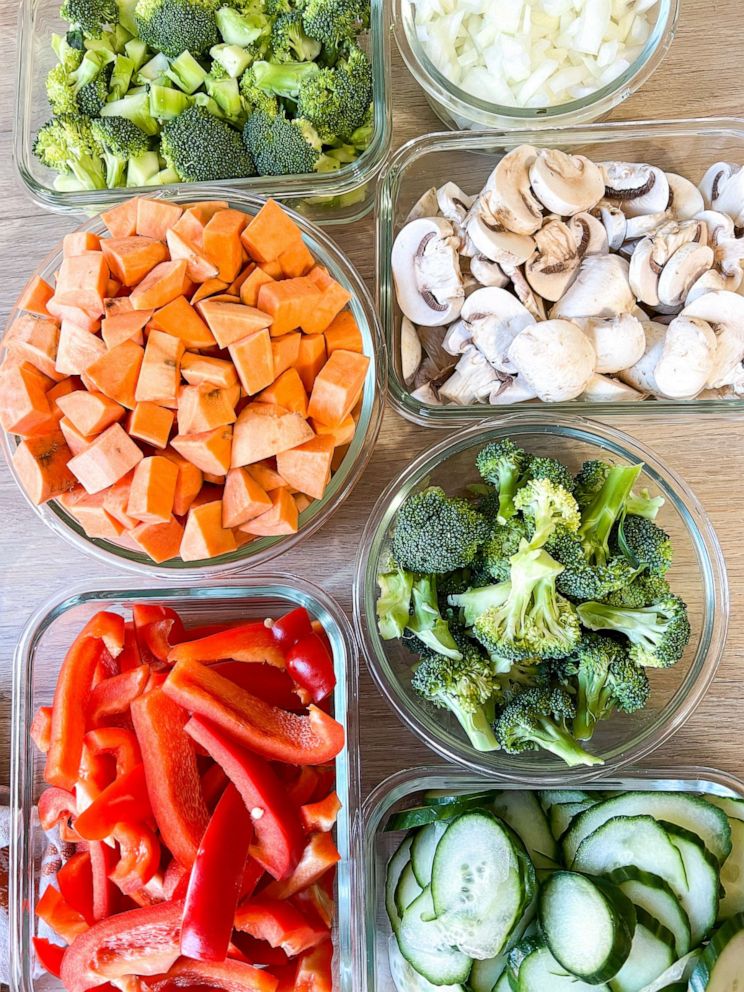
    PHOTO: Meal prepped vegetables for a week of healthy meals.

    @jenneatsgoood

    Meal prepped vegetables for a week of healthy meals.

    “I like to pick four or five meals that I’m going to cook for the week and then I make my list from there and try to see what I can use for multiple things,” Lueke suggested.

    For example with produce, Lueke will look to use recipes that “use the same produce every day” or one ingredient in multiple ways. 

    “If you really wanted to make a unique dinner every night and you didn’t plan it, you could easily spend $200 plus at the grocery store,” she said. “If you don’t plan it and you’re not having that overlap of spices and [condiments] and the proteins, you can easily rack up a huge grocery bill. It’s really about planning.”

    Powerhouse ingredients that go a long way

    Despite not using them in this recipe series, Lueke hailed eggs as a workhorse ingredient that can stretch to work in many meals and recipes.

    Additionally, she said, “I always get chickpeas, coconut milk — it’s like a good paleo vegan option. I always get some kind of greens every week because you can freeze them and then add them to smoothies if you don’t use them — that kind of goes for all produce honestly, I always chop everything up, but if I don’t use it, I freeze it.”

    Easy and versatile proteins for weeknight dinners

    “I like to do like a ground chicken or ground turkey when I can. I like to do chicken thighs because they’re a little bit cheaper than chicken breasts,” she said. “[Opt] for those more affordable things [instead of] pre-cooked or pre-portioned things that just make it more expensive, because if you take a little bit of time to prep it, you’ll save like 50{bf0515afdcaddba073662ceb89fbb62b6b1bf123143c0e06b788e1946e8c353f}.”

    Grocery list for five healthy meals on a $75 budget

    1 1/2-2 pounds chicken breast

    1 package Italian chicken sausage (5 sausages)

    15-ounce can light coconut milk

    1 jar tamari, coconut aminos, or soy sauce

    1 pound frozen cauliflower rice

    4-inch piece ginger root (can substitute with ground ginger)

    6-8 green onions (1 bunch)

    1 package baby bella mushrooms (about 14 mushrooms)

    Pantry items: Spices/sauces

    Once the shopping is complete, Lueke gets to work on prepping ingredients for the following five dishes. Here’s everything you need — and be sure to check out her corresponding Instagram posts for complete cooking instructions.

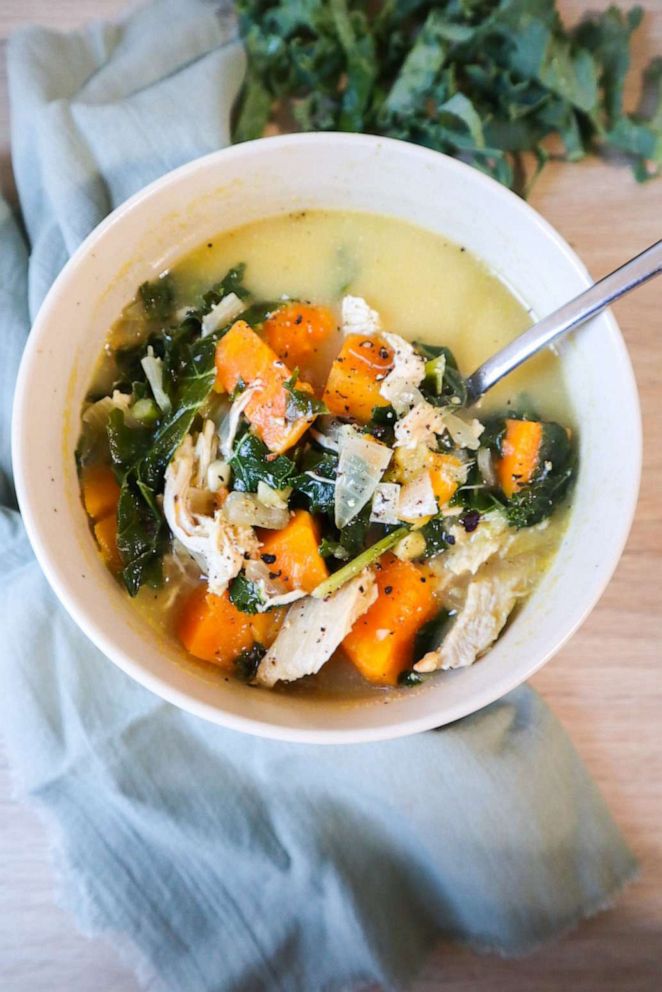
    Meal 1: Ginger, Sweet Potato, & Kale Chicken Soup

    PHOTO: Healthy chicken, veggie and ginger soup.

    @jenneatsgoood

    Healthy chicken, veggie and ginger soup.

    2 tablespoons olive or avocado oil

    1 1/2-2 pounds boneless chicken breast (for a vegetarian option, sub for cannellini beans)

    1 large yellow onion, chopped

    1 + 1/2-inch ginger root piece, minced

    2 large sweet potatoes, cubed

    1 teaspoon salt (plus more to taste)

    1/2 teaspoon black pepper

    1 teaspoon turmeric powder

    3 cups fresh chopped kale

    1/2 of one 15-ounce can light coconut milk

    Meal 2: Curry Chicken Meatballs

    PHOTO: Curry chicken meatballs with veggies.

    @jenneatsgoood

    Curry chicken meatballs with veggies.

    2 tablespoons avocado or olive oil

    3/4 large yellow onion, chopped

    1 large sweet potato, cubed

    1 red bell pepper, sliced

    1/2 broccoli head, chopped

    4 baby bella mushrooms, sliced

    1 teaspoon salt, plus more to taste

    1/2 teaspoon black pepper, plus more to taste

    3/4 teaspoon smoked paprika

    1 tablespoon + 1 tablespoon ground ginger

    1/2 of one 15-ounce can light coconut milk

    1 pound ground chicken (for a vegetarian option, substitute baked tofu)

    1 tablespoon tamari, coconut aminos, or soy sauce

    4-6 green onions, chopped

    sesame seed, for topping (optional)

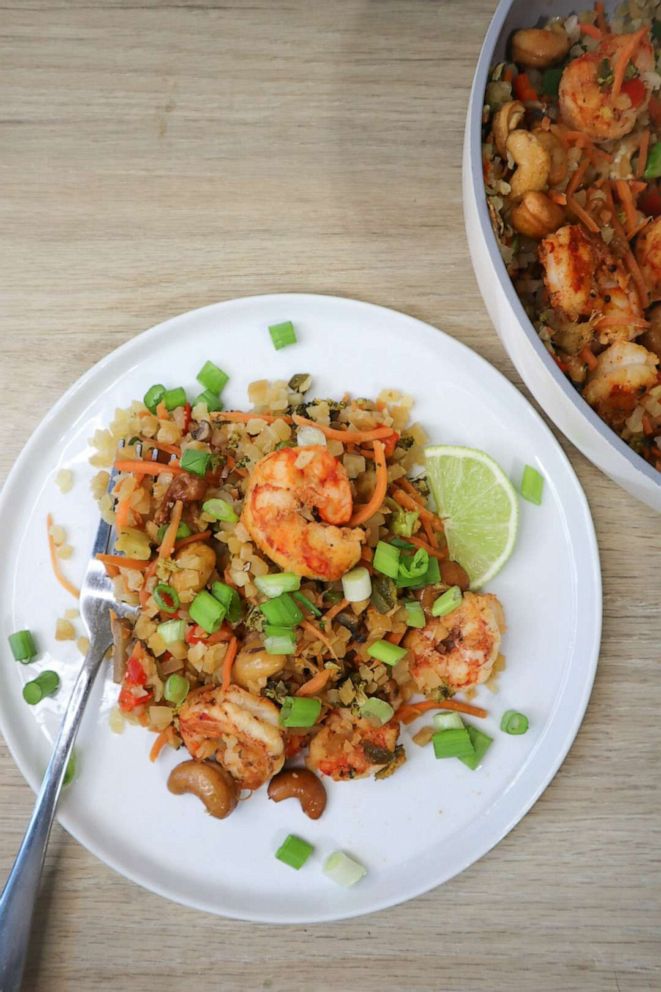
    Meal 3: Cauliflower Shrimp Fried Rice

    PHOTO: Fried cauliflower rice with shrimp and green onions.

    @Jenneatsgoood

    Fried cauliflower rice with shrimp and green onions.

    12-15 frozen shrimp (for a vegetarian option, substitute tofu)

    2 tablespoons olive or avocado oil

    1/2 teaspoon black pepper

    1 teaspoon smoked paprika

    1-inch piece ginger root, minced

    1/2 broccoli head, chopped

    1/2 red bell pepper, chopped

    4 baby bella mushrooms, chopped

    1 jalapeno pepper, de-seeded and chopped

    1 pound frozen cauliflower rice

    1/4 cup tamari, coconut aminos, or soy sauce

    lime juice (optional) for serving

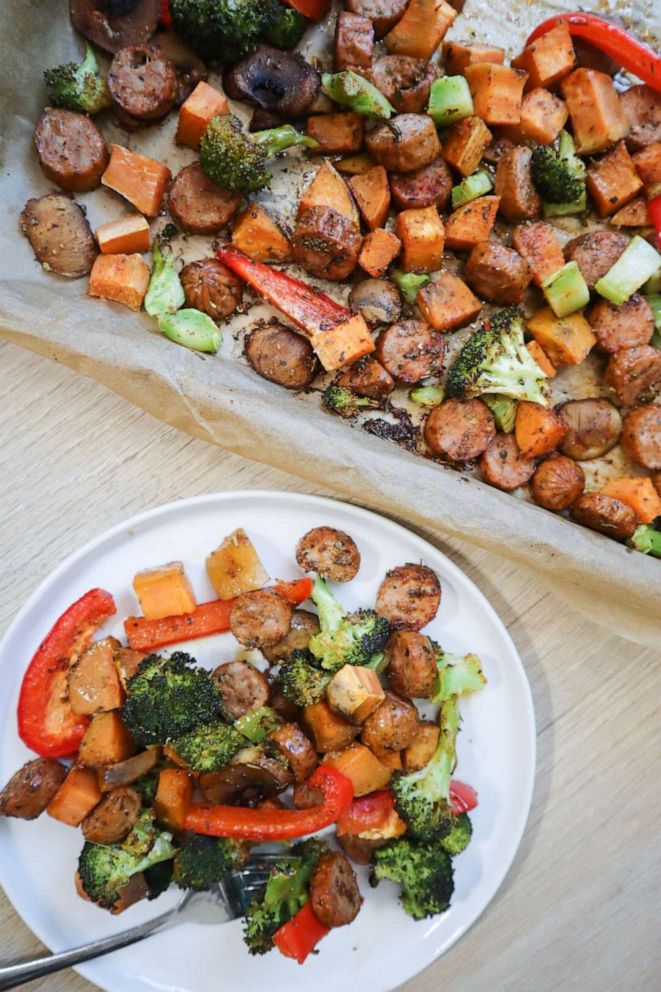
    Meal 4: Chicken Sausage & Veggie Sheet Pan Dinner

    PHOTO: A sheet pan dinner with chicken sausage and veggies.

    @jenneatsgoood

    A sheet pan dinner with chicken sausage and veggies.

    1 large sweet potato, cubed

    1/2 red bell pepper, sliced

    6 baby bella mushrooms, sliced

    1 package Italian chicken sausages (5 sausages) (for a vegetarian option, substitute veggie sausage)

    2 tablespoons olive or avocado oil

    1/2 teaspoon black pepper

    1 tablespoon italian seasoning

    2 teaspoons smoked paprika

    2 teaspoons garlic powder

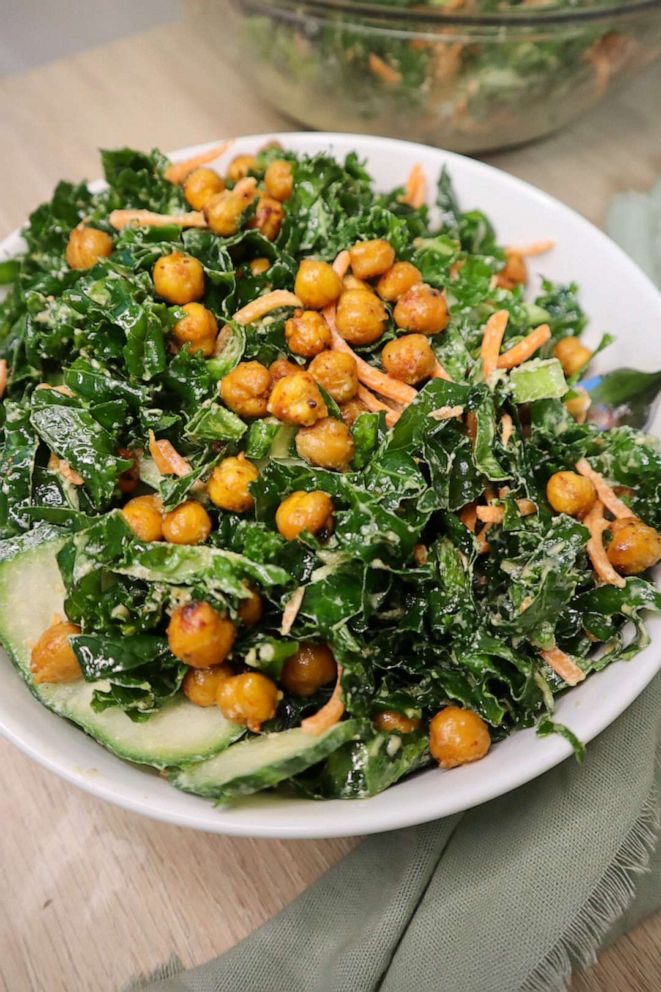
    Meal 5: Crispy Chickpea Tahini Kale Salad

    PHOTO: Kale salad with crispy chickpeas.

    @jenneatsgoood

    Kale salad with crispy chickpeas.

    “I’m not a big salad person — and this one is like amazing,” she said of this dish for day five. “The dressing so good. It’s really simple and it holds up in the fridge for a long time. I absolutely love that and it’s a plant based option which a lot of people were asking about.”

    Plus, she shared her secret for actually crispy chickpeas: “Cook them in the air fryer.”

    “Wash off the chickpeas, pat them dry with a paper towel, season them with all the seasonings, toss it in some olive oil or avocado oil and then put it in the air fryer” lined with a piece of parchment paper, she suggested, “for 18 to 20 minutes.”

    1 large cucumber, thinly sliced

    2 tablespoons tamari, coconut aminos, or soy sauce

    1 tablespoon rice vinegar

    2 tablespoons honey or maple syrup

    Salt, pepper, garlic powder and red pepper flakes to taste

    3 cups fresh chopped kale

    2 tablespoons + 1 tablespoon olive or avocado oil

    15-ounce can chickpeas, rinsed

    1 teaspoon smoked paprika