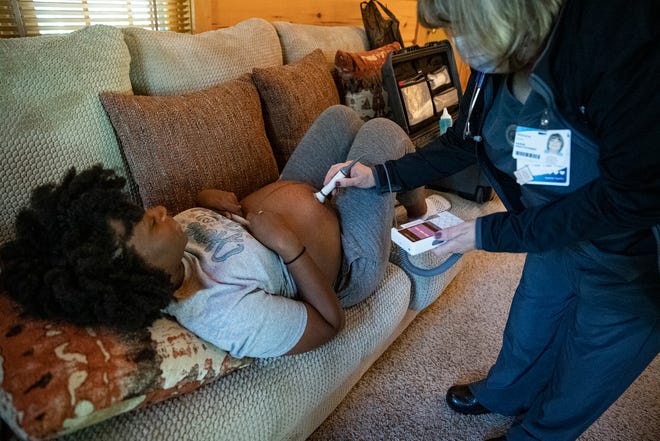
Children languish in emergency rooms awaiting mental health care

This story includes discussions of suicide. If you or someone you know is in crisis, you can get help from the Suicide and Crisis lifeline by calling or texting 988.


While most kids his age were wrapping up their junior year of high school, Daniel was in a box. 

“It was like I was sitting in a gigantic FedEx box being shipped somewhere,” he said. “But like, add one bed and the door had to be closed at all times.” 

Daniel’s years of mental health struggles, stretching back into his early childhood, came to a head in early 2022. His often-uncontrollable emotional outbursts became unmanageable; he was “unraveling,” his parents said. 

CBS News is only using the first names of former patients interviewed for this story to protect their privacy. 

Fearing Daniel might harm himself, his parents took him to the only place they could: the emergency room. After seven days in the ER, Daniel was discharged; hospital staff felt he was no longer in danger. His parents disagreed.  

“We were like no, no, no, he is so not ready,” his mom Kathe said. “We’ve been waiting and waiting, but he is not ready.” 

Daniel’s therapist even wrote a letter to the hospital saying he wasn’t ready to be released. But the hospital said he needed to go home.  

Ten days later, he was back in the ER — this time at another nearby hospital, where he would stay for 19 days.  

“There’s barely any room in the [hospital] room to walk around,” Daniel, now 18, said. “So I was just sitting on my bed all of the time. I had some rough times there, like it was really difficult to, like, stay put, you know, and that’s what they expected [me] to do.”

Read more: Inside America’s youth mental health crisis 

Instead of the intensive mental health care he needed, Daniel said he got very little help while in the room.  

“Dan, rightfully so, he was like, what am I doing here?” Kathe said. “This is not help. You promised help. Where’s the help?” 

“Severe shortage”

Stories similar to Daniel’s are growing more common in the U.S., fueled by a critical shortage of doctors, therapists and resources to address the needs of kids in crisis. 

In Massachusetts, the number of kids landing in ERs for mental health treatment soared 200{bf0515afdcaddba073662ceb89fbb62b6b1bf123143c0e06b788e1946e8c353f}-400{bf0515afdcaddba073662ceb89fbb62b6b1bf123143c0e06b788e1946e8c353f} during the pandemic. That same trend is reflected across the country: a 2021 study found the number of kids stuck in ERs awaiting treatment tripled between 2019 and 2021. 

“I do think it is very bad,” said Dr. Muniya Khanna, research scientist at Children’s Hospital Philadelphia and a former faculty member at the University of Pennsylvania’s Department of Psychiatry. “Suicide is now the number two leading cause of death in children 10 to 24. And this trajectory is only getting worse after the COVID pandemic. And so, we are absolutely in a crisis.” 

Experts say it’s a demand and supply issue: demand for mental health services has increased after the pandemic and the supply of trained staff hasn’t increased enough to fulfill the needs. 

Forty U.S. states and Puerto Rico all have “severe” shortages of child psychiatrists, according to data from the American Academy of Child and Adolescent Psychiatry (AACAP) analyzed by CBS News. Only the District of Columbia reported having enough child and adolescent psychiatrists to meet AACAP standards.

RELATED: Half of all Texas school districts have no mental health services 

Amid this lack of formal mental health treatment options, ERs have become the last and only option for many families, according to numerous mental health experts interviewed by CBS News.  

“Kids languish for days, weeks, sometimes even over a year in children’s hospitals around the country,” said Zach Zaslow, vice president of advocacy and community health at Children’s Hospital Colorado. “This is not just a Colorado problem, and it happens because there’s nowhere else that’s safe for them to go.” 

In Colorado, Michaela, who grew up in foster homes, told CBS News she tried get a special therapist to address her anger, anxiety and depression nearly a dozen times. 

“I would be crying out for help,” Michaela said. “I would say I need support. And it wouldn’t happen until I came to a point where it was too late to really come back and not make a bad decision that in the end would hurt me.” 

Michaela said she tried to hurt herself, including several suicide attempts, over those years. She said the system in its current form does not do enough for young people until they reach a crisis point. 

“I think it’s really hard to get into a good therapist or just a therapist in general,” Michaela said. “It doesn’t matter if they’re good or bad.”  

Michaela said she had a total of eight ER visits for mental health crises, and often left the ER without seeing a therapist. The few times she did meet with a mental health expert, she said her therapy was cut short. 

“It did cause me to have to go back [to the ER] again like less than a year later just because I didn’t get the help that I needed,” said Michaela. “And I think it was partly because I left too early.”  

Michaela, who is now 20, said she is proud that she’s “beat the odds” and survived. She now sits on a youth advisory board as part of a partnership between the University of Colorado and Children’s Hospital Colorado. 

“It definitely made me feel like all of that pain and suffering that I had to go through wasn’t a waste,” said Michaela. “Because now I can be the voice of power for so many other young people who are stuck in the same situation that I was and give them hope that I didn’t have then.” 

A revolving door at ERs

Experts told CBS News the use of ERs as stopgap mental health treatment measures simply doesn’t work.  

“For anybody who’s been in an emergency department for more than a few hours, it is not an ideal place to be,” said Dr. Kevin Carney, an emergency room physician at Children’s Hospital Colorado.   

Massachusetts General Hospital in Boston, where Daniel stayed for 19 days, acknowledged the problem, saying in a statement to CBS News that “shortages [of proper mental health treatment options] have forced youth in crisis — and their families — to turn to their local emergency departments where ongoing capacity challenges may mean waiting for days or weeks for appropriate inpatient care to become available.” 

For kids in crisis, ER visits can make matters even worse.  

A December 2022 American Academy of Pediatrics study found more than a quarter of children who went to ERs for mental health issues were hospitalized — either in ERs or in mental health facilities — within six months. And about 26.5{bf0515afdcaddba073662ceb89fbb62b6b1bf123143c0e06b788e1946e8c353f} were back in the ER within a week.  

Dr. Sandra DeJong, a psychiatrist and the secretary with the American Psychiatric Association, said if kids don’t get proper care early, their condition can rapidly get worse. 

“My fear is that we really have significant risk for the future,” DeJong said. “Because if we don’t address the needs of particularly young people now, then they are going to grow up to be people who are diminished and don’t have the capacity to function in the way that they could have if they had gotten the treatment.  

“And frankly, they’re going to be expensive to care for because if they go untreated, there are situations that are likely to get worse and then they will need higher intensity care. It’s just not an effective way to approach the problem.” 

Meanwhile, more and more kids find themselves in crisis. Suicide attempts by teen girls jumped more than 51{bf0515afdcaddba073662ceb89fbb62b6b1bf123143c0e06b788e1946e8c353f} between 2019 and 2021, according to a study by the CDC. And a recent study published in the journal JAMA Pediatrics found the number of suicide attempts by overdose reported to poison control centers more than doubled between 2000 and 2020.

The number of kids with mental health issues coming to the ER “has been unrelenting,” said Zaslow.  

“And it’s not acceptable,” he added. “It means ultimately, at the end of the day, that there are kids waiting for those beds every single minute as soon as one frees up.”   

Dr. Taylor Louden, medical director at Cook Children’s Medical Center in Fort Worth, Texas, said that in recent years he’s seen more and more young patients come into his ER for mental health problems. 

“We are seeing even younger and younger kids, 8-, 9-year-olds — ages of my kids,” said Louden. “Some are expressing that they want to hurt themselves that they want to die and it’s really tough to hear.” 

Not only are there more kids showing up in ERs, Louden said, but they’re staying longer, too.  

“No one should ever be in an ER longer than a few hours,” he said. “That means that the system is broken, in my mind.” 


Inside an ER’s psych room

04:04

“It’s not acceptable” 

Numerous experts CBS News interviewed said serious investments are needed to increase the mental health resources available to kids in crisis.  

CBS News went to the person in charge of the system in the U.S.: Health and Human Services Secretary Xavier Becerra, who said “we have to do a lot” to fix the problem. 

“It wasn’t until recently that you could get an insurer who actually gave you access to mental health services,” Becerra said. “And we still have a system where mental health is what you get at a primary care physician when you go to a family doctor.  

“That’s got to change. Mental health, it’s got to be part of primary health, not something where you get a referral to a specialist.”  

When asked about children getting stuck in ERs rather than proper mental health treatment facilities, Becerra said it was “not acceptable.” 

“It’s not care,” Becerra said. “It’s housing them until we can get somebody who could give them professional help. They’re crying out and shame on us that we haven’t prepared.”  

Becerra pointed out that several states and the federal government are investing billions of dollars into mental health care. And last summer, the Biden White House announced $300 million to expand mental health services in schools. 

“That’s where the president last year in the State of the Union and again, double down this year has said, Congress, we’ve got to step up, we’ve got to finish the job of making sure that mental health is treated like any other aspect of health,” Becerra said.  

But doctors Khanna and DeJong both said much of this federal spending comes in the form of one-time grants that will eventually expire.  

“Now it’s really time to start investing time and resources on all levels for making that happen more on a regular basis,” said Khanna. 

Attracting more people to work in youth mental health must be part of the equation, DeJong said.  

“You can build all the beds and clinics in the world,” DeJong said. “But if you don’t have enough people to staff them, which is a real problem right now, we’re not going to meet the needs that we’re facing.”   

Secretary Becerra agreed.  

“You just got to put your money where your mouth is. And President Joe Biden is trying to put his money there,” Becerra said. “We need now the partnership with Congress to make it happen.”  


HHS Secretary Xavier Becerra speaks about youth mental health crisis

06:53

Some aren’t waiting on the federal government to help, instead trying new approaches in attempts to address this crisis and meet young people where they are.   

One of those approaches comes in the form of a youth advisory group at Children’s Hospital Colorado. The advisory group consists of teenagers who regularly meet to give advice to therapists and hospital officials about how to meet the needs of young people. 

Another new approach: construction of a new, first-of-its-kind facility at the Cherry Creek School District outside Denver that will combine a mental health medical facility and a school when it’s completed in the fall of 2023.  

When kids in crisis leave ERs 

Finding help after a hospital stay can be even more challenging. 

The Academy of Pediatrics study found just 31.2{bf0515afdcaddba073662ceb89fbb62b6b1bf123143c0e06b788e1946e8c353f} of children had a mental health follow-up visit within seven days of leaving the hospital and only about half had a mental health follow-up with a specialist within 30 days of leaving the hospital. 

“I think what is very distressing about this mental health crisis that we’re facing is that while we very much take as part of our responsibility to make sure that we are keeping kids safe and stabilizing them when they’re in crisis or have harmed themselves,” Dr. Carney said. “The very hard thing is knowing that at that point I can’t do anything else for that child.” 

Dr. Glenda Wrenn Gordon knows those statistics firsthand: she and her 18-year-old son lived them.  

Wrenn Gordon said even though she’s an Atlanta-area psychiatrist herself, she was surprised by the effort she had to put in to find help for her son in crisis after she got him to the ER. She said she thought she knew what to do, but still found the system of finding and getting care post-hospital visit to be daunting. 

“We moved very quickly through the ER because I knew exactly what to say and how to say it to get us where we needed to go,” she said. “I was extremely frustrated for how hard it was. I was thinking about these other families. What hope do they have and what it must be like?”  

When asked what she fears most if the system is not changed, Wrenn Gordon was blunt. 

“We will continue to bury our children,” she said. 


Atlanta psychiatrist struggles to find help for her son

02:56

If you or someone you know is in crisis, get help from the Suicide and Crisis Lifeline by calling or texting 988. 

In addition, help is available from the National Alliance on Mental Illness, or NAMI. Call the NAMI Helpline at 800-950-6264 or text “HelpLine” to 62640. There are more than 600 local NAMI organizations and affiliates across the country, many of which offer free support and education programs. 

Why did scientists generate electrodes in zebrafish brains?

Why did scientists generate electrodes in zebrafish brains?Share on Pinterest
Pictured, the injectable gel being tested on a microfabricated circuit. Image credit: Thor Balkhed.
  • Studying the brain is difficult, and often involves invasive techniques, such as using a probe, to gain information about electrical signaling.
  • This means our understanding of exactly how brain signaling works is limited, which has implications for basic science and medical research.
  • A research team has discovered a way to inject an enzyme-containing gel into zebrafish brains, which triggers a reaction that causes it to turn into an electrode.
  • This can be used to measure electrical cell signaling in the brain, which could have further clinical and research applications in the future.

Studying the brain is notoriously difficult. Sampling it in a living person is next to impossible, probing it is invasive, and getting drugs to cross the blood-brain barrier to observe how it behaves, challenging.

One of the most important breakthroughs in biology in the past decade has been harnessing the ability to influence stem cells, either embryonic or human stem cells, to form particular cell types.

Researchers have cultured these to form mini-organ models or organoids.

Organoids have proved particularly useful for studying the brain, and the different types of cells that the brain and nervous system are made from.

For example, one of the earliest uses of organoids was to develop a model of a person’s brain using induced pluripotent adult stem cells from their skin.

One area of current research focuses on seeing if models recreate the structures that develop naturally. So far, researchers have created brain organoids that demonstrate eye-like structures, and others that were able to integrate with rats’ brains, and even heal injured areas of tissue.

In addition to this area of study, there is also work being done to study brain cells in vitro, or in a Petri dish, using induced pluripotent stem cells, to gain greater insight into how brain cells or neurons work.

Last year, a debate was launched when scientists from University College London in the United Kingdom and the start-up Cortical Labs, announced they had developed DishBrain, which integrated brain cells onto computing devices using multiple electrodes.

They used this device to “teach” neurons how to play the computer game Pong, and published the results in Neuron.

This emerging area of research, known as “bioelectronics,” can also give us an insight into how brain cells work. Brain and nerve cells work by transmitting electrical activity and using these for cell signaling, as well as signaling using chemical cell signaling used by other cells.

By being able to merge electronics with nerve cells, we can measure cell signaling in a less invasive way than what is currently required when using a brain probe to measure electrical activity, for example.

Less invasive techniques may not only be more ethical but they might produce more reliable results, as there is less chance of interference from the invasive technique itself.

One of the biggest challenges facing those trying to merge electronics and living tissues is making the structure compatible: One is animal and one is mineral, after all.

Most of the recent advances in this area take place on silicone structures, or on specially designed films in a Petri dish, but these are difficult to merge with living tissues.

Recently, a group of scientists based in Sweden has created an injectable gel that undergoes polymerization — a kind of crosslinking — which allows it to act as an electrode and carry electrical signals.

The process was demonstrated in zebrafish brains and leeches, and the research findings outlined in a paper published in the journal Science.

In the paper, researchers describe how they created an “injectable cocktail gel” containing an enzyme that triggers a signaling cascade that leads to the polymerization, or linking, of other molecules in the “cocktail” in the presence of lactate, which occurs naturally in the body, and in the central nervous system.

The linking of the molecules that occurs allows them to conduct electrical signals, meaning that the gel forms an electrode when in contact with chemicals that naturally exist in the brain.

Researchers tested how resilient the electrode that had been formed was to harsh environments, and also tested its biocompatibility and found no negative effects on the zebrafish, said lead author Dr. Xenofon Strakosas, principal research engineer in the Laboratory of Organic Electronics at Linköping University, Norrköping, Sweden in an interview with Medical News Today.

The experiments were a proof of concept, he explained:

“Next week, we have collaborations with more advanced animal models like mice and rats and stuff. In the beginning, we optimized these processes in zebrafish and leeches to deduce animal modeling to prove that this can be biocompatible [and] will not interfere with the normal functional sort of the models.”

“For example, in the zebrafish, we didn’t see any side effects. So this was the proof of concept. And now we are moving towards different applications,” Dr. Strakosas noted.

The electrode formed in the brain by the gel could be attached to devices that record electrical signaling, shedding light on the ways that these cells signal with each other.

Though the gel has not been tested on heart tissue, it could have some applications in studying electrical signaling in the heart, Dr. Strakosas explained.

Dr. Brett Kagan, chief scientific officer of Cortical Labs, which was behind the DishBrain discovery reported last year, who was not involved in the current research, told MNT in an email:

“This is an exciting step forward in interfacing with living brain and other electrically active tissues for research purposes, with evidence for being able to investigate less accessible regions less invasive than is typically done.”

“While much more work is still required even for this to be commonly implemented in animal research, it is possible that it may even provide a basis for future developments that could one day lead to more complex applications of this approach even in humans,” Dr. Kagan added.

Remove roadblocks to medical care by nurse practitioners in Indiana

As a physician who provides health care to Hoosiers every day, it’s clear that our state is facing a mounting crisis of care. There simply aren’t enough physicians to meet the skyrocketing patient demand, and many of us are retiring. For years, I’ve worked with advanced practice registered nurses (APRNs) to provide patients with safe, high-quality care. It’s time for the state legislature to remove the legislative roadblocks that prevent patients from choosing APRNs as their health care providers.

Across our state, the physician shortage is having detrimental effects on Hoosiers’ health. Health care costs are up and health outcomes are down. We hear every day that patients are having difficulty scheduling appointments for routine care. The lack of prenatal care is driving up infant mortality rates across our state. Kids devastated by the pandemic can’t get the mental health care they need. The status quo isn’t cutting it anymore and policymakers need to make a change.

Can the Fitplan App and Michelle Lewin’s Workouts Help You Level Up Your Fitness?

Gone are the days when the only fitness gurus around were Billy Blanks, Jane Fonda, and Kathy Smith. Now there are so many fitness influencers on social media and YouTube that it’s hard to choose which one can actually help you crush your fitness goals.


Michelle Lewin is one of the most popular fitness influencers on the internet, but are her app, Fitplan, and her YouTube channel the resources you should use to achieve your goals? Find out what Lewin has to offer and what makes Fitplan a valuable tool as you strive to be fit and healthy.


Fitplan and the Michelle Lewin Fitness Website

With over 15 million followers on Instagram, Michelle Lewin is an incredibly well-known fitness icon and model. However, her stardom isn’t limited to Instagram, as she has built somewhat of a fitness empire. In fact, she has both a workout app and YouTube channel, as well as a range of products that includes fitness equipment, supplements, workout clothing, and accessories.

What makes Michelle Lewin unique from many other fitness influencers is her journey and hardworking attitude. She started simply by working in a clinic in Venezuela, and she stays relatable, humble, and unpretentious during her videos.

Beyond her motivating attitude and inspirational story, here are the features of the Fitplan app and Lewin’s website that you should check out as you decide if she’s the trainer for you.

1. Fitplan Workout App

Fitplan is Michelle Lewin’s home and gym workout app. The app offers a bunch of awesome features including over 100 workout plans, an extensive collection of healthy recipes, and a global fitness community.

To get started on Fitplan, you first have to answer a set of questions so that the app can get an overview of your preferences and recommend some workout plans that are best for you. Don’t worry, you do have the option to change and update your initial filter choices whenever you like.

There are even more filters you can add to narrow down your search for the perfect workout. Some of them include fitness level, training type, focus area, and whether you’re looking for a full workout plan or merely a single workout.

You might like using a workout app because it makes it effortless to work out from the comfort of your own home, but that is what makes the Fitplan app different. Fitplan caters to both people who prefer to work out at the gym and people who prefer at-home workouts.

Download: Fitplan for iOS | Android (Free, subscription available)

Fitplan Workouts and Plans

The Fitplan app has a massive selection of training plans and single workouts, and the library continues to grow! If you’re considering committing to a lengthy workout plan, choose the workout frequency, duration, and training type that works best for you.

On the other hand, you can choose a workout plan based on your favorite trainers, like Scott Mathison, Jen Selter, and even Michelle Lewin herself.

There aren’t as many single workouts available on the Fitplan app, but they’re a nice option if you don’t want to dedicate yourself to a full-on workout plan. The single workout sessions range from 8-minute abs workouts to 90-minute chest and back routines with Jeff Seid.

Nutrition in the Fitplan App

Fitplan isn’t all about the workouts, the app also offers over 400 delicious, nutritious, and easy-to-make recipes. The recipes are from the Fitplan trainers themselves and include all the necessary nutritional information, like overall calories.

You can use multiple filters to find recipes based on course or your dietary preferences. So there’s something for everyone, whether you’re looking for the perfect side dish or a quick pre-workout meal.

2. The Fitplan Blog

When you visit the Fitplan website, you’ll find a tab labeled Magazine. Click on it, and you’ll be taken straight to the Fitplan blog. The blog covers a handful of interesting categories including fitness, wellness, nutrition, and general news about Fitplan.

The fitness category features all you need to know about leveling up your workout game, like tips and tricks and inspiring member stories. Nutrition, of course, is all about what you put into your body. Here, you’ll find healthy recipes and essential information to help you on your nutrition journey.

The wellness category focuses on healthy habits for your physical and mental well-being. Why Exercising Makes You Happy and 5 Tips for Better Sleep are just a couple of the articles you should take a look at.

3. Michelle Lewin’s Zumba Workouts

Do you want to sweat to the beat? STRONG by Zumba is an online workout class that’s completely different from any other Zumba cardio dance workout class. This Zumba class doubles as an intense HIIT workout session where every beat of the music matches the individual exercise movements. You can either stream this collaboration between Lewin and STRONG by Zumba using Amazon Prime Video or buy the DVD online.

4. Michelle Lewin’s YouTube Channel

The Michelle Lewin YouTube channel has plenty of videos that can help you correct your exercise forms, cook up healthy recipes, and learn more about fitness tips and tricks. Unfortunately, the workout videos do not guide you through full, free guided workout classes.

Instead, compared to other fitness brands like Pamela Reif and Chloe Ting, Lewin only demonstrates each exercise in the routine, including how many reps and sets you should do.

Lewin centers more on providing full workouts and workout plans on the Fitplan app. So, the YouTube videos are nice if you’re looking for a simple demo of a workout routine, but it’s best to download and use the Fitplan app if you want ongoing guidance on workout routines and long-term plans.

Are Fitplan and Michelle Lewin’s YouTube Channel Helpful for Your Fitness Goals?

Crushing your fitness goals can sometimes be difficult. Perhaps you’re in a slump, or you simply don’t know where to start. Whatever the case may be, you probably need a little guidance on your journey to fitness.

Although Michell Lewin’s brand offers various YouTube videos, a line of products, and lots more, what is really great is her workout app, Fitplan. The app doesn’t just give you access to a workout plan that’s suited for your journey with step-by-step instructions. Fitplan also gives you that community aspect that is so important to keep you motivated!

With so many fitness influencers, icons, and gurus posting content online, it’s tough to pick just one. Of course, you don’t have to! But if you did want to choose one, Michelle Lewin and her app provide some of the best home and gym workout content around.

Is Your Phone a Medical Device?

Scholar argues that Congress and FDA should treat risky clinical artificial intelligence tools as medical devices.

When the U.S. Congress defined the term “medical device” in the Food, Drug, and Cosmetic Act, it mostly had in mind physical hardware products, such as knee replacements, pacemakers, and surgical instruments.

But today, patients and providers often rely on software tools to improve health. Examples include the Apple Watch’s electrocardiogram app and a smart camera that tells ophthalmologists whether a diabetes patient is at risk of blindness.

In a recent article, professor Sara Gerke of Penn State Dickinson Law proposes that Congress broaden the definition of a “medical device” to encompass risky products that rely on artificial intelligence (AI), and that the U.S. Food and Drug Administration (FDA) exercise regulatory oversight over the makers of some of these products.

Admittedly, FDA has adopted a regulation that treats as medical devices any software used for “medical purposes”—disease prevention, treatment, and diagnosis.

But not all software services related to health care serve medical purposes. FDA clarified in 2019 that software tools that only help users maintain “a general state of health or a healthy activity” are not medical devices. A smartphone app that monitors your exercise activity, for example, is currently not considered a medical device. Neither is software intended to reduce an individual’s risk of chronic diseases or conditions, such as an AI service that helps Type 2 diabetes patients eat a balanced diet for their condition.

In her proposal, Gerke calls for Congress to define such “clinical decision” software as medical devices. Doing so would include many risky AI-based health care products that FDA currently does not regulate, Gerke contends.

Gerke offers AI-based mortality prediction models as a telling example. These algorithms analyze a cancer patient’s medical records to predict likelihood of death within the next six months. Gerke argues that, because such algorithms do not directly relate to the prevention, treatment, and diagnosis of a condition, the current statutory definition of a medical device would likely not cover them.

Hospitals increasingly rely on tools such as cancer mortality prediction models in clinical decision-making, which Gerke claims could jeopardize patient safety. Gerke explains that “a model could lead to the cessation of a patient’s treatment if it incorrectly predicts the patient’s early death.”

Her proposed fix is simple: Congress should amend its definition of a medical device to include clinical decision-making tools that are intended for the “prediction or prognosis of disease or other conditions or mortality.”

Gerke also notes that many AI-based tools, including those used in health care, rely on “black box” machine learning models that hide the logic of how they reach their determinations. This opaqueness makes it difficult for providers and patients to review the tool’s recommendations independently.

Gerke first proposes a “gold standard” solution to the challenges that black-box medical algorithms pose: Congress can require the makers of clinical AI to use a “white-box” model—a transparent system that reveals how the clinical algorithms reach their decisions—whenever a white-box system would perform better than a black-box one.

But if companies can demonstrate that a black-box AI system for a particular product would perform better than a white-box one, then FDA should shift its focus to verifying the tool’s safety and effectiveness, argues Gerke. She suggests that FDA can better accomplish this verification if it regulates these black-box systems as medical devices.

Only then can FDA ensure that black-box algorithms in health care are safe and effective through clinical trials, according to Gerke. For this reason, she proposes that FDA adjust its regulation of these black-box products to match the standards it imposes on more traditional medical devices.

But beyond clinical trials, FDA can do more to bring clinical AI tools into compliance with the agency’s medical device rules and standards, Gerke argues.

FDA mostly takes enforcement action against the makers of AI-based medical devices through a discretionary approach that considers the level of risk that a particular device poses, Gerke explains. And in determining what counts as a “risky” AI-based tool, FDA emphasizes whether the tool allows for the user—whether caregiver or patient—to review independently the software’s decisions. If a tool does allow for independent user review of clinical decisions, then FDA usually will not take regulatory action against the tool’s manufacturer, Gerke describes.

Gerke proposes, instead, that FDA focus its regulatory oversight on two types of AI-based medical devices: those that make decisions on “critical or serious” health conditions, irrespective of whether providers or patients can independently review those decisions; and those that make decisions on “non-serious” health conditions, but do not allow for independent review of the software’s decisions by patients or providers.

This shift in focus would likely subject to FDA oversight, for example, mortality-prediction tools even when a physician or patient can independently review the tool’s prognoses before making decisions based on them, Gerke suggests. But lower-risk tools, such as general wellness products like asthma alert mobile apps, might not warrant such oversight under this proposal.

Both Congress and FDA can take decisive action to keep pace with the rising tide of AI-based health care products, Gerke concludes.

Big food companies slam government proposal for regulating “healthy” food labeling

As the federal government moves to change rules for what foods can sport “healthy” labels, manufacturers are pushing back.

Some of the biggest makers of cereals, frozen and packaged food have submitted dozens of claims to the Food and Drug Administration objecting to new rules that would exclude food with high amounts of added sugar and salt from being labeled as “healthy” on packaging. Some manufacturers have even called the regulations unconstitutional, saying they violate companies’ First Amendment rights. 

The FDA last fall moved to update its requirements around what foods can use the word “healthy” on packaging — the first change since the rule was implemented in the 1990s. The proposed changes would leave out high-sugar, low-fat products that currently are allowed to use the healthy label today, such as fruit-flavored low-fat yogurts and Raisin Bran cereal.

That’s unfair, many food companies gripe, complaining that the more rigorous nutritional standards would wrongly malign a range of popular foods. The rule “automatically disqualifies entire categories of nutrient dense foods,” Kellogg’s wrote in a February 16 comment on the agency’s proposal. 

General Mills goes further, arguing that the FDA’s “overly restrictive” rule violates companies’ rights to free speech.

“[T]he Proposed Rule precludes many objectively healthy products, including those promoted by the Dietary Guidelines, from engaging in truthful, nonmisleading commercial expression — and these overly restrictive boundaries for ‘healthy’ violate the First Amendment,” the packaged-food giant writes. 

General Mills has a slew of well-known brands, including Annie’s, Betty Crocker, Cascadian Farm, Pillsbury and Yoplait, as well as cereals Chex, Cheerios, Choco Puffs, Cinnamon Toast Crunch, Raisin Nut Bran and Wheaties.

The window for submitting public comments on the proposed rules closed earlier this month. The FDA will now review the feedback, though the timing of a final rule is uncertain.


FDA proposes new rules for plant-based milks

04:16

The Consumer Brands Association, whose members include Coca-Cola, PepsiCo, Hain Celestial and the Campbell Soup Company, took a similar tack, writing that “consumers have a First Amendment right to receive truthful information about products and manufacturers have a First Amendment right to provide it to them.” The group estimated that 95{bf0515afdcaddba073662ceb89fbb62b6b1bf123143c0e06b788e1946e8c353f} of foods currently on the market would not qualify for a “healthy” label under the government’s new requirements. 

KIND, the granola bar company, took issue with the FDA’s proposed limits on added sugars in foods, saying they “created a barrier for fruit, vegetable, and protein food innovation” and would lead to more companies using artificial sweeteners in their products to mimic the taste of sugar-sweetened food.

“Criteria for use of ‘healthy’ should not be so restrictive that they allow only a very limited number of foods to qualify, because this could lead consumers to conclude that other nutrient dense food choices are ‘unhealthy,'” the company added.

No label, no customers?

Conagra Brands, creator of the “Healthy Choice” brand of frozen meals, offered a blunt assessment: If it reinvents “Healthy Choice” to comply with the new rules, people won’t buy it, the company said. 

“Conagra cannot continue to invest in ‘healthy’ innovation if we are not able to meet the necessary taste, eating trends and affordability our consumers expect. If the food does not taste good, people will not buy it,” Conagra said. 


FDA hasn’t reviewed some food additives in decades

02:33

Many “Healthy Choice” items have been criticized for their high amount of sugar or salt. For instance, the “Healthy Choice Sweet and Sour Chicken” meal contains 21 grams of added sugar — 42{bf0515afdcaddba073662ceb89fbb62b6b1bf123143c0e06b788e1946e8c353f} of the current recommended daily value — while providing just 390 calories. 

“Meeting people where they are”

The American Frozen Food Institute said that restrictions on sodium would result in “nutritious frozen items being excluded due to a small amount of sauce that makes the item much more likely to be consumed.” 

“Consumers already know that whole fruits and vegetables are healthy and may not be consuming such products for a variety of reasons,” the Institute said, adding that the FDA should be “meeting people where they are.”

The Consumer Brand Association echoed this comment, writing: “Many consumers are constrained from preparing meals and snacks from ‘plain’ ingredients due to limited time, affordability, easy access to stores that sell these ingredients, kitchen resources, and cooking skills. And most consumers do not typically eat foods in a plain, unflavored form.”

Despite this industry’s grousing, many nutrition experts have come out in favor of the FDA’s revised guidelines. Requirements for the “healthy” label haven’t changed in the 28 years since it was first created, even as the public understanding of what’s nutritious has evolved. 

“We want to use policies that advocate for a healthier diet than we currently have, and that’s why we believe the healthy claims should be allowed only for foods that are truly healthy,” said Eva Greenthal, senior policy scientist at the Center for Science in the Public Interest. The CSPI mostly supports the new rules but says they allow too much refined grain and processed fruit.

Powerful marketing 

Under the FDA’s proposed rules, foods high in sugar, sodium or refined grains won’t be banned; rather, food makers won’t be allowed to label such products as “healthy,” which can be a powerful marketing claim.

“There are currently some products labeled ‘healthy’ that contain insane amounts of sugars,” Greenthal said. 

That’s a remnant of the low-fat craze of the early nineties, when processed-food manufacturers created a slew of supposedly low-fat snacks that contained high amounts of sugar and salt to compensate for the loss of taste. Since then, research has overturned the belief that all fat is bad for health while demonstrating the harmful effects of high sugar consumption. 

Greenthal sees the revised FDA guidelines as mostly positive, although she doubts it will have much impact on Americans’ eating habits.

“What we really need are mandatory labels that force companies to disclose information they otherwise conceal,” she said. “Companies are very quick to tell us if a product is high in fiber or vitamin C, but not when a product is high in saturated fat, sodium, or sugar. These are the products that are linked to heart disease, high blood pressure and diabetes.”

The CSPI recently petitioned the FDA to require food makers to prominently label these ingredients on the front of a food package.

“The FDA just needs to consider its mission, to protect public health, and use that as its guiding star as it faces industry pressure to prioritize industry interests over public health,” Greenthal said.