Before getting that diagnosis, Balducci said she spent nearly two decades of her life living with menstrual cycles so painful she’d have to miss work or school.
“I’ve been to the [emergency room] because the pain was so bad sometimes I thought, ‘This can’t just be cramps. This has to be my appendix bursting,'” Balducci told “Good Morning America.” “I consistently was told that my [period] pain was normal. Nobody mentioned the word endometriosis once.”
It was only last year, as Balducci was starting the process of freezing her eggs, that she said a fertility doctor told her she should see a specialist for her pain.
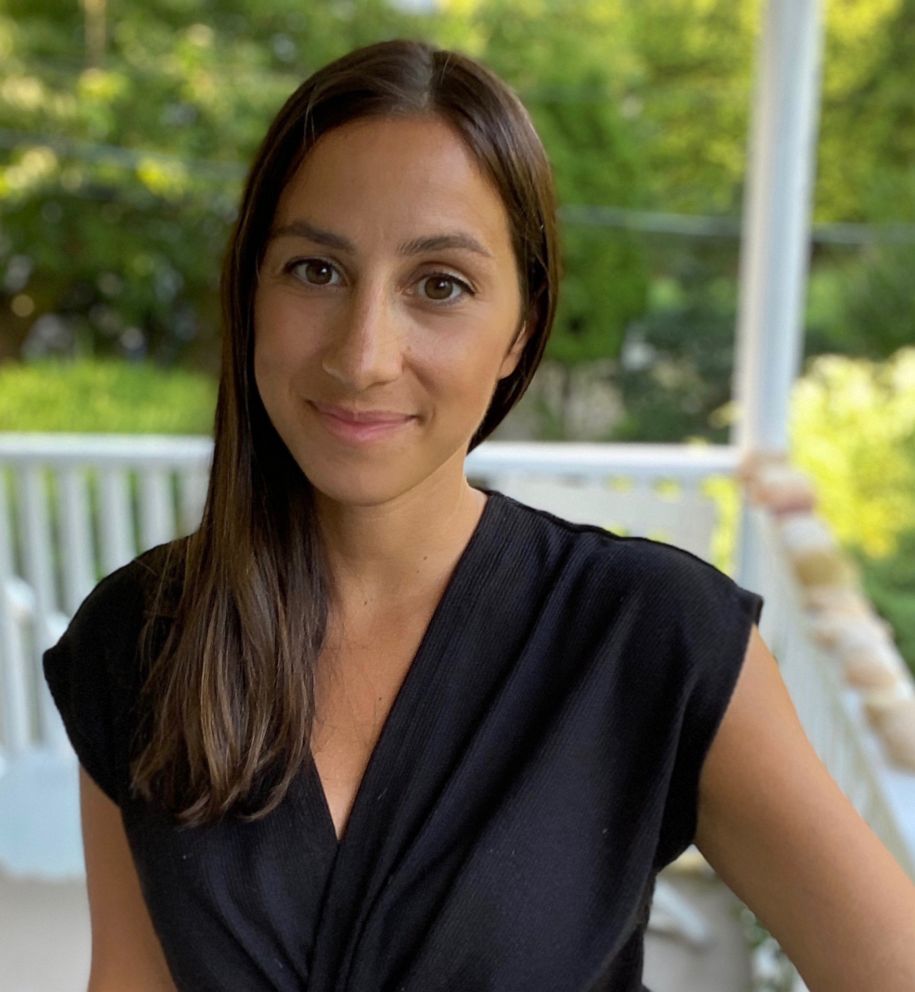
Courtesy Victoria Balducci
Victoria Balducci, 39, was diagnosed with endometriosis after experiencing symptoms for over a decade.
Once she saw a specialist who told her she likely had endometriosis, Balducci had to undergo laparoscopic surgery, as it is currently the only way to diagnose the disease.
“It’s really invasive … and the recovery is very intense,” Balducci said of the surgery. “And the diagnosis and the surgery, for many, is a step because there is mystery around if the endometriosis is going to grow back, and if the pain is even going to go away.”
Researchers believe that endometriosis — a disease where the tissue forming the inner lining of the uterus is found outside of the uterus such as within the fallopian tubes, ovaries, bladder and intestines — affects more than 6 million women in the U.S. and as many as 200 million women worldwide.
Though it is one of the most common gynecological diseases, according to the National Institutes of Health, getting a diagnosis is often similar to Balducci’s experience: long and painful.
On average, women wait as long as seven to 10 years for a diagnosis, according to Christine Metz, Ph.D., head of the laboratory of medicinal biochemistry and a professor in the Institute of Molecular Medicine at the Feinstein Institutes for Medical Research in New York.
Metz said the delay can be due to everything from women being told their menstrual pain is normal, as in Balducci’s case, to the symptoms of endometriosis — painful menstrual cramps, chronic lower back and pelvis pain, pain during and after sex, bleeding or spotting between periods and digestive problems like diarrhea, constipation, bloating and nausea — being misdiagnosed and treated as gastrointestinal issues.
In many cases, the delay happens, she said, because patients are either not referred for diagnostic surgery, or are hesitant to undergo such an invasive surgery in order to be diagnosed.
“Endometriosis can only be definitively diagnosed through laparoscopic surgery, and that means a small camera is inserted into the abdominal cavity to look for endometriosis lesions,” Metz said. “The suspected lesions that they find during this scoping procedure are removed and then analyzed for the presence of endometrial-like cells.”
Metz said that in her own experience, she has seen patients who have gone as long as 20 years without a diagnosis of endometriosis.
For the past six years, Metz has worked to find a way to diagnose endometriosis that does not require surgery.
She and her research partner, Dr. Peter Gregersen, a rheumatologist and genetics researcher, believe they have found the answer in something that comes monthly for menstruating women: menstrual blood.
“Scientifically, it makes a lot of sense because the lesions that are found in the pelvic cavity contain the same cells that are found in menstrual blood,” Metz said. “And we believe that if you were healthy, most of that tissue and material would be removed.”
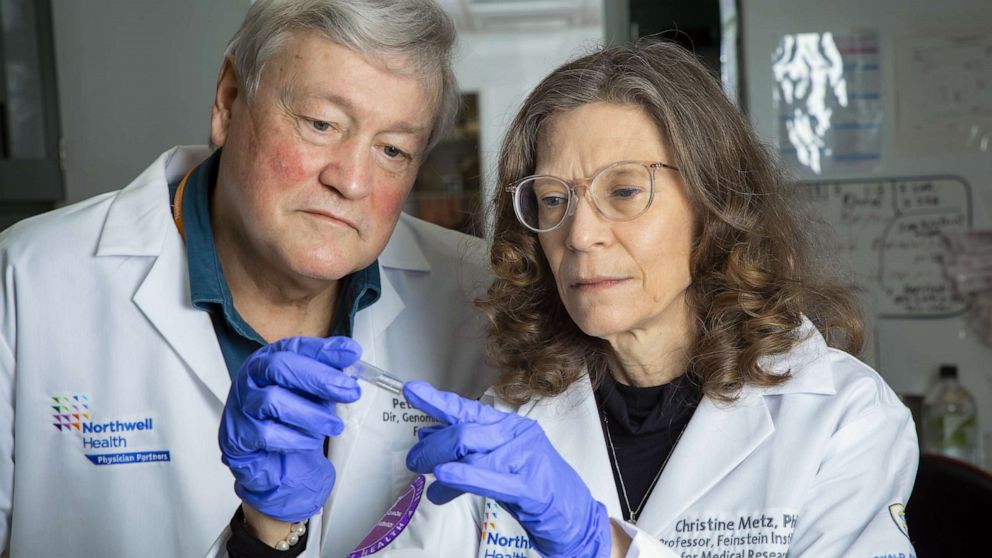
Feinstein Institutes for Medical Research
Drs. Christine Metz and Peter Gregersen are studying endometriosis through the ROSE Study at Feinstein Institutes for Medical Research.
So far, more than 2,400 women around the world have taken part in the study.
The menstrual blood samples are collected through menstrual sponges that Metz and Gregersen created as a way to collect the sample without any type of insertion, a request that came from participants, according to Metz. The researchers have also worked, she said, to make the diagnostic test “reasonably priced” so it is not cost-prohibitive once it hits the market.
By collecting just a small amount of menstrual blood on the sponge and then analyzing it, Metz said they have been able to document differences in the menstrual blood of people with endometriosis.
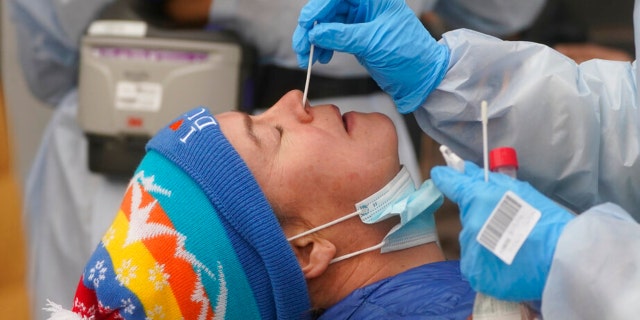
Feinstein Institutes for Medical Research
A specimen is collected for the ROSE Study at Feinstein Institutes for Medical Research.
Late last year, Metz and Gregersen began a new clinical trial focused on people who are preparing to undergo laparoscopic surgery. The goal of the trial is to see if menstrual blood analysis can be used as a way to screen people for endometriosis, which would help people know more definitively that they could benefit from surgery.
“We hope to finish the trial by the end of this year or the beginning of next year and submit materials to the [U.S. Food and Drug Administration], so that we could get an FDA approval for either a diagnostic for endometriosis or a screening tool,” Metz said.
Endometriosis currently has no known cause, but Metz said by studying menstrual blood, she and Gregersen have been able to start unlocking some of the mysteries of how this common disease starts.
There is no known cure for endometriosis, but treatment options include medications and/or surgery, including the medication Orilissa, which has been specifically studied and marketed for the treatment of endometriosis pain.
Metz said that due to a “frustrating” lack of research, doctors and researchers do not yet know what it would mean for women to be diagnosed with endometriosis soon after their first-ever menstrual cycle instead of years or decades later.
“We haven’t even been able to study whether early diagnosis will impact anything, because it’s never been studied in any organized way,” Metz explained. “We don’t know whether early diagnosis with the current therapies will even do anything.”
Feinstein Institutes for Medical Research
Dr. Peter Gregersen studies a lab specimen in the ROSE Study at Feinstein Institutes for Medical Research.
Through their years of research on menstrual blood, Metz said she and Gregersen have discovered it may help with more than endometriosis, and instead be more of a window into a woman’s overall uterine health.
“Nobody studied menstrual blood with respect to endometriosis, or any uterine condition, prior to our work,” Metz said. “It was never used to understand women’s health.”
In the future, Metz said she hopes collecting a menstrual blood sample will be a routine part of a gynecological exam.
“We believe it was a completely neglected biological sample, perhaps related to the ‘yuck factor’ associated with it,” Metz said of menstrual blood. “We have to dispel all of the negative discussion of being afraid to discuss periods and menstruation … We’re not afraid to talk about our leg pain or arm pain or our tooth pain, but somehow we’ve been quieted.”
Do you remember when some senior citizens had to ration their medications due to the fact their prescription drug expenses would triple each 12 months soon after they entered the Medicare protection gap identified as the “donut hole”? I do.
Do you recall when turning 19 intended getting kicked off your parents’ overall health insurance plan plan, regardless of your dwelling circumstance? I do.
Do you keep in mind when insurance policy firms could refuse to pay for preventive treatment options — vaccinations, mammograms, colonoscopies or a great number of other necessary products and services — for any motive, or maybe no purpose at all? I do.
Do you remember insurance plan corporations refusing coverage to pregnant females or many others with “preexisting conditions”? Or when they could cost you what they wished, for no matter what reason they wished, and you seriously had no selection but to accept that due to the fact there was no Patient’s Bill of Rights? I do.
But those times were being relegated to the dustbin of historical past on March 23, 2010, when President Obama signed the Economical Treatment Act (ACA) into regulation. Of class, as we mark the ACA’s 13th anniversary, it’s simple to ignore the political costs of that “miracle” laws.
To start off with, it took a long time for Congress to draft and vote on the wellness treatment regulation. Then, the GOP built repealing the ACA its priority in the 2010 midterm elections. They demonized the law — labeled as “ObamaCare” — threw in a few of racist pet whistles and, with a nationwide disinformation campaign, rode a wave that received them back again manage of the Property of Associates and flipped 12 governor’s workplaces, together with Ohio, Pennsylvania, New Mexico and Michigan. This ushered in an era of obstructionism that described Congress for numerous decades.
In point, the GOP-managed Household voted a lot more than 50 times to repeal the ACA, disregarding the tens of hundreds of thousands of People in america who received health and fitness insurance coverage, and numerous others who have benefitted from the Patient’s Bill of Rights. Ironically, the one-minded devotion that won Republicans the Home greater part in 2010 would expense them that vast majority in 2018, adhering to a systematic schooling campaign that took the debate from abstract political philosophy to 1 centered on concrete truth.
It turns out that public feeling is even a lot more placing when you inquire people about distinct ACA provisions. For instance:
90 per cent of People assist prohibiting wellbeing insurance policies companies from denying coverage for people today with preexisting problems
89 per cent support demanding well being insurance coverage providers to deal with the cost for most preventive services
88 {bf0515afdcaddba073662ceb89fbb62b6b1bf123143c0e06b788e1946e8c353f} aid prohibiting wellbeing insurance companies from denying protection to pregnant ladies
87 per cent aid prohibiting wellbeing insurance coverage corporations from charging ill people today extra, and the very same share support providing states the alternative to increase Medicaid
85 per cent assist providing economical enable to reduced- and average-cash flow People to buy coverage and
78 per cent aid allowing younger grownups to keep on their parents’ insurance plan ideas until age 26.
Additional than 35 million Americans have well being insurance policies currently for the reason that of the ACA — guys, gals and young children who are benefiting from reduced charge and increased good quality wellbeing treatment coverage. They can thank the eyesight and bravery of leaders such as former Residence Speaker Nancy Pelosi (D-Calif.), former The vast majority Leader Steny Hoyer (D-Md.) and previous The vast majority Whip Jim Clyburn (D-S.C.), who socialized the concern and worked to safe the history-making votes in Congress.
These males and girls of conscience knew that “an ounce of avoidance is worthy of a pound of heal,” as the aged Ben Franklin declaring goes. They passed the most consequential overall health treatment legislation of my lifetime, proving that the age of heroes has not handed and that, in the words and phrases of Abraham Lincoln, our “government of the men and women, by the folks and for the people today shall not perish from the earth.”
Do you believe that in miracles? I do.
Antjuan Seawright is a Democratic political strategist, founder and CEO of Blueprint Strategy LLC, a CBS News political contributor, and a senior going to fellow at 3rd Way. Abide by him on Twitter @antjuansea.
Copyright 2023 Nexstar Media Inc. All rights reserved. This content may possibly not be published, broadcast, rewritten, or redistributed.
Individuals go to all lengths, in phrases of their eating plan and exercising, to keep in condition and continue being healthy. But Balakrishnan has, potentially, transcended all boundaries as he has been on a coconut-only eating plan for 24 yrs to control gastroesophageal reflux illness (GERD). Sharing his tale on Instagram, actor-journey influencer Shenaz Treasury wrote, “Leave a ❤️ for Mr Balakrishnan and his good health’ Can you think about — this man has been on a coconut diet program for 24 years. I was in shock — what about protein? But he said he’s under no circumstances had greater health and fitness in his existence.”
In a online video that includes Balakrishnan, she started off out by saying, “He has not eaten anything at all but coconuts for the previous 24 decades.”
Shenaz shared that he was diagnosed with GERD and experienced misplaced all his strength. “Then, as part of his remedy, he began ingesting coconuts and consuming the drinking water,” she said in the movie.
Sharing how consuming only coconuts served Balakrishnan, she concluded, “Coconut has minerals, like calcium, magnesium, sodium, and potassium. This served him regain his toughness and now he is fit and fine. And, he is on a rigid coconut-only diet regime.”
As anticipated, individuals expressed shock about the truth that he consumed only coconuts for above two decades. “Many of us have GERD now. It is rather prevalent these days. But feeding on just coconuts is just unbelievable that also for so lots of a long time,” a person wrote.
A different commented: “How can persons continue to be alive eating only coconut.”
Ahead of we understand if a coconut-only food plan is advised for those with GERD, let us uncover out what this illness is. “GERD or gastroesophageal reflux disorder is also known as acid reflux. It is a digestive disorder in which belly acid or bile irritates the foodstuff pipe lining. This is a serious sickness that takes place when stomach acid or bile flows into the foodstuff pipe and irritates the lining. Heartburn more than 2 times a week may perhaps point out acid reflux or GERD,” reported Dr Tushar Tayal, Senior Expert, Internal Medicine, Narayana Superspeciality Hospital, Gurugram.
Coming to coconuts, the expert reported that they contain practical electrolytes that promote pH balance and assist control acid reflux which is great for your body. “Some of the benefits of a coconut-only eating plan is that it is low in carbs, so it is the greatest substitute for carb-prosperous treats. It consists of minerals and nutrients this kind of as potassium, sodium, manganese, vitamin B, copper, and iron. Manganese is also helpful for our bone health and fitness,” he explained.
However, Dr Tayal emphasised that one can’t endure on a coconut-only diet regime for extra than it’s possible a few of weeks. “Particularly, if a person drank all the coconut drinking water from every single coconut, unless of course you only ate/drank about half a coconut in a day. Or else, you would experience a heart attack induced by the superior potassium ranges in coconut water,” he described.
Then, what variety of diet program really should anyone with GERD abide by? Dr Tayal stated:
*Whole grains like oatmeal, couscous, and brown rice. *Root veggies like sweet potatoes, carrots and beets. *Inexperienced vegetables like asparagus, broccoli and green beans.
📣 For extra life style news, comply with us onInstagram | Twitter | Facebook and do not miss out on the most up-to-date updates!
As a health and science reporter, I’ve studied the maze of U.S. health care. But when my son got sick, I still got lost.
Staff writer
January 30, 2023 at 6:30 a.m. EST
Evan, 3, has systemic onset juvenile idiopathic arthritis. After a few weeks on a drug called anakinra, he could walk and play, but the insurance company refused to cover it. (Courtesy of Carolyn Y. Johnson)
Comment
When a salmon-colored rash flared on my 3-year-old son’s tummy one afternoon in August, I shrugged it off. The next time I asked Evan to lift up his shirt to take a photo, it was gone. When he stopped sleeping through the night, I thought it was a dreadful new developmental phase. But then on a Saturday, he stopped walking and spiked a 104-degree fever. A nurse gave me clear directions: “Get in your car, and start driving to the ER.”
After days in the hospital, the doctors had ruled out a long list of infections, as well as scary conditions like leukemia. That left them circling around a rare type of childhood arthritis called systemic onset juvenile idiopathic arthritis, or sJIA, in which the innate immune system, the body’s first line of defense against pathogens, goes haywire. Young children are tormented by daily spiking fevers, a fleeting rash and arthritis. Some develop a life-threatening immune activation syndrome. Untreated, destructive joint damage can occur. We were in shock.
But the doctors mentioned a drug that they’d probably want to try — anakinra, a biologic drug that blocks a key prong of the immune system and quells inflammation. Like most rare disease drugs, anakinra (also known by the trade name Kineret) was obscure, but I’m a health and science reporter and I’d heard of it. In 2020, I interviewed a pediatric rheumatologist, Randy Cron at the University of Alabama at Birmingham, who wanted to test whether anakinra could help people with severe covid-19.
Now, he told me that anakinra and similar biologics had transformed treatment for kids with sJIA. “Remarkably effective and safe,” he’d replied after I emailed him about our situation. “There may be a window of opportunity early during treatment to get the best long-term benefit.”
Anakinra was clearly the favored route back to health for Evan. We were determined to take advantage of any early “window of opportunity.” Unfortunately for us, our insurance company, Aetna, disagreed. We began a health journey that many people encounter when dealing with rare diseases, health insurance and pricey drugs.
Anakinra is expensive — on average, private health plans pay about $4,000 a month for it— so we needed to get approval before it would be covered. In early September, Aetna denied the request, requiring an additional test. Our doctors ordered the test and appealed.
In October, after another emergency room visit, daily spiking fevers, $2,000 of bloodwork and a growing feeling of despair about whether our son would ever be able to walk or play normally again, I received a letter from Aetna. It was a decision to “uphold the denial” to cover the drug, and it came from a team led by a urologist, a medical specialty that would not typically treat sJIA.
Aetna required that Evan try 30 days on drugs such as naproxen or ibuprofen, or two weeks on a steroid first to see if those worked. This type of decision isn’t unusual — nearly all insurance companies use this process, called step therapy, and it’s meant to save health-care dollars. The idea is a logical one — to “step” up from inexpensive therapies to more expensive ones. It’s a guard rail to prevent unnecessary spending on drugs that cost more but may not offer much more benefit.
We carried him between his bed and the living room couch, the only two places he was comfortable.
The painful irony was that we already had tried those medicines.A few days on ibuprofen and we were back in the ER. It failed to control Evan’s miserable fevers or assuage his knee pain. Steroids, which Evan was still taking, were only sort of helping.
We carried him between his bed and the living room couch, the only two places he was comfortable. We hand-fed him bites of food in bed. We went back to using diapers. One day, I tried to encourage Evan to walk, but watched in horror as I saw his knees buckle underneath him in slow motion, nearly falling backward down a flight of stairs. My mom came to help out, but left our house in tears after a few minutes.
In the midst of our August to October limbo, Evan received his first doses of anakinra through a free program offered by the drugmaker — and his symptoms dissipated. One of his rheumatologists had described this almost magical effect. Before the drug was standard treatment, one of her patients suffered from fevers for a full year. They had abated within hours of the first dose.
Patients vs. insurance companies
This isn’t a unique story about American health care,a single high-priced drug or just one insurance company. It is a tale of routine aggravation, inconvenience, futility and fear, but fortunately, not tragedy. Our battle was hair-raising but typical.
What’s different is that I have more tools, more time and more knowledge about how the system works than the average health-care consumer.
Before I came to The Washington Post, I covered science in Boston — the epicenter of the biotech industry and its sometimes miraculous, almost always high-priced drugs. I had been welcomed into the homes of families on diagnostic odysseys for children with rare and sometimes life-threatening illnesses. At The Post, my first job focused on the affordability of health care to consumers, particularly the weird economics behind drug prices.
I was also knowledgeable, even sympathetic, to the rationale behind insurance company policies that cause immense frustration to people. I’ve interviewed insurance and drug company executives, but I also did billing for a pediatric neuropsychology practice part-time after college.
I felt like I had been preparing for a situation like this for years.
Trying everything
Biologic drugs such as anakinra are produced in bioreactors by living cells. They’re given by injection or IV infusion and are much more expensive to produce than the familiar yellow jar of pills that people pick up at the pharmacy. Prices vary, but the monthly costs typically have a comma in them.
Insurance companies often put obstacles in the way of access to high-priced drugs. There are sensible reasons for this. Doctors aren’t incentivized to pick the most cost-effective care. They are the targets of aggressive marketing by pharmaceutical companies pushing new, more expensive drugs.Yet older, cheaper ones may work just as well.
Like other insurers, Aetna says that its step therapy program had been “designed to ensure patient access to clinically appropriate, evidence-based care” and is updated as new evidence becomes available.
So when the company denied the drug right off the bat in September, upset and worried as we were, we were also not surprised.
The doctors appealed the decision. We crossed our fingers. Evan’s fevers came under control while he was on high doses of steroids, but he refused to walk, couldn’t sleep at night, demanded meals at 1 a.m. and never seemed comfortable. He spent most of his time in bed, moaning.And we waited.
These insurance barriers are so common that drug companies sometimes provide initial doses of a drug for free, to bridge the time before insurance begins to cover it. Which is why, as we awaited action on our appeal, we were able to get three weeks’ worth of free drugs from Sobi, the drugmaker. It was enough though to get our little boy out of bed and eating dinner at the table for the first time in weeks.
These free drug programs are not a form of selfless charity. They offer immediate access to patients but also give drug companies cover, insulating them against critiques of the prices of their medicines.
“Once they hook you, they are going to go to the insurer and get the real dollars,” Ezekiel J. Emanuel, an architect of the federal Affordable Care Act and a professor at the University of Pennsylvania, told me.
Put more simply: Health care is a battlefield. Patients often become cannon fodder.
I knew all this. I expected it. Still, when our appeal was denied in October,I felt like I had been punched.
Several specialists told me that a short trial of ibuprofen — not 30 days — could be tried, but in their experience didn’t work in most children with this disease. Steroids are not recommended as an initial solo therapy by guidelines and, if used, are cautioned to be limited “to the lowest effective dosage for the shortest duration possible.”
“Your son was sick, but some of these kids die,” said Cron, who co-wrote the 2021 American College of Rheumatology guidelines on how to treat sJIA. He has also served as a consultant to Sobi, receiving $6,400 in fees in 2021. “So if you waited to put him on anakinra, that would not go well.”
After I received thatdenial in October, I set aside chunks of time each day to make phone calls — primarily to my insurer, but also to a care manager at Sobi’s patient support program, Evan’s rheumatologists and a specialty pharmacy in Massachusetts that had sent us the free drugs.
Why was I notified of the denial nine days after the decision? Why did a urologist, who had probably never seen a child with sJIA, have the last word on how my son should be treated? I wanted another option besides filling out a second appeal form and faxing it into the void. I was terrified about what would happen when we used up our last dose in a few days.
I kept detailed notes about the calls. Jordan, Alicia, Joseph, Alex, Alexis, Julie, April, etc., were polite but largely unhelpful. My son’s doctor suggested screaming and crying to get better results.
This tip — a serious suggestion — pushed me over the edge. I called other rheumatologists to find out if what we were going through was unusual. No. Other doctors echoed what our own had told us: requests typically got denied right off the bat, but were often approved after an appeal — or two.
Put more simply: Health care is a battlefield. Patients often become cannon fodder. I knew all this. I expected it. Still, when our appeal was denied in October, I felt like I had been punched.
The struggle varied, depending on the insurer and the specific drug that the child needed, but it seemed especially cruel in this case, because“there isn’t a clear alternative that has a reasonable chance of being effective,” said Grant Schulert, a pediatric rheumatologist at Cincinnati Children’s Hospital.
“It’s something we spend a huge amount of largely uncompensated time on, as providers. And for patients, it delays significantly the time it takes to access care,” he added.
There is a name for what I was going through, which is also an accurate description of how I felt: sludge. The administrative burden of people dealing with their insurance adds up to about $21.6 billion a year in lost productivity, half of it during work hours, according to a paper from Jeffrey Pfeffer at Stanford Graduate School of Business.
Pfeffer said that, like me, he got interested in the problem when he ran into insurance barriers and realized how many advantages it took to succeed. “I have fancy doctors who know how to play the system,” Pfeffer said. “If you don’t have those resources, if you’re a less-educated human being with a crappy job and maybe African American or Latino, your ability to access the system is much less.”
I tweeted about my frustration, without mentioning most of the details — and got an outpouring of empathy. My Twitter profile identifies me as a Washington Post reporter, but I shared the story because it felt like a universal problem with American health care. Someone offered to ship doses from their personal stockpile of a similar drug. People inside insurance companies messaged me, offering personal contact information for executives. A person with Type 1 diabetes told me that due to her activism online, she had been labeled a “media threat” and now had the phone number of a person inside her insurance company to help get prescriptions covered.
Some *** personal news *** ! After covering this stuff for a long time, my toddler has a rare disease. It is awful to watch your child suffer. There is a biologic drug. What follows is not a special or orginal story, it’s the most ordinary possible story about healthcare.
Receiving health care shouldn’t require special favors. I interacted with Aetna as an ordinary health-care consumer, and kept trying 800 numbers.
After nearly three weeks on the anakinra doses supplied by Sobi, Evan’s doctors confirmed what we knew. He was so much better. Bloodwork showed his out-of-whack immune response was headed back in the right direction. After weeks of refusing to stand or walk across a room, he ran down the hallway and smiled behind his mask. We’d gone hiking.
It was great news, but we had only one syringe of anakinra left in the fridge.
Because getting anakinra covered had proved so difficult, our medical team had decided to shift gears a week before we even knew about the final denial. They decided to try, in parallel, to see if insurance would approve a different biologic drug called canakinumab that worked in a similar way but cost about four times as much. The doctors had started with anakinra, a fast-acting, once-a-day injection, to see if Evan responded. They’d preferred, based on his case, to start with a short-term daily shot, instead of canakinumab, which is given once a month and offers less flexibility.
Shortly after we lost the battle for anakinra, we qualified for a free first dose of canakinumab from Novartis, the company that makes that drug. But with only one syringe left in the fridge, there would be a gap. These drugs can’t just be picked up at the local pharmacy. Our free dose would be shipped to us from a pharmacy in Massachusetts, then we’d need a nurse to come to our house to administer it.
Our doctors mulled various options. Could we go to the ER to get a shot? What about going back on high-dose steroids? That afternoon, I took out our last syringe, and began squirting bits of the medicine into other syringes. It was not a recommended practice, but a way to stretch the supply.
Three days later, our first free dose of the new drug arrived. A nurse came on a Sunday at 8 p.m. to give it to Evan. His illness stayed at bay.
This is, in many ways, a story of a success in saving health-care dollars. For two months, our health insurance avoided paying for expensive drugs. The canakinumab was ultimately covered.
In January, after an editor suggested I write about the experience, I asked Aetna for their perspective.
“In reviewing the situation for your son, our team could have explained all requirements for step therapy more clearly in the first letter to you. Our initial decision was upheld on appeal, based on the information we had available at the time,” Aetna spokesman Ethan Slavin said in a statement. “We are working to clarify our communications process on these types of matters.”
Aetna said the canakinumab was approved because it was subject to different rules. “Your health care provider submitted the request as a continuation of existing care,” Aetna said in a statement. Reading between the lines: Evan was doing well on another biologic drug when the doctors made the request for the new one. He now qualified for the treatment, no thanks to our health insurance.
As a journalist, I often found prior authorization a difficult story to sell to an editor. The process caused families stress and delayed needed treatment. It drove doctors and nurses absolutely crazy. But it is a clumsily applied Band-Aid on a legitimate problem: high-priced drugs. And as with us, a Rube Goldberg-like workaround often materialized.
The people who simply give up may not have the time, resources or sense of entitlement to keep fighting — or tell their stories to reporters.
In our case, we patched together two free drug programs and split up doses. It was incredibly precarious, time-consuming and tense. Other families face longer, harder fights. We were lucky. It was still horrible.
We don’t know what the future holds. Evan might need the medication long-term. He might need to try other drugs, if it stops working. He may be able to wean off it. What we do know: We’ll need to be ready for the next battle.
My struggle to get essential health care covered taught me how isolating the experience can be. We would like to collect these stories. Have you struggled to get insurance to pay for high-priced drugs? Tell The Post your story here: wapo.st/insurerstories.
The important is to be practical, keep on your own accountable, make a program and do it for your mental health and fitness.
CHARLOTTE, N.C. — Charlotte-spot gyms are no stranger to new faces in the new yr, as new users be a part of hoping to execute their exercise-themed New Year’s resolutions. But those new faces rarely turn into common ones.
Analysis from the University of Scranton finds as several as 80{bf0515afdcaddba073662ceb89fbb62b6b1bf123143c0e06b788e1946e8c353f} of Individuals who established New Year’s resolutions give them up in advance of February. A study from the on the net physical fitness platform Strava identified most people today ditch their resolutions two weeks into the new calendar year, prompting the development of Quitter’s Working day which falls on the next Friday of just about every New 12 months.
As Jan. 1 grows even further absent, health and health and fitness specialists hope to motivate objective-setters to keep dedicated to their conditioning resolutions.
“I believe the most essential detail we can do for ourselves is [to] consider treatment of our human body and workout is a wonderful way to do that,” head workout expert at CoreLife Healthcare in Charlotte Dominique Harris stated.
Gurus say there are various techniques men and women can keep by themselves inspired to get suit, starting just before even creating resolutions.

Be real looking
Wellness gurus imagine the vital to trying to keep up with New Year’s resolutions is setting realistic goals and realizing it may well get extra time than predicted.
“We want to make it a lifestyle,” Harris said. “We really don’t want it to be a small-term correct. Even however you place the bodyweight on in three months, it’s not going to just take three months to take off.”
For the newest breaking information, weather and targeted traffic alerts, obtain the WCNC Charlotte cell application.
Numerous specialists propose building incremental and measurable ambitions, ones that can be tracked by reaching specific milestones.
“I don’t want you to come in and say, ‘Oh my gosh, I’m going to operate out six times a week, and I’m going to go robust,’” Harris said. “Why don’t we start off with a person working day a week? Why never we start off with it’s possible 30 minutes a day? Get started small, and then when you’re form of steady. Then consider to go from there.”
Wellbeing professionals say smaller sized ambitions that lead to more substantial types will give people explanations to stay motivated alongside their health and fitness journey.

Hold oneself accountable, have some others do so too
At OrangeTheory Health, a exercise routine studio chain with 17 destinations in Charlotte, team work out classes are the primary concentrate. Trainers there say doing work out with an instructor and all-around some others is a great way to make positive other folks are making certain the aims set are retained in examine.
“Our coaches are heading to hold you accountable when you’re in the studio,” regional gross sales manager for OrangeTheory Conditioning Jennifer Barrett stated. “They are likely to stick to up with you if they don’t see you in below to make sure they get you again in the doorways and keep you accountable with your work out program.”
You can stream WCNC Charlotte on Roku and Amazon Fireplace Tv, just down load the free application.
Other specialists agree obtaining an accountability companion like a pal, spouse and children member or a educated skilled can supply a motivating pressure.
“Set accountability possibly we have an accountability individual to hold you in examine,” Harris mentioned. “Maybe it is coming in to see an exercising specialist or see a personal trainer so we can be in tune with your ambitions and designs.”

Have a strategy
Pros at CoreLife, an firm focused on working with health and nutrition to deal with professional medical concerns, say developing a customized prepare is crucial for their individuals tackling problems like weight problems. They say planning is just as essential for any individual hoping to achieve their fitness plans and resolutions.
“My most important piece of guidance is to create a program of assault,” Harris mentioned. “Say ‘OK, just before I go to the health club, this is the physical exercise I’m going to do, these are the equipment I’m going to do,’ so you’re not going for walks close to randomly.”
Click on below to indication up for the every day Wake Up Charlotte newsletter
The Mayo Clinic explained when creating a fitness plan, it is critical for persons to evaluate their health level and history baselines to evaluate their development. The group also stated making a balanced regimen together with both equally average and vigorous workout each and every week can help a human being drop weight and preserve it off.

Never just get physically in shape, but mentally, too
When specialists concur sticking to conditioning objectives is essential for physical health, they also say it can be vital for mental health, as very well.
A 2018 UCLA examine observed persons who exercise practical experience 40{bf0515afdcaddba073662ceb89fbb62b6b1bf123143c0e06b788e1946e8c353f} less days with anxiety, despair or psychological concerns regular monthly than those who do not physical exercise. OrangeTheory Exercise team reported they see this influence all the time.
“The transformations we see from our associates and our staff members associates just from finding in here and moving their physique is further than a number you can see on the scale,” Barrett said. “It’s critical to spend in your over-all well being. It’s not just the physical part.”
Harris explained work out can be a excellent way to disconnect from and tune out the entire world. Individuals ought to use it as a way to motivate themselves to stick to conditioning targets and handle it as a time to aim on by themselves. She proposed listening to a favored podcast, listening to an audiobook or speaking to a mate through exercises.
Harris explained, most of all, doing the job out really should be pleasant.
Wake Up Charlotte To Go is a everyday news and temperature podcast you can pay attention to so you can get started your day with the staff at Wake Up Charlotte. SUBSCRIBE: Apple Podcasts || Spotify || Stitcher || TuneIn || Google Podcasts
All of WCNC Charlotte’s podcasts are cost-free and out there for both equally streaming and obtain. You can hear now on Android, Apple iphone, Amazon, and other world-wide-web-related gadgets. Be part of us from North Carolina, South Carolina, or on the go anyplace.
CNN professional medical analyst and Washington Post columnist Dr. Leana Wen admitted in a column, Friday, that the clinical group is “overcounting” the volume of “COVID deaths and hospitalizations.”
Wen, who writes an occasional Washington Submit column delivering her observations on the pandemic, masking and other COVID-similar subjects, cited sources professing that most “patients identified with COVID are essentially in the clinic for some other illness.”
The article is titled, “We are overcounting COVID fatalities and hospitalizations. Which is a dilemma.”
Wen’s observations prompted audience on Twitter to complain, stating that it really is “two and a fifty percent several years late.”
Assistance Associates TERMINATED More than UNVAXXED Status COULD BE REINSTATED IN Armed forces WITH GOP-LED Bills
CNN health care analyst Leana Wen wrote a column Friday claiming it appears that hospitals have been overcounting COVID-19 deaths in the U.S. (REUTERS/Andrew Kelly)
Wen began her column with some apparent skepticism about the CDC’s hottest COVID-19 demise stats: “According to the Facilities for Condition Management and Prevention, the United States is dealing with around 400 COVID deaths each individual working day. At that price, there would be virtually 150,000 fatalities a yr. But are these Us citizens dying from COVID or with COVID?”
The health practitioner claimed that “Knowledge this difference is crucial to putting the continuing toll of the coronavirus into viewpoint. Pinpointing how likely it is an an infection will end result in hospitalization or death allows individuals weigh their very own threat.”
She spoke to two Infectious-disorder gurus, who informed her they considered “the variety of deaths attributed to COVID is much bigger than the true variety of individuals dying from COVID.”
Mentioning the initially, she wrote, “Robin Dretler, an attending doctor at Emory Decatur Hospital and the former president of Georgia’s chapter of Infectious Health conditions Culture of The usa, estimates that at his clinic, 90 p.c of individuals identified with COVID are truly in the hospital for some other ailment.”
Dretler informed the analyst, “Due to the fact every single hospitalized affected individual gets analyzed for COVID quite a few are incidentally optimistic.” Wen pointed out how people today with gunshot wounds or other significant sicknesses usually exam beneficial for the virus, and wrote, “If these sufferers die, COVID could get additional to their dying certification together with the other diagnoses. But the coronavirus was not the most important contributor to their demise and typically performed no purpose at all.”
Dretler admitted this contributed to “imprecise reporting” on COVID deaths and hospitalizations, which he additional did not arrive from a area of “undesirable intent.” He denied that there was any “conspiracy” driving it to “exaggerate coronavirus figures for some nefarious purpose.”
PENTAGON DITCHES COVID VACCINE MANDATE FOR TROOPS
A member of the Salt Lake County Wellbeing Office COVID-19 tests staff members performs a take a look at outside the Salt Lake County Wellness Division Tuesday, Jan. 4, 2022, in Salt Lake City. (AP Picture/Rick Bowmer) (Linked Press)
Wen also cited infectious-ailment doctor Shira Doron, who figured out that “In current months, only about 30 per cent of total hospitalizations with COVID were generally attributed to the virus” in Massachusetts hospitals for instance.
Wen recounted Doron’s experience at Tufts Professional medical Center, producing, “During some times, she stated, the proportion of those hospitalized simply because of COVID were being as reduced as 10 per cent of the whole number described” who had COVID.
Wen added, “Doron acknowledges that there is a grey zone in the info in which COVID could not be the main bring about of loss of life but could have contributed to it.”
In direction of the finish of her piece, Wen declared, “To be obvious, if the COVID death depend turns out to be 30 percent of what’s currently claimed, which is continue to unacceptably substantial.”
Several audience on Twitter seemed discouraged with the piece, expressing that they thought the medical neighborhood experienced been counting for years now and that Wen’s information will come too late.
Epidemiologist Dr. Tracy Høeg responded to Wen’s piece, stating, “Spring 2021 [USA] experienced great evidence >40{bf0515afdcaddba073662ceb89fbb62b6b1bf123143c0e06b788e1946e8c353f} of little one COVID admissions were being incidental. 2021 Denmark introduced they’d distinguish with vs from COVID hosp. COVID+ fatalities in [Denmark] in 2022 [were] 60-70{bf0515afdcaddba073662ceb89fbb62b6b1bf123143c0e06b788e1946e8c353f} incidental.”
The health practitioner additional, “Awesome how extended it has taken the U.S. to take this is a trouble.”
ELON MUSK TEASES NEW FAUCI REVELATIONS IN Future TWITTER Documents INSTALLMENT
Center for Protection Plan senior analyst J. Michael Waller slammed the Washington Post about the column, stating, “Not extended back, the Washington Publish was contacting us conspiracy theorists for declaring such issues.”
Creator A.J. Kay tweeted, “Properly, yeah … You’d consider viewing this in legacy media would provide a emotion of vindication or resolution for those people of us who have been screaming about it because 2020, but seriously it’s just exasperation, anger, & grief. The lies caused so a lot damage.”
“The Australian” journalist Adam Creighton tweeted, “Folks declaring this a year back have been booted off social media.”
Click Right here TO GET THE FOX News Application
Brownstone Institute president Jeffrey Tucker tweeted, “This is not just not long ago legitimate. It can be been accurate for 3 decades! We really do not know how quite a few actually died from COVID, which implies that not even the CFR is correct.”
Timcast workers author Adrian Norman wrote, “TWO AND A 50 {bf0515afdcaddba073662ceb89fbb62b6b1bf123143c0e06b788e1946e8c353f} Yrs LATE.”
Miami Beach front, Teenagers in encounter masks browsing at Publix grocery keep. (Photograph by: Jeffrey Greenberg/Training Images/Universal Images Team by using Getty Photographs) (Jeffrey Greenberg/Education and learning Images/Common Images Group by means of Getty Photographs)
Gabriel Hays is an associate editor for Fox Information Electronic.