

Endometriosis can take years and requires surgery to diagnose. Researchers say they are close to a solution


Before getting that diagnosis, Balducci said she spent nearly two decades of her life living with menstrual cycles so painful she’d have to miss work or school.

“I’ve been to the [emergency room] because the pain was so bad sometimes I thought, ‘This can’t just be cramps. This has to be my appendix bursting,'” Balducci told “Good Morning America.” “I consistently was told that my [period] pain was normal. Nobody mentioned the word endometriosis once.”

It was only last year, as Balducci was starting the process of freezing her eggs, that she said a fertility doctor told her she should see a specialist for her pain.
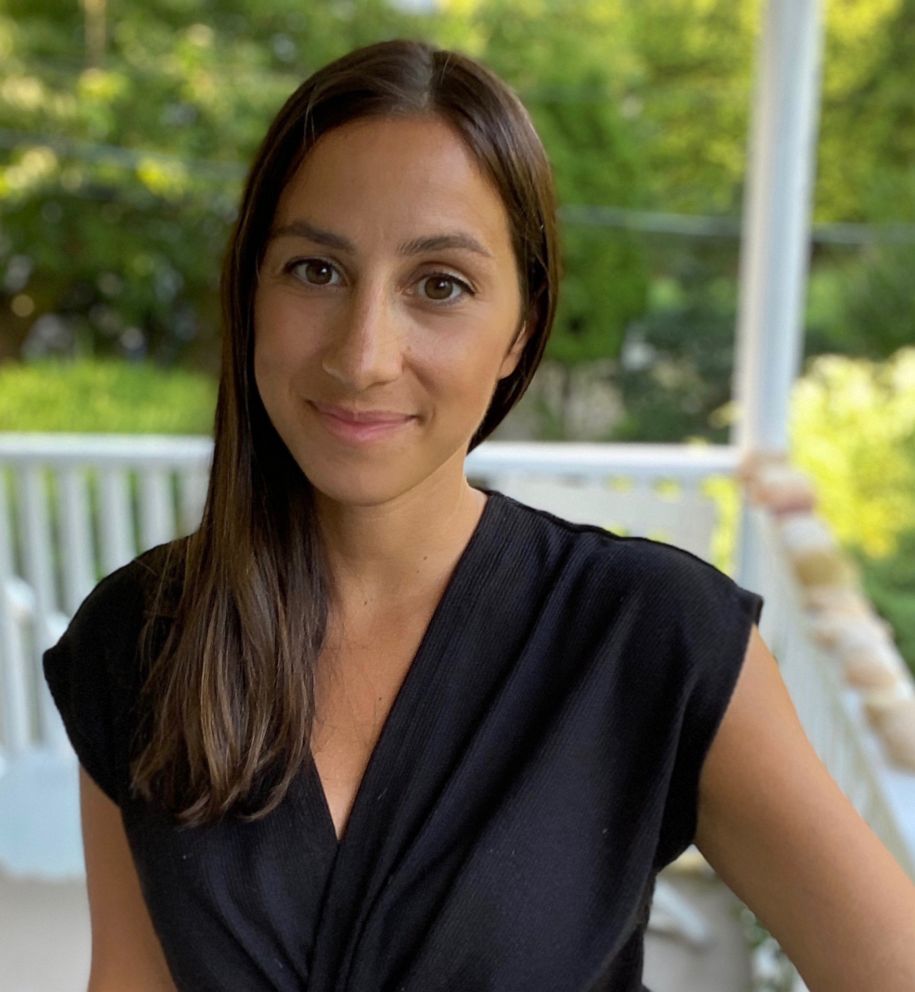
PHOTO: Victoria Balducci, 39, was diagnosed with endometriosis after experiencing symptoms for over a decade.

Courtesy Victoria Balducci

Victoria Balducci, 39, was diagnosed with endometriosis after experiencing symptoms for over a decade.

Once she saw a specialist who told her she likely had endometriosis, Balducci had to undergo laparoscopic surgery, as it is currently the only way to diagnose the disease.

“It’s really invasive … and the recovery is very intense,” Balducci said of the surgery. “And the diagnosis and the surgery, for many, is a step because there is mystery around if the endometriosis is going to grow back, and if the pain is even going to go away.”

Researchers believe that endometriosis — a disease where the tissue forming the inner lining of the uterus is found outside of the uterus such as within the fallopian tubes, ovaries, bladder and intestines — affects more than 6 million women in the U.S. and as many as 200 million women worldwide.

Though it is one of the most common gynecological diseases, according to the National Institutes of Health, getting a diagnosis is often similar to Balducci’s experience: long and painful.

On average, women wait as long as seven to 10 years for a diagnosis, according to Christine Metz, Ph.D., head of the laboratory of medicinal biochemistry and a professor in the Institute of Molecular Medicine at the Feinstein Institutes for Medical Research in New York.

Metz said the delay can be due to everything from women being told their menstrual pain is normal, as in Balducci’s case, to the symptoms of endometriosis — painful menstrual cramps, chronic lower back and pelvis pain, pain during and after sex, bleeding or spotting between periods and digestive problems like diarrhea, constipation, bloating and nausea — being misdiagnosed and treated as gastrointestinal issues.

In many cases, the delay happens, she said, because patients are either not referred for diagnostic surgery, or are hesitant to undergo such an invasive surgery in order to be diagnosed.

“Endometriosis can only be definitively diagnosed through laparoscopic surgery, and that means a small camera is inserted into the abdominal cavity to look for endometriosis lesions,” Metz said. “The suspected lesions that they find during this scoping procedure are removed and then analyzed for the presence of endometrial-like cells.”

Metz said that in her own experience, she has seen patients who have gone as long as 20 years without a diagnosis of endometriosis.

For the past six years, Metz has worked to find a way to diagnose endometriosis that does not require surgery.

She and her research partner, Dr. Peter Gregersen, a rheumatologist and genetics researcher, believe they have found the answer in something that comes monthly for menstruating women: menstrual blood.

“Scientifically, it makes a lot of sense because the lesions that are found in the pelvic cavity contain the same cells that are found in menstrual blood,” Metz said. “And we believe that if you were healthy, most of that tissue and material would be removed.”
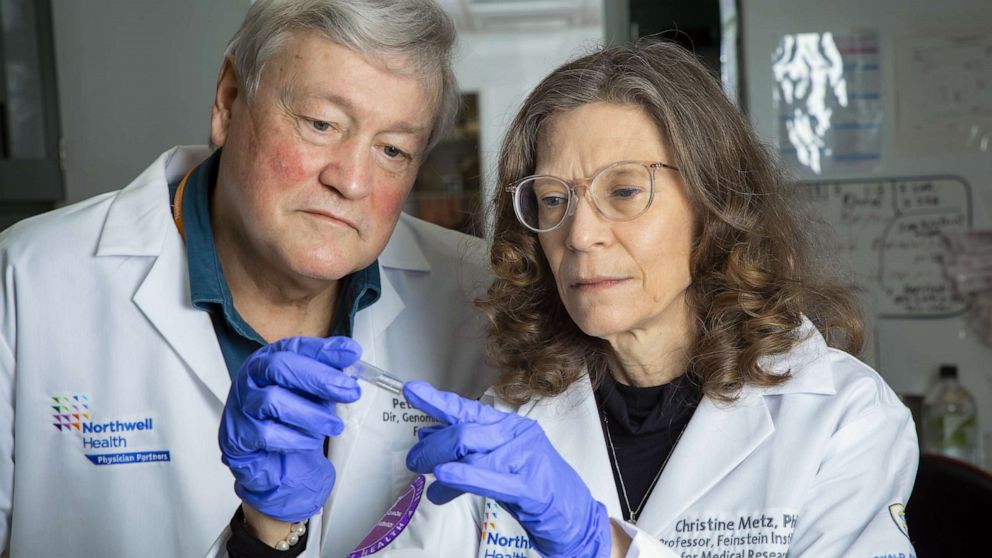
PHOTO: Drs. Christine Metz and Peter Gregersen are studying endometriosis through the ROSE Study at Feinstein Institutes for Medical Research.

Feinstein Institutes for Medical Research

Drs. Christine Metz and Peter Gregersen are studying endometriosis through the ROSE Study at Feinstein Institutes for Medical Research.

So far, more than 2,400 women around the world have taken part in the study.

The menstrual blood samples are collected through menstrual sponges that Metz and Gregersen created as a way to collect the sample without any type of insertion, a request that came from participants, according to Metz. The researchers have also worked, she said, to make the diagnostic test “reasonably priced” so it is not cost-prohibitive once it hits the market.

By collecting just a small amount of menstrual blood on the sponge and then analyzing it, Metz said they have been able to document differences in the menstrual blood of people with endometriosis.

PHOTO: A specimen is collected for the ROSE Study at Feinstein Institutes for Medical Research.

Feinstein Institutes for Medical Research

A specimen is collected for the ROSE Study at Feinstein Institutes for Medical Research.

Late last year, Metz and Gregersen began a new clinical trial focused on people who are preparing to undergo laparoscopic surgery. The goal of the trial is to see if menstrual blood analysis can be used as a way to screen people for endometriosis, which would help people know more definitively that they could benefit from surgery.

“We hope to finish the trial by the end of this year or the beginning of next year and submit materials to the [U.S. Food and Drug Administration], so that we could get an FDA approval for either a diagnostic for endometriosis or a screening tool,” Metz said.

Endometriosis currently has no known cause, but Metz said by studying menstrual blood, she and Gregersen have been able to start unlocking some of the mysteries of how this common disease starts.

There is no known cure for endometriosis, but treatment options include medications and/or surgery, including the medication Orilissa, which has been specifically studied and marketed for the treatment of endometriosis pain.

Metz said that due to a “frustrating” lack of research, doctors and researchers do not yet know what it would mean for women to be diagnosed with endometriosis soon after their first-ever menstrual cycle instead of years or decades later.

“We haven’t even been able to study whether early diagnosis will impact anything, because it’s never been studied in any organized way,” Metz explained. “We don’t know whether early diagnosis with the current therapies will even do anything.”
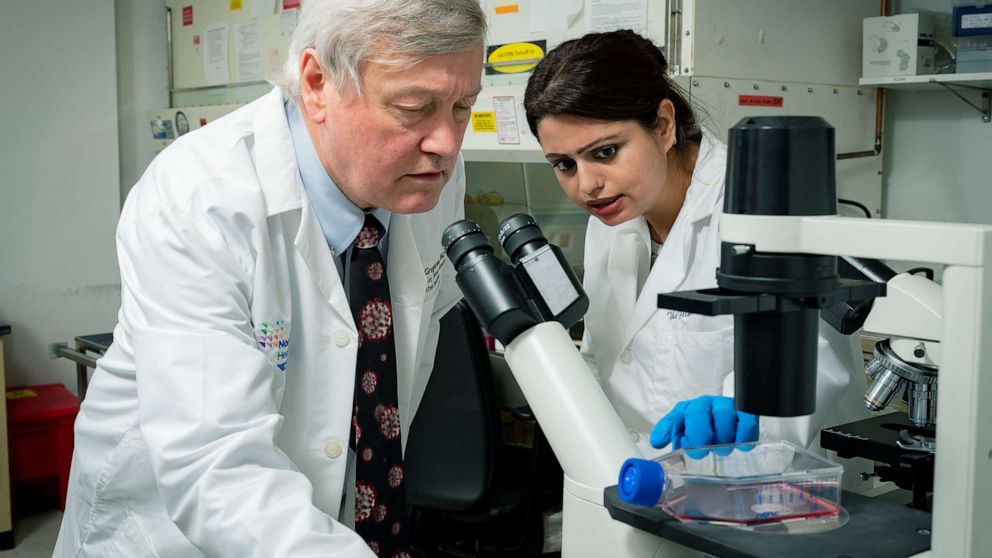
PHOTO: Dr. Peter Gregersen studies a lab specimen in the ROSE Study at Feinstein Institutes for Medical Research.

Feinstein Institutes for Medical Research

Dr. Peter Gregersen studies a lab specimen in the ROSE Study at Feinstein Institutes for Medical Research.

Through their years of research on menstrual blood, Metz said she and Gregersen have discovered it may help with more than endometriosis, and instead be more of a window into a woman’s overall uterine health.

“Nobody studied menstrual blood with respect to endometriosis, or any uterine condition, prior to our work,” Metz said. “It was never used to understand women’s health.”

In the future, Metz said she hopes collecting a menstrual blood sample will be a routine part of a gynecological exam.

“We believe it was a completely neglected biological sample, perhaps related to the ‘yuck factor’ associated with it,” Metz said of menstrual blood. “We have to dispel all of the negative discussion of being afraid to discuss periods and menstruation … We’re not afraid to talk about our leg pain or arm pain or our tooth pain, but somehow we’ve been quieted.”

Cooper Aerobics and EatLove Partner to Deliver a Personalized Nutrition Solution

Cooper Aerobics and EatLove Partner to Deliver a Personalized Nutrition Solution

Cooper Aerobics

National Nutrition Month kicks off this turn-key nutrition intervention to supercharge members’ fitness journey

SAN FRANCISCO and DALLAS, March 02, 2023 (GLOBE NEWSWIRE) — EatLove, a digital health company specializing in personalized nutrition, and Cooper Aerobics, the leading authority on health and wellness for more than 52 years, announce an industry-leading partnership to optimize daily nutrition to support fitness and health.

EatLove’s unique platform combines proven science with personal data to create individualized nutrition prescriptions designed around an individual’s unique medical history, fitness goals and preferences for meals delivered right to your doorstep.

“Cooper Aerobics has long been a leader in wellness and nutrition and by using EatLove to power their ‘Nutrition for Life’ approach they can offer their fitness center members expertise using EatLove’s best-in-class tools, data and AI technology,” said EatLove Co-Founder and CEO Monique Nadeau. “EatLove was designed to enable companies like Cooper Aerobics to go beyond traditional meal planning to a comprehensive nutrition prescription that guides the more than 200 decisions we make every day around food and diet, making smart eating choices simple and easy. We are delighted to deliver a premium service with Cooper Aerobics.”

Cooper Aerobics will offer Cooper Fitness Center members a truly individualized nutrition prescription powered by EatLove’s LENA®Nutrition Intelligence technology that combines proven nutrition science with individual client data. Members will have an always-on personalized feed of nutritionally adherent meals and snacks, offering inspiration and solutions for every eating situation.

“Our partnership with EatLove helps us deliver our ‘Nutrition for Life’ approach to our members in a realistic and practical way,” said Bryan Lennon, Cooper Fitness Center Vice President and General Manager. “Our registered dietitian nutritionists will use EatLove’s platform to provide 24/7 guidance to fitness center members’ lives, including online grocery shopping, meal kits and dining out, as well as eating at home.”

About EatLove
EatLove is a San Francisco-based digital health company dedicated to providing individuals with easy access to affordable, hyper-personalized nutrition solutions. EatLove’s HIPAA-compliant intelligent nutrition platform equips health and fitness providers with the power to revolutionize the way they approach care, and scale sustainable health outcomes. By offering more than 500 health and fitness companies a one-stop solution for clients to receive customized guidance and home delivery of carefully designed meals, EatLove is making the vision of food-as-medicine achievable and accessible. Its unique, adaptive nutrition intelligence combines proven science with personal data to create individualized nutrition prescriptions behind meals designed around specific needs, preferences, and lifestyles to fit every eating occasion. For further inquiries, email hello@eatlove.is, visit eatlove.is/pro or connect with us on LinkedIn (EatLove PRO), and follow us on Instagram (@eatlove.pro).

About Cooper Aerobics
Cooper Aerobics in Dallas serves as the headquarters for six health and wellness companies and a research and education nonprofit, The Cooper Institute® 501(c)(3), founded in 1970 by Kenneth H. Cooper, MD, MPH. Cooper Aerobics is the health and wellness resource that bases its recommendations on its world-leading body of data and expertise. Through the array of services Cooper offers under the leadership of President and CEO Tyler C. Cooper, MD, MPH, millions have been inspired to make good health a habit, helping improve their quality and quantity of life. For more information, call 866.906.2667 (COOP) or visit cooperaerobics.com. Follow the Cooper Aerobics Facebook page or Instagram account for updates.

Media Contact:

Pam Czerlinsky
972.560.3246
pczerlinsky@cooperaerobics.com

Karen Wallace
510.872.8059
hello@eatlove.is

The Healthcare Freedom Act is a vital solution to runaway medical debt

As the pandemic lingers, contributing to rising inflation and looming economic recession, Americans from all walks of life may be concerned about their medical bills. 

The Healthcare Freedom Act, proposed by Rep. Chip Roy (R-Texas), seeks to help Americans regain control of their healthcare expenses by creating “health freedom accounts” similar to existing health savings accounts. Health savings accounts enable patients to save pretax dollars for future medical expenses, but are limited to only those with high-deductible health plans, and contain numerous restrictions on what types of healthcare spending may qualify. Roy’s bill would allow any American, regardless of their health insurance type, to become eligible for health freedom accounts, as well as expand the list of qualified medical expenses. 

As a physician, I call upon Congress to pass this legislation in order to provide patients greater autonomy over their healthcare. 

Health savings accounts were first established in 2003 as part of the Medicare Prescription Drug Improvement and Modernization Act and became more prevalent as more employers began offering high-deductible health plans over the past 20 years. Many patients with high deductible plans never meet their annual deductible, and thus are forced to rely on money from their health savings account to cover routine health expenses; for these individuals, any money spent on insurance premiums by themselves or their employer is wasted. To make matters worse, current regulations also prohibit the use of health savings accounts to pay for insurance premiums. These policies serve only to enrich insurance companies at the expense of patients and private employers.  


Black Friday and Cyber Monday deals from BestReviews:

The Healthcare Freedom Act is a vital solution to runaway medical debt

Currently, HSAs allow maximum family contributions of up to $7,300 per year to a tax-deductible account, which enables the contributions to be untaxed for that year. In addition, the money grows tax-free and may be withdrawn from the account untaxed. These tax-protective mechanisms are how HSAs came to be known by the coveted descriptor “triple tax-free.” In addition to allowing all Americans to obtain an HSA/HFA, the Healthcare Freedom Act would nearly double the yearly contribution limit to $12,000, and allow individuals 55 years or older to contribute an additional $5,000. These changes are necessary due to the rapid growth in healthcare costs which routinely outpaces the already-astronomical rate of inflation.  

The Healthcare Freedom Act would also expand the list of approved medical expenses to include insurance premiums, direct primary care physician subscriptions, and payment to Healthcare Sharing Ministries. The bill would enable money from HSAs to be spent on all of these, plus additional services that may not be covered by health insurance. For example, patients coming to dermatology clinics may use money from their HSA/HFA to pay for the removal of benign skin lesions or other procedures deemed as “cosmetic” by insurance companies.  From the physician side, it allows a wider range of practice possibilities that would enable doctors to practice more personalized medicine.  

If HFAs become commonplace, more patients will be able to obtain their medications through compounding and specialty pharmacies, cutting out middlemen and reducing costs. Indeed, physicians will be able to circumvent insurance headaches such as step therapy (requiring patients to fail certain categories of medications before insurance will cover alternative therapies) if patients can pay for their medications directly. As a dermatologist, I frequently use direct-to-consumer pharmacies to help patients obtain customized therapies for their skin. 

Healthcare freedom accounts would expand access to these services to patient populations who may not have the financial ability to pay for these treatments out-of-pocket. Employers may also like the added flexibility of HFA’s, as they would be able to offer the new health savings account as an employee benefit without being forced to subscribe to a group high-deductible health plan. 

The net effect of expanding the number of approved expenses would be increased patient and physician autonomy. From the patient side, the Healthcare Freedom Act allows them to spend their hard-earned savings in a way that most aligns with their values. 

As a physician, I look forward to serving patients based on the ideals of the Hippocratic Oath rather than following arbitrary guidelines created by insurance companies.  

Aamir Hussain is a resident physician practicing in Washington, DC. Rufus Sweeney, a medical student at the University of Wisconsin, assisted in the creation of this story.