The United States spends far more on wellness care than any other superior-earnings country but continue to has the cheapest everyday living expectancy at start and the maximum fee of folks with multiple persistent illnesses, according to a new report from The Commonwealth Fund, an impartial study group.
The report, unveiled Tuesday, also suggests that in comparison with peer nations, the US has the optimum premiums of fatalities from avoidable or treatable results in and the highest maternal and infant demise costs.
“Americans are living shorter, significantly less balanced lives mainly because our wellness technique is not functioning as properly as it could be,” the report’s lead writer, Munira Gunja, senior researcher for The Commonwealth Fund’s Worldwide Program in Overall health Coverage and Follow Innovation, claimed in a information release. “To capture up with other large-earnings international locations, the administration and Congress would have to grow accessibility to health and fitness care, act aggressively to management fees, and devote in overall health fairness and social providers we know can lead to a much healthier inhabitants.”
Folks in the US see doctors a lot less usually than those in most other international locations, which is probably relevant to the US owning a under-ordinary quantity of working towards medical professionals, according to the report, and the US is the only state among those studied that does not have universal well being coverage. In 2021 by itself, 8.6{bf0515afdcaddba073662ceb89fbb62b6b1bf123143c0e06b788e1946e8c353f} of the US populace was uninsured.
“Not only is the U.S. the only region we analyzed that does not have common health protection, but its wellbeing system can seem created to discourage individuals from applying expert services,” scientists at the Commonwealth Fund, headquartered in New York, wrote in the report. “Affordability continues to be the best explanation why some Us citizens do not indication up for overall health protection, although superior out-of-pocket prices guide almost 50 {bf0515afdcaddba073662ceb89fbb62b6b1bf123143c0e06b788e1946e8c353f} of operating-age grown ups to skip or delay finding needed treatment.”
The researchers analyzed health and fitness stats from international resources, like the Organisation for Financial Cooperation and Advancement, or OECD, which tracks and stories on knowledge from wellness methods across 38 large-cash flow nations. The info was extracted in December.
The scientists examined how the United States calculated from Australia, Canada, France, Germany, Japan, the Netherlands, New Zealand, Norway, South Korea, Sweden, Switzerland and the United Kingdom. They also in comparison the US with the OECD ordinary for 38 large-earnings countries.
The data showed that in 2021 by yourself, the US used approximately 2 times as a lot as the typical OECD place on wellbeing care – and overall health expending in the US was 3 to four periods larger than in South Korea, New Zealand and Japan.
Globally, health and fitness care expending has been increasing considering the fact that the 1980s, in accordance to the report, driven generally by progress in clinical systems, the soaring expenses of medical care and a increased desire for products and services.
The US has the best amount of folks with a number of continual wellness problems, the data showed, and the optimum obesity rate between the nations around the world researched.
Lifetime expectancy at beginning in the US in 2020 was 77 several years – a few decades considerably less than the OECD typical – and early facts indicates that US life expectancy dropped even further more in 2021. Because the start of the Covid-19 pandemic, much more people died from coronavirus infections in the US than in any other higher-money nation, in accordance to the report.
Deaths brought on by assaults also appeared to be optimum in the US when compared with all peer international locations. The researchers identified that deaths from bodily assault, which includes gun violence, transpired at a charge of 7.4 fatalities for each 100,000 individuals in the US in 2020, considerably bigger than the OECD typical of 2.7 and at least seven periods greater than most other superior-income nations in the report.
The place the US appeared to do effectively was in most cancers avoidance and treating cancers early. Along with Sweden, it had the optimum quantity of breast cancer screenings between women ages 50 to 69, and the US exceeded the OECD normal when it arrived to screening fees for colorectal cancer.
A different paper released in mid-January claimed that the US most cancers dying level has fallen 33{bf0515afdcaddba073662ceb89fbb62b6b1bf123143c0e06b788e1946e8c353f} given that 1991, which corresponds to an approximated 3.8 million fatalities averted.
Total, the new Commonwealth Fund report “continues to display the importance of global comparisons,” Reginald D. Williams II, who potential customers The Commonwealth Fund’s Global System, said in the news release. “It features an chance for the U.S. to understand from other nations and establish a much better wellbeing treatment program that provides economical, superior-excellent health and fitness care for everyone.”
A great deal of the details in the new report displays developments that have been witnessed ahead of.
“It validates the reality that we carry on to shell out much more than any one else and get the worst wellbeing results. So we’re not having the best benefit for our overall health care greenback,”stated Dr. Georges Benjamin, government director of the American Public Well being Association, who was not involved in the new report.
“The major takeaway for me is that Covid did not turn out to be the great equalizer [among nations]. It did not help our scenario at all,” Benjamin claimed. “If anything at all, it uncovered the existing holes in our overall health treatment technique.”
To support resolve the holes in the US wellbeing care technique, Benjamin referenced 3 ways the nation can just take.
“We’re nevertheless the only nation that does not have universal health care or accessibility for all of our citizens,” Benjamin said.
2nd, “we do not do as considerably primary treatment prevention as the other nations, and we nevertheless have a community overall health method, which is fractured,” he reported. “The third issue is, we below-spend as opposed to other industrialized nations in societal points. They devote their funds on furnishing upfront aid for their citizens. We expend our cash on ill care.”
As a health and science reporter, I’ve studied the maze of U.S. health care. But when my son got sick, I still got lost.
Staff writer
January 30, 2023 at 6:30 a.m. EST
Evan, 3, has systemic onset juvenile idiopathic arthritis. After a few weeks on a drug called anakinra, he could walk and play, but the insurance company refused to cover it. (Courtesy of Carolyn Y. Johnson)
Comment
When a salmon-colored rash flared on my 3-year-old son’s tummy one afternoon in August, I shrugged it off. The next time I asked Evan to lift up his shirt to take a photo, it was gone. When he stopped sleeping through the night, I thought it was a dreadful new developmental phase. But then on a Saturday, he stopped walking and spiked a 104-degree fever. A nurse gave me clear directions: “Get in your car, and start driving to the ER.”
After days in the hospital, the doctors had ruled out a long list of infections, as well as scary conditions like leukemia. That left them circling around a rare type of childhood arthritis called systemic onset juvenile idiopathic arthritis, or sJIA, in which the innate immune system, the body’s first line of defense against pathogens, goes haywire. Young children are tormented by daily spiking fevers, a fleeting rash and arthritis. Some develop a life-threatening immune activation syndrome. Untreated, destructive joint damage can occur. We were in shock.
But the doctors mentioned a drug that they’d probably want to try — anakinra, a biologic drug that blocks a key prong of the immune system and quells inflammation. Like most rare disease drugs, anakinra (also known by the trade name Kineret) was obscure, but I’m a health and science reporter and I’d heard of it. In 2020, I interviewed a pediatric rheumatologist, Randy Cron at the University of Alabama at Birmingham, who wanted to test whether anakinra could help people with severe covid-19.
Now, he told me that anakinra and similar biologics had transformed treatment for kids with sJIA. “Remarkably effective and safe,” he’d replied after I emailed him about our situation. “There may be a window of opportunity early during treatment to get the best long-term benefit.”
Anakinra was clearly the favored route back to health for Evan. We were determined to take advantage of any early “window of opportunity.” Unfortunately for us, our insurance company, Aetna, disagreed. We began a health journey that many people encounter when dealing with rare diseases, health insurance and pricey drugs.
Anakinra is expensive — on average, private health plans pay about $4,000 a month for it— so we needed to get approval before it would be covered. In early September, Aetna denied the request, requiring an additional test. Our doctors ordered the test and appealed.
In October, after another emergency room visit, daily spiking fevers, $2,000 of bloodwork and a growing feeling of despair about whether our son would ever be able to walk or play normally again, I received a letter from Aetna. It was a decision to “uphold the denial” to cover the drug, and it came from a team led by a urologist, a medical specialty that would not typically treat sJIA.
Aetna required that Evan try 30 days on drugs such as naproxen or ibuprofen, or two weeks on a steroid first to see if those worked. This type of decision isn’t unusual — nearly all insurance companies use this process, called step therapy, and it’s meant to save health-care dollars. The idea is a logical one — to “step” up from inexpensive therapies to more expensive ones. It’s a guard rail to prevent unnecessary spending on drugs that cost more but may not offer much more benefit.
We carried him between his bed and the living room couch, the only two places he was comfortable.
The painful irony was that we already had tried those medicines.A few days on ibuprofen and we were back in the ER. It failed to control Evan’s miserable fevers or assuage his knee pain. Steroids, which Evan was still taking, were only sort of helping.
We carried him between his bed and the living room couch, the only two places he was comfortable. We hand-fed him bites of food in bed. We went back to using diapers. One day, I tried to encourage Evan to walk, but watched in horror as I saw his knees buckle underneath him in slow motion, nearly falling backward down a flight of stairs. My mom came to help out, but left our house in tears after a few minutes.
In the midst of our August to October limbo, Evan received his first doses of anakinra through a free program offered by the drugmaker — and his symptoms dissipated. One of his rheumatologists had described this almost magical effect. Before the drug was standard treatment, one of her patients suffered from fevers for a full year. They had abated within hours of the first dose.
Patients vs. insurance companies
This isn’t a unique story about American health care,a single high-priced drug or just one insurance company. It is a tale of routine aggravation, inconvenience, futility and fear, but fortunately, not tragedy. Our battle was hair-raising but typical.
What’s different is that I have more tools, more time and more knowledge about how the system works than the average health-care consumer.
Before I came to The Washington Post, I covered science in Boston — the epicenter of the biotech industry and its sometimes miraculous, almost always high-priced drugs. I had been welcomed into the homes of families on diagnostic odysseys for children with rare and sometimes life-threatening illnesses. At The Post, my first job focused on the affordability of health care to consumers, particularly the weird economics behind drug prices.
I was also knowledgeable, even sympathetic, to the rationale behind insurance company policies that cause immense frustration to people. I’ve interviewed insurance and drug company executives, but I also did billing for a pediatric neuropsychology practice part-time after college.
I felt like I had been preparing for a situation like this for years.
Trying everything
Biologic drugs such as anakinra are produced in bioreactors by living cells. They’re given by injection or IV infusion and are much more expensive to produce than the familiar yellow jar of pills that people pick up at the pharmacy. Prices vary, but the monthly costs typically have a comma in them.
Insurance companies often put obstacles in the way of access to high-priced drugs. There are sensible reasons for this. Doctors aren’t incentivized to pick the most cost-effective care. They are the targets of aggressive marketing by pharmaceutical companies pushing new, more expensive drugs.Yet older, cheaper ones may work just as well.
Like other insurers, Aetna says that its step therapy program had been “designed to ensure patient access to clinically appropriate, evidence-based care” and is updated as new evidence becomes available.
So when the company denied the drug right off the bat in September, upset and worried as we were, we were also not surprised.
The doctors appealed the decision. We crossed our fingers. Evan’s fevers came under control while he was on high doses of steroids, but he refused to walk, couldn’t sleep at night, demanded meals at 1 a.m. and never seemed comfortable. He spent most of his time in bed, moaning.And we waited.
These insurance barriers are so common that drug companies sometimes provide initial doses of a drug for free, to bridge the time before insurance begins to cover it. Which is why, as we awaited action on our appeal, we were able to get three weeks’ worth of free drugs from Sobi, the drugmaker. It was enough though to get our little boy out of bed and eating dinner at the table for the first time in weeks.
These free drug programs are not a form of selfless charity. They offer immediate access to patients but also give drug companies cover, insulating them against critiques of the prices of their medicines.
“Once they hook you, they are going to go to the insurer and get the real dollars,” Ezekiel J. Emanuel, an architect of the federal Affordable Care Act and a professor at the University of Pennsylvania, told me.
Put more simply: Health care is a battlefield. Patients often become cannon fodder.
I knew all this. I expected it. Still, when our appeal was denied in October,I felt like I had been punched.
Several specialists told me that a short trial of ibuprofen — not 30 days — could be tried, but in their experience didn’t work in most children with this disease. Steroids are not recommended as an initial solo therapy by guidelines and, if used, are cautioned to be limited “to the lowest effective dosage for the shortest duration possible.”
“Your son was sick, but some of these kids die,” said Cron, who co-wrote the 2021 American College of Rheumatology guidelines on how to treat sJIA. He has also served as a consultant to Sobi, receiving $6,400 in fees in 2021. “So if you waited to put him on anakinra, that would not go well.”
After I received thatdenial in October, I set aside chunks of time each day to make phone calls — primarily to my insurer, but also to a care manager at Sobi’s patient support program, Evan’s rheumatologists and a specialty pharmacy in Massachusetts that had sent us the free drugs.
Why was I notified of the denial nine days after the decision? Why did a urologist, who had probably never seen a child with sJIA, have the last word on how my son should be treated? I wanted another option besides filling out a second appeal form and faxing it into the void. I was terrified about what would happen when we used up our last dose in a few days.
I kept detailed notes about the calls. Jordan, Alicia, Joseph, Alex, Alexis, Julie, April, etc., were polite but largely unhelpful. My son’s doctor suggested screaming and crying to get better results.
This tip — a serious suggestion — pushed me over the edge. I called other rheumatologists to find out if what we were going through was unusual. No. Other doctors echoed what our own had told us: requests typically got denied right off the bat, but were often approved after an appeal — or two.
Put more simply: Health care is a battlefield. Patients often become cannon fodder. I knew all this. I expected it. Still, when our appeal was denied in October, I felt like I had been punched.
The struggle varied, depending on the insurer and the specific drug that the child needed, but it seemed especially cruel in this case, because“there isn’t a clear alternative that has a reasonable chance of being effective,” said Grant Schulert, a pediatric rheumatologist at Cincinnati Children’s Hospital.
“It’s something we spend a huge amount of largely uncompensated time on, as providers. And for patients, it delays significantly the time it takes to access care,” he added.
There is a name for what I was going through, which is also an accurate description of how I felt: sludge. The administrative burden of people dealing with their insurance adds up to about $21.6 billion a year in lost productivity, half of it during work hours, according to a paper from Jeffrey Pfeffer at Stanford Graduate School of Business.
Pfeffer said that, like me, he got interested in the problem when he ran into insurance barriers and realized how many advantages it took to succeed. “I have fancy doctors who know how to play the system,” Pfeffer said. “If you don’t have those resources, if you’re a less-educated human being with a crappy job and maybe African American or Latino, your ability to access the system is much less.”
I tweeted about my frustration, without mentioning most of the details — and got an outpouring of empathy. My Twitter profile identifies me as a Washington Post reporter, but I shared the story because it felt like a universal problem with American health care. Someone offered to ship doses from their personal stockpile of a similar drug. People inside insurance companies messaged me, offering personal contact information for executives. A person with Type 1 diabetes told me that due to her activism online, she had been labeled a “media threat” and now had the phone number of a person inside her insurance company to help get prescriptions covered.
Some *** personal news *** ! After covering this stuff for a long time, my toddler has a rare disease. It is awful to watch your child suffer. There is a biologic drug. What follows is not a special or orginal story, it’s the most ordinary possible story about healthcare.
Receiving health care shouldn’t require special favors. I interacted with Aetna as an ordinary health-care consumer, and kept trying 800 numbers.
After nearly three weeks on the anakinra doses supplied by Sobi, Evan’s doctors confirmed what we knew. He was so much better. Bloodwork showed his out-of-whack immune response was headed back in the right direction. After weeks of refusing to stand or walk across a room, he ran down the hallway and smiled behind his mask. We’d gone hiking.
It was great news, but we had only one syringe of anakinra left in the fridge.
Because getting anakinra covered had proved so difficult, our medical team had decided to shift gears a week before we even knew about the final denial. They decided to try, in parallel, to see if insurance would approve a different biologic drug called canakinumab that worked in a similar way but cost about four times as much. The doctors had started with anakinra, a fast-acting, once-a-day injection, to see if Evan responded. They’d preferred, based on his case, to start with a short-term daily shot, instead of canakinumab, which is given once a month and offers less flexibility.
Shortly after we lost the battle for anakinra, we qualified for a free first dose of canakinumab from Novartis, the company that makes that drug. But with only one syringe left in the fridge, there would be a gap. These drugs can’t just be picked up at the local pharmacy. Our free dose would be shipped to us from a pharmacy in Massachusetts, then we’d need a nurse to come to our house to administer it.
Our doctors mulled various options. Could we go to the ER to get a shot? What about going back on high-dose steroids? That afternoon, I took out our last syringe, and began squirting bits of the medicine into other syringes. It was not a recommended practice, but a way to stretch the supply.
Three days later, our first free dose of the new drug arrived. A nurse came on a Sunday at 8 p.m. to give it to Evan. His illness stayed at bay.
This is, in many ways, a story of a success in saving health-care dollars. For two months, our health insurance avoided paying for expensive drugs. The canakinumab was ultimately covered.
In January, after an editor suggested I write about the experience, I asked Aetna for their perspective.
“In reviewing the situation for your son, our team could have explained all requirements for step therapy more clearly in the first letter to you. Our initial decision was upheld on appeal, based on the information we had available at the time,” Aetna spokesman Ethan Slavin said in a statement. “We are working to clarify our communications process on these types of matters.”
Aetna said the canakinumab was approved because it was subject to different rules. “Your health care provider submitted the request as a continuation of existing care,” Aetna said in a statement. Reading between the lines: Evan was doing well on another biologic drug when the doctors made the request for the new one. He now qualified for the treatment, no thanks to our health insurance.
As a journalist, I often found prior authorization a difficult story to sell to an editor. The process caused families stress and delayed needed treatment. It drove doctors and nurses absolutely crazy. But it is a clumsily applied Band-Aid on a legitimate problem: high-priced drugs. And as with us, a Rube Goldberg-like workaround often materialized.
The people who simply give up may not have the time, resources or sense of entitlement to keep fighting — or tell their stories to reporters.
In our case, we patched together two free drug programs and split up doses. It was incredibly precarious, time-consuming and tense. Other families face longer, harder fights. We were lucky. It was still horrible.
We don’t know what the future holds. Evan might need the medication long-term. He might need to try other drugs, if it stops working. He may be able to wean off it. What we do know: We’ll need to be ready for the next battle.
My struggle to get essential health care covered taught me how isolating the experience can be. We would like to collect these stories. Have you struggled to get insurance to pay for high-priced drugs? Tell The Post your story here: wapo.st/insurerstories.
SALT LAKE City — Utah’s Republican governor on Saturday signed expenses that ban youth from acquiring gender-affirming wellness treatment and let people to get scholarships to shell out for education exterior the community university program, both steps that are part of larger sized nationwide movements.
Gov. Spencer Cox, who had not taken a general public situation on the transgender care measure, signed it a working day following the Legislature sent it to his desk. Utah’s measure prohibits transgender operation for youth and disallows hormone solutions for minors who have not but been identified with gender dysphoria. The state’s Republican-dominated Legislature prioritized the ban and considered a first draft of the evaluate fewer than 10 times ago, two days right after the Legislature opened this year’s session Jan. 17.
Cox’s approval of the bill will come as lawmakers in at minimum 18 states contemplate equivalent expenditures focusing on wellbeing treatment for youthful transgender men and women.
Cox defined in a assertion that his determination was dependent on his perception that it was prudent to pause “these permanent and lifestyle-altering remedies for new clients right until a lot more and improved study can support decide the lengthy-term implications.”
“While we fully grasp our terms will be of very little convenience to individuals who disagree with us, we sincerely hope that we can treat our transgender family members with extra appreciate and regard as we function to much better have an understanding of the science and consequences powering these processes,” he explained.
Among the critics is the ACLU of Utah, which on Friday urged Cox to veto the monthly bill.
In its letter to Cox, the civil legal rights business claimed it was deeply involved about “the damaging and likely catastrophic outcomes this regulation will have on people’s life and health care treatment and the grave violations of people’s constitutional legal rights it will trigger.
“By reducing off health care therapy supported by each individual key professional medical affiliation in the United States, the monthly bill compromises the overall health and very well-being of adolescents with gender dysphoria. It ties the fingers of doctors and moms and dads by restricting accessibility to the only evidence-based remedy out there for this major healthcare situation and impedes their capacity to satisfy their experienced obligations,” the letter stated.
The bill’s sponsor, condition Sen. Mike Kennedy, a Republican spouse and children physician has mentioned governing administration oversight is essential for essential wellbeing treatment coverage linked to gender and youth.
Cox also signed an additional evaluate that would give college students school-option design and style scholarships to go to universities outside the house the public training process. The monthly bill also enhanced instructor shell out and rewards in an energy to ease the state’s instructor lack.
At minimum a dozen other states are considering identical laws in what has emerged as a landmark 12 months for faculty selection battles. The debates have inflamed teachers’ unions and resurfaced issues about attempts to steadily privatize public education. If enacted, they could rework the nature of state government’s romantic relationship with the schooling procedure and deepen contrasts between how likely to faculty looks in many red vs . blue states.
The Utah evaluate allocates $42 million in taxpayer money to pay out for scholarships so college students can attend personal universities. Approximately 5,000 pupils would receive $8,000 scholarships, which is approximately double the state’s “weighted pupil unit” funding that follows pupils to their universities. In an try to appease staunch opposition from the state’s teachers’ union, the bill also incorporates $6,000 in income and added benefits for Utah academics.
Cox’ statement detailing his decision focused predominantly on the greater teacher pay out whilst portraying the measure as “striking a great stability.”
“School alternative operates greatest when we adequately fund general public schooling and we clear away avoidable rules that stress our public faculties and make it challenging for them to be successful,” Cox claimed.
Members of the support staff at the University of Vermont Medical Center in Burlington celebrate after they voted to unionize on Friday, Jan. 27. Photo by Glenn Russell/VTDigger
Support and technical staff employed by the University of Vermont Medical Center voted overwhelmingly this week to unionize, joining the hospital’s nurses and other technicians as part of the Vermont Federation of Nurses and Health Professionals.
More than 1,300 people participated in the voting, which was run by representatives of the National Labor Relations Board over three days at the UVM Medical Center’s main campus and in a cafeteria at the Fanny Allen campus. The vote results, 997-163 for support staff and 123-18 for technical staff, were announced by the union late Friday afternoon.
“The energy in the building is very excited,” said Jacob Berkowitz, a member of the 70-person union organizing committee and a staffing office specialist at the hospital. After 11 months of effort to organize, “to finally have that union and to win in such a strong fashion, it feels great,” he said.
As a result of both votes, the Vermont Federation of Nurses and Health Professionals, already the state’s largest affiliation representing some 2,500 health care workers, will roughly double in size by bringing 2,200 more support staff under representation. The union is an affiliate of the national American Federation of Teachers, or AFT, an arm of the AFL-CIO, one of the nation’s longest-standing labor organizations, which called it “likely the largest private-sector election in Vermont ever.”
Support staff from a wide variety of categories will participate in a new bargaining unit that will include licensed nursing assistants, lab and office assistants, phlebotomists, food service, custodial workers, schedulers and parking attendants. It will encompass workers from both the hospital and more than a dozen outpatient offices, including family medicine, dental, ophthalmology and orthopedic care, among others.
A separate vote added mental health workers from the emergency and psychiatry departments, as well as pharmacy and laboratory technicians, to the existing technical staff bargaining unit.
Deb Snell, president of Vermont Federation of Nurses and Health Professionals union at the University of Vermont Medical Center in Burlington, speaks afte hospital staff voted to unionize on Friday, Jan. 27. Photo by Glenn Russell/VTDigger
Organizing across so many different departments and facilities made the effort difficult, but also rewarding, and ensured members came from all walks of life and included people from many different racial and ethnic groups, Berkowitz said.
The process of building the union through many hours together outside of work brought them closer and has created a real sense of community, said Natalie Cartier, a pharmacy technician. “I see so many people now, just passing them in the hall, and know we have each other’s best interests at heart,” she said. “We all have each other’s back.”
The result of the two votes also has symbolic significance for worker representation in general, organizers said. UVM Medical Center is the state’s largest employer with 8,800 employees, more than half of whom will now be represented by the same union organization.
Stephen Leffler, UVM Medical Center president and CEO, said in an emailed statement that the organization “is committed to a culture where our people feel heard, respected and supported.”
“We believe the election administered on-site by the National Labor Relations Board met that goal, and expect to be in contact with the union soon to begin negotiating in good faith a collective bargaining agreement,” he wrote.
Unionization has heated up at UVM Medical Center in recent years. Medical residents voted to form their own union, which has been active in seeking better pay and working conditions for its members. Nurses went on strike in 2018 during contract negotiations, and successfully bargained for a mid-contract wage increase last year.
AFT Vermont also represents health care workers at Brattleboro Memorial Hospital and the Community Health Centers of Burlington. A regional independent union, United Nurses and Allied Professionals, represents nurses and other health care workers at other hospitals in the state, including Copley Hospital in Morrisville, Springfield Hospital and the Brattleboro Retreat.
Union membership nationwide fell to a new low last year, making up just 10.1{bf0515afdcaddba073662ceb89fbb62b6b1bf123143c0e06b788e1946e8c353f} of workers, according to new 2022 figures out last week from a survey done annually by the U.S. Department of Labor. Thirty years ago, that percentage was more than 20{bf0515afdcaddba073662ceb89fbb62b6b1bf123143c0e06b788e1946e8c353f}.
Just over 12{bf0515afdcaddba073662ceb89fbb62b6b1bf123143c0e06b788e1946e8c353f} of Vermont workers are union members, according to the survey. The percentage is slightly higher among health care practitioners and affiliated technical workers nationwide at 13{bf0515afdcaddba073662ceb89fbb62b6b1bf123143c0e06b788e1946e8c353f}, but is lower among health care support workers, at 9.3{bf0515afdcaddba073662ceb89fbb62b6b1bf123143c0e06b788e1946e8c353f}
Both Berkowitz and Cartier said they have been inspired by the passion and work ethic that their colleagues bring to their jobs each day, and they want to see that recognized. “We absolutely are the backbone of the hospital,” Cartier said.
The new bargaining unit will also be seeking better wages, specifically a minimum wage of at least $20 per hour. “Bottom line, that is the living wage in this county and in this state,” said Berkowitz. “It is imperative to get that for people who are working so hard, and who are so patient-facing.”
Don’t miss a thing. Sign up here to get VTDigger’s weekly email on Vermont hospitals, health care trends, insurance and state health care policy.
For non-medical professionals, professional medical terminology can be frustratingly opaque. Just one of my good friends is a extremely-educated personal computer specialist who knows multiple programming languages, but he has also advised me, “I really don’t converse ‘Doctor’.” When doctors talk with clients utilizing cryptic health care jargon, clients can very easily misunderstand the supposed indicating.
Drugs is 1 of the several fields where by “negative” usually signifies a thing fantastic, while “positive” indicates anything undesirable. A latest analyze by Dr. Rachel Gottleib and colleagues in JAMA Network Open up showed how usually patients “misunderstood and often assigned which means opposite to what the clinician meant.” In distinct, they examined jargon that may well have a person indicating in standard speech, but a various meaning in healthcare discussions.
Some of their unique findings ended up interesting. For illustration, most non-physicians (96{bf0515afdcaddba073662ceb89fbb62b6b1bf123143c0e06b788e1946e8c353f}) understood that a unfavorable most cancers screening consequence intended that they did not have most cancers. However, “fewer respondents knew that ‘your tumor is progressing’ was undesirable news” (79{bf0515afdcaddba073662ceb89fbb62b6b1bf123143c0e06b788e1946e8c353f}) or that “positive nodes meant their most cancers experienced spread” (67{bf0515afdcaddba073662ceb89fbb62b6b1bf123143c0e06b788e1946e8c353f}).
For radiology terminology, some misunderstandings have been even worse. 80{bf0515afdcaddba073662ceb89fbb62b6b1bf123143c0e06b788e1946e8c353f} of patients understood that an “unremarkable” upper body x-ray was fantastic news. But only 21{bf0515afdcaddba073662ceb89fbb62b6b1bf123143c0e06b788e1946e8c353f} understood that a upper body x-ray described as “impressive” was bad news.
Equivalent misunderstandings happened with the time period “occult”: “More individuals considered that the phrase ‘had an occult infection’ had one thing to do with a curse than recognized that this intended that they experienced a hidden an infection.”
Dr. Gottleib and colleagues observe that a significant resource of the challenge is that doctors frequently do not know they are making use of terminology that can be very easily misinterpreted by non-physicians — a phenomenon recognised as “jargon oblivion.” A person of their paper’s vital take-residence details for physicians is that “by greater being familiar with what healthcare conditions and phrases individuals do or do not understand, we can grow our jargon identification toolkit and eventually strengthen our interaction with individuals.”
Following the theme of improving upon communications involving doctors and sufferers, I was inspired to learn of a analyze by Dr. Shanmukha Srinivas and colleagues in the American Journal of Roentgenology executed jointly at UC San Diego and at Stanford College, finding out how to make improvements to patient knowledge of health care procedures by working with “Patient Final decision Aids” (PDAs) thoroughly crafted in common English. These PDAs were established by the non-gain academic firm, The Interventional Initiative fascinated viewers can perspective on line versions here.
Dr. Srinivas and colleagues researched the outcome of supplying patients about to go through invasive interventional radiology methods specific two-site brochures written at the “sixth- to eighth-quality health and fitness literacy level” describing the regular advantages, challenges, and possibilities to the method, prior to owning the regular informed consent meeting with their doctor. The interventional radiologists doing the strategies have been blinded as to which people did (or did not) acquire the educational brochures beforehand the physicians expended the same sum of time with the patients speaking about the process and getting consent.
Curiously, the researchers identified that “patients who acquired a PDA prior to the take a look at noted appreciably better understanding of the process and its added benefits, pitfalls, and alternatives and were significantly extra probable to sense that the clinician listened to them and answered all inquiries.” In addition, the use of the PDA did not sluggish down the workflow and essential no “additional time or work by the clinicians accomplishing the consent discussions.”
Dr. Srinivas and colleagues mentioned that the key was effectively-vetted educational content aimed at the “sixth- to eighth-grade well being literacy stage.” Regretably, they notice that most hospitals and healthcare centers typically present educational substance to people “written over the necessarily mean reading level, with readability scores that ended up assessed as fairly difficult or complicated.”
Individual with tangle of messy feelings in head talking with health practitioner.
getty
One particular of my clinical college professors employed to emphasize that communications takes place only when the receiver has recognized the intended information, not when the sender has transmitted the message. A medical professional can use a thousand superbly eloquent phrases to describe a technique or a test consequence. But if the affected person does not grasp the intended that means, then no conversation has in fact happened! The function of Dr. Gottleib, Dr. Srinivas, and their associates has proven how working towards doctors can a lot more reliably communicate with their patients.
Of class, communications is a two-way avenue. Whenever clients can additional precisely connect their signs and problems to their doctors, both of those will reward. Physicians are qualified to question issues to elicit insightful answers from clients. But sufferers can help if they learn standard strategies of describing indicators that will enable their doctor to far more immediately slender down the opportunities that could be leading to their problems.
For illustration, Anne Asher, CPT, has created a awesome tutorial for patients on how ideal to describe again agony to their doctors. Her report offers ideas on how individuals can explain many aspects of agony, which includes the intensity, place, timing, and excellent of their ache. Phrases that describe timing could possibly include things like “constant, intermittent, at evening only, and many others.” Terms that that explain soreness high quality may possibly include “flickering”, “sharp”, “dull”, “shooting”, and so on. (Much more illustrations can be observed at the McGill Pain Questionnaire.)
Clients can also explain their signs in terms of how it affects their every day lifestyle routines — e.g., “I can no for a longer time achieve down to put my footwear on my toes for the reason that my again hurts as well a lot when I bend that way.”
Once again, sufferers do not necessarily have to have to know all the nuances of clinical agony vocabulary. But to the extent they can use their possess text to describe their inner encounters, they and their physicians can a lot more fruitfully get the job done collectively to arrive at an exact diagnosis and an efficient treatment strategy.
I am a radiologist who specializes in decoding MRI and CT scans. But I also recognize that the most productive tool for high-quality individual treatment is good communication concerning clients and medical practitioners. A several well-selected terms can be truly worth a thousand large-tech photographs. The English language is a fantastic communications medium, and the skillful use of everyday language can be a potent tool to help both clients and doctors alike.
George Mink Jr. is a health care outreach worker in Delaware County, Pa. He worries about what will happen when vaccines are no longer paid for by the federal government. (Kimberly Paynter/WHYY)
Kimberly Paynter/WHYY
hide caption
toggle caption
Kimberly Paynter/WHYY
George Mink Jr. is a health care outreach worker in Delaware County, Pa. He worries about what will happen when vaccines are no longer paid for by the federal government. (Kimberly Paynter/WHYY)
Kimberly Paynter/WHYY
Robert, who lives in Philadelphia, knows signing up for Medicaid can be tricky with his ADHD, so he brought his daughter along to help him fill out the paperwork.
“If we miss one little detail, they would reject you,” says Robert, who has had the government health insurance for people on low incomes in the past. “I usually get two applications, so if I mess up on one. I can do the other one.”
This time, with his daughter’s help, the application only took Robert a half hour. (NPR agreed to use Robert’s first name only because he has a medical condition he would like to keep private.)
Signing up for Medicaid correctly is about to become an important step for enrollees again after a three-year break from paperwork hurdles. In 2020, the federal government recognized that a pandemic would be a bad time for people to lose access to medical care, so it required states to keep people on Medicaid as long as the country was in a public health emergency. The pandemic continues and so has the public health emergency, most recently renewed on Jan. 11.
But the special Medicaid measure known as “continuous enrollment” will end on March 31, 2023 no matter what. It was part of the budget bill Congress passed in Dec. 2022. Even if the public health emergency is renewed in April, states will begin to make people on Medicaid sign up again to renew their coverage. And that means between 5 and 14 million Americans could lose their Medicaid coverage, according to the Kaiser Family Foundation, the nonpartisan health policy organization..
The federal Department of Health and Human Services expects 6.8 million people to lose their coverage even though they are still eligible, based on historical trends looking at paperwork and other administrative hurdles. Pre-pandemic, some states made signing up for and re-enrolling in Medicaid very difficult to keep people off the rolls.
In the three pandemic years, the number of Americans on Medicaid and CHIP – the Children’s Health Insurance Program – swelled to 90.9 million, an increase of almost 20 million.
Jenn Lydic is the director of social services and community engagement at the Public Health Management Corporation, a nonprofit that runs six health centers in Philadelphia. She says the reprieve from renewal paperwork “allowed for a continuity that I think has really been lifesaving for a lot of folks.”
“I know so many patients who have now been able to really finally get ahead of a lot of their health conditions,” Lydic says.
Research shows that disruptions in Medicaid coverage can lead to delayed care, less preventative care, and higher health care costs associated with not managing chronic conditions like diabetes and substance-use disorder.
Philadelphia Health Commissioner Cheryl Bettigole worked in city health centers for years. She said the continuous Medicaid enrollment and pandemic measures like free access to COVID-19 tests and treatments have been a big advance. She would like to see some of that last.
“There was this moment with the pandemic in which we recognized that it was really important for everybody to have access to care. And we’ve somehow changed our minds about that,” says Bettigole. “If we were to have a newer, better vaccine that lasts longer, we would want everyone to get that. We recognized it for a moment, for a single condition, and now we’re kind of walking back from that. I do think that’s a pity.”
The boosted Medicaid rolls mean the country has a historically high rate of people with insurance at 92{bf0515afdcaddba073662ceb89fbb62b6b1bf123143c0e06b788e1946e8c353f}. That rate is likely to erode as Medicaid winnows down again. States do have some discretion on how they re-start the sign up process. It could take a few months to a year. If a state finds someone to be no longer eligible for Medicaid, they won’t be cut off immediately, said Jennifer Tolbert, associate director for the program on Medicaid and the uninsured at the Kaiser Family Foundation. The Pennsylvania Department of Human Services said it will take a full year to do this and is working to make sure no one experiences a lapse in health coverage.
The federal government also increased Medicaid funding to the states in 2020, and that increased funding won’t start phasing out until the end of 2023. Tolbert added that the move to keep people enrolled on Medicaid continuously is truly unprecedented, but there will be some lasting changes from the pandemic.
For instance, Oregon will allow children who qualify for Medicaid to enroll at birth, and stay enrolled until age 6, without having to reapply. Washington, California, and New Mexico are considering similar policies as well.
Another concern is what happens when the federally-funded supply of COVID-19 vaccines and tests ends. Last August, the federal government announced they do not have more funds from Congress to pay for COVID-19 vaccines. In March 2022, the federal government stopped paying for tests for uninsured patients.
George Mink Jr. is a community activist for Health Educated, a nonprofit in Delaware County that has hosted vaccine clinics, health fairs, and webinars. He took advantage of free Covid testing and vaccines early in the pandemic. Mink said he might not have gotten tested if he had to have health insurance or pay for it himself. He has not had any serious health issues, but in 2020, a close family friend died from COVID-19. Mink and his family got tested and found out they were positive.
“Who knows what could have happened?’ he says. “We still would have been … infecting other people. It made a major difference.”
Mink is also up to date with his COVID-19 vaccinations, but worries about what will happen when the vaccines are no longer free: “What if in two months, we got a new variant coming and now I need a new booster, and now I can’t afford it?”
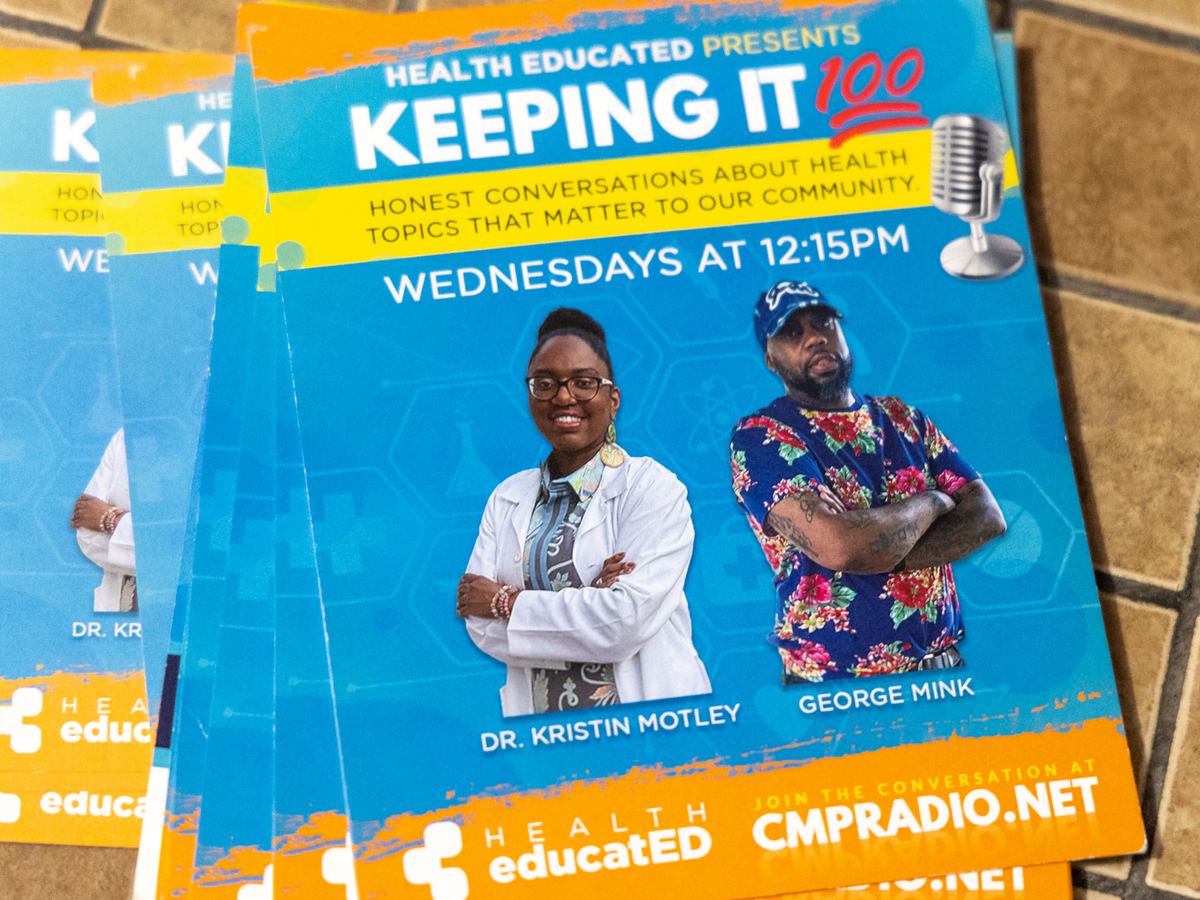
Dr. Kristin Motley, a pharmacist, founded Health Educated, an outreach organization in Delaware County, Pa. Flyers for the podcast she hosts with George Mink Jr. (Kimberly Paynter/WHYY)
Kimberly Paynter/WHYY
hide caption
toggle caption
Kimberly Paynter/WHYY
Dr. Kristin Motley, a pharmacist, founded Health Educated, an outreach organization in Delaware County, Pa. Flyers for the podcast she hosts with George Mink Jr. (Kimberly Paynter/WHYY)
Kimberly Paynter/WHYY
The health departments in Pennsylvania and Delaware say they plan to keep providing free tests and vaccines for the foreseeable future, and that the federal government has yet to say when the free vaccine supply will be cut off.
Pharmacist Kristin Motley, the founder of the Health Educated nonprofit where Mink works, will be sorry to see the free vaccines go.
“It allowed us to go into the community, wherever people were and to say, you don’t have to register, you don’t have to bring I.D., you don’t have to bring insurance. You just come,” she says. “That was really nice to be able to help people in that way with no red tape, no bureaucracy. It was so seamless.”