GOP bill would stick Congress members with veterans’ health care plan to call attention to failing VA

A Republican monthly bill launched this 7 days would power users of Congress and their staff members to get overall health care from the Department of Veterans Affairs, a improve aimed at forcing lawmakers to acknowledge the longstanding issues with the VA.

Property and Senate lawmakers and workers are expected to get their overall health protection via the Washington, D.C., wellness insurance policies trade produced under Obamacare. They get obtain to gold-degree designs, which suggests they fork out 20{bf0515afdcaddba073662ceb89fbb62b6b1bf123143c0e06b788e1946e8c353f} of their health and fitness care prices while taxpayers cover 80{bf0515afdcaddba073662ceb89fbb62b6b1bf123143c0e06b788e1946e8c353f}.

But, less than legislation proposed by Rep. Warren Davidson, an Army veteran and Republican from Ohio, lawmakers and team would acquire VA treatment at VA services “as if these types of users and staff ended up veterans.” Davidson claims the issue is to make lawmakers additional aware of the challenges with the VA.

WATCHDOG ASKS Choose TO Conclusion VA ‘STONEWALLING,’ Establish Officials Behind Overall health Care Constraints

GOP bill would stick Congress members with veterans’ health care plan to call attention to failing VA

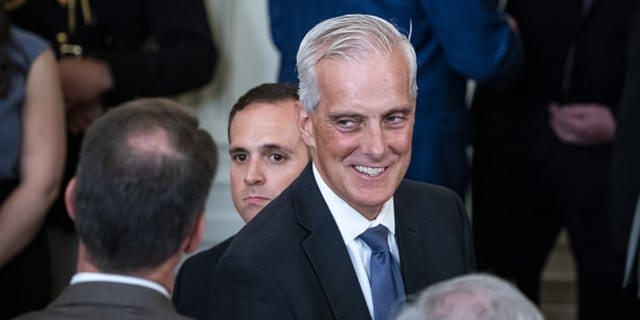
Rep. Warren Davidson, a Republican from Ohio and Army veteran, desires lawmakers to use Veterans Affairs care so they can become a lot more common with how the VA needs to be fixed.
(Al Drago-Pool/Getty Visuals)

“Providing our veterans with the highest good quality care is a bipartisan problem on which approximately all customers of Congress agree,” Davidson mentioned in a assertion to Fox Information Digital. “The VA is billed with satisfying our nation’s obligation to give veterans with the overall health rewards they have gained. To fulfill that obligation, the VA will have to have consistent and intentional congressional oversight.

“When I converse with veterans, they often worry the urgency bordering veterans’ wellness care issues, notably for mental well being solutions,” he included. “My invoice will make sure members of Congress have a stake in strengthening the VA wellness care technique.”

DEMOCRATS REFUSE TO Take a look at ‘UNACCEPTABLE’ VETERAN Well being Care DELAYS

The VA has been beneath tight scrutiny given that 2014, when it turned apparent it was systematically underreporting veteran wait around moments for well being treatment to make it glance as even though veterans were finding well timed care. That practice led to findings that some veterans died even though waiting lengthy intervals of time for VA treatment. And that prompted Congress to create a pilot plan enabling some veterans to get care exterior the VA.

Under former President Trump, the choice of private care grew to become lasting underneath the MISSION Act, but the Biden administration has arrive beneath fireplace for striving to downplay the personal wellness treatment selection. In a 2022 listening to, Republicans criticized VA Secretary Denis McDonough for redirecting a MISSION Act website link from a webpage that educated veterans about their personal care options to a page that encouraged them to indication up for VA treatment.

Denis McDonough, secretary of Veterans Affairs, is under fire from Republicans over the VA's implementation of legislation giving veterans the option of using private sector care. 

Denis McDonough, secretary of Veterans Affairs, is less than fire from Republicans around the VA’s implementation of laws supplying veterans the selection of using personal sector care. 
(Al Drago/Bloomberg by using Getty Illustrations or photos)

Sen. Dan Sullivan, R-Alaska, last 12 months identified as it an case in point of “blatant bias” versus the MISSION Act.

“Due to the fact I have been in Congress, I have supported the VA Mission Act, VA Accountability Act and the PACT Act,” Davidson stated. “These bills elevated entry to treatment, expanded gains and enhanced the good quality of treatment. Having said that, extra should be done to make improvements to the VA.”

SENATORS RIP VA SECRETARY FOR TRAPPING VETERANS IN Government-Operate Health and fitness Treatment: ‘BLATANT BIAS’

Veterans and veterans companies continue on to complain about hold out periods for treatment. Via requesting federal paperwork, veterans teams and their allies have located proof the VA is all over again producing data to make it appear VA wait around instances are not as prolonged as they are.

For illustration, they observed that as an alternative of measuring hold out times starting off from the day a veteran requests care, the VA is beginning the clock when a VA “scheduler” commences the operate of placing up an appointment, which can be months or even months after a veteran first requests treatment.

Veterans Affairs has also been criticized for long wait times for veterans at clinics and hospitals around the country.

Veterans Affairs has also been criticized for lengthy wait instances for veterans at clinics and hospitals about the region.
(Alastair Pike/AFP by way of Getty Photos)

The overall look of brief hold out moments can make it tougher for veterans to qualify for treatment outside the VA. Under the MISSION Act, just one issue that helps make veterans eligible for non-public sector care is extended wait instances, and veterans’ teams say artificially brief hold out times are preventing hundreds of veterans from having the treatment they need to have outdoors the VA.

Simply click Right here TO GET THE FOX Information App

Previous year, Individuals for Prosperity Foundation (AFPF) sued the VA for access to documents detailing the VA’s implementation of the MISSION Act. Though a judge purchased the VA to produce those people files, AFPF last thirty day period returned just before a Washington, D.C., judge to demand from customers it produce far more appropriate files, which include papers that expose which senior leaders in the VA are attempting to limit the use of the MISSION Act.

Medicaid: What to Watch in 2023

As 2023 kicks off, a number of issues are at play that could affect coverage and financing under Medicaid, the primary program providing comprehensive health and long-term care coverage to low-income Americans. The Consolidated Appropriations Act, passed in December 2022, ends the Medicaid continuous enrollment provision on March 31, 2023 with a phase-down in enhanced federal matching funds. The unwinding of this provision, as well as the trajectory of the pandemic and the economy, will have implications for Medicaid enrollees, providers, managed care plans, and the states that operate these programs. A divided Congress will make it difficult to pass federal legislation, and while the Administration is expected to continue to use existing authority to improve coverage, access, and health equity, limited action at the federal level will push even more policy focus to the states. The first glimpse of state policy priorities will be revealed in Governors’ state of the state addresses and proposed budgets. Within this context, this issue brief examines key issues to watch in Medicaid in 2023.

Medicaid Coverage and Financing

The Medicaid continuous enrollment provision in place during the pandemic has increased enrollment and reduced the uninsured rate, but will end in March 2023. Provisions in the Families First Coronavirus Response Act (FFCRA) required states to ensure continuous enrollment in Medicaid in exchange for enhanced federal matching funds during the Public Health Emergency (PHE). Largely due to these policies, enrollment in Medicaid and the Children’s Health Insurance Program (CHIP) grew to 91 million in September 2022, an increase of 27.9{bf0515afdcaddba073662ceb89fbb62b6b1bf123143c0e06b788e1946e8c353f} from February 2020 (prior to the pandemic). KFF estimates that through federal fiscal year 2022, states received more than double the amount in federal fiscal relief relative to the costs of enrollment due to the continuous enrollment provision, with some variation across states. The Consolidated Appropriations Act ends the continuous enrollment provision on March 31, 2023, and phases down the enhanced federal Medicaid matching funds through December 2023. States can resume disenrollments beginning April 1 but must meet certain eligibility and reporting requirements to continue to be eligible for enhanced funding. An estimated 5 to 15 million people could lose Medicaid coverage during unwinding and how states manage the process could affect how many people are able to maintain coverage.

Debate about Medicaid expansion will shift back to the states. Democrats in Congress last year discussed a federal option to fill in the Medicaid coverage gap but ultimately did not pass it, and such an approach is now highly unlikely with divided control in Washington. The American Rescue Plan Act (ARPA) included a two-year fiscal incentive to encourage remaining “non-expansion” states to newly adopt the Affordable Care Act (ACA) Medicaid expansion. Over  2 million individuals living in the 11 states that have not adopted the (ACA Medicaid expansion fall into the “coverage gap”). These individuals do not qualify for Medicaid (as their income exceeds Medicaid eligibility limits in their respective states) but have incomes below poverty, making them ineligible for premium subsidies in the ACA Marketplace. A KFF analysis shows that all non-expansion states would see a net fiscal benefit from the ARPA incentive for two years if they adopt the expansion. The ARPA federal incentive reignited discussion around Medicaid expansion in a few non-expansion states during the last state legislative session. Notably, every state that has adopted expansion since 2019 has done so not through legislative or executive processes, but as a result of a successful ballot initiative. Most recently, South Dakota became the 40th state to expand Medicaid after voters approved a ballot question in November 2022. Although expansion ballot initiatives have been successful in all seven states where they have gone to voters (Idaho, Maine, Missouri, Nebraska, Oklahoma, and Utah), most of the remaining non-expansion states do not have ballot initiative processes. North Carolina may be the state most likely to expand Medicaid next given how far efforts advanced last year, with active efforts in Kansas and Wyoming as well.

Some states and the Administration are expected to continue to implement incremental policies to expand coverage. ARPA included an option, made permanent in the Consolidated Appropriations Act, to allow states to extend postpartum coverage from 60 days to 12 months. Under current law, after the 60 days of postpartum coverage, many people who qualify for pregnancy-related Medicaid  lose that coverage because Medicaid eligibility levels for parents are much lower than for pregnant people in most states, and especially in non-expansion states. As of January 2023, more than two-thirds of the states have taken steps to extend postpartum coverage. The Consolidated Appropriations Act also included a requirement for all states to implement 12 months of continuous coverage for children. In addition, Oregon received waiver approval to provide continuous eligibility for children from birth to age 6 and 2 years of continuous eligibility for all enrollees ages 6 and up, including adults; other states are seeking similar waivers for multi-year continuous eligibility. KFF analysis shows that for children, continuous eligibility policies help to provide coverage stability. Finally, the Administration released a proposed regulation designed to make it easier for individuals to obtain and retain coverage.

New state and federal attention to Medicaid financing could emerge in 2023. Medicaid financing is shared by the federal government and the states. Consequently, economic factors that affect state revenues including inflation, supply chain issues, and declining labor force participation rates, along with phase-down of the enhanced FMAP tied to the end of the continuous enrollment provision will have fiscal implications for states. In our annual state survey, states noted that inflation and workforce shortages were driving higher labor costs and pressure from providers for rate increases. Many states use reimbursement methodologies for some provider types, such as nursing facilities, that may automatically adjust for inflation. In addition, at the federal level the House of Representatives is likely to focus on measures to reduce the federal deficit and, while unlikely to pass in the Senate, proposals to limit federal spending for Medicaid could be debated again in Congress.

What to Watch:

  • What will happen to Medicaid enrollment during the unwinding of the continuous enrollment provision? How will changes vary across states? How many people losing Medicaid coverage will transition to other sources of insurance like the Affordable Care Act marketplaces, and what will happen to the number of uninsured?
  • Will any additional states implement Medicaid expansion or other coverage expansions like 12-month postpartum coverage?
  • How will administrative actions, including oversight of the unwinding of the continuous enrollment provision, waiver approvals, and new regulations contribute to changes in coverage?
  • How will broader economic factors, like inflation, affect state financing of Medicaid and will Congress debate broader proposals to cap federal Medicaid spending?

Access and Health Equity

Capitated managed care remains the predominant delivery system for Medicaid in most states. More than three-quarters of states that contract with MCOs (35 of 41) reported that 75{bf0515afdcaddba073662ceb89fbb62b6b1bf123143c0e06b788e1946e8c353f} or more of their Medicaid beneficiaries were enrolled in MCOs as of July 1, 2022. Several states have recently implemented Medicaid managed care programs. Beginning July 1, 2021, North Carolina implemented its first MCO program, enrolling more than 1.8 million Medicaid beneficiaries in MCOs as of December 2022. Missouri implemented the ACA Medicaid expansion in October 2021, enrolling all expansion adults in Medicaid MCOs, and Oklahoma expects to implement capitated, comprehensive Medicaid managed care in October 2023. State managed care contracts vary widely in the populations required to enroll, the services covered, and the quality and performance incentives and penalties employed. Five multi-state, for-profit “parent” firms – Centene, UnitedHealth Group, Anthem, Aetna/CVS, and Molina – each have Medicaid MCOs in 12 or more states and account for half of all Medicaid MCO enrollment. MCOs are expected to play a large role in helping enrollees maintain coverage during the unwinding of the continuous enrollment provision. The Administration is expected to release revised regulations about Medicaid managed care and assuring access in Medicaid in the Spring of 2023.

In response to the pandemic, all states took action to expand coverage and access to telehealth in Medicaid, particularly for behavioral health services. In particular, nearly all states added or expanded audio-only telehealth coverage. These policy changes contributed to high telehealth utilization by Medicaid enrollees during the pandemic, overall and especially for behavioral health services. The rapid expansion of Medicaid telehealth policies and utilization has prompted state and federal questions about the quality of services delivered via telehealth. Most states have implemented or are planning initiatives to assess telehealth quality, though many states report ongoing considerations and uncertainty over how to effectively evaluate quality. States also report actions to address other telehealth challenges, including access to technology and broadband, program integrity, outreach and education, and equity. Most states have or plan to adopt permanent Medicaid telehealth expansions that will remain in place after the pandemic, including expansions of allowable modalities, services, and providers. At the same time, some states are considering guardrails on such policies, particularly for audio-only telehealth.

Beyond telehealth, many states are taking steps to expand access to behavioral health services as the pandemic has heightened demand for these services. Nine in ten Americans believe the nation is in the midst of a mental health crisis. Behavioral health conditions (i.e., mental health and substance use disorders) are more prevalent in Medicaid enrollees compared to people with other coverage, with data from 2020 showing that approximately 39{bf0515afdcaddba073662ceb89fbb62b6b1bf123143c0e06b788e1946e8c353f} of Medicaid enrollees were living with a mental health or substance use disorder. States have been expanding behavioral health benefits and access to care, including by adopting strategies to bolster the behavioral health workforce. These state efforts track with continued activity at the federal level: the Consolidated Appropriations Act and the 2022 Bipartisan Safer Communities Act included an array of provisions to expand access and funding for behavioral health, such as provisions to require guidance on expanding Medicaid-covered mental health services in schools, expand Certified Community Behavioral Health Clinics (CCBHC), fund new psychiatry residency positions, and eliminate administrative requirements to prescribe buprenorphine.

States and the Administration have identified advancing health equity as an important priority for the Medicaid program. The pandemic exacerbated longstanding racial and ethnic disparities in health and health care. Medicaid policies that could help address health equity include closing the “coverage gap” for adults in non-expansion states; increasing coverage among those eligible but not enrolled; and expanding benefits such as pregnancy and postpartum services, housing and housing-related supports, and community health worker services. High-quality, comprehensive data are essential for identifying and addressing health disparities and measuring progress over time and the majority of states are implementing strategies to improve race, ethnicity, and language (REL) data completeness. States are also using MCO financial quality incentives (e.g., performance bonuses, withholds) tied to health equity-related performance goals and other MCO contract requirements to advance health equity. Other reported state Medicaid initiatives to reduce racial health disparities include outreach to underserved populations, increasing cultural competency, and establishing departments and dedicated staff positions focused on promoting equity. In addition, states have received or are seeking Section 1115 waivers that aim to advance equity.

States and the Administration are implementing strategies to leverage Medicaid to address social determinants of health (SDOH) through managed care and Section 1115 waivers. The Biden Administration has encouraged states to propose waivers that expand coverage, reduce health disparities, and/or advance “whole-person care,” including by addressing health-related social needs (HRSN). Recent waivers approved in four states (AR, AZ, MA, and OR) include HRSN services to address food insecurity and/or housing instability for targeted populations. Additionally, following the approval of a California proposal to use “in lieu of” services (ILOS) to offer a menu of health-related services through managed care authority, the Centers for Medicare and Medicaid Services (CMS) recently released additional guidance on the use of in lieu of services and settings in Medicaid managed care to reduce health disparities and address unmet HRSN (such as housing instability and nutrition insecurity).

What to watch?

  • How effective will state and administration efforts to leverage Medicaid be in addressing SDOH and reducing health disparities? How will states use authorities including Section 1115 and managed care to pursue these goals?
  • What kinds of permanent telehealth expansions and/or guardrails will state Medicaid agencies adopt, and how will these policy changes be informed by data analyses, federal guidance, and cost concerns?
  • Will the Administration release new guidance in 2023 to address access to care and what provisions will be included in the anticipated access and revised managed care regulations?
  • Will Congress pass additional legislation and / or will states take additional actions to improve access to and funding for behavioral health services?

Enrollment and Access Among People Eligible for Medicaid through Age or Disability

The new proposed rule on eligibility and enrollment could increase enrollment among all Medicaid eligibility groups, but especially among seniors and people with disabilities. A proposed rule designed to make it easier for people to obtain and maintain coverage in Medicaid and CHIP includes provisions to simplify the enrollment and renewal processes for seniors and people with disabilities by applying many of the ACA’s simplified eligibility processes for children and other adult eligibility groups to these groups. There would also be simplified enrollment procedures for people who receive supplemental security income and people who are enrolled in Medicare but eligible for Medicaid coverage of Medicare premiums. KFF analysis finds that over one-third of Medicare-Medicaid enrollees lose Medicaid coverage within one year of their initial enrollment, which is one of the reasons for the proposed changes. CMS expects that the rule would increase Medicaid enrollment by nearly 3 million full-year equivalents, with seniors and people with disabilities accounting for over half of that total.

Staff and residents at long-term care facilities have been disproportionately affected by the pandemic. Over one-fifth of all deaths from COVID-19 were among residents and staff in long-term care facilities as of June 12, 2022. Although initial vaccination rates were high and the death rate among nursing facility residents and staff dropped, take-up of boosters and of the new bivalent booster has been much lower. Going into the 2022-2023 winter period, fewer than half of residents and one quarter of staff were up-to-date with their vaccinations, which may result in higher death rates moving forward. Compounding the challenges with COVID-19 illness is the ongoing workforce shortage for long-term care facilities. Whereas employment in most health care sectors has rebounded from the sharp drop in March 2020, employment in long-term care facilities remains well-below pre-pandemic levels.

The pandemic also highlighted workforce shortages and unmet need among people who use long-term services and supports (LTSS) delivered in home and community settings (HCBS). In a KFF survey of HCBS programs, nearly all states reported that workforce shortages were the number one impact of the COVID-19 pandemic on HCBS services and 44 states reported that at least one HCBS provider permanently closed. Virtually all states increased payment rates in response, but some of those increases are temporary rather than permanent. Many changes to HCBS programs relied on temporary funding through the ARPA or temporary authorities available during the PHE. Policymakers of both parties have called for additional and longer-term changes to HCBS including eliminating waiting lists for services, increasing opportunities for family members to be paid caregivers, enabling more people to live in their homes as they age, and permanently increasing wages for all HCBS providers.

There is bipartisan interest in improving the coordination for Medicare-Medicaid enrollees (also known as “dual eligibles”). People who are enrolled in both Medicare and Medicaid tend to have significant health and functional needs and higher health care spending than people with only Medicare or Medicaid. Policymakers have expressed interest in improving the coordination between Medicare and Medicaid with the goals of improved health outcomes and, possibly, reduced health care spending. Most recently, a bipartisan group of senators released a request for information, soliciting input from patients, providers, payors, and other stakeholders.

What to Watch:

  • How will the final eligibility and enrollment rule increase enrollment for seniors and people with disabilities?
  • Will nursing facility residents and staff be at increased risk of death as the virus evolves and immunity wanes among people who are vaccinated but not up to date? What efforts will emerge to improve rates of booster take-up?
  • How will the end of ARPA funding and PHE authorities affect access to HCBS?
  • Will bipartisan interest in improving the coordination between Medicare and Medicaid result in new legislation addressing Medicare-Medicare enrollees and their access to care?

The latest cyberattack on health care shows how vulnerable the sector is

Comment

Welcome to The Cybersecurity 202! Aubrey Plaza is a national treasure.

Reading this online? Sign up for The Cybersecurity 202 to get scoops and sharp analysis in your inbox each morning. 

Below: Cybercriminals stole more than $500,000 from a senator’s campaign committee, and T-Mobile is again hacked. First:

Apparent BlackCat ransomware attack demonstrates risks to health-care sector, vendors

An apparent ransomware attack on a major electronic health records company demonstrates the vulnerability of the health-care sector to potentially disastrous cyberattacks.

The cyber incident impacted NextGen Healthcare last week. It apparently took place at the hands of a ransomware group that the Department of Health and Human Services warned about earlier this month.

The company says it doesn’t look like the hackers obtained any client data, although it didn’t say anything about patient or employee data. The suspected Russian ransomware group that claimed responsibility, BlackCat, put an alleged sample of NextGen information on its extortion site — typically used to compel victims to pay or risk further exposure — but later took down the NextGen listing.

However the NextGen incident plays out in the end, it highlights trends of attacks on major vendors and the health-care system.

What happened (according to those involved)

Founded in 1974, the Atlanta-based NextGen Healthcare claims 2,800 employees and reported revenue of nearly $600 million in 2022. It says it provides software and technology services in “ambulatory” settings, a term that ranges from physician offices to outpatient clinics, and has helped more than 2,500 health-care organizations across the world. 

Here’s what NextGen told media outlets happened in response to inquiries about the BlackCat extortion site listing:

  • “NextGen Healthcare is aware of this claim and we have been working with leading cybersecurity experts to investigate and remediate. We immediately contained the threat, secured our network, and have returned to normal operations. Our forensic review is ongoing and, to date, we have not uncovered any evidence of access to or exfiltration of client data. The privacy and security of our client information is of the utmost importance to us.”

The statement is silent on whether any patient or employee data was affected, Databreaches.net pointed out. Spokespeople for the company didn’t answer questions about those elements of the incident on Sunday. And a purported spokesperson for BlackCat (also known as ALPHV) refused to provide further proof of obtaining client data.

It’s not uncommon for companies to learn later that a breach was more extensive than originally believed. It’s also not uncommon for cybercriminals to lie about what kind of data they’ve stolen, or boast that they’ve stolen something they never did.

BlackCat is “a relatively new but highly-capable ransomware threat to the health sector,” according to an HHS threat briefing dated Jan. 12. It’s not the first time U.S. authorities have issued warnings about the group.

  • HHS dubbed it a “triple-extortion” group, marked by ransomware attacks that accompany threats to leak data and conducted distributed denial-of-service attacks intended to knock websites offline.
  • It has ties to older, infamous Russian ransomware gangs, such as Darkside/Black Matter and REvil.
  • The group has said it doesn’t “attack state medical institutions, ambulances, hospitals,” but that the “rule does not apply to pharmaceutical companies, private clinics.” HHS notes that ransomware gangs have frequently broken these promises.
  • BlackCat favors U.S. targets, according to HHS, which is not uncommon for ransomware gangs, many of which are believed to be based in Eastern Europe.

The ransomware risks for health-care organizations are severe, including potentially causing patient death. North Korean and Iranian hackers have demonstrated particular interest in pursuing attacks on the sector.

Companies that are vendors for other firms are a prominent way for ransomware gangs and other cybercriminals to expand their reach. Notable incidents include:

  • In 2021, REvil got into a software system developed by Kaseya, which in turn affected what Kaseya estimated to be 800 to 1,500 businesses.
  • Suspected Russian hackers accessed SolarWinds software as a means of obtaining access to U.S. government agencies, government organizations around the world and major tech companies.
  • Specifically in the health-care sector, a ransomware incident in the United Kingdom last summer affecting a service provider caused issues for the country’s National Health Service.

Regardless of how the NextGen incident turns out, it’s one episode in an eventful start to 2023 for ransomware. This year has seen the usual array of attacks and disclosures mixed in with some unusual reversals.

  • Restaurants in the U.K., including KFC, Pizza Hut and Taco Bell, had to shut down after a ransomware attack on parent company Yum!, the company said Wednesday.
  • The Los Angeles Unified School District earlier this month acknowledged that ransomware hackers last year stole employee Social Security numbers.
  • On New Year’s Eve, the LockBit gang apologized for what it said was an affiliate hacking a children’s hospital in Canada, and offered the hospital a decryptor to unlock its systems.
  • A study by blockchain analytics company Chainalysis released over the weekend suggested that ransomware payments were down in 2022, as more victims appeared to refuse forking over ransoms to crooks holding their networks hostage. But ransomware criminals continue to use cryptocurrency, contributing to illicit crypto activity reaching an all-time high last year, the firm concluded in another report this year.

Cybercriminals steal more than $500,000 from GOP senator’s campaign committee

They stole the money after sending phony invoices to Moran for Congress, the campaign committee for Sen. Jerry Moran (R-Kan.), Raw Story’s Dave Levinthal reports. The committee has recovered around a quarter of the stolen funds, which amounted to $690,000, it said in a Federal Election Commission filing.

“Cybercriminals targeted the accounting firm employed by Moran For Kansas and money was wired to fraudulent bank accounts,” Moran for Kansas spokesman Tom Brandt told Raw Story in an email. “As soon as a discrepancy was realized, it was reported to law enforcement. We are currently pursuing all avenues available to recover the money and there is an ongoing investigation with the FBI. The campaign also consulted with the FEC on how to transparently report the unauthorized expenditures.”

Cybercriminals have targeted other political campaigns as well. “Joining Moran among the federal-level politicians to experience thefts from their campaign accounts in recent years is President Joe Biden, whose 2020 Democratic presidential campaign committee lost at least $71,000,” Levinthal writes. “The Republican National Committee, Rep. Diana Harshbarger (R-TN), former Democratic presidential candidate and congresswoman Tulsi Gabbard and rapper-turned-2020 presidential candidate Ye, formerly Kanye West, are among others who reported money stolen from their political accounts.”

T-Mobile got hacked — again

T-Mobile said the hacker stole information like names, addresses, emails, phone numbers, birth dates and account numbers on as many as 37 million customers, TechCrunch’s Lorenzo Franceschi-Bicchierai reports. It’s the eighth time the phone carrier — which has 110 million customers — has been hacked since 2018.

“Our investigation is still ongoing, but the malicious activity appears to be fully contained at this time, and there is currently no evidence that the bad actor was able to breach or compromise our systems or our network,” the company said in a Securities and Exchange Commission filing.

A spokesperson for the company didn’t respond to TechCrunch’s request for comment.

A hacker found the sensitive U.S. no-fly list on an open server

Swiss hacker maia arson crimew found the list — which includes people not allowed to fly in or to the United States — on a server run by a regional U.S. airline, the Daily Dot’s Mikael Thalen and David Covucci report.

“The server contained data from a 2019 version of the federal no-fly list that included first and last names and dates of birth,” CommuteAir spokesman Erik Kane told the Daily Dot. “In addition, certain CommuteAir employee and flight information was accessible. We have submitted notification to the Cybersecurity and Infrastructure Security Agency and we are continuing with a full investigation.”

The Transportation Security Administration told the Daily Dot that it’s “aware of a potential cybersecurity incident with CommuteAir, and we are investigating in coordination with our federal partners.” 

U.S. law enforcement has noticed the hacker, crimew, before. In 2021, a grand jury indicted crimew, accusing the hacker of breaching “dozens of companies and government agencies.” Crimew was also a member of a group of hackers who breached security camera firm Verkada.

Hackers penetrated LAUSD computers much earlier than previously known, district probe finds (Los Angeles Times)

Riot Games hacked, delays game patches after security breach (Bleeping Computer)

A hack at ODIN Intelligence exposes a huge trove of police raid files (TechCrunch)

Majority of GAO’s cyber recommendations since 2010 have gone unresolved (NextGov)

  • Jack Cable and Lauren Zabierek have joined the Cybersecurity and Infrastructure Security Agency as senior technical adviser and senior policy adviser.
  • CIA deputy director for analysis Linda Weissgold speaks at an event hosted by the Intelligence and National Security Alliance on Tuesday at 9 a.m.

Thanks for reading. See you tomorrow.

Excess deaths are soaring as health-care systems wobble

In 1516 thomas more explained the ideal health-treatment method. “These hospitals are nicely provided with all types of healthcare products and the nurses are sympathetic,” the thinker wrote in “Utopia”. “Though nobody’s compelled to go there, virtually anyone would alternatively be sick in hospitals than at residence.”

Five centuries later, these who like to be sick in hospital would struggle to make it earlier the foyer. Persons generally lament the shortcomings of their personal country’s health technique. They are inclined to dismiss the extent to which strain is noticeable across the wealthy planet. Britain’s Nationwide Wellbeing Service (nhs) is in a winter season disaster like none before, with people today who have coronary heart attacks ready 90 minutes for an ambulance. In Canada factors are so poor that a children’s clinic identified as in the Red Cross. Even in Switzerland, whose health treatment is often admired, the method is underneath massive anxiety.

Excess deaths are soaring as health-care systems wobble

Worse care is contributing to huge quantities of extra deaths. Mortality in Europe is about 10{bf0515afdcaddba073662ceb89fbb62b6b1bf123143c0e06b788e1946e8c353f} increased than expected in a ordinary 12 months. In mid-December French and German fatalities ended up a quarter bigger. The chaos is also harming in methods that are unable to be calculated. It is distressing to think that just one day you will require to simply call 911, 112 or 999—and that no just one will appear to help.

Paying out on health and fitness treatment is at an all-time high in the prosperous environment. The hassle is that “all-time high” does not always suggest “enough”. Ageing populations boost demand from customers. Wellbeing-treatment units compete for personnel with other elements of the economy, so doctors’ and nurses’ wages have to retain rate with prevailing premiums of shell out. Fees increase even if wellness-treatment productiveness stagnates. The unforgiving logic of this “cost disease” usually means that in ageing societies wellness-treatment expending will have to usually develop as a share of the overall economy just to keep a specified degree of provision. Countries, such as Britain and Italy, that in the decades in advance of the covid-19 pandemic slash overall health-treatment investing as a share of gdp, or held it regular, were previously on a route to worse solutions.

But squeezed budgets do not entirely clarify the disarray. Even in places with sufficient funding, wellbeing treatment is battling with the unprecedented effects of the pandemic. On the desire side, covid has still left driving sicker populations. Soon after a long time of preventing flu, a lot of people are now finding it. The world is also exploring some of the charges of lockdowns. In 2020-21 lots of hospitals and spouse and children physicians cancelled appointments for non-covid situations. Persons who postponed treatment method for other maladies are presenting with later on-phase sicknesses that have to have extra costly treatment they also have poorer likelihood of recovery.

Covid hits the supply facet, much too. A lot of hospitals go on to isolate covid-good sufferers and maintain strict cleansing regimes. This eats up time and means. In addition, workers are burned out. The consequence appears to be to have been a drop in productivity. Excluding major care, the nhs has 13{bf0515afdcaddba073662ceb89fbb62b6b1bf123143c0e06b788e1946e8c353f} far more doctors and 10{bf0515afdcaddba073662ceb89fbb62b6b1bf123143c0e06b788e1946e8c353f} far more nurses than in 2019, nonetheless it is treating fewer individuals from its waiting record.

What can be done? Far more funds would make minor fast variation. It can take time to employ personnel and vacancies are already substantial. But it could be achievable to improve productivity by winding down anti-covid actions that are unwanted in generally vaccinated populations. Outside of this 12 months, spare capacity is necessary. Governments that can’t obtain techniques to improve productivity will have no option but to increase funding and thus increase taxes. Reforms that were previously appealing, this kind of as streamlining processes or introducing much more level of competition, may occur to be necessary.

Governments pondering about the up coming pandemic should really also note the lengthy-expression effects of lockdowns. There is a agonizing trade-off in between suppressing disorder in the shorter phrase and keeping away from bottled-up difficulties in the foreseeable future. As Additional counselled, “it’s a very inadequate physician who cannot cure 1 sickness without having providing you another.” ■

Health care capitalists want to see profits, not just cool ideas : Shots

Health care capitalists want to see profits, not just cool ideas : Shots

The Westin St. Francis San Francisco on Union Square lodge hosted this year’s JPMorgan Healthcare Meeting — the very first considering the fact that the onset of the coronavirus pandemic. (Darius Tahir/KHN)

Darius Tahir/KHN


conceal caption

toggle caption

Darius Tahir/KHN


The Westin St. Francis San Francisco on Union Square hotel hosted this year’s JPMorgan Healthcare Meeting — the initial given that the onset of the coronavirus pandemic. (Darius Tahir/KHN)

Darius Tahir/KHN

SAN FRANCISCO — Wellness care’s enterprise course returned to its San Francisco sanctuary last week for JPMorgan’s yearly wellness care confab, at the gilded Westin St. Francis lodge on Union Square. Immediately after a two-calendar year pandemic pause, the temper between the executives, bankers and startup founders in attendance experienced the aura of a reunion — as they gossiped about promotions, operate-from-property routines, who’s obtaining what investments. Dressed in their capitalist greatest — ranging from amazing-blue or pastel-purple blazers to puffy-coat chic — they thronged to huge get-togethers held in art galleries and places to eat.

But the occasion was tinged with new anxiousness: Would the massive revenue invested in wellbeing treatment owing to COVID-19 go on to movement? Would traders check with to see success — which means profits — fairly than just cool tips?

The buzzy meeting had just as many text about gains as about sufferers. The generally maskless crowd spoke English, French, Japanese — and, of study course, funds.

Other than the company and expense types, attendees routinely noticed stunning characters — like movie star physician Mehmet Oz, fresh off his Senate loss, keeping courtroom in the foyer on Jan. 10.

If the vibe in the hotel’s congested halls was upbeat — or, at least, cheery — beneath there was a frisson of stress and anxiety as all were informed that the wellbeing care business bonanza appears to be slowing down.

The convention began with a sidewalk protest of pharmaceutical business Gilead Sciences, whose prescription drugs combating HIV and hepatitis C are fabulously powerful — and fabulously high-priced. All through the pandemic, Congress for the 1st time has set up a plan to permit Medicare to negotiate U.S. drug rates, which are by considerably the optimum in the entire world. In a statement, corporation spokesperson Catherine Cantone mentioned Gilead is the largest personal funder of HIV courses in the U.S., introducing, “Gilead’s function in ending the HIV and hepatitis epidemics is to discover, produce, and ensure access to our daily life-preserving medications.”

‘A challenging year’

Then there’s the economic ecosystem, which is turning treacherous. Journalists at money publication Bloomberg identified a lack of fascinating offers. Startup executives — who beforehand found tens of millions of pounds in investments quick to arrive by — appeared obligated to demonstrate benefits in their impromptu pitches in bars and coffee outlets. Organization executives of all stripes promised they possibly at present manufactured earnings or were being about to … soon.

“I consider this is a tricky calendar year,” claimed Hemant Taneja, CEO of the enterprise money firm Common Catalyst, all through a person panel. He proposed that massive swaths of well being tech startups were being overvalued and that their shoppers will be additional interested in no matter whether they’re in fact offering handy products and services.

The new message from opportunity buyers was obvious. “The notion you could develop and not be lucrative is useless, absent,” mentioned Dr. Jon Cohen, CEO of the psychological health and fitness startup Talkspace, in an job interview.

Some tried using to celebrate the two economic and humanitarian success. BioNTech co-founder Uğur Şahin was interrupted by applause during a presentation as the developer, with Pfizer, of the mRNA vaccine recounted the shots’ part in combating the pandemic. And that was just before he touted his firm’s part in minimizing infectious ailment, saving lives, and conference international health demands for tuberculosis and malaria.

The conversation afterwards turned to the pricing of his company’s flagship vaccine — which it is really jockeying to set at extra than $100 a dose, up from an typical governing administration purchase price tag of $20.69. A hundred bucks is a truthful price tag taking into consideration the “wellbeing economics,” BioNTech’s chief tactic officer, Ryan Richardson, argued: the hospitalizations and critical results averted.

A mind-bending comment

There was some cognitive dissonance at the conference. Look at drugstore giant CVS — which is steadily growing over and above its retail roots into health coverage and main treatment. CVS Well being CEO Karen Lynch said that as section of its health business enterprise the business is searching at all the aspects that underlie being very well. “Wellness is not just about the engagement with the provider it really is about all the other variables — which include housing and nutrition,” she explained. Still left unaddressed was the sight usually greeting CVS consumers on moving into a shop: candy, chips, and other processed foods.

For critics, it was a thoughts-bending comment. “The final I read, CVS was a for-revenue corporation, not a social welfare company,” explained Marion Nestle, a researcher who is a longtime critic of the food stuff market. “It sells junk meals that make people sick and medicine to deal with those people ailments. How’s that for a nifty organization design!”

CVS spokesperson Ethan Slavin offered a quite unique eyesight, one particular in which CVS is seeking to be a leading health and wellness location. “We’re normally evolving our foodstuff and beverage assortment to deliver more healthy, on-trend solutions.” It is also supporting packages to bolster food stuff availability in underserved regions, he additional.

Some techies encountered new skepticism about “artificial intelligence.” Ginkgo Bioworks co-founder Jason Kelly mentioned through his presentation that persons at the convention listened to so significantly about synthetic intelligence all through the meetings, “they want to quit listening to it.” (Ginkgo’s AI, utilized to guidance pharmaceutical and biotech analysis, he stated, was different than the rest.)

A person surgeon, Dr. Rajesh Aggarwal, found discussions with financiers about the stealth startup he launched, which focuses on metabolic health, were centered on silver bullets. “Convey to me if I spend in this, I will 10x” the outlay, he reported, paraphrasing the bankers. Many, he reported, wished to “do some good as perfectly” for individuals.

Aggarwal felt the buyers were being wanting for simple alternatives to overall health troubles. And a person product match that invoice: a new class of drugs — GLP-1 agonists, a style of medication that aids in bodyweight decline but will possible have to be taken for extended durations. Some analysts are projecting these medicine will be really worth $50 billion. The bankers, Aggarwal felt, usually are not “pondering about health care,” they are “imagining about the bucks attached to the capsule.”

KHN (Kaiser Overall health Information) is a countrywide, editorially impartial method of the Kaiser Household Foundation.

New poll shows jump in adults who rate the quality of US health care as ‘poor’


CNN
 — 

Most grownups in the US take into account the excellent of the country’s health and fitness care to be unfavorable, according to a new survey. This is the first time in a 20-year craze from Gallup polls that the share of grown ups who rated the high quality of the nation’s wellbeing care to be “excellent” or “good” dipped underneath 50{bf0515afdcaddba073662ceb89fbb62b6b1bf123143c0e06b788e1946e8c353f}. The share of grownups who rated it as “poor” jumped higher than 20{bf0515afdcaddba073662ceb89fbb62b6b1bf123143c0e06b788e1946e8c353f}, also for the 1st time.

Practically fifty percent of adults said that the program has “major challenges.” One more 1 in five grown ups explained that US well being treatment is in a “state of disaster,” the most significant share in about a 10 years.

Rankings of health and fitness care expense and coverage were very low – considerably less than a quarter of grown ups say they are pleased with the value of wellbeing care in the state and a lot less than a third of adults view health and fitness treatment coverage favorably – but all those views have held relatively constant over the several years.

For the past two decades, there has been a “clear difference between the significant regard people had for the good quality of care in the country compared to the issues they saw in health care administration, like coverage and price tag,” according to the Gallup report, which printed Thursday and is based mostly on interviews collected in November.

But the declining sights on overall health treatment high quality mark a recognizable shift in this stability.

Partisan sights demonstrate some of this change. Republicans’ view of well being treatment high quality dropped in 2014 following the implementation of the Reasonably priced Care Act and rebounded in the course of Donald Trump’s presidency. But they dropped sharply again in latest several years, down from 75{bf0515afdcaddba073662ceb89fbb62b6b1bf123143c0e06b788e1946e8c353f} favorable in 2019 to 56{bf0515afdcaddba073662ceb89fbb62b6b1bf123143c0e06b788e1946e8c353f} in the latest poll. Democrats generally perspective health treatment good quality fewer favorably than Republicans, but their ratings have stayed much more steady around the a long time.

Also, gratification with wellness care has remained substantial amid older grownups ages 55 and up but declined between younger and center-age grown ups. The authors of Gallup report propose that some of this drop may perhaps mirror views on abortion obtain and other adjustments that occurred in the course of the Covid-19 pandemic.

Overall, US older people are drastically extra very likely to see their personalized health and fitness treatment – which include the top quality, coverage and charge – much more favorably than they do for the place as a total. Additional than 70{bf0515afdcaddba073662ceb89fbb62b6b1bf123143c0e06b788e1946e8c353f} of grown ups see the high quality of their own health and fitness care favorably, but as with general impressions of the program, fulfillment with personal wellness treatment dropped sharply in latest yrs.

Just 56{bf0515afdcaddba073662ceb89fbb62b6b1bf123143c0e06b788e1946e8c353f} of grownups in the US are pleased with the whole expense they have to shell out for health and fitness treatment, the most affordable Gallup has calculated since 2016.

Having said that, an additional new report uncovered a a lot more positive craze similar to health and fitness treatment expenditures.

The share of persons dwelling in families who ended up struggling to fork out for clinical expenditures has been lower approximately in 50 percent above the earlier decade, down from just about 20{bf0515afdcaddba073662ceb89fbb62b6b1bf123143c0e06b788e1946e8c353f} in 2011 to about 11{bf0515afdcaddba073662ceb89fbb62b6b1bf123143c0e06b788e1946e8c353f} in 2021, in accordance to info posted Wednesday by the Nationwide Center for Wellness Stats.

There was a notable drop of far more than 3 share points from 2019 to 2021, meaning 10.5 million much less individuals ended up in families acquiring problems having to pay clinical costs in 2021 than in 2019.

The effects of the Covid-19 pandemic on this alter “cannot be discounted,” according to the authors of the report.

Persons have been fewer very likely to search for treatment in the early times of the pandemic, which could have constrained the number of costs that wanted to be paid. But plan provisions – these as these bundled in the CARES Act and American Rescue Approach – delivered money help that could have helped mitigate the impression of clinical personal debt.

Still, health care credit card debt proceeds to be a main source of overall financial debt and significant disparities continue to be.

Black, Hispanic and American Indian men and women residing in families are substantially additional probably to wrestle to shell out health care charges. Men and women included by personal insurance plan are considerably less probably to have troubles shelling out health care bills, but results were being much better for people living in Medicaid growth states than those people that did not increase the federal method.

Cutting down the stress of health and fitness care charges could support increase populace wellbeing general, as men and women facing health-related credit card debt are additional very likely to forego treatment and prescription medication.

“Despite the reducing trend in the percentage of folks with issues having to pay healthcare expenditures, the load linked with unpaid professional medical costs remains a community well being concern,” wrote the authors of the NCHS report.