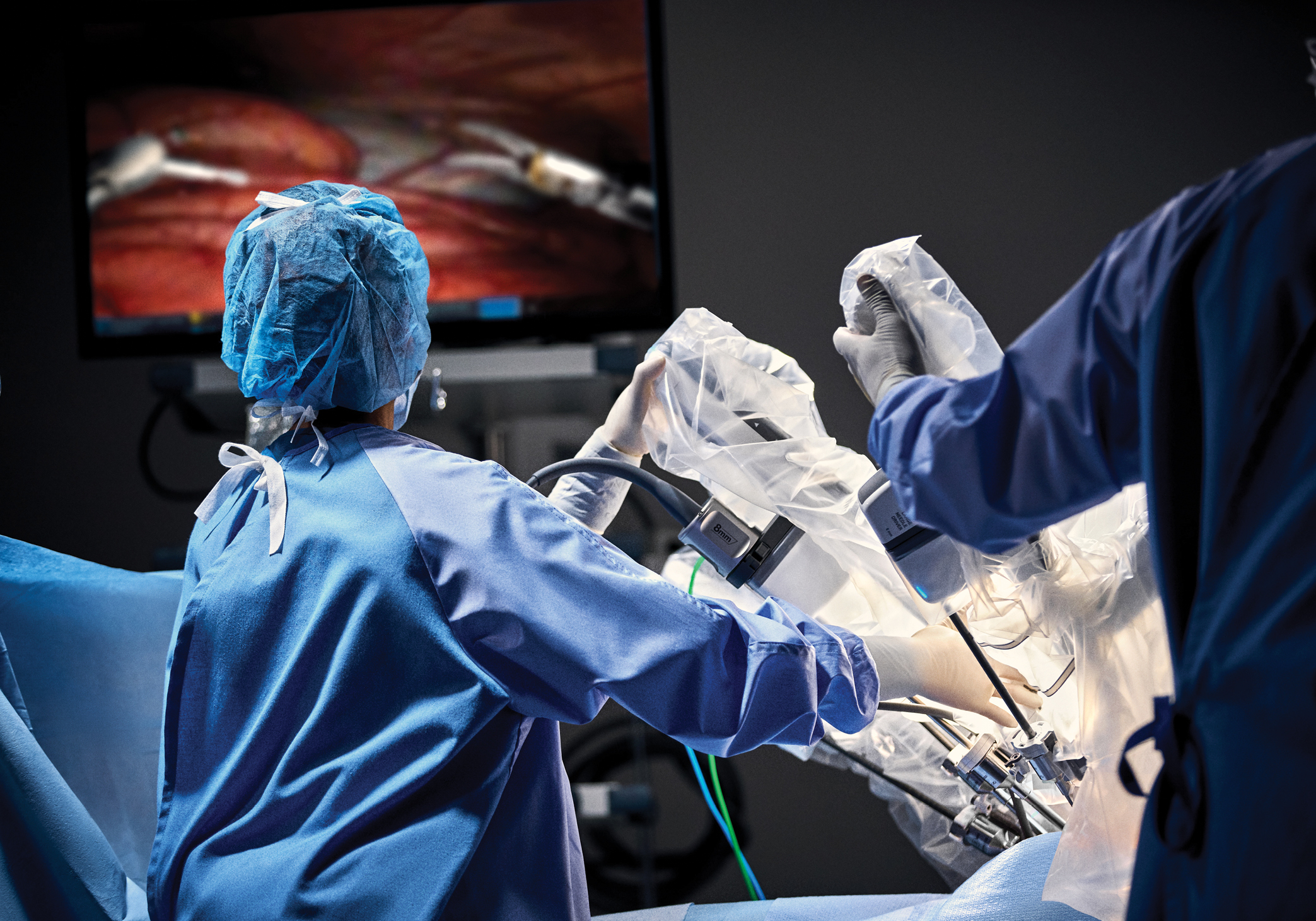
Medical device makers drop products as EU law sows chaos

LONDON, Dec 19 (Reuters) – Nicola Osypka’s German company has been selling medical devices used in surgery on newborn babies in Europe for decades, but new European Union rules have forced her to make tough decisions.

Under the regulations designed to prevent another health scandal, such as the one in 2010 involving ruptured breast implants made by Poly Implant Prothese, companies must apply for new certificates for their medical equipment.

But Osypka says the small firm founded in 1977 by her father Peter cannot afford the process and it has withdrawn five lines of devices sold in the EU, some for more than 30 years.

“A law created to stop one criminal company’s actions 10 years ago now endangers patients’ lives, including children, and European manufacturing sites,” said Osypka.

“Is that what the EU wants for its citizens?”

Osypka AG is one of eight companies Reuters has spoken to, including Swedish medical equipment maker Getinge (GETIb.ST), that are withdrawing devices from the EU market, or have stopped making them due to the cost it takes to comply with the rules.

While some companies say the products they have cut have no impact on patients or profits, others say some of withdrawn devices are essential, and doctors agree.

Under the EU’s Medical Devices Regulation (MDR), which came into effect in May 2021, all medical devices, from implants and prosthetics to blood glucose meters and catheters, must meet stricter safety criteria, sometimes with new clinical trials.

The eight manufacturers all said the requirements were stretching the time it takes to get a certificate for a product line to as much as two-and-a-half years, compared with a few months under the old system.

Costs have also surged, by anywhere from three to 10 times, the companies said. As a result, some are simply allowing their product certifications to lapse, which means hospitals in the EU can no longer use their devices.

The EU Commission, in response to Reuters’ questions, said it was concerned about the pace of the implementation of the new rules and would do all it could to ensure patients have access to the medical devices they need.

DISRUPTION FOR DOCTORS

Reuters also spoke to two medical associations, three doctors and two regulatory experts and, like the companies, they said the new rules were causing widespread disruption and shortages of crucial equipment.

The doctors, in Austria, Belgium and Germany, said in some cases they were unable to provide their standard quality of care because devices for routine procedures were no longer available.

The Standing Committee of European Doctors (CPME), a group of national medical associations, told Reuters that hospitals in Austria and Denmark have reported shortages of critical devices.

France’s national medical regulator (ANSM) told Reuters that the country’s health system was being affected by shortages of various types of devices, partly because of the new law.

Nicola Osypka, a molecular biologist, said she sat down with staff to run the numbers on their niche products, such as a miniscule catheter used to keep newborns with non-functioning heart valves alive until surgery can be performed.

“These types of products are totally beneficial for these patients, but we cannot afford the half a million euros it takes to conduct a clinical study, even though these products have been on the market for 30 or 40 years,” she said.

Just as painful is the fact Osypka cannot afford costs estimated at one million euros ($1.1 million) to prepare the application for an innovative product that has already been through clinical trials.

The company’s new stent for babies was developed over eight years and doctors successfully used it on 19 babies during the trial in Germany, according to the results seen by Reuters.

John O’Dea, chief executive of Palliare, a small Irish medical equipment manufacturer, is so keen to get his firm’s new laparoscopic device for surgery in the abdomen or pelvis onto the market, he has swallowed the costs.

The process has taken a year and a half so far and O’Dea estimates the total cost will come to about 100,000 euros, for equipment approved two years ago by the U.S. Food and Drug Administration.

Under the old system, it took about 15,000 euros and a few months to get a similar device approved, he said.

SYSTEM OVERLOAD

The costly approval process is the latest blow to the world’s second-biggest medical device market, worth more than $150 billion, which is already reeling from soaring energy bills and unpredictable supply chains following pandemic lockdowns.

An EU Commission spokesperson said in an emailed statement that there were currently not enough agencies, known as notified bodies, to do the work of recertifying products, though device makers had also not prepared sufficiently for the change.

Brussels has authorised 36 agencies and is considering 20 more applications, the spokesperson said.

Tom Melvin, an associate professor of medical device regulatory affairs at Trinity College Dublin, said there were nearly 100 such agencies a decade ago under the old system.

In a major concession, the EU Health Commissioner proposed on Dec. 9 to delay the May 2024 deadline for companies to comply with the new law to 2028 to prevent shortages.

The extension will require an amendment to the law to be approved by the European Council and Parliament, which would not happen until next year.

While a delay would mean some devices will not be cut in the short term, it would not address the logjams and high costs putting firms off going through the process, executives such as Frank Matzek, vice president of regulatory and governmental affairs at Biotronik, a cardiac devices maker in Berlin, said.

EU Commission data released this month shows the scale of the problem.

Under the old system, there are about 25,000 certificates. So far, manufacturers have submitted applications under the new system for about 8,000, but less than 2,000 have been approved.

Certificates cover multiple devices, and in some cases whole product lines, making it hard to estimate the number of products potentially affected. Industry experts say about 500,000 different devices are sold in the EU.

GOING BACKWARDS

Even large companies with deeper pockets and more experience of handling tough global regulations say they have been astonished by the new system’s complexity and expense.

Getinge, which makes products for surgery, intensive care and sterilization, has new certificates for about 20{bf0515afdcaddba073662ceb89fbb62b6b1bf123143c0e06b788e1946e8c353f} of its portfolio and feels it is on track to meet the deadline, said Mikael Johansson, an executive overseeing MDR implementation.

But that work started in 2018, required a full review of the company’s portfolio and resulted in the removal of about a third of Getinge’s products from its range of hundreds of devices.

He said the cull was “healthy” in that it removed products with little effect on profit, but recertification of the rest has been more demanding and taken much longer than expected.

But as some companies press ahead, others are letting certifications lapse.

Andreas Kohl, who runs stent and catheter manufacturer AndraTec in Germany, said he plans to drop two or three devices because he cannot afford to apply for all six of his products currently sold in the EU.

Balton in Poland told customers in October it would ditch over a dozen products, including catheters and stents used for coronary angioplasties and pacing electrodes, due to the costs and other difficulties of complying with the new law, according to an email seen by Reuters.

The company did not respond to requests for comment.

Doctors say the starkest example of the impact of the company decisions has been on devices for rare conditions, such as catheters used on newborns with heart problems.

Marc Gewillig, director of paediatric cardiology at the University Hospital Leuven, a teaching hospital in Belgium, said he has lost access to nearly a dozen devices needed for procedures, forcing him to improvise on three babies.

For one procedure, he said he had to use a catheter to access the atrial septum in the heart through the groin, instead of through the umbilical cord with a balloon catheter.

The procedure is usually carried out within five minutes of birth, but without the preferred device, he must transfer the baby to another part of the hospital, delaying it by 30 minutes.

“Those are minutes in a child with little oxygen going to its brain,” he said. “We’re going back in medicine by 20 to 30 years.”

($1 = 0.9405 euros)

Reporting by Maggie Fick; Additional reporting by Tassilo Hummel in Paris; Editing by Josephine Mason and David Clarke

Our Standards: The Thomson Reuters Trust Principles.

EU Health Commissioner proposes MDR delay to prevent medical device shortages

Dive Brief:

  • The European Union Health Commissioner has proposed delaying enforcement of the Medical Devices Regulation (MDR) by three to four years to prevent product shortages.
  • EU Health Commissioner Stella Kyriakides seeks to pair the delay with “additional measures to address the structural problems” of MDR, including the need for targeted solutions to the problems facing rare disease devices.
  • One critic of the extension called it a “sticking plaster solution,” using the British term for a Band-Aid.

Dive Insight:

A steady stream of warnings about the impact of MDR on medical device supply again has driven the EU to act. Officials changed the original timeline in response to the COVID-19 pandemic and allowed devices with valid certificates under the old directives to stay on the market until 2024. However, as the deadline has approached, worries that the EU lacks the capacity to process the backlog have intensified. 

Six new notified bodies have received MDR designation since June, creating a pool of 36 organizations that need to process around 23,000 certificates by May 2024 if all current devices are to stay on the market. The equation has led Kyriakides to accept that a delay is necessary.

“The transition to the new rules has been slower than we anticipated. The pandemic, shortages of raw materials caused by Russian war against Ukraine and low notified body capacity has put a strain on market readiness,” Kyriakides said. “We are facing a risk of shortages of life-saving medical devices for patients. This is a risk we cannot take.”

Noting factors that have “put a strain on market readiness,” Kyriakides outlined plans to delay the deadline for MDR certification to 2027 for high-risk devices and 2028 for medium and low-risk devices. 

As well as extending the validity of directive certificates, Kyriakides is proposing to remove the “sell-off” date that would have required some marketed medical devices to be discarded in May 2025. The plan is to have the amendment ready for review by EU politicians at the start of next year.

If passed into law early in 2023, the amendment will give the EU, manufacturers and notified bodies four to five years, depending on the risk classification of a device, to fix the problems that have forced officials to twice delay MDR. 

The decision was derided by attorney Alison Dennis, a London-based international co-head of life sciences and healthcare at law firm Taylor Wessing, as “a sticking-plaster solution.” In an emailed comment, she said it imposes “an administrative burden for both companies and competent authorities to have to make these applications,” adding that “their time would be better spent on getting medical devices certified under the [existing] Regulations.” 

Dennis said it would be preferable for the new rules to provide for an automatic extension of existing certification. “Manufacturers are likely to have to ask and potentially ask repeatedly for extensions,” she said.

Kyriakides, the EU commissioner, also spoke about the Commission’s efforts to support solutions for rare diseases. 

“We should develop together solutions on orphan devices, to ensure patients with rare diseases continue to have access to those devices,” Kyriakides said. “We must also shape a regulatory environment that fosters innovation and ensures that notified bodies are enabled to focus on the key task at hand, patient safety and less bureaucracy.” 

Kyriakides’ focus on orphan devices is in line with the concerns raised by the Biomedical Alliance in Europe, which recently called for a special framework for orphan medical devices. The EU Health Commissioner also outlined plans for a pilot project that will “offer scientific advice from the expert panels on medical devices” to manufacturers of orphan and breakthrough devices and for more support for small and medium-size enterprises.

Exclusive: EU to propose delay to medical device law amid supply worries

LONDON, Dec 8 (Reuters) – The EU Well being Commissioner will on Friday suggest extending the deadline for organizations to comply with a new legislation regulating healthcare gadgets, she instructed Reuters on Thursday as medical professionals alert the laws is creating shortages of lifesaving products.

Stella Kyriakides informed Reuters that worries in employing the regulation had been threatening provides of vital gadgets, this kind of as catheters applied for surgeries on newborns with coronary heart conditions.

“Our individuals hope that medical gadgets are harmless and of maximum quality. We have created important progress to set in area new needs for individual security, but troubles however stay,” mentioned Kyriakides in published emailed comments to Reuters.

“This is why, to mitigate any brief-term pitfalls, we will tomorrow announce an extension of the changeover time period to mitigate any danger of shortages.”

Kyriakides will make the proposal at a meeting of EU health and fitness ministers on Friday. She reported in parliament previous month she was contemplating amendments.

A Commission supply said the extension will need an modification to the legislation. Any authorized adjustments would need to have to be authorised by the Council and Parliament.

Kyriakides did not comment on how extensive the extension would be for.

The Healthcare Products Regulation (MDR) came into effect final 12 months and was launched immediately after the 2010 scandal of exploding breast implants created by a French organization that exploited loopholes to provide defective products at profit.

It has extra stringent needs and greater safety benchmarks than the directive it replaced.

Below the new law, all health-related devices, from implants and prosthetics to blood glucose meters and pacemakers sold in the EU need to be re-licensed by May possibly 2024.

A dozen health professionals and producers interviewed by Reuters say supplies of some merchandise are running lower even just before the 2024 deadline.

That is simply because certificates which very last for 5 many years beneath the aged program are expiring and companies are having difficulties to get new types beneath the new legislation. They say the new certification system is sluggish, cumbersome and expensive.

“From the standpoint of medical practitioners, the circumstance is starting to be extra and much more stressing. We are by now observing shortages of some vital healthcare devices, and in a lot of circumstances option products are lacking,” Christiaan Keijzer, president of the Standing Committee of European Doctors (CPME), told Reuters.

He reported that healthcare associations throughout Europe have noted complications with the provide of surgical instruments, in particular in paediatrics, orthopaedics and cardiology, as very well as other gadgets these kinds of as binocular endoscopes, silicone adhesives and blood assortment items.

Facts unveiled by the Fee in a assertion this 7 days ahead of Friday’s conference highlights the issue.

Makers have submitted apps for around 8,000 devices, but a lot less than 2,000 have been permitted.

At that speed, only 7,000 certificates less than the new program will be issued by the May well 2024 deadline, the Commission explained.

The Fee reported there are about 23,000 certificates less than the outdated system which will expire by Could 2024 without having an extension. About 4,300 of those will expire subsequent yr, it explained.

Certificates address a number of units, generating it challenging to estimate the full number of merchandise potentially affected.

Reporting by Maggie Fick editing by Josephine Mason and Elaine Hardcastle

Our Criteria: The Thomson Reuters Trust Ideas.

From needles To MRI Machines, Medical ‘Device’ Exports Up 8.14{bf0515afdcaddba073662ceb89fbb62b6b1bf123143c0e06b788e1946e8c353f}

Good news and bad news. Sort of.

The value of medical-instrument exports, one of the top U.S. exports this year, is growing at less than half the rate of overall U.S. exports.

That’s the bad news.

The category, which includes everything from needles and sutures to MRI and ultrasound machinery, are still increasing at a pace sufficient to lead to a record year, when annual totals are released in early February.

Now, the good news: Through September, according to the most recent U.S. Census Bureau data, exports in the category were up 8.14{bf0515afdcaddba073662ceb89fbb62b6b1bf123143c0e06b788e1946e8c353f} to $26.46 billion. U.S. exports increased 21.04{bf0515afdcaddba073662ceb89fbb62b6b1bf123143c0e06b788e1946e8c353f} and stand a chance of topping $2 trillion for the first time in 2022.

This post, focused on medical instruments, which ranked 10th when this series on U.S. exports began, is the 12th and final post in a series of columns about the nation’s exports. It currently ranks 12th, trailing gold, which entered the top 10 earlier this year and low-value shipments, which I chose to step over since the data on the category. largely unspecified e-commerce and courier shipments, is insufficiently detailed.

This series follows similar series I did for the countries that were, at the time, the nation’s top 10 trade partners and one for the airports, seaports and border crossings that were, at the time, the nation’s top 10 “ports.”

The first article in this series focused on an overview of the top 10 exports. The second looked at the top 10 countries that are markets for U.S. exports and how they differ from our overall trade partners, which would include imports.

The third was about refined petroleum, the top export; followed by one on oil, which ranks second; natural gas, which includes LNG and ranks third; the primary commercial jet category, which ranks fourth; passenger vehicles, at No. 5; computer chips, which actually rank seventh, though at the time this series started, ranked sixth; vaccines, plasma and other blood fractions, which ranked seventh when the series started; motor vehicle parts, the No. 8-ranked U.S. export; and medicines, largely in pill form, which ranked No. 9 when the series began but had slipped to No. 10 by the release of the September data.

In the same way that the low-value shipments category is relatively opaque, so too is the medical instrument category, though far less so. Nonetheless, $11.21 billion of the $26.46 billion total, is categorized as “not elsewhere specified or indicated” — or more than 42 percent.

The top 10 markets are, not surprisingly, advanced economies in North America, Europe, Asia and Oceania (Australia). The top five have already topped $2 billion this year, the top seven having topped $1 billion.

Increases in exports to China, Canada and Japan are all in the single digits while those to the Netherlands, a transshipment hub for Europe, and Mexico have increased 28.48{bf0515afdcaddba073662ceb89fbb62b6b1bf123143c0e06b788e1946e8c353f} and 12.81{bf0515afdcaddba073662ceb89fbb62b6b1bf123143c0e06b788e1946e8c353f}, respectively.

Chicago’s O’Hare International Airport, Los Angeles International Airport and what is quite possibly New Orleans International Airport are the three dominant gateways for these exports. (The New Orleans port data comingles air and ocean cargo in the Census Bureau data.) Those three account slightly less than 30{bf0515afdcaddba073662ceb89fbb62b6b1bf123143c0e06b788e1946e8c353f} of the total this year.

The top seven all topped $ billion through September.

These 14 medical device inventions are the best

Marketing images of Osso VR Phonak Audéo Fit Molli Surgical breast cancer localization system and Esper Bionics Esper Hand which were medical device innovations making it into Time magazin Best Inventions of 2022

Clockwise from top left: Osso VR, Phonak’s Audéo Fit, Molli Surgical’s breast cancer localization system, and Esper Bionics’ Esper Hand were among 14 medical device innovations to make it into Time magazine’s Best Inventions of 2022. [Images courtesy of the companies]

Fourteen medical devices ranging from patient monitoring to surgical robotics recently made it into Time magazine’s Best Inventions of 2022.

For over 20 years, Time magazine has highlighted the 100 most impactful devices and ideas around the world. The list is compiled through nominations from the publication’s editors and global correspondents, with special attention to categories such as medical innovations, green energy and electric vehicles.

Time graded each nominee on a number of key factors that include originality, efficacy, ambition and impact.

This year’s list honored 14 medical devices, mostly from startup companies. Vicarious Surgical and Osso VR are some familiar names in the medtech industry that were recognized as some of Time magazine’s Best Inventions of the year as surgical robotics and virtual reality continue to gain traction in the industry.

Other notable devices on Time magazine’s Best Inventions list include a wearable walking cane for visually-impaired people that takes into account objects at head and chest level, as well as an ultrasound sticker and a pop-up patient isolation room.

Here are the 14 medical devices and technologies, separated into type categories, that were awarded Best Invention of 2022, according to Time magazine.

Patient monitoring

Patient monitoring devices had to become more innovative during the COVID-19 pandemic. In the first few months of the COVID-19 pandemic, the FDA relaxed regulations on 21 types of remote patient monitoring devices for the duration of the pandemic to protect healthcare workers from exposure to the virus. Time magazine has named some patient monitoring systems as some of the best inventions of 2022. Ranging from wearable continuous stroke monitoring to a pop-up patient isolation room, here are five patient monitoring devices that are keeping physicians and patients safe and comfortable.

What are they and how do they work?

Click + symbol to expand.

Clinomic: Mona | Tracking ICU patient care using voice activation

Clinomic‘s Mona is a smart bedside device used in the intensive care unit that provides feedback to assist clinicians in the best treatment options for patients. This remote monitoring system allows clinicians to securely perform telemedicine through an encrypted audio-video connection, giving specialist care at the patient’s bedside. Using natural language, Mona documents patient data, including drugs administered, clinical measurements, observations, procedures and more. It is voice-activated to allow doctors to verbally note what action they are taking. The system features SmartLabs, MedicBI, SmartWorkflows, ItelliQM and SmartSummary, all of which provide meaningful information to doctors on lab values, predictions of out-of-range lab values, efficient ways to track ICU checklists and more. Mona is powered by an NVIDIA high-speed artificial intelligence chipset, artificial intelligence-powered eight microphone array, 60 GHz radar and localization chip, 5G and LTE mobile connectivity and a 180-degree 4K telemedicine camera and runs on hospital infrastructure.

Neuralert | Wearable continuous stroke monitoring

Neuralert is a non-invasive stroke monitoring system that detects and alerts hospital staff to the onset of a stroke. Worn as a wristband, the device is constantly monitoring for warning signs of a stroke by measuring arm asymmetry and models out non-stroke asymmetry that causes false alarms, such as hand dominance and cellphone usage. When Neuralert detects signs of a stroke, the device’s cloud software immediately sends an alert to hospital staff on their mobile devices to enhance care delivery. The parameter-invariant algorithm helps reduce false alarms and detect strokes with up to 97{bf0515afdcaddba073662ceb89fbb62b6b1bf123143c0e06b788e1946e8c353f} specificity, according to the company.

Xander Kardian: XK300 | Wireless, remote patient monitoring system

Xander Kardian‘s XK300 is a wireless patient monitoring system that measures motion, resting heart rate, respiratory rate and the presence detection of a patient using radar technology. The device is cleared for use in general hospitals, nursing homes and residential homes for home health monitoring. The XK300 measures nano-vibrations from inside the body and uses impulse UWB radar technology to obtain the frequencies from both macro body motion and micro nano-vibrations as a patient moves, breathes and their heart pumps. The human body can send out 15 million impulse signals per second, and the XK300 translates them into 10 data set conclusions per second and compiles it to provide a body motion index, respiratory rate and resting heart rate information. The device is attached to a wall to monitor many chronic conditions, including COVID-19, asthma, pulmonary hypertension, pulmonary embolism and more.

Biotricity: Bioheart | 24/7 heart monitoring

Biotricity‘s Bioheart is a direct-to-consumer continuous heart rhythm monitoring device. It has built-in electrodes and offers three different heart views with 48 hours of battery life on a fabric chest strap wearable. It uses powerful analytics and continuous rhythm monitoring to deliver feedback to physicians that is needed to better understand the condition of a person’s heart health. The technology syncs to a smartphone to offer real-time data that can be viewed on the Bioheart application, which includes important metrics like resting heart rate, active heart rate, live heart rhythm, heart rate variability and more.

Gama Healthcare: Rediroom | Instant patient isolation room

Gama Healthcare‘s Rediroom is an instant patient isolation room that equips hospitals to respond to infection outbreaks. The pop-up isolation room has a mobile cart that expands into a HEPA air-filtered isolation room with hands-free entry. The Rediroom is fully operational in five minutes and is a mobile solution that can be easily wheeled to a patient’s bed. It can create an isolation space anywhere in a multi-bay ward. The HEPA filters remove 99.995{bf0515afdcaddba073662ceb89fbb62b6b1bf123143c0e06b788e1946e8c353f} of particles down to 0.3 microns. Rediroom’s hands-free entry and exit reduce the risk of hand contamination with an entry kick panel below the in-built PPE station.

Withings: Body Scan | Home connected health station

Withings’ Body Scan is a connected health station that delivers precise weight, segmental body composition and heart health with vascular age. It uses advanced sensors embedded in the handle of the scale to scan the torso, arms and legs to give a precise body composition and overall fitness measurement. The vascular age feature identifies changes in overall cardiovascular health by measuring the speed at which wave heart-generated waves move along the artery. Body Scan also provides an Electrodermal Activity Score that measures skin response to sweat gland stimulation. Data from the scale is transmitted to the Withings smartphone application where health trends can be monitored.

MIT: Bioadhesive Ultrasound | Ultrasound stickers

Researchers at the Massachusetts Institute of Technology have developed a stamp-sized device that sticks to the skin to provide continuous ultrasound imaging of internal organs. The sticker can operate for 48 hours to show high-resolution images of major blood vessels and deeper organs such as the heart, lungs and stomach. The bioadhesive ultrasound stickers are connected to instruments that translate the reflected sound waves and turn them into images. A transducer is pressed against the skin and sends sound waves into the body that then echo off internal structures and back to the transducer, which translates the echoed signals into visual images. The adhesive layer is two thin layers of elastomer encapsulating a middle layer of solid hydrogel that easily transmits the sound waves.

Accessibility devices and technology

There are many devices on the market to assist people with health conditions and impairments. Recently, the White House announced that over-the-counter hearing aids would be sold at major U.S. retailers following an FDA final ruling that created a new category of OTC hearing aids. Those devices for the hearing impaired and many other accessibility devices for amputees and visually-impaired are some of Time magazine’s Best Inventions of 2022. Ranging from hearing aids to wearable walking canes, these devices improve accessibility and mobility.

What are they, and how do they work?

Click + symbol to expand.

Phonak: Audéo Fit | Hearing aids that monitor heart rate

Phonak‘s Audéo Fit hearing aids are equipped with a sensor that collects heart rate, steps and activity levels to help create a greater sense of well-being when used with the company’s myPhonak smartphone app. The wearable hearing aids also have multiple Bluetooth functions that allow the device to connect to smartphones, televisions and more.

Esper Bionics: Esper Hand | Bionic hand prosthetic

Esper Bionics‘ Esper Hand is an FDA-registered self-learning bionic hand prosthesis that has five separate movable fingers. It is powered by the company’s Esper Control and Esper Platform to accurately detect muscle activity, recognizes situations and predicts the grip that would best fit a certain scenario. Esper Hand is trained using digital signal processing, artificial intelligence, machine learning, data collection, low-power electrons and light movable machinery design so that when a user moves the Esper Hand, the human brain sends impulses to activate exact muscles in the forearm, shoulder and chest. The activation is detected with the help of wearable muscle sensors to work as an exact call-to-action for the robotic hand.

Enhanced Robotics: Sportsmate 5 | Personalized exoskeleton to assist mobility

Enhanced Robotics‘ Sportsmate 5 is an exoskeleton, wearable robot that helps a user lift their thighs up and push the body forward to make walking easier. The consumer-level powered exoskeleton is form-fitting and has two actuators at the hip to provide assistance when needed to save energy and move with ease. Sportsmate 5 improves stability by holding the user’s body and absorbing shaking to decrease strain. It uses a gait controller system, actuator system and energy system, all of which will monitor gait behavior using sensors and are processed using an artificial intelligence algorithm. The controller sends signals to the exoskeleton’s drivers to deliver the correct amount of assistance to the user.

Strap Technologies: Ara | A wearable walking cane for visually-impaired

Strap Technologies’ Ara device is an assistive technology for the blind and visually impaired. The company designed it to replace traditional canes as the wearable technology provides obstacle detection at the user’s head, chest and below waist level and alerts them through haptic feedback. The system’s obstacle detection and straight-line navigation communicate with the user through haptic feedback and a sequence of vibrations specific to certain situations. Ara also adapts to walking speed, and sensors on the device provide information and essential direction instructions that prevent unintentional veering when walking long distances. The Ara is worn on the chest and has six actuators in the device and four actuators on the strap.

Robotic surgery, virtual reality and surgical systems

Robotic-assisted surgery is one of the hottest spaces in the medical device industry, while virtual reality is gaining traction as well. Companies like Vicarious Surgical are combining the two technologies to create one of Time magazine’s Best Inventions of 2022. From surgical robotics to breast cancer localization systems, here are three inventions labeled as the best of the year by Time magazine.

What are they, and how do they work?

Click + symbol to expand.

Vicarious Surgical: Robotic system | Transporting doctors inside a patient using surgical robots

Vicarious Surgical designed its surgical robotics platform to use human-like surgical robots combined with 3D visualization to transport surgeons inside the patient to perform minimally invasive procedures. The system creates a 1.5 cm incision — smaller than a dime — to insert a camera and two robotic instruments for abdominal procedures. The surgical robot design has 360 degrees of visualization and access and robotic arms that move downward, sideways, upward and backward to give surgeons greater access to the abdomen. Vicarious Surgical’s robotic system has 28 sensors per arm and replicates a surgeon’s natural upper body movements from shoulders to elbows to wrists.

Molli Surgical: Molli breast cancer localization system | Precise localization for breast cancer surgery

Molli Surgical‘s Molli is a surgical localization device that makes breast cancer surgery simpler for patients, radiologists and surgeons. The localization marker is 3.2 mm in size and has solid magnetic technology to prevent the marker from being deactivated. Molli works with all breast sizes and dense tissue and the delivery system’s tip is extra sharp and free of burrs to provide the best possible placement. An accompanying tablet is portable and mountable on an IV pole or tabletop stand with a fully rechargeable battery that provides three real-time feedback options that measure distance, visual and auditory feedback.

Osso VR: Surgical training platform | Using virtual reality to train surgeons

Osso VR designed its surgical training technology to provide on-demand educational experiences that are repeatable and measurable to help surgeons with surgical techniques and technologies. It has visual fidelity and is available in multiple languages, including English, Japanese, Spanish, German and French. Osso VR gives medical device companies and healthcare professionals a better way to share, practice and learn new skills and procedures in virtual reality. It uses off-the-shelf technology like Oculus VR goggles to work with existing training processes to provide actionable insights and significantly improve effectiveness. The whole system has training analytics to help measure engagement and proficiency to help healthcare professionals perform their best.

Despite the slowdown in elective medical procedures prompted by the COVID-19 pandemic, 2021 has been a banner year for medical device manufacturers.

I

ntuitive Surgical opened its Peachtree Corners, Georgia, campus nearly 10 years ago, serving as a primary training facility for surgeons and care teams on the East Coast. For 27 years, the advanced robotic systems company, headquartered in Sunnyvale, California, has changed the landscape of medical practice through minimally invasive robotic-assisted surgery. Dozens of hospitals around Georgia use Intuitive’s systems and technologies, such as the da Vinci, with portions of the da Vinci XI and X systems manufactured in Peachtree Corners, a northeast Atlanta suburb in the metro area’s booming Gwinnett County.

Despite the slowdown in elective medical procedures prompted by the COVID-19 pandemic, 2021 has been a banner year for medical device manufacturers.

Surgeon operating with da Vinci XI system.

Photo courtesy of Intuitive Surgical.

Intuitive plans to expand its Georgia site to 750,000 sq. ft. with a $500 million investment to include manufacturing and engineering operations, training facilities and administrative offices. Now under construction, the site (about a mile from Site Selection’s headquarters) will be opening in phases until completion, with full operation anticipated by 2024.

“This expansion is part of our broader, multi-year global growth strategy to build and expand global ‘hubs’ where we can best support our customers and all elements of our business,” says Eric Torbenson, senior manager of global public affairs at Intuitive. “Over the next few years, we anticipate adding approximately 1,200 employees in manufacturing, production, distribution, engineering, sales, customer training, customer service and more.”

Torbenson tells Site Selection that access to a strong and diverse talent pool and quality infrastructure were key factors in Intuitive’s decision to expand in Georgia.

Peachtree Corners City Manager Brian Johnson says Intuitive’s investment is the largest economic development project in Gwinnett County’s history. With the creation of 1,200 high-paying jobs, Johnson notes the move is a “game changer” for the community, a win that state and local officials worked hard to score.

The impact on the local economy through increased need for housing, education and retail developments brings challenges that Johnson looks forward to addressing. Investments like Intuitive’s not only bring new talent to the area, but site acquisitions from suppliers as well.

“These are companies that want to be close to the mothership,” Johnson says. “We have definitely had interest and are working with some of those companies now to show why they should move to Peachtree Corners.”

CBRE’s Americas Life Sciences Leader Matthew Gardner says markets like Atlanta are gaining recognition.

“I think that’s a very important signal for the industry to hear they can find a highly educated life sciences workforce in a number of markets around the U.S.”

— Matthew Gardner, Americas Life Sciences Leader, CBRE

“There’s something really interesting as a signal to other multinationals about that decision, which is that a lot of the industry feels like it has matured in Massachusetts and California and has to think about [which] emerging markets should be next,” he says. “I think that’s a very important signal for the industry to hear they can find a highly educated life sciences workforce in a number of markets around the U.S.”

Georgia, with assets such as the Atlanta-based Centers for Disease Control and Prevention in its holster, indeed has gained recognition and attracted investments from top players in the industry, including Boston Scientific and Moderna.

CBRE’s top five life sciences markets — Boston, Washington, D.C., San Francisco, New York and San Diego — tote a high cost of living relative to salary earnings. Atlanta finds itself in a favorable situation as the annual cost of living averages $48,752, according to the U.S. Bureau of Labor Statistics. That low cost of living in comparison to other metros plays a vital role in not only talent retention, but real estate costs as well.

CBRE’s 2022 Life Sciences Talent Report ranked Atlanta 14th out of the top 25 life sciences research talent clusters. “Denver/Boulder, Minneapolis/St. Paul, Houston, Atlanta, Dallas/Ft. Worth and Miami, though sometimes overlooked, also have world-class health centers and universities, and in turn, sizable pools of life sciences research talent,” the report stated.

Institutions such as Emory University and Georgia Institute of Technology offer a wealth of skilled talent to add to over 75,000 life science employees in the state. Between 2016 and 2020 the state produced over 33,000 graduates with life sciences-related degrees. Over the next 10 years, Georgia occupations in the industry are expected to increase by 7{bf0515afdcaddba073662ceb89fbb62b6b1bf123143c0e06b788e1946e8c353f}, higher than the U.S. average.

Just Up the Street

Georgia Governor Brian Kemp announced in June 2022 that Boston Scientific plans to expand its Johns Creek facility. About 11 miles northwest of Initiative’s campus, what was once an EndoChoice site became part of Boston Scientific’s Endoscopy business in 2016 after a $210 million acquisition.

MedicalDevicesFinal1122a-two

Construction underway at Intuitive’s Peachtree Corners site.

Photo by Adam Bruns

For over 40 years, the medical technology leader has designed and manufactured a portfolio of over 17,000 products. The company’s medical devices and therapies cater toward less-invasive procedures, its Georgia facility specializing in endoscopy.

Boston Scientific is investing $62.5 million to expand and integrate a new manufacturing and supply chain plant. The expansion will create 340 new jobs, adding to its roster of 300 employees in Fulton County.

“As we expand our presence in Georgia, we remain grateful to all of our local employees whose work is already making a difference for healthcare providers and patients around the world,” said Brad Sorenson, executive vice president of global operations at Boston Scientific, in a press release. “Our new site in Johns Creek will enable continued growth as we fulfill our mission to transform lives.”

Like the city of Peachtree Corners, Fulton County figures prominently in Atlanta’s budding life sciences market. According to Georgia Power’s 2021 Life Sciences Database there are 110 medical device companies in Georgia, employing over 10,000. The sector accounts for $2.8 billion of Georgia’s Gross Regional Product.

Georgia’s potential to be one of the next big medical devices markets is not a far-fetched idea.