Council takes action to mitigate risk of medical devices shortage

Today the Council adopted a regulation which extends the deadline for the certification of medical devices. This measure aims to prevent that medical devices which cannot be certified by the initial cut-off date become unavailable for European patients.


Council takes action to mitigate risk of medical devices shortage

Today we have agreed on measures that will allow the industry to continue bringing essential medical devices to the market and ensure that patients have safe access to medical devices.

Acko Ankarberg Johansson, Swedish minister for health care

A staggered and conditional extension

Producers of medical devices will now have until 31 December 2027 for higher risk devices and until 31 December 2028 for medium and lower risk devices to meet the legal requirements.

The extension of the transition period will be granted under certain conditions. These ensure that only devices that are safe and for which manufacturers have already started the certification procedure will benefit from the additional time.

Removal of “sell-off” date

The regulation adopted today also reduces the risk of medical devices shortages by removing the “sell-off” date rule. The “sell-off” date is the end date after which devices already on the market but not yet with the final user should be withdrawn. Only devices that comply with the previous EU law on medical devices will benefit from this rule. Removing the “sell-off” date will allow safe medical devices to remain longer on the market.

Background and next steps

In April 2017, the Council and the European Parliament adopted two regulations to improve the safety of medical devices and in vitro diagnostic medical devices. Medical devices cover a broad array of products, ranging from hearing devices and wheelchairs to catheters and orthopaedic implants. One of the measures of the 2017 regulation is a more robust conformity assessment system of medical devices. The amending regulation adopted today does not change the requirements of the original regulations of 2017.

Under this system, by the end of the foreseen transition period of 26 May 2024, all medical devices have to conform with the new rules. But because, among other things, conformity assessment bodies suffer from capacity problems to (re)certify old and new medical devices there is a risk that at the end of the transition period a large share of devices will no longer be available to EU patients.

The decision to extend the implementation period will enter into force on the day of its publication in the Official Journal of the EU.

Visit the meeting page

Alert Banners Dramatically Increase Prescribing Rates of Lifesaving Heart Failure Medication

An automated procedure that flags the patients who could most gain from an underused however lifesaving cardiology drug extra than doubled new prescriptions, according to a pilot software take a look at by scientists at NYU Grossman School of Drugs.

“Our findings recommend that tailor-made electronic notifications can raise the prescription of lifesaving medicines,” stated examine lead creator and cardiologist Amrita Mukhopadhyay, MD, a medical instructor in the Office of Medication. “By compiling important data in one particular position, the program could support vendors spend considerably less time looking via healthcare documents all through a stop by and far more time talking with their clients.”

The demo used the new software to heart failure, in the course of which the heart is more and more not able to pump enough blood. Prescription drugs referred to as mineralocorticoid receptor antagonists (MRAs) can greatly raise survival prices, but earlier reports had demonstrated that almost two-thirds of suitable individuals are not recommended these drugs. Other exploration has blamed this treatment method gap for more than 20,000 preventable fatalities every single 12 months in the United States.

In accordance to the research group, element of the obstacle in prescribing MRAs is that the clinical facts required to identify a patient’s eligibility is scattered during their electronic well being document. As a consequence, industry experts have been exploring the use of electronic messaging equipment that immediately evaluate standard scientific tips and applicable medical knowledge to make therapy conclusions less difficult.

The study was offered at the once-a-year conference of the American College of Cardiology (ACC) on March 5 and was at the same time revealed in the association’s journal, JACC. In accordance to its authors, the analyze is the 1st to immediately review the efficiency of warn concept forms that deal with heart failure.

In a pilot program made to find the most successful variety of electronic warn, researchers at NYU Grossman College of Medication examined two automated technologies around 6 months. 1st, the documents of extra than 2,220 adult males and girls in procedure for heart failure were screened. The benefits confirmed that cardiologists who gained a banner-like alert on their computer system display approved MRA remedy for about 30 percent of their individuals more than the training course of the demo. All those who have been in its place sent month-to-month email-like messages did so around 16 per cent of the time. By contrast, these who acquired neither type of concept approved the therapy for 12 per cent of their patients.

Concerning April and Oct 2022, the analysis staff analyzed the notification systems at much more than 60 cardiology outpatient clinics that had been aspect of NYU Langone. Adults with coronary heart failure were being randomly divided into a few groups, determined by the form of assistance resource made use of by their cardiologist.

In the 1st group, alerts appeared on the top corner of affected person healthcare charts, which are routinely reviewed through visits. They integrated details that could tell choices about MRA therapy, such as blood tension, estimated glomerular filtration level (a measure of kidney functionality), and potassium concentrations in the blood.

Dr. Mukhopadhyay notes that the researchers wished to keep away from frustrating medical professionals with much too quite a few prompts. To avert alarm exhaustion, the inform was developed to exclude anybody who could be harmed by MRA remedy, this kind of as these with selected kidney conditions or those who were being already getting the medicines.

For the next team of patients, cardiologists received a month-to-month concept within the healthcare system’s inner messaging platform that involved a record of these eligible for MRAs. By way of this “email,” healthcare companies could open professional medical charts and study facts appropriate for prescribing MRAs.

“Even while regular ‘emails’ restrict interruptions for the duration of a consultation, alerts may well be more successful for the reason that they allow for doctors to explore a suggested treatment method in real time,” explained analyze senior creator Saul B. Blecker, MD.

Dr. Blecker, an affiliate professor in the Departments of Medication and Population Wellness, cautions that the technologies were being only analyzed in cardiology techniques inside of a huge city healthcare system. As a end result, Dr. Blecker said the team upcoming designs to examine the effectiveness of these instruments in other settings, such as major treatment techniques and lesser clinics.

Funding for the analyze was supplied by Countrywide Institutes of Overall health grants UL1TR001445 and 2T32HL098129-11. Even further funding was provided by Allen Thorpe.

In addition to Dr. Mukhopadhyay and Dr. Blecker, other NYU Langone investigators included in the research had been Harmony R. Reynolds, MD Lawrence Phillips, MD Arielle R. Nagler, MD William King, MS Adam C. Szerencsy, DO Archana Saxena, MD Rod Aminian, MPH Nathan Klapheke, BS Leora Horwitz, MD and Stuart D. Katz, MD.

Media Inquiries

Katie Ullman
Mobile phone: 212-404-3511
kathryn.ullman@nyulangone.org

Eastern District of Kentucky | Medical Equipment Company Pays $7 Million to Resolve False Claims Act Allegations

LEXINGTON, Ky.— United Seating and Mobility, LLC, d/b/a Numotion (Numotion) has paid $7 million to resolve civil allegations that it made false statements in connection with claims for reimbursement it submitted to Kentucky Medicaid, two of Kentucky Medicaid’s Managed Care Organization contractors (MCOs), MO HealthNet (Missouri Medicaid), and D.C. Medicaid.

Numotion is a national supplier of durable medical equipment (DME), such as hospital beds, manual wheelchairs, power wheelchairs and accessories, and gait trainers.  The investigation involved DME that was “manually priced” by Medicaid payors in Kentucky, Missouri, and D.C.  Those Medicaid programs reimbursed manually priced DME based on the cost Numotion actually paid the manufacturer for the equipment.  Specifically, in Kentucky, reimbursement is based on “a manufacturer’s actual charges” billed to Numotion, or the “invoice price;” in Missouri, reimbursement is based on the “actual invoice of cost;” and in D.C., reimbursement is based on “original documentation reflecting all discounts.”

In the Settlement Agreement, the United States alleged that Numotion did not disclose all discounts Numotion received from, or the cost Numotion actually paid to, DME manufacturers when submitting claims for manually priced DME to Kentucky Medicaid, two Kentucky Medicaid MCOs (Aetna Better Health of Kentucky and WellCare of Kentucky), MO HealthNet, and D.C. Medicaid.  Numotion’s failure to disclose all discounts, or the actual cost paid, resulted in these Medicaid programs paying Numotion higher reimbursements than it was entitled to receive.  The United States contended that the conduct violated the False Claims Act, 31 U.S.C. § 3729(a)(1)(B), a federal law that prohibits knowingly making or using a false statement material to a false claim for reimbursement. 

As part of the settlement, Numotion also entered into a 5-year Corporate Integrity Agreement (CIA) with the U.S. Department of Health and Human Services Office of Inspector General.  The CIA requires, among other things, that Numotion implement a centralized risk assessment program, as part of its compliance program, and hire an Independent Review Organization to complete annual reviews of some of its Medicare and Medicaid claims.

“By hiding or failing to disclose discounts, to receive higher reimbursement from Medicaid programs across the country, Numotion prioritized its financial incentives, to the detriment of these Medicaid programs,” said Carlton S. Shier, IV, United States Attorney for the Eastern District of Kentucky.  “Whenever the valuable resources of government health care programs are improperly dissipated to those who are not entitled, it diminishes the ability of these programs to meet the needs of their beneficiaries.  We remain committed to doing our part to protect these programs from fraud, waste, and abuse and to preserve the taxpayer money that supports them.”

“When health care companies do not follow federal health care billing requirements, the integrity of those safety net programs can be undermined,” said Special Agent in Charge Tamala E. Miles of the U.S. Department of Health and Human Services Office of Inspector General.  “Working with our law enforcement partners, the dedicated work of OIG’s investigators and attorneys has again resulted in the recovery of taxpayer dollars and better protection against improper billing in the future.”

The settlement resolves a lawsuit originally brought by L. Richard Parkey, a former Numotion employee, under the qui tam, or whistleblower, provisions of the False Claims Act.  Under those provisions, a private party can file an action on behalf of the United States and receive a portion of any recovery. As part of this resolution, Parkey will receive approximately $1.05 million of the settlement amount.

This case was investigated by the U.S. Department of Health and Human Services, Office of Inspector General.  Assistant United States Attorney Jennifer A. Williams handled the matter for the United States.

The case is United States ex rel. L. Richard Parkey v. United Seating and Mobility, LLC d/b/a Numotion, Case No. 3:17-cv-53-GFVT.  The claims resolved by the settlement are allegations only, and there has been no determination of liability.


– END –

Nonprofit Chosen BCS aims to ensure all have access to needed medical equipment

BRYAN, Texas (KBTX) – In a recently leased warehouse on Texas Avenue in Bryan, Chosen BCS, a faith-based, community-oriented organization is working to be a lifeline to those in need of durable medical equipment.

The nonprofit is set to open in the next month and has already started to collect new and gently used medical equipment like wheelchairs, canes, walkers, hospital beds, and more, all to distribute to people in need.

Chosen is an international ministry based out of Erie, PA with local distribution and collection sites across the country.

Longtime Brazos County resident Sara Hadley is the director of Chosen BCS Pavilion Texas. Once operational, she says the ministry aims to bridge the gap for people needing medical supplies.

“Medical equipment is essential for the care and well-being of many individuals. Unfortunately, many people cannot afford it or have limited access to it,” says Hadley. “Chosen seeks to offer a beacon of hope and lifeline to those who need medical devices to enable them to live their best life.”

“There are no boxes to check, no income or insurance requirements, or timelines to fulfill. Locally, we distribute everything from gauze to hospital beds to anyone who expresses a need for our staff,” said Hadley.

The Brazos County District 2 Volunteer Fire Department recently made the first donation to Chosen BCS.

“Excited to see Chosen B/CS take what we were doing with our medical supply loan closet to the next level to serve the entire county, and then some,” the district said in a social media post.

Hadley says the hearts this team has for God and His people is the most inspiring and the driving force behind bringing this ministry to the Brazos Valley.

For more information on Chosen BCS and how you can get involved call 979-204-1104

Equipment includes:

  • Canes
  • Crutches
  • Walkers
  • Bedside Commodes
  • Toilet Rails
  • Bed Canes & Bed Rails
  • Wheelchairs
  • Transport Chairs
  • Pulmonary Walkers
  • Knee Scooters
  • Reclining Wheelchairs
  • Shower Chairs & Transfer Benches
  • Toilet Risers
  • Hospital Beds & Mattresses
  • Bedside Tables & Bed Trays
  • Nebulizer Machines and Accessories
  • Incontinence Supplies
  • Blood Pressure Monitors (Home Use, Non-Mercury)
  • Hoyer Lifts, Hoyer Slings, & Sara Lifts
  • Feeding Bags and Tubing
  • Medical Supplies (Gloves, Wipes, Etc.)
  • Diabetic Supplies
  • Wound Care Supplies (Bandages, Gauze, Etc.)
  • Shoes
  • Step Stools
  • Transfer Boards
  • Shower Grab Bars
  • Tub Rails
  • Sock Aids & Shoe Horns
  • Dressing Sticks
  • Reacher/Grabbers
  • Leg Lifters
  • Oxygen Concentrator
  • O2 Carriers
  • Humidifier Machines
  • Portable Ramps
  • Lift Chairs
  • Cushions (Wedge, Egg Crate, Donut, Wheelchair)
  • Colostomy Supplies
  • Other (Please Contact Prior to Dropping Off)

Medical Devices Market Size ($656 Bn by 2032 at 3.0{bf0515afdcaddba073662ceb89fbb62b6b1bf123143c0e06b788e1946e8c353f} CAGR)


Pune, March 01, 2023 (GLOBE NEWSWIRE) — According to Market.us, the global medical devices market accounted for USD 492 billion in 2022 and is projected to reach USD 656 billion by 2032, exhibiting a CAGR of 3.0{bf0515afdcaddba073662ceb89fbb62b6b1bf123143c0e06b788e1946e8c353f} in the forecast period (2023-2032).

Medical devices are used to diagnose and treat diseases or injuries. These devices can be used to treat illnesses or improve patients’ quality of life. FDA (Food and Drug Administration) classifies medical devices into three classes: Class I, Class II, and Class III. Because they have the most regulatory controls, Class I and II require special labeling. These are the ones that sustain or support human life. These include an implant endosseous and an external defibrillator. Medical device establishments are those that manufacture medical devices. These devices include in-vitro diagnosis and diagnostic imaging devices.
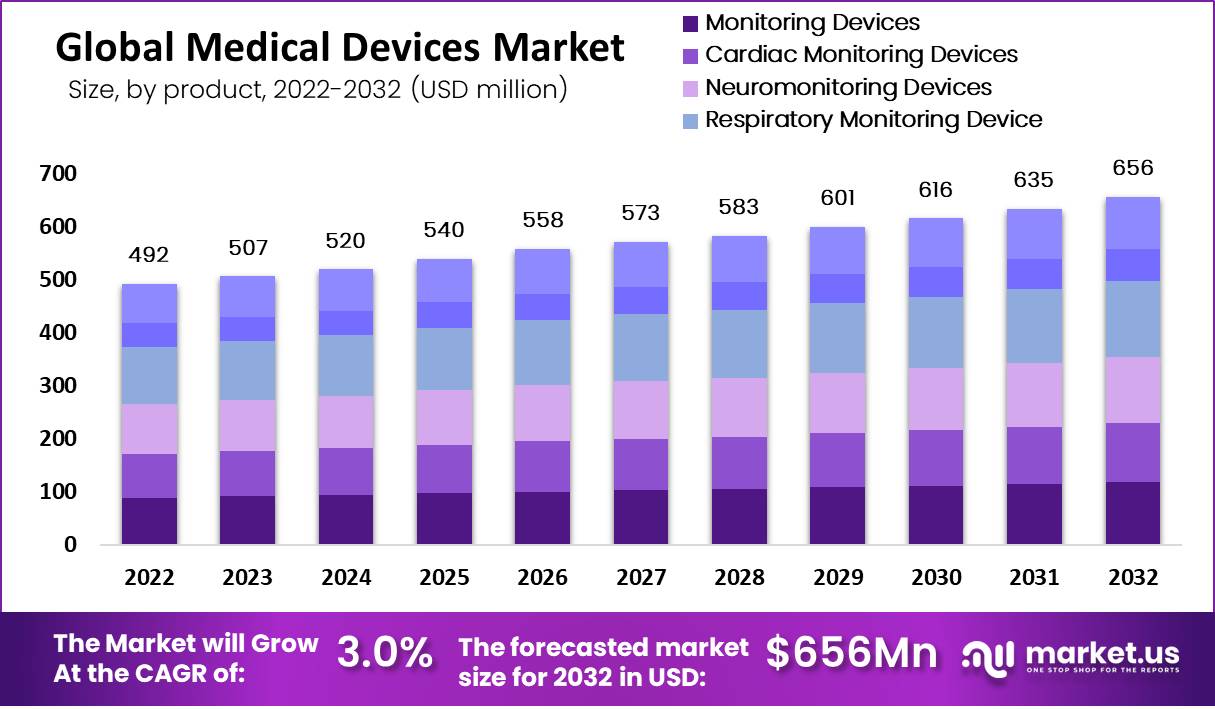
Medical Devices Market Size (6 Bn by 2032 at 3.0{bf0515afdcaddba073662ceb89fbb62b6b1bf123143c0e06b788e1946e8c353f} CAGR)

Get additional highlights on major revenue-generating segments; request a medical devices market sample report at https://market.us/report/medical-devices-market/request-sample/

Medical Devices Market Key Takeaway:

  • By product, the In-Vitro Diagnostics segment (IVD) is expected to have the highest CAGR during the forecast period due to the increasing use of real-time diagnostic testing for diagnosing infectious and chronic diseases.
  • By end-user, the hospitals & clinics segment dominated the market in 2022 because of the rising healthcare spending, better healthcare infrastructure, and an attractive reimbursement policy.
  • In 2022, North America dominated the market with the highest revenue share of 43{bf0515afdcaddba073662ceb89fbb62b6b1bf123143c0e06b788e1946e8c353f} due to the high treatment rates, supportive government initiatives for early diagnosis of diseases, and the increasing adoption of technologically advanced devices.
  • Asia-Pacific is expected to grow at the highest CAGR between 2023-2032 due to the increasing patient population suffering from chronic diseases and improving healthcare infrastructure.

Complex surgeries and growing numbers are driving this market. In addition, the market for medical devices is expected to grow due to technological advancements in medical technology, brain monitoring devices, and government initiatives.

Factors affecting the growth of the medical devices industry?

Several factors can affect the growth of the medical devices industry. Some of these factors include:

  • Technological Advancements: Advanced technologies like artificial intelligence (AI) and wearable medical equipment are becoming increasingly prevalent in the medical devices market nowadays. This is propelling the market growth positively.
  • Rising chronic diseases: The increasing cases of chronic diseases like cancer, diabetes, etc., will raise the patient population. A sedentary lifestyle is a major reason behind this. This is boosting the market’s expansion.
  • Increasing healthcare expenditure: The increasing per capita healthcare expenditure in developing and developed countries means more opportunities for medical devices, which is positively affecting market growth.
  • Growing awareness about diseases: The growing awareness about infectious diseases and chronic conditions means that individuals are taking necessary treatments readily. This is abetting the market growth positively.

To understand how our report can bring a difference to your business strategy, Inquire about a brochure at https://market.us/report/medical-devices-market/#inquiry

Top Trends in the Global Medical Devices Market

Remote diagnosis, treatment, and monitoring of patients are possible now because of technologies like remote patient monitoring devices, artificial Intelligence (AI), wearable devices, and electronic health records. Patients can be monitored at their homes and hospitals via contactless technology. This is crucial in controlling COVID-19. Both patients and doctors can have an EHR for their patients. This means they don’t need to deal with traditional paperwork that must be sent through multiple people involved in the treatment. Patients and doctors can view the data on their own devices as well as those of other doctors.

Medical device manufacturers are seeking ways to reuse production lines to produce high-demand supplies to fight against the coronavirus. These products include hand soaps, ventilators, personal protective equipment (PPE), face masks, and other medical supplies. AirCo, a liquor producer, has shifted its focus to hand sanitizers. INKSmith Canada also produces face shields. It was a startup that made technology tools and designs more accessible for children.

Due to rising rates of chronic medical conditions and the treatment of those suffering from them, the healthcare system across different countries is facing immense pressure. This has led to a significant rise in the cost of treating these conditions. Hospital inpatient costs are significantly higher than the hospital charges for those treated at home. Additionally, longer hospital stays can result in a higher economic burden. A recent randomized study comparing hospital patients with those in home care showed that home care management costs decreased by 19{bf0515afdcaddba073662ceb89fbb62b6b1bf123143c0e06b788e1946e8c353f}. There has been an increase in the preference for home healthcare services due to increasing economic burdens and a growing elderly population. Home healthcare services are becoming more popular in developed countries due to the increasing efforts of key players and healthcare agencies to develop and launch simple-to-use medical devices, such as portable and wearable devices for chronic illnesses. Shimmer Research, a world leader in wearable technology applications, introduced Verisense Pulse+ in March 2021. This sensor is designed for Verisense platforms and provides photoplethysmographs and galvanic skin reactions. This device measures the heart rate and oxygen saturation of clinical trial patients and their activity levels and sleep levels.

Market Growth

Living a lifestyle that leads to physical inactivity can increase the risk of developing heart disease. This will likely increase the demand for medical devices as more heart surgeries are performed to clear blocked arteries. This will help to boost the market growth. This market is expanding because companies focus on creating advanced products and using different business strategies, such as acquisitions or partnerships, to maintain their market position.

Regional Analysis

Regional analysis shows that North America is expected to continue to be the largest market in medical devices. This market dominance is due to the rising prevalence of chronic disease, high healthcare spending, and key players’ presence. Canada’s growing elderly population will likely boost market growth during the forecast period. According to United Nations Population Fund statistics for 2022, Canada has a large population aged between 15 and 64. This group makes up approximately 65{bf0515afdcaddba073662ceb89fbb62b6b1bf123143c0e06b788e1946e8c353f} of Canada’s total population. According to the same source, 19{bf0515afdcaddba073662ceb89fbb62b6b1bf123143c0e06b788e1946e8c353f} of Canadians are expected to reach 65 by 2022. Geriatrics are more susceptible to developing chronic conditions such as respiratory disease, cardiopulmonary disease, and orthopedic disorders. This trend over the forecast period is anticipated drive market growth. A rising number of chronic conditions such as stroke, heart disease, and cardiovascular disease has increased cardiopulmonary bypass procedures; therefore, medical devices have seen a significant increase in demand. According to American Heart Association, the United States is predicted to have a 6.8{bf0515afdcaddba073662ceb89fbb62b6b1bf123143c0e06b788e1946e8c353f} heart disease prevalence by 2021, 1.8{bf0515afdcaddba073662ceb89fbb62b6b1bf123143c0e06b788e1946e8c353f} higher than the overall population. This will help to increase demand for medical devices that improves diagnosis and treatment. This will likely boost the market’s growth over the forecast period.

Competitive Landscape

The global medical devices market is fragmented because of the presence of many market players on both a regional and global level. With its extensive product range and international reputation, Medtronic holds the largest market share. Most industry players invest heavily in Research and Development (R&D), which is used to develop new products and improve existing product lines. They also invest a lot in growing their global distributor networks, allowing businesses to diversify product offerings.

Have Queries? Speak to an expert, or To Download/Request a Sample, Click here.

Medical Devices Market: Scope of the Report

Report Attribute Details
Market Value (2022) USD 492 Billion
Market Size (2032) USD 656 Billion
CAGR (from 2023 to 2032) 3.0{bf0515afdcaddba073662ceb89fbb62b6b1bf123143c0e06b788e1946e8c353f}
North America Revenue Share 43{bf0515afdcaddba073662ceb89fbb62b6b1bf123143c0e06b788e1946e8c353f}
Historic Period 2016 to 2022
Base Year 2022
Forecast Year 2023 to 2032

Market Drivers

Sedentary lifestyles and other factors increase chronic diseases like diabetes, cancer, and other infections. Through various awareness programs, healthcare agencies worldwide are trying to improve the speed of diagnosis and treatment. Due to the increasing prevalence of these conditions, the number of people who need diagnostic tests and procedures is on the rise. For example, the International Diabetes Federation stated that 537 million people were diagnosed with diabetes in 2021. IDF states this number will rise to 643 million in 2030 and 783 million by 2045.

According to the American Cancer Society, the number of new cancer cases in 2021 was 1.9 million. In addition, there is a rising demand for orthotic or ophthalmic procedures due to increasing numbers of joint fractures and poor vision in the elderly. Osteoarthritis Alliance 2021 data shows that the incidence of knee osteoarthritis is highest in those between 45 and 65 years old. About 45{bf0515afdcaddba073662ceb89fbb62b6b1bf123143c0e06b788e1946e8c353f} of osteoarthritis patients are 65 years old or older. Along with these factors, higher per capita healthcare spending in developing and emerging countries and better reimbursement policies drive an increasing number of patients seeking treatment and diagnosis. This is driving demand for medical devices.

Due to rising rates of chronic medical conditions and the treatment of those suffering from them, the healthcare system across different countries is facing immense pressure. This has led to a significant rise in the cost of treating these conditions. Hospital inpatient costs are significantly higher than the hospital charges for those treated at home. Additionally, longer hospital stays can result in a higher economic burden Shimmer Research, a world leader in wearable technology applications, introduced Verisense Pulse+ in March 2021. This sensor is designed for Verisense platforms and provides photoplethysmographs and galvanic skin reactions. It also has an inertial measurement unit. This device measures the heart rate and oxygen saturation of clinical trial patients. It can also measure their activity levels and sleep levels.

Market Restraints

Most likely, new products and services will be more expensive due to regulatory changes. Data protection is affected by these regulatory changes. These regulatory changes can also affect equipment approval procedures. The US Food and Drug Administration (FDA) has requested additional clinical information. This information is needed to support safety claims and efficacy claims regarding medical devices such as endoscopies. Due to the potential loss of revenue due to delayed product releases and the higher costs associated with the stringent approval process, investments in product development have been under pressure. This can have a negative effect on the growth of medical device and equipment markets.

Market Opportunities

The largest medical device market segmented by type is In-vitro Diagnostics. Hospitals and clinics will benefit the most from the segmented market for medical devices by the end user. With US$ 55,700 million, the USA is anticipated to be the world’s largest medical device market. According to the Business Research Company, medical device companies should concentrate on disposable medical products, contactless medical devices, portable medical devices, and wearable medical gadgets.

A recent randomized study comparing hospital patients with those in home care showed that home care management costs decreased by 19{bf0515afdcaddba073662ceb89fbb62b6b1bf123143c0e06b788e1946e8c353f}. There has been an increase in the preference for home healthcare services due to increasing economic burdens and a growing elderly population. In addition, home healthcare services are becoming more popular in developed countries due to the increasing efforts of key players and healthcare agencies to develop and launch simple-to-use medical devices, such as portable and wearable devices for chronic illnesses. These factors are creating ample amount of opportunities for the market.

Grow your profit margin with Market.us – Purchase This Premium Medical Devices Market Report at https://market.us/purchase-report/?report_id=95403

Report Segmentation of the Medical Devices Market

Product Insight

In-Vitro Diagnostics (IVD) is expected to experience a higher CAGR. This is due to the increasing usage of real-time diagnostic tests to accurately diagnose chronic or infectious diseases such as diabetes, cancer, HIV/AIDS, etc. In addition, the increased demand for medical devices, such as gloves and masks, surgical lights, and fetal monitors, led to the other segments holding a dominant position in 2022. The wound management segment is expected to grow significantly due to the increased investment made by medical device companies into new wound devices and bioactive therapies. Minimally Invasive Surgery is predicted to grow because of technological advancements in surgical robots and increased use by healthcare providers. Due to the increasing number of patients suffering from different cardiac and orthopedic conditions, orthopedic and cardiovascular devices will likely continue growing rapidly. Market growth for medical devices is anticipated to be driven by the increasing incidence of diabetes and retinal disorders in the population.

End-User Insight

This segment’s notable growth can be attributed primarily to rising healthcare spending, improved healthcare infrastructure, and a favorable reimbursement policy. According to the WHO report on healthcare infrastructure, most developing countries have less than 1 million hospital beds. These countries invest heavily in healthcare infrastructure development. As a result, healthcare infrastructure spending is expected to increase over the forecast period.

For more insights on the historical and Forecast Medical Devices Market data from 2016 to 2032 – Download a sample report at https://market.us/report/medical-devices-market/request-sample/

Market Segmentation

By Product Type

  • Monitoring Devices
  • Cardiac Monitoring Devices
  • Neuromonitoring Devices
  • Respiratory Monitoring Device
  • Multi-Parameter Monitoring Devices
  • Hemodynamic Monitoring Devices
  • Fetal and Neonatal Monitoring Devices
  • Temperature Monitoring Devices
  • Weight Monitoring Devices
  • In-Vitro Diagnostic Devices
  • Surgical ENT Devices.
  • Endoscopes
  • Imaging Devices
  • Diagnostic Molecular Devices
  • Drug Delivery Devices
  • Surgical Devices
  • Bio Implants and Stimulation Devices
  • Treatment Equipment
  • Infusion Pumps
  • Medical lasers and LASIK surgical machines
  • Other Product Types

By End-User

  • Hospitals & Clinics
  • Diagnostic Centers
  • Research laboratory
  • Pharmaceutical companies (Shopping Plazas, Military, Corporate Sectors, Hostels)

By Geography

  • Western Europe
    • Germany
    • France
    • The UK
    • Spain
    • Italy
    • Portugal
    • Ireland
    • Austria
    • Switzerland
    • Benelux
    • Nordic
    • Rest of Western Europe
  • Eastern Europe
    • Russia
    • Poland
    • The Czech Republic
    • Greece
    • Rest of Eastern Europe
  • APAC
    • China
    • Japan
    • South Korea
    • India
    • Australia & New Zealand
    • Indonesia
    • Malaysia
    • Philippines
    • Singapore
    • Thailand
    • Vietnam
    • Rest of APAC
  • Latin America
    • Brazil
    • Colombia
    • Chile
    • Argentina
    • Costa Rica
    • Rest of Latin America
  • Middle East & Africa
    • Algeria
    • Egypt
    • Israel
    • Kuwait
    • Nigeria
    • Saudi Arabia
    • South Africa
    • Turkey
    • United Arab Emirates
    • Rest of MEA

Key Market Players

Recent Development of the Medical Devices Market

  • FDA granted Abbott’s recall of its imaging catheter a Class 1 label in May 2022 because of vascular injury risks.
  • In January 2022, The US gave FDA approval to Mediatric’s Intellis rechargeable neurostimulator and Vanta recharge-free neurostimulator used for treating chronic pain caused by diabetic peripheral neuropathy.
  • Siemens Healthineers AG launched NAEOTOM Alpha in November 2021, which is the world’s first CT scanner that uses photon-counting technology cleared for clinical use in Europe and the US.
  • In August 2021, Johnson & Johnson introduced VELYS digital surgery. The robot-assisted option for total knee arthroplasty in the United States is now available.

Browse More Related Reports:

About Us:

Market.US (Powered by Prudour Pvt Ltd) specializes in in-depth market research and analysis and has been proving its mettle as a consulting and customized market research company, apart from being a much sought-after syndicated market research report-providing firm. Market.US provides customization to suit any specific or unique requirement and tailor-makes reports as per request. We go beyond boundaries to take analytics, analysis, study, and outlook to newer heights and broader horizons.

Our Blog: 


Is Your Phone a Medical Device?

Scholar argues that Congress and FDA should treat risky clinical artificial intelligence tools as medical devices.

When the U.S. Congress defined the term “medical device” in the Food, Drug, and Cosmetic Act, it mostly had in mind physical hardware products, such as knee replacements, pacemakers, and surgical instruments.

But today, patients and providers often rely on software tools to improve health. Examples include the Apple Watch’s electrocardiogram app and a smart camera that tells ophthalmologists whether a diabetes patient is at risk of blindness.

In a recent article, professor Sara Gerke of Penn State Dickinson Law proposes that Congress broaden the definition of a “medical device” to encompass risky products that rely on artificial intelligence (AI), and that the U.S. Food and Drug Administration (FDA) exercise regulatory oversight over the makers of some of these products.

Admittedly, FDA has adopted a regulation that treats as medical devices any software used for “medical purposes”—disease prevention, treatment, and diagnosis.

But not all software services related to health care serve medical purposes. FDA clarified in 2019 that software tools that only help users maintain “a general state of health or a healthy activity” are not medical devices. A smartphone app that monitors your exercise activity, for example, is currently not considered a medical device. Neither is software intended to reduce an individual’s risk of chronic diseases or conditions, such as an AI service that helps Type 2 diabetes patients eat a balanced diet for their condition.

In her proposal, Gerke calls for Congress to define such “clinical decision” software as medical devices. Doing so would include many risky AI-based health care products that FDA currently does not regulate, Gerke contends.

Gerke offers AI-based mortality prediction models as a telling example. These algorithms analyze a cancer patient’s medical records to predict likelihood of death within the next six months. Gerke argues that, because such algorithms do not directly relate to the prevention, treatment, and diagnosis of a condition, the current statutory definition of a medical device would likely not cover them.

Hospitals increasingly rely on tools such as cancer mortality prediction models in clinical decision-making, which Gerke claims could jeopardize patient safety. Gerke explains that “a model could lead to the cessation of a patient’s treatment if it incorrectly predicts the patient’s early death.”

Her proposed fix is simple: Congress should amend its definition of a medical device to include clinical decision-making tools that are intended for the “prediction or prognosis of disease or other conditions or mortality.”

Gerke also notes that many AI-based tools, including those used in health care, rely on “black box” machine learning models that hide the logic of how they reach their determinations. This opaqueness makes it difficult for providers and patients to review the tool’s recommendations independently.

Gerke first proposes a “gold standard” solution to the challenges that black-box medical algorithms pose: Congress can require the makers of clinical AI to use a “white-box” model—a transparent system that reveals how the clinical algorithms reach their decisions—whenever a white-box system would perform better than a black-box one.

But if companies can demonstrate that a black-box AI system for a particular product would perform better than a white-box one, then FDA should shift its focus to verifying the tool’s safety and effectiveness, argues Gerke. She suggests that FDA can better accomplish this verification if it regulates these black-box systems as medical devices.

Only then can FDA ensure that black-box algorithms in health care are safe and effective through clinical trials, according to Gerke. For this reason, she proposes that FDA adjust its regulation of these black-box products to match the standards it imposes on more traditional medical devices.

But beyond clinical trials, FDA can do more to bring clinical AI tools into compliance with the agency’s medical device rules and standards, Gerke argues.

FDA mostly takes enforcement action against the makers of AI-based medical devices through a discretionary approach that considers the level of risk that a particular device poses, Gerke explains. And in determining what counts as a “risky” AI-based tool, FDA emphasizes whether the tool allows for the user—whether caregiver or patient—to review independently the software’s decisions. If a tool does allow for independent user review of clinical decisions, then FDA usually will not take regulatory action against the tool’s manufacturer, Gerke describes.

Gerke proposes, instead, that FDA focus its regulatory oversight on two types of AI-based medical devices: those that make decisions on “critical or serious” health conditions, irrespective of whether providers or patients can independently review those decisions; and those that make decisions on “non-serious” health conditions, but do not allow for independent review of the software’s decisions by patients or providers.

This shift in focus would likely subject to FDA oversight, for example, mortality-prediction tools even when a physician or patient can independently review the tool’s prognoses before making decisions based on them, Gerke suggests. But lower-risk tools, such as general wellness products like asthma alert mobile apps, might not warrant such oversight under this proposal.

Both Congress and FDA can take decisive action to keep pace with the rising tide of AI-based health care products, Gerke concludes.
