Virginia Republicans Vote Against Apology for Misusing Black Bodies for Medical Research, Citing ‘No-End’ to Number of Amends Needed

Virginia lawmakers have decided not to move forward with legislation that would officially apologize for the state-sanctioned misuse of Black body parts over the past two centuries.

As far back as the 1800s, Old Dominion allowed medical professionals to conduct research on African-American bodies, living and dead, without their or their family’s permission. Some politicians were hoping in vain the state legislature would own up to exploitation.

However, on Friday, Feb. 17, the Rules subcommittee of Virginia’s House of Delegates voted 4-1 to lay SJ 274 on the table. This act, according to the Virginia Mercury, indefinitely killed the resolution.

Virginia House Speaker
RICHMOND, VA – FEBRUARY 3: Delegate Todd Gilbert, left, a Virginia republican representing the Shenandoah district, talks to fellow delegates on the House floor of the Virginia State Capitol in Richmond, Virginia, Monday, February 3, 2014. (Melina Mara/The Washington Post via Getty Images)

Four Republicans among the subcommittee’s five members, House Majority Leader Terry Kilgore, Speaker Todd Gilbert, Del. Barry Knight, and Del. Kathy Byron, shut it down.

Titled “Unethical use of Black bodies by medical institutions; acknowledging with profound regret,” the bill was introduced by Democratic Sen. Jennifer B. Boysko of Fairfax.

During her presentation of the bill, she said it was important to acknowledge the past wrongs perpetrated by the government in order to heal wounds created by those wrongdoings.

Gilbert, one of the Republicans who voted against the resolution, said during the meeting, “I feel like there are thousands upon thousands of equally painful and hurtful and regrettable stories that could be told about how we treated one another, how Black Americans were treated for a very long time in this country. And I just worry that there’s no end to these resolutions, and maybe that’s the intent, I don’t know.”

One example of this was when the Medical College of Virginia hired grave robbers to steal Black bodies for medical experimentation in the 1800s when they did not have cadavers available for research.

“But certainly,” he continued. “If it helps for me to acknowledge that fact, that there are these many, many hurtful, painful memories and events and actions that hurt so many people, you know, I’m doing that publicly right now.”

“I just don’t know in the way of legislation how we contribute to that healing by acknowledging one or two a year at a time. That’s my main concern,” he concluded.

After the bill was not affirmed, Boysko said, “I think it’s important that we address problems so we can move forward collaboratively. We know there are Black people who live in Virginia and around the country who are suspicious of health care because of what has happened in the past.”

Adding, “Our bill would have at least admitted that and given people a small peace of mind.” 

Phillip Thompson, the former president of the Loudoun NAACP, believed the resolution would pass because it was supported by many in the senate already, unanimously being passed in that branch of government. However, the House of Delegates proved to be a barrier to the measure.

He said, “I thought it had a chance because it’s a very innocuous bill. We weren’t asking for reparations, nothing like that; we just wanted a real apology.”

Thompson also added that he believes it was so difficult to persuade African-Americans to get the COVID-19 vaccine because of the mistrust born out of the nation’s history of medical mistreatment, including The Tuskegee Experiment.

From 1932 to 1972, about 400 African-American men with syphilis participated in The Tuskegee Study of Untreated Syphilis in the Negro Male by the United States Public Health Service

According to the Centers for Disease Control and Prevention, the study initially involved 600 Black men (399 with syphilis, and 201 who did not have the disease). Participants were told they were being treated for “bad blood” but never had informed consent collected.

Despite being in the study, which looked at the sexually transmitted disease, anemia, and fatigue, the men were never offered penicillin to treat their syphilis. Instead, for research purposes, they were allowed to suffer.

“When the COVID vaccines first came out in my community, a lot of African-Americans didn’t want to take those vaccines because they thought that it was like the Tuskegee experiment,” Thompson explained. “Back in the ’30s and 40s, young kids were told don’t stray too far because the body snatchers will get you.”

Boysko explained in her bill presentation that this kind of warning was plausible.

She reminded the group that in April 1994, nine of the 53 bodies discovered in Richmond’s East Marshall Street Well dug up on Virginia Commonwealth University’s MCV Campus were discovered to be mostly from Black children. The human bones found at the well are believed to have been discarded in the 1800s by medical staff.

“Many of us still don’t trust the system, and when you look at history, that distrust is justified,” Thompson said.

In September, Virginia Commonwealth University formally apologized for its discarding of Black bodies after dissections. It also issued an apology to the family of Bruce Tucker, a Black Virginia laborer whose heart was removed after his condition was deemed too severe in 1968.

Why did scientists generate electrodes in zebrafish brains?

Why did scientists generate electrodes in zebrafish brains?Share on Pinterest
Pictured, the injectable gel being tested on a microfabricated circuit. Image credit: Thor Balkhed.
  • Studying the brain is difficult, and often involves invasive techniques, such as using a probe, to gain information about electrical signaling.
  • This means our understanding of exactly how brain signaling works is limited, which has implications for basic science and medical research.
  • A research team has discovered a way to inject an enzyme-containing gel into zebrafish brains, which triggers a reaction that causes it to turn into an electrode.
  • This can be used to measure electrical cell signaling in the brain, which could have further clinical and research applications in the future.

Studying the brain is notoriously difficult. Sampling it in a living person is next to impossible, probing it is invasive, and getting drugs to cross the blood-brain barrier to observe how it behaves, challenging.

One of the most important breakthroughs in biology in the past decade has been harnessing the ability to influence stem cells, either embryonic or human stem cells, to form particular cell types.

Researchers have cultured these to form mini-organ models or organoids.

Organoids have proved particularly useful for studying the brain, and the different types of cells that the brain and nervous system are made from.

For example, one of the earliest uses of organoids was to develop a model of a person’s brain using induced pluripotent adult stem cells from their skin.

One area of current research focuses on seeing if models recreate the structures that develop naturally. So far, researchers have created brain organoids that demonstrate eye-like structures, and others that were able to integrate with rats’ brains, and even heal injured areas of tissue.

In addition to this area of study, there is also work being done to study brain cells in vitro, or in a Petri dish, using induced pluripotent stem cells, to gain greater insight into how brain cells or neurons work.

Last year, a debate was launched when scientists from University College London in the United Kingdom and the start-up Cortical Labs, announced they had developed DishBrain, which integrated brain cells onto computing devices using multiple electrodes.

They used this device to “teach” neurons how to play the computer game Pong, and published the results in Neuron.

This emerging area of research, known as “bioelectronics,” can also give us an insight into how brain cells work. Brain and nerve cells work by transmitting electrical activity and using these for cell signaling, as well as signaling using chemical cell signaling used by other cells.

By being able to merge electronics with nerve cells, we can measure cell signaling in a less invasive way than what is currently required when using a brain probe to measure electrical activity, for example.

Less invasive techniques may not only be more ethical but they might produce more reliable results, as there is less chance of interference from the invasive technique itself.

One of the biggest challenges facing those trying to merge electronics and living tissues is making the structure compatible: One is animal and one is mineral, after all.

Most of the recent advances in this area take place on silicone structures, or on specially designed films in a Petri dish, but these are difficult to merge with living tissues.

Recently, a group of scientists based in Sweden has created an injectable gel that undergoes polymerization — a kind of crosslinking — which allows it to act as an electrode and carry electrical signals.

The process was demonstrated in zebrafish brains and leeches, and the research findings outlined in a paper published in the journal Science.

In the paper, researchers describe how they created an “injectable cocktail gel” containing an enzyme that triggers a signaling cascade that leads to the polymerization, or linking, of other molecules in the “cocktail” in the presence of lactate, which occurs naturally in the body, and in the central nervous system.

The linking of the molecules that occurs allows them to conduct electrical signals, meaning that the gel forms an electrode when in contact with chemicals that naturally exist in the brain.

Researchers tested how resilient the electrode that had been formed was to harsh environments, and also tested its biocompatibility and found no negative effects on the zebrafish, said lead author Dr. Xenofon Strakosas, principal research engineer in the Laboratory of Organic Electronics at Linköping University, Norrköping, Sweden in an interview with Medical News Today.

The experiments were a proof of concept, he explained:

“Next week, we have collaborations with more advanced animal models like mice and rats and stuff. In the beginning, we optimized these processes in zebrafish and leeches to deduce animal modeling to prove that this can be biocompatible [and] will not interfere with the normal functional sort of the models.”

“For example, in the zebrafish, we didn’t see any side effects. So this was the proof of concept. And now we are moving towards different applications,” Dr. Strakosas noted.

The electrode formed in the brain by the gel could be attached to devices that record electrical signaling, shedding light on the ways that these cells signal with each other.

Though the gel has not been tested on heart tissue, it could have some applications in studying electrical signaling in the heart, Dr. Strakosas explained.

Dr. Brett Kagan, chief scientific officer of Cortical Labs, which was behind the DishBrain discovery reported last year, who was not involved in the current research, told MNT in an email:

“This is an exciting step forward in interfacing with living brain and other electrically active tissues for research purposes, with evidence for being able to investigate less accessible regions less invasive than is typically done.”

“While much more work is still required even for this to be commonly implemented in animal research, it is possible that it may even provide a basis for future developments that could one day lead to more complex applications of this approach even in humans,” Dr. Kagan added.

Patients losing out amid slump in NHS clinical trials, warn top clinicians | Medical research

The state of clinical trials in the NHS is “much worse than it has been in years” with patients losing access to cutting-edge cancer and dementia treatments, one of the UK’s most senior clinicians has warned.

Sir John Bell, the regius professor of medicine at the University of Oxford and a government life sciences adviser, said the UK’s approach needed “a full overhaul, top to bottom” to prevent a collapse in the number of clinical trials being conducted in the NHS.

“I don’t think there’s any doubt that companies are choosing not to evaluate their drugs in the UK,” he said. “The risks [to patients] are much bigger than have been alluded to.”

The intervention comes after the government launched an independent review led by the former health minister James O’Shaughnessy into why the NHS had seen a 44{bf0515afdcaddba073662ceb89fbb62b6b1bf123143c0e06b788e1946e8c353f} drop in participants recruited to commercial clinical trials in the past five years. The UK is rapidly losing ground to countries such as Spain, Poland and Australia, falling from fourth to 10th internationally for phase III trials.

Prof John Bell.
Prof John Bell says patients get access to groundbreaking treatments and the NHS makes money from conducting commercial trials. Photograph: Sophia Evans/The Observer

Reduced access to trials is particularly concerning for patients with limited routine treatment options, such as the roughly 3.5 million people living with rare diseases and patients with dementia and advanced cancer.

Beyond clinical benefits, the NHS makes money from conducting commercial trials. “You get the drugs for free, you get the treatment for the control arm for free, the NHS rides for free for everyone in the trial and pharma pays pretty well to get these trials done,” said Bell.

However, Bell said bureaucracy that had been simplified during the pandemic to fast-track trials had “crept back into the system and ossified” and the overstretched NHS workforce was losing capacity for research. “The system needs a pretty serious revamp,” said Bell. “[The government] is not going to fix this by just turning the handle a bit harder.”

Official figures show just 52{bf0515afdcaddba073662ceb89fbb62b6b1bf123143c0e06b788e1946e8c353f} of trials in the NHS are running to schedule – a significant improvement in recent months but still some way from the target the Department of Health has set for 80{bf0515afdcaddba073662ceb89fbb62b6b1bf123143c0e06b788e1946e8c353f} trials being delivered to time and target by June.

The department has directed funders to shut down any trials that have missed their target to start recruiting by more than 90 days, with one in 10 trials being monitored under its Reset Research programme set to close prematurely. Five hundred trials have been closed under the initiative since May last year.

Other senior clinicians also raised concerns. Prof James Rowe, a senior dementia researcher at the University of Cambridge and consultant neurologist, said the UK’s lengthy approvals process could leave clinicians and their patients frozen out of international multicentre trials.

“If it’s going to take you 12 months to get started in the UK, by the time you get the green light the trial is effectively closing for recruitment internationally. It could be futile to begin the work to set up,” he said.

“It’s a great pity as there’s fantastic progress in the dementia world. There are 300 clinical trials for dementia worldwide. The UK should be at the forefront of this, not putting up barriers.”

Prof Paul Stewart, the vice-president (clinical) of the Academy of Medical Sciences and of the University of Leeds, said research tended to be viewed as a luxury rather than an integral part of the NHS’s mission.

“As I reflect on my 40-year career in the NHS, there have always been challenges, but now the crisis has come to a head in terms of a research capacity issue. The current environment is extremely challenging,” he said.

Dr Ian Walker, of Cancer Research UK, said the pandemic continued to “cast a long shadow” over clinical research. “As backlogs for diagnosis and treatment grow, NHS staff face more pressures and protecting time for research is increasingly difficult,” he said. “If this pattern continues, it means slower progress towards brand new treatments for cancer.”

George Freeman, the minister at the Department for Science, Innovation and Technology, said: “Commercial clinical trials are absolutely vital to both our UK life sciences sector and widening NHS patient access to innovative medicines all across the UK. The UK has traditionally been a strong global location for trials, as demonstrated most recently through the groundbreaking Covid recovery trial which was set up in record time and was the world’s largest randomised controlled trial for Covid-19.

“However, our life sciences sector has reported a 44{bf0515afdcaddba073662ceb89fbb62b6b1bf123143c0e06b788e1946e8c353f} fall in recruitment of patients to commercial clinical trials between 2017 and 2021 – so it is vital that we act to rebuild competitiveness.”

ChatGPT has many uses. Experts explore what this means for healthcare and medical research

The sanctity of the doctor-patient marriage is the cornerstone of the healthcare career. This guarded space is steeped in custom – the Hippocratic oath, healthcare ethics, professional codes of carry out and legislation. But all of these are poised for disruption by digitisation, rising technologies and “artificial” intelligence (AI).

Innovation, robotics, digital technological innovation and improved diagnostics, prevention and therapeutics can alter healthcare for the far better. They also increase ethical, authorized and social problems.

Considering that the floodgates were opened on ChatGPT (Generative Pertaining Transformer) in 2022, bioethicists like us have been considering the part this new “chatbot” could play in healthcare and health analysis.

Chat GPT is a language product that has been qualified on massive volumes of world-wide-web texts. It attempts to imitate human text and can execute numerous roles in health care and well being investigate.

Early adopters have started off applying ChatGPT to guide with mundane tasks like crafting sick certificates, patient letters and letters asking medical insurers to pay out for particular costly prescription drugs for people. In other words and phrases, it is like obtaining a high-level own assistant to pace up bureaucratic duties and raise time for client interaction.

But it could also guide in a lot more really serious health-related routines such as triage (deciding on which individuals can get accessibility to kidney dialysis or intensive treatment beds), which is significant in options where methods are minimal. And it could be utilised to enrol individuals in scientific trials.

Incorporating this advanced chatbot in affected person care and clinical investigation raises a selection of moral problems. Using it could guide to unintended and unwelcome penalties. These fears relate to confidentiality, consent, excellent of treatment, trustworthiness and inequity.

It is way too early to know all the ethical implications of the adoption of ChatGPT in health care and investigate. The additional this engineering is utilized, the clearer the implications will get. But thoughts relating to potential threats and governance of ChatGPT in drugs will inevitably be aspect of long run discussions, and we concentrate on these briefly below.

Potential ethical risks

Initial of all, use of ChatGPT operates the risk of committing privateness breaches. Productive and economical AI depends on device discovering. This needs that knowledge are continuously fed again into the neural networks of chatbots. If identifiable patient facts is fed into ChatGPT, it types part of the data that the chatbot employs in long run. In other words, delicate data is “out there” and susceptible to disclosure to third get-togethers. The extent to which these types of info can be safeguarded is not very clear.

Confidentiality of affected person details forms the basis of believe in in the health care provider-patient romance. ChatGPT threatens this privateness – a hazard that vulnerable people may perhaps not completely fully grasp. Consent to AI assisted health care could be suboptimal. People could possibly not realize what they are consenting to. Some may possibly not even be requested for consent. As a result professional medical practitioners and institutions might expose them selves to litigation.

A further bioethics issue relates to the provision of large top quality healthcare. This is historically based on robust scientific proof. Employing ChatGPT to make proof has the prospective to accelerate analysis and scientific publications. On the other hand, ChatGPT in its present-day format is static – there is an stop date to its databases. It does not supply the most recent references in serious time. At this stage, “human” scientists are accomplishing a much more precise position of producing proof. Extra stressing are stories that it fabricates references, compromising the integrity of the evidence-primarily based strategy to excellent healthcare. Inaccurate information and facts could compromise the basic safety of healthcare.

Superior high quality proof is the foundation of professional medical treatment method and professional medical suggestions. In the era of democratised healthcare, vendors and individuals use various platforms to accessibility info that guides their conclusion-producing. But ChatGPT may well not be sufficiently resourced or configured at this point in its enhancement to deliver accurate and impartial data.

Technological innovation that uses biased details dependent on beneath-represented details from persons of colour, women and little ones is hazardous. Inaccurate readings from some makes of pulse oximeters made use of to measure oxygen concentrations in the course of the new COVID-19 pandemic taught us this.

It is also truly worth thinking about what ChatGPT could imply for minimal- and middle-earnings countries. The concern of obtain is the most clear. The rewards and hazards of rising systems have a tendency to be unevenly dispersed concerning countries.

At present, accessibility to ChatGPT is absolutely free, but this will not previous. Monetised obtain to highly developed versions of this language chatbot is a likely danger to source-weak environments. It could entrench the electronic divide and worldwide health and fitness inequalities.

Governance of AI

Unequal access, likely for exploitation and doable hurt-by-info underlines the importance of obtaining certain rules to govern the overall health takes advantage of of ChatGPT in minimal- and middle-profits international locations.

International suggestions are rising to make certain governance in AI. But a lot of low- and center-money nations around the world are but to adapt and contextualise these frameworks. On top of that, many nations around the world absence legal guidelines that apply especially to AI.

The world wide south requirements locally relevant conversations about the ethical and authorized implications of adopting this new technologies to make sure that its benefits are liked and rather dispersed.

Feinstein Institutes report on early mapping of vagus nerve, unveil novel stimulator for bioelectronic medicine research

MANHASSET, N.Y., February 24, 2023–(Business enterprise WIRE)–Beginning in the brain and extending to our organs, the vagus nerve aids talk and manage how the entire body functions, including heart level, respiration and immune reaction. For the initially time, scientists at The Feinstein Institutes for Professional medical Investigation are microscopically mapping a lot more than 100,000 person fibers that make up the vagus nerve to ascertain how they are anatomically connected and which bodily perform it controls. Bioelectronic medication scientists posted their early mapping in the journal Mind Stimulation, together with a novel vagus nerve stimulator that can activate qualified fibers, opening up new avenues of vagus nerve stimulation (VNS) investigate.

This push release attributes multimedia. See the entire launch right here: https://www.businesswire.com/information/home/20230224005280/en/

Feinstein Institutes report on early mapping of vagus nerve, unveil novel stimulator for bioelectronic medicine research

Stavros Zanos, MD, PhD, is senior creator on the exploration, which published in the journal Brain Stimulation. (Credit score: Feinstein Institutes)

The research, led by Stavros Zanos, MD, PhD, associate professor at the Feinstein Institutes’ Institute of Bioelectronic Medication, deployed highly developed solutions for surgical dissection, imaging and microscopic anatomy to map how vagal fibers are organized within the vagus nerve in animal styles. The workforce identified fibers that hook up to the larynx, lung and heart lie in diverse elements of the nerve. They also found that sensory and motor fibers are in separate locations, which are shut to the neck and later disappear as the nerve enters the upper body cavity.

“To progress the subject of bioelectronic medication and efficiency of vagus nerve stimulation therapies, we will have to very first recognize what section of the nerve we are stimulating and what that does to the body,” claimed Dr. Zanos, senior writer of the paper. “By way of our early mapping and new electrical stimulation vagal nerve cuff, we hope to unlock the probable of VNS to treat more successfully organ-distinct ailments.”

The team’s animal model VNS cuff wraps close to the vagus nerve and has 10 contacts as a substitute of the regular two contacts utilized currently in scientific VNS gadgets. By electrically stimulating particular person contacts about the nerve, the group showed that nerve fibers can be extra selectively activated. For instance, by stimulating the get hold of that lies away from nerve fibers to the larynx and nearer to nerve fibers to the lung, they were in a position to affect lung perform with a lesser affect on laryngeal functionality.

The cuff’s efficiency exhibits the capability to hone in and pick fibers to a one organ of interest whilst averting other people. Current VNS therapies are unable to very easily concentrate on the nerves that engage a specific organ (i.e. the heart in atrial fibrillation or the lungs in pulmonary hypertension). Regularly, present VNS therapies generate aspect effects from non-specific organs, like voice improvements, throat agony and coughing. Even although all those consequences are not lifetime-threatening, a more selective, focused solution to VNS could probably lessen those facet outcomes and use VNS to handle organ-certain ailments improved.

“Irrespective of the relevance of the vagus nerve and extensive fascination in methods to stimulate it, the basic anatomy of this nerve is mainly unidentified,” claimed Kevin J. Tracey, MD, president and CEO of the Feinstein Institutes and Karches Loved ones Distinguished Chair in Health-related Analysis. “Dr. Zanos’ existing study presents a new basic foundation for comprehending vagus nerve operate and composition.”

This current research aided in Dr. Zanos and the Feinstein Institutes securing a $6.7 million grant from the Nationwide Institutes of Wellness (NIH). The award will enable Dr. Zanos and his lab make a detailed map of the anatomy of the human vagus nerve. The funding is part of the NIH Prevalent Fund’s Stimulating Peripheral Activity to Relieve Disorders plan.

The Feinstein Institutes for Professional medical Analysis is the world-wide scientific dwelling of bioelectronic medicine, which brings together molecular medication, neuroscience and biomedical engineering. At the Feinstein Institutes, health-related researchers use contemporary know-how to produce new system-based therapies to address condition and injuries.

Constructed on yrs of investigate in molecular mechanisms of disease and the backlink between the anxious and immune systems, our scientists uncover neural targets that can be activated or inhibited with neuromodulation products, like vagus nerve implants, to management the body’s immune response and inflammation. If inflammation is effectively managed, health conditions – such as arthritis, pulmonary hypertension, Crohn’s disorder, inflammatory bowel diseases, diabetic issues, most cancers and autoimmune disorders – can be taken care of extra properly. Past swelling, utilizing novel brain-laptop interfaces, our researchers formulated approaches to bypass injuries of the nervous technique so that individuals living with paralysis can get back sensation and use their limbs. By creating bioelectronic medication expertise, disease and harm could a single working day be handled with our individual nerves with no pricey and potentially unsafe pharmaceuticals.

About the Feinstein Institutes

The Feinstein Institutes for Health-related Analysis is the house of the investigation institutes of Northwell Well being, the most significant health care company and non-public employer in New York State. Encompassing 50 analysis labs, 3,000 scientific study scientific studies and 5,000 scientists and personnel, the Feinstein Institutes raises the standard of health-related innovation by means of its 5 institutes of behavioral science, bioelectronic medicine, cancer, overall health procedure science, and molecular medicine. We make breakthroughs in genetics, oncology, mind investigate, psychological wellbeing, autoimmunity, and are the world wide scientific leader in bioelectronic medication – a new area of science that has the potential to revolutionize drugs. For additional information and facts about how we develop knowledge to cure condition, check out http://feinstein.northwell.edu and abide by us on LinkedIn.

View source variation on businesswire.com: https://www.businesswire.com/news/household/20230224005280/en/

Contacts

Julianne Mosher Allen
516-880-4824
jmosherallen@northwell.edu

Clinical trials on new cancer drugs still fall far short of including key data on several demographic groups

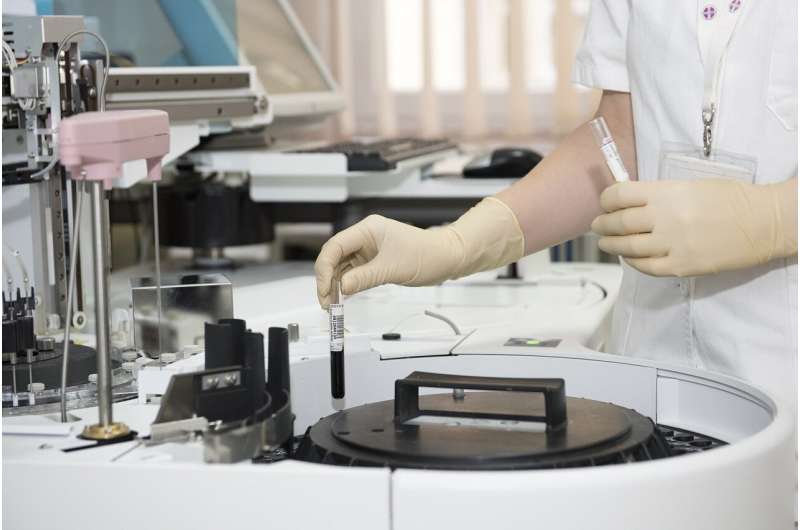
Clinical trials on new cancer drugs still fall far short of including key data on several demographic groups
Credit: Pixabay/CC0 Public Domain

Despite widespread agreement that clinical trials should enroll a representative sampling of individuals from different age, gender, and racial and ethnic groups, a new Yale School of Medicine study shows that clinical trials on new cancer drugs still fall far short of including key data on several demographic groups. The findings were published in the journal BMJ Medicine.

For the study, the Yale team—led by Jennifer Miller, associate professor of medicine and senior author, and Tanvee Varma, a fourth-year medical student and lead author—developed a series of quality control metrics to assess how well pharmaceutical companies reported on and included demographic groups in cancer trials, conducted between 2012 and 2017, that led to U.S. Food and Drug Administration approval of new drugs.

Of the 24 companies submitting key trial results, all but one failed to publicly report at least some demographic data on participants, the researchers found. Although all of the companies reported participants’ sex, more than 60{bf0515afdcaddba073662ceb89fbb62b6b1bf123143c0e06b788e1946e8c353f} failed to report age and almost 80{bf0515afdcaddba073662ceb89fbb62b6b1bf123143c0e06b788e1946e8c353f} did not report race and ethnicity data.

Half of the companies also failed to adequately represent women in at least one trial supporting their product approvals. About 75{bf0515afdcaddba073662ceb89fbb62b6b1bf123143c0e06b788e1946e8c353f} of companies did not adequately represent older adults and more than 4 out of 5 did not adequately represent patients identifying as Black or Latinx.

“We created a baseline scorecard for companies to spur a race to the top in reporting and including under-represented groups in clinical trials,” Miller said.

The importance of including diverse populations in drug and treatment trials has been known for decades; people can respond differently to diagnostic tests or treatments depending upon their sex, age, or racial background, which can affect the quality of treatment they receive.

“While a few companies have done well in meeting diversity standards, most have substantial room for improving their fair inclusion of older adults and racial and ethnic minoritized patients, and to a lesser extent women, in cancer pivotal trials,” Miller said. “We still need to move the needle.”

More information:
Tanvee Varma et al, Ranking pharmaceutical companies on clinical trial diversity, BMJ (2023). DOI: 10.1136/bmj.p334

Provided by
Yale University


Citation:
Clinical trials on new cancer drugs still fall far short of including key data on several demographic groups (2023, February 23)
retrieved 23 February 2023
from https://medicalxpress.com/news/2023-02-clinical-trials-cancer-drugs-fall.html

This document is subject to copyright. Apart from any fair dealing for the purpose of private study or research, no
part may be reproduced without the written permission. The content is provided for information purposes only.