Mississippi man loses nearly 400 pounds to improve health, keeping promise to grandma: ‘She would be so proud’

A man in Mississippi is inspiring others with his near-400-pound weight loss transformation.

Nicholas Craft, 42, of Hattiesburg, Mississippi, weighed 649 pounds in June 2019, and now he’s down more than 365 pounds.

“I’ve been dealing with my weight since childhood,” Craft told Fox News Digital on Thursday, March 9. “I was 300 pounds in high school,”

WOMAN LOSES NEARLY 100 POUNDS AND TRANSFORMS LIFE AS A MODEL, SCHOLAR

Craft said depression led him to overeat, and overeating made him withdraw from society, which contributed to his sedentary lifestyle.

Mississippi man loses nearly 400 pounds to improve health, keeping promise to grandma: ‘She would be so proud’

Nicholas Craft told Fox News Digital he sometimes had a hard time fitting in vehicles before his weight loss. (Nicholas Craft)

“My weight stopped me from going to family events and traveling,” he recalled. “I couldn’t get into regular vehicles. It was hard for me to get around. I had knee pain, body aches and shortness of breath.”

In 2019, a doctor reportedly told Craft that his weight was “a ticking time bomb” for his 5-foot-9 frame. 

Craft said that comment made him realize he had to change his ways.

“I wanted to live longer,” he said.

Craft told Fox News Digital he didn’t go on a specialized weight loss diet. He simply switched the way he ate and how he approached food, which includes calorie counting and giving up junk food.

“My calorie intake was 1,200 to 1,500 calories per day when I first started,” he said.
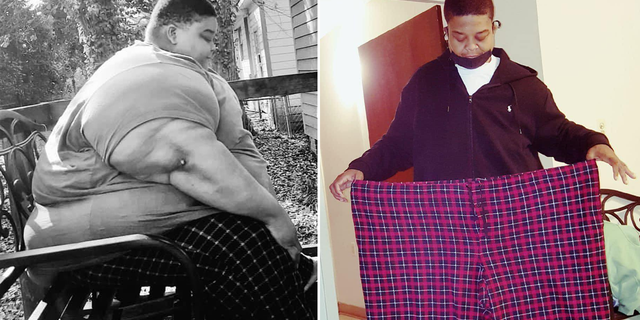
Nicholas Craft, of Hattiesburg, Mississippi, lost more than 365 pounds since starting his weight loss journey in June 2019.

Nicholas Craft, of Hattiesburg, Mississippi, lost more than 365 pounds since starting his weight loss journey in June 2019. (Nicholas Craft)

Craft said he’s cut out sodas, fried foods, bread, pasta, rice and other carbs, and now he incorporates a lot of fruits, vegetables and protein.

In terms of exercise, Craft said he strength trains with dumbbells and moves around a lot throughout the day.

RUNNING 1 MILE A DAY IS GAINING POPULARITY ONLINE: HOW IT CAN IMPROVE YOUR HEALTH

Craft also credits his grandmother, Georgia Moody, for his weight loss success. He said he appreciates the encouragement and support she provided him before her death in 2019.

“My grandmother passed away before she was able to see my weight loss transformation,” Craft said. “She wanted to see me more often. I promised her I would lose weight, so I could see her more.”

Craft only wishes she could see him now.

“She would be so proud of me,” Craft said. “She was my source of motivation.”

Since making that promise, Craft experiences less physical pain, his breathing has improved, he has more energy, more confidence and he no longer has trouble fitting in different vehicles for travel, he said.

“I wanted to live longer.”

— Nicholas Craft

He said he doesn’t feel tempted by “bad food” anymore and has his cravings under control.

“I haven’t reached my weight loss goal just yet,” Craft said. “But, it feels good knowing my story can help people who may be struggling with their weight.”

NORTH CAROLINA MAN, ONCE OBESE, INSPIRED BY NAVY SEAL TO QUIT DRINKING, GET FIT AND RADICALLY ALTER HIS LIFE

The native Mississippian has documented his weight loss journey on Facebook with before and after photos that show his progress.

Social media users who have come across Craft’s weight loss story on Facebook have commended him for his ambition and dedication.

Nicholas Craft, a lifelong Mississippian, told Fox News Digital he used to weigh 649 pounds.

Nicholas Craft, a lifelong Mississippian, told Fox News Digital he used to weigh 649 pounds. (Nicholas Craft)

“This goes WAY above a regular congratulations,” one user wrote. “Outstanding work, young man, you are such an inspiration!!!”

“Keep up the good work and stay strong,” another user commented.

Other Facebook users have praised Craft and his grandmother for making Craft’s weight loss goal a reality.

INCREASE IN LIPOSUCTION PROCEDURES LINKED TO ATHLEISURE WEAR TREND, STUDY CLAIMS 

“Congratulations young man, your grandmother just gave you a second birth,” one user wrote. “Enjoy your healthy life.”

“Bless you Nicholas you’ve shown such love and respect to your grandmother and yourself,” another user shared.

“You have to make lifestyle changes, like eating healthier, instead of shortcuts. [It’s also important to] stay active, even if it’s just a little bit, so long as you’re moving.”

— Nicholas Craft

Craft’s drastic weight loss story comes at a time when some Americans are attempting to shed pounds with semaglutide injections such as Wegovy and Ozempic, which is manufactured by Danish pharmaceutical Novo Nordisk.

Wegovy is a weight loss prescription while Ozempic is a diabetes prescription. Both brands have been used as fast-acting weight loss treatments by the masses after receiving celebrity endorsements. 

Reports of Ozempic shortages began in December 2022 and the diabetes drug appears to still be in short supply due to high demand, which has created challenges for overweight and obese patients with a diabetes diagnosis.
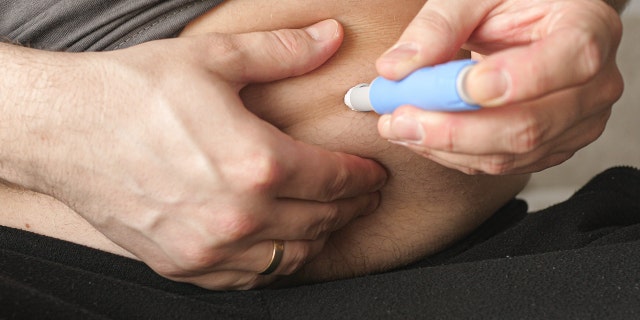
Semaglutide injections are being used to support weight loss and treat type 2 diabetes.

Semaglutide injections are being used to support weight loss and treat type 2 diabetes. (iStock)

DOCTORS URGE CAUTION ON DIABETES DRUGS FOR WEIGHT LOSS AFTER STUDY HIGHLIGHTS SIDE EFFECTS   

Other noninvasive weight loss and toning procedures that have gained popularity in recent years include fat melting injections, fat freezing (cryolipolysis), fat warming (laser lipolysis) and targeted radiofrequency treatments (radiofrequency lipolysis), as noted by the American Society of Plastic Surgeons.

Invasive body contouring options include various forms of liposuction – the surgical removal of fat via suction device – while surgical weight loss options include various bariatric operations, including adjustable gastric banding, gastric balloons and gastric bypasses, according to the American Academy of Cosmetic Surgery and the American Society for Metabolic and Bariatric Surgery.
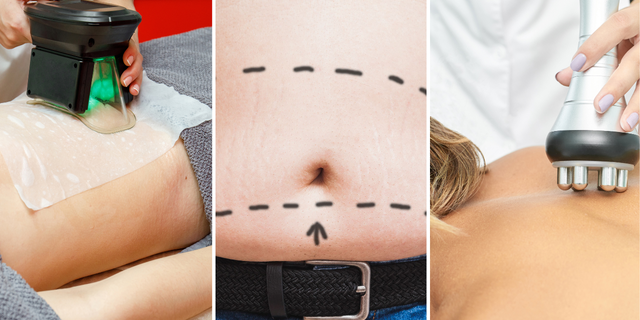
Body contouring options for spot-reducing fat include cryopolis (left), liposuction (middle) and radiofrequency cryopolis (right).

Body contouring options for spot-reducing fat include cryopolis (left), liposuction (middle) and radiofrequency cryopolis (right). (iStock)

Craft told Fox News Digital he lost weight naturally and he didn’t use any weight loss medicines or enhancement supplements or seek surgical means.

“You have to make lifestyle changes, like eating healthier, instead of shortcuts,” Craft said. “[It’s also important to] stay active, even if it’s just a little bit, so long as you’re moving.”

CLICK HERE TO SIGN UP FOR OUR LIFESTYLE NEWSLETTER

The U.S. Department of Health and Human Services’ National Institutes of Health (NIH) reports that one-in-three American adults are overweight and more than two-in-five American adults are obese. About one-in-11 American adults are severely obese.

In terms of diet, the NIH recommends adults avoid foods with added sugar and high saturated fats and eat foods that are rich in vitamins and minerals, which includes vegetables, fruits, whole grains, beans, nuts, seeds, lean meat, seafood, eggs and milk. 

The National Institutes of Health says 75 minutes of vigorous-intensity aerobic activity each week is the minimum time it recommends for healthy adults. Lower intensity workouts will require at least 150 minutes per week.

The National Institutes of Health says 75 minutes of vigorous-intensity aerobic activity each week is the minimum time it recommends for healthy adults. Lower intensity workouts will require at least 150 minutes per week. (iStock)

The NIH also advises 75 to 300 minutes of physical activity for adults depending on the intensity level of their chosen activity. Recommended exercise times are determined by each person’s age, health condition and desired result. 

FOLLOW US ON FACEBOOK FOR MORE FOX LIFESTYLE NEWS

Craft told Fox News Digital he no longer sees the doctor who called his weight “a ticking time bomb,” but his new doctor is impressed by his progress.

“My current doctor says it’s unbelievable how much I’ve lost,” Craft said.

After losing hundreds of pounds, the main challenge that Craft said he’s facing now is loose skin and he’s hoping he can find a doctor to surgically remove it because the excess tissue causes discomfort.

He said his health insurance has declined to cover the cost of skin removal surgery.
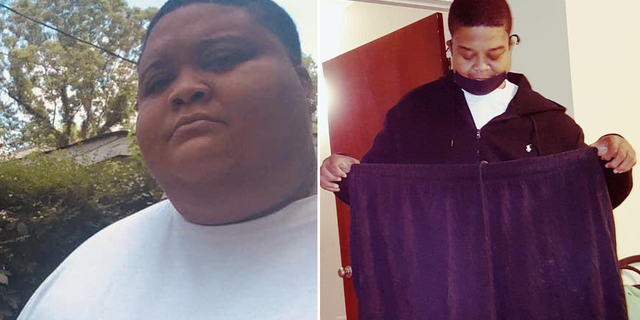
Nicholas Craft's four-year weight loss journey is ongoing. He told Fox News Digital he promised his late grandmother that he would lose weight.

Nicholas Craft’s four-year weight loss journey is ongoing. He told Fox News Digital he promised his late grandmother that he would lose weight. (Nicholas Craft)

Multiple plastic surgeons on RealSelf, a healthcare marketplace focused on consumer aesthetic treatments, have noted that most insurance companies reject covering skin removal surgeries because they deem them a cosmetic procedure. Some exceptions may exist if a patient can prove their excess skin causes adverse health effects, such as painful rashes, but terms vary with each health insurance provider.

CLICK HERE TO GET THE FOX NEWS APP

Craft said he’s planning to lose more weight.

“My family and friends tell me they’re proud of how far I’ve come,” Craft added. “My advice for anyone trying to lose weight, be consistent on your weight loss plan and trust the process.”

9 Ways to Jumpstart Healthy Eating Habits After Festive Binge

Festivals get in touch with for celebrations. You dance your hearts out, invest high-quality time with your beloved ones and a lot more importantly, chomp on mouth-watering treats. However, immediately after all that enjoyment, it is vital to observe your common common healthy lifestyle. This is also vital mainly because a great deal of individuals stop up placing on bodyweight immediately after the festive binge. Do you go through comparable encounters soon after festivals? Have you also gorged on large and oily foods objects? Cease, ideal there. If you wish to jumpstart healthful having behavior soon after the festive binge, there are some details that require to be held in mind. Seem at the 9 suggestions outlined below.

In this article Are 9 Means to Jumpstart Wholesome Feeding on Behaviors Just after Festive Binge

1. Decide for Detox Drinks

Did you address by yourself to a great deal of junk or greasy and oily food stuff merchandise? Perfectly, commence with detoxing oneself then. This is a fantastic way to get rid of those people poisons amassed inside your procedure. How can you do this, you inquire? Sip on some refreshing honey lemon ginger tea and you are very good to go. You can conveniently brew a pleasant cuppa for your self in mere ten minutes. Simply click here for the recipe

2. Stay Hydrated

Consuming 8 litres of water is superior for your wellbeing. It keeps you healthier, cleanse, and hydrated and relieves concerns like constipation. You can also drink some warm drinking water that will support you make improvements to digestion and revamp your metabolic process. Do keep a check on your h2o consumption and take in sufficient water consciously. To keep by yourself hydrated, you can go for scrumptious coconut h2o with a trace of lemon and mint. Click listed here for the recipe

9 Ways to Jumpstart Healthy Eating Habits After Festive Binge

Coconut h2o is a single of the very best all-natural detox beverages. Photograph Credit score: iStock

(Also Read through: Did You Know? Coconut Meat Or ‘Nariyal Ki Malai’ Is Good For Your Overall health Right here Are Some Facts)

3. Count On Healthy Snacks

We understand that it is really complicated to acquire a nutritious route out of the blue when you have been bingeing on festive delights. But no one is telling you to quit consuming or to skip foods. All you have to do is make healthier selections. Do you sense hungry between foods? Go for healthy snacks like dry fruits or nuts. You can also try out full-grain crackers together with hummus. Why don’t you prepare some delectable protein balls at household? You should not fret about the recipe. Discover it here.

4. Prevent Taking in Sweet Treats

A single of the to start with ways to subsequent a balanced diet regime is to keep away from sugary treats. No issue how hungry you are, attempt not to have sweet delights. If sugar cravings are still bothering you, switch your sweets with fruits that act as purely natural sweeteners. In simple fact, you really should kickstart your working day with fruits. If this isn’t really sufficient, go for other nutritious sweets. You can very easily prepare some desserts with healthful twists at dwelling. Simply click in this article for the recipes

5. Consume Vegetables

dmeidie8

Veggies are a need to in order to bounce back just after having harmful snacks. Photograph Credit score: iStock

Go to the market and bring adequate veggies at dwelling. Ideal from salads to generating a number of curries, make sure you are gorging on a good deal of vegetables. These are loaded with fibre, nutritional vitamins and other nutrients that will aid you hold your program healthy. You can also test steamed vegetables. If you are organizing on avoiding carbs for supper, go for this recipe.

6. Take in Mindfully

Overeating need to be strictly prevented. If you are used to watching Tv or internet collection while ingesting, quit that appropriate away. Try out to aim only on your foodstuff when you are feeding on. In small, practise mindful consuming. This will assistance you hear to your body’s demands and prevent when necessary. Keep in mind, part management is the vital.
(Also Browse: 15 Straightforward Diet program And Way of life Modifications That Might Do Wonders For Body weight Decline)

7. Work out, Workout And Work out

We realize that your health regimen goes for a toss, normally, through festivities. But now, it is really time to hear to your physique. If you are a beginner in this arena, start off with essential routines rather of likely for an intense session. But make absolutely sure you incorporate actual physical do the job in your program. If you are a person who presently follows a exercise session regimen, go again to that now.
(Also Study: 10 Pre and Put up Work out Snack Recipes)

8. Pair Your Foods With Probiotics And Salads

qgifphig

Having curds with other foods is a terrific strategy, in particular soon after a festive binge. Picture Credit history: iStock

It is correct that your precedence is property-cooked foods when you are preparing on heading again to healthy routines. But, possessing reported that, will not ignore to pair your frequent meals with probiotics like dahi or a excellent fibre-rich salad. Do not rely on carbs only. You can put together this tremendous tasty dahi cucumber salad at household. Click below for the recipe

9. Manage Snooze Cleanliness

You will have to by no means skip this point. Test to abide by a proper rest cycle. Every person ought to attempt to snooze for at minimum 7 to 8 hrs each individual evening. Do not stay awake late at evening. Rest early and wake up early.
(Also Read through: What To Do After Eating Oily Food stuff – 10 Approaches To Recuperate From The Effects)

Keep these ideas in thoughts for foreseeable future celebrations much too. Delighted Holi 2023!

Showcased Video Of The Day

Scorching Toddy Recipe | How To Make Very hot Toddy

Seven Healthy Habits To Reduce the Risk of Dementia

Alzheimer’s Disease Brain Treatment

New research spanning two decades has found that following seven healthy habits and lifestyle factors, known as the American Heart Association’s Life’s Simple 7, may lower the risk of dementia in women. These factors include being active, eating better, maintaining a healthy weight, not smoking, maintaining healthy blood pressure, controlling cholesterol, and having low blood sugar.

New research that followed female participants for two decades has found that seven healthy habits and lifestyle factors may play a role in lowering the risk of dementia. The preliminary study released on February 27, 2023, will be presented at the American Academy of Neurology’s 75th Annual Meeting being held in person in Boston and live online from April 22-27, 2023.

The seven cardiovascular and brain health factors, known as the American Heart Association’s Life’s Simple 7, are: being active, eating better, maintaining a healthy weight, not smoking, maintaining a healthy blood pressure, controlling cholesterol, and having low blood sugar.

“Since we now know that dementia can begin in the brain decades before diagnosis, it’s important that we learn more about how your habits in middle age can affect your risk of dementia in old age,” said Pamela Rist, ScD, of Brigham and Women’s Hospital in Boston, Massachusetts, and a member of the American Academy of Neurology. “The good news is that making healthy lifestyle choices in middle age may lead to a decreased risk of dementia later in life.”


AHA Life's Simple 7

The American Heart Association’s Life’s Simple 7 is a set of health goals designed to help people improve their overall health and reduce their risk of heart disease, stroke, and other chronic conditions. These seven goals include:

  1. Manage blood pressure: Keeping your blood pressure within a healthy range can reduce your risk of heart disease and stroke.
  2. Control cholesterol: High levels of cholesterol in the blood can increase your risk of heart disease.
  3. Reduce blood sugar: High blood sugar levels can increase your risk of developing type 2 diabetes and other chronic conditions.
  4. Get active: Regular physical activity can improve your overall health and reduce your risk of chronic conditions.
  5. Eat better: A healthy diet can reduce your risk of chronic conditions and improve your overall health.
  6. Lose weight: Maintaining a healthy weight can reduce your risk of chronic conditions and improve your overall health.
  7. Stop smoking: Quitting smoking can reduce your risk of heart disease, stroke, and other chronic conditions.

By focusing on these seven goals, individuals can make positive lifestyle changes that can lead to better health outcomes and a lower risk of chronic conditions.


The study involved 13,720 female participants with an average age of 54 at the start of the study.

After 20 years of follow-up, researchers looked at Medicare data to identify those who had been diagnosed with dementia.

Of the participants, 1,771, or 13{bf0515afdcaddba073662ceb89fbb62b6b1bf123143c0e06b788e1946e8c353f}, developed dementia.

For each of the seven health factors, participants were given a score of zero for poor or intermediate health and one point for ideal health, for a total possible score of 7. The average score was 4.3 at the start of the study and 4.2 10 years later.

After adjusting for factors like age and education, researchers found that for every increase of one point in the score, a participant’s risk of dementia decreased by 6{bf0515afdcaddba073662ceb89fbb62b6b1bf123143c0e06b788e1946e8c353f}.

“It can be empowering for people to know that by taking steps such as exercising for half an hour a day or keeping their blood pressure under control, they can reduce their risk of dementia,” Rist added.

A limitation of the study was that researchers were unable to look at how changes in factors such as quitting smoking influenced the risk of dementia later in life.

The study was supported by the National Institutes of Health.

Heart-healthy habits linked to longer life without chronic conditions

Heart-healthy habits linked to longer life without chronic conditionsShare on Pinterest
A study found that heart-healthy lifestyle habits described in the American Heart Association’s Life’s Essential 8, such as physical activity and quality sleep, are associated with a longer lifespan and more years spent free of chronic conditions such as type 2 diabetes and cancer. urbazon/Getty Images
  • The American Heart Association’s Life’s Essential 8 is a concept that defines cardiovascular health based on four modifiable behaviors, such as physical activity and sleep, and four modifiable biometric measures, such as weight, blood glucose, and blood lipid levels, that impact cardiovascular health.
  • The composite cardiovascular health score measured using the aforementioned eight metrics can help clinicians measure and monitor cardiovascular health to prevent or treat cardiovascular diseases.
  • A recent study showed that an optimal composite cardiovascular score based on the Life’s Essential 8 metrics was associated with longer life expectancy free of chronic conditions such as cancer and cardiovascular diseases.
  • An accompanying study showed that the decline in deaths due to cardiovascular disease contributed significantly to the increase in life expectancy associated with good cardiovascular health.

Two related studies recently presented at the American Health Association (AHA) conference suggest that optimal cardiovascular health (CVH) was associated with a longer chronic disease-free lifespan, reduced cardiovascular mortality, and increased total longevity.

These studies assessed CVH using the criteria defined by Life’s Essential 8, thus underscoring the validity and utility of cardiovascular health scores based on this construct as predictors of life expectancy and cardiovascular diseases (CVD).

Dr. Hao Ma, a biostatistical analyst at the Tulane University Obesity Research Center and an author of one of the studies, said:

“After decades of strong growth, the rise in US life expectancy has stagnated since 2010. The main reason for such a phenomenon is the poor cardiovascular health in the US population. Our study indicates that adhering to a high CVH, defined as the Life’s Essential 8 score, is related to a considerably increased life expectancy. Moreover, our findings lend support to the validity of the newly released Life’s Essentia 8 metrics in assessment and monitoring CVH in the general populations.”

In 2010, the American Heart Association (AHA) developed a prescription for health called Life’s Simple 7, consisting of seven measurable risk factors or metrics that together represented cardiovascular health. The AHA revised Life’Simple 7 to create Life’s Essential 8 in 2022 to improve the measurement and monitoring of cardiovascular health and facilitate cardiovascular disease prevention and treatment.

The eight metrics comprising the construct, Life’s Essential 8 include physical activity, diet, smoking and other forms of nicotine exposure, sleep, body mass index, blood glucose, blood lipids, and blood pressure. Each metric included in Life’s Essential 8 is measured on a continuous scale of 0-100. These individual metrics are used to calculate the composite or cumulative cardiovascular health score that also ranges from 0 to 100 points.

Although life expectancy has increased in the past few decades, it has been accompanied by an increase in the prevalence of chronic conditions, such as cardiovascular conditions and cancer. The combined effects of the metrics included in Life’s Essential 8 — such as being more active, quitting tobacco use and managing blood pressure — are associated with increased total life expectancy.

However, studies have not examined the association between the composite cardiovascular health score, calculated as defined by the updated Life’s Essential 8, and total life expectancy and disease-free life span.

Two studies recently presented at the AHA conference assessed whether ideal composite cardiovascular health scores were associated with increased life expectancy in the absence of chronic health conditions and reduced mortality due to cardiovascular diseases.

The first study examined whether the cardiovascular health score was associated with an increase in total life expectancy and life expectancy in the absence of chronic conditions.

The study analyzed data collected by the UK Biobank from more than 136,000 adults residing in the United Kingdom who, at the time of enrollment, did not have cardiovascular disease, diabetes, cancer, or dementia and had data on cardiovascular health scores.

The individuals were classified as having poor, intermediate, or ideal cardiovascular health based on the criteria defined by Life’s Essential 8. The researchers found that average life expectancy at 50 years of age was prolonged by 5.2 and 6.3 years in men and women with ideal CVH, respectively, compared with their counterparts with poor CVH.

Individuals with ideal CVH scores also had more years of life free of major chronic conditions, including diabetes, cardiovascular disease, dementia, and cancer, than those with poor CVH. Specifically, men and women with ideal CVH were expected to spend 75.9{bf0515afdcaddba073662ceb89fbb62b6b1bf123143c0e06b788e1946e8c353f} and 83.4{bf0515afdcaddba073662ceb89fbb62b6b1bf123143c0e06b788e1946e8c353f}, respectively, of their lives in good health, whereas their male and female counterparts with poor CVH were expected to spend 64.9{bf0515afdcaddba073662ceb89fbb62b6b1bf123143c0e06b788e1946e8c353f} and 69.4{bf0515afdcaddba073662ceb89fbb62b6b1bf123143c0e06b788e1946e8c353f} of their lives free of chronic disease.

Previous studies have shown that low socioeconomic status is associated with lower disease-free life expectancy. In the present study, researchers found that maintaining ideal cardiovascular health helped reduce the impact of low socioeconomic status on disease-free life expectancy.

The second study examined the impact of maintaining ideal cardiovascular health on potential improvements in life expectancy due to a decrease in cardiovascular deaths. The study analyzed data from 23,000 adults participating in the National Health and Nutrition Examination Survey (NHANES) between 2005 and 2018. Using a national death registry, the researchers determined that 1,359 participants died during the average follow-up period of 7.8 years.

Consistent with the first study, participants with ideal cardiovascular health had longer life expectancies than individuals with poor cardiovascular health. Specifically, the life expectancy of men and women with ideal CVH at 50 years of age was an average of 7.5 years and 8.9 years, respectively, longer than their counterparts with poor CVH.

Notably, 41.8{bf0515afdcaddba073662ceb89fbb62b6b1bf123143c0e06b788e1946e8c353f} and 44.1{bf0515afdcaddba073662ceb89fbb62b6b1bf123143c0e06b788e1946e8c353f} of the increase in life expectancy at 50 years of age in men and women with ideal CVH scores, respectively, could be attributed to a decline in deaths due to cardiovascular disease. Among ethnic groups, the CVH score was also associated with longer life expectancy in White and Black Americans, but not Mexican Americans.

Both studies also had a few limitations. Dr. Ma noted that the data on lifestyle factors such as diet and sleep patterns from the NHANES database were self-reported and hence, prone to errors. Moreover, the metrics used to measure cardiovascular health in both studies were assessed only at baseline, but not during the follow-up period.

Medical News Today also spoke with Dr. Alexandra Lajoie, a noninvasive cardiologist at Providence Saint John’s Health Center in Santa Monica, CA, who was not involved in the study.

“The results of these studies are not surprising. Research continues to show us that healthy lifestyle interventions are good for health outcomes, and often are even more important than prescription medications.”

Dr. Lajoie said it is possible to reverse some of the effects of not living a heart-healthy lifestyle earlier in life, but it’s better to consistently maintain a lifestyle that’s beneficial to one’s health.

“Of course the ideal would be to follow healthy habits from the start, but starting exercise, getting better sleep, and maintaining a healthybody weight improves blood pressure and blood sugar, and consequently reduces cardiovascular event risk, for decades beyond age 50,” she explained. “Quitting smoking is the best [thing] to improve heart health. After that it’s maintaining a regular exercise routine.

Japanese Health Secrets Can Help Anyone Struggling With Weight Loss

  • Kaki Okumura is a Japanese wellness writer and illustrator who lived in the US until she was 12.
  • Okumura struggled with being overweight and tried numerous dieting tactics, but none of them worked.
  • Her book “Wa: The Art of Balance” will be released in March and focuses on 4 Japanese practices that helped her. 

This as-told-to essay is based on a conversation with Kaki Okumura, the author of “Wa: The Art of Balance,” a book set to be published on March 14. It’s been edited for length and clarity.

I remember looking down at the family photo and feeling my heart sink. I couldn’t help it. I was clearly the only one who was overweight.

I’m Japanese, but having been raised in the US until I was 12, I had found myself facing a health challenge that a lot of other Americans face: being overweight.

If my family had shared this trouble with me, I may not have felt so alone in my journey.

But my family just didn’t struggle in the way I did, perhaps because most of them lived in Japan — a country that is a leader in longevity and has very low rates of obesity. 

My parents were kind and never shamed me for my body, but I still couldn’t help but feel an intense amount of pressure to change the way I looked. So I embarked on a number of dieting tactics — I tried everything from calorie restriction and intermittent fasting to low-carb. Some worked, with varying levels of success, but none were sustainable.

At least, not until I moved to Japan.

I always had an image in my mind that people in Japan ate very healthfully — that they didn’t eat fried foods, meat, or ice cream — and most of their meals were composed of rice, fish, and steamed vegetables.

matcha desserts

Matcha desserts are one of the most popular treats in Japan.

Kaki Okumura


But after living there, I started to realize that Japan is just like any other developed country: they have snacks, they have fast food, and they certainly indulge in sweets. It was clear that Japanese people enjoyed these foods regularly too.

So what’s the secret? It’s in balance.

Since following these 4 principles, I have never struggled or worried about the way I ate. 

1. Moderation

One of the first things that people who visit Japan will say about the food is how small the portions are. When you go out to eat in Japan, you’ll probably be able to finish it in one sitting, while in the US you’re probably going to want a takeout box.

Japanese food

Portions served in Japanese restaurants are often just right.

Kaki Okumura


But these moderate portions are one of the key reasons why people in Japan often eat whatever they want — and many without rigorous exercise routines. When you eat in moderation, nothing has to be off-limits, and you can relax about eating cake at birthdays or steak to celebrate a job promotion. Consequently, we feel less stressed about food.

I came to realize that sustainable healthy eating is not about willpower or self-discipline, but it’s about being able to incorporate the foods we love, in moderation.

2. Variety

When you go to a Japanese restaurant in Japan, you often come across a meal set composed of rice, miso soup, a protein dish, and a few vegetable side dishes. The dishes can range from grilled fish and steamed spinach, to deep-fried chicken and a salad.

Japanese meal

Eating a variety of dishes in a meal helps to keep your diet balanced, and your mind happy.

Kaki Okumura


The key point is not so much the actual dish itself, but that there is such a wide variety of dishes in one meal. This way, people can easily get a variety of nutrients without having too much of any one thing.

We need carbohydrates, fats, fiber, and protein, but instead of having to overthink how to incorporate them together, the Japanese style embeds balance into each meal by having various mini dishes.

The variety also keeps meals interesting, so you don’t feel restricted or deprived of anything, while still eating everything your body requires.

3. Simplicity

I’ve found that vegetables are often treated as a necessary evil in the US. There is no shortage of recipes and articles that are worded like “How to make vegetables taste good” or “Vegetable dishes you’ll actually want to eat.”

With the assumption that vegetables don’t taste good, we end up with recipes that will do anything to mask the flavor — often with heavy amounts of salt, oil, or sugar.

Contrary to that, in Japan, the narrative around vegetables is the opposite: that they are delicious.

Japanese nabe

Popular dishes often have a significant variety and amount of vegetables included.

Kaki Okumura


It’s common for vegetable dishes to be seasoned lightly, often steamed or even raw, like the shredded cabbage that often comes with tonkatsu, Japanese pork cutlet.

Popular Japanese movies, for example Ghibli’s “My Neighbor Totoro”, have entire scenes of children eating plain, fresh, vegetables with delight.

totoro vegetables

Vegetables are not ingredients that Japanese children dread.

My Neighbor Totoro/Studio Ghibli


Once I started recognizing that the ingredients we use to cook are delicious, I started focusing on how to enhance and complement these flavors rather than mask them.

Sometimes, the most important ingredient is the one you leave out.

4. Self-compassion

This was the most difficult principle for me to adopt, but it was the most important.

When I would overeat, I would end up feeling bad about myself. Occasionally I might feel guilty, ashamed, or weak-willed.

An idea that helped me during moments like this was the Japanese phrase “kuchisabishii.” It’s a commonly used phrase that directly translates to “lonely mouth,” but it refers to boredom snacking, or when we eat without intention.

But kuchisabishii is less critical in nature than phrases like binge-eating, or compulsive overeating, because it recognizes that like loneliness, eating out of boredom is a very natural emotion.

Japanese meal

A simple home cooked meal that comforts the stomach as well as the heart.

Kaki Okumura


Instead of sitting in guilt and shame, by shaping experiences in which we may have eaten a bit too much as a forgiving experience, we can recognize and move on with kindness.

Living in Japan has shown me that healthy eating is less about self-discipline or willpower, which are not helpful in building lifelong habits, but it’s more importantly about finding a balance. Food is not just fuel, but it can be central to our culture, traditions, identity, and values.

I’ll be publishing a book in March of this year, called “Wa: The Art of Balance.” “Wa” — the Japanese word used to describe Japanese things — also means harmony, and represents the value of seeking balance to live a well-rounded life.

Poor sleep linked to increased heart disease risk: Study

Poor sleep is associated with up to seven years’ worth of increased heart disease risk and even premature death, according to a study.

The research, published in the journal BMC Medicine, analysed data from more than 300,000 middle-aged adults from the UK Biobank.

Researchers from the University of Sydney in collaboration with Southern Denmark University found that different disturbances to sleep are associated with different durations of compromised cardiovascular health later in life compared to healthy sleepers.

In particular, men with clinical sleep-related breathing disorders lost nearly seven years of cardiovascular disease-free life compared to those without these conditions, and women lost over seven years, they said.

The study found that even general poor sleep, such as insufficient sleep, insomnia, snoring, going to bed late, and daytime sleepiness is associated with a loss of around two years of normal heart health in men and women.

“Our research shows that, over time, regular poor sleep can lead to significantly compromised cardiovascular health in middle and old age,” said Professor Emmanuel Stamatakis from the University of Sydney, and senior author of the study.

“Sleep apnea is well known to increase the risk of cardiovascular disease and other chronic conditions, but these findings are a wake-up call that poor sleep in general can pose significant risk to heart health,” Stamatakis said in a statement.

The team came up with three sleep categories: poor, intermediate, and healthy at age 40, and compared this with their overall cardiovascular disease-free health expectancy.
By combining the study participants’ self-reported data with clinical data from their doctors in the two years preceding the study, the researchers were able to compare health outcomes for self-reported sleep patterns and clinically diagnosed conditions such as sleep-related breathing disorders.

The team categorised participants as poor, intermediate, and healthy sleepers at age 40, and compared their health outcomes at old age.

Women with poor sleep were likely to experience two years more of compromised cardiovascular health compared to healthy sleepers, while men experienced more than two years. Intermediate sleepers lost almost one year of heart disease-free life among women, and men lost slightly more.

This means that snoring and trouble falling asleep or staying asleep can be a warning sign of potential health issues in the future.

“While the average life expectancy of the UK study participants is around 80 years, people with clinically diagnosed sleep-related breathing disorders like sleep apnea lost over seven years of cardiovascular-disease free life,” said the study’s lead author Bo-Huei Huang, an epidemiologist recently graduating from the University of Sydney.

📣 For more lifestyle news, follow us on Instagram | Twitter | Facebook and don’t miss out on the latest updates!