Jay Leno gives health update as he’s seen behind the wheel for first time after being released from hospital

Jay Leno was in his happy place once again as he was spotted for the first time cruising down the street in a silver 2002 Mercedes-Benz just one day after being released from the Grossman Burn Center.

Leno was released from the West Hills hospital on Monday after a 10-day stay where he received multiple surgeries for third-degree burns to his face, chest and hands from a fire that broke out at his garage in Burbank.

“Everything’s OK,” Leno said while laughing. He admitted that he’s ready to go back to work, too, and will be “performing Sunday at the Comedy Magic Club.” When told to get some rest, Leno quipped, “Yeah, I need barbecue.”

Leno looked completely at ease driving down the street despite the traumatic event nearly two weeks ago when he was sprayed with gasoline while working on one of his vintage vehicles and a fire ignited, causing serious damage to his body.

JAY LENO REVEALS BURNS FROM FIRE, RELEASED FROM HOSPITAL

Jay Leno gives health update as he’s seen behind the wheel for first time after being released from hospital

Jay Leno shows scarred marks on his hands and face while driving a silver Mercedes in Los Angeles on Tuesday, Nov. 22, 2022.
(The Mega Agency / BACKGRID)

The car connoisseur had burns across the left side of his face and showed had deep scabs on his hands as he held onto the steering wheel while on a joyride in L.A.

JAY LENO’S DOCTOR GIVES UPDATE AFTER HE SUFFERED ‘SERIOUS BURNS’ IN GASOLINE FIRE

He wore a pair of black circular glasses and his trademark blue denim long-sleeve over a white T-shirt as he cruised down the street with his windows rolled down.

Dr. Peter Grossman was “optimistic that he will make a full recovery” and said in a release provided to Fox News Digital that he was “pleased with Jay’s progress.”
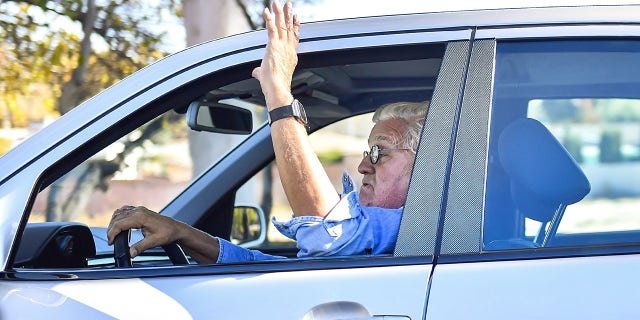
Jay Leno held his arm out of the car window while on a joyride one day after leaving the burn center.

Jay Leno held his arm out of the car window while on a joyride one day after leaving the burn center.
(The Mega Agency / BACKGRID)

Jay Leno gets behind the wheel of a 2002 Mercedes-Benz one day after leaving the burn center.

Jay Leno gets behind the wheel of a 2002 Mercedes-Benz one day after leaving the burn center.
(The Mega Agency / BACKGRID)

“Jay would like to let everyone know how thankful he is for the care he received, and is very appreciative of all of the well wishes,” the Grossman Burn Center said in a statement.

JAY LENO ‘SPRAYED WITH GAS’ WHEN STEAM CAR IGNITED AT BURBANK GARAGE; FIRE OFFICIALS RESPONDED TO EMERGENCY

“He is looking forward to spending Thanksgiving with his family and friends and wishes everyone a wonderful holiday.”

Leno had at least two surgeries while at the burn center, one was a “surgical excision and grafting procedure.” He also required the use of a hyperbaric chamber to help provide better blood flow and decrease bacteria.

Jay Leno was spotted on a trip around town, his first sighting in public since a traumatic car fire.

Jay Leno was spotted on a trip around town, his first sighting in public since a traumatic car fire.
(The Mega Agency / BACKGRID)

Jay Leno sustained minor injuries from a car fire last week, and was easing back into normal life.

Jay Leno sustained minor injuries from a car fire last week, and was easing back into normal life.
(The Mega Agency / BACKGRID)

Beverly Hills Dermatologist Dr. Jason Emer told Fox News Digital it is “essential to do immediate treatment to protect the skin barrier and help it repair itself” following injuries sustained similar to Leno’s burns. “In this case, when you have a true burn on the skin with pigmentation issues and textural damage, you need skincare plus aggressive laser treatments and at home LED light therapy.”

CLICK HERE TO SIGN UP FOR THE ENTERTAINMENT NEWSLETTER

He noted that a combination of “deep microneedling radio frequency to stimulate new collagen production” combined with “skin barrier repair and pigmentation blending” could benefit a burn victim.

“These treatments, in combination, would treat the skin at every level and help it remodel to normal, fresh, healthy skin over time,” Emer said.

Burbank Fire Department Battalion Chief Dave Burke released an incident report to Fox News Digital that revealed officials responded to the “emergency medical call” on Saturday, Nov. 12 at 12:28 p.m.
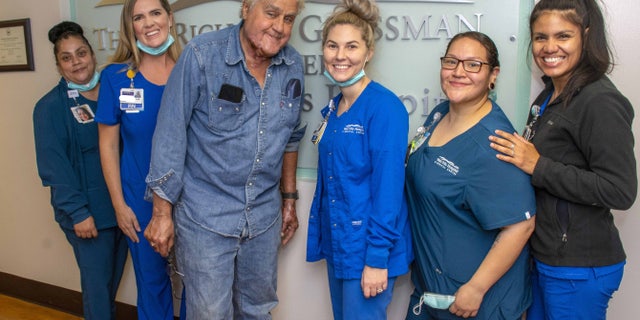
Jay Leno is shown saying goodbye to the Grossman Burn Center care team.

Jay Leno is shown saying goodbye to the Grossman Burn Center care team.
(Grossman Burn Center)
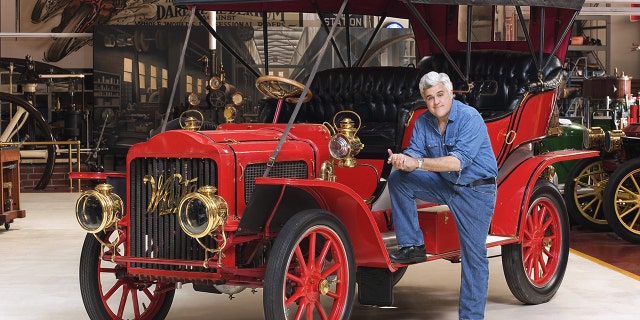
Jay Leno has hundreds of rare and vintage cars, and posed with a 1908 steam car.

Jay Leno has hundreds of rare and vintage cars, and posed with a 1908 steam car.
(Paul Drinkwater/NBCU Photo Bank)

Shortly after the incident, Leno said in a statement to Fox News Digital, “I got some serious burns from a gasoline fire. I am OK. Just need a week or two to get back on my feet.”

CLICK HERE TO GET THE FOX NEWS APP

Leno has long been a connoisseur of car culture. He worked as a mechanic while rising through the ranks as a stand-up comedian, and he now owns more than 280 unique vehicles.

The impressive collection of rare, antique and vintage cars is reportedly worth from $50 million to $100 million, but estimates vary due to predictions in what some rare cars could sell for. On “Jay Leno’s Garage,” Leno chats with car enthusiasts about favorite makes and models, in addition to showing off his prized collection of cars, motorcycles and all-terrain vehicles.

Fox News Digital’s Larry Fink contributed to this report.

Tom Meade obituary | Medical research

Tom Meade, who has died aged 86, pioneered the field of cardiovascular epidemiology. His research, spanning five decades, gave medical science a vastly improved understanding of the biology of blood and the circulatory system, opening the door for targeted new heart disease treatments.

By the early 1960s, heart disease was the leading cause of death in many countries, with the culprit widely believed to be atheroma (fatty deposits inside the arteries), brought on by high cholesterol and a fatty diet. But in 1965, Meade, a researcher at the Medical Research Council (MRC), read something he described as “a real eye-opener”. His boss, the pre-eminent epidemiologist Jerry Morris, wrote that while the numbers of men dying aged 50-69 had surged since 1908, analysis of autopsy reports showed that the numbers dying with coronary atheroma had decreased. Meade wondered if other factors were in play, and what role blood might have in heart disease. He wanted to investigate.

In 1970, he became director of the newly created MRC Epidemiology and Medical Care Unit at Northwick Park in Harrow, north-west London. He set up the Northwick Park heart trial in 1972 with 3,900 volunteers, who were mostly workers at the nearby Heinz factory. Among other things, Meade and his team wanted to study fibrinogen and Factor VII (proteins in the blood essential for clot formation, but too much of which can make blood “sticky” and liable to clot inappropriately).

The trial found fibrinogen levels are linked to heart disease, and one of the reasons smoking is a risk factor for heart disease is that it raises fibrinogen levels. The findings pointed to the need for fibrinogen-lowering drugs. They also found high levels of Factor VII increased heart disease risk, which posed the question – what might lower it? In 1983 Meade’s thrombosis prevention trial began, which took 5,500 high-risk individuals and gave them aspirin, warfarin, a combination of the two, or a placebo. Of the four groups, those on the combination fared best, with heart attacks reduced by more than a third.

Recruits for the thrombosis prevention trial came through the MRC GP Research Framework, a network of GP practices around Britain. Meade directed many trials through this network, not just on blood circulation, but also on blood pressure, incontinence, back pain, stroke rehabilitation and other topics. Chiropractic was considered a quack science, but Meade’s trial in 1990 comparing it with standard treatment for low back pain found it to be more effective.

It was compulsory to retire from the MRC at 65, so in 2001 Meade stepped down as director. He was glad, as the administrative demands had become steadily more onerous, but was keen to retain an academic foothold somewhere to continue his research. After a five-week campervan holiday in Australia, he became an emeritus professor of epidemiology at the London School of Hygiene and Tropical Medicine, with, to his wry amusement, pay of £10 a month to formalise the agreement.

As well as his own work, he also chaired the LSHTM research ethics committee and was the co-author of an overview of trials into aspirin to prevent heart disease, which also found it valuable in preventing bowel and other cancers.

Meade stayed at the LSHTM for more than 15 years and was able to do a 30-year follow-up of his Northwick Park heart trial. One finding was that having a respiratory infection made people more susceptible to having a heart attack. Knowing there is this link has prompted officials to encourage uptake of flu vaccinations in vulnerable groups.

Born in Oxford, Tom was the son of Margaret (nee Wilson), a committed Quaker, and James Meade, a distinguished economist and Nobel laureate. Tom was the eldest of four children, with three sisters, Charlotte, Bridget and Carol. In 1940 the second world war was still in its “phoney” stage, so the family went on holiday in France (from Geneva, where James was serving with the League of Nations), but rapidly turned for Britain with the Germans advancing behind them. After days waiting on the French coast they were rescued by a tramp steamer and taken to Barry in Wales.

His mother then took the children to the US for safety, and his father pressed a copy of Rudyard Kipling’s Jungle Book into Tom’s hands, with an inscription. It was a memento should they never meet again. Meade’s mother did not like being away from the UK, however, and they returned in 1942, a perilous crossing, with masts of sunken ships just visible as they sailed into home waters.

In 1949, Meade won a scholarship to Westminster school in London, where in 1953 he took part in an ancient rite at Queen Elizabeth’s coronation. (The scholars were the first to greet the new monarch with Vivat Regina.) In 1950 he had his appendix out and, although he excelled at classics, seeing a hospital at close quarters inspired him to read medicine. He studied at Christ Church, Oxford, and Bart’s hospital in London, where he qualified in 1962.

Meade originally wanted to join the prison medical service and to that end worked for 18 months as a junior doctor at Littlemore hospital, a mental health facility in Oxford. However, he had become increasingly interested in public health, and decided to work for Morris at the Medical Research Council.

In 1962 Meade married Liz Perks, a social worker, and the couple went on to have three children: Richard, Helen and Rebecca. They went to India in 1969 for a year (with their London house let to the king of Tonga) so that Meade could study the epidemiology of leprosy at the Schieffelin research laboratory in Karigiri.

The family lived in Highgate, north London, and when in 1979 Haringey council shut the borough’s schools for several weeks in response to a caretakers’ strike, Meade sued the council in a case that reached the court of appeal, by which time the schools were open again. Modest yet principled, Meade was happy to accept appropriate accolades: in 1996 he was elected a fellow of the Royal Society and in 1997 received the Balzan prize for epidemiology. In 1994 he was appointed CBE, although he was always uneasy about the honours system. When he heard that the head of the MRC, Colin Blakemore, was not getting a knighthood, as was customary with that position, he handed back his CBE in protest; Blakemore’s knighthood came in 2014. When several of the congregation stayed away from his granddaughter’s confirmation in disapproval of female priests, Meade was so incensed that he left the Church of England and became a Quaker.

In middle age, Meade took up running, completing a marathon, and for decades had an allotment in Highgate. He and Liz moved into a flat in Highgate in 2016 and his health gradually began to falter.

He is survived by Liz and their children and eight grandchildren, and by his sisters.

Thomas Wilson Meade, epidemiologist, born 21 January 1936; died 24 October 2022

Ask Amy: Wonderful health care professional has patient wishing they could be friends

Dear Amy: I am a happily married, 54-year-old woman. I have a great primary medical provider.

“Rebecca” is a nurse practitioner in a large practice. I’ve been going to her for about four years.

Rebecca is personable, interesting, authentic, and has an easy and fun sense of humor. She asks about my family, vacations, etc., and seems to just be a good person.

From day one, I leave every medical appointment wanting to be friends with her. We just seem to have a compatible energy and sort of “click.”

At my most recent pre-op appointment, she greeted me with a huge smile and a very enthusiastic, “I’m SO glad you’re finally able to have this surgery! I’m SO happy for you!”

I have no idea if this is just her typical “bedside manner,” but I was quite touched.

I have a good group of girlfriends, and I deeply value friendship as one of life’s great joys.

If Rebecca were not my doctor, I would invite her to coffee, and be open to either making a new friend – or not.

But given the boundaries of this relationship, is there any way to figure out if we could be friends, or if this is just how she is with all her patients?

And ethically, CAN a doctor and patient become friends?

If so, it would be worth switching to a different provider in the practice, but I don’t want to make that switch for nothing.

– What’s Appropriate?

Wellness Checked

Dear Checked: The most “appropriate” and ethical stance is for everyone to stay in their boxes; “Rebecca” remaining your excellent and humane health care provider, and you remaining her grateful patient.

The warm personal rapport you two share enhances your medical care: you feel comfortable and communicate well – she obviously listens, remembers details about your life, and cares about you.

Despite the standard of maintaining boundaries, practitioners and patients do step out of these boxes because they are human beings and sometimes human beings just click. The OB who delivers the premature baby becomes a family friend; the oncology nurse administering chemo connects with a survivor.

Making a bid for friendship with your health care provider is somewhat risky because doing so might shift the dynamic between you.

If you want to take a stab at friendship outside the office, do not ask her for coffee (that’s a little too intimate).

Contact her via email (not through the patient portal), and invite her to a group event along with other friends – a fundraiser, hike, or performance.

She can then accept or demur based on her own comfort-level, and your professional rapport will be preserved.

Dear Amy: My mother-in-law and I have not always seen eye-to-eye on everything, but we are cordial and appreciate one another.

As the grandkids have gotten older and there is less of a reason to communicate, I find I am unsure when or if to call her.

When I have called in the past to chat, she seems happy to talk to me, but she never calls me.

I feel like I should assume if she never calls me, she must not want to talk to me. In fact, once when she was going through a tough time, she actually told me that I didn’t “need” to call her.

However, she lives alone and is getting older, and I occasionally wonder how she is doing.

I do remind my husband to call from time to time, and he does.

We see her in-person once every month or two, and she has other family members and friends who live closer and see her more frequently.

– Unreturned Caller

Dear Caller: I think these calls you make are important – even if you always initiate. As she gets older, they will be vital ways to check in.

Your mother-in-law may be shy, or a little intimidated. Some people have an actual aversion to making telephone calls – it’s a sort of inertia that can be hard to overcome. From what you write, it seems that she also doesn’t call her son. Keep it up; it’s the right thing to do.

Dear Amy: “Concerned in Suburban Chicagoland” wrote that her 13-year-old daughter burst out laughing and left the room when these parents told her that they were divorcing.

I thought I was the only teen who laughed at the worst possible moment. When my folks dramatically told me my grandmother died, I burst out laughing.

A short time later I realized that this weird response was mainly because I was overwhelmed. I still miss Nana.

— Missing Her

Dear Missing: Laughing in response to loss seems strange, but it does happen.

You can email Amy Dickinson at askamy@amydickinson.com or send a letter to Ask Amy, P.O. Box 194, Freeville, NY 13068.

10 fitness and nutrition tips for the holiday season

10 fitness and nutrition tips for the holiday season

Ah, Thanksgiving Week — when the holiday season really kicks into high gear. 

Of course, the pandemic put a serious crimp in most everyone’s holidays in 2020 and 2021 — but this holiday season feels more like the traditional ones of the past. 

Yes, COVID-19 remains a persistent presence — but not necessarily the overarching threat it once was. 

More ways to enjoy the holidays:Sandi, the 700-ton, 35-foot holiday sand tree, returning to West Palm Beach for the 11th year

More health:House calls: FAU gets big grant to create nurse home-visit program

Food Editor: Thanksgiving pies, restaurant picks, Oprah-approved charcuterie, doughnuts to love

So it’s perfectly understandable if you’re looking forward to enjoying your first event-filled holiday season since 2019.  

However, just in case you’re a bit out of practice when it comes to celebrating a busy holiday season while also maintaining your fitness and nutrition plans, we’ve got some suggestions to help you get through the next six weeks with both intact. 

Staying in shape 

Doing something is better than doing nothing. 

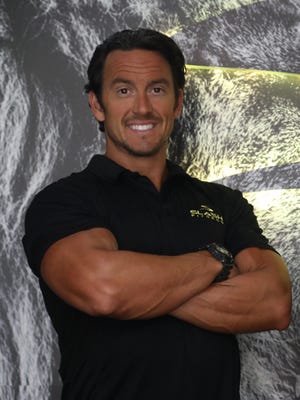
Austin Brock, certified fitness trainer and co-owner of Slash Fitness in Delray Beach recommends that you try to fit in 15 to 20 minutes of high-intensity interval training (HIIT) on a cardio machine.

Austin Brock, certified trainer and co-owner of Slash Fitness in Delray Beach.

“If you don’t own a cardio machine or have access to one, any park or open area will do,” he says. 

He says elevating your heart rate to around 80{bf0515afdcaddba073662ceb89fbb62b6b1bf123143c0e06b788e1946e8c353f} of your max — and sustaining it for one to three minutes if possible — is a great way to burn calories. 

“Then, follow that with lowering your heart rate to 60{bf0515afdcaddba073662ceb89fbb62b6b1bf123143c0e06b788e1946e8c353f} of your max heart rate for the same amount of time,” he instructs. 

Spartan Medical donates 700 medical-grade survival blankets and other medical supplies to Ukraine people

“Send blankets . . . or we’ll freeze to death” was Kyiv mayor Vitali Klitschko’s blunt assessment of the coming winter

ROCKVILLE, Md., Nov. 23, 2022 /PRNewswire/ — Spartan Medical Inc., a veteran-owned medical solutions company, today announced it has donated 700 Siren Survival Wraps and additional medical supplies to help Ukrainian civilians endure the alarmingly cold months ahead.

Spartan Medical donates 700 medical-grade survival blankets and other medical supplies to Ukraine people

Spartan Medical logo (PRNewsfoto/Spartan Medical Inc.)

“These Siren Survival Wraps will directly assist Ukrainians in enduring the approaching harsh winter.”

As Ukrainian forces have halted and opposed the invading Russian military, Russia has expanded its military strategy to attack critical infrastructure and dismantle Ukrainian cities’ life-support systems such as water, sewage, and electricity.

The average daily high temperature in Kyiv during the winter months is just above freezing. Accordingly, it is critical that medical facilities and first responders can maintain the core body temperature of at-risk populations under these conditions. Siren Survival Wraps are derived from a proprietary, post-surgery normothermia system. With the help of these wraps, clinicians and first responders will have the medical-grade tools needed to reduce the risk of life-threatening hypothermia.

“Spartan Medical has the technologies and expertise to help the Ukrainian people, and we are determined to make a difference,” stated Vince Proffitt, Founder and President of Spartan Medical. “These Siren Survival Wraps will directly assist Ukrainians in enduring the approaching harsh winter.”

Spartan Medical and the Proffitt Brothers Foundation, the charitable arm of Spartan Medical Inc., are working with the James Hollister Wellness Foundation based in Rockville, Maryland to deliver these supplies to Ukraine. The James Hollister Wellness Foundation provides life-saving medications and medical supplies to low-income and displaced individuals around the world.

“We’ve been providing medicine and medical supplies to Ukraine for months now, but the coming winter has drastically changed the requests we are receiving,” explained Matthew Hollister, Chairman and CEO, James Hollister Wellness Foundation. “For the Ukrainian soldiers battling for their home country, it has always been a life-or-death situation. But now, for the Ukrainian civilians, it’s a life-or-death situation just to battle the weather. The supplies from Spartan Medical Inc. could not have come at a better time to save the lives of those most affected by the attacks on Ukraine’s infrastructure.”

In addition to the Siren Survival Wraps, Spartan will also provide over one hundred thousand individual medical supplies, including the recently launched SURE Fire single-use retractor, a pre-packaged, sterile, surgery-ready system ideally suited to the demanding medical conditions in Ukraine (designed for the flexibility required in austere environments and front-line operations).

“Because of our medical and clinical expertise and our ability to manage complex logistics, today we assist the James Hollister Wellness Foundation in getting these products to the place of greatest need,” adds Proffitt.

About Spartan Medical:

Spartan Medical is a veteran-owned-and-operated government contractor for the U.S. Department of Veterans Affairs (VA), the U.S. Department of Defense (DoD), and other local, state, and federal agencies. We provide some of the most advanced medical technologies & biologics, licensed medical staff, and best-in-class operations management expertise to our clients both domestic and abroad. Our executive team have all held leadership positions in both the public and private sector and our core strength is solving complex problems through creative thinking, innovative solutions, and highly skilled flexible teams. Spartan Medical maintains its vanguard position by providing medical facilities with best-in-class solutions that improve patient care and outcomes, especially for America’s military and veteran communities.

About The James Hollister Wellness Foundation:

The James Hollister Wellness Foundation is a non-profit organization with a mission to save excess inventory in hospitals, pharmacies, and nursing care networks from being needlessly wasted. Founded in 2015 to honor the memory our co-founder’s late father, the medication and medical devices collected by the James Hollister Wellness is sent to low-income citizens in developing nations who do not have easy access to healthcare. Our non-profit organization works with charity groups, church groups, and service organizations that operate in countries, supplying them with the necessary medications needed to conduct their service work so that they can personally work with low-income individuals and tend to their healthcare needs.

Media Contact:
Nick Goebel
Director of Public Relations and Government Affairs, Spartan Medical
NickGoebel@SpartanMedical.com
248-767-6276

Cision

Cision

View original content to download multimedia:https://www.prnewswire.com/news-releases/spartan-medical-donates-700-medical-grade-survival-blankets-and-other-medical-supplies-to-ukraine-people-301685446.html

SOURCE Spartan Medical Inc.

13 Foods You Should Eat for Optimal Kidney Health

Think of your kidneys like filters that rid your body of all the things you don’t want. These two fist-sized, bean-shaped organs filter your blood. In doing so, they remove toxins and excess fluids while keeping your levels of potassium, sodium and more in check. At the same time, they produce hormones that help to regulate everything from your blood pressure to your bone strength. Long story short: Your kidneys do a lot. 

So much, in fact, that they can get overtaxed. Roughly one in seven Americans has chronic kidney disease, which can cause waste and fluid buildup in your body. Worse yet, most people with CKD don’t know they have it. 

Poor eating habits heighten your risk for CKD. But when you eat the best foods for your kidneys, the reverse can be true. Since certain foods are good for kidneys, what you eat can help to protect your kidney health. 

Best foods for healthy kidneys

These are our top picks for foods to add to your diet for optimal kidney health.

1. Fatty fish 

Fish delivers protein, and when you choose a fatty fish like tuna, salmon or trout, you’re also getting omega-3 fatty acids. According to the National Kidney Foundation, omega-3 fats may help reduce fat levels (triglycerides) in the blood and may also lower blood pressure.

If you have CKD, you may need to keep an eye on the phosphorus and potassium levels of the fish you choose. The National Kidney Foundation has a chart you can use to determine levels in specific types of fish. Although, it’s best to consult with your doctor.

2. Cabbage 

This nutrient-dense vegetable is low in both potassium and sodium while packing in fiber, vitamins C and K and more. 

Plus, cabbage is versatile. You can use it in salads and slaws, but you can also use it as a wrap for tacos, sandwiches and more. 

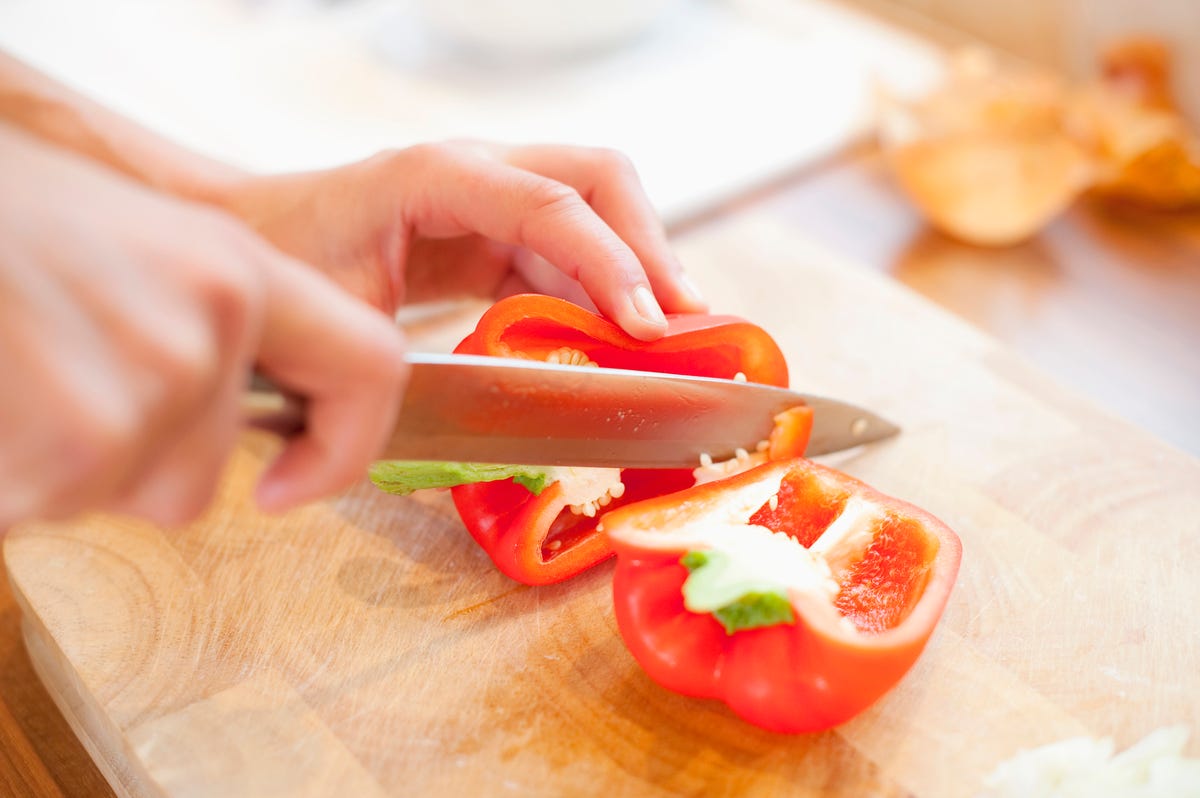
3. Bell peppers 

Like cabbage, bell peppers pack in lots of good nutrients with low levels of potassium. With them, you get vitamins B6, B9, C and K, plus fiber. And they deliver antioxidants, too. 

You can slice them and eat them with dips or roast them up and add them to dinner. 

Red bed pepper on cutting board with hands and knife slicing it

Jacobs Stock Photography/Getty Images

4. Cranberries 

Cranberries help to prevent urinary tract infections. While these usually stay in your bladder, they can travel up to your kidney, making kidney problems worse. Fortunately, regularly consuming cranberries can help you avoid this unwelcome situation. 

Plus, cranberries have antioxidants that can help to fight inflammation, and they can boost your heart and digestive health. It turns out, these tart berries aren’t just for the Thanksgiving table. 

5. Blueberries 

We’ve talked about some of the best foods for kidneys, but you can take it a step further. The question is: what foods help repair kidneys? Blueberries deliver here. 

With high levels of antioxidants and loads of vitamin C and fiber, blueberries are all-around healthy. They can also help to reduce inflammation and support bone health, reversing some of the issues that can come with CKD. 

6. Dark, leafy greens 

Still wondering what foods help repair kidneys? You can turn to dark, leafy greens like spinach or kale. They deliver so many nutrients that they can help you get key vitamins and minerals, plus immunity-boosting benefits. 

Be advised, though, that greens can come with a decent amount of potassium. If you have CKD, talk to your doctor before adding more of these to your diet. 

7. Olive oil

Rich in antioxidants and healthy fatty acids, olive oil can boost your overall wellness. A study from the University of Harvard, found that olive oil may lower cholesterol levels and the risk of cardiovascular disease, dementia and some types of cancer.

Beyond all this, it can help you add flavor to dishes without turning to salt or butter. 

To get more antioxidants, choose unrefined or cold-pressed olive oil that’s virgin or extra virgin. 

8. Garlic 

Another antioxidant-rich, inflammation-fighting food, garlic also contains a specific compound called allicin. For people with CKD, allicin — an active compound found in garlic — worked just as effectively to help protect kidney health as a prescription drug. If you’re looking for the best foods for kidneys, garlic has to make the list. 

Plus, it’s an excellent way to add flavor even when you’re skimping on salt. 

9. Onions 

From the same family as garlic, onions give you another excellent and salt-free way to add flavor (bonus points if you saute them in olive oil). Onions also deliver important nutrients like vitamins B6 and C, manganese and copper. 

They also contain quercetin, a chemical that can help your body fight cancer, and organic sulfur compounds that can reduce your risk of high blood pressure, stroke and heart disease. 

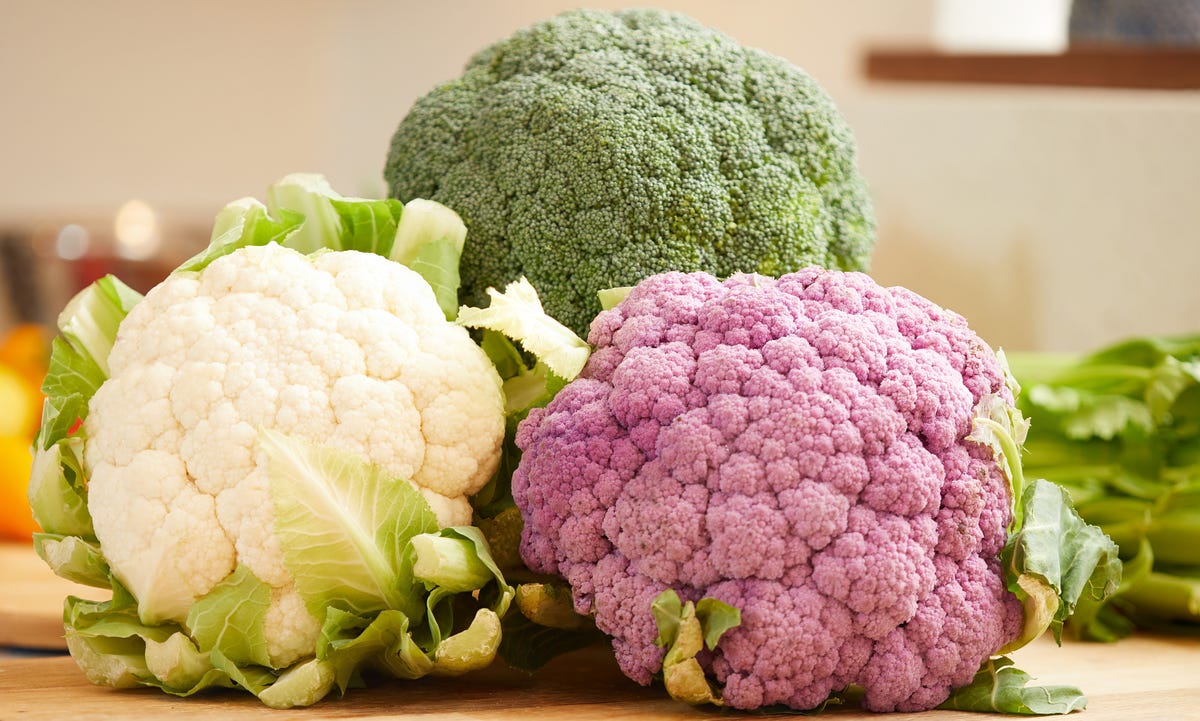
10. Cauliflower 

Cauliflower brings the crunch, paired with plenty of vitamins C, B6, B9 and K, along with fiber. It also contains compounds your body can use to neutralize certain toxins — a big help when your kidneys aren’t doing their best filtration work. 

Cauliflower does contain some potassium and phosphorus, though, so while it makes the list of foods good for kidneys, people with CKD may want to moderate their intake. 

Green, white and purple cauliflowers on cutting board

Thanasis/Getty Images

11. Egg whites 

Egg whites are specifically recommended for people with kidney problems. They give you a way to increase your protein levels — which can be especially important with later-stage CKD, and especially if you’re on dialysis. 

12. Arugula 

Arugula is packed with nutrients your body needs like magnesium, iron, calcium and vitamins A, B9, C and K. Plus, it’s antioxidant-rich and has glucosinolates, which can help your body protect itself against a range of cancer types. 

You can eat arugula raw (it’s a great salad base), but you can also sprinkle it over whatever you’re whipping up. It’s great on pizzas, in omelets and in pastas, for example. 

13. Apples 

Apples deliver the cancer-fighting quercetin and fiber that can help to keep your cholesterol and blood sugar at healthy levels. And they’ve got plenty of antioxidants. 

Better yet, they’re easy to work into your diet. Leave a bowl of apples on your counter and you’ll have a kidney-healthy grab-and-go snack whenever you need one. 

The information contained in this article is for educational and informational purposes only and is not intended as health or medical advice. Always consult a physician or other qualified health provider regarding any questions you may have about a medical condition or health objectives.