Amy Abernethy on fixing clinical trials

Clinical trials that are key to developing new treatments and medical devices have a lot of problems.

Researchers struggle to recruit participants, and the people who agree to take part are often not diverse enough. That can undermine the results if drugs or devices affect different people in different ways.

The Covid-19 pandemic, with the pressing need it created to develop treatments and vaccines, pushed clinical trial modernization efforts forward. Millions in venture funding have poured into the sector.

The 21st Century Cures Act of 2016 aimed to improve trials by reducing administrative burdens, and the FDA has made improving trials a priority over the past several years. Verily, a subsidiary of Google parent company Alphabet, hopes to be part of the solution.

Ben caught up with Amy Abernethy, the former No. 2 at the Food and Drug Administration and now president of Verily’s clinical research business. They discussed barriers to improving trials, the new Advanced Research Projects Agency for Health and more.

The interview is edited for length and clarity.

What is the state of clinical trials right now, and what needs to change?

We learned in Covid that our discovery engines were really working very, very fast. But clinical trials still are circa 1995. We also learned in Covid that we have the opportunity to shift how we do clinical trials, and that will speed up the process.

I see us moving towards clinical trials that include data that already exist in the system, like electronic health records and claims data. I see clinical trials leveraging new types of data, such as sensors in a watch to help you understand mobility. We’re going to see study designs that also leverage formalized clinical trials followed by longitudinal follow-up [tracking people over time]. There will be many new study designs.

What are the biggest obstacles to modernizing clinical trials? 

There are lots of obstacles to modernizing clinical trials, but most of them I see as surmountable.

If we’re going to leverage all available data, we’ve got to solve for the data quality mismatches that happen. Another critical thing to solve is we need to make clinical trials low-burden for participants. It shouldn’t get in the way of living. We need to make sure that clinical trials fit in the lives of people of all backgrounds so that clinical trials are representative of real populations.

Can you leverage data to better pair patients with trials? 

Recruitment is one of the hardest things in clinical trials. Oftentimes, about a third of the study budget goes to recruitment because it’s hard to find the right participant at the right moment.

You can’t just have one way of trying to solve it.

Yes, we think about the requirements of clinical trials and how to match that to the features of individual people who may be appropriate. But we also include digital marketing and campaigns to reach people and call centers and white-glove service to help that last mile of matching patients to trials.

What are the biggest obstacles to Verily’s success?

One of them is participant burden and a focus on patient centricity. I think about how digital and software and user experience works for us and other parts of our lives. We need to make sure that we bring the best of software design and fit that into workflow and life workflow in a way that’s completely patient-centric.

Another one is longitudinally. Clinical trials of the future are not going to be one week or two weeks long. We are going to follow people for long periods of time. We’re going to need to solve: How do people stay in trials for long periods of time?

President Joe Biden’s biomedical research agency, the Advanced Research Projects Agency for Health, is beginning to take shape with ambitious goals. What does it need to do to find new cures?

As they look to novel solutions in clinical trials and evidence generation, they’re going to need to think about leveraging data in new ways, including all available data, prospectively understanding and following products across time, making sure that we consent people to participate in efficient ways and that it’s fully transparent.

This is where we explore the ideas and innovators shaping health care. 

Do you think the Covid pandemic is over, or not? Send your thoughts to Carmen Paunand we may publish them in a future edition of Future Pulse.

Share any other thoughts, news, tips and feedback with Ben Leonard at [email protected], or Ruth Reader at [email protected].

We’re excited to announce that we have a new team member covering the future of health and how the pandemic has reshaped medicine, Erin Schumaker!

Erin was most recently Insider’s science editor, where her team covered space, climate, extreme weather and discoveries. Prior to that, she spent a decade as a health reporter at ABC News and HuffPost. Welcome her and send tips to [email protected] and follow her on Twitter @erinlschumaker.

Send tips securely through SecureDrop, Signal, Telegram or WhatsApp.

Today on ourPulse Checkpodcast, Katherine Ellen Foley talks with Alice Miranda Ollstein about the actions anti-abortion groups want the new GOP House majority to take.

Reducing air pollution could help combat dementia, according to a study recently published in the journal PNAS.

What’s the evidence? Researchers at the Emory University School of Public Health and Georgia Tech’s School of Earth and Atmospheric Sciences, among other institutions, explored whether there’s a link between air pollution and dementia by examining Medicare claims for 19 million people and estimates of air pollution levels in the areas where those people lived.

Sulfate and black carbon pollution showed the strongest association with dementia, followed by organic matter and ammonium. Nitrate and soil dust had relatively little linkage.

Why it matters: Nearly 6 million people in the U.S. live with dementia, which encompasses Alzheimer’s disease and other conditions that damage the brain, typically causing memory loss and the inability to think clearly.

That number is expected to rise to 14 million by 2060, according to the Alzheimer’s Association, with Hispanic and Black people most affected.

Public policy ideas: Reducing the concentration of fine particulate matter in the air, especially from traffic and sulfur-containing fossil fuel combustion, could have a significant public health impact, the researchers said.

More people are using smartphone apps they hope will improve their mental health.

But a new study in JAMA Network Open by researchers from Beth Israel Deaconess Medical Center in Boston says the apps have room for improvement.

The researchers found:

— Just 2 percent of the apps they studied were connected to electronic health records.

— Nearly half of the apps studied shared health data with third parties.

— It’s unclear whether the apps’ privacy policies are “accessible by most users.”

— Just half of the apps had an accessibility feature.

— Few apps were designed to treat serious illnesses.

The researchers also pointed to previous research showing that less than 5 percent of mental health apps have randomized clinical trials or other real-world evidence to back up the help they’re offering.

Among the apps the researchers studied, the most common aimed to treat substance abuse related to smoking or tobacco, stress and anxiety, and “nonserious mood disorders.”

“Overall, there is a lack of clinically supported mental health apps,” the researchers wrote. “The current app marketplaces lack diversity in their offerings and fail to implement potentially high-impact features.”

First-in-kind psychedelic trials treat opioid and methamphetamine use disorders

First-in-kind psychedelic trials treat opioid and methamphetamine use disorders

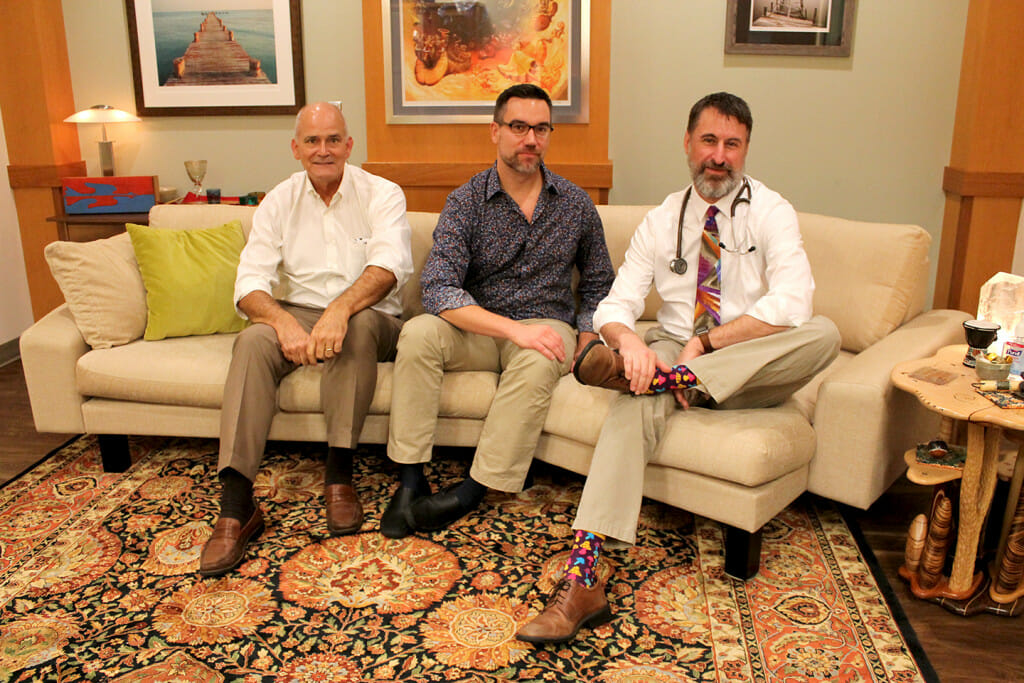
College of Pharmacy Professor Paul Hutson (remaining), with School of Medication and General public Wellbeing collaborators Assistant Professor Christopher Nicholas (center) and Professor Randall Brown (right). The scientists have launched two very first-in-variety clinical trials for treating material use diseases with the psychedelic pharmaceutical psilocybin. Sally Griffith-Oh

3 million men and women in the United States have experienced opioid use condition, and yet another 1.5 million individuals have dealt with methamphetamine misuse in just the final 12 months by yourself.

But two new groundbreaking clinical trials out of the UW Transdisciplinary Center for Research in Psychoactive Substances (TCRPS), housed inside the University of Wisconsin–Madison College of Pharmacy, aim to deal with these urgent problems with a promising psychoactive agent: psilocybin.

The drug has shown encouraging final results for clients with despair and with tobacco and alcoholic beverages misuse. Now, a UW–Madison research group is investigating the use of psilocybin to assist in reducing opioid and methamphetamine misuse.

The workforce features Paul Hutson — professor in the School’s Pharmacy Observe and Translational Research Division and founding director of the TCRPS — as nicely as Randall Brown and Christopher Nicholas, faculty in the UW University of Medication and General public Overall health.

The pair of medical trials characterize groundbreaking firsts in their use of psilocybin and their adaptable design and style.

“We by now have proof that psilocybin can do some amazing items to increase the patient’s means to get and approach vital insights about their life and ordeals,” suggests Hutson, a co-investigator on both scientific studies. “We’re thrilled to see what it can do together all those exact same traces for clients having difficulties with material abuse, numerous of whom have overlapping mental health ailments.”

Equally trials are open-label, solitary-arm trials, that means there is no manage team or placebo. The targets of the trials are to take a look at for basic safety and feasibility — the moment proven, this groundwork will let for long run research about the treatment’s performance.

Every single participant in these trials will go through a psychological screening and at minimum 6 hours of preparatory counseling. Participants will then acquire at the very least just one 25 milligram dose of psilocybin and be observed for 8 hrs by two therapists in the College of Pharmacy’s devoted medical study facility — an unparalleled space that resembles a residing room, decked out with the comforts of household in addition checking technological innovation to be certain review replicability.

The room that houses the psychedelic testing is warmly lit with soft white walls and honey wood paneling. A cream sofa with throw pillows faces a brown armchair, and the wood floor is mostly covered with an area rug.

Demo contributors will invest eight hrs of observation in the University of Pharmacy’s clinical investigation facility (pictured) less than the observation of two therapists. Sally Griffith-Oh

Another view of the psychedelic testing room shows two brown arm chairs with a round wooden end table in between. The space is decorated to resemble a living room.

On the floor, the scientific investigation facility resembles a comfortable dwelling place, but it’s nicely geared up with monitoring engineering to guarantee research replicability. Sally Griffith-Oh

Right after monitoring, members will expend the evening in the scientific investigate unit at UW Clinic, followed by an integration, or debriefing, session with a psychologist ahead of they are discharged.

“To be optimally therapeutic, psychedelic medicines have to have to be built-in with an satisfactory preparation and screening of individuals to verify that they are proper to obtain these medicines, that they are attended by trained therapists and that they then have one or much more integration periods afterward so they can have some guided interpretation of their encounter,” states Hutson. “We also understand the want to give subsequent aid of the patients to strengthen ideal behavioral and life-style variations. That can be a problem in this affected individual inhabitants.”

Four months soon after the 1st dose, individuals will have the possibility to just take a next dose of possibly 25 or 50 milligrams, based on whether they obtained an enough psychedelic knowledge the very first time.

“A element that’s remarkably unique than other psilocybin experiments is this selection of growing the dose, for each the opioid and methamphetamine experiments,” says Hutson. “That’s uncommon and will examination the thought of no matter if there is a dose response to outcomes from psychedelics.”

Members in drug trials often deal with stringent eligibility conditions, but the UW­–Madison group is rethinking historic exclusionary ailments in favor of which include people more agent of all those abusing opioids or methamphetamine.

“If we’re going to recruit a sample of individuals that is much more practical to scientific apply in conditions of how generalizable it is, we have to have to do very careful pondering about this balance of eligibility and what challenges are probably to affect security,” states Brown.

Participants’ final follow-up pay a visit to is two months following the past dose, at which time patients’ psychedelic experiences and any changes in compound use will be evaluated.

Traditionally, medical trials addressing methamphetamine use condition see numerous members fall out, compromising the final results. Medical trials are fairly arduous and time consuming, so these two studies are built to be as flexible as probable.

The crew is recruiting individuals who are actively utilizing methamphetamine — another component of the analyze that breaks new ground. Typically, members in compound misuse trials have detoxed and been stabilized. Studying active consumers will help the scientists to consider a nearer appear at how dependancy and psilocybin influence the brain by means of MRI scans. Scans will be taken ahead of and after every single psilocybin dose to acquire early facts on how networks in the mind involved with dependancy, psychological wellness and very well-currently being may alter across the program of the analyze.

“We’ll ideally be in a position to correlate these modifications in different end result actions, whether it is temper, dependancy-relevant constructs, properly-currently being or emotional actions,” claims Nicholas, the principal investigator of the methamphetamine study.

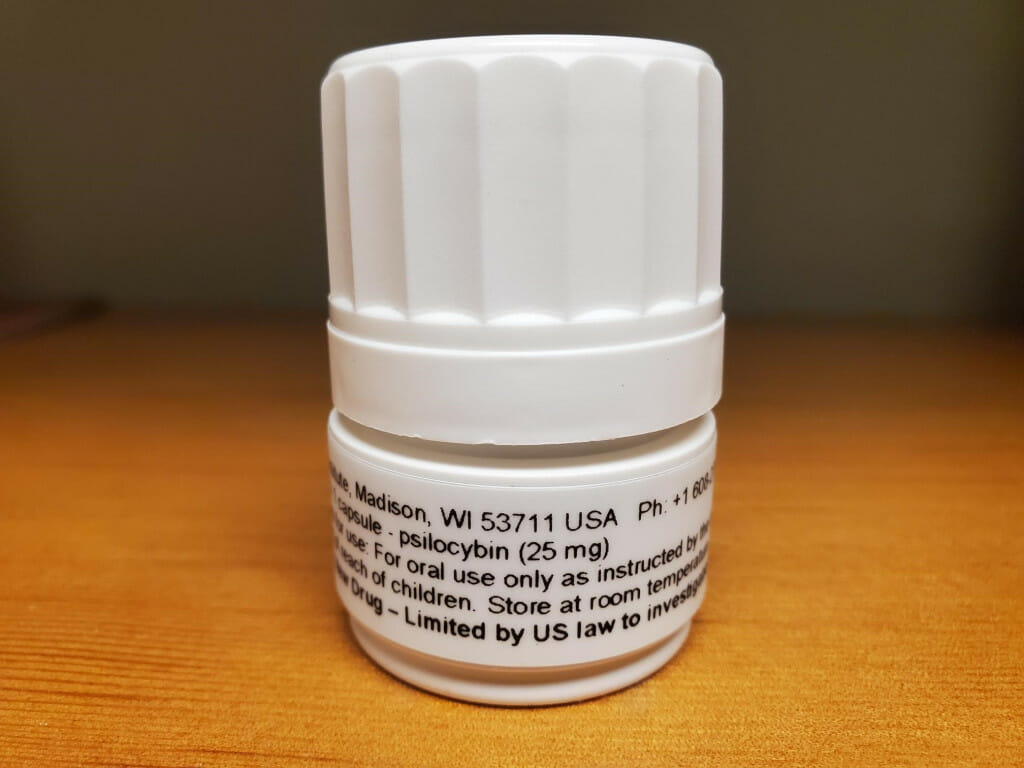
A close-up shot of a psilocybin prescription bottle sitting on a wooden table

The vial in which the psilocybin capsules are shipped to the College of Pharmacy for medical investigate. Sally Griffith-Oh

The medical trial discovering psilocybin for opioid use problem, led by Brown, also marks new territory.

“The opioid use dysfunction examine is really the initially of its form,” suggests Brown. “There has not been any examine of psilocybin in the placing of opioid use ailment.”

Researching those people who misuse opioids needs some additional concerns for protection mainly because of threats involved with overdose and mortality that goes alongside with fentanyl and very similar medicine, Brown claims. Blocking withdrawal signs or symptoms with buprenorphine can help men and women steer clear of applying significantly riskier avenue medications.

The opioid use disorder examine obtained underway in 2021, and the methamphetamine use dysfunction analyze is beginning recruitment. Whilst equally experiments are in their early phases, the study crew expects they will insert to the scientific and cultural knowing of psilocybin. 1 of the myths the staff hopes to dispel is that a therapy with psilocybin is merely investing one particular drug for yet another.

“There’s no evidence that psilocybin and LSD are addictive agents,” claims Hutson.

And even with encouraging findings throughout a selection of ailments, the medical environment — not just psychedelics them selves — is important to affected person achievement.

“They’re not a speedy correct,” says Nicholas. “They have the opportunity to be extremely practical for a range of mental health and fitness and material use issues, but it is a total package remedy that includes counseling prior to and right after to put together and make sense of these ordeals.”

Cardiovascular Research Foundation Announces Clinical Trials Center Executive Director

December 30, 2022 — The Cardiovascular Exploration Foundation (CRF) lately declared that Alexandra Popma, MD, has joined the group as Executive Director of the CRF Medical Trials Heart (CTC).  A distinguished researcher with more than 20 a long time of encounter, Popma will come to CRF from The Baim Institute for Clinical Exploration, a whole-support nonprofit educational analysis group in Boston, exactly where she served as Chief Functioning Officer, according to the CRF assertion on the appointment. As Govt Director of the CRF Medical Trials Center (CTC), she assumes accountability for the strategic route, administration, and operational areas of the CTC, doing the job intently with all CTC departments to guarantee that the division carries on to produce excellent study products and services.

Prior to joining CRF, Popma was also the Director of the Cardiovascular Imaging Core Laboratory at Harvard Clinical College Physicians at Beth Israel Deaconess Professional medical Centre in Boston. Below her management, the main laboratory made revolutionary techniques for the analyses of cardiovascular imaging to superior recognize the outcomes of people undergoing new device remedy. She acquired her clinical degree from University del Rosario in Bogotá, Colombia.

“I am quite psyched to sign up for the CRF Clinical Trials Centre,” explained Dr. Popma, adding, “CRF is an organization with an impeccable track record for innovation in cardiovascular drugs and client care…working closely with CRF’s environment-renowned medical professional management, I hope to bolster the CTC’s knowledge in clinical demo design and style and growth.”

CRF management supplied the pursuing on the addition of Popma to the CRF crew:

“We are delighted to welcome Alexandra to CRF,” claimed Juan Granada, MD, CRF’s President and Main Govt Officer. He extra, “Dr. Popma’s unique track record and encounter will strengthen CRF’s investigate group and our abilities to take a look at the scientific overall performance of emerging cardiovascular technologies. She is a widely highly regarded medical professional whose management and experience will develop our latest research abilities and providers to our sponsors.”

“Alexandra Popma is a impressive leader and is uniquely capable to presume the part as Government Director of the CTC,” stated Martin B. Leon, MD, CRF Founder and Chairman Emeritus. “She has the expertise, knowledge, decisiveness, arms-on motivation to detail, and advancement-oriented persona to aid guide the CTC to unparalleled heights in the potential. We are so lucky to have Alexandra be a part of CRF in this very important management place,” included Leon.

The Cardiovascular Investigation Foundation (CRF) is a nonprofit corporation specializing in interventional cardiology innovation, exploration, and education. CRF is committed to assisting medical doctors make improvements to survival and top quality of lifestyle for folks struggling from heart and vascular disease. The corporation notes that it has aided speed up professional medical breakthroughs and educated medical practitioners on the most recent treatments for coronary heart sickness for about 30 a long time. CRF’s centers of excellence include things like the CRF Skirball Center for Innovation, CRF Scientific Trials Heart, CRF Heart for Education, CRF Digital, TCTMD, and Structural Heart: The Journal of the Coronary heart Group.

Transcatheter Cardiovascular Therapeutics (TCT) is the yearly scientific symposium of CRF and the leading educational conference specializing in interventional cardiovascular medicine. TCT attributes main healthcare research breakthroughs and gathers primary scientists and clinicians from about the world to existing and focus on the latest proof-based mostly analysis in the subject.

For far more information: www.crf.org

For linked coverage of TCT: https://www.dicardiology.com/channel/tct

Clinical Trials for Kidney Cancer: What to Know

It is lucky that, in a the vast majority of circumstances, kidney most cancers is caught in advance of spreading to other parts of the entire body. For these clients, remedy commonly requires a nephrectomy, which is the surgical elimination of one particular or the two of the kidneys. The objective of the surgery is to reduce the cancer from metastasizing. Regretably, a lot of individuals who endure a nephrectomy for substantial-threat disease—between 20{bf0515afdcaddba073662ceb89fbb62b6b1bf123143c0e06b788e1946e8c353f} to 50{bf0515afdcaddba073662ceb89fbb62b6b1bf123143c0e06b788e1946e8c353f}, according to current estimates—will inevitably go on to develop metastatic most cancers.

Till recently, there wasn’t a lot a person’s treatment team could do in this problem to halt the cancer from coming back again. Reliably powerful “adjuvant” immune therapies—something extra to operation to reduce the cancer’s return—had not nonetheless been discovered. But in 2021, the New England Journal of Medication revealed the results of a groundbreaking medical demo. The demo involved approximately 1,000 men and women undergoing nephrectomy who were being at high possibility for cancer recurrence. About 50 percent of the people today took a placebo capsule, even though the other fifty percent took a kidney cancer drug termed pembrolizumab. Pembrolizumab is an immune checkpoint inhibitor—a kind of immunotherapy drug that stimulates the immune technique to combat cancer cells. After two several years of stick to-up, the individuals in the demo who took the immunotherapy drug were being considerably fewer possible to have had a most cancers recurrence than those having the placebo. A handful of months later, the U.S. Foodstuff and Drug Administration (Fda) approved pembrolizumab as a sort of adjuvant treatment.

“This was a gain-win circumstance,” claims Dr. Toni Choueiri, one of the leaders of that trial and director of the Lank Center for Genitourinary Oncology at the Dana-Farber Most cancers Institute in Boston. Not only did the individuals included in the demo reward from the drug, but the experiment’s conclusions also served grow the health-related community’s know-how of the disorder and its arsenal of weapons.

Clinical trials like the one Choueiri led are occurring all the time throughout the region. They are a essential step—and normally the final step—in the advancement of new medications for the cure of kidney cancer. But they don’t usually entail medications. Scientific trials are also utilized to vet the usefulness of new surgical strategies, new diagnostic techniques, and everything else that could improve the life of folks with kidney cancer. Even though some trials break new floor, many others take a look at modest modifications to the existing requirements of care—such as changing the dose of a drug up or down, or switching the way remedy facet-results are managed. In all conditions, a trial’s outcomes support shape the way each individual human being who develops kidney most cancers is handled, and so their value are not able to be overstated.

In this article, Choueiri and other kidney cancer experts element the most current developments in the trial landscape. They also explain who is suitable to participate in scientific trials, how enrollment in a trial will work, and how trials have served revolutionize the subject of kidney most cancers medicine.

Mapping the latest demo landscape

Kidney most cancers doesn’t respond nicely to typical most cancers solutions, such as standard radiation or chemotherapy. As not too long ago as 2005, there was only 1 style of medication—an immunotherapy drugs known as interleukin-2—that had Fda approval for the curative cure of kidney cancer.

Fortunately, the predicament today is a great deal distinctive. “We now have additional than a dozen Food and drug administration-accepted prescription drugs, and each single one of them has been approved and is available simply because of randomized clinical trials,” claims Dr. James Brugarolas, director of the Kidney Most cancers Plan at the University of Texas Southwestern Healthcare Centre in Dallas.

Brugarolas is associated in translational exploration, which aims to carry scientific discoveries manufactured in the lab or in animal designs into the realm of human medication. Some of his modern work has concerned a transcription component referred to as HIF-2. A transcription issue is basically a protein molecule that controls the activity of a gene, and HIF-2 regulates a gene that influences the advancement of kidney cancer tumors. For many years, there was speculation that blocking the exercise of HIF-2 could prevent or slow the development of kidney cancer. Having said that, for the reason that of HIF-2’s unusual structure, normal medications could not bind to it. HIF-2 was essentially “undruggable,” Brugarolas suggests. But quite a few yrs back, scientists at UT Southwestern recognized a cavity in an HIF-2 protein that could be exploited with specifically created prescription drugs. Brugarolas has served create those people medications, which are known as HIF-2 inhibitors, and a sequence of scientific trials has demonstrated that they are efficient for several sorts of kidney most cancers. “Very handful of cancer drugs focus on transcription elements, so this is a new paradigm,” he states.

Brugarolas notes that medical trials on HIF-2 inhibitors are ongoing, and equivalent trials are wanting at several other novel drug solutions. Like other types of cancer, kidney most cancers isn’t really a single sickness, he states. It’s extra exact to get in touch with it a family members of connected cancers that have various traits. Some of his other operate, which includes scientific trials he’s led, has examined these attributes to decide how specific individual groups will react to sure therapies.

Though some scientific trials look at groundbreaking new remedies, other people entail new cocktails of existing medicines. This sort of “combination therapy” is an in particular active place of kidney most cancers research, says Dr. Eric Jonasch, a kidney most cancers professional and professor of genitourinary medical oncology at MD Anderson Cancer Center in Houston. A handful of combos have now acquired Fda approval. “More mixtures are coming down the pipeline, and not just doublets, but triplets.”

Not all the demo operate is anxious with drug therapies. “There have been advancements in surgical methods, this kind of as robotic surgery,” Jonasch says. A specialised style of radiation remedy is a different promising place of investigate. “The capacity to emphasis radiation even though reducing collateral problems has drastically improved,” he says. Radiation could offer advancements more than broader “systemic” remedies for folks with kidney cancers that have metastasized. “It could even take care of kidney tumors by themselves with no surgery,” he adds.

The added benefits of all this trial perform are significant—and quantifiable. “Kidney cancer is a condition wherever, it’s possible 15 many years back, somebody identified with phase 4 condition experienced just one year to reside, and now the typical is nearer to five several years,” Choueiri says. The following ten years is guaranteed to provide far more considerable enhancements in the lives and longevity of people with kidney most cancers. But to get there, clinical trials will need contributors.

Study Additional: Coping With the Facet Results of Kidney-Cancer Procedure

The benefits of participating in a scientific trial

The exact hazards and rewards of scientific demo participation will differ from a person patient—and trial—to the subsequent. But broadly speaking, industry experts say there are two powerful good reasons for people with kidney most cancers to acquire element in this type of clinical study.

“Number 1, demo participation could give sufferers the possibility to access therapies that may well not if not be accessible to them,” Jonasch states. In just about all instances, the price of these therapies—which can be considerable—will be picked up by the providers or institutions operating the demo.

For these who may well be concerned about hoping an experimental therapy, Jonasch claims that each individual scientific trial must be accredited by a review board—an unaffiliated group of gurus who scrutinize the proposed demo to make certain that individuals are not exposed to undue challenges. “Because of how ethical boards perform today, you’re incredibly likely heading to get anything that is both equivalent or exceptional to regular treatment,” he states. Research in the Journal of the National Most cancers Institute has identified that individuals with cancer who participate in clinical trials are inclined to fare slightly much better than people who really do not. Primarily for individuals with innovative cancers with a very poor prognosis, demo participation can be beneficial, that research located.

It is not an exaggeration to say that having aspect in a clinical trial has intended the variation between existence and dying for some individuals. “I have a good deal of patients who were being concerned in scientific trials of tiny-molecule [drugs] or immunotherapies who, if they experienced gotten the normal of treatment back again then, would not be alive correct now,” Choueiri says.

A further gain to demo participation is the impression its conclusions have on the cancer local community. “You’re contributing to the growth of our expertise of the ailment, and you are serving to in the growth of therapies that will advantage other individuals,” Jonasch states.

One particular of the tragedies of most cancers is that, in many situations, it robs the earth of all the fantastic someone may have carried out experienced their existence not been disrupted or minimize limited by the disorder. “For quite a few people, everyday living has been drastically undermined by cancer, and they might appreciate the possibility to support other people today who have the identical condition,” Brugarolas suggests.

Study A lot more: The Newest Breakthroughs That Could Increase Kidney Most cancers Treatment method

How to just take section in a scientific demo

The initial action is to request your treatment group if you may well be a good prospect for a scientific demo, Choueiri says. Referral from a cancer expert or physician is the most popular route to demo enrollment.

Even so, you may well also have to do a very little study on your personal. “The whole field of oncology, not just kidney cancer, is growing at a charge where by it’s really hard to know every little thing which is going on,” Choueiri claims. If you’re not becoming treated at a big analysis hospital or health and fitness method, your treatment staff may possibly not be knowledgeable of trials that could benefit you.

There are a wide range of ways to discover trials on your possess. “Visit ClinicalTrials.gov,” Jonasch suggests. This is a thorough databases of medical trials having place in the U.S. and in other sections of the globe. You can lookup it dependent on your style of most cancers and your spot, and it could aid you discover trials that are worth flagging to your medical practitioners.

Jonasch also suggests connecting with kidney most cancers patient advocacy corporations, these kinds of as the Kidney Most cancers Association and the International Kidney Cancer Coalition, to check with about medical trials. “These teams can be a tremendous source for navigating these waters,” he claims.

At last, he claims there is an especially wonderful need to have for more demo participation among the men and women of shade, who are not often properly represented in this perform. He blames complications of obtain and recruitment for these shortfalls. “We’re not acquiring it appropriate but, but there are endeavours underway to assure we’re achieving out to communities that may perhaps not have obtain to medical trials,” he claims. “It’s incredibly crucial that we have consultant diversity to assure we recognize the effects in all client teams.”

Plainly, there’s a lot likely on in the demo area for kidney cancer. It is a risk-free wager that additional breakthroughs could soon adhere to.

Far more Have to-Reads From TIME


Make contact with us at letters@time.com.

Clinical trials demonstrate safety and efficacy of Ebola Zaire vaccines

Two vaccines in opposition to the Zaire pressure of Ebola virus are immunogenic and protected in both of those grownups and small children, in accordance to first outcomes from two period II clinical trials published in the New England Journal of Medicine.

Advert26.ZEBOV (Ad26) followed by MVA-BN-Filo (MVA) 56 days later on and rVSVΔG-ZEBOV-GP (rVSV) given with or without a booster dose 56 days later manufactured antibody responses as early as two weeks adhering to administration of the to start with dose of vaccine which lasted for at least one particular yr.

Both vaccine regimens had been harmless and effectively-tolerated.

These results, unveiled as element of the PREVAC examine in West Africa, may help optimize vaccine procedures to fight Ebola virus disease (EVD), and limit the significant demise rates connected with outbreaks of the Zaire pressure.

PREVAC (Partnership for Investigation on Ebola Vaccinations) is a consortium of health and fitness authorities in four nations in West Africa — Guinea, Liberia, Sierra Leone and Mali — performing together with global husband or wife corporations such as the London School of Cleanliness & Tropical Medication (LSHTM), the U.S. Nationwide Institutes of Health and fitness and the French National Institute of Well being and Health care Analysis.

Launched in 2017, the PREVAC review aims to compare the security and efficacy of a few unique experimental regimens of Ebola Zaire vaccine vs . placebo.

Over-all, 2801 volunteers at six web sites in Guinea, Liberia, Sierra Leone and Mali, had been recruited into two, randomized period II clinical trials: one involving 1400 grown ups (median age of 27 yrs, 45{bf0515afdcaddba073662ceb89fbb62b6b1bf123143c0e06b788e1946e8c353f} females) and the other involving 1401 small children aged one year or older (median age of 8 many years, 46{bf0515afdcaddba073662ceb89fbb62b6b1bf123143c0e06b788e1946e8c353f} feminine).

Participants been given possibly Ad26 (provided by Janssen) followed by MVA (provided by Bavarian Nordic) eight months afterwards, one particular dose of rVSV (equipped by Merck Sharp & Dohme) followed by placebo 8 weeks afterwards, or two doses of rVSV divided by 8 months.

Regimens of Advert26 furthermore MVA and rVSV generated antibody responses in individuals from 7 days two subsequent to start with injection. Peak response prices happened at close to month three for Advertisement26 as well as MVA in grown ups and children, at day 28 for rVSV in grownups and youngsters in the one dose group and at day 63 in older people and youngsters in the rVSV booster team. By 12 months, antibody responses had been still perfectly taken care of in all teams.

Reported facet effects, these kinds of as fever and complications, ended up gentle, short-term and very similar to prior vaccine scientific tests.

Despite the fact that the findings are promising, the authors emphasize that they were being not able to assess how these vaccines could possibly safeguard towards EVD instantly as no situations of the disorder had been recorded in the demo and the actual level of antibody response necessary to induce protecting immunity is however not known.

&#13

Extended-time period abide by up of the individuals in this trial is having put to identify if and when booster doses might be wanted. The availability of secure and efficient Ebola vaccines for both equally children and grownups is an vital stage ahead in becoming ready to avert and/or incorporate upcoming outbreaks of Ebola infection.”

&#13
&#13

Professor Brian Greenwood, Co-Creator and Professor of Scientific Tropical Drugs, LSHTM

&#13

Remember to notice that the vaccines investigated in PREVAC are against the Zaire pressure of Ebola virus and not the Sudan pressure implicated in the present-day outbreak in Uganda.

Further facts on the PREVAC Consortium can be uncovered listed here. A stick to-up analyze, PREVAC-UP, will go on to watch individuals over a 5-year interval to evaluate whether or not these original protection and efficacy final results can be maintained in the very long-expression.

Resource:

Journal reference:

Kieh, M., et al. (2022) Randomized trial of vaccines for Zaire Ebola virus disorder. New England Journal of Medication. doi.org/10.1056/NEJMoa2200072.

Large-scale review of COVID-19 clinical trials highlights multiple disparities

Large-scale review of COVID-19 clinical trials highlights multiple disparities
Credit: Unsplash/CC0 Public Domain

Women were underrepresented in COVID-19 treatment clinical trials, and some racial and ethnic groups were underrepresented in COVID-19 prevention trials, according to a new meta-analysis conducted by Fred Hutchinson Cancer Center in collaboration with researchers from Beijing and London.

The study, published Dec. 5 in JAMA Internal Medicine, identified system-wide differences in representation among several key demographic groups in COVID-19 prevention and treatment trials in the U.S.

“To our knowledge, this is the first study to comprehensively examine demographic representation across the landscape of both COVID-19 prevention and treatment trials over the first two years of this pandemic,” said Hong Xiao, Ph.D., researcher in the Public Health Sciences Division at Fred Hutch and the lead author for the study.

By the numbers

Overall, the meta-analysis examined 122 U.S.-based clinical trials for COVID-19 vaccines or treatments, involving more than 175,000 participants. The selected trials were those registered on ClinicalTrials.gov or published in PubMed from October 2019 to February 2022.

Only studies that provided data about enrolled participants by sex, race or ethnicity were analyzed in this study. Representation rates from trials were compared to expected rates in the U.S. COVID-19 population.

Takeaways

Key findings from their review included:

  • Sex, race, and ethnicity were reported in 89.3{bf0515afdcaddba073662ceb89fbb62b6b1bf123143c0e06b788e1946e8c353f}, 77.9{bf0515afdcaddba073662ceb89fbb62b6b1bf123143c0e06b788e1946e8c353f}, and 71.3{bf0515afdcaddba073662ceb89fbb62b6b1bf123143c0e06b788e1946e8c353f} of U.S.-based COVID-19 clinical trials, respectively, suggesting there was a meaningful gap for many studies in this important aspect of trial reporting.
  • Female participants were underrepresented in treatment trials (85{bf0515afdcaddba073662ceb89fbb62b6b1bf123143c0e06b788e1946e8c353f} of expected participants) but were well represented in COVID-19 prevention trials.
  • Black and Asian individuals were underrepresented in COVID-19 prevention trials (53.7{bf0515afdcaddba073662ceb89fbb62b6b1bf123143c0e06b788e1946e8c353f} and 64.4{bf0515afdcaddba073662ceb89fbb62b6b1bf123143c0e06b788e1946e8c353f} of expected participants, respectively), but were well represented in COVID-19 treatment trials.
  • Hispanic individuals were overrepresented in treatment trials (more than 200{bf0515afdcaddba073662ceb89fbb62b6b1bf123143c0e06b788e1946e8c353f} of expected participants).

Author commentary

The study authors noted that female participants historically have been underrepresented in clinical trials in general for various reasons. Pregnant women have routinely been excluded from clinical trials; as such, women of reproductive age may have had greater concerns about how developmental COVID-19 treatments would affect their health and current or future fertility.

The authors also speculated that Hispanic overrepresentation might have occurred for several reasons, including the fact that one-third of the U.S.-based COVID-19 trial sites were in California, Texas and Florida—areas with large Hispanic populations. Additionally, COVID-19 treatment trials were typically conducted among inpatient populations, which may have disproportionately affected Hispanic populations due to a lack of primary care and increased risk for COVID-associated hospitalizations.

“In many instances, our findings highlight achievements in the successful enrollment of historically underrepresented patients. However, our findings also underscore that despite efforts to eliminate sex, racial and ethnic disparities, gaps in reporting and differences in representation in U.S.-based COVID-19 trials have persisted,” said Joseph M. Unger, Ph.D., MS, Fred Hutch biostatistician and health services researcher and the study’s senior author. “Clearly, more progress needs to occur to fully close these gaps and achieve greater diversity among participants.”

Equitable access

“This vital work by Fred Hutch researchers and their collaborators highlights the ongoing disparities in who accesses and enrolls in clinical research,” added Rachel Bender Ignacio, MD, medical director of the COVID-19 Clinical Research Center at Fred Hutch. “We must remain laser-focused on ensuring that clinical-trial participation is representative of the general population, which both requires trust in and access to research, and also ensures that the products of that research are acceptable to and appropriate for everyone.”

Xiao, Unger and the rest of the study authors concluded that additional strategies are needed to ensure that all trial sponsors, whether federally supported or industry-funded, are held accountable for appropriate representation of females and racial and ethnic groups in clinical trials.

More information:
Hong Xiao et al, JAMA Internal Medicine (2022). DOI: 10.1001/jamainternmed.2022.5600

Provided by
Fred Hutchinson Cancer Center

Citation:
Large-scale review of COVID-19 clinical trials highlights multiple disparities (2022, December 5)
retrieved 5 December 2022
from https://medicalxpress.com/news/2022-12-large-scale-covid-clinical-trials-highlights.html

This document is subject to copyright. Apart from any fair dealing for the purpose of private study or research, no
part may be reproduced without the written permission. The content is provided for information purposes only.