‘Eating disorders are not lifestyle choices’: Why many people share a complicated relationship with food

Kritika Ghai was first diagnosed with binge-eating disorder when she was merely 12 years. Since birth, she had an enlarged adenoid that blocked her nose pipe, making her gain weight. Her suffering was further exacerbated by her inability to perform any kind of exercise, owing to her irregular breathing patterns. As such, as a child, she was put on various extreme diets to manage her weight. This forced her to eat large amounts of food — rapidly and secretively. “Not knowing what I was going through, eating became a way to validate my emotions,” she said, adding that the pandemic-induced anxiety only led to her eating even more food during stressful and lonely times.

Finally, she consulted a nutritionist who helped her develop healthy eating patterns. Ghai was advised to not curb her cravings and eliminate the difference between ‘good’ and ‘bad’ food in order to stop associating eating with guilt and shame. “I started seeing my body as a structure that supported me and this perspective enabled me to develop a healthy body image,” she said. Finally, after years of battling with this binge-eating disorder, she has developed a healthy relationship with food by eating regular meals, exercising and food-mapping, a technique which involves charting your daily meals in a journal to keep a track of what you’re eating.

Similarly, Pranshu Mishra developed binge-eating disorder due to polycystic ovarian syndrome (PCOS), stress, and an excessive study load in eleventh grade. “You just don’t stop at one single serving; you just mindlessly eat even if you feel discomfort,” Mishra said, calling eating disorders “a tug of war between the stomach and brain”.

While eating her favourite food induced happy hormones in her body, she would feel immense guilt immediately after consumption, leading her to starve herself for hours before repeating the same cycle, she admitted.

Ann, on the other hand, developed bulimia — a serious eating disorder marked by bingeing, followed by methods to avoid weight gain — in 2007. “I have been a chubby kid all my life because of which I faced a lot of bullying. It reached a point where people made snide remarks like ‘do people in your house get to eat food or do you eat it all?’ or ‘go for a walk.’ This massively affected me, and I stopped eating in front of people,” she told indianexpress.com. Owing to her condition, she used to excessively work out which made her lose weight drastically. “I felt very weak and light-headed all the time,” she said.

To understand more about the mental and physical aspects of such eating disorders, we reached out to experts, who emphasised that these disorders are not lifestyle choices. Dr Aparna Ramakrishnan, Psychiatry Consultant, Kokilaben Dhirubhai Ambani Hospital, Mumbai said, “Eating disorders are complex disorders associated with significant disturbances in an individual’s eating behaviours and related thoughts, emotions and attitudes which impair their physical, psychological health and psychosocial functioning. They can often be life-threatening.” She highlighted that the exact causation is elusive, but eating disorders are caused by a complex interaction of genetic, biological, behavioural, psychological and social factors.

Agreeing, Dr Meghana Pasi, Nutrition Consultant, MyThali Program, ArogyaWorld said, “Societal and peer pressure to achieve unrealistic body standards as well as people with low self-esteem and impulsive behaviour are at risk of developing eating disorders.” The expert said that nutritional counselling, psychotherapy and medications are some available treatment options.

Implementing these, Mishra sought nutritional advice from a dietitian who asked her to eat at regular intervals and practise mindful eating, a technique which makes you pay closer attention to your food and how it makes you feel, thereby helping you distinguish between physical and emotional hunger. Alongside, she also included physical activities such as swimming, yoga, and exercise in her routine which made her feel better about her body. “Earlier, people used to body shame me and call me different names, but after developing self-confidence, I am able to ignore their nasty remarks,” she said.

As for Ann, running was what changed her life for the better as it became a mechanism for her to lose weight in a healthy way, helping her achieve mental peace.

Does social media affect eating disorders?
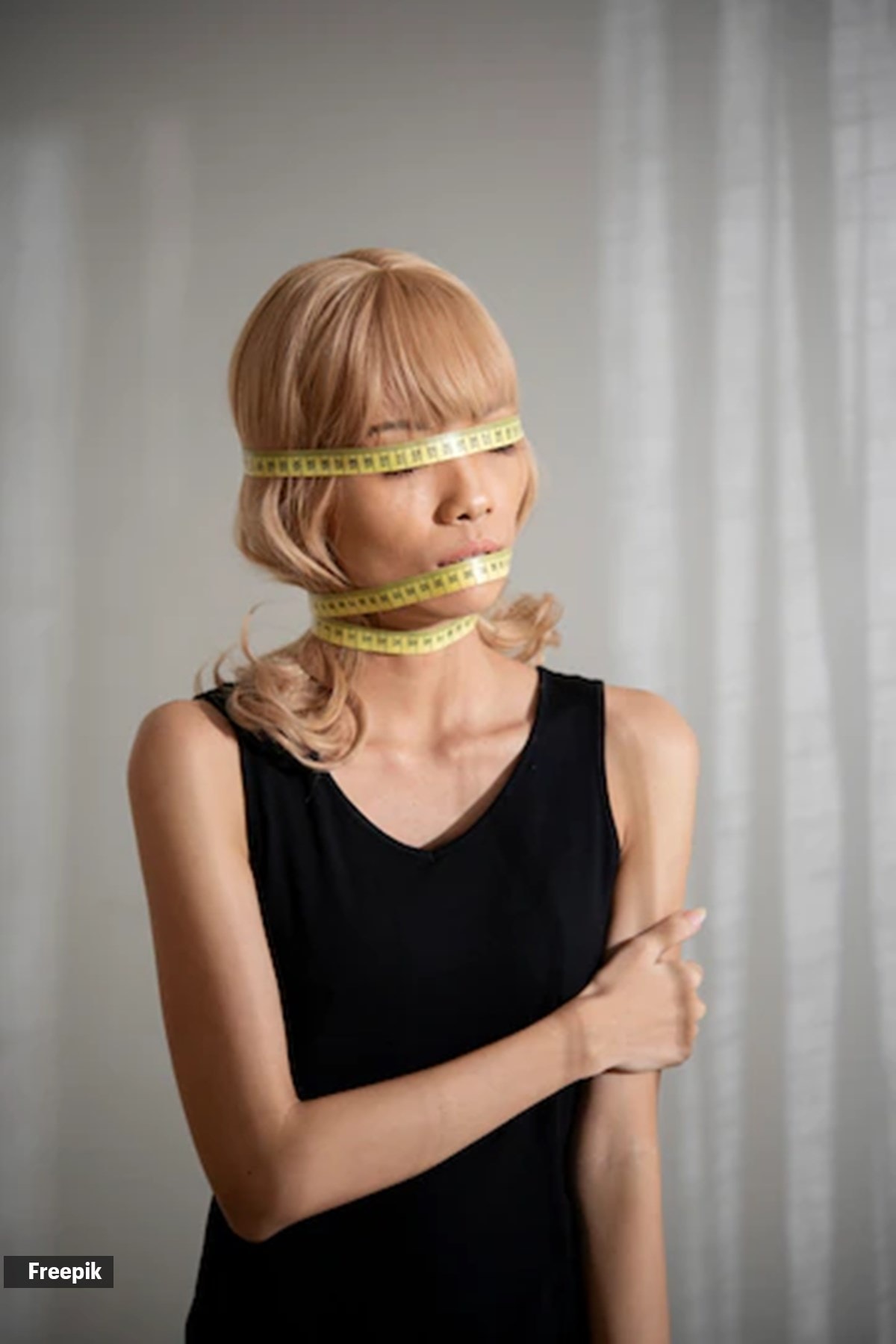
‘Eating disorders are not lifestyle choices’: Why many people share a complicated relationship with food Social media plays a huge role in our relationship with food. (Source: Freepik)

Talking about the same, Dr Ramakrishnan said, “Exposure to media like fashion magazines, television and social media mediate thin-ideal internalisation and can be associated with the development of eating disorders. More time spent or frequent use of social media means more exposure to images, messages and peer interactions which can propagate body stereotypes.” She further explained that inaccurate visual media representation like the use of filters on photos and videos can raise the risk of eating disorders.

Moreover, after analysis of videos and chat groups across social media platforms, there is a worrying presence of ‘pro-ana’ and ‘pro-mia’ content which focus on anorexia and bulimia being lifestyle choices (that are to be respected) rather than being categorised as disorders, Dr Ramakrishnan said. 

Agreeing, Dr Dinika Anand, Clinical Psychologist, BLK-Max Superspeciality Hospital said, “Social media plays a huge role in our relationship with food. On one end, social media projects the ideal body type and size, and on the other end, it glorifies and celebrates food through advertisements and food bloggers.”

The experts stressed that women are more likely to be affected by social pressure and unfavourable evaluations of their physical appearance. Moreover, gender stereotypes, especially the objectification and sexualisation of women, contribute to the emergence of eating disorders among them. Research published in The Journal of Treatment and Prevention in 2012 concurs with this claim as it showed that men are less likely to be diagnosed with an eating disorder even when they exhibit the same symptoms as women because eating disorders are considered generally ‘female’ disorders.

Here are some tips by experts that can help manage eating disorders:

*Keep meals on track
*Eat small portions of meals throughout the day
*Stop starving
*Do not restrict your urges
*Delete or limit the usage of food delivery applications
*Scroll through social media mindfully by engaging with body positivity and relatable content instead of unrealistic and curated feeds

📣 For more lifestyle news, follow us on Instagram | Twitter | Facebook and don’t miss out on the latest updates!

First-in-kind psychedelic trials treat opioid and methamphetamine use disorders

First-in-kind psychedelic trials treat opioid and methamphetamine use disorders

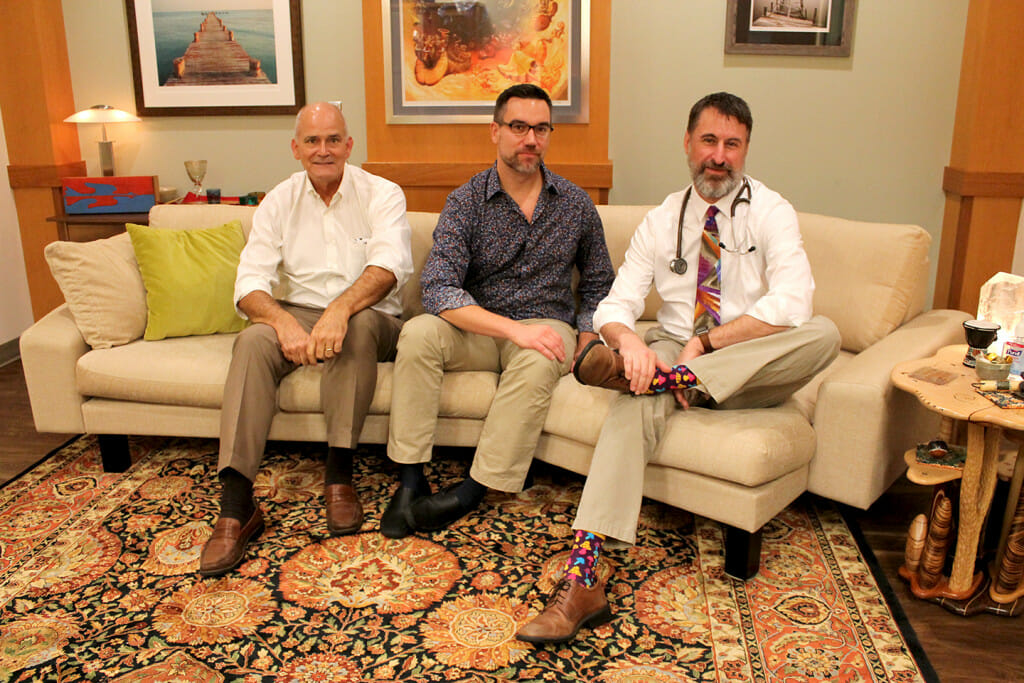
College of Pharmacy Professor Paul Hutson (remaining), with School of Medication and General public Wellbeing collaborators Assistant Professor Christopher Nicholas (center) and Professor Randall Brown (right). The scientists have launched two very first-in-variety clinical trials for treating material use diseases with the psychedelic pharmaceutical psilocybin. Sally Griffith-Oh

3 million men and women in the United States have experienced opioid use condition, and yet another 1.5 million individuals have dealt with methamphetamine misuse in just the final 12 months by yourself.

But two new groundbreaking clinical trials out of the UW Transdisciplinary Center for Research in Psychoactive Substances (TCRPS), housed inside the University of Wisconsin–Madison College of Pharmacy, aim to deal with these urgent problems with a promising psychoactive agent: psilocybin.

The drug has shown encouraging final results for clients with despair and with tobacco and alcoholic beverages misuse. Now, a UW–Madison research group is investigating the use of psilocybin to assist in reducing opioid and methamphetamine misuse.

The workforce features Paul Hutson — professor in the School’s Pharmacy Observe and Translational Research Division and founding director of the TCRPS — as nicely as Randall Brown and Christopher Nicholas, faculty in the UW University of Medication and General public Overall health.

The pair of medical trials characterize groundbreaking firsts in their use of psilocybin and their adaptable design and style.

“We by now have proof that psilocybin can do some amazing items to increase the patient’s means to get and approach vital insights about their life and ordeals,” suggests Hutson, a co-investigator on both scientific studies. “We’re thrilled to see what it can do together all those exact same traces for clients having difficulties with material abuse, numerous of whom have overlapping mental health ailments.”

Equally trials are open-label, solitary-arm trials, that means there is no manage team or placebo. The targets of the trials are to take a look at for basic safety and feasibility — the moment proven, this groundwork will let for long run research about the treatment’s performance.

Every single participant in these trials will go through a psychological screening and at minimum 6 hours of preparatory counseling. Participants will then acquire at the very least just one 25 milligram dose of psilocybin and be observed for 8 hrs by two therapists in the College of Pharmacy’s devoted medical study facility — an unparalleled space that resembles a residing room, decked out with the comforts of household in addition checking technological innovation to be certain review replicability.

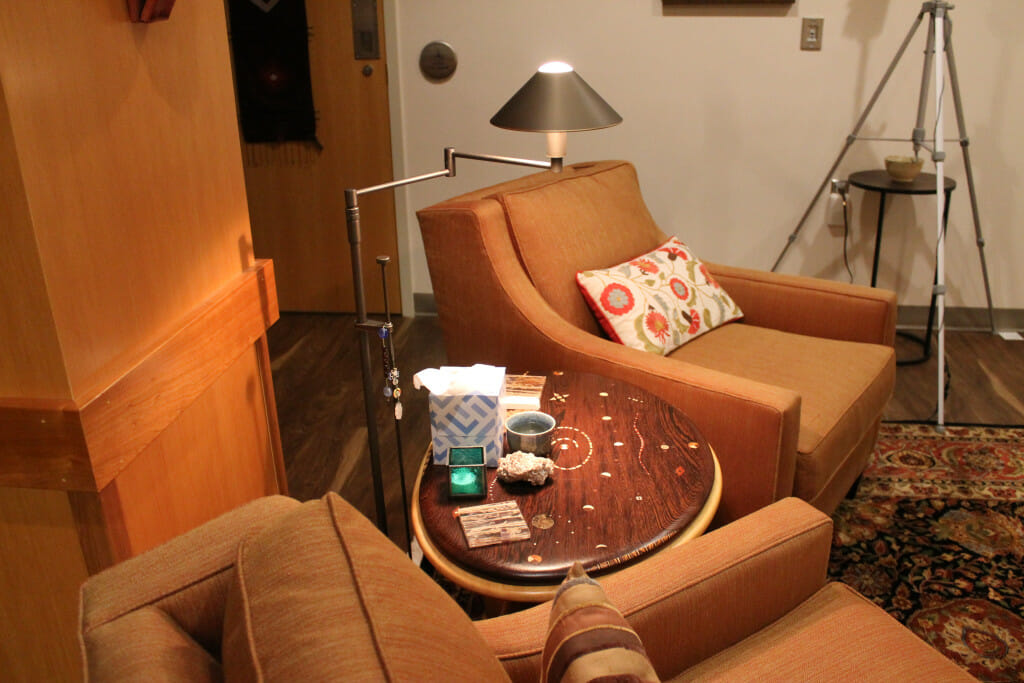
The room that houses the psychedelic testing is warmly lit with soft white walls and honey wood paneling. A cream sofa with throw pillows faces a brown armchair, and the wood floor is mostly covered with an area rug.

Demo contributors will invest eight hrs of observation in the University of Pharmacy’s clinical investigation facility (pictured) less than the observation of two therapists. Sally Griffith-Oh

Another view of the psychedelic testing room shows two brown arm chairs with a round wooden end table in between. The space is decorated to resemble a living room.

On the floor, the scientific investigation facility resembles a comfortable dwelling place, but it’s nicely geared up with monitoring engineering to guarantee research replicability. Sally Griffith-Oh

Right after monitoring, members will expend the evening in the scientific investigate unit at UW Clinic, followed by an integration, or debriefing, session with a psychologist ahead of they are discharged.

“To be optimally therapeutic, psychedelic medicines have to have to be built-in with an satisfactory preparation and screening of individuals to verify that they are proper to obtain these medicines, that they are attended by trained therapists and that they then have one or much more integration periods afterward so they can have some guided interpretation of their encounter,” states Hutson. “We also understand the want to give subsequent aid of the patients to strengthen ideal behavioral and life-style variations. That can be a problem in this affected individual inhabitants.”

Four months soon after the 1st dose, individuals will have the possibility to just take a next dose of possibly 25 or 50 milligrams, based on whether they obtained an enough psychedelic knowledge the very first time.

“A element that’s remarkably unique than other psilocybin experiments is this selection of growing the dose, for each the opioid and methamphetamine experiments,” says Hutson. “That’s uncommon and will examination the thought of no matter if there is a dose response to outcomes from psychedelics.”

Members in drug trials often deal with stringent eligibility conditions, but the UW­–Madison group is rethinking historic exclusionary ailments in favor of which include people more agent of all those abusing opioids or methamphetamine.

“If we’re going to recruit a sample of individuals that is much more practical to scientific apply in conditions of how generalizable it is, we have to have to do very careful pondering about this balance of eligibility and what challenges are probably to affect security,” states Brown.

Participants’ final follow-up pay a visit to is two months following the past dose, at which time patients’ psychedelic experiences and any changes in compound use will be evaluated.

Traditionally, medical trials addressing methamphetamine use condition see numerous members fall out, compromising the final results. Medical trials are fairly arduous and time consuming, so these two studies are built to be as flexible as probable.

The crew is recruiting individuals who are actively utilizing methamphetamine — another component of the analyze that breaks new ground. Typically, members in compound misuse trials have detoxed and been stabilized. Studying active consumers will help the scientists to consider a nearer appear at how dependancy and psilocybin influence the brain by means of MRI scans. Scans will be taken ahead of and after every single psilocybin dose to acquire early facts on how networks in the mind involved with dependancy, psychological wellness and very well-currently being may alter across the program of the analyze.

“We’ll ideally be in a position to correlate these modifications in different end result actions, whether it is temper, dependancy-relevant constructs, properly-currently being or emotional actions,” claims Nicholas, the principal investigator of the methamphetamine study.

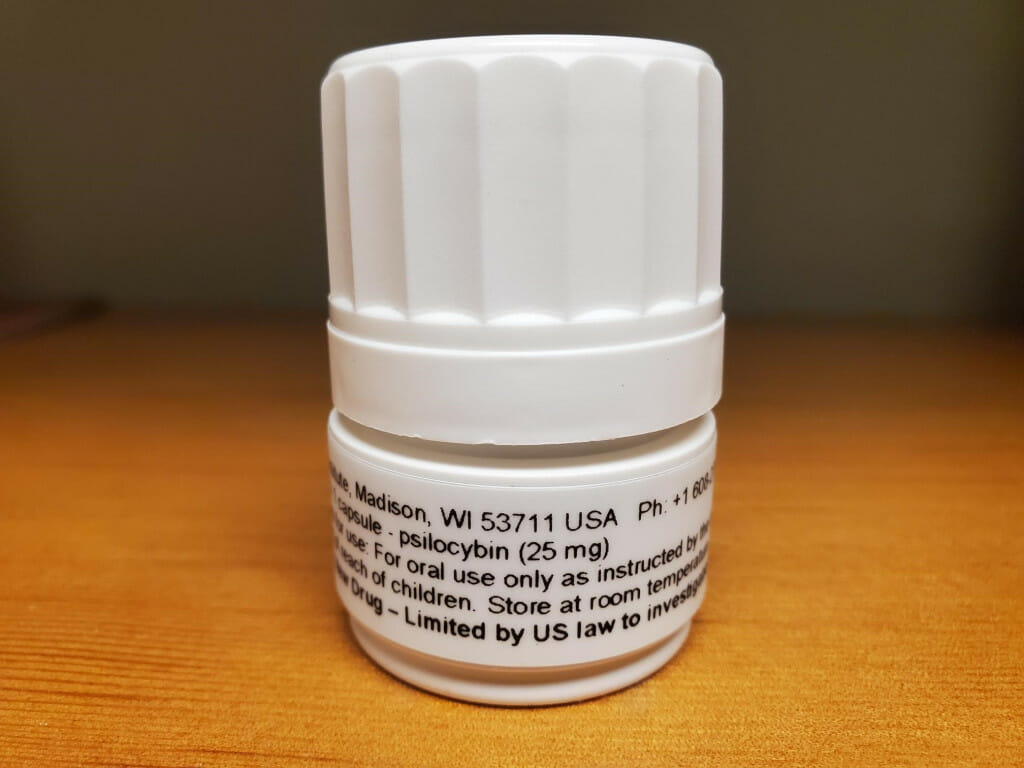
A close-up shot of a psilocybin prescription bottle sitting on a wooden table

The vial in which the psilocybin capsules are shipped to the College of Pharmacy for medical investigate. Sally Griffith-Oh

The medical trial discovering psilocybin for opioid use problem, led by Brown, also marks new territory.

“The opioid use dysfunction examine is really the initially of its form,” suggests Brown. “There has not been any examine of psilocybin in the placing of opioid use ailment.”

Researching those people who misuse opioids needs some additional concerns for protection mainly because of threats involved with overdose and mortality that goes alongside with fentanyl and very similar medicine, Brown claims. Blocking withdrawal signs or symptoms with buprenorphine can help men and women steer clear of applying significantly riskier avenue medications.

The opioid use disorder examine obtained underway in 2021, and the methamphetamine use dysfunction analyze is beginning recruitment. Whilst equally experiments are in their early phases, the study crew expects they will insert to the scientific and cultural knowing of psilocybin. 1 of the myths the staff hopes to dispel is that a therapy with psilocybin is merely investing one particular drug for yet another.

“There’s no evidence that psilocybin and LSD are addictive agents,” claims Hutson.

And even with encouraging findings throughout a selection of ailments, the medical environment — not just psychedelics them selves — is important to affected person achievement.

“They’re not a speedy correct,” says Nicholas. “They have the opportunity to be extremely practical for a range of mental health and fitness and material use issues, but it is a total package remedy that includes counseling prior to and right after to put together and make sense of these ordeals.”

Unlocking the mystery of placental disorders and recurrent stillbirths | Medical research

The Medical Study Council (MRC) Max Perutz science writing award is open to MRC-funded PhD learners, who are invited to compose about why their space of analysis issues. This year’s 10 shortlisted subjects involved immune therapies for most cancers, Scotland’s drug-related dying charge and the neglected tropical sickness schistosomiasis. The superior quality of the entries made judging tough. Finally, the panel, created up of the Observer’s Ian Tucker, Roger Highfield of the Science Museum, the journalist Samira Ahmed, the science conversation lecturer Andy Ridgeway, the MRC’s Jennifer Anderson and the award-successful youthful science writer Zara Hussan, agreed that the £1,500 prize should go to Emily Cornish, a Phd candidate at University University London’s EGA Institute for Women’s Overall health, for her essay about recurrent pregnancy reduction. “I am so thrilled to have won this inspirational prize,” says Emily.

The successful essay

emily cornish
Emily Cornish. Photograph: Joel Knight

Amy’s third baby was born in the center of the night. In the break up second in advance of he cried, every person in the functioning theatre held their breath. I was lurking in a corner holding a huge bucket of ice, waiting around to accumulate the placenta. The stakes felt very substantial. Baby William’s two sisters had been stillborn simply because of a placental condition identified as serious histiocytic intervillositis (CHI).

Most obstetricians have in no way listened to of CHI. It’s a scarce situation that affects one particular in 2,000 pregnancies and can only be diagnosed postpartum by inspecting the placenta underneath a microscope. The intention of my PhD is to uncover the induce of this illness.

In a healthier being pregnant, the mother’s blood flows as a result of the placenta in a channel identified as the intervillous area, in which it will come into direct get hold of with tree-like branching buildings acknowledged as placental villi. This is where by the important exchange of gases and vitamins among the mother and newborn takes place. In CHI, the channel will get clogged with maternal immune cells, impairing the trade approach and top to serious implications for the newborn. Only half of these pregnancies final result in a dwell start and some infants have to be sent quite a few months early by unexpected emergency caesarean to give them a opportunity of survival.

CHI ordinarily has an effect on females who are in good shape and effectively, with no health-related troubles. It arrives out of the blue and has a devastating impression on couples hoping to have a newborn. The cruellest issue about CHI is that 8 occasions out of 10, it will recur in a subsequent being pregnant.

Any miscarriage or stillbirth is emotionally shattering for the moms and dads, but for most it is unlikely to take place again. This is in which CHI is different. When Amy been given the prognosis right after her second daughter was stillborn, she skilled a “double grief”: not just for the reduction of Grace, but for the decline of the foreseeable future and the relatives she experienced envisaged. There are no tests that can reliably forecast the recurrence of CHI, so these subsequent pregnancies call for exceptionally near checking. Numerous ladies will have scans just about every fortnight, battling to suppress their dread as they return to the very same ultrasound departments wherever their preceding losses were being identified.

The cause of CHI is unknown. Nonetheless, when you look at a placenta with CHI by way of a microscope, at a cellular amount, it appears to be remarkably identical to a turned down kidney transplant. My speculation is that afflicted moms make an antibody that assaults the creating placenta. This qualified prospects to swelling of the placenta and an influx of maternal immune cells. Assistance for this idea arrives from the truth that when couples afflicted by CHI bear IVF making use of their possess eggs and sperm, and transfer the embryo into a surrogate, the being pregnant progresses usually with no signals of CHI. This confirms that the difficulty derives from the mother’s immune technique.

Originally, creating a analysis research concentrating on CHI felt challenging – how could I hope to recruit meaningful quantities of girls when the disease is so exceptional? Luckily for us, I was rescued by a woman named Claudia and a Facebook group.

Claudia shed 4 sons to CHI in the area of a few many years. As she navigated as a result of the heartache of mastering to are living with no her youngsters, she grew to become decided to increase the profile of this mysterious and brutal sickness. Because then, she has been a tireless advocate for advancing investigate into CHI and allows to run a Facebook help team for affected women. The group has far more than 700 associates and is a lifeline for parents having difficulties to come to terms with their diagnosis.

Irrespective of its rarity, and many thanks to Claudia’s team, I have managed to recruit more than 30 ladies to my research. I accumulate blood and placental samples from them to look for abnormal immune cells, proteins or antibodies that could clarify what goes incorrect in their pregnancies. I also analyse their DNA to search for versions in their genetic code that could predispose them to CHI.

By purifying antibodies from their blood and evaluating them with ladies who have had wholesome, uncomplicated pregnancies, I have demonstrated that females with CHI react abnormally to placental proteins. My following obstacle is to figure out specifically what triggers this response and unravel the molecular basis of how this leads to catastrophic placental injury. And the final target is to use this expertise to establish new, focused treatment plans that can avert recurrence.

My group is previously building development on the closing query. Claudia misplaced her young children 10 years in the past and inevitably resorted to surrogacy, as absolutely nothing her medical doctors tried using could cease the relentless recurrence of CHI. However, over the last handful of months we have become cautiously optimistic about a new treatment method protocol that requires suppressing the mother’s immune system through pregnancy. After once again, we drew on the parallels among CHI placentas and rejected transplants. This procedure is the exact same just one that folks with organ transplants just take to prevent their bodies rejecting the donated organ. It is an intense cocktail of treatment that needs standard blood checks and near vigilance for early signs of likely risky aspect-outcomes. We have only addressed a handful of ladies so far, but the bulk have gone residence with a nutritious infant.

But until finally we uncover the trigger of CHI, these solutions are, at most effective, an educated guess. I’m only nine months into my PhD and am very well informed that acquiring a wonder heal is an unrealistic desire. Having said that, my eyesight is to make concrete advances in our comprehending of CHI so that long run treatments can be tailored toward the precise defect in impacted women’s immune units.

Following Amy dropped her daughters, she felt like she’d been “kicked out of the motherhood club”. She could not bear to drop another child and while the prospect of a greatly medicated being pregnant crammed her with panic, she determined to acquire the gamble. Amy took far more than 1,000 tablets and injected herself with a blood thinner at least 200 occasions through her pregnancy with William. She travelled to the clinic on commuter trains all through the pandemic, arrived to scans on your own for the reason that of the restrictive Covid going to plan and had blood exams virtually just about every 7 days.

I am inspired and humbled by the amazing courage and perseverance of the women of all ages who embark on this regime. CHI has been neglected by obstetric scientists, but luckily the gals who have seasoned it are extremely motivated and determined to educate us. If my investigate can draw focus to the large impression of CHI and give influenced families some hope, then expending my evenings crouching in an working theatre with an ice bucket looks totally worthwhile.