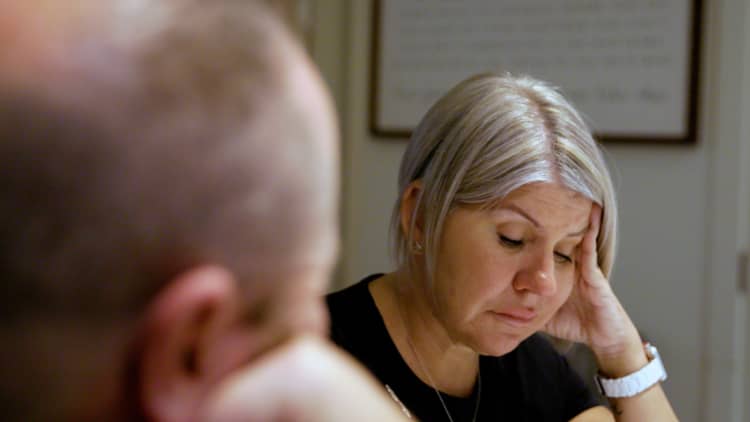
Social frailty comes with health risks for older adults


CNN
 — 

Consider three hypothetical women in their mid-70s, all living alone in identical economic circumstances with the same array of ailments: diabetes, arthritis and high blood pressure.

Ms. Green stays home most of the time and sometimes goes a week without seeing people. But she’s in frequent touch by phone with friends and relatives, and she takes a virtual class with a discussion group from a nearby college.

Ms. Smith also stays home but rarely talks to anyone. She has lost contact with friends, stopped going to church and spends most of her time watching TV.

Ms. Johnson has a wide circle of friends and a busy schedule. She walks with neighbors regularly, volunteers at a local school twice a week, goes to church and is in close touch with her children, who don’t live nearby.

Three sets of social circumstances, three levels of risk should the women experience a fall, bout of pneumonia or serious deterioration in health.

Of the women, Ms. Johnson would be most likely to get a ride to the doctor or a visit in the hospital, experts suggest. Several people may check on Ms. Green and arrange assistance while she recovers.

But Ms. Smith would be unlikely to get much help and more likely than the others to fare poorly if her health became challenged. She’s what some experts would call “socially vulnerable” or “socially frail.”

Social frailty is a corollary to physical frailty, a set of vulnerabilities (including weakness, exhaustion, unintentional weight loss, slowness and low physical activity) shown to increase the risk of falls, disability, hospitalization, poor surgical outcomes, admission to a nursing home and earlier death in older adults.

Essentially, people who are physically frail have less physiological strength and a reduced biological ability to bounce back from illness or injury.

Those who are socially frail similarly have fewer resources to draw upon but for different reasons — they don’t have close relationships, can’t rely on others for help, aren’t active in community groups or religious organizations, or live in neighborhoods that feel unsafe, among other circumstances. Also, social frailty can entail feeling a lack of control over one’s life or being devalued by others.

Many of these factors have been linked to poor health outcomes in later life, along with so-called social determinants of health — low socioeconomic status, poor nutrition, insecure housing and inaccessible transportation.

Social frailty assumes that each factor contributes to an older person’s vulnerability and that they interact with and build upon each other.

“It’s a more complete picture of older adults’ circumstances than any one factor alone,” said Dr. Melissa Andrew, a professor of geriatric medicine at Dalhousie University in Halifax, Nova Scotia, who published one of the first social vulnerability indices for older adults in 2008.

This way of thinking about older adults’ social lives, and how they influence health outcomes, is getting new attention from experts in the United States and elsewhere. In February, researchers at Massachusetts General Hospital and the University of California, San Francisco published a 10-item “social frailty index” in the Proceedings of the National Academy of Sciences journal.

Using data from 8,250 adults 65 and older who participated in the national Health and Retirement Study from 2010 to 2016, the researchers found that the index helped predict an increased risk of death during the period studied in a significant number of older adults, complementing medical tools used for this purpose.

“Our goal is to help clinicians identify older patients who are socially frail and to prompt problem-solving designed to help them cope with various challenges,” said Dr. Sachin Shah, a coauthor of the paper and a researcher at Massachusetts General Hospital.

“It adds dimensions of what a clinician should know about their patients beyond current screening instruments, which are focused on physical health,” said Dr. Linda Fried, a frailty researcher and dean of the Mailman School of Public Health at Columbia University.

Beyond the corridors of medicine, Fried said, “we need society to build solutions” to issues raised in the index — the ability of older adults to work, volunteer and engage with other people; the safety and accessibility of neighborhoods in which they live; ageism and discrimination against older adults; and more.

Meanwhile, a team of Chinese researchers recently published a comprehensive review of social frailty in adults age 60 and older, based on results from dozens of studies with about 83,900 participants in Japan, China, Korea and Europe. They determined that 24{bf0515afdcaddba073662ceb89fbb62b6b1bf123143c0e06b788e1946e8c353f} of these older adults, assessed both in hospitals and in the community, were socially frail — a higher portion than those deemed physically frail (12{bf0515afdcaddba073662ceb89fbb62b6b1bf123143c0e06b788e1946e8c353f}) or cognitively frail (9{bf0515afdcaddba073662ceb89fbb62b6b1bf123143c0e06b788e1946e8c353f}) in separate studies. Most vulnerable were people 75 and older.

What are the implications for health care? “If someone is socially vulnerable, perhaps they’ll need more help at home while they’re recovering from surgery. Or maybe they’ll need someone outside their family circle to be an advocate for them in the hospital,” said Dr. Kenneth Covinsky, a geriatrician at UC San Francisco and coauthor of the recent Proceedings of the National Academy of Sciences article.

“I can see a social frailty index being useful in identifying older adults who need extra assistance and directing them to community resources,” said Jennifer Ailshire, an associate professor of gerontology and sociology at the University of Southern California Leonard Davis School of Gerontology.

Older people who are socially vulnerable may need more assistance with health care.

Unlike other physicians, geriatricians regularly screen older adults for extra needs, albeit without using a well-vetted or consistent set of measures. “I’ll ask, ‘Who do you depend on most and how do you depend on them? Do they bring you food? Drive you places? Come by and check on you? Give you their time and attention?’ ” said Dr. William Dale, the Arthur M. Coppola family chair in supportive care medicine at City of Hope, a comprehensive cancer center in Duarte, California.

Depending on the patients’ answers, Dale will refer them to a social worker or help modify their plan of care. But he cautioned that primary care physicians and specialists don’t routinely take the time to do this.

Oak Street Health, a Chicago-based chain of 169 primary care centers for older adults in 21 states and recently purchased by CVS Health, is trying to change that in its clinics, said Dr. Ali Khan, the company’s chief medical officer of value-based care strategy.

At least three times a year, medical assistants, social workers or clinicians ask patients about loneliness and social isolation, barriers to transportation, food insecurity, financial strain, housing quality and safety, access to broadband services and utility services.

The organization combines these findings with patient-specific medical information in a “global risk assessment” that separates older people into four tiers of risk, from very high to very low. In turn, this informs the kinds of services provided to patients, the frequency of service delivery and individual wellness plans, which include social as well as medical priorities.

The central issue, Khan said, is “what is this patient’s ability to continue down a path of resilience in the face of a very complicated health care system?” and what Oak Street Health can do to enhance that.

What’s left out of an approach such as this, however, is something crucial to older adults: whether their relationships with other people are positive or negative. That isn’t typically measured, but it’s essential in considering whether their social needs are being met, said Linda Waite, the George Herbert Mead distinguished service professor of sociology at the University of Chicago and director of the National Social Life, Health, and Aging Project.

For older adults who want to think about their own social vulnerability, consider this five-item index, developed by researchers in Japan.

1. Do you go out less frequently compared with last year?

2. Do you sometimes visit your friends?

3. Do you feel you are helpful to friends or family?

4. Do you live alone?

5. Do you talk to someone every day?

Think about your answers. If you find your responses unsatisfactory, it might be time to reconsider your social circumstances and make a change.


It’s ‘Telehealth vs. No Care’: Doctors Say Congress Risks Leaving Patients Vulnerable

When the covid-19 pandemic hit, Dr. Corey Siegel was additional organized than most of his peers.

50 percent of Siegel’s sufferers — several with non-public insurance and Medicaid — were previously employing telehealth, logging on to appointments via phones or pcs. “You get to meet up with their spouse and children associates you get to satisfy their pets,” Siegel reported. “You see far more into their lives than you do when they come to you.”

Siegel’s Medicare patients weren’t coated for telehealth visits till the pandemic drove Congress and regulators to temporarily shell out for distant health care remedy just as they would in-person care.

Siegel, segment main for gastroenterology and hepatology at Dartmouth-Hitchcock Health care Middle, is certified in a few states and many of his Medicare people had been regularly driving two to 3 several hours round journey for appointments, “which isn’t a modest feat,” he said.

The $1.7 trillion paying package deal Congress passed in December bundled a two-year extension of key telehealth provisions, this kind of as protection for Medicare beneficiaries to have telephone or movie health care appointments at house. But it also signaled political reluctance to make the payment modifications long-lasting, requiring federal regulators to examine how Medicare enrollees use telehealth.

The federal extension “basically just kicked the can down the road for two many years,” stated Julia Harris, associate director for the wellness program at the D.C.-based Bipartisan Policy Middle assume tank. At problem are inquiries about the price and cost of telehealth, who will gain from its use, and whether or not audio and video appointments should continue on to be reimbursed at the identical charge as confront-to-encounter treatment.

Right before the pandemic, Medicare paid out for only slim employs of remote drugs, these as emergency stroke treatment supplied at hospitals. Medicare also included telehealth for people in rural spots but not in their households — individuals ended up expected to journey to a selected site these as a medical center or doctor’s workplace.

But the pandemic brought a “seismic modify in perception” and telehealth “became a home time period,” reported Kyle Zebley, senior vice president of community coverage at the American Telemedicine Association.

The omnibus bill’s provisions include things like: paying out for audio-only and home care permitting for a assortment of medical doctors and many others, this kind of as occupational therapists, to use telehealth delaying in-particular person specifications for mental overall health sufferers and continuing current telehealth providers for federally experienced well being clinics and rural wellbeing clinics.

Telehealth use amid Medicare beneficiaries grew from less than 1{bf0515afdcaddba073662ceb89fbb62b6b1bf123143c0e06b788e1946e8c353f} before the pandemic to a lot more than 32{bf0515afdcaddba073662ceb89fbb62b6b1bf123143c0e06b788e1946e8c353f} in April 2020. By July 2021, the use of remote appointments retreated relatively, settling at 13{bf0515afdcaddba073662ceb89fbb62b6b1bf123143c0e06b788e1946e8c353f} to 17{bf0515afdcaddba073662ceb89fbb62b6b1bf123143c0e06b788e1946e8c353f} of promises submitted, in accordance to a charge-for-provider statements examination by McKinsey & Co.

Fears around possible fraud and the charge of expanding telehealth have made politicians hesitant, reported Josh LaRosa, vice president at the Wynne Wellbeing Team, which focuses on payment and care shipping reform. The report expected in the omnibus bundle “is genuinely going to enable to give extra clarity,” LaRosa said.

In a 2021 report, the Authorities Accountability Office environment warned that employing telehealth could maximize paying out in Medicare and Medicaid, and historically the Congressional Spending plan Business office has explained telehealth could make it less complicated for persons to use far more well being treatment, which would guide to additional paying.

Advocates like Zebley counter that distant treatment doesn’t automatically price tag extra. “If the priority is preventative care and expanding obtain, that must be taken into account when looking at prices,” Zebley reported, conveying that elevated use of preventative treatment could push down a lot more high priced expending.

Siegel and his colleagues at Dartmouth see distant treatment as a resource for serving to chronically ill patients get ongoing treatment and preventing pricey unexpected emergency episodes. It “allows clients to not be burdened by their health problems,” he stated. “It’s significant that we maintain this going.”

Some of Seigel’s operate is funded by The Leona M. and Harry B. Helmsley Charitable Have faith in. (The Helmsley Charitable Believe in also contributes to KHN.)

For the earlier 9 months, Dartmouth Health’s telehealth visits plateaued at additional than 500 for every working day. That’s 10{bf0515afdcaddba073662ceb89fbb62b6b1bf123143c0e06b788e1946e8c353f} to 15{bf0515afdcaddba073662ceb89fbb62b6b1bf123143c0e06b788e1946e8c353f} of all outpatient visits, reported Katelyn Darling, director of operations for Dartmouth’s virtual care centre.

“Patients like it and they want to continue accomplishing it,” Darling claimed, including that doctors — specially psychologists — like telehealth also. If Congress decides not to carry on funding for distant at-property visits immediately after 2024, Darling explained, she fears patients will have to drive yet again for appointments that could have been managed remotely.

The similar fears are worrying leaders at Sanford Health, which offers providers across the Higher Midwest.

“We definitely have to have those provisions to become long-lasting,” said Brad Schipper, president of virtual care at Sanford, which has health system associates, hospitals, clinics, and other amenities in the Dakotas, Iowa, and Minnesota. In addition to the provisions, Sanford is carefully looking at irrespective of whether medical professionals will go on to get paid out for supplying care throughout condition traces.

For the duration of the pandemic, licensing demands in states had been frequently relaxed to help health professionals to follow in other states and many of all those necessities are established to expire at the conclude of the community wellness emergency.

Licensing prerequisites were being not tackled in the omnibus, and to ensure telehealth accessibility, states need to have to allow for medical professionals to address people across condition lines, said Dr. Jeremy Cauwels, Sanford Health’s chief medical professional. This has been notably critical in delivering mental health care, he reported digital visits now account for about 20{bf0515afdcaddba073662ceb89fbb62b6b1bf123143c0e06b788e1946e8c353f} of Sanford’s appointments.

Sanford is based mostly in Sioux Falls, South Dakota, and Cauwels recalled a person circumstance in which a affected individual lived four hrs from the closest youngster-adolescent psychiatrist and was “on the erroneous facet of the border.” Simply because of the latest licensing waivers, Cauwels stated, the patient’s wait for an appointment was minimize from several months to six times.

“We were in a position to get that child viewed with no Mom having a working day off to generate again and forth, with out a six-week hold off, and we had been able to do all the matters just about for that relatives,” Cauwels mentioned.

Psychiatrist Dr. Sara Gibson has utilised telehealth for many years in rural Apache County, Arizona. “There are some people today who have no accessibility to treatment without the need of telehealth,” she said. “That has to be additional into the equation.”

Gibson, who is also clinical director for Tiny Colorado Behavioral Health and fitness Centers in Arizona, said one critical query for policymakers as they search forward is not no matter if telehealth is superior than experience-to-encounter. It is “telehealth vs. no care,” she stated.

KHN (Kaiser Health News) is a national newsroom that creates in-depth journalism about health issues. Alongside one another with Policy Evaluation and Polling, KHN is a person of the 3 important functioning applications at KFF (Kaiser Spouse and children Basis). KFF is an endowed nonprofit organization supplying details on health difficulties to the country.

USE OUR Information

This tale can be republished for absolutely free (facts).

Is walking enough? Science finds how to undo health risks of sitting all day

A shorter stroll every 50 {bf0515afdcaddba073662ceb89fbb62b6b1bf123143c0e06b788e1946e8c353f} hour may perhaps support undo the wellbeing harms affiliated with extended periods of sitting, a new research finds.

Mounting proof has recommended that sitting for very long periods of time — an inescapable point of daily life for a lot of personnel — is harmful to health even for people who exercise frequently.

In the new research, volunteers who acquired up and walked for 5 minutes each 50 {bf0515afdcaddba073662ceb89fbb62b6b1bf123143c0e06b788e1946e8c353f} hour experienced decreased blood sugar and blood pressure than those people who sat consistently. The scientists also discovered that going for walks for a person minute each and every hour assisted with blood tension, but not blood sugar, according to the tiny study released in Drugs & Science in Athletics & Training.

“If you have a career that demands you to sit most of the working day or have a mainly sedentary life style, this is one particular approach that could enhance your wellbeing and offset the well being harms from sitting down,” reported the study’s guide author, Keith Diaz, an affiliate professor of behavioral drugs at the Columbia University Vagelos University of Physicians and Surgeons.

It really is not very clear why sitting for very long intervals uninterrupted is poor for your health, but Diaz suspects at minimum part of the explanation is that even though we’re sitting down, we are not employing our leg muscular tissues.

“Muscles provide as significant regulators of blood sugar ranges,” he claimed. “If we don’t use them, factors really don’t operate right.”

When it comes to blood force, going about allows enhance circulation, Diaz reported. “When you’re sitting down, the blood pools in the legs,” he included. “When you regularly activate the muscle groups in the legs, it assists restore common blood circulation.”

‘Activity snacks’ just about every 30 minutes

To look at the most effective way to battle the deleterious consequences of sitting, Diaz and his group tested four diverse ‘activity snacks’ in 11 volunteers: a single minute of walking following each and every 30 minutes of sitting, a single moment after 60 minutes of sitting down, 5 minutes right after 30 minutes of sitting down and 5 minutes soon after 60 minutes of sitting down . The effects of every single of all those tactics had been in contrast to individuals from sitting down with no breaks.

Is walking enough? Science finds how to undo health risks of sitting all day

Each and every of the 11 grownup volunteers came to the researchers’ lab wherever they were seated in an ergonomic chair for eight hrs, finding up only for a rest room crack and whatever action snack they’d been explained to to execute. All 11 ran via every single of the methods, a person at a time, as well as an eight-hour time period in which they only acquired up for lavatory breaks.

Blood tension and blood sugar were measured through each period of the examine. The tactic that worked finest was five minutes of walking for each individual 30 minutes of sitting. This technique also experienced a extraordinary result on how the volunteers’ bodies responded to substantial meals, developing a 58{bf0515afdcaddba073662ceb89fbb62b6b1bf123143c0e06b788e1946e8c353f} reduction in blood force spikes in contrast with sitting all day.

All going for walks techniques resulted in a sizeable reduction of 4 to 5 blood strain factors, in comparison to sitting down all eight several hours. Each sort of action snack, except for strolling 1 minute just about every hour, also led to major decreases in fatigue and improvements in temper.

The examine proves that walking helps, Diaz stated, though he suspects some supervisors may well frown on staff walking away from their desks.

“The upcoming huge important stage for us is to transform workplace lifestyle,” he stated.

How to acquire a going for walks break at perform

“You may possibly stroll to a co-worker’s desk somewhat than sending an e-mail,” he recommended. “If you are on the mobile phone, you could be strolling. You could provide a smaller bottle of water to operate so you have to preserve having up to refill it.”

Though the approaches instructed in the new research aren’t a substitution for regular training, they could enable with the harms of extended sitting, reported Dr. Ron Blankstein, a preventive cardiologist at Brigham and Women’s Hospital and a professor of medication at the Harvard Health care University.

“We do know there is a ton of harm in sitting down,” he mentioned. “When you do it without the need of breaks, your blood tension goes up and there are elevations in blood sugar.”

Do standing desks support?

Whilst standing desks have develop into a big detail, Diaz does not advise them.

“The science on standing desks is nonetheless mostly mixed,” he additional. “And there is some evidence that they could possibly be damaging to your back and the blood vessels in your legs.”

Blankstein pointed out that “remaining in 1 posture all day, whether it is standing or sitting, is not excellent.”

The conclusions of the new review make perception, explained Dr. Doris Chan, a normal and interventional cardiologist at NYU Langone Well being.

“I’m genuinely pleased this arrived out,” she claimed. “It could be the start out of anything revolutionary. We just will need larger sized scientific studies with far more people. But this is like a seed that is been planted. It opens doorways to all varieties of other analysis.”

Obtaining up and going for walks just about every half hour may well have other rewards, such as loosening joints that have stiffened just after very long intervals of sitting, Chan reported.

“I hope that companies go through about this analyze and take to coronary heart that they should be enabling their workers to consider breaks to extend and to transfer,” she mentioned. “It may even make improvements to workflow.”

Despite long Covid risks, employees consider cutting health benefits

Tech startup company Fast Chief Communications Officer Jason Alderman (R) talks with an employee on the first day working in the office on March 24, 2021 in San Francisco, California.

Justin Sullivan | Getty Images

Inflation has stretched household budgets near their limit. As a result, most people have reined in discretionary spending, even when it comes to health and wellness.

But just as many Americans want to scale back, U.S. health officials are expecting another pandemic wave this winter and new research underscores the importance of having comprehensive medical benefits.

Although the Biden administration is looking at ending the public health emergency over the next few months, many who get sick but survive Covid suffer from enduring health problems, studies show. And currently, as many as 23 million Americans have what’s considered long Covid, according to recent estimates from the U.S. Department of Health and Human Services.

With open enrollment season in full swing, this is an opportunity to reevaluate your coverage, said Gary Claxton, senior vice president at the Kaiser Family Foundation, a nonprofit organization focused on national health issues.

More from Your Health, Your Money

Here’s a look at more stories on the complexities and implications of long Covid:

Employees spend 18 minutes, on average, reviewing their benefit selections during open enrollment, according to Rob Grubka, CEO of Health Solutions for Voya Financial. “They spend more time deciding what to watch on Netflix.”

But this year brings added uncertainty, he said. “Between rising inflation, Covid and long Covid, we underestimate how different things may look in the future.”

At the same time, more than a quarter of employees have postponed wellness visits and screenings and consider cost the most important factor in determining their benefit choices for next year, according to benefits platform Elevate. 

Employees are making choices to keep themselves afloat, said Brian Cosgray, Elevate’s CEO and co-founder. Unfortunately, some are engaging in trade-offs — like foregoing needed medical care — that could cause problems down the road, he added.

To balance your overall health and the long-term risks of illness as well as financial constraints, Claxton suggests reassessing your employer-sponsored health insurance during open enrollment, which typically runs through early December.

Almost 159 million Americans rely on employer-sponsored health insurance coverage. Here are four key considerations with open enrollment season underway:

1. Health insurance plans

For starters, consider what your health coverage costs you.

Annual family premiums for employer-sponsored health insurance — the amount it costs each year for insurance, often divided into 12 monthly payments — average $22,463 this year, up slightly from a year ago, according to the Kaiser Family Foundation.

On average, workers contribute $6,106 toward the cost of a family premium, with employers pick up the rest.

However, more workers have a deductible — the amount you pay before insurance kicks in — and that deductible is also rising. In 2022, the average single deductible was $1,763, more than double what it was a decade ago.

But “don’t just look at the monthly cost of your health insurance,” Cosgray advised. “Most employers offer a few health-plan options,” he added, such as a high-deductible plan with a health savings account or a more traditional PPO.

“If you expect your health-care costs to be low for the coming year, a high deductible health-care plan paired with an HSA could be a good way to save money,” he said. “However, if you have chronic health conditions in your household and typically hit your deductible, a traditional plan paired with [a flexible spending account] may save you more over the course of a year, even if the plan’s monthly cost is higher,” Cosgray said.

“If you are going to take the high-deductible plan, you have to be able to pay the deductible if someone gets sick,” Claxton added. “The plan maybe cheaper but what if you can’t afford to use it?” Most people can’t even afford a $500 expense, he noted. “If you go to the hospital the likelihood that your out-of-pocket costs are at least $500 are pretty high.”

There are often employer-offered resources designed to help pick between benefit offerings, which can include webinars and dedicated benefits professionals. 

“Many health plans now have great tools to help you manage your choices based on what you anticipate your health-care costs to be,” advised Thomas Belmont, health and benefits practice leader at Gallagher.

“That will help guide you.”

2. Health savings accounts

Despite long Covid risks, employees consider cutting health benefits

3. Life insurance and disability insurance policies

To be sure, the pandemic brought a greater awareness of financial risks associated with a critical illness.

Employer-issued life insurance policies typically amount to a year’s worth of salary, often less, but that may be a fraction of what you need to protect young children or other dependents.

Consider what’s the right amount for you and your family, then weigh whether you want to buy additional coverage, or supplemental insurance, through your workplace group plan or shop for your own individual term life insurance policy, a move many advisors recommend, although this may also require more medical information, including a physical exam and blood work.

The same goes for disability insurance, which can help replace a portion of your paycheck if you get sick and are unable to work.

There are two basic kinds: Short-term disability generally replaces 60{bf0515afdcaddba073662ceb89fbb62b6b1bf123143c0e06b788e1946e8c353f} to 70{bf0515afdcaddba073662ceb89fbb62b6b1bf123143c0e06b788e1946e8c353f} of your base salary and premiums are often paid by your employer. Long-term disability, which ordinarily kicks in after three months to six months, typically replaces 40{bf0515afdcaddba073662ceb89fbb62b6b1bf123143c0e06b788e1946e8c353f} to 60{bf0515afdcaddba073662ceb89fbb62b6b1bf123143c0e06b788e1946e8c353f} of your income.

Other voluntary benefits offered through an employer can provide additional protection, including hospital indemnity insurance, critical illness coverage and accident insurance.

“As we go into next year and the additional financial pressures, make sure you are protecting your income,” Belmont said.

4. Wellness benefits

Forever chemicals, or PFAS, pose troubling health risks

For decades, chemicals that make life easier — your eggs slide out of the frying pan, stains don’t stick to your sofa, rain bounces off your jackets and boots — have been touted as game changers for our busy modern lives. “Better things for better living … through chemistry,” was the optimistic slogan coined by DuPont, the company that invented the widely used chemical coating Teflon.

But this better living has come at a cost that is getting new attention. These chemicals — dubbed forever chemicals for their ability to last in the environment — are proving to have a lasting impact on human health. A growing body of research links the group of chemicals broadly known as PFAS, short for per- and polyfluoroalkyl substances, to conditions from unhealthy blood lipid levels to pregnancy complications to cancer.

Alarm about the health impacts of these chemicals has sparked a recent flurry of action from U.S. public health and regulatory officials. Warning that PFAS pose a greater health risk than previously thought, the U.S. Environmental Protection Agency in June dramatically lowered its recommended safe levels of the chemicals in drinking water.

“The updated advisory levels are based on new science, including more than 400 recent studies which indicate that negative health effects may occur at extremely low levels, much lower than previously understood,” Radhika Fox, assistant administrator of the EPA’s Office of Water, said in June at the Third National PFAS Conference, held in Wilmington, N.C.

Soon after, the National Academies of Sciences, Engineering and Medicine released the first clinical guidelines quantifying blood concentration levels of PFAS that could put someone’s health at risk. The 300-page report urges clinicians to recommend regular blood tests for anyone exposed to high levels of the chemicals and to provide information on how to limit exposure, such as installing special filters known to reduce PFAS in drinking water.

In the United States alone, by one measure, the tally in medical care costs and lost productivity from PFAS exposure linked to five medical conditions adds up to at least $5.5 billion annually, researchers at New York University reported July 26 in Exposure and Health. Those conditions include low birth weight, childhood obesity, hypothyroidism in women, and kidney and testicular cancers.

“We only looked at two of the more than 9,000 chemicals in the PFAS family, so we’re just seeing the tip of an iceberg,” says Leonardo Trasande, a pediatrician and environmental health expert at NYU Langone Health.

Ubiquitous chemicals

Among those most at risk of exposure are firefighters: PFAS make protective gear more water resistant, and the chemicals are found in a widely used fire suppressant foam. But most people have some measurable level of PFAS in their bodies, according to the U.S. Centers for Disease Control and Prevention. Exposure typically comes from ingesting PFAS-contaminated drinking water or food grown in soil treated with fertilizers made from sewage contaminated with the chemicals (SN: 11/24/18, p. 18). An estimated 2,854 locations across the United States have PFAS contamination.

“People and communities have had significant exposure to these chemicals. If they can ID that they are in an area of significant exposure, they should seek testing through their usual source of care,” says Ned Calonge, an epidemiologist at the Colorado School of Public Health in Aurora who chaired the committee that wrote the National Academies report. The committee linked PFAS exposure to a slightly different list of conditions than the NYU team, finding “sufficient evidence” linking PFAS to four conditions: poor antibody response to vaccination, abnormally high cholesterol levels, decreased infant and fetal growth, and kidney cancer. Evidence was “suggestive” for breast and testicular cancers, as well as thyroid problems and ulcerative colitis, an inflammatory bowel disease.

The report calls for more research into the health effects of PFAS, noting gaps in evidence on everything from neurological issues to bone density. These chemicals have a wide range of impacts on multiple systems in the body, Calonge says. And they’re “ubiquitous in the environment.”

Newer, not safer

PFAS have been produced in the United States since the 1940s. Because they are good at repelling oil and water, holding up at high temperatures and reducing friction, the chemicals became useful for a vast array of products, including carpeting, upholstery, food packaging and even dental floss. Yet, relatively few of the 9,000 or so versions of these synthetic chemicals have been studied for their toxicologic effects.

Many PFAS are now recognized as endocrine disruptors, chemical compounds that interfere with the normal functioning of the endocrine, or hormonal, system. But PFAS have other effects that can boost cancer risk, such as weakened immunity, excessive cell growth and altered gene activity. One study found a greater than twofold increase in kidney cancer risk between people with the highest versus lowest blood levels of one common PFAS called perfluorooctanoic acid, or PFOA, researchers reported in 2021 in the Journal of the National Cancer Institute.

A newer generation of PFAS was assumed to be safer because the chemicals are less likely to accumulate in the body. But these newer compounds are structurally similar to the older ones and can be just as harmful to health as their cousins, Trasande says. These newer molecules “are increasingly being associated with diseases like gestational diabetes. We’re just starting to see the bigger problem that might be at play.”

The EPA’s new drinking water advisory aims to tackle both old and new PFAS. It targets two of the earlier and most commonly found kinds of PFAS in the environment: PFOA and perfluorooctane sulfonic acid, or PFOS. The advisory reduces the level of drinking water contamination below which adverse health effects are not expected from 70 parts per trillion to 0.004 and 0.02 ppt, respectively. Those levels are based on routine exposure to them over a lifetime.

The EPA’s health advisory also provided the first-ever recommendations on two of the newer kinds of PFAS: hexa­fluoropropylene oxide dimer acid and HFPO ammonium salt, collectively known as GenX chemicals, and perfluorobutane sulfonic acid, or PFBS. The agency set the drinking water safety threshold at 10 ppt for GenX chemicals and 2,000 ppt for PFBS. These newer chemicals have similar persistence in the environment, the agency states.

Consumers can ask their municipal water provider for data on PFAS testing in their area. Testing is becoming more common, and providers should be able to list which PFAS they test for. Private wells can be contaminated with PFAS if they are near manufacturers that produce or use the chemicals, as well as airfields where PFAS are used for firefighting, firefighting training areas and some waste disposal sites. People with private wells near one of these facilities can get their water tested. The EPA is giving grants to help underserved small and disadvantaged communities provide household water quality testing and comply with drinking water regulations.

PFAS price tag

Because there are limited available data on the health effects of the newer generation of chemicals, the NYU and National Academies reports focused on the impacts of older PFAS.

First, the NYU team examined PFAS chemicals in blood samples obtained from roughly 5,000 adults and children who participated in the U.S. National Health and Nutrition Examination Survey. Then, based on earlier studies linking PFAS to certain diseases and models that estimate medical costs and lost worker productivity for these illnesses, the team came up with its PFAS price tag.

Childhood obesity, the largest contributor to the overall economic toll of PFAS exposure, costs about $2.7 billion a year, the team estimates, followed by hypothyroidism in women at $1.26 billion. When the researchers considered other PFAS-linked diseases beyond the top five, such as endometriosis, obesity in adults and pneumonia in children, the estimated economic burden rose to as much as $63 billion annually.

Assessing risk

The National Academies report focused in part on how to curb that toll by providing testing guidelines to clinicians to detect high levels of PFAS in the body and try to reduce exposure.

The report provides the first clinical guidelines on how to assess a person’s disease risk. A person with a PFAS blood concentration of less than 2 nanograms per milliliter doesn’t have to worry. But for patients with blood concentrations between 2 and 20 ng/mL, clinicians should screen for conditions like unhealthy levels of fat in the blood, which can lead to heart problems. Such screening is especially important for people more vulnerable to the effects of PFAS exposure, like children, pregnant people and those who are immunocompromised. For anyone who tests above 20 ng/mL, the report encourages routine screenings for some cancers, thyroid problems and ulcerative colitis.

“For almost 20 years, we’ve been able to measure PFAS in people’s blood, but there was no guidance to say what [those measurements] mean,” says National Academies report coauthor Jane Hoppin, who heads the Center for Human Health and the Environment at North Carolina State University in Raleigh. “For the first time, this actually sets some ranges, some guidance for what could be levels of concern, and what kinds of health follow-up might be appropriate.”

She hopes that the recommendations will increase testing availability and make both doctors and patients more aware of these chemicals and their health risks. The report also encourages doctors to work with their patients to figure out where they are being exposed to PFAS and how to mitigate those risks, by cutting down on PFAS-containing products and filtering water.

Activated carbon filters, found in some countertop or pitcher filters, don’t remove PFAS as completely as reverse osmosis filters, researchers at Duke University and North Carolina State reported in 2020. The National Academies report offers a link to NSF, a testing organization that offers technical details on which filters actually filter out PFAS.

Efforts like reducing PFAS in drinking water could help. While EPA’s health advisories are recommendations and not enforceable, Trasande is pleased that the agency acted quickly, particularly on newer chemicals like GenX. But he argues that in light of what we already know and are continuing to learn about the disease burden caused by these chemicals, PFAS should undergo more testing before they are approved. Better yet, they should be regulated by class instead of taking what he calls a whack-a-mole approach.

“Our environmental policy still takes a wait-and-see approach that we should wait 20 to 30 years, which is the time that people take to develop diseases due to chemical exposures,” he says.