Lennox-Gastaut Syndrome (LGS) Research Roundtable at AES Annual Meeting Focused on Advancing Clinical Research to Find Better Treatments and Cures

SAN DIEGO, Nov. 28, 2022 /PRNewswire/ — On December 2, the Lennox-Gastaut Syndrome (LGS) Foundation will host its LGS Research Roundtable at the American Epilepsy Society’s (AES) annual meeting in Nashville, TN. The event will bring together over a hundred researchers, clinicians, and family members to discuss the state of medical research in LGS. Click here to learn more about how YOU can attend the Roundtable and join the discussion.

Lennox-Gastaut Syndrome (LGS) Research Roundtable at AES Annual Meeting Focused on Advancing Clinical Research to Find Better Treatments and Cures

LGS Foundation Logo (PRNewsfoto/LGS Foundation)

“How we treat LGS has remained roughly the same for the last 30 years,” said Dr. Tracy Dixon-Salazar, the LGS Foundation’s Executive Director and mother of an adult living with LGS. “We try treatment after treatment, alone and in combination, and hope one of them might work. Families often refer to this as the “dartboard approach” to treating LGS. Patients with this rare disease are in desperate need of better treatment approaches.”

The LGS Research Roundtable is an initiative of the LGS Foundation that brings together LGS patient families and research experts to discuss the barriers to better research and care and to facilitate the development and implementation of solutions. Discussions from the Roundtable guide the LGS Foundation’s Cure LGS 365 Research Grants Program. Since 2013, the LGS Foundation has awarded more than a million dollars in research funding to scientists around the world.

“We are excited to gather the brightest minds tackling LGS across the globe,” said Dixon-Salazar. “And, we believe that now more than ever, that patient families and doctors working together can help find better treatment options for those with LGS.”

Talks at the LGS Research Roundtable will set the stage for a larger LGS Meeting of the Minds Conference on the same topic that will take place in September 2023.

The LGS Foundation is a nonprofit organization dedicated to improving the lives of individuals impacted by LGS through advancing research, awareness, education, and family support.

To learn more about LGS or to support the LGS Foundation’s efforts, visit www.lgsfoundation.org.

Cision

Cision

View original content to download multimedia:https://www.prnewswire.com/news-releases/lennox-gastaut-syndrome-lgs-research-roundtable-at-aes-annual-meeting-focused-on-advancing-clinical-research-to-find-better-treatments-and-cures-301654043.html

SOURCE LGS Foundation

Tackle systemic racism to diversify health care and clinical research

Tackle systemic racism to diversify health care and clinical research

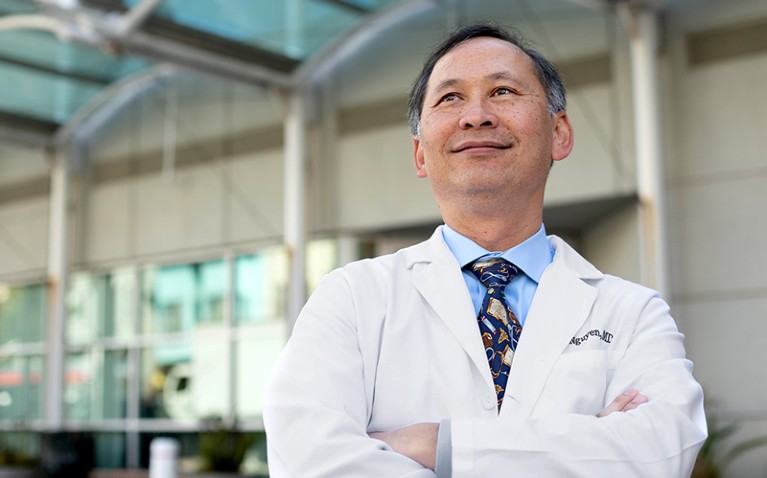
Health-equity researcher Tung Nguyen guides several anti-racism efforts at the University of California, San Francisco.Credit: Susan Merrell

Decolonizing science

Science is steeped in injustice and exploitation. Scientific insights from marginalized people have been erased, natural-history specimens have been taken without consent and genetics data have been manipulated to back eugenics movements. Without acknowledgement and redress of this legacy, many people from minority ethnic groups have little trust in science and certainly don’t feel welcome in academia — an ongoing barrier to the levels of diversity that many universities claim to pursue.

In the next of a short series of articles about decolonizing the biosciences, Tung Nguyen, who was appointed associate vice-chancellor for research inclusion, diversity, equity and anti-racism at University of California, San Francisco (UCSF) in September, offers advice for reforms in health research. Nguyen, a health-equity researcher who is also the director of the UCSF Asian American Research Center on Health, says anti-racism efforts start with engaging underserved communities and nurturing diverse trainees in health research and health care.

I studied medicine because I didn’t see health care and health research addressing the needs of the Asian community in the San Francisco Bay area — the part of California where I moved, as an 11-year-old non-English speaker, when my family emigrated from Vietnam. For the past 20 years, I’ve been doing health-equity research, focusing on cancer interventions.

In this country, the health-research world has many aspects that are anti-Asian. A lack of data on one racial identity is always a sign of racism because it essentially means that a portion of the population is invisible. For example, we know that about one-third to one-half of Asian Americans don’t speak English well enough to take a medical survey conducted in English. The ‘Asian’ responses to such a survey will include only English speakers; in addition, all of the ‘Asian’ respondents will be lumped together, despite the diversity of Asian cultures.

Lack of urgency

Although some institutions are trying to hire diverse candidates, there is a fundamental lack of urgency when it comes to addressing systemic racism. The issues I’ve mentioned are all structural problems. I think that there can be no systematic change without engaging everyone involved — from medical-department heads to members of the communities that institutions purportedly serve.

In 2020, my colleagues and I created an anti-racism task force at the University of California, San Francisco. Using a community-engagement approach, we convened a committee of 25 members, including institutional and community leaders, staff, faculty members and trainees. Over the course of a year, we solicited information throughout the university and produced a report with 160 recommendations — ranging from funding for research that investigates the structures that sustain racism, to conducting more community engagement in scholarship.

Most institutions are too top-down. I’ve learnt that the academic hierarchy is a basic challenge to doing equity work on campuses. White men tend to be over-represented among faculty members, whereas non-faculty staff members tend to include more women and under-represented minority groups. We make sure the staff and faculty members meet and are mindful of — and acknowledge — the power dynamics that exist. Otherwise, our efforts wouldn’t be inclusive.

To better diversify recruitment of study participants, in 2021, my colleagues and I created the Research Action Group for Equity, or RAGE — an acronym we deliberately chose because we are angry about the lack of minority-health data and participation, and we want to make things uncomfortable for the powers that be. RAGE works with the UCSF Clinical & Translational Science Institute to make sure that recruitment is an inclusive process. We engage community leaders who are bicultural or bilingual to provide translation support or address cultural concerns.

If my colleagues and I can diversify the health-care workforce at UCSF, we can definitely improve the economic status of diverse communities as well as the reach of biomedical research into those communities. We have a US National Institutes of Health BUILD award to address the lack of diversity among biomedical researchers. If you want minority students and trainees, you have got to go to where they are. In our case, we recruited trainees from San Francisco State University, a Hispanic-focused, minority-serving institution. We trained these junior research and health professionals to become, for example, clinical research coordinators to manage studies and conduct experiments.

This expands the job opportunities available to these trainees and diversifies participation in research. But when people talk about efforts to increase the numbers of early-career scholars from diverse backgrounds, I hate the term ‘pipeline programme’. ‘Pipeline’ implies that you have to fit into a pipeline to begin with and you come out the other end, where the system wants you to come out. Furthermore, if the pipeline is producing a steady stream of talented PhDs from under-represented communities but the system does not increase the number of senior roles these people hold, it’s not a pipeline problem. Instead, it’s a dam problem — pun intended; there are structural barriers to workplace diversity that need to be removed.

UCSF has its own continuing challenges in terms of anti-racism efforts, but the institution has been transparent. It has a dashboard that highlights racial, ethnic and gender diversity among faculty members, staff and trainees. The situation fluctuates, and the numbers have never been great for typically under-represented groups in medicine, such as Black and Hispanic people. But it’s important that the problem be visible so that we can actually improve.

It’s frustrating that successful diversity, equity and inclusivity programmes often don’t get sustained. Under-represented groups are used to people coming in with money and then leaving. I have helped to develop the AEIOU principles, which will be the foundation of my work as the newly appointed associate vice-chancellor for research inclusion, diversity, equity and anti-racism. A is for accountability and anti-racism, E is for engagement, I is for individual-centred institutional change, O is opportunity, and U is unity. These principles are key to making progress against racism. The system has to change for under-represented groups to be successful, and that requires an increase in opportunities. Oppressive structures maintain oppression by making people perceive a zero-sum game — if someone wins, someone else has to lose. To increase diversity, equity and justice, we need to quit pitting one group against another.

This interview has been edited for length and clarity.

What is ethical animal research? A scientist and veterinarian explain

A proposed measure in Switzerland would have made that country the first to ban medical and scientific experimentation on animals. It failed to pass in February 2022, with only 21{bf0515afdcaddba073662ceb89fbb62b6b1bf123143c0e06b788e1946e8c353f} of voters in favor. Yet globally, including in the United States, there is concern about whether animal research is ethical.

We are scientists who support ethical animal research that reduces suffering of humans and animals alike by helping researchers discover the causes of disease and how to treat it. One of us is a neuroscientist who studies behavioral treatments and medications for people with post-traumatic stress disorder – treatments made possible by research with dogs and rodents. The other is a veterinarian who cares for laboratory animals in research studies and trains researchers on how to interact with their subjects.

We both place high importance on ensuring that animal research is conducted ethically and humanely. But what counts as “ethical” animal research in the first place?

The 4 R’s of animal research

There is no single standard definition of ethical animal research. However, it broadly means the humane care of research animals – from their acquisition and housing to the study experience itself.

Federal research agencies follow guiding principles in evaluating the use and care of animals in research. One is that the research must increase knowledge and, either directly or indirectly, have the potential to benefit the health and welfare of humans and other animals. Another is that only the minimum number of animals required to obtain valid results should be included. Researchers must use procedures that minimize pain and distress and maximize the animals’ welfare. They are also asked to consider whether they could use nonanimal alternatives instead, such as mathematical models or computer simulations.

These principles are summarized by the “3 R’s” of animal research: reduction, refinement and replacement. The 3 R’s encourage scientists to develop new techniques that allow them to replace animals with appropriate alternatives.

What is ethical animal research? A scientist and veterinarian explain
L’Oreal Brazil CEO Marcelo Zimet looks at microscope samples at the Episkin laboratory, which has developed alternative methods to animal testing.
Mauro Pimentel/AFP via Getty Images

Since these guidelines were first disseminated in the early 1960s, new tools have helped to significantly decrease animal research. In fact, since 1985, the number of animals in research has been reduced by half.

A fourth “R” was formalized in the late 1990s: rehabilitation, referring to care for animals after their role in research is complete.

These guidelines are designed to ensure that researchers and regulators consider the costs and benefits of using animals in research, focused on the good it could provide for many more animals and humans. These guidelines also ensure protection of a group – animals – that cannot consent to its own participation in research. There are a number of human groups that cannot consent to research, either, such as infants and young children, but for whom regulated research is still permitted, so that they can gain the potential benefits from discoveries.

Enforcing ethics

Specific guidelines for ethical animal research are typically established by national governments. Independent organizations also provide research standards.

In the U.S., the Animal Welfare Act protects all warmblooded animals except rats, mice and birds bred for research. Rats, mice and birds are protected – along with fish, reptiles and all other vertebrates – by the Public Health Service Policy.

Each institution that conducts animal research has an entity called the Institutional Animal Care and Use Committee, or IACUC. The IACUC is composed of veterinarians, scientists, nonscientists and members of the public. Before researchers are allowed to start their studies, the IACUC reviews their research protocols to ensure they follow national standards. The IACUC also oversees studies after approval to continually enforce ethical research practices and animal care. It, along with the U.S. Department of Agriculture, accreditation agencies and funding entities, may conduct unannounced inspections.

Laboratories that violate standards may be fined, forced to stop their studies, excluded from research funding, ordered to cease and desist, and have their licenses suspended or revoked. Allegations of misconduct are also investigated by the National Institutes of Health’s Office of Laboratory Animal Welfare.

Above and beyond the basic national standards for humane treatment, research institutions across 47 countries, including the U.S., may seek voluntary accreditation by a nonprofit called the Association for Assessment and Accreditation of Laboratory Animal Care, or AAALAC International. AAALAC accreditation recognizes the maintenance of high standards of animal care and use. It can also help recruit scientists to accredited institutes, promote scientific validity and demonstrate accountability.

Principles in practice

So what impact do these guidelines actually have on research and animals?

First, they have made sure that scientists create protocols that describe the purpose of their research and why animals are necessary to answer a meaningful question that could benefit health or medical care. While computer models and cell cultures can play an important role in some research, others studies, like those on Alzheimer’s disease, need animal models to better capture the complexities of living organisms. The protocol must outline how animals will be housed and cared for, and who will care for and work with the animals, to ensure that they are trained to treat animals humanely.

During continual study oversight, inspectors look for whether animals are provided with housing specifically designed for their species’ behavioral and social needs. For example, mice are given nesting materials to create a comfortable environment for living and raising pups. When animals don’t have environmental stimulation, it can alter their brain function – harming not only the animal, but also the science.

Monitoring agencies also consider animals’ distress. If something is known to be painful in humans, it is assumed to be painful in animals as well. Sedation, painkillers or anesthesia must be provided when animals experience more than momentary or slight pain.

For some research that requires assessing organs and tissues, such as the study of heart disease, animals must be euthanized. Veterinary professionals perform or oversee the euthanasia process. Methods must be in compliance with guidelines from the American Veterinary Medical Association, which requires rapid and painless techniques in distress-free conditions.

Fortunately, following their time in research, some animals can be adopted into loving homes, and others may be retired to havens and sanctuaries equipped with veterinary care, nutrition and enrichment.

Continuing the conversation

Animal research benefits both humans and animals. Numerous medical advances exist because they were initially studied in animals – from treatments for cancer and neurodegenerative disease to new techniques for surgery, organ transplants and noninvasive imaging and diagnostics.

These advances also benefit zoo animals, wildlife and endangered species. Animal research has allowed for the eradication of certain diseases in cattle, for example, leading not only to reduced farm cattle deaths and human famine, but also to improved health for wild cattle. Health care advances for pets – including cancer treatments, effective vaccines, nutritional prescription diets and flea and tick treatments – are also available thanks to animal research.

People who work with animals in research have attempted to increase public awareness of research standards and the positive effects animal research has had on daily life. However, some have faced harassment and violence from anti-animal research activists. Some of our own colleagues have received death threats.

Those who work in animal research share a deep appreciation for the creatures who make this work possible. For future strides in biomedical care to be possible, we believe that research using animals must be protected, and that animal health and safety must always remain the top priority.

Editor’s note: One photo depicting a species that is highly restricted for use in biomedical research has been removed from the article.

Tom Meade obituary | Medical research

Tom Meade, who has died aged 86, pioneered the field of cardiovascular epidemiology. His research, spanning five decades, gave medical science a vastly improved understanding of the biology of blood and the circulatory system, opening the door for targeted new heart disease treatments.

By the early 1960s, heart disease was the leading cause of death in many countries, with the culprit widely believed to be atheroma (fatty deposits inside the arteries), brought on by high cholesterol and a fatty diet. But in 1965, Meade, a researcher at the Medical Research Council (MRC), read something he described as “a real eye-opener”. His boss, the pre-eminent epidemiologist Jerry Morris, wrote that while the numbers of men dying aged 50-69 had surged since 1908, analysis of autopsy reports showed that the numbers dying with coronary atheroma had decreased. Meade wondered if other factors were in play, and what role blood might have in heart disease. He wanted to investigate.

In 1970, he became director of the newly created MRC Epidemiology and Medical Care Unit at Northwick Park in Harrow, north-west London. He set up the Northwick Park heart trial in 1972 with 3,900 volunteers, who were mostly workers at the nearby Heinz factory. Among other things, Meade and his team wanted to study fibrinogen and Factor VII (proteins in the blood essential for clot formation, but too much of which can make blood “sticky” and liable to clot inappropriately).

The trial found fibrinogen levels are linked to heart disease, and one of the reasons smoking is a risk factor for heart disease is that it raises fibrinogen levels. The findings pointed to the need for fibrinogen-lowering drugs. They also found high levels of Factor VII increased heart disease risk, which posed the question – what might lower it? In 1983 Meade’s thrombosis prevention trial began, which took 5,500 high-risk individuals and gave them aspirin, warfarin, a combination of the two, or a placebo. Of the four groups, those on the combination fared best, with heart attacks reduced by more than a third.

Recruits for the thrombosis prevention trial came through the MRC GP Research Framework, a network of GP practices around Britain. Meade directed many trials through this network, not just on blood circulation, but also on blood pressure, incontinence, back pain, stroke rehabilitation and other topics. Chiropractic was considered a quack science, but Meade’s trial in 1990 comparing it with standard treatment for low back pain found it to be more effective.

It was compulsory to retire from the MRC at 65, so in 2001 Meade stepped down as director. He was glad, as the administrative demands had become steadily more onerous, but was keen to retain an academic foothold somewhere to continue his research. After a five-week campervan holiday in Australia, he became an emeritus professor of epidemiology at the London School of Hygiene and Tropical Medicine, with, to his wry amusement, pay of £10 a month to formalise the agreement.

As well as his own work, he also chaired the LSHTM research ethics committee and was the co-author of an overview of trials into aspirin to prevent heart disease, which also found it valuable in preventing bowel and other cancers.

Meade stayed at the LSHTM for more than 15 years and was able to do a 30-year follow-up of his Northwick Park heart trial. One finding was that having a respiratory infection made people more susceptible to having a heart attack. Knowing there is this link has prompted officials to encourage uptake of flu vaccinations in vulnerable groups.

Born in Oxford, Tom was the son of Margaret (nee Wilson), a committed Quaker, and James Meade, a distinguished economist and Nobel laureate. Tom was the eldest of four children, with three sisters, Charlotte, Bridget and Carol. In 1940 the second world war was still in its “phoney” stage, so the family went on holiday in France (from Geneva, where James was serving with the League of Nations), but rapidly turned for Britain with the Germans advancing behind them. After days waiting on the French coast they were rescued by a tramp steamer and taken to Barry in Wales.

His mother then took the children to the US for safety, and his father pressed a copy of Rudyard Kipling’s Jungle Book into Tom’s hands, with an inscription. It was a memento should they never meet again. Meade’s mother did not like being away from the UK, however, and they returned in 1942, a perilous crossing, with masts of sunken ships just visible as they sailed into home waters.

In 1949, Meade won a scholarship to Westminster school in London, where in 1953 he took part in an ancient rite at Queen Elizabeth’s coronation. (The scholars were the first to greet the new monarch with Vivat Regina.) In 1950 he had his appendix out and, although he excelled at classics, seeing a hospital at close quarters inspired him to read medicine. He studied at Christ Church, Oxford, and Bart’s hospital in London, where he qualified in 1962.

Meade originally wanted to join the prison medical service and to that end worked for 18 months as a junior doctor at Littlemore hospital, a mental health facility in Oxford. However, he had become increasingly interested in public health, and decided to work for Morris at the Medical Research Council.

In 1962 Meade married Liz Perks, a social worker, and the couple went on to have three children: Richard, Helen and Rebecca. They went to India in 1969 for a year (with their London house let to the king of Tonga) so that Meade could study the epidemiology of leprosy at the Schieffelin research laboratory in Karigiri.

The family lived in Highgate, north London, and when in 1979 Haringey council shut the borough’s schools for several weeks in response to a caretakers’ strike, Meade sued the council in a case that reached the court of appeal, by which time the schools were open again. Modest yet principled, Meade was happy to accept appropriate accolades: in 1996 he was elected a fellow of the Royal Society and in 1997 received the Balzan prize for epidemiology. In 1994 he was appointed CBE, although he was always uneasy about the honours system. When he heard that the head of the MRC, Colin Blakemore, was not getting a knighthood, as was customary with that position, he handed back his CBE in protest; Blakemore’s knighthood came in 2014. When several of the congregation stayed away from his granddaughter’s confirmation in disapproval of female priests, Meade was so incensed that he left the Church of England and became a Quaker.

In middle age, Meade took up running, completing a marathon, and for decades had an allotment in Highgate. He and Liz moved into a flat in Highgate in 2016 and his health gradually began to falter.

He is survived by Liz and their children and eight grandchildren, and by his sisters.

Thomas Wilson Meade, epidemiologist, born 21 January 1936; died 24 October 2022

‘Game-changing’ gender quotas introduced by Australian research agency

‘Game-changing’ gender quotas introduced by Australian research agency

Last year, female researchers received Aus$95 million less than male researchers in investigator grants from the Australian National Health and Medical Research Council.Credit: Lisa Maree Williams/Getty

In an attempt to achieve gender equity, Australia’s leading health and medical research funding organization plans to award half of its research grants for its largest funding programme to women and non-binary applicants, starting next year.

The National Health and Medical Research Council (NHMRC) announced the move last week. It will apply to researchers at the mid-career and senior level applying for the agency’s investigator grants, which fund research and salaries. Grants will also be fixed at Aus$400,000 (US$252,000) each a year for five years. Many countries struggle to achieve gender equity in research funding, and the NHRMC will be one of the first agencies to introduce gender quotas at this scale, say researchers.

“It’s game-changing,” says Anna-Maria Arabia, chief executive of the Australian Academy of Science in Canberra. The plan “directly removes a barrier that’s historically led to attrition in the research workforce and has led to the significant under-representation of women at senior levels”, she says.

“It’s a really significant step in the right direction,” says Kylie Walker, chief executive of the Australian Academy of Technological Sciences and Engineering, a Canberra-based organization representing applied scientists and engineers. From 2015 to 2020, the number of women enrolling in undergraduate science, technology, engineering and mathematics (STEM) courses in Australia increased by 24{bf0515afdcaddba073662ceb89fbb62b6b1bf123143c0e06b788e1946e8c353f}, compared with a 9{bf0515afdcaddba073662ceb89fbb62b6b1bf123143c0e06b788e1946e8c353f} increase in the number of men enrolling. “We need to obviously work out how to keep them,” says Walker.

Biggest gap

In 2021, 254 investigator grants were awarded, worth Aus$400 million in total. But when two researchers in Melbourne reviewed the data, they found that men had received 23{bf0515afdcaddba073662ceb89fbb62b6b1bf123143c0e06b788e1946e8c353f} more of the grants, worth an extra Aus$95 million, than had women. There was an outcry from researchers. This year, the agency conducted its own review of investigator-grant outcomes from the past three years and found that the biggest gap was among the most senior researchers. A subsequent discussion paper and consultations with researchers informed the latest decision.

The NHMRC has been working for a decade to address gender inequity in its grant funding. For example, in 2017, it introduced ‘structural priority funding’, which reserves additional money — around 8{bf0515afdcaddba073662ceb89fbb62b6b1bf123143c0e06b788e1946e8c353f} of the overall grant budget — for high-quality ‘near-miss’ research applications led by women. This approach is also used to support Aboriginal and Torres Strait Islander researchers

But this did not address the gender imbalance among the most established researchers. In 2021, only 20{bf0515afdcaddba073662ceb89fbb62b6b1bf123143c0e06b788e1946e8c353f} of the applicants in this group were women. Modelling suggested that even raising the priority-funding allocation to 20{bf0515afdcaddba073662ceb89fbb62b6b1bf123143c0e06b788e1946e8c353f} of the grant budget for senior researchers did not achieve parity, says Anne Kelso, chief executive of the NHMRC. “The skewing of application numbers from men versus women is so great at the upper end of the scheme that the structural priority funding doesn’t get you there,” she says.

The council will be looking to see whether awarding equal numbers of grants by gender leads to an increase in the number of senior women applying for leadership grants, says Kelso.

Skewed workforce

The gender disparities in grant applicants and recipients among senior researchers reflect disparities in the STEM workforce, says Isabelle Kingsley, a research associate at the office of the Australian government’s Women in STEM Ambassador in Sydney. She hopes the NHMRC’s policy will help women to stay in research and progress in their careers.

For early-career researchers, the NHMRC will continue with existing gender-parity measures, such as structural priority funding. Kelso says there is significantly less gender imbalance among early-career researchers. From 2019 to 2021, more applications for investigator grants at the earliest career stage came from women — who were awarded 137 grants, compared to 123 for men. “We found that we hardly needed to use any structural priority funding for the more junior levels,” she says.

Tony Kenna, president of the Australian Society for Medical Research in Brisbane, welcomes the changes, but hope this won’t be the final step. Other NHMRC grant schemes could benefit from similar reforms, he says, as could funding schemes offered by other agencies, such as the Australian Research Council.

Cornelia Schroeder obituary | Medical research

My mom, Cornelia Schroeder, who has died aged 73, was a virologist specialising in influenza and also the editor of her mother’s memoir.

Cornelia used the early several years of her occupation in her indigenous East Germany, but immediately after its collapse, she went to do the job at the National Institute for Health-related Study in Mill Hill, London. From 1990 to 1993, she was Wellcome analysis fellow at the institute’s division of virology, working on isolation of the influenza virus protein. There, she fulfilled an global crowd of like-minded individuals with whom she remained pals and went mountaineering in west Wales every single yr – extensive right after she went back again to Berlin in 1993, returning to the Charité Institute for Virology to take up a write-up as associate professor.

From 2002, she was dependent at the Max-Planck-Institute in Dresden, as senior virologist, and right after her official retirement in 2016 she stayed on there to complete her experiments and oversee PhD learners until eventually 2018.

Cornelia, acknowledged as “Corky”, was born in occupied Berlin to the American author Edith Anderson (nee Handelsman) and her husband, Max Schroeder, a still left-wing mental and publisher who had only returned to Germany two years earlier from his exile in New York. She grew up in the somewhat leafy suburb of Grünau, between other families of communist, typically Jewish, emigrants, and went to the Heinrich-Hertz Schule in Berlin-Friedrichshain, a selective secondary faculty and sixth kind for pupils excelling at maths and science.

At the Humboldt university in East Berlin, where by she finished her scientific tests – in chemistry in 1970 and biochemistry in 1972 – she fulfilled Rainer Wetzel, a PhD college student. I was born in 1974 and they divided in 1976.

Cornelia stayed on at the Humboldt university and accomplished her PhD on bacteriophage-virus host mobile interactions, in 1980, at the affiliated Institute for Biochemistry and the Charité Institute for Virology. At the exact time, she worked as a junior research scientist, 1st concentrating on bacteriophages and afterwards on the herpes simplex virus. From 1984, she more and more grew to become concerned in influenza analysis.

However it was her spouse and children historical past that determined (what she thought of) her finest achievement. Her mom experienced died in 1999, acquiring just published her memoir, Love in Exile, in the US. The guide was an angry, unembellished account of how a operating-course, nonconformist Jewish female from the Bronx expert the postwar interval among the the overwhelmingly male East German cultural elite.

Corky manufactured it her mission to have her mother’s perform launched in Germany and translated the e-book with the author Christa Tragelehn. An endorsement from Doris Lessing aided and following the hardback launch (Liebe im Exil) in 2007, Bertelsmann picked up the paperback rights.

Corky is survived by me and by two grandchildren, Benjamin and Isla.