Struggling with voice loss due to SMA | New medical equipment reminds me of the harsh reality of SMA

As this writer’s voice grows weaker, she struggles with the loss of another ability

Struggling with voice loss due to SMA | New medical equipment reminds me of the harsh reality of SMA

“OK, SMA. You win,” I thought after signing off from a virtual meeting.

I didn’t know how it was possible to feel so defeated yet relieved about finding a solution for one of my recent health woes. But there I was, staring up at my ceiling and arguing with my intrusive thoughts about why this was supposed to be a good thing.

Allow me to explain.

A few weeks ago, I lost my voice. In the past year, my ability to speak has declined due to general disease progression. But since getting my NJ feeding tube, it has become increasingly difficult. I either squeak my way through a conversation sounding like a dying mouse, or my voice sounds completely normal. There’s no in between, and it’s indescribably frustrating, to say the least.

However, more recently, my voice went entirely. Though it’s difficult to determine the exact cause of this, it is likely the result of irritation and swelling from my frequent NJ tube changes. For a week, I battled between staying much quieter and continuing to strain my voice, because speaking is my main form of communicating my needs. I knew there was a simple solution all along — I just didn’t want to face it.

Recommended Reading

stillness, friends, Disability Visibility, kidney stone, funcle, wonder, balance, change, adventures, X-Men, digestive problems, kevin smith, coronavirus, isolation, toys

Confronting reality

I struggled with my voice for a week before conceding the fact that I needed to find a way to make my voice heard. And all week, I was fully aware that there was a voice amplifier on my desk — a viable solution that would have saved me a lot of frustration and strain.

I bought the amplifier last summer for outdoor gatherings and used it a few times in group settings. There are many external noises outside, and using it allowed me to participate in conversations without having to repeat myself multiple times. Truly, it was a great find. It also left many people wondering why I didn’t use it every time I had company, regardless of whether we were indoors or outdoors.

The short answer is that I am one stubborn person. But the long, more complicated explanation is that I don’t like using medical equipment unless I have no other choice. It feels embarrassing to write this, only because I know how foolish it sounds, but my skewed way of thinking tells me that getting new equipment means SMA is winning. It means one less ability I can perform independently. I’ve been trying to break this vicious thought cycle for a long time.

It might not make sense to most people. In fact, it doesn’t make sense to me sometimes. After all, medical equipment is supposed to help me. It’s supposed to make my life easier. I love my wheelchair and BiPAP machine, two tools I use every single day. So why am I open to some and not others?

This is a question I’m still exploring, but I suspect it comes down to finding acceptance. I don’t want my voice to get weaker. I want to be able to talk at the same decibel I always have. Sure, my voice has always been weak. But after managing so well for so many years, I don’t want to adapt to new equipment. I don’t want to admit I’m weaker. I don’t want to accept my new reality.

Even though muscle weakness is the name of the game with SMA, losing abilities still stings. Having to use new equipment still reminds me of what I’ve lost.

While I don’t know if my strained voice is permanent, using my voice amplifier during my meeting (and thereafter) was a stark reminder of what my future might hold. Yes, it was the answer to my problem, and I’m thankful to have solutions that improve my quality of life. But it doesn’t take away from the harsh reality that comes with living with a progressive neuromuscular disease.


Note: SMA News Today is strictly a news and information website about the disease. It does not provide medical advice, diagnosis, or treatment. This content is not intended to be a substitute for professional medical advice, diagnosis, or treatment. Always seek the advice of your physician or other qualified health provider with any questions you may have regarding a medical condition. Never disregard professional medical advice or delay in seeking it because of something you have read on this website. The opinions expressed in this column are not those of SMA News Today or its parent company, BioNews, and are intended to spark discussion about issues pertaining to spinal muscular atrophy.

Siemens Healthineers plans to supply medical devices to IISc-associated hospitals: Staudinger

Germany’s Siemens Healthineers has tied up with the Indian Institute of Science in Bengaluru on clinical research projects and plans to supply medical devices to the upcoming hospitals and medical schools associated with the institute. The two parties signed a related memorandum of understanding on Tuesday, according to Elisabeth Staudinger, a managing board member at the German firm. In a conversation with DH’s Dhanya Skariachan and two other reporters, she shed light on the German medical device maker’s plans for India. Edited excerpts.

How important is India in your larger scheme of things?

India is a very important location as well as market. In terms of location, it – especially Bengaluru – is the hub where we have (an) almost 3500-people strong software development team, where we also over the years have started building a manufacturing base. And we are now in this transition of further elevating the role of the team here in Bengaluru to become one of the key nodes in our global innovation network. So we are really moving to making Bengaluru one of the key places where we also innovate and work on the future for Siemens Healthineers, both in India as well as globally.

Also Read: Protecting families from ruinous healthcare costs

Does India have the potential to become a manufacturing hub for medical devices?

Already today, we have a first product which was entirely designed, developed, engineered and … built in India. We originally created this product to address the specific needs of the market in India. But in the meantime, we have started exporting that product. To me, this is a real success story and a good example of how by starting from kind of a focus on the specific needs of the market here in India, we can create global success stories.

Has India become a meaningful manufacturing hub for you already?

For India to be a meaningful manufacturing base, it’s extremely important to have a strong supplier ecosystem around you. If you ship all the parts here and assemble them here, it’s not really meaningful. It doesn’t bring a lot of cost savings. On the contrary, it may even increase cost and it also doesn’t create jobs for people in India. So it’s not a win-win type of setup and you can really create a win-win type of setup if, in addition to locating your own production manufacturing here in India, you also make sure you have as many parts that you need from your local supply base. And this is something which takes some time. This doesn’t happen overnight. But, step by step, we are building that ecosystem around us, which will allow us over time to further expand.

What fuels your optimism tied to the Indian market?

If you look at the metro areas in India, you have very good hospitals. Very, I mean, maybe sometimes difficult to afford for some patients, but the quality of care is excellent. If you go to more rural areas, yeah, even basic things sometimes are not there. And this is why we believe there is still a significant need to provide better access to care to people in India. And this also makes us very optimistic about the future market development here in the country.

Also Read: Gender inequalities, inequities in healthcare, clinical research are alive!

How will you make healthcare services more accessible and affordable in India?

I’m actually quite confident here that we have very meaningful value products available, which can make a difference in these places. However, spending the money on putting a piece of equipment somewhere…is not really enough to be able to offer services to patients which make a difference. In order to do this, you need qualified staff, you need physicians, you need nurses, you need people who know how to diagnose a disease and to recommend them and follow up on a treatment. And this is where digitalisation really can make a difference. You can leverage digitalisation in many different ways. It starts from training people. It can be about providing the scanning service from a metro location (such) that you don’t need the specialised personnel on the ground here, which sometimes may be very difficult. So you can do things remotely. If you look at diagnostic information, be it lab results or imaging tests, the doctor who looks at the images can sit anywhere, right? If you use digital tools, you can send this information to wherever the expert is and send the diagnosis back. So digitalisation is a key enabler when it comes to providing better access to care.

Could you shed some light on your collaboration with IISc? 

This morning, we had a meeting with the Indian Institute of Science, where we are also entering into closer collaborations to really capture this idea of creating an innovation hub here in Bengaluru. And in that context, there are also certain discussions around corporate social responsibility in the collaboration with IISc here in Karnataka, so it’s a bit of a different angle. But it’s also a way where we bring our expertise together with people here in the ecosystem who then multiply the impact together with us.
(IISc’s upcoming hospital on campus) will focus on not only training doctors, but it will also focus on this aspect of bringing science into medicine. So they want to develop programs where you have training as a medical doctor together with a PhD. And this is something which fits very well with who we are and how we work. So because we are the partners, to a certain extent, on the technological side. (We are) helping them with, kind of, building a strong research base, to go a bit beyond just providing medical services, but really look for pioneering healthcare.

How does India compare with China w.r.t. its position on the global healthcare map?

China may be a bit further down the road when it comes to really providing good access to healthcare to their populations. We are very optimistic about India. We do believe that the dynamics here in India, both in the economy, but also when it comes to providing better health care services will be positive over the next years to come. And this is also why we are now focusing here in India, investing here in India, building a manufacturing base, moving up the food chain, also in the software development work to becoming an innovation hub, because we believe that India, I mean, already today, it’s not small, but it will become an even more important element in our global network going forward.

What are the cutting-edge technologies you are heavily invested in right now? 

There’s three pillars which make us unique. The first is what we call patient twinning. So this is our ability based on imaging, based on the blood testing, to enable a very early, very precise diagnosis, which then helps guide treatment. And this is extremely important. For the treatment to be effective, the better the diagnosis, the earlier the diagnosis, the cheaper it is to be treated, and the more effective the treatment will be. Then we have strengths when it comes to precision therapy. And this revolves around leveraging robotics, to guide therapy and make therapy ultra precise, which again, has significant benefits for patients. One really good example is in cancer therapy, where we provide the equipment that destroys tumours in the body. You use a very high energy radiation to do this. And this is harmful. You want to make sure that you only and very precisely only expose this part of the body which you want to treat, and that you spare everything else. So this is one area where we have absolute strengths and where we keep innovating because there is still a lot which can be improved. And these two pillars are all founded in our ability to work with digitalisation data, and artificial intelligence. And especially that pillar is enabled here by the work we do here in Bengaluru.

In 2020, you unveiled plans to invest ₹1,300 crore in an innovation hub in Bengaluru. Could you give us an update on where things stand now?

Tomorrow’s the groundbreaking ceremony for the investment we’re making here. The state-of-the-art facility, which is something we are really excited about, will bring together all the different disciplines we have in the company. We have our strong software development team, the innovation centre, the manufacturing footprint as well as our headquarters for India. So the people who work with customers here in India, who service our installed base in the country, everybody will be co located here in Bengaluru. And we believe that this will be a very interesting space, which can also drive innovation.

Are you planning to hire more people in India?

We have about 7000 employees in India, about half of those are based out of Bengaluru. We expect that we will add another 1800 people in the years to come. The building will be ready by 2025. Then, we will have the facilities to then, over time, add this additional headcount.

Ancient DNA as a tool for medical research

The simplest model used to study human susceptibility to infection is genetic predisposition to infectious diseases through inborn errors of immunity — mutations that increase the risk of severe infections6. The most successful approach has been to study people who are extremely susceptible to infections, as they have the highest odds of carrying highly penetrant genetic lesions. The main advantage of this approach is that causality between genotype and phenotype follows naturally from the study of an in vivo (human) model, although its implementation requires the extensive genetic screening of severely ill patients.

An alternative approach is to study the effects of natural selection from pathogenic pressure on human genome variability7. These two frameworks are comparable in that both involve the identification of variants that increase the risk of a given infectious disease in natura. However, they differ in that inborn errors of immunity usually operate at the scale of a single generation, whereas gradual pathogenic pressure operates at the scale of many generations, which makes it possible to identify genetic variants with effect sizes that differ by several orders of magnitude.

Recent studies have highlighted the value of using ancient genomes from different epochs, known as aDNA time series, to reconstruct the evolutionary history of immune disorders and past epidemics (Fig. 1). One recent proof-of-concept study of more than 1,000 genomes dated to within the last 10,000 years of European history showed that a tuberculosis risk variant, TYK2 P1104A, present in around 3{bf0515afdcaddba073662ceb89fbb62b6b1bf123143c0e06b788e1946e8c353f} of people of European ancestry, has evolved under strong negative selection over the past two millennia8. This finding, probably reflective of the pressure imposed by Mycobacterium tuberculosis, would have been very difficult to achieve through studies of modern DNA. Indeed, most methods for detecting natural selection in modern DNA data are underpowered for low-frequency variants.

Fig. 1: Ancient DNA can identify genetic variants associated with disease risk.
figure 1

Schematic representation of the use of aDNA to study the effects of negative selection on genetic variants associated with disease risk in the context of past pathogenic pressure. Here, the aDNA samples date from either before or after an epidemic event. The frequencies of DNA variants between the two groups of samples (pre- and post-epidemic groups) can identify genetic variants that are targeted by negative selection, which are present at a significantly lower frequency than would be expected by chance in the post-epidemic group. Such observations provide clues to the pathogenic nature of the variant, and the corresponding gene, in the context of the infectious disease studied.

The evolutionary history of the pathogen itself can also provide insight into the dynamics of past epidemics, but this was difficult to characterize until samples from ancient pathogens became available. In the context of tuberculosis, studies of ancient mycobacteria have dated the most recent common ancestor of the pathogen to only 6,000 years ago, which contrasts markedly with the estimates of more than 70,000 years ago that were obtained from studies of modern strains of M. tuberculosis9. Medical practitioners may find aDNA studies similarly helpful for pinpointing genetic variants of microorganisms, as their evolutionary history can reveal their deleteriousness to human health.

aDNA time series at the scale of the entire human genome can identify variants under negative selection, which is useful for the detection of new genetic factors associated with immune disorders, as described in a recent study10. Paleogenomics therefore appears to be a powerful approach, complementary to epidemiological and clinical genetics studies, that can be used to confirm and expand on genetic variants associated with disease risk.

Pediatric Medical Devices Global Market Report 2023:


Dublin, March 15, 2023 (GLOBE NEWSWIRE) — The “Pediatric Medical Devices Market Size, Share & Trends Analysis Report By Product (Cardiology Devices, In Vitro Diagnostic (IVD) Devices, Diagnostic Imaging Devices), By End-user, By Region, And Segment Forecasts, 2023 – 2030” report has been added to ResearchAndMarkets.com’s offering.

The global pediatric medical devices market size is expected to reach USD 51.9 billion by 2030, expanding at a CAGR of 7.8{bf0515afdcaddba073662ceb89fbb62b6b1bf123143c0e06b788e1946e8c353f} over the forecast period. The rising prevalence of chronic diseases among children such as asthma, cystic fibrosis, diabetes, epilepsy, and technological advancements in pediatric medical devices are the major growth-propelling factors for the market.

Pediatric medical devices diagnose or treat diseases from birth through adolescence. The Federal Food, Drug, and Cosmetic Act consist of pediatric patients aged 21 or younger at the time of the treatment. In the U.S., the commercialization and development of pediatric medical devices lag significantly behind the medical devices for adults. In the last few years, only 24{bf0515afdcaddba073662ceb89fbb62b6b1bf123143c0e06b788e1946e8c353f} of lifesaving medical devices have been approved by the FDA that can be used for childcare, and the majority of its users are 12 years and above.

The COVID-19 pandemic has put the medical device industry at the center with unparalleled demand for personal protective equipment, diagnostic tests, ventilators, and other critical medical supplies. However, the pediatric medical device industry is highly impacted by the substantial decrease in the number of surgeries, many of which are being canceled or postponed so that hospitals and clinics can focus their resources on treating COVID-19 patients. The reopening of manufacturing units and supply-chain is expected to grow the market of pediatric medical devices.

The development and design of pediatric medical devices continue to be an exciting field. There are only a few pediatric devices in the market which is forcing pediatric professionals to suggest alternative ways of treating children using devices mainly made for adults.

Pediatric medical devices cover a wide range of indications and risks associated with child care. It also helps to reduce disease burden and improve the quality of life for many children.

Various innovation competitions took place to support new and advanced pediatric medical devices. For instance, since 2013, the “Make Your Medical Device Pitch for Kids” international competition has focused on supporting and identifying innovations that will make a substantial improvement in pediatric care.

Pediatric Medical Devices Market Highlights

  • The anesthesia and respiratory care devices segment is expected to showcase the fastest CAGR over the forecast period as it is a commonly used product among children
  • In Vitro Diagnostic (IVD) Devices segment held the largest share as of 2022 owing to the accurate and error-free diagnostic through the product
  • The pediatric clinics segment is expected to showcase lucrative CAGR over the forecast period as these clinics are especially focused on children’s care
  • The hospitals held the largest share as of 2022 owing to the high number of patient admission in the hospitals

Key Attributes:

Report Attribute Details
No. of Pages 110
Forecast Period 2022 – 2030
Estimated Market Value (USD) in 2022 $28.4 Billion
Forecasted Market Value (USD) by 2030 $51.9 Billion
Compound Annual Growth Rate 7.8{bf0515afdcaddba073662ceb89fbb62b6b1bf123143c0e06b788e1946e8c353f}
Regions Covered Global

Key Topics Covered:

Chapter 1 Methodology and Scope

Chapter 2 Executive Summary

Chapter 3 Pediatric Medical Devices Market: Variables, Trends, & Scope

Chapter 4 Pediatric Medical Devices Market: Product Segment Analysis
4.1 Pediatric Medical Devices Market: Market Share Analysis, 2022 & 2030
4.1.1 Cardiology Devices
4.1.2 In Vitro Diagnostic (IVD) Devices
4.1.3 Diagnostic Imaging Devices
4.1.4 Anesthesia And Respiratory Care Devices
4.1.5 Neonatal Icu Devices
4.1.6 Others

Chapter 5 Pediatric Medical Devices Market: End-User Segment Analysis
5.1 Pediatric Medical Devices Market: Market Share Analysis, 2022 & 2030
5.1.1 Hospitals
5.1.2 Pediatric Clinics
5.1.3 Ambulatory Surgical Centers
5.1.4 Others

Chapter 6 Pediatric Medical Devices Market: Regional Analysis

Chapter 7 Company Profiles

Companies Mentioned

  • TSE MEDICAL
  • Ningbo David Medical Device Co. Ltd
  • Hamilton Medical
  • GE Healthcare
  • Fritz Stephan GmbH
  • Phoenix Medical Systems Pvt Ltd
  • Novonate Inc.
  • Trimpeks
  • Atom Medical Corporation
  • Abbott
  • Medtronic PLC

For more information about this report visit https://www.researchandmarkets.com/r/jlcphr

About ResearchAndMarkets.com
ResearchAndMarkets.com is the world’s leading source for international market research reports and market data. We provide you with the latest data on international and regional markets, key industries, the top companies, new products and the latest trends.


AI language models open a potential Pandora’s box of medical research fraud

AI language models open a potential Pandora’s box of medical research fraud
Credit: Unsplash/CC0 Public Domain

Medical student and researcher Faisal Elali of the State University of New York Downstate Health Sciences University and medical scribe and researcher Leena Rachid from the New York-Presbyterian/Weill Cornell Medical Center wanted to see if artificial intelligence could write a fabricated research paper and then investigate how best to detect it.

Artificial intelligence is an increasingly valuable and vital part of scientific research. It is used as a tool to analyze complicated data sets, but it is never used to generate the actual paper for publication. AI-generated research papers, on the other hand, can look convincing even when based on an entirely fabricated study. But exactly how convincing?

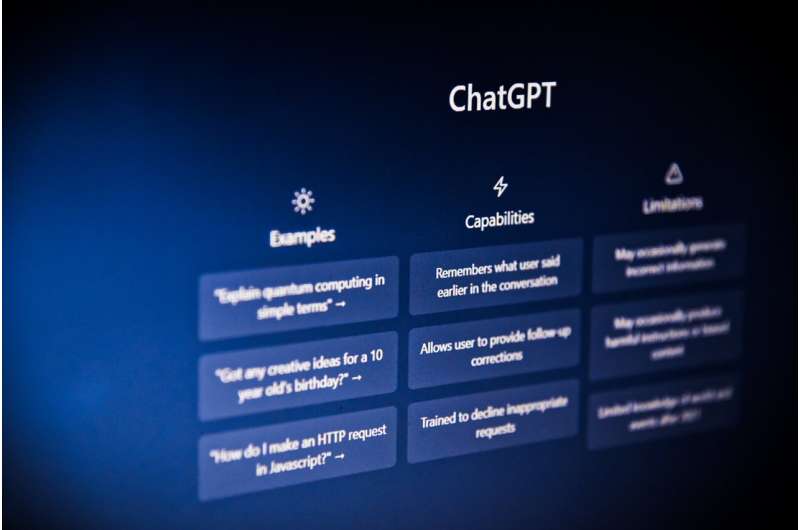
In a paper published in the open-access journal Patterns, the research duo demonstrated the feasibility of fabricating a research paper using ChatGPT, an AI-based language model. Simply by asking, they were able to have ChatGPT produce a number of well-written, entirely made-up abstracts. A hypothetical fraudster could then submit these fake abstracts to multiple journals seeking publication. If accepted, the same process could be used to write an entire study with false data, nonexistent participants and meaningless results. However, it could appear legitimate, especially if the subject is particularly abstract or not screened by an expert in the specific field.

In a previous experiment cited in the current paper, humans were given both human-created and AI-generated abstracts to consider. In that experiment, humans incorrectly identified 32{bf0515afdcaddba073662ceb89fbb62b6b1bf123143c0e06b788e1946e8c353f} of the AI-generated research abstracts as real and 14{bf0515afdcaddba073662ceb89fbb62b6b1bf123143c0e06b788e1946e8c353f} of the human-written abstracts as fake.

The current research team decided to test their ChatGPT fabricated study against three online AI detectors. The texts were overwhelmingly identified as AI-generated, suggesting the adoption of AI detection tools by journals could be a successful diverter of fraudulent applications. However, when they took the same text and ran it through a free, online, AI-powered rephrasing tool first—the consensus unanimously flipped to “likely human,” suggesting we need better AI detection tools.

Actual science is hard work, and communicating the details of that work is a crucial aspect of science requiring substantial effort. But any mostly hairless ape can string sensible sounding words together given enough time and coffee—as the writer of this article can firmly attest. Creating a fake study with enough detail to seem credible would take tremendous effort, requiring hours of researching how best to sound believable, and might be too tedious a task for someone interested in malicious mischief. With AI completing the task in minutes, that mischief could become an entirely achievable objective. As the researchers point out in their paper, that mischief could have terrible consequences.

They give an example of a legitimate study that supports the use of drug A over drug B for treating a medical condition. Now, suppose a fabricated study makes the opposite claim and is not detected (as a side note, even if it is detected, clawing back citations and reprints of retracted studies is notoriously difficult). It could impact subsequent meta-analyses and systematic reviews of these studies—studies that guide health care policies, standards of care and clinical recommendations.

Beyond the simple mischief motive, the authors of the paper point to the pressure on medical professionals to quickly produce a high volume of publications to gain research funding or entry into higher career positions. In part, they point out that the United States Medical Licensing Examination recently switched from a graded exam to a pass/fail model, meaning ambitious students rely more heavily on published research to distinguish them from the pack. This raises the stakes for a trustworthy AI detection system to remove potentially fraudulent medical research that could pollute the publishing environment—or worse still, practitioners who submit fraudulent papers from practicing on patients.

The goal of AI language models has long been to produce texts that are indistinguishable from human text. That we need AI that can detect when a human is using AI to produce fraudulent work indistinguishable from reality should not come as a surprise. What might be surprising is just that we may need it so soon.

More information:
Faisal R. Elali et al, AI-generated research paper fabrication and plagiarism in the scientific community, Patterns (2023). DOI: 10.1016/j.patter.2023.100706

© 2023 Science X Network

Citation:
AI language models open a potential Pandora’s box of medical research fraud (2023, March 14)
retrieved 14 March 2023
from https://medicalxpress.com/news/2023-03-ai-language-potential-pandora-medical.html

This document is subject to copyright. Apart from any fair dealing for the purpose of private study or research, no
part may be reproduced without the written permission. The content is provided for information purposes only.

Neuralink competitor launches platform to accelerate medical innovation

A Science employee at work in the lab.

Courtesy: Science Corporation

Biotechnology startup and Neuralink competitor Science on Monday launched a new platform that aims to make it easier for other companies to quickly develop and produce medical devices. 

The platform, called Science Foundry, allows companies to utilize and build upon Science’s internal infrastructure by offering access to more than 80 of its tools and services, like the company’s thin-film electrode technologies.

related investing news

Neuralink competitor launches platform to accelerate medical innovation

CNBC Pro

The cost of the technology required to develop medical devices is often “prohibitive” for early-stage startups, Science Co-Founder and CEO Max Hodak told CNBC in an interview. Individual tools can cost anywhere from $200,000 to $2 million, and Hodak said companies could easily spend hundreds of millions building a manufacturing line. 

For many startups, that cost is too much to bear, but Hodak is hoping Science Foundry can help.

“Hopefully, we bring down the barriers to innovation,” Hodak said. “There’s a bunch of smart people out there that have a bunch of different ideas than the ones that we have, and we would like to enable them.” 

Science is part of the growing brain-computer interface, or BCI, industry. A BCI is a system that deciphers brain signals and translates them into commands for external technologies. Perhaps the best-known name in the space is Neuralink, thanks to the high profile of founder Elon Musk, who is also the CEO of Tesla, SpaceX and Twitter.

Hodak co-founded Neuralink and served as the company’s president until he announced his departure in 2021. At Neuralink, Hodak helped develop a BCI system that is designed to be implanted directly into the brain, but at Science, he is working on an implant that doesn’t directly touch the brain at all.

Science’s flagship BCI system is the Science Eye– a visual prosthesis that aims to help patients with two forms of serious blindness restore some visual input to their brains. 

The Science Eye relies on a thin, flexible micro-LED array that is surgically implanted over the retina. The implant controls a group of light-sensitive cells in the optic nerve that Science alters through a form of optogenetic gene therapy. When one pixel is turned on in the array, a cell is turned on in the optic nerve, which can be used to drive the nerve and send vision into the brain. 

Science’s implant is powered by special glasses that are outfitted with tiny sensors and cameras. The LED array translates the images it receives from the glasses and sends them up to the optic nerve. 

Hodak said the resulting images will look different than what people with healthy eyes are used to – at least for the first iteration of the technology – but that it will be very restorative for patients with no light sensitivity. Eventually, he said thinks Science will be able to reproduce high-resolution color vision. 

Science has been testing the technology in rabbits, and Hodak said the company hopes to eventually conduct trials with human patients as soon as next year.

The company’s new platform Science Foundry aims to support companies working on similarly ambitious ideas. Hodak said he expects to see demand from other neurotechnology companies, but that other medical technology startups and even quantum computing companies represent growth opportunities. 

The cost of using Science Foundry is comparable to the cost of working with academic facilities, which are “cheap to get started,” Hodak said. But while academic facilities typically do not allow companies to test devices on patients or sell them on the market, Hodak said it will be easier for Science Foundry customers to commercialize their products.

Hodak said the platform will benefit Science and the broader industry as a whole.

“This enables us to afford larger-scale and more capabilities that then we can use to enable the community and ourselves even further,” he said.