
The Healthcare Freedom Act is a vital solution to runaway medical debt

As the pandemic lingers, contributing to rising inflation and looming economic recession, Americans from all walks of life may be concerned about their medical bills. 

The Healthcare Freedom Act, proposed by Rep. Chip Roy (R-Texas), seeks to help Americans regain control of their healthcare expenses by creating “health freedom accounts” similar to existing health savings accounts. Health savings accounts enable patients to save pretax dollars for future medical expenses, but are limited to only those with high-deductible health plans, and contain numerous restrictions on what types of healthcare spending may qualify. Roy’s bill would allow any American, regardless of their health insurance type, to become eligible for health freedom accounts, as well as expand the list of qualified medical expenses. 

As a physician, I call upon Congress to pass this legislation in order to provide patients greater autonomy over their healthcare. 

Health savings accounts were first established in 2003 as part of the Medicare Prescription Drug Improvement and Modernization Act and became more prevalent as more employers began offering high-deductible health plans over the past 20 years. Many patients with high deductible plans never meet their annual deductible, and thus are forced to rely on money from their health savings account to cover routine health expenses; for these individuals, any money spent on insurance premiums by themselves or their employer is wasted. To make matters worse, current regulations also prohibit the use of health savings accounts to pay for insurance premiums. These policies serve only to enrich insurance companies at the expense of patients and private employers.  


Black Friday and Cyber Monday deals from BestReviews:

The Healthcare Freedom Act is a vital solution to runaway medical debt

Currently, HSAs allow maximum family contributions of up to $7,300 per year to a tax-deductible account, which enables the contributions to be untaxed for that year. In addition, the money grows tax-free and may be withdrawn from the account untaxed. These tax-protective mechanisms are how HSAs came to be known by the coveted descriptor “triple tax-free.” In addition to allowing all Americans to obtain an HSA/HFA, the Healthcare Freedom Act would nearly double the yearly contribution limit to $12,000, and allow individuals 55 years or older to contribute an additional $5,000. These changes are necessary due to the rapid growth in healthcare costs which routinely outpaces the already-astronomical rate of inflation.  

The Healthcare Freedom Act would also expand the list of approved medical expenses to include insurance premiums, direct primary care physician subscriptions, and payment to Healthcare Sharing Ministries. The bill would enable money from HSAs to be spent on all of these, plus additional services that may not be covered by health insurance. For example, patients coming to dermatology clinics may use money from their HSA/HFA to pay for the removal of benign skin lesions or other procedures deemed as “cosmetic” by insurance companies.  From the physician side, it allows a wider range of practice possibilities that would enable doctors to practice more personalized medicine.  

If HFAs become commonplace, more patients will be able to obtain their medications through compounding and specialty pharmacies, cutting out middlemen and reducing costs. Indeed, physicians will be able to circumvent insurance headaches such as step therapy (requiring patients to fail certain categories of medications before insurance will cover alternative therapies) if patients can pay for their medications directly. As a dermatologist, I frequently use direct-to-consumer pharmacies to help patients obtain customized therapies for their skin. 

Healthcare freedom accounts would expand access to these services to patient populations who may not have the financial ability to pay for these treatments out-of-pocket. Employers may also like the added flexibility of HFA’s, as they would be able to offer the new health savings account as an employee benefit without being forced to subscribe to a group high-deductible health plan. 

The net effect of expanding the number of approved expenses would be increased patient and physician autonomy. From the patient side, the Healthcare Freedom Act allows them to spend their hard-earned savings in a way that most aligns with their values. 

As a physician, I look forward to serving patients based on the ideals of the Hippocratic Oath rather than following arbitrary guidelines created by insurance companies.  

Aamir Hussain is a resident physician practicing in Washington, DC. Rufus Sweeney, a medical student at the University of Wisconsin, assisted in the creation of this story.
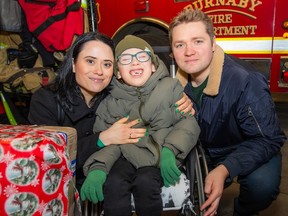
8-year-old Ukrainian refugee reunited with vital medical equipment

“It’s important for Mark’s mobility and quality of life that he has these. They were impossible for us to replace because what costs $600 in Ukraine, costs $6,000 here in Canada.” — Bogdan Motorenko

Article content

Mark Motorenko let out joyful squeals Saturday morning as Captain Doug Petti lifted him into a fire truck at Burnaby’s hall No. 1. 

Advertisement 2

Article content

It was the first time the eight-year-old Ukrainian refugee had seen inside such a vehicle. Normally, he cowers if sirens from the truck blast through his new Burnaby neighbourhood.

Article content

“The sounds scare him,” said his mother Yelyzaveta, 26, who fled from Kyiv to Canada five months ago with her husband Bogdan, 28.

The family came to Metro Vancouver seeking a better life for their son, who lives with cerebral palsy.

After Mark was lifted back down from the truck and into his wheelchair, he was presented with five large gifts by Petti, Burnaby Mayor Mike Hurley and Peter Julian, the MP of New Westminster-Burnaby.

The group invited the family to the firehall Saturday for a surprise.

Underneath the wrapping paper was the standing device Mark had used back home to strengthen his muscles, which are affected by a developmental disease that affects his movement, balance and posture.

Advertisement 3

Article content

Mark Motorenko smiles for the camera on Saturday as he was reunited with some vital medical equipment that his family had been forced to leave behind when they fled Ukraine in late February.
Mark Motorenko smiles for the camera on Saturday as he was reunited with some vital medical equipment that his family had been forced to leave behind when they fled Ukraine in late February. Photo by Francis Georgian /PNG

The child smiled with glee to see the return of remnants of his old life. The other gifts were his walker and tricycle.

“It’s important for Mark’s mobility and quality of life that he has these,” Bogdan said. “They were impossible for us to replace because what costs $600 in Ukraine, costs $6,000 here in Canada.”

Since war broke out where they lived in Kyiv in February, both parents agree that their son hasn’t quite been himself.

Before Russia’s invasion, Mark had made progress with daily physiotherapy and had begun to stand on his own and took his first step. But since Feb. 25, when the blast of a nearby missile awoke the child in terror, he has been reluctant to move.

“He is very scared,” Yelyzaveta said. “That’s why we left, he was so nervous every night and would cry all night about the war.”

Advertisement 4

Article content

The Motorenkos fled the Ukrainian capital days after the conflict began in late February. They left their belongings behind.

By September, settled in the Lower Mainland, they reached out to Julian’s office in desperate need of retrieving their son’s specialized medical equipment.

“It would cost thousands of dollars to ship their special needs child’s medical equipment from Ukraine to Canada,” the MP said Saturday in a news release. “It was impossible for a refugee family, fleeing from a war zone, to come up with such an enormous amount.”

So, the Burnaby Firefighters Charitable Society quickly stepped in to cover the costs.

“We’re just happy to get this equipment back into Mark’s hands,” Petti said.

The family plans to haul the equipment home, to Burnaby, where they live with sponsors Susan Millar and Deepak Sahasrabudhe.

Advertisement 5

Article content

Julian said Saturday that hundreds of other Burnaby residents have offered up their homes to Ukrainian refugees this year.

“Tragically, as this brutal invasion continues we will see more families coming.”

The MP acknowledged the serious challenges the refugees face upon arriving in Canada. “My office is hearing some Ukrainian families here are struggling to put food on the table right now.”

Julian said, “the important thing is that as they come, they are being supported by their new community — as Mark has.”

Yelyzaveta hopes that her son will soon find the courage to try to walk again, with help of the equipment.

“We’re thankful for all the Canadians who have helped us and Mark,” Yelyzaveta said.

“If he is happy, we are happy.”

sgrochowski@postmedia.com

twitter.com/sarahgrochowski

Advertisement 1

Comments

Postmedia is committed to maintaining a lively but civil forum for discussion and encourage all readers to share their views on our articles. Comments may take up to an hour for moderation before appearing on the site. We ask you to keep your comments relevant and respectful. We have enabled email notifications—you will now receive an email if you receive a reply to your comment, there is an update to a comment thread you follow or if a user you follow comments. Visit our Community Guidelines for more information and details on how to adjust your email settings.

Despite successes, lack of regulation raises concerns over medical devices

Janice Berger isn’t a big fan of bowling shoes.

“Oh my gosh, who knows whose dirty feet have been in those shoes,” Berger said.

But sporting a pair at Signature Lanes in Elkhart, Berger is just glad to be able to lace them up on her own. It wasn’t long ago the senior from Goshen couldn’t put on her own shoes. Much less bowl.

Chronic pain has kept Berger from bowling for the last seven years.

“I couldn’t bowl, I couldn’t ride my bike,” Berger said. “I couldn’t enjoy my grandchildren. So it is frustrating when you are so tired of pain there is absolutely no joy in your life.”

She has diabetic neuropathy; nerve damage in her feet caused by diabetes. It affects 28{bf0515afdcaddba073662ceb89fbb62b6b1bf123143c0e06b788e1946e8c353f} of all diabetic patients according to the National Library of Medicine.

Berger was at the point she was willing to do anything to stop the pain.

“I just thought, I’m going to start with a podiatrist and work my way up to God if that’s what it takes,” Berger said.

You couldn’t see it even while Berger grabbed a bowling ball, rolled it down the lane, or watched her first gutter ball in years; but sitting in the base of her spine is a Nevro HFX. A spinal cord stimulator stopping the pain. She had it implanted in November, 2021 after trying medications, therapy, and other methods that never worked.

“Last time I talked to her, she told me she had 100{bf0515afdcaddba073662ceb89fbb62b6b1bf123143c0e06b788e1946e8c353f} relief. She was smiling the whole time. She was extremely happy,” said interventional pain specialist Dr. Jerry Grewal.

Dr. Grewal implanted Berger’s Nevro HFX, which is the first time it’s been used for diabetic neuropathy.

“Hopefully patients will improve, their quality of life will get better, their pain will decrease, and they can be less reliant on medications,” Dr. Grewal said. “And hopefully they don’t have to be on opiates long term.”

Jeanne Lenzer, author of The Danger Within Us: America’s Untested, Unregulated Medical Device Industry and One Man’s Battle to Survive It, worries some patients don’t consider that medical devices have their own side effects which can be serious.

She’s spent years studying the medical device industry.

“It’s a wild west out there,” Lenzer said. “Devices are the wild west.”

About one in ten Americans will have a medical device implanted in their lifetime. But less than half a percent of these devices have been tested in rigorous clinical trials, according to the American Medical Association Journal of Ethics.

There are at least 500 FDA consumer complaints over the last five years following a Nevro Senza device implant. Reported issues include infections, sepsis, shocking sensations, and numbness.

In these cases, no issues were found with the device. But it’s the manufacturer itself investigating whether the device is at fault.

“We’ve [implanted], between the trials and everything else, almost 100,000 of these devices. And we very carefully track any reports of adverse events. We’re required to,” Nevro chief medical officer Dr. David Caraway said.

Dr. Caraway points to an 18-month trial showing Nevro’s spinal cord stimulators leading to pain relief for nearly three quarters of patients.

“We’re really focused on evidence building and providing the safest and most effective therapies that are out there,” Dr. Caraway said.

And the Nevro HFX went through the FDA’s more stringent pre-market approval process.

But 82{bf0515afdcaddba073662ceb89fbb62b6b1bf123143c0e06b788e1946e8c353f} of devices go through 510(k) approval, which requires no clinical data. According to a study published in the Journal of the American Medical Association, 510(K)-approved devices make up 97{bf0515afdcaddba073662ceb89fbb62b6b1bf123143c0e06b788e1946e8c353f} of medical device recalls.

“A lot of people think that the FDA actually tests things. They don’t do any testing at all,” Lenzer said. “What they do is they ask the manufacturer to provide their information. And that’s what they go on.”

Patients considering a medical device can look up reported issues on the FDA database. Lenzer recommends researching complaints, considering possible side effects, and weighing them against the intended benefit. Patients should also ask their medical provider how often they’ve implanted the device.

So far, Berger hasn’t had any issues.

“It’s a dream come true,” Berger said.

And even if it’s not helping her score on the lanes, she is just glad to be back in the game.

What medical mysteries can teach us about getting better health care

Comment

You are reading our weekly Well+Being newsletter. Sign up here to get it delivered to your inbox every Thursday.

Who doesn’t love a good mystery?

For 15 years, medical reporter Sandra G. Boodman has chased down the most unusual, quirkiest and weirdest medical cases for her monthly Medical Mysteries series. Recent stories have focused on a teenager who couldn’t wake up, a woman wrongly diagnosed with ALS, and an entire family and guest felled by a strange flu-like illness.

I checked in with Sandra to find out more about how she writes the column and the lessons we can learn from it.

Here’s our edited conversation.

Q. How do you choose your ideas?

A: It has to be something I haven’t written about. It has to be a solved case. I need to know the ultimate diagnosis. Even though it’s a solved case, there has to be a mystery. And there has to be a human story.

Q. Once you pick a case, how do you report it?

A: I ask for a chronology of events and medical records that confirm the diagnosis. The medical records and chronology enable me to see whether, indeed, this is a mystery, whether it unfolded in an interesting way. Will this be an interesting case?

Then, I interview the patient, sometimes the parent, sometimes the spouse. The last step is to talk to the doctor who made the diagnosis or the current treating physicians. Any step along the way, the process can fail.

Q. Do you write about unsolved cases?

A. No, it has to be a solved case. A lot of people write to me and say, “I have this problem, can you help me?” Unfortunately, that’s not what I do. I did once write about a lawyer in Detroit who had gone to the undiagnosed-disease program at the National Institutes of Health. He’s seen more than 100 doctors and still doesn’t have an answer. But I thought his case was so unusual and interesting, I did make an exception that time.

Q. What are some of your most memorable medical mysteries?

A: I wrote about a family that kept getting recurrent strep throat. They couldn’t figure it out. An enterprising veterinarian got involved. It turned out their cat may have been the vector. When they finally treated the cat, nobody has had strep.

One of the weirder ones — there was a woman who had serious kidney and heart problems. It turned out she was eating too much licorice. That was really odd.

And I still vividly remember a State Department worker who had terrible itching on her head at night. She had even been worked up for a type of cancer. She had seen multiple dermatologists. It turned out she had head lice for an entire year. How did they miss that? That was really stunning.

Q. What have you learned about the medical system from writing about medical mysteries?

A. Medical care has become increasingly specialized. Doctors are familiar with a small slice of what’s going on, yet diagnosis is an inherently complex process. I also think time pressures are worsening. It’s like: “You’ve got 10 minutes. Go.” That’s not going to work with a complicated problem.

I also think sometimes patients are not good at describing the problems. The people who tend to do better are organized and can describe their symptoms in a way that is intelligible for a doctor.

Q. What’s your best advice to patients for getting better medical care?

A. Primary-care doctors can really help a patient. I often see people who go right to specialists. They may not have a primary-care doctor, or they use urgent care when they’re sick. That can be problematic. People really undervalue the role of a good primary-care doctor.

Sign up for the Well+Being newsletter, your source of expert advice and simple tips to help you live well every day

The 2022 Well+Being Gift Guide

Need a gift idea? The Well+Being team shared our favorite finds for cooking, exercising, spending time at home, improving our mental health, presents for your pets and more.

Some gifts are practical and affordable; others are definite splurges. I just bought air fryers for my family members because our Eating Lab columnist Anahad O’Connor recommended it. Runners will appreciate the perfect running shorts recommended by fitness writer Kelyn Soong. Amanda Morris, who writes about disability, suggested hearing-aid jewelry. Reporter Teddy Amenabar has found the perfect traveling coffee mug.

There are lots to choose from, and every item brought us closer to living healthy, fulfilled lives. We hope they do the same for you and your loved ones this year.

Please let us know how we are doing. Email me at wellbeing@washpost.com.

Baxter Hillrom Recalls WatchCare Incontinence Management System (IMS) for Risk of RF Interference with Nearby Medical Equipment

The FDA has identified this as a Class I recall, the most serious type of recall. Use of these devices may cause serious injuries or death.

Recalled Product 

  • Product Name: WatchCare Incontinence Management System (IMS) 
  • Product Models: 
    • P7900B Centrella Bed with WatchCare
    • P00697901: Hospital Bed Accessory, WatchCare System for VersaCare Bed Rev. A-J
    • P00697902: Hospital Bed Accessory, WatchCare System for VersaCare Bed Rev. K
    • P00697903: Hospital Bed Accessory, WatchCare System for Progressa Bed
    • P00697905: Hospital Bed Accessory WatchCare System for Centrella Bed
  • Distribution Dates: August 1, 2018 to September 1, 2022
  • Devices Recalled in the U.S.: 8,550
  • Date Initiated by Firm: September 30, 2022

Device Use

The WatchCare Incontinence Management System (IMS) includes specific Centrella, Progressa, and VersaCare hospital beds and disposable incontinence pads. It is designed to discreetly alert the caregiver of an incontinence event. The system is usually used in critical care and medical/surgical settings as well as in other clinical areas. 

Reason for Recall 

Baxter Hillrom is recalling the WatchCare IMS after receiving reports that the radiofrequency emissions (RF) from WatchCare devices may interfere with other medical devices, including equipment that is critical to the health and wellbeing of patients, such as:

  • Infusion pumps 
  • Insulin pumps
  • Blood glucose sensors
  • Fetal monitors / dopplers
  • Telemetry devices
  • Bladder scanners

Other third-party medical devices may also be affected. The RF interference from WatchCare may cause erroneous readings or malfunctions of these other devices on both patients and staff, which could lead to inappropriate medical treatments or lack of treatment. If WatchCare RF emissions affect a medically necessary device such as a blood glucose sensor, insulin pump, fetal monitor, or general infusion pump, among others, this issue could lead to serious injury or death.

Baxter reported 96 complaints of interference. To date, interferences in all cases but two occurred at distances less than 1 meter. There is insufficient data about distance on the remaining two reported interferences. There have been no reports of serious injuries or deaths related to this issue. 

Who May be Affected 

  • People who receive care in hospital beds with the WatchCare IMS accessory installed.
  • Health care personnel who care for patients in hospital beds with the WatchCare IMS accessory installed. 

What to Do 

On September 30, 2022, Baxter Hillrom sent customers an Urgent Medical Device Correction letter. An updated letter was sent on October 21, 2022, which recommended the following actions for clinicians, biomedical engineers, and other end users: 

  • Immediately locate all affected devices and remove them from clinical care areas (where possible) until the WatchCare functionality is disabled. Affected devices are those Centrella, Progressa and Versacare beds which have WatchCare functionality. Baxter will contact you to arrange for the WatchCare to be disabled, and their technical support can assist and provide alternative actions until the features are disabled. 
  • Be aware that RF emissions from functioning WatchCare devices may impact other devices including, but not limited to, telemetry devices, bladder scanners, fetal monitors/dopplers, infusion pumps, insulin pumps, and blood glucose sensors. 
    • Double check all unexpected or atypical results and monitor infusions closely. 
  • Use standard, non-RF based incontinence management pads until the issue is resolved.
  • Share this notice with all potential users and staff in your organization. 
  • Complete the response form (attached to the letter) and return to Hillrom-FA2022043@sedgwick.com within two weeks to acknowledge receipt and understanding.
  • Report any irregular activity or product complaints connected to the use of the WatchCare System to Baxter at 1-800-445-3720.
  • For distributors: Share with end users, complete the response form and return to Hillrom-FA2022043@sedgwick.com within two weeks. Electronic copies of the notification and response form can also be provided by reaching out to this address. 

Baxter will contact all impacted customers to arrange for WatchCare functionality to be switched off. 
The company will also provide a follow-up when more information is available. 

Contact Information 

Customers with technical questions about this recall should contact Baxter Hillrom Technical Support at 1-800-445-3720 or technical.support@hillrom.com.

Additional Resources: 

How do I report a problem?

Health care professionals and consumers may report adverse reactions or quality problems they experienced using these devices to MedWatch: The FDA Safety Information and Adverse Event Reporting Program using an online form, regular mail, or FAX.
 

Tom Meade obituary | Medical research

Tom Meade, who has died aged 86, pioneered the field of cardiovascular epidemiology. His research, spanning five decades, gave medical science a vastly improved understanding of the biology of blood and the circulatory system, opening the door for targeted new heart disease treatments.

By the early 1960s, heart disease was the leading cause of death in many countries, with the culprit widely believed to be atheroma (fatty deposits inside the arteries), brought on by high cholesterol and a fatty diet. But in 1965, Meade, a researcher at the Medical Research Council (MRC), read something he described as “a real eye-opener”. His boss, the pre-eminent epidemiologist Jerry Morris, wrote that while the numbers of men dying aged 50-69 had surged since 1908, analysis of autopsy reports showed that the numbers dying with coronary atheroma had decreased. Meade wondered if other factors were in play, and what role blood might have in heart disease. He wanted to investigate.

In 1970, he became director of the newly created MRC Epidemiology and Medical Care Unit at Northwick Park in Harrow, north-west London. He set up the Northwick Park heart trial in 1972 with 3,900 volunteers, who were mostly workers at the nearby Heinz factory. Among other things, Meade and his team wanted to study fibrinogen and Factor VII (proteins in the blood essential for clot formation, but too much of which can make blood “sticky” and liable to clot inappropriately).

The trial found fibrinogen levels are linked to heart disease, and one of the reasons smoking is a risk factor for heart disease is that it raises fibrinogen levels. The findings pointed to the need for fibrinogen-lowering drugs. They also found high levels of Factor VII increased heart disease risk, which posed the question – what might lower it? In 1983 Meade’s thrombosis prevention trial began, which took 5,500 high-risk individuals and gave them aspirin, warfarin, a combination of the two, or a placebo. Of the four groups, those on the combination fared best, with heart attacks reduced by more than a third.

Recruits for the thrombosis prevention trial came through the MRC GP Research Framework, a network of GP practices around Britain. Meade directed many trials through this network, not just on blood circulation, but also on blood pressure, incontinence, back pain, stroke rehabilitation and other topics. Chiropractic was considered a quack science, but Meade’s trial in 1990 comparing it with standard treatment for low back pain found it to be more effective.

It was compulsory to retire from the MRC at 65, so in 2001 Meade stepped down as director. He was glad, as the administrative demands had become steadily more onerous, but was keen to retain an academic foothold somewhere to continue his research. After a five-week campervan holiday in Australia, he became an emeritus professor of epidemiology at the London School of Hygiene and Tropical Medicine, with, to his wry amusement, pay of £10 a month to formalise the agreement.

As well as his own work, he also chaired the LSHTM research ethics committee and was the co-author of an overview of trials into aspirin to prevent heart disease, which also found it valuable in preventing bowel and other cancers.

Meade stayed at the LSHTM for more than 15 years and was able to do a 30-year follow-up of his Northwick Park heart trial. One finding was that having a respiratory infection made people more susceptible to having a heart attack. Knowing there is this link has prompted officials to encourage uptake of flu vaccinations in vulnerable groups.

Born in Oxford, Tom was the son of Margaret (nee Wilson), a committed Quaker, and James Meade, a distinguished economist and Nobel laureate. Tom was the eldest of four children, with three sisters, Charlotte, Bridget and Carol. In 1940 the second world war was still in its “phoney” stage, so the family went on holiday in France (from Geneva, where James was serving with the League of Nations), but rapidly turned for Britain with the Germans advancing behind them. After days waiting on the French coast they were rescued by a tramp steamer and taken to Barry in Wales.

His mother then took the children to the US for safety, and his father pressed a copy of Rudyard Kipling’s Jungle Book into Tom’s hands, with an inscription. It was a memento should they never meet again. Meade’s mother did not like being away from the UK, however, and they returned in 1942, a perilous crossing, with masts of sunken ships just visible as they sailed into home waters.

In 1949, Meade won a scholarship to Westminster school in London, where in 1953 he took part in an ancient rite at Queen Elizabeth’s coronation. (The scholars were the first to greet the new monarch with Vivat Regina.) In 1950 he had his appendix out and, although he excelled at classics, seeing a hospital at close quarters inspired him to read medicine. He studied at Christ Church, Oxford, and Bart’s hospital in London, where he qualified in 1962.

Meade originally wanted to join the prison medical service and to that end worked for 18 months as a junior doctor at Littlemore hospital, a mental health facility in Oxford. However, he had become increasingly interested in public health, and decided to work for Morris at the Medical Research Council.

In 1962 Meade married Liz Perks, a social worker, and the couple went on to have three children: Richard, Helen and Rebecca. They went to India in 1969 for a year (with their London house let to the king of Tonga) so that Meade could study the epidemiology of leprosy at the Schieffelin research laboratory in Karigiri.

The family lived in Highgate, north London, and when in 1979 Haringey council shut the borough’s schools for several weeks in response to a caretakers’ strike, Meade sued the council in a case that reached the court of appeal, by which time the schools were open again. Modest yet principled, Meade was happy to accept appropriate accolades: in 1996 he was elected a fellow of the Royal Society and in 1997 received the Balzan prize for epidemiology. In 1994 he was appointed CBE, although he was always uneasy about the honours system. When he heard that the head of the MRC, Colin Blakemore, was not getting a knighthood, as was customary with that position, he handed back his CBE in protest; Blakemore’s knighthood came in 2014. When several of the congregation stayed away from his granddaughter’s confirmation in disapproval of female priests, Meade was so incensed that he left the Church of England and became a Quaker.

In middle age, Meade took up running, completing a marathon, and for decades had an allotment in Highgate. He and Liz moved into a flat in Highgate in 2016 and his health gradually began to falter.

He is survived by Liz and their children and eight grandchildren, and by his sisters.

Thomas Wilson Meade, epidemiologist, born 21 January 1936; died 24 October 2022
