Leveraging consumer brands to bring healthy lifestyle options to seniors

At one time, the business of healthcare might have seemed impenetrable to outsiders. If an organization wasn’t directly connected to medicine, research, pharmaceuticals, health insurance and the like, there was no place for it. However, as stakeholders have recognized the assets those outside of the field can contribute, there has been a surge of collaborations and integrations that strengthen healthcare delivery, quality and outcomes.

For example, while physicians have long touted the benefits of physical activity, health plans also understand the value of including gym memberships or fitness programs as a benefit. Today, senior fitness programs are a popular benefit for Medicare Advantage enrollees and plans, offering members a cost-effective way to improve and maintain their health. SilverSneakers®, the leading fitness program for older adults, promotes greater health engagement and accountability through regular exercise and social opportunities, and has been proven to improve overall health and lower healthcare costs.

Leveraging consumer brands

In recent years, recognizable, consumer-facing brands have entered the fold as both consumers and healthcare experts have recognized a need for opportunities for healthcare services to be more integrated in typical consumer experiences. Today, meal delivery services, ride-sharing services, retailers and tech brands are seeking new ways to reach consumers with solutions to improve their health and well-being. It’s no secret that many consumers use fitness and healthcare apps, but it may be surprising that leading technology companies are also recognizing the potential to support the senior population through virtual and mobile solutions.

SilverSneakers understands the potential to leverage technology and recognizable consumer brands to enhance its own offerings. SilverSneakers recently announced that, starting in 2023, members in participating health plans are eligible for an Apple Fitness+ subscription at no additional cost. With a Fitness+ subscription, these SilverSneakers members will have access to 3,000-plus workouts and meditations, which will join SilverSneakers’ virtual suite of live and on-demand fitness and holistic health offerings, interest-based social connection opportunities, mental enrichment, personalized member content and a network of up to 22,000 fitness locations. The result is more opportunities for more members to experience the mental and physical benefits of exercise and meditation.

Apple Fitness+ enables SilverSneakers members to move how they want, where they want, using familiar technology. They can choose from workouts and meditations ranging from 5 to 45 minutes across 11 workout types, including dance, Pilates, strength and yoga, along with video and audio guided meditations to support cognitive health and stress relief. There are also workout programs with custom content, including Workouts for Older Adults, which helps users stay active at any age with a focus on strength, flexibility, balance, coordination and mobility.

The power of collaboration

So, as SilverSneakers becomes a more comprehensive program through its latest offering of Apple Fitness+, a brand that people know and love, it becomes even more enticing to health plans and their members, with greater potential to improve senior health. But what’s the benefit for Apple Fitness+? SilverSneakers has 18 million eligible members nationwide. With 10,000 people turning 65 every day, today’s seniors expect tech-enabled health options for everything from doctors’ appointments to wellness. Apple Fitness+ is committed to being the world’s most inclusive fitness subscription service, recognizing that today’s older adults are active and connected.

Fitness+ is designed to be welcoming and inclusive to all and to help users live a healthier day – no matter where they are on their fitness journey. The workouts and meditations are led by a diverse team of trainers, curated for a range of abilities, skill levels, ages and interests. Every Fitness+ studio workout includes modifications to accommodate all fitness levels, along with options for closed captioning and subtitles in six languages.

SilverSneakers has been a leader in the senior wellness space for 30 years and understands the unique needs and fitness preferences of older adults. Through this new offering, it is furthering its commitment to accessible fitness for seniors. SilverSneakers is the only senior fitness program that will offer Fitness+ in January through select Medicare Advantage plans.

While the exclusivity of healthcare may have served it well at one time, today, harnessing the strengths of disparate entities has the power for transformation. In this case, by linking two brands that are respected in their categories and have a shared vision, fitness can be a more approachable, accessible and fun pursuit for seniors. And when seniors embrace opportunities to be more physically and mentally well, everyone wins.

To learn more about SilverSneakers, visit www.tivityhealth.com/brands/silversneakers/.


Sponsored by

Leveraging consumer brands to bring healthy lifestyle options to seniors
At Tivity Health, we help adults improve their health and support them on life’s journey by providing access to in-person and virtual physical activity, social, and mental enrichment programs. Our suite of services supports health plans nationwide as they seek to reduce costs and improve health outcomes. At Tivity Health, we deliver the resources members need to live healthier, happier, more connected lives. Learn more at www.tivityhealth.com.
7 Day Healthy Meal Plan (Dec 5-11)

posted December 2, 2022 by Gina

This post may contain affiliate links. Read my disclosure policy.

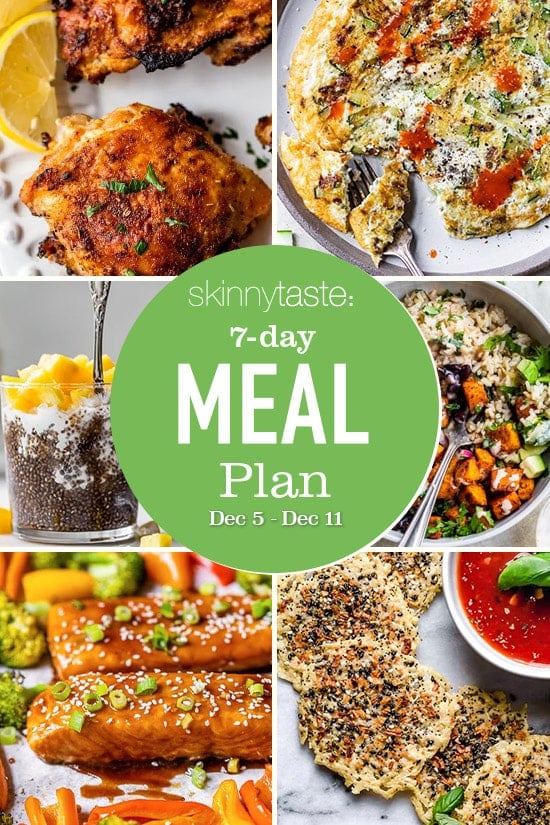
A free 7-day, flexible weight loss meal plan including breakfast, lunch and dinner ideas and a shopping list. All recipes include macros and links to WW recipe builder to get your personal points.

7 Day Healthy Meal Plan

I love to bake- so does my mom and my aunt and I am so glad that not only do both my daughters love to bake- but that they love to bake together!! Those are memories that will last a lifetime! As Christmas and holiday season start to draw near,  so do cookie swaps, gingerbreads and one of my favorites- Cranberry Bliss Bars! Or try these chocolate pistachio biscotti. Here is a fun holiday project to do with your kids (young or old!), DIY Gingerbread Tree Ornaments! I promise your house will smell amazing!!

With grocery prices soaring, many of us are having to adjust, scale back and/or get more creative with our meals. One of the absolute BEST ways to stay within a budget and maintain healthy eating habits is to MEAL PLAN. You can get more 5-day Budget Friendly Meal Plans by signing up for Relish+ (get a 14-day free trial here!)

Ultimate Skinnytaste Meal Planner

Skinnytaste Ultimate Meal Planner

I’m also excited to share the Skinnytaste Ultimate Meal Planner is now available! The 52 week spiral bound meal planner has weekly meal planning grids you can tear out and put on your fridge if you wish, a 12-week meal plan, 30 (15 new) recipes, and tear-out grocery lists. I love starting my week with gratitude, affirmations and intentions, so I included a space for that as well. I hope you will love this as much as I do!

Skinnytaste Ultimate Meal Planner

Buy the meal planner here:

A note about WW Personal Points:

I no longer provide points since they vary on the new Weight Watchers plans but I do provide links to WW Personal points recipe builder for all recipes. Look for the orange button in the recipe card says my WW personal points. Click on that and it takes you to the Weight Watchers website where you can see the WW points and add it to your day (US only, you must be logged into your account). All cookbook recipes in the cookbook index are also updated!

About The Meal Plan

If you’re new to my meal plans, I’ve been sharing these free, 7-day flexible healthy meal plans (you can see my previous meal plans here) that are meant as a guide, with plenty of wiggle room for you to add more food, coffee, beverages, fruits, snacks, dessert, wine, etc. or swap recipes out for meals you prefer, you can search for recipes by course in the index. Depending on your goals, you should aim for at least 1500 calories* per day. There’s no one size fits all, this will range by your goals, your age, weight, etc.

There’s also a precise, organized grocery list that will make grocery shopping so much easier and much less stressful. Save you money and time. You’ll dine out less often, waste less food and you’ll have everything you need on hand to help keep you on track.

Lastly, if you’re on Facebook join my Skinnytaste Facebook Community where everyone’s sharing photos of recipes they are making, you can join here. I’m loving all the ideas everyone’s sharing! If you wish to get on the email list, you can subscribe here so you never miss a meal plan!

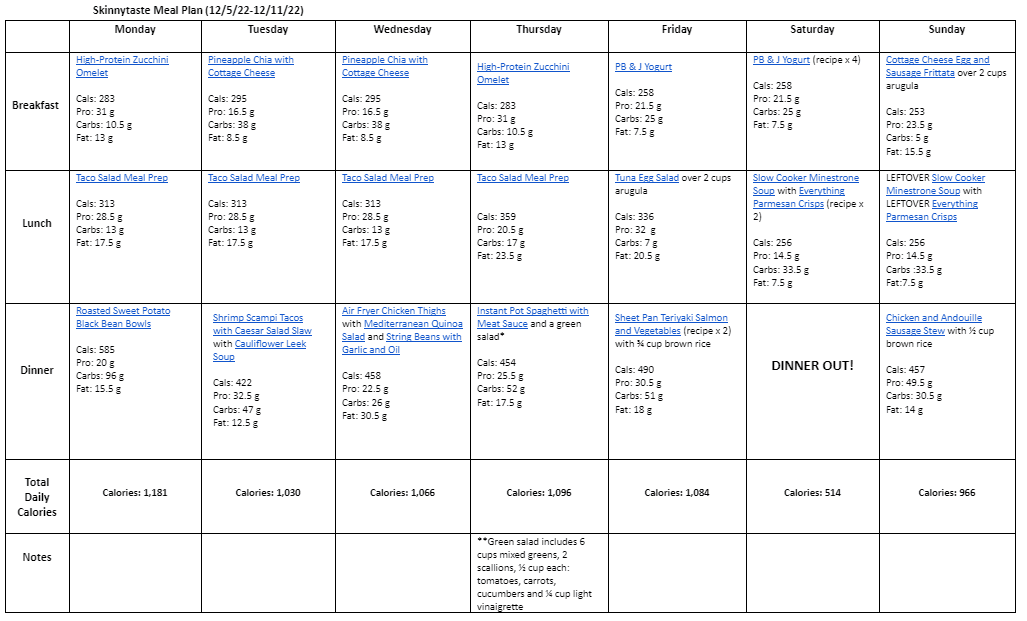
Meal Plan:

Breakfast and lunch Monday-Friday, are designed to serve 1 while dinners and all meals on Saturday and Sunday are designed to serve a family of 4. Some recipes make enough leftovers for two nights or lunch the next day. The grocery list is comprehensive and includes everything you need to make all meals on the plan.

MONDAY (12/5)
B: High-Protein Zucchini Omelet
L: Taco Salad Meal Prep
D: Roasted Sweet Potato Black Bean Bowls

Total Calories: 1,181*

TUESDAY (12/6)
B: Pineapple Chia with Cottage Cheese
L: Taco Salad Meal Prep
D: Shrimp Scampi Tacos with Caesar Salad Slaw with Cauliflower Leek Soup
Total Calories: 1,030*

WEDNESDAY (12/7)
B: Pineapple Chia with Cottage Cheese
L: Taco Salad Meal Prep
D: Air Fryer Chicken Thighs with Mediterranean Quinoa Salad and String Beans with Garlic and Oil

Total Calories: 1,066*

THURSDAY (12/8)
B: High-Protein Zucchini Omelet
L: Taco Salad Meal Prep
D: Instant Pot Spaghetti with Meat Sauce and a green salad**
Total Calories: 1,096*

FRIDAY (12/9)
B: PB & J Yogurt
L: Tuna Egg Salad over 2 cups arugula
D: Sheet Pan Teriyaki Salmon and Vegetables (recipe x 2) with ¾ cup brown rice
Total Calories: 1,084*

SATURDAY (12/10)
B: PB & J Yogurt (recipe x 4)
L: Slow Cooker Minestrone Soup with Everything Parmesan Crisps (recipe x 2)
D: DINNER OUT

Total Calories: 514*

SUNDAY (12/11)
B: Cottage Cheese Egg and Sausage Frittata over 2 cups arugula
L: LEFTOVER Slow Cooker Minestrone Soup with LEFTOVER Everything Parmesan Crisps
D: Chicken and Andouille Sausage Stew with ½ cup brown rice
Total Calories: 966*

*This is just a guide, women should aim for around 1500 calories per day. Here’s a helpful calculator to estimate
your calorie needs. I’ve left plenty of wiggle room for you to add more food such as coffee, beverages, fruits,
snacks, dessert, wine, etc.
**Green salad includes 6 cups mixed greens, 2 scallions and 1/2 cup each: tomatoes, cucumbers, carrots and
chickpeas with ¼ cup light vinaigrette.

*Google doc

Don’t think that just because you live a healthy lifestyle you are immune to lung cancer.

Don’t think that just because you live a healthy lifestyle you are immune to lung cancer.

(Trent Nelson | The Salt Lake Tribune) Poor air quality obscures the Oquirrh Mountains and downtown Salt Lake City, as seen from the University of Utah on Friday, Dec. 3, 2021.

We are two women with one too many things in common. We both lived our adult lives in Salt Lake City, are nurses, college professors, were never exposed to radon or occupational hazards and are non-smokers. We shared the mistaken belief that our healthy lifestyles would protect us from serious diseases.

The one-too-many things we have in common is that we were both discovered to have advanced non-small cell lung cancer caused by a common genetic mutation activated by Salt Lake valley air pollution.

Even though we were/are college of nursing professors and read medical literature, neither one of us realized breathing polluted air put us at higher risk for lung cancer, according to the CDC. We blithely assumed non-smokers didn’t get lung cancer. Too late we learned many studies have shown long-term air pollution exposure is toxic enough to cause lung cancer in people like us.

We learned the hard way that, in most cases, lung cancer can remain early stage and asymptomatic for many years and solid tumors usually take decades to develop. But in 2013 lung cancer in an 8-year-old girl in China, attributable to air pollution, set off alarm bells throughout the world.

In 2019, 300,000 lung cancer deaths globally were linked to exposure to outdoor air pollution. According to the CDC, up to 20{bf0515afdcaddba073662ceb89fbb62b6b1bf123143c0e06b788e1946e8c353f} of lung cancers occur in non-smokers.

We learned our ignorance isn’t uncommon. We were both initially worked up by our family physicians for other possible reasons for our fatigue, persistent cough and shortness of breath with exercise, delaying our diagnoses and treatment. This is typical of lung cancer, the number one cancer killer in the U.S.

Because non-smokers aren’t screened for lung cancer, and the early-stage symptoms are subtle and self-reported, it isn’t usually diagnosed until Stage III or IV, when it is much more difficult to treat, and survival is low — exactly our situation. Too late we also learned that air pollution also increases the size and grade of lung cancers, and even impacts our ability to survive by decreasing the effectiveness of our treatment and by making us more susceptible to recurrence.

Fortunately for us, there is an oral chemotherapy medication we take that can extend our lives by a few years, but this isn’t the way we expected to live them, with debilitating symptoms, extensive medicine-generated side effects and very expensive medical costs.

The World Health Organization has declared air pollution a leading cause of cancer, and there is no safe level of air pollution, just like there is no safe number of cigarettes a person can smoke. But air pollution also causes a list of other diseases nearly as long as those from smoking — virtually every type of lung disease, heart and blood vessel diseases, impaired fetal development, chromosomal damage, pregnancy complications, brain and neurologic disorders like strokes and Alzheimer’s, type II diabetes, accelerated aging and premature death.

We share our stories in the hope you and your health care providers won’t wait until it is too late to learn more about the negative consequences of chronic exposure to air pollution. Lung cancer is a real possibility, and it shouldn’t be considered only after everything else has been ruled out. It is only one of many poor health outcomes that needs to be considered when symptoms first appear in non-smoking patients.

We also issue a call to arms for all who live in this beautiful state to work with our elected officials to change public policy and to fight against proposals that will increase air pollution, such as the inland port and water rights causing Great Salt Lake to become a dry, toxic dust generating wasteland. We must advocate for healthier air to protect ourselves and those who come after us, and an end to public policy that benefits the few at the expense of the many.

Behind every abstract statistic on the health hazards of air pollution is a human face — someone’s spouse, mother, father, grandparent, brother, sister or newborn baby — someone who was denied a long, healthy life simply because of the air they breathed. We hope hearing our stories and seeing our faces can lead to fewer stories like ours.

Angela Deneris, Ph.D., CNM, FACNM, is a professor, clinical emeritus, at the University of Utah College of Nursing, was a practicing nurse-midwife for 40 years and faculty in the Nurse-Midwifery and Women’s Health Nurse Practitioner Program for 30 years, retired and resides in Sugar House.

Cordelia Schaffer, RN, MSN, CHPN, has been a nurse educator at Westminster College since 2008. She has worked in health care since 1985, specializing in hospice, and resides near Rose Park.

The Green Mediterranean Diet Reduces Twice as Much Visceral Fat as the Mediterranean Diet and 10{bf0515afdcaddba073662ceb89fbb62b6b1bf123143c0e06b788e1946e8c353f} More Than a Healthy Diet

Summary: A modified version of the Mediterranean diet called the green Mediterranean diet, which consists of enriched dietary polyphenols such as green tea, walnuts, and duckweed, and decreased red meats, reduced more visceral fat than the traditional Mediterranean diet or a traditional diet plan.

Source: Ben-Gurion University of the Negev

The green Mediterranean diet (MED) significantly reduces visceral adipose tissue, a type of fat around internal organs that is much more dangerous than the extra “tire” around your waist.

The green Mediterranean diet was pitted against the Mediterranean diet and a healthy diet in a large-scale clinical interventional trial- the DIRECT PLUS. Subsequent analysis found that the green Med diet reduced visceral fat by 14{bf0515afdcaddba073662ceb89fbb62b6b1bf123143c0e06b788e1946e8c353f}, the Med diet by 7{bf0515afdcaddba073662ceb89fbb62b6b1bf123143c0e06b788e1946e8c353f} and the healthy diet by 4.5{bf0515afdcaddba073662ceb89fbb62b6b1bf123143c0e06b788e1946e8c353f}.

The study was published in BMC Medicine.

Reducing visceral fat is considered the true goal of weight loss as it is a more important indicator than a person’s weight or the circumference of their waist. Visceral fat aggregates over time between organs and produces hormones and poisons linked to heart disease, diabetes, dementia and premature death.

The research was led by Prof. Iris Shai of Ben-Gurion University of the Negev, Israel, an adjunct Professor from the Harvard School of Public Health, and an Honorary Professor, University of Leipzig, Germany, together with her doctoral student Dr. Hila Zelicha and Italian, German, and American colleagues.

The DIRECT-PLUS trial research team was the first to introduce the concept of the green-Mediterranean diet. This modified MED diet is further enriched with dietary polyphenols and lower in red/processed meat than the traditional healthy MED diet. On top of a daily intake of walnuts (28 grams), the participants consumed 3-4 cups of green tea/day and 100 grams (frozen cubes) of duckweed green shake/day. The aquatic green plant duckweed is high in bioavailable protein, iron, B12, vitamins, minerals, and polyphenols and substituted meat intake.

The Green Mediterranean Diet Reduces Twice as Much Visceral Fat as the Mediterranean Diet and 10{bf0515afdcaddba073662ceb89fbb62b6b1bf123143c0e06b788e1946e8c353f} More Than a Healthy Diet
On top of a daily intake of walnuts (28 grams), the participants consumed 3-4 cups of green tea/day and 100 grams (frozen cubes) of duckweed green shake/day. Image is in the public domain

The team has shown in previous studies that the green MED diet has a variety of salutary effects ranging from the microbiome to age-related degenerative diseases.

Two hundred and ninety four participants took part in the 18-month long trial.

“A healthy lifestyle is a strong basis for any weight loss program. We learned from the results of our experiment that the quality of food is no less important than the number of calories consumed and the goal today is to understand the mechanisms of various nutrients, for example, positive ones such as the polyphenols, and negative ones such as empty carbohydrates and processed red meat, on the pace of fat cell differentiation and their aggregation in the viscera,” says Prof. Shai.

“A 14{bf0515afdcaddba073662ceb89fbb62b6b1bf123143c0e06b788e1946e8c353f} reduction in visceral fat is a dramatic achievement for making simple changes to your diet and lifestyle. Weight loss is an important goal only if it is accompanied by impressive results in reducing adipose tissue,” notes Dr. Hila Zelicha.

Funding: This work was funded by grants from the Deutsche Forschungsgemeinschaft (DFG, German Research Foundation) – Project number 209933838- SFB 1052; the Rosetrees trust (grant A2623); Israel Ministry of Health grant 87472511; Israel Ministry of Science and Technology grant 3-13604; and the California Walnuts Commission.

None of the funding providers was involved in any stage of the design, conduct, or analysis of the study and they had no access to the study results before publication.

About this diet and fat reduction research news

Author: Ehud Zion Waldoks
Source: Ben-Gurion University of the Negev
Contact: Ehud Zion Waldoks – Ben-Gurion University of the Negev
Image: The image is in the public domain

Original Research: Open access.
“The effect of high-polyphenol Mediterranean diet on visceral adiposity: the DIRECT PLUS randomized controlled trial” by Hila Zelicha et al. BMC Medicine

See also

This shows a woman drinking coffee

Abstract

The effect of high-polyphenol Mediterranean diet on visceral adiposity: the DIRECT PLUS randomized controlled trial

Background

Mediterranean (MED) diet is a rich source of polyphenols, which benefit adiposity by several mechanisms. We explored the effect of the green-MED diet, twice fortified in dietary polyphenols and lower in red/processed meat, on visceral adipose tissue (VAT).

Methods

In the 18-month Dietary Intervention Randomized Controlled Trial PoLyphenols UnproceSsed (DIRECT-PLUS) weight-loss trial, 294 participants were randomized to (A) healthy dietary guidelines (HDG), (B) MED, or (C) green-MED diets, all combined with physical activity. Both isocaloric MED groups consumed 28 g/day of walnuts (+ 440 mg/day polyphenols). The green-MED group further consumed green tea (3–4 cups/day) and Wolffia globosa (duckweed strain) plant green shake (100 g frozen cubes/day) (+ 800mg/day polyphenols) and reduced red meat intake. We used magnetic resonance imaging (MRI) to quantify the abdominal adipose tissues.

Results

Participants (age = 51 years; 88{bf0515afdcaddba073662ceb89fbb62b6b1bf123143c0e06b788e1946e8c353f} men; body mass index = 31.2 kg/m2; 29{bf0515afdcaddba073662ceb89fbb62b6b1bf123143c0e06b788e1946e8c353f} VAT) had an 89.8{bf0515afdcaddba073662ceb89fbb62b6b1bf123143c0e06b788e1946e8c353f} retention rate and 79.3{bf0515afdcaddba073662ceb89fbb62b6b1bf123143c0e06b788e1946e8c353f} completed eligible MRIs. While both MED diets reached similar moderate weight (MED: − 2.7{bf0515afdcaddba073662ceb89fbb62b6b1bf123143c0e06b788e1946e8c353f}, green-MED: − 3.9{bf0515afdcaddba073662ceb89fbb62b6b1bf123143c0e06b788e1946e8c353f}) and waist circumference (MED: − 4.7{bf0515afdcaddba073662ceb89fbb62b6b1bf123143c0e06b788e1946e8c353f}, green-MED: − 5.7{bf0515afdcaddba073662ceb89fbb62b6b1bf123143c0e06b788e1946e8c353f}) loss, the green-MED dieters doubled the VAT loss (HDG: − 4.2{bf0515afdcaddba073662ceb89fbb62b6b1bf123143c0e06b788e1946e8c353f}, MED: − 6.0{bf0515afdcaddba073662ceb89fbb62b6b1bf123143c0e06b788e1946e8c353f}, green-MED: − 14.1{bf0515afdcaddba073662ceb89fbb62b6b1bf123143c0e06b788e1946e8c353f}; p < 0.05, independent of age, sex, waist circumference, or weight loss). Higher dietary consumption of green tea, walnuts, and Wolffia globosa; lower red meat intake; higher total plasma polyphenols (mainly hippuric acid), and elevated urine urolithin A polyphenol were significantly related to greater VAT loss (p < 0.05, multivariate models).

Conclusions

A green-MED diet, enriched with plant-based polyphenols and lower in red/processed meat, may be a potent intervention to promote visceral adiposity regression.

Trial registration

ClinicalTrials.gov, NCT03020186

Ensure your diet is heart-friendly by making these healthy changes

It is a well-known fact that heart health forms the core of overall wellness. It beats about 2.5 billion times over the average lifetime and pushes millions of gallons of blood to every part of the body. This steady flow carries with it oxygen, fuel, hormones, nutrients, other compounds, and a host of essential cells. It also whisks away the waste products from metabolism.

“As such, many essential body functions fail in case the heart stops functioning, with some stopping almost instantly. It can also fail when its health is compromised by way of a poor diet and lack of exercise, smoking, alcohol, infection, and more. A healthy lifestyle, especially when started at a young age, goes a long way to preventing cardiovascular disease or any other disease or illness,” said Anam Golandaz, clinical dietician, Masina Hospital, Byculla, Mumbai.

The expert went on to share certain important points that will help aid heart health.

Path to improve heart health

Following these nutritional strategies can help you reduce or even eliminate some risk factors, such as reducing total and LDL (low-density lipoprotein)-cholesterol; lowering blood pressure, blood sugars and triglycerides; and reducing body weight.

Control your portion size

Overloading your plate, taking seconds, and eating until you feel full can lead you to eat more calories than your body requires. “These extra calories will make you put on extra weight and lead to you being overweight and obese — the main causes of heart diseases. Follow a few simple tips to control food portion size – Use a small plate or bowl; eat more low-calorie, nutrient-rich foods such as fruits and vegetables, and eat smaller amounts of high-calorie, high-sodium foods, such as refined, processed, or fast foods.

heart health Ensure your prevent heart related health scares by these diet tips (Source: Getty Images/Thinkstock)

Be smart about fats

Unlike widely believed, some fats are actually good for us and our hearts. When using fats for cooking, choose monounsaturated fats such as olive oil or canola oil. Also, a good source of monounsaturated fats are avocados. Polyunsaturated fats (found in nuts and seeds) and omega-3 fatty acids (found in fish such as tuna and salmon) are also healthy choices. In general, try to avoid trans fats that are usually found in processed foods and snacks such as bakery products, or packed food. Look for the words “partially hydrogenated” in the ingredient label to know whether a food item contains trans fats.

What’s the difference between healthy fat and unhealthy fat?

Saturated and trans fats can be harmful to your heart and arteries. A basic rule of a heart-healthy diet is to lower these harmful fats but include moderate amounts of healthy fats such as mono- and polyunsaturated fats, especially omega-3 fats. These are good for our hearts.

Go whole-grain

Whole-grains such as wheat, oats, buckwheat or wholegrain breads or pastas are higher in fibre, magnesium, manganese, selenium, B vitamins and complex carbohydrates. Choose them over white breads or regular pastas.

Eat plenty of fruits and vegetables

They contain fibre, antioxidants ,vitamins, and minerals that are good for our heart and overall body.

Prepare meat healthily

Instead of deep frying, try baking, broiling, and roasting as these are the healthiest ways to prepare meat and poultry. Also trim any outside fat or skin before cooking.

Don’t forget beans

Dry beans, peas, soybean and lentils are good source of protein and fibre. They are also high in minerals without the saturated fat found in some animal proteins. Eating beans as part of a heart healthy diet and lifestyle may also help to improve blood cholesterol, a leading cause of heart disease.

Choose low-fat dairy

Go for fat-free or low-fat versions of milk, yoghurt, and cheese products as it is high in saturated fat.

Include lean protein

Eat protein–rich foods, including fish, lean meats, skinless poultry, eggs, nuts and seeds, and beans.

What should you avoid eating?

A heart-healthy diet limits some nutrients. These include no-salt seasonings instead of salt.
Packaged foods, sauces, canned foods, and processed foods contain a high amount of sodium.
Sweetened drinks, snacks, and sweet treats are the main source of added sugars in our diet. These include sodas, sweetened coffee and tea, energy drinks, cakes, pies, ice cream, candy, syrups, and jellies. Limit these types of foods and drinks.

Limit your intake of alcohol. Too much alcohol can raise blood pressure and cause weight gain. It can also contribute to or worsen heart failure in some people.

“Know that no single food can make you healthy instantly, so your overall dietary pattern is more important than specific foods,” said Golandaz

📣 For more lifestyle news, follow us on Instagram | Twitter | Facebook and don’t miss out on the latest updates!

How to Keep Your Heart Healthy Through Your Diet

Heart disease is a leading health issue in the US. When it comes to your risk level, some factors are out of your control — like, say, your blood type. But other factors are more changeable, including your diet. Everyone from the American Heart Association to the US Department of Health and Human Services recommends making specific food choices to support a healthy heart. Because foods for heart health can reduce other potential cardiovascular issues — like high blood pressure and high cholesterol — it’s worth keeping in mind as you plan your weekly meals. 

Keep reading to find out which foods to look for and what a heart-healthy diet looks like overall.


Now playing:
Watch this:

How Healthy is Your Heart, Really? 5 Ways to Tell at…


3:59

What is a heart-healthy diet?

Studies have revealed two things: foods that are riskier for your heart and foods that strengthen it. Fortunately, you’re not about to get hit with a bunch of curveballs. The best foods for heart health are ones you probably already think of as healthy. Similarly, the not-so-heart-healthy foods are probably already on your radar for not doing your body any favors.

Before we dive in here, let’s say: everything in moderation. Unless you already know you have a heart health issue, you don’t need to cut out any foods or make drastic changes. We’re not saying you can never have another piece of bacon or crack open another soda. Instead, being mindful of what a heart-healthy diet looks like can help you incorporate more of those foods into your meals.

Now, let’s talk details. According to the AHA and Department of Health, a heart-healthy diet is rich in:

  • Produce
  • Lean proteins
  • Fiber-rich complex carbs
  • Healthy fats

A diet full of colorful fruits and vegetables, whole grains and healthy proteins and fats will give your body the fiber, vitamins and minerals it needs to support a healthy heart. 

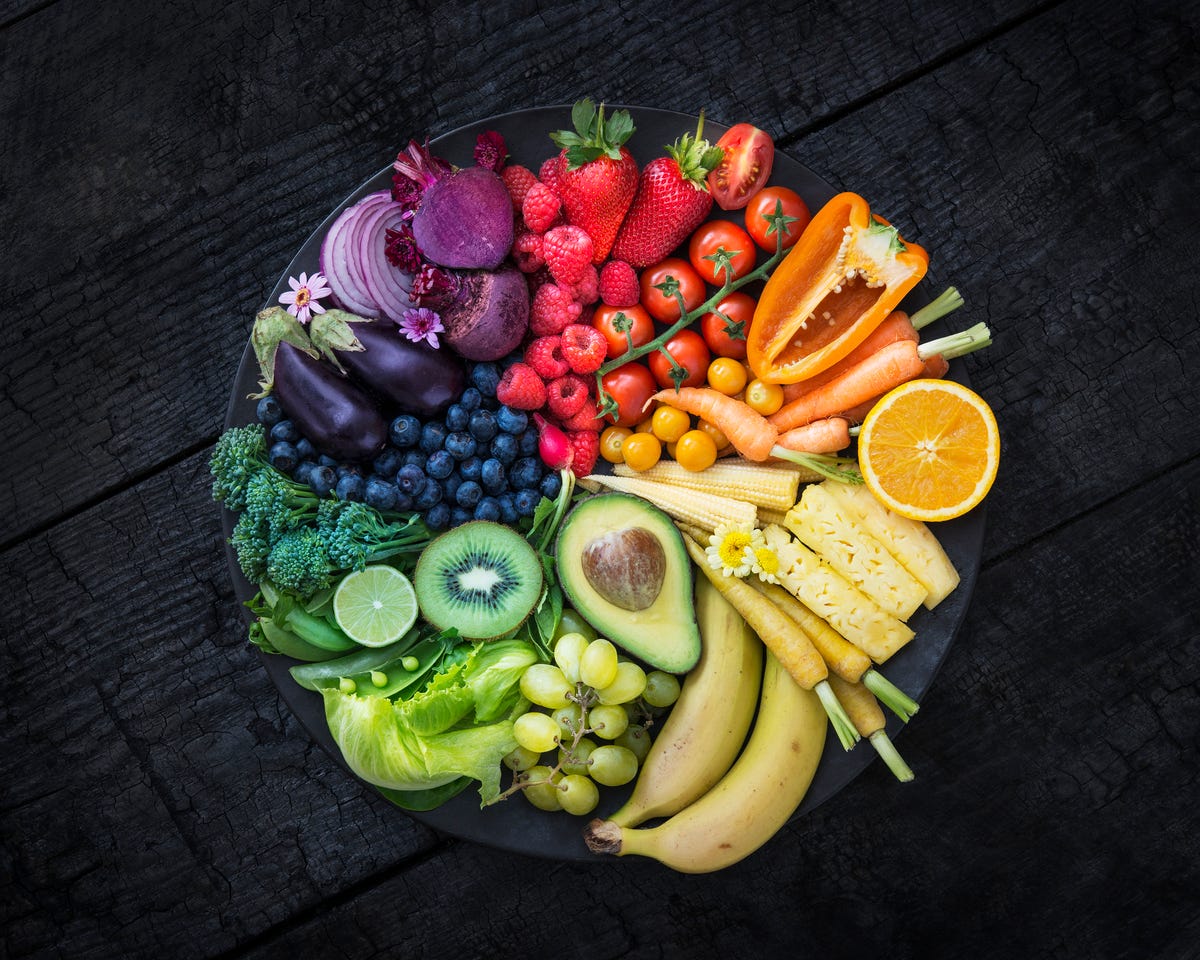
A bright rainbow spectrum of produce on a platter.

David Malan/Getty Images

Conversely, if you’re trying to boost cardiovascular health, you want to limit your intake of:

  • Trans fats
  • Saturated fats
  • Processed meats (for example, lunch meat, salami and hot dogs)
  • Excess salt
  • Excess sugar
  • Refined carbohydrates (for example, white breads and snacks)
  • Red meat
  • Excess alcohol

If a lot of your favorites are on the less heart-healthy list, don’t panic. You can still include them in your diet (unless your doctor says otherwise). Just make sure that these foods aren’t taking over every meal, and try to add as many heart-healthy foods into your day as you can.

Heart-healthy foods

Person in a long brown dress browses a grocery store aisle.

d3sign/Getty Images

If you want to feel good about what your next grocery trip will do for your heart health, you can grab items in these specific categories.

1. Fruits and vegetables

Remember the food pyramid from back in the day? It was on to something. Your body benefits from eating quite a bit of produce.

That’s because veggies and fruit load in a lot of nutritional density per bite. Bananas and sweet potatoes deliver potassium, a key mineral for heart health. Cruciferous veggies may help to prevent clogged arteries. Leafy greens deliver fiber, which can help to lower cholesterol and blood pressure. 

Long story short, the more produce you’re packing in, the better. And if fresh produce doesn’t work for your budget or your lifestyle, don’t worry. You can get plenty of nutritional benefits from frozen, dried and canned options. Just make sure they’re marked low-sodium. 

2. Whole grains

Not all carbs are bad. Refined carbs like the ones in white bread fly through your body, usually doing you more harm than good. But complex carbohydrates, like the ones you’ll find in whole grain products, deliver fiber, which we’ve already mentioned as a heart health booster. 

Plus, they often come packed with vitamins and minerals like iron, selenium, thiamin (Vitamin B1), riboflavin (Vitamin B2), niacin (Vitamin B3), folate (Vitamin B9) and magnesium. If you’re looking for a heart-healthy diet, choose products that have whole grains in their ingredient list. Plus, complex carbs can also be found in beans, potatoes, peas and corn.

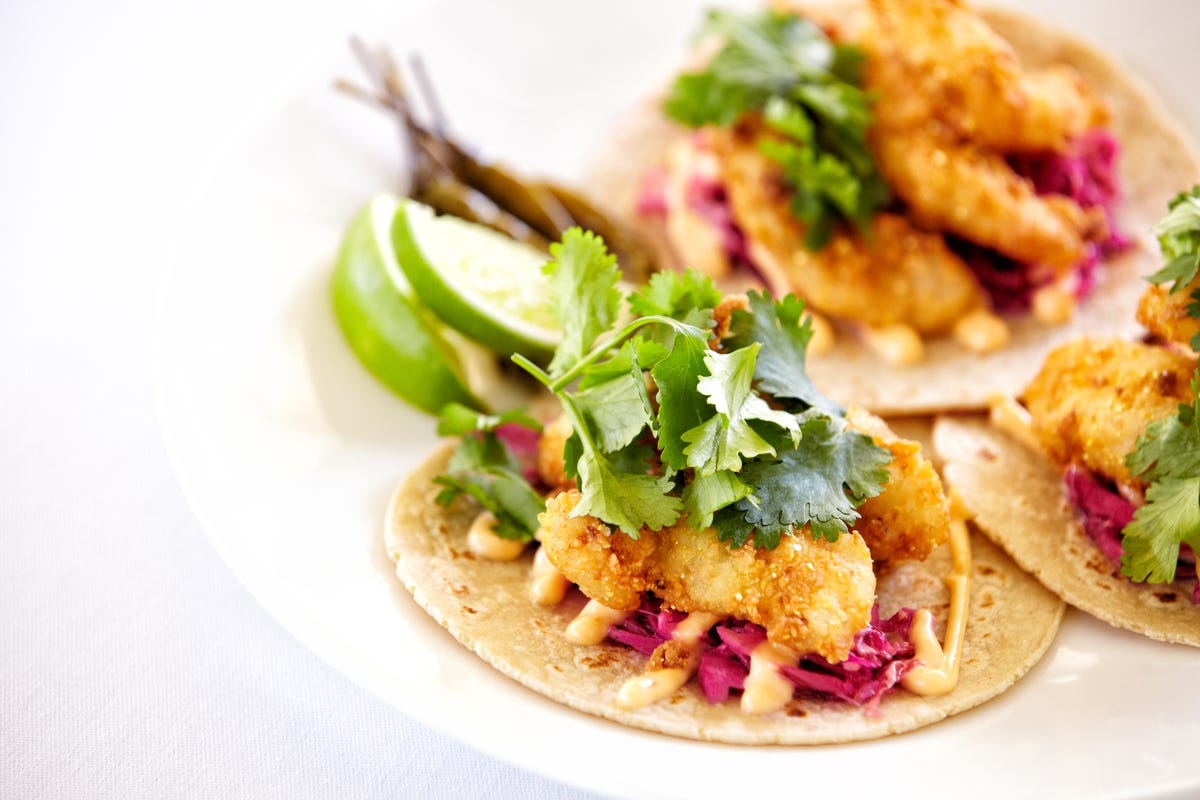
Fish tacos on a plate, with corn tortillas and fresh cilantro.

GSPictures/Getty Images

3. Lean and plant protein

While certain proteins — like red and processed meat — can be hard on your heart, others top the list of foods for heart health. The key here is to look for plant-based protein, lean animal proteins and fish. Experts recommend mixing up your protein sources. So you have plenty of options, stock up on:

  • Lentils
  • Beans
  • Nuts
  • Seeds
  • Tofu
  • Fish, especially ones high in omega-3 fatty acids
  • Eggs
  • Low-fat dairy products
  • Poultry
  • Seeds

Swap some of your red meat and cured pork for the options above and you’ll be doing your heart a favor. 

4. Healthy fats

You might think that fat spells heart trouble, but it’s all about the type of fat. While trans and saturated fats have been linked to cardiovascular issues in numerous studies, your body, including your heart, needs healthy fats. You can get these from fish, nuts and seeds, along with avocados and moderate amounts of plant oils like:

  • Olive oil
  • Sesame oil
  • Sunflower 
  • Soybean oil
  • Canola oil
  • Corn oil
  • Safflower oil

As a general rule of thumb, if the fat would be solid at room temp, it’s probably saturated. If it would be a liquid, it most likely falls under the unsaturated variety. Think butter (controversial for health) versus olive oil (definitely part of a heart-healthy diet). 

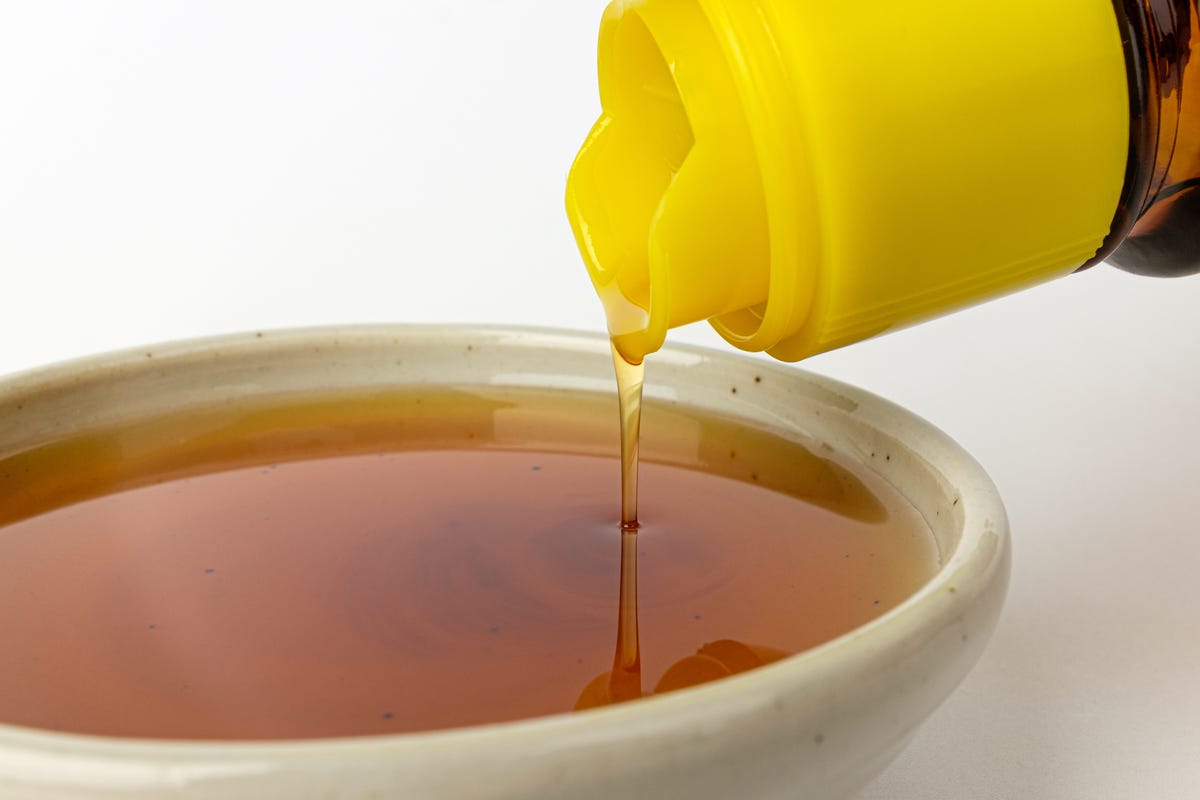
Sesame oil pouring into a small dish.

SUNGMIN/Getty Images

5. Heart-check foods

The American Heart Association has certified certain foods for heart health and given them the Heart-Check seal, which you can find on some food packaging. Once you learn that seal, it can make it easier to stock your cart with foods for heart health. 

For the best results, pair your heart-healthy diet with other heart health boosters like regular exercise, sleep and stress management techniques. It can also be helpful to learn your blood type and what it means for your risk of specific cardiovascular conditions. 

The information contained in this article is for educational and informational purposes only and is not intended as health or medical advice. Always consult a physician or other qualified health provider regarding any questions you may have about a medical condition or health objectives.