Smith told WIRED that Amazon keeps patient health information confidential and secure in compliance with federal law and regulations, and in line with industry standards; Amazon Clinic customer data will be protected through the use of HIPAA-compliant encryption methods. “Protecting patient information is an important part of our business; we are not in the business of selling or sharing it,” Smith wrote.
Amazon’s recent efforts to break into health care raise a more fundamental question: Should Big Tech even be allowed in the sector? The motivations of a private company—efficiency, optimization, and above all, profit—don’t exactly square with serving the public good, says Tamar Sharon, a professor at Radboud University in the Netherlands whose work explores the politics and ethics of Big Tech in health and medicine—or as she dubs it, the “Googlization of health.”
Amazon Care, a telehealth service Amazon piloted among its employees and then rolled out to other customers, shows how things can go wrong. Its shutdown was announced a few months ago, with the senior vice president in charge of the program, Neil Lindsay, writing in an internal memo Amazon shared with WIRED: “Although our enrolled members have loved many aspects of Amazon Care, it is not a complete enough offering for the large enterprise customers we have been targeting, and wasn’t going to work long-term.”
But it was plagued by other problems, too. A Washington Post investigation alleged that moving at top speed and efficiency sometimes conflicted with best practices in medicine: For example, nurses were asked to process patient blood samples in their personal cars, the paper reported, and to store and dispose of medical supplies at home, which they protested. (Amazon told the Post that they could not find records of complaints about these matters.)
“Amazon Care followed common practices for in-home care and know them to be safe and appropriate,” Smith told WIRED. “For example, Amazon Care clinicians were always equipped with Stericycle medical waste return equipment to properly and securely return or dispose of supplies.”
For Sharon, a big concern is how reliant we risk becoming on big companies as mediators of fundamental public needs. “This is a dangerous situation—that we would become dependent on a handful of private actors for the distribution of very basic goods, like health, or education, or public services,” she says. For instance, as these companies increasingly fund and perform their own research, it’s possible they could influence how the research agenda is set. That could be a problem if tech founders’ penchant for wanting to live forever results in a focus on funding longevity research over, say, cancer treatments.
Yet private companies entering public spaces isn’t always inherently bad, says Wachter. Arguably, the multitrillion-dollar American health care system is the perfect target for new players. As Scott Galloway, a professor of marketing at the New York University Stern School of Business, points out in his newsletter, health care spending in the US far surpasses that of other rich countries, yet life expectancy is lower, creating an opportunity for new services to offer better value to patients. “The US health care industry is a wounded 7-ton seal, drifting aimlessly, bleeding into the sea. Predators are circling,” he wrote. “Amazon is the lurking megalodon, its 11-foot jaws and 7-inch teeth the largest in history.”
You could argue that Amazon is simply filling a gap in a broken system. With its new service, the company appears to be applying the same principles that made it so successful as a retailer: easy access, rapid delivery, competitive pricing—hard-to-refuse conveniences that appeal to humans’ inherent laziness, for sure, but which might also make good health care more affordable in a system divided between the haves and have-nots.
In exchange for convenience and better access, there are likely to be tradeoffs. “If we do that, we want to do it right,” says Wachter. “We just have to think about all the possible negative consequences to make sure that they don’t happen.”
David Goldhill is the chief executive of SesameCare.com, a digital marketplace for discounted health services.
The United States spends twice as much per person as other wealthy countries on health care. This fact is well-known, and when it is mentioned, people often point out that the governments of other developed countries leverage purchasing power to drive cheaper, more universal care. So why doesn’t the United States do the same thing?
Because we can’t. In fact, the do-what-everyone-else-does option is uniquely unavailable to us.
The world’s other health-care systems survive only because they receive a massive and ongoing, but hidden, subsidy courtesy of the inefficient U.S. system. Two unique features of our arrangement — the absence of price controls and the profit drive of doctors and hospitals — allow other countries to transfer the risk and cost of medical innovation to Americans.
And unlike in any other industry, once Americans have borne the costs of lifesaving breakthroughs as well as incremental improvements in tools and techniques, these can be used elsewhere at little extra cost. American exorbitance allows other nations to offer price-controlled universal care with none of the decline in quality, technology or productivity that would otherwise result from central planning.
A similar complaint has been made about the country’s defense alliance: U.S. allies ride free on American defense spending. Health care, indeed, is a kind of second NATO.
The United States can’t lower its costs by doing what other countries do, because what others do depends on our unique system remaining as is. Our only hope is to put in place more sensible economic structures that could introduce the competition that’s necessary to bring prices down.
The size of the U.S. health-care system is almost impossible to overstate. With barely four percent of the world’s population, the United States accounts for almost half of the world’s $8 trillion health-care economy. England’s National Health Service is tiny by comparison — barely bigger than U.S. Veterans Affairs health system funding. Canada’s total spending is comparable to the revenue of a single American company, United Health. Free-market star Singapore spends only as much as New Jersey’s Medicaid program.
The world’s top 10 spenders in pharmaceutical products
In 2020, the United States spent more on pharmaceutical products than all other nine spenders in the ranking combined.
All other top 9
countries combined
Notes: Prices are reported at the ex-manufacturer level (price when sold from manufacturer to wholesaler or direct to pharmacies). * Hospital market only. **Pharmacy market only.
The world’s top 10 spenders in pharmaceutical products
In 2020, the United States spent more on pharmaceutical products than all other nine spenders in the ranking combined.
All other top 9 countries combined
Notes: Prices are reported at the ex-manufacturer level (price when sold from manufacturer to wholesaler or direct to pharmacies). * Hospital market only. **Pharmacy market only.
The world’s top 10 spenders in pharmaceutical products
In 2020, the United States spent more on pharmaceutical products than all other nine spenders in the ranking combined.
All other top 9 countries combined
Notes: Prices are reported at the ex-manufacturer level (price when sold from manufacturer to wholesaler or direct to pharmacies). * Hospital market only. **Pharmacy market only.
This is why all health-care innovators — makers of drugs, devices, diagnostics, medical software — share the same business plan: Make money in the United States and take whatever scraps you can get in the other markets.
The pharmaceutical industry earns almost 50 percent of its worldwide revenue here, as do medical information-technology firms. Device makers earn 40 percent of their money in the United States. And this understates things, because U.S. revenue is generated from higher prices, so margins are greater. If the United States accounts for half of a company’s revenue, it probably contributes at least 75 percent of its profits.
America’s domination might not seem obvious. After all, high-tech health care exists everywhere in the world. Even in emerging economies, brilliant researchers, great universities and advanced companies perform cutting-edge research. Many have close relationships with their countries’ health-care systems, and some innovations are introduced in other nations. But the profit opportunity — the reason to invest — is always generated in the United States.
Consider the well-known miracle drug Gleevec. Before it came along in 2001, less than 30 percent of patients diagnosed with chronic myelogenous leukemia survived at least five years; today, 90 percent do.
Gleevec is also a poster drug for American dysfunction. Novartis steadily raised its price in the United States — even after its patent expired — to eventually reaching more than $123,000 per year in 2020. Yet, in Canada, Gleevec was priced at $38,000. A generic version in India now costs just $400.
Drugmakers and their opponents argue over the “fair” returns on innovation that companies need to maintain their incentive to invest in new medicines. Critics point to the share of pharma’s profits that come from barely legal anticompetitive behavior or from drugs created with heavy public support — such as the U.S. government’s $12 billion investment in coronavirus vaccines.
But enormous returns on a few blockbuster drugs compensate for drugmakers’ many unsuccessful products. That’s the business model, and these big, “unfair” returns are available only in the United States.
If the world’s largest health economy limited drug companies to “fair” returns — as other countries try to — then few new drugs would be created. The United States doesn’t pay $123,000 a year for Gleevec despite Canada paying only $38,000; Canada can pay $38,000 only because the United States pays $140,000.
And while pharmaceuticals might be the most obvious area in which the U.S. economy drives innovation, the $3.5 trillion we spend on care other than drugs makes an even greater contribution to world health-care advances.
In 2000, Intuitive Surgical Systems introduced the first commercially successful robotic surgery system. The company’s da Vinci robots carry $2 million price tags plus costly service contracts. In the first 20 years, 6,000 of the robots were sold worldwide, and American hospitals purchased roughly two-thirds of them.
Why? In the United States, the prices charged by hospitals and doctors are unrestricted. American physicians earn roughly two to three times as much as their counterparts in western Europe. Hospitals charge two to five times as much for their services.
The obvious, if rarely asked, question is: Why doesn’t competition bring U.S. health-care prices down? The answer: America’s stagnant third-party payment system allows hospitals and doctors to avoid competing on price. Instead, they compete on innovation. This is why hospitals advertise advanced, high-tech cancer therapies; surgeons build reputations for cutting-edge procedures; and even your family physician must invest to keep up.
Right now, we’re stuck. We want what every other country has. American reformers believe we’re just one clever policy tweak away from getting it — perhaps by instituting accountable care or “value-based” care.
But the only way to lower U.S. health-care costs is to rethink the system’s top-down policy structures that rely on huge, centralized payers.
What’s needed is a way to separate the safety net function that insurance provides from consumer decision-making. If insurance covered only major and unanticipated health problems, a consumer economy could drive competition in the rest of the system. This would give doctors and hospitals an economic incentive to bundle services, enhance efficiency, reduce waste and offer genuinely “value-driven” care.
In this century, the world has seen the democratization of many services considered “too complicated” for consumers — computers, finance, international travel, furniture construction, you name it. All this happened because people had enough control over their own spending to drive competition among innovators. It’s how industry managed to put supercomputer power in everyone’s pocket, while reducing price by 99 percent.
Until the same kind of competition is introduced in health care, the U.S. system will continue to subsidize the world — and cost us a fortune.
When you look at the numbers, it’s easy to gape in horror.
In Ghana, a nation of 32 million people, there are only 62 psychiatrists.
Zimbabwe, with a population of 15 million, has only 19 psychiatrists.
And in Uganda, there are 47 psychiatrists serving a country of 48 million — less than one single psychiatrist for every million people.
These are staggering ratios. To get your head around them, take the US as a comparison. There are around 45,000 psychiatrists for all 333 million Americans, which translates to about 135psychiatrists for every million people. That’s still not enough — experts are actually warning of an escalating shortage — and yet it’s a whopping 135 times more coverage than exists in Uganda.
These numbers have very real, and sometimes very brutal, implications for people’s lives. When psychiatry and other forms of professional mental health care are not accessible, people suffer in silence or turn to whatever options they can find. In Ghana, for instance, thousands of desperate families bring their ailing loved ones to “prayer camps” in hopes of healing, only to find that the self-styled prophets there chain their loved ones to trees. Instead of receiving medical treatment for, say, schizophrenia, the patients receive prayers.
The scandal of mental health care in developing countries has been well documented, and surveying it, you could be forgiven for thinking the solution is straightforward: These countries just need to train more psychiatrists and mental health professionals of the type you’d find in the US.
But that’s too simplistic. Yes, training more mental health specialists will be part of the answer for these nations. But what’s most interesting is that developing countries have also figured out a new way to tackle the deficit in mental health care — and it could hold lessons for the developed world as well.
Specifically, these nations have been serving as a proving ground for a model called community-based care, where non-specialist providers or lightly trained laypeople — picture someone like your grandmother, not a doctor — deliver brief mental health interventions in informal settings like homes or parks.
Whereas importing Western norms can alienate local populations, who may not view mental health problems as medical, brain-based problems, community-based care has found acceptance because it pays attention to cultural context. Lay counsellors meet patients where they are — both literally, in terms of physical space, and conceptually, in terms of their beliefs about mental health.
This model has turned out to be not only cheap to operate and easy to scale, but also incredibly effective for treating issues like depression. So effective, in fact, that the model is now being exported to the US, which stands to learn a lot from these poorer countries.
Dixon Chipanda, psychiatrist and founder of the NGO Friendship Bench, visits with his grandmother. He says she was part of his inspiration for the benches project.Brent Stirton/Getty Images
In 19th-century Europe, the reigning paradigm of mental health care was the asylum. The belief was that people suffering from psychiatric conditions should be institutionalized and treated on an inpatient basis. As Europeans exported this belief to the territories they colonized, asylums sprang up everywhere, from Ghana to India.
By the middle of the 20th century, asylums were becoming discredited: They were too often sites of coercion and violence, not to mention notoriously overcrowded and unhygienic. At the same time, the discovery of new psychiatric medications fostered hope that patients could be treated on an outpatient basis. In Europe, many asylums shut down.
In Accra, the capital city of Ghana, a psychiatric hospital built on this model in 1904 still houses hundreds of patients, some voluntary and some involuntary. Their issues range from depression to psychosis. It’s a resource-strapped, overcrowded institution. When I visited the hospital in 2019, I found that some patients sleep outdoors in a courtyard, where a motley collection of beds draped in mosquito nets was scattered around.
Thinking about the legacy of colonialism helps explain why this warehousing of the mentally ill persists, explained Vikram Patel, a psychiatrist and a professor of global health at Harvard Medical School.
“When the Europeans left Africa, Asia, and Latin America, they left virtually no higher education infrastructure for the native people. Basically, the colonizers left nothing,” he said. Upon gaining independence, some postcolonial countries had just one medical school for the whole nation. “And if psychiatrists can only be trained in medical schools, well, then, you know. There’s nothing.”
The very limited training capacity — and very limited funding to increase that capacity — has led to a supply-side problem. Today, that problem is aggravated by a major brain drain: The few who do train in psychiatry tend to move to richer nations offering them a more comfortable life.
And most would-be doctors in Africadon’t want to specialize in psychiatry. For some, that’s because it’s associated with institutionalization or incarceration. Others, aware that their cultures stigmatize mental illness as the work of evil spirits, may fear being viewed as “tainted” by contact with mentally ill people. And this stigma creeps all the way up to the policymakers debating how to allocate scarce resources.
“We bring these stigmas into the boardrooms and into decisions we make around fiscal planning,” Tina Ntulo, who leads the mental health nonprofit StrongMinds in Uganda, told me. “You do not budget for a person who you think is cursed or bewitched.”
Many would-be patients are also hesitant to see psychiatrists, who represent a foreign idea.
“People just don’t conceive of their mental health problem as a biomedical problem,” Patel said. “They do not say ‘I feel the way I do because I have an illness in the brain.’ That is exquisitely uncommon.”
And in cultures that don’t view mental health problems through a medical lens, stigma is a major barrier to seeking out professional care. In one large-scale survey in Nigeria, for example, 83 percent of respondents said they would be afraid to even have a conversation with someone with a mental health problem. The social costs of being branded as mentally unwell are just too high.
This is part of why some developing countries are moving toward community-based care. When you receive care from someone who’s familiar and helps you without necessarily applying a diagnostic label, it can mean there’s less stigma.
Despite being a psychiatrist himself, Patel does not believe the answer to the mental health care deficit is to just train more doctors like him. Instead, he’s become one of the most influential advocates for community-based care, where people with just a bit of training — weeks or months, not years — offer focused therapy. Empowering non-specialist providers or laypeople to take on tasks formerly done by specialists is what the World Health Organization refers to as “task-shifting” or “task-sharing.”
You might think that therapy delivered by a layperson is fine for countries that can’t afford more mental health professionals, but certainly not the ideal. Yet Patel and others who embrace the community-based model are making a much more radical claim.
“A lot of people think this is just a stopgap arrangement. It’s not,” Patel told me. “In the US itself, you need community health workers. What we need in all countries is the same model. We need to have an army of community-based health workers, nurses, social workers, delivering evidence-based interventions.”
And they are, in fact, evidence-based. Over the past two decades, dozens of randomized controlled trials (RCTs) and other studies have come out in favor of the community-based model.
Friendship Bench offers a prime example of what community-based care can look like. Rather than expecting people who are mentally unwell to seek out a psychiatrist’s office, this Zimbabwean nonprofit recruits “grandmothers” — middle-aged or older women who help out in their communities — to learn enough about depression and anxiety to recognize them, and then to treat those disorders using problem-solving therapy. That’s exactly what it sounds like: a therapy that teaches people the skills to devise their own solutions to the problems they face.
Each grandmother, recognizable in her uniform, will then go sit on a bench in a yard. People come along, wanting to talk. In fact, since Friendship Bench was created in 2006, more than 1,600 grandmothers have been trained, and they’ve already served more than 158,000 people — to great effect.
Friendship Bench counsellors attend a Sunday service at the Catholic church in Msvingo, Zimbabwe. The NGO offers free mental health counselling through trained grandmothers who work as lay health workers in clinics.Brent Stirton/Getty Images
In a 2016 study, 573 patients were assigned to either a Friendship Bench or to a bolstered version of standard psychiatric care available in Zimbabwe, which includes antidepressants. Six months later, only 14 percent of those who’d sat with a grandmother were still depressed, compared to 50 percent of those in the standard care group.
Another great example can be found in Uganda and Zambia: StrongMinds, a nonprofit founded in 2013, trains laypeople to lead group talk therapy sessions as a way to treat women with depression. Over a 12-week period, the women learn to identify the triggers of their depression and devise strategies to overcome them, using a form of therapy called group interpersonal therapy.
“This therapy is culturally appropriate. It sees interpersonal relationships as the treatment for depression,” said Tina Ntulo, the country director for Uganda. “And on this continent we are still highly relational and dependent on each other.”
Working with laypeople has enabled StrongMinds to scale up quickly, reaching more than 160,000 women to date.
“One of the amazing things our staff found is that the village volunteers [who’ve been trained to deliver the therapy] are so much better at mobilizing the women to come for therapy,” Ntulo told me. “Our staff said they never saw such high attendance for therapy when they were running it.”
Two RCTs have demonstrated that this intervention is both powerful and cost-effective. Independent researchers estimate that StrongMinds prevents the equivalent of one year of severe major depressive disorder for a woman at a cost of $248 — a pretty good deal, especially when you consider this helps the woman as well as her dependents.
Such interventions have spillover effects. The researchers note that mental health care can lead to material benefits: A non-depressed woman is more likely to be able to work, earn income, and get her kids to school so they can one day work and earn income, too.
A third example of community-based care can be found in India, where Patel co-founded an organization called Sangath. It developed a six-session program in which lay counselors treat patients with severe depression. The program showed strong results, leading to significantly lower symptom severity and higher remission than in a control group after three months.
But what’s really amazing about it is that, a full five years after researchers conducted the initial trial in India, a followup still showed significant differences between those who had received the treatment and a control group. The benefits, it turned out, could really last.
Right about now, you may be thinking: This laypeople stuff sounds all well and good for people dealing with common mental disorders like depression or anxiety, especially if they’ve got mild cases, but some people need an actual psychiatrist.
Even ardent proponents of community-based care agree with that.
“You need some psychiatrists. There’s no question that they play a role,” Patel said. That can be true even when it comes to the common mental disorders: After all, though Sangath’s community-based program for treating depression in India showed strong results, about a third of participants remained depressed after the program.
So the claim is not that community-based care should replace psychiatry. It’s that making mental health care primarily the business of psychiatrists, with little room for alternative approaches depending on context, is a mistake.
Of course, achieving the right balance between the two models is tricky.
At StrongMinds, Ntulo is very clear with the laypeople being trained about what is and isn’t within their remit. “When a person’s symptoms fall outside depression, this is not your client,” she said. “So you refer the person to the health center, and a clinician there will assess.”
At a health center, some of the tasks reserved in the West for a psychiatrist have been shifted to nurses. They can prescribe certain medications, for instance. They consult a flow chart that makes it easier to assess a patient — is he hearing voices or not? — and when symptoms indicate the patient’s problem is beyond their capacity, the nurses refer him to the next level of care above them. Essentially, laypeople handle the easier cases, nurses handle somewhat more complex cases, and the really complex cases may be referred to a psychiatrist for treatment.
StrongMinds is not anti-medication on principle, but doesn’t dispense it — partly because current-generation psychiatric medications are less available in developing countries like Uganda, and partly because much of the population would balk at the idea that a mental health condition is something they should treat with medication. Instead, StrongMinds uses the methods it thinks are most effective for the context.
It’s a system that makes sense to Ntulo, who says only a minority of people need a psychiatrist. “Everybody else could actually receive services through talk therapy and they’d probably be able to stay well for a long time,” she told me.
Patel agrees. He estimates that community-based care could probably address 80 percent of mental health morbidity. “The irony is that 80 percent of the money that’s being spent — this is my back-of-the-envelope calculation — is for that 20 percent that need hospitalization,” he said. “I think the real problem is that we do not spend enough at the base of the pyramid.”
Kwabena Kusi-Mensah, a Ghanaian psychiatrist, is a little skeptical about how far community-based care can go. “On paper, it’s a brilliant idea, really fantastic,” he said. “But having watched it be implemented for over 10 years now, there have been serious problems and challenges.”
Ghana, he explained, has trained a lot of mid-level staff called community psychiatric officers. These CPOs are like physicians’ assistants who’ve been given some additional training in psychiatry. The idea was that they would work in small villages or towns, to help bridge the treatment gap there.
In reality, the CPOs have drifted into major urban centers; now that they’ve got specialized training, they want to use it to secure a better life for themselves. But what’s even more worrying to Kusi-Mensah is that some of them are going over and above what they’ve been trained to do. He worries that this overreach could put patients at risk — if, for instance, they try to treat problems they’re not qualified to treat.
For that reason, he actually prefers task-sharing of the sort that Friendship Bench does with its grandmothers. “These are not medical people,” he said, “so they are less likely to overreach and do things they’re not supposed to do.”
A carpenter works on a bench near a Friendship Bench site.Brent Stirton/ Getty Images
When it comes to tasks that require medical know-how, he’d prefer to see psychiatrists in place to handle those, not mid-level staff. And he told me he’s “hyped up psychiatry” to many young medical students, enticing them to enter the field. But he’s careful not to entrench himself too much in either a pro-psychiatry camp or a pro-community-care camp because he doesn’t want to become too ideologically attached to one or the other.
“With extremes of ideology, if you lean too much to one way or another, you end up in a ditch,” he said. “So stay in the middle of the road, is the way I think about it.”
What all these community-based programs, and others in a similar vein, have discovered is the power of getting local laypeople to meet folks where they are.
Kusi-Mensah emphasized that importing Western norms just doesn’t work: If you want to help people in a place like West Africa, you can’t discount the importance of traditional beliefs, including religion.
“In our cultural background, where things are overspiritualized, our biggest competitors in mental health provision are the prophets,” he told me, referring to those who profess to heal patients with prayers, like in Ghana’s notorious prayer camps.
Efforts are now underway to work with, not against, faith-based healers to improve care. Some mental health professionals have gone to the prayer camps and introduced medications as a complementary treatment. Instead of saying “prayer doesn’t work, take this pill instead,” they might encourage prayers to be said alongside medical treatment. This type of collaboration has resulted in improved clinical outcomes for the patients.
But working within the camps is controversial because it could give the appearance of condoning them. Less controversial are efforts to partner with religious leaders in various towns and villages. Pastors and imams often double as informal mental health counselors anyway — that’s true in the US, too — so, the thinking goes, why not view them as another cadre of laypeople who can be trained? And for mental health problems that are beyond their ken, why not establish a referral pathway between them and the mental health care professionals?
“I’m a bit of a pragmatist,” Kusi-Mensah told me. “So I think the best we’re going to get is this sort of rapprochement, where it’s like, ‘Okay, there’s a spiritual component, so let the pastor handle that, but also there’s a medical component, so the doctor will handle that.’”
Western nations like the US favor a biomedical and highly individualistic view of mental health. Compared to, say, a Ghanaian, an American is more likely to conceive of her mental health problem as a brain problem and seek out medication from a psychiatrist. And she’s got a far better chance of accessing one.
Yet Americans’ mental health is in such bad shape that the US Preventive Services Task Force recently recommended that doctors screen every patient under 65 for anxiety. And 90 percent of American adults say the US is experiencing a mental health crisis, according to a new poll from CNN and the Kaiser Family Foundation.
To Patel, this indicates that the biomedical system can’t be the whole solution. “Mental health care is inadequate not because there’s not enough psychiatrists in most countries,” he said. “If that was the case, the US should have a perfect system. But it has a huge number of problems. It is living proof that the problem isn’t only about the lack of psychiatrists.”
America once flirted with the idea of community-based care. As Vice explained:
It’s taken a few decades, but America now seems ready to experiment with community-based care again as a supplement to psychiatry. What’s exciting is that, this time, it’s taking inspiration from poorer countries.
Zimbabwe’s Friendship Benches have made their way to New York City. Walk around Manhattan and you might see a trained layperson sitting on a big orange bench, waiting to listen or talk about issues ranging from depression to addiction. These are issues some of the laypeople have experienced themselves, so they’re nonjudgmental. They literally meet people where they are, lugging their bench around from spot to spot, as part of the Thrive NYC program aiming to create a mental health system that works for everyone.
India’s Sangath program for depression, meanwhile, is now being rolled out in Texas, where Patel is collaborating with the Meadows Mental Health Policy Institute and Baylor Scott and White, the largest not-for-profit health care system in the state.
And this year, Uganda’s StrongMinds is setting up a pilot in New Jersey. The idea is to address the US mental health gap by reaching people who can’t afford to pay for a licensed professional, with a focus on serving Black people, Indigenous people, and people of color.
“We just finished training the team in New Jersey!” Ntulo told me. “They’re going to use the same model we use. It’s an amazing solution for a health system that is so commoditized, like yours.”
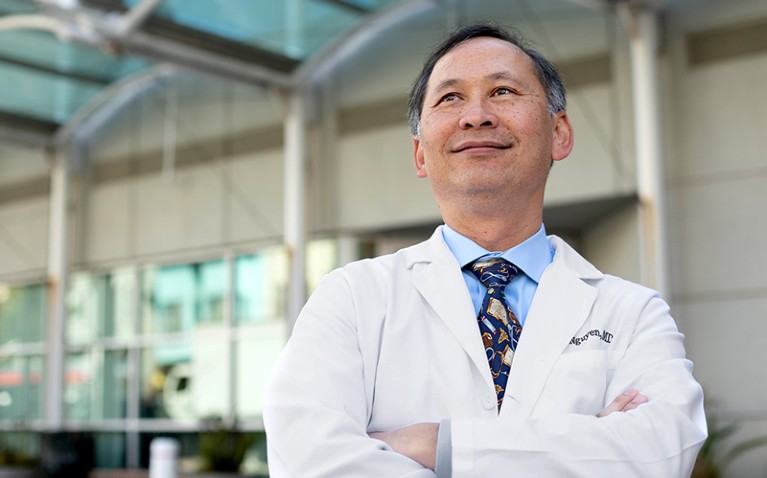
Health-equity researcher Tung Nguyen guides several anti-racism efforts at the University of California, San Francisco.Credit: Susan Merrell
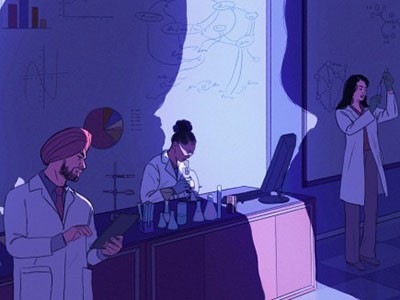
Decolonizing science
Science is steeped in injustice and exploitation. Scientific insights from marginalized people have been erased, natural-history specimens have been taken without consent and genetics data have been manipulated to back eugenics movements. Without acknowledgement and redress of this legacy, many people from minority ethnic groups have little trust in science and certainly don’t feel welcome in academia — an ongoing barrier to the levels of diversity that many universities claim to pursue.
In the next of a short series of articles about decolonizing the biosciences, Tung Nguyen, who was appointed associate vice-chancellor for research inclusion, diversity, equity and anti-racism at University of California, San Francisco (UCSF) in September, offers advice for reforms in health research. Nguyen, a health-equity researcher who is also the director of the UCSF Asian American Research Center on Health, says anti-racism efforts start with engaging underserved communities and nurturing diverse trainees in health research and health care.
I studied medicine because I didn’t see health care and health research addressing the needs of the Asian community in the San Francisco Bay area — the part of California where I moved, as an 11-year-old non-English speaker, when my family emigrated from Vietnam. For the past 20 years, I’ve been doing health-equity research, focusing on cancer interventions.
In this country, the health-research world has many aspects that are anti-Asian. A lack of data on one racial identity is always a sign of racism because it essentially means that a portion of the population is invisible. For example, we know that about one-third to one-half of Asian Americans don’t speak English well enough to take a medical survey conducted in English. The ‘Asian’ responses to such a survey will include only English speakers; in addition, all of the ‘Asian’ respondents will be lumped together, despite the diversity of Asian cultures.
Lack of urgency
Although some institutions are trying to hire diverse candidates, there is a fundamental lack of urgency when it comes to addressing systemic racism. The issues I’ve mentioned are all structural problems. I think that there can be no systematic change without engaging everyone involved — from medical-department heads to members of the communities that institutions purportedly serve.
In 2020, my colleagues and I created an anti-racism task force at the University of California, San Francisco. Using a community-engagement approach, we convened a committee of 25 members, including institutional and community leaders, staff, faculty members and trainees. Over the course of a year, we solicited information throughout the university and produced a report with 160 recommendations — ranging from funding for research that investigates the structures that sustain racism, to conducting more community engagement in scholarship.
Most institutions are too top-down. I’ve learnt that the academic hierarchy is a basic challenge to doing equity work on campuses. White men tend to be over-represented among faculty members, whereas non-faculty staff members tend to include more women and under-represented minority groups. We make sure the staff and faculty members meet and are mindful of — and acknowledge — the power dynamics that exist. Otherwise, our efforts wouldn’t be inclusive.
To better diversify recruitment of study participants, in 2021, my colleagues and I created the Research Action Group for Equity, or RAGE — an acronym we deliberately chose because we are angry about the lack of minority-health data and participation, and we want to make things uncomfortable for the powers that be. RAGE works with the UCSF Clinical & Translational Science Institute to make sure that recruitment is an inclusive process. We engage community leaders who are bicultural or bilingual to provide translation support or address cultural concerns.
Decolonizing science toolkit
If my colleagues and I can diversify the health-care workforce at UCSF, we can definitely improve the economic status of diverse communities as well as the reach of biomedical research into those communities. We have a US National Institutes of Health BUILD award to address the lack of diversity among biomedical researchers. If you want minority students and trainees, you have got to go to where they are. In our case, we recruited trainees from San Francisco State University, a Hispanic-focused, minority-serving institution. We trained these junior research and health professionals to become, for example, clinical research coordinators to manage studies and conduct experiments.
This expands the job opportunities available to these trainees and diversifies participation in research. But when people talk about efforts to increase the numbers of early-career scholars from diverse backgrounds, I hate the term ‘pipeline programme’. ‘Pipeline’ implies that you have to fit into a pipeline to begin with and you come out the other end, where the system wants you to come out. Furthermore, if the pipeline is producing a steady stream of talented PhDs from under-represented communities but the system does not increase the number of senior roles these people hold, it’s not a pipeline problem. Instead, it’s a dam problem — pun intended; there are structural barriers to workplace diversity that need to be removed.
UCSF has its own continuing challenges in terms of anti-racism efforts, but the institution has been transparent. It has a dashboard that highlights racial, ethnic and gender diversity among faculty members, staff and trainees. The situation fluctuates, and the numbers have never been great for typically under-represented groups in medicine, such as Black and Hispanic people. But it’s important that the problem be visible so that we can actually improve.
It’s frustrating that successful diversity, equity and inclusivity programmes often don’t get sustained. Under-represented groups are used to people coming in with money and then leaving. I have helped to develop the AEIOU principles, which will be the foundation of my work as the newly appointed associate vice-chancellor for research inclusion, diversity, equity and anti-racism. A is for accountability and anti-racism, E is for engagement, I is for individual-centred institutional change, O is opportunity, and U is unity. These principles are key to making progress against racism. The system has to change for under-represented groups to be successful, and that requires an increase in opportunities. Oppressive structures maintain oppression by making people perceive a zero-sum game — if someone wins, someone else has to lose. To increase diversity, equity and justice, we need to quit pitting one group against another.
This interview has been edited for length and clarity.
You are reading our weekly Well+Being newsletter. Sign up here to get it delivered to your inbox every Thursday.
Who doesn’t love a good mystery?
For 15 years, medical reporter Sandra G. Boodman has chased down the most unusual, quirkiest and weirdest medical cases for her monthly Medical Mysteries series. Recent stories have focused on a teenager who couldn’t wake up, a woman wrongly diagnosed with ALS, and an entire family and guest felled by a strange flu-like illness.
I checked in with Sandra to find out more about how she writes the column and the lessons we can learn from it.
Here’s our edited conversation.
Q. How do you choose your ideas?
A: It has to be something I haven’t written about. It has to be a solved case. I need to know the ultimate diagnosis. Even though it’s a solved case, there has to be a mystery. And there has to be a human story.
Q. Once you pick a case, how do you report it?
A: I ask for a chronology of events and medical records that confirm the diagnosis. The medical records and chronology enable me to see whether, indeed, this is a mystery, whether it unfolded in an interesting way. Will this be an interesting case?
Then, I interview the patient, sometimes the parent, sometimes the spouse. The last step is to talk to the doctor who made the diagnosis or the current treating physicians. Any step along the way, the process can fail.
Q. Do you write about unsolved cases?
A. No, it has to be a solved case. A lot of people write to me and say, “I have this problem, can you help me?” Unfortunately, that’s not what I do. I did once write about a lawyer in Detroit who had gone to the undiagnosed-disease program at the National Institutes of Health. He’s seen more than 100 doctors and still doesn’t have an answer. But I thought his case was so unusual and interesting, I did make an exception that time.
Q. What are some of your most memorable medical mysteries?
A: I wrote about a family that kept getting recurrent strep throat. They couldn’t figure it out. An enterprising veterinarian got involved. It turned out their cat may have been the vector. When they finally treated the cat, nobody has had strep.
One of the weirder ones — there was a woman who had serious kidney and heart problems. It turned out she was eating too much licorice. That was really odd.
And I still vividly remember a State Department worker who had terrible itching on her head at night. She had even been worked up for a type of cancer. She had seen multiple dermatologists. It turned out she had head lice for an entire year. How did they miss that? That was really stunning.
Q. What have you learned about the medical system from writing about medical mysteries?
A. Medical care has become increasingly specialized. Doctors are familiar with a small slice of what’s going on, yet diagnosis is an inherently complex process. I also think time pressures are worsening. It’s like: “You’ve got 10 minutes. Go.” That’s not going to work with a complicated problem.
I also think sometimes patients are not good at describing the problems. The people who tend to do better are organized and can describe their symptoms in a way that is intelligible for a doctor.
Q. What’s your best advice to patients for getting better medical care?
A. Primary-care doctors can really help a patient. I often see people who go right to specialists. They may not have a primary-care doctor, or they use urgent care when they’re sick. That can be problematic. People really undervalue the role of a good primary-care doctor.
Sign up for the Well+Being newsletter, your source of expert advice and simple tips to help you live well every day
The 2022 Well+Being Gift Guide
Need a gift idea? The Well+Being team shared our favorite finds for cooking, exercising, spending time at home, improving our mental health, presents for your pets and more.
Some gifts are practical and affordable; others are definite splurges. I just bought air fryers for my family members because our Eating Lab columnist Anahad O’Connor recommended it. Runners will appreciate the perfect running shorts recommended by fitness writer Kelyn Soong. Amanda Morris, who writes about disability, suggested hearing-aid jewelry. Reporter Teddy Amenabar has found the perfect traveling coffee mug.
There are lots to choose from, and every item brought us closer to living healthy, fulfilled lives. We hope they do the same for you and your loved ones this year.
Please let us know how we are doing. Email me at wellbeing@washpost.com.
Dear Amy: I am a happily married, 54-year-old woman. I have a great primary medical provider.
“Rebecca” is a nurse practitioner in a large practice. I’ve been going to her for about four years.
Rebecca is personable, interesting, authentic, and has an easy and fun sense of humor. She asks about my family, vacations, etc., and seems to just be a good person.
From day one, I leave every medical appointment wanting to be friends with her. We just seem to have a compatible energy and sort of “click.”
At my most recent pre-op appointment, she greeted me with a huge smile and a very enthusiastic, “I’m SO glad you’re finally able to have this surgery! I’m SO happy for you!”
I have no idea if this is just her typical “bedside manner,” but I was quite touched.
I have a good group of girlfriends, and I deeply value friendship as one of life’s great joys.
If Rebecca were not my doctor, I would invite her to coffee, and be open to either making a new friend – or not.
But given the boundaries of this relationship, is there any way to figure out if we could be friends, or if this is just how she is with all her patients?
And ethically, CAN a doctor and patient become friends?
If so, it would be worth switching to a different provider in the practice, but I don’t want to make that switch for nothing.
– What’s Appropriate?
Wellness Checked
Dear Checked: The most “appropriate” and ethical stance is for everyone to stay in their boxes; “Rebecca” remaining your excellent and humane health care provider, and you remaining her grateful patient.
The warm personal rapport you two share enhances your medical care: you feel comfortable and communicate well – she obviously listens, remembers details about your life, and cares about you.
Despite the standard of maintaining boundaries, practitioners and patients do step out of these boxes because they are human beings and sometimes human beings just click. The OB who delivers the premature baby becomes a family friend; the oncology nurse administering chemo connects with a survivor.
Making a bid for friendship with your health care provider is somewhat risky because doing so might shift the dynamic between you.
If you want to take a stab at friendship outside the office, do not ask her for coffee (that’s a little too intimate).
Contact her via email (not through the patient portal), and invite her to a group event along with other friends – a fundraiser, hike, or performance.
She can then accept or demur based on her own comfort-level, and your professional rapport will be preserved.
Dear Amy: My mother-in-law and I have not always seen eye-to-eye on everything, but we are cordial and appreciate one another.
As the grandkids have gotten older and there is less of a reason to communicate, I find I am unsure when or if to call her.
When I have called in the past to chat, she seems happy to talk to me, but she never calls me.
I feel like I should assume if she never calls me, she must not want to talk to me. In fact, once when she was going through a tough time, she actually told me that I didn’t “need” to call her.
However, she lives alone and is getting older, and I occasionally wonder how she is doing.
I do remind my husband to call from time to time, and he does.
We see her in-person once every month or two, and she has other family members and friends who live closer and see her more frequently.
– Unreturned Caller
Dear Caller: I think these calls you make are important – even if you always initiate. As she gets older, they will be vital ways to check in.
Your mother-in-law may be shy, or a little intimidated. Some people have an actual aversion to making telephone calls – it’s a sort of inertia that can be hard to overcome. From what you write, it seems that she also doesn’t call her son. Keep it up; it’s the right thing to do.
Dear Amy: “Concerned in Suburban Chicagoland” wrote that her 13-year-old daughter burst out laughing and left the room when these parents told her that they were divorcing.
I thought I was the only teen who laughed at the worst possible moment. When my folks dramatically told me my grandmother died, I burst out laughing.
A short time later I realized that this weird response was mainly because I was overwhelmed. I still miss Nana.
— Missing Her
Dear Missing: Laughing in response to loss seems strange, but it does happen.
You can email Amy Dickinson at askamy@amydickinson.com or send a letter to Ask Amy, P.O. Box 194, Freeville, NY 13068.



:no_upscale()/cdn.vox-cdn.com/uploads/chorus_asset/file/24221139/GettyImages_1297778820.jpg "The future of mental health care might lie beyond psychiatry")
:format(webp):no_upscale()/cdn.vox-cdn.com/uploads/chorus_asset/file/24221139/GettyImages_1297778820.jpg)
:format(webp):no_upscale()/cdn.vox-cdn.com/uploads/chorus_asset/file/24221120/GettyImages_1297778551.jpg)
:format(webp):no_upscale()/cdn.vox-cdn.com/uploads/chorus_asset/file/24221129/GettyImages_1297778727.jpg)