
How to Encourage Your Children to Have Healthy Eating Habits

How to Encourage Your Children to Have Healthy Eating Habits

As a parent and caregiver, you play an important role in making healthy choices for your children and in teaching them to make healthy choices on their own. With so many mixed messages surrounding nutrition, it’s a task that can feel overwhelming. Venus Kalami, MNSP, RD, CSP, a clinical pediatric dietitian and nutritionist at Stanford Medicine Children’s Health, breaks down some simple things you can do to help your family establish healthy eating habits.

Focus on the joy of food

According to Kalami, our focus should be on having a healthy relationship with food, rather than on restriction. She encourages parents to reframe their mindset around food. Due in part to the influence of marketing and diet culture (in a nutshell, the focus of everyone being on a diet and wanting to lose weight), there is a lot of false information about nutrition that we can unknowingly pass on to our kids. By peeling this away and embracing the enjoyment of a wide variety of foods, you can help your family cultivate healthy habits.

“As a society, our tendency is to focus on the things to restrict, like sweet treats or salty snacks, and it’s not healthy for our minds to be wired so negatively and fearfully around food,” she explained. “But if we focus on balance, variety, and a healthy relationship with food, without giving all of this extra negative attention to the sweet and salty snacks, then we can have a healthy diet and lifestyle, with some flexibility for treats. … By keeping it about balance, positivity, and joy, we help break the cycle and build a generation of healthy and happy eaters.”

Make time for breakfast

A long night of sleep can be restorative, but all those hours of fasting and repairing the body can also mean lower energy stores in the morning, especially for growing children. Breakfast refuels and replenishes their bodies so they have energy to play and learn. Kalami suggests offering a balanced meal that contains protein, carbohydrates, a healthy fat, and a fruit and/or vegetable. It could be as simple as avocado toast with an egg, tofu soup with noodles, or options like Greek yogurt with fruit and oatmeal.

“Having breakfast is particularly important in younger children, who are going through more frequent periods of rapid growth,” Kalami said. “But truthfully, breakfast is still going to be important for all age groups, adults included, as we are all dynamically experiencing different shifts and changes in our body, and starting the day off with a nutritious and fueling breakfast helps set everyone up for success, by giving us fuel, consistent energy levels, and a more stable mood.”

Whenever possible, Kalami suggests, have a family meal at the table. Eating together has been linked to many positive health outcomes. However, hot or cold, or even on the go, there’s no wrong way to have breakfast. “Breakfast doesn’t have to be the very first thing in the morning, and it doesn’t even have to happen at home,” Kalami said. “Sometimes life is so hectic that breakfast happens when the child gets to school, and that’s totally OK—perfect doesn’t need to be the enemy of good.”

Help your child listen to their body

While you may feel tempted to beg your child to eat one more bite of peas, mealtime offers a great opportunity to allow children to listen to their body’s instincts. Kalami said that most children do a good job of self-regulating their hunger and appetite. This means they will naturally eat the right amount of food. So, instead of tracking calories or asking for “just one more bite,” parents can look for other cues to make sure their kids are eating enough.

“Fortunately, there are more holistic indicators to tell us if a child is eating adequately, such as their energy, ability to focus, endurance and stamina, mood stability, going to the bathroom regularly, and growing and gaining consistently, to name a few,” she said. “If one or some of these domains are ‘off,’ then that tips providers off to investigate a little further to make sure a child is eating and drinking enough.”

Keep your child hydrated

Getting kids to drink enough water can be challenging. When kids play hard or participate in sports, they may be too distracted to stop and get a drink to stay hydrated. For kids who just aren’t interested in drinking water, Kalami recommends finding fun ways to promote hydration.

“To get them interested in drinking more water, I like to encourage getting a fun and cute water bottle that they’ll enjoy drinking from,” she said. “A rebranding, like ‘sparkly mint water’ instead of ‘water with added mint leaves,’ can also help pique their curiosity and wonder, which helps motivate them to drink water more consistently.” And if it’s developmentally appropriate, explaining how hydrating well can help them “crush” their sports performance (or whatever other activity they enjoy) is often highly motivating!

Foster your child’s independence

One of the best ways to reinforce healthy eating habits in children is to nurture their independence. According to Kalami, it makes them more likely to engage in and continue healthy eating and lifestyle habits. Even toddlers can help with meal prep by washing produce, tearing up lettuce, or just standing and watching happenings of the kitchen in a safe way. As children get older, they can be more involved with selecting recipes, helping with grocery shopping, and preparing meals.

“It can be a huge help to sit down together once or twice a week to softly brainstorm some ideas, grocery shop together, and assemble meals ahead of time,” Kalami said. “Grocery shopping is a wonderful opportunity and activity of regular life where kids can build curiosity and an interest in food, outside of the kitchen and away from the dinner table, that lends to an overall positive experience.”

She recommends setting loving boundaries by gently guiding children to make good choices, such as picking a fruit, a protein, and one “fun” food, so there is a balance of fun and nutrition—while also helping the child build an understanding of how to structure balanced meals to fuel all of their fun.

Support kids with medical diets

For children with food allergies, intolerances, or special medical diets, healthy eating and a good relationship with food is still possible with some advance planning and communication. The biggest challenges often come when eating outside of the home, such as at school, at parties, and when celebrating holidays.

“Communicate with others, plan ahead, do your research, have a backup plan, and do your best. … As you gain more practice, you become more adept at navigating all of the social settings that involve food,” Kalami said. “The goal is to participate in everyday life as much as possible! Ultimately, the purpose of these medical diets is to keep the child healthy and sound, so that they can live their fullest lives—and not live their lives around their diet.”

Connect with your village

Developing nurturing eating habits in childhood can provide lifelong benefits for our children. While it can feel like a lot of work, you don’t have to do it alone. Kalami encourages families to reach out for support from a professional if they have questions about nutrition. “You don’t ever have to wait until you have a food-related problem to see a dietitian,” she said. “Dietitians can help with not only navigating the logistics of nutrition, diet, medical dietary restrictions, supplements, and more, but they can also help with facilitating behavior change toward healthy and wholesome diet and lifestyle practices.”

For more advice about healthy eating from Venus Kalami, check out Eating Well with Celiac Disease or What You Need to Know About Improving Your Child’s Gut Health.
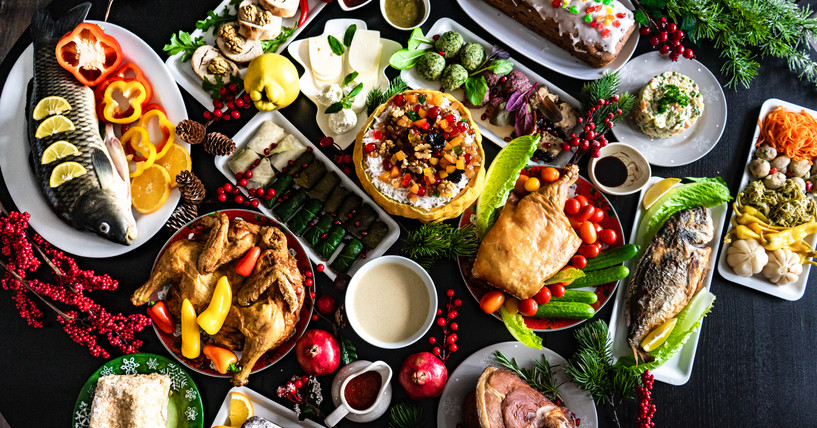
Jump-start a healthier New Year with four holiday eating tips

Satisfying strategies to adopt during a season of festive food.

Jump-start a healthier New Year with four holiday eating tips

Many people wait until January 1st to begin eating healthier. After all, the holidays are full of stress and extra helpings of rich festive foods, so why bother?

But banish that negative thought, because this is an ideal time to adopt new habits. “The dietary changes you make now can help you manage the stress and avoid overindulging on holiday fare,” says Teresa Fung, a registered dietitian with Harvard’s T.H. Chan School of Public Health. “Plus, by practicing healthier eating, you can begin the new year with momentum and motivation.”

4 keys to healthy holiday eating patterns

Fung suggests four great strategies for healthier fare that can give you a jump-start on a healthful 2023.

Focus on portion control and mindful eating. People often overeat during the holidays because of tempting food choices and larger portions — think family dinners and party spreads. “This is a wonderful chance to practice portion control,” says Fung. For example, if three different cakes are offered at the party and you like all three, take a tiny slice of each. “This way, you can enjoy a variety of goodies without overdoing it,” says Fung.

Eating at big gatherings is also a chance to practice mindful eating, which can reduce overeating. “Focus on eating slowly and savoring the flavors, and pause to talk and socialize,” says Fung. “The slower pace gives your body time to sense what you’ve eaten and signal the brain that you are full, so you are less likely to reach for seconds or third servings.”

Push the plants. When considering your holiday dishes, make plant-based foods a high priority. For instance, the Mediterranean and MIND diets emphasize eating fruits, vegetables, and whole grains, and using healthy oils. These diets are rich in fiber, vitamins, and minerals that help lower blood pressure and maintain a healthy weight (both welcomed gifts during the holidays).

“The holidays are an ideal opportunity to begin the transition into a plant-based diet, since you are cooking more than usual and often need new ideas for meals,” says Fung. Here are some ways you can begin adopting plant-based habits.

  • Eat more salads. These are great for holiday parties and family meals, as you can make large amounts. “Another approach is to add a side salad to at least one daily meal,” says Fung.
  • Adopt a vegetarian day. Once a week, go vegetarian for the entire day and eat nothing but fruits, vegetables, and whole grains. “This can help you recognize the types and amounts of foods you need to eat without the overwhelming pressure to do it all the time,” says Fung. As you get more comfortable, try two days a week. A fun option is to consider specific meals or foods for certain days of the week, like Whole-Grain Wednesdays and Stir-Fry Fridays.
  • Try new recipes. Creating just one new vegetarian meal per week can help make preparing meals less daunting. “There are many easy, healthy recipes on the Internet,” says Fung. “Find something that uses ingredients you like and that requires only a few steps or minimal cooking skills.”

Get spicy. With all the extra baking and cooking, the holidays are the ideal time to add more spices to your diet. Many spices contain antioxidants, flavonoids, and other beneficial compounds that are involved in mood and inflammation regulation.

“There are a lot of spice mixes available that combine a variety of spices and can be used on all kinds of meals, from poultry to soups to side dishes,” says Fung. Better yet, experiment with creating your own spice mix. “You don’t have to know what you are doing, just give it a try and enjoy your creation,” says Fung.

Go light on the alcohol. One survey found that the average adult consumes three alcoholic drinks daily during the holidays. And a new study suggests that just one daily drink may raise a person’s risk of cardiovascular disease. Then there are the extra calories to consider. Depending on the type of beverage (beer, wine, spirits) and the amount, calories per serving can range from about 120 to more than 200.

If you do enjoy raising a glass of celebratory cheer, Fung suggests switching to sparkling water or a cocktail made of one-third fruit juice and two-thirds sparkling water after one or two drinks. “This can help keep you from drinking too much, and help you realize you can enjoy social settings without alcohol even after the holidays are over,” she says.

Children’s medical equipment damaged on Frontier flight

CASTLE ROCK, Colo. (KDVR) — A Castle Rock couple with two disabled children told FOX31 they were heartbroken to discover expensive medical equipment was damaged after their flight on Frontier Airlines.

The Leao family faces challenges, but they take them on with patience and love. When asked about 2-year-old son Bellamy and 4-year-old daughter Annabel, Morgan Leao said, “they are nonverbal but their lives and their smiles tell everything.”

Annabel copes with a seizure disorder that can be triggered by a lack of rest, so she needs to sleep in a specially-designed bed.

“It just provides her with an enclosed space to stay in her bed at night and really be able to relax,” Morgan Leao said.

Charges, missing and damaged parts

On Nov. 30, the family flew from Atlanta to Denver on Frontier Airlines. Morgan Leao said she was shocked to be charged for the medical equipment.

“I had to open the bag for her, and I was like, even with proof, you have the audacity to charge me?” Morgan said.

When the family got home, they discovered seven parts from Annabel’s bed were missing.

“We went to put her bed up and it was just like a nightmare,” Annabel’s father, Waltier Leao, said.

A special stroller was damaged as well. The cost to replace the items is nearly $8,000, but Morgan Leao said she had trouble getting the airline to respond to her request for compensation.

“I’m obviously not enough to fight for myself. I need help,” she said.

Frontier Airlines responds

The Problem Solvers contacted Frontier and asked what could be done. The company provided FOX31 with the following statement:

“Since the customer reached out to us, we have been actively working with our third-party vendor that specializes in assistive device repairs and replacements. Upon evaluation, replacement for both a pediatric stroller and safety bed was approved. In the meantime, we have refunded the checked bag and overweight fees associated with the equipment. We extend our sincere apologies to the family for the inconvenience they have experienced.”

Frontier Airlines

Annabel’s new bed will arrive in seven weeks.

“I am relieved, I’m grateful for being able to receive those items and grateful to have such support on my side and people to fight for me,” Morgan Leao said.

Consumer protection experts advise all parents to carry proof of the need for medical equipment and check policies before boarding any airline’s flight. Ask about how customer service can be contacted before you go on your trip.

Can a Healthy Lifestyle Prevent IBD?

Adopting and maintaining a healthy lifestyle may prevent inflammatory bowel disease (IBD), according to findings from an analysis of three prospective U.S. cohort studies, which were validated in three external European cohorts.

In the primary analysis, maintaining low modifiable risk scores — based on risk factors including body mass index, smoking status, use of non-steroidal anti-inflammatory drugs, physical activity, and daily consumption of fruit, vegetables, fiber, polyunsaturated fatty acids, and red meat — could have prevented 42.9{bf0515afdcaddba073662ceb89fbb62b6b1bf123143c0e06b788e1946e8c353f} of Crohn’s disease cases and 44.4{bf0515afdcaddba073662ceb89fbb62b6b1bf123143c0e06b788e1946e8c353f} of ulcerative colitis cases, reported Hamed Khalili, MD, MPH, of Massachusetts General Hospital in Boston, and colleagues.

Moreover, adherence to a healthy lifestyle could have prevented 61.1{bf0515afdcaddba073662ceb89fbb62b6b1bf123143c0e06b788e1946e8c353f} of Crohn’s disease cases and 42.2{bf0515afdcaddba073662ceb89fbb62b6b1bf123143c0e06b788e1946e8c353f} of ulcerative colitis cases, they noted in Gut.

“We were surprised by the proportion of cases that could have been prevented through lifestyle modifications,” Khalili told MedPage Today. “One reason for this finding may be that our population was older and therefore most of our cases of IBD happened in older adults.”

“We know that lifestyle and environmental factors play a bigger role in the development of IBD in this population as compared to those who are diagnosed with disease earlier in life,” he added.

These findings from the Nurses’ Health Study (NHS), the NHS II, and the Health Professionals Follow-Up Study (HPFS) were largely validated in three external European cohorts — the Swedish Mammography Cohort, Cohort of Swedish Men, and the European Prospective Investigation into Cancer and Nutrition.

Looking at cases of Crohn’s disease among the European validation cohorts, adhering to low-risk factors could have prevented 44{bf0515afdcaddba073662ceb89fbb62b6b1bf123143c0e06b788e1946e8c353f} to 51{bf0515afdcaddba073662ceb89fbb62b6b1bf123143c0e06b788e1946e8c353f} of cases, while adhering to a healthy lifestyle could have prevented 49{bf0515afdcaddba073662ceb89fbb62b6b1bf123143c0e06b788e1946e8c353f} to 60{bf0515afdcaddba073662ceb89fbb62b6b1bf123143c0e06b788e1946e8c353f} cases. For ulcerative colitis, adherence to low-risk factors could have prevented 21{bf0515afdcaddba073662ceb89fbb62b6b1bf123143c0e06b788e1946e8c353f} to 28{bf0515afdcaddba073662ceb89fbb62b6b1bf123143c0e06b788e1946e8c353f} of cases, while healthy lifestyle adherence could have prevented 47{bf0515afdcaddba073662ceb89fbb62b6b1bf123143c0e06b788e1946e8c353f} to 56{bf0515afdcaddba073662ceb89fbb62b6b1bf123143c0e06b788e1946e8c353f} of cases.

For every 1-point increase in modifiable risk score, a higher risk of Crohn’s disease (P for trend<0.0001) and ulcerative colitis (P for trend=0.008) was observed, and was similar for men and women.

IBD affects about 3.1 million people in the U.S. and 1.3 million in Europe, with incidence rising globally, especially among newly industrialized countries, Khalili’s group said. IBD is associated with an annual healthcare cost of $23,000 per patient in the U.S., and there are no current strategies to prevent the development of IBD. While one approach to preventing many chronic diseases is modification of lifestyle and dietary factors, the success of adhering to such changes remains unclear.

For this study, Khalili and colleagues examined data on 72,290 participants from the NHS, 93,909 from the NHS II, and 41,871 from the HPFS. The NHS enrolled female nurses ages 30 to 55 across 11 states in 1976. NHS II assessed a slightly younger cohort of female nurses (ages 25 to 42) from 15 states starting in 1989, while the HPFS enrolled male physicians ages 40 to 75 across all states in 1986.

In order to externally validate their findings, the researchers assessed data on 40,810 participants in the Cohort of Swedish Men, 404,144 from the European Prospective Investigation into Cancer and Nutrition, and 37,275 from the Swedish Mammography Cohort.

Using participant baseline and biennial questionnaires that assessed lifestyle factors, anthropomorphic data, and medical history, Khalili and colleagues developed modifiable risk scores ranging from 0 to 6 for Crohn’s disease and ulcerative colitis, with higher scores indicating more risk factors. Healthy lifestyle scores ranging from 0 to 9 were also developed, based on recommendations from the American Heart Association and other organizations, with higher scores indicating a healthier lifestyle.

A healthy lifestyle included never smoking, a BMI between 18.5 and 25, and engaging in physical activity of at least 7.5 metabolic equivalent of task-hours per week, in addition to consuming less than half a serving of red meat per day, at least eight daily servings of fruit/vegetables, at least half a serving of nuts or seeds per day, at least two servings of fish per week, at least 25 g of daily fiber, and a maximum of one daily alcoholic beverage for women and two for men.

Across 5,117,021 person-years of follow-up, 346 cases of Crohn’s disease and 456 cases of ulcerative colitis were reported.

On falsification analysis, adherence to low-risk factors for Crohn’s disease could have also prevented 32.3{bf0515afdcaddba073662ceb89fbb62b6b1bf123143c0e06b788e1946e8c353f} of cases of rheumatoid arthritis, 13.3{bf0515afdcaddba073662ceb89fbb62b6b1bf123143c0e06b788e1946e8c353f} of cases of colorectal cancer, and 14{bf0515afdcaddba073662ceb89fbb62b6b1bf123143c0e06b788e1946e8c353f} of cases of cardiovascular disease, though this was not the case for ulcerative colitis.

“This is largely due to differences in strength of associations and prevalence of risk factors, and presence of other modifiable risk factors such as alcohol and medications or supplements which are strongly associated with these other conditions,” Khalili and colleagues suggested.

They acknowledged that younger-onset IBD was under-represented in their study, since the mean age of the cohort (about 45) was higher than the usual age at onset of IBD. In addition, data on other modifiable risk factors such as stress were not explored, and high-risk individuals were not assessed.

  • Can a Healthy Lifestyle Prevent IBD?

    Zaina Hamza is a staff writer for MedPage Today, covering Gastroenterology and Infectious disease. She is based in Chicago.

Disclosures

This study was primarily supported by the National Institutes of Health.

Khalili reported support from the American College of Gastroenterology Senior Research Award and the Beker Foundation, as well as consulting fees from AbbVie and Takeda, and grant funding from Pfizer and Takeda.

Co-authors also reported multiple relationships with industry.

The best diet and nutrition tracking apps on Android in 2022

Part of maintaining a healthy lifestyle is looking after your dietary habits. Of course, snagging takeout frequently and snacking on the wrong kinds of foods won’t do you any favors in the long term. But sometimes, we need more awareness of how to overcome our current eating habits, and we need to know where to start when it comes to developing a better diet. So we’ve created a list of some of the best Android apps that are easily accessible on your favorite Android phone to help enable healthier choices for your daily food intake and meal planning.


ANDROIDPOLICE VIDEO OF THE DAY

MyFitnessPal

You can’t go wrong with MyFitnessPal, the all-in-one food tracking app. The app serves as your nutrition coach and food diary, helping to recommend well-balanced meals so you meet your dietary goals. MyFitnessPal also saves you time as you record your daily food intake since you can scan the barcodes for the products you own/consume to get the information you need to record instantly. Never forget to miscount your calories again now that you have access to the best food tracker.

Lose it!

If you’re looking for a more personalized food-tracking app, Lose it! is an excellent choice. You can take pictures of your food to help log what you’ve consumed, set macro dietary goals for weight loss plans, and select custom recipes that exactly fit your needs. Sometimes the cookie-cutter methodologies don’t work out for us, but why not just create our own goals using the help of an app instead? The Lose it! app might just be the push that gets us there.

Lifesum

You may be completely lost and don’t know where to begin when it comes to dieting. Thankfully, Lifesum provides complete meal plans for every type of diet/goal, along with healthy recipes to help you create a balanced diet. It also offers a built-in calorie tracker with a sleek UI to view macros and calories at a glance. Unfortunately, you’ll need a paid subscription to sync with third-party services, which can be a roadblock for some users.

Mealime

Starting fresh on any diet can be cumbersome. Not only do you have to keep track of your eating activities, but you require a lot of meal planning. It’s not easy to shop for all the ingredients to carefully prep those meals, which is why we turn to Mealime. Mealime helps plan your meals for you and your family, generate grocery store shopping lists, and a paid subscription giving access to detailed nutritional information, meal plan tracking, and exclusive recipes. Have personal preferences or allergies you need to note down? Mealime takes care of all that for you.

Freeletics Nutrition

You may know Freeletics for its popular bodyweight training app, but Freeletics Nutrition is a standalone app dedicated to improving your nutritional and weight goals. Basically, you are what you eat. Freeletics Nutrition doesn’t believe in focusing on calorie counting; it is all about the final results to get to where you want to be for healthy eating and weight. In addition, you can pay for a subscription to access a nutritional coach to help you along the way. Are you worried about finding the right meal plans without meat? Well, vegetarians and pescatarians are also well accommodated within this app. There’s a plan for literally anyone.

BodyFast Intermittent Fasting

A beginner-friendly app to get ahold of a safe and effective fasting plan. It includes recipes, fasting plans, coaching tips, and food/water tracking; you’ll learn what you’re eating and how each stage affects your body. If not done correctly, fasting may pose some risks, which is why you’ll turn to the help of BodyFast Intermittent Fasting. In addition, you’ll have access to a BodyFast coach, trackers with timers and reminders, and plans tailored to your dietary needs and goals. So never worry about learning how to fast on your own ever again.

Senza

Senza is the ultimate ketogenic and fasting dietary help; you gain access to beginner guides, keto-specific recipes, and daily recommendations. The app also includes carnivore and paleo diets for recipes and tips. It also has advanced features like potassium, sodium, magnesium, glucose, and ketone intakes. Instead of acquiring a virtual coach, you’ll connect with live nutritionists for advanced support. In addition, you can now sync your progression with Fitbit and Google Fit; that way, you can keep up with your exercise, weight, and dietary advancement, all in a single place.

Yuka — Food & cosmetic scan

A set dietary plan can only do so much for your weightless goals. However, it is possible to maintain a healthy lifestyle if you know how to make informed choices. This is where Yuka comes in. Yuka is the ultimate food scanning app that takes scientific data to evaluate the nutritional value, additives (how much), and the organic dimension of the product. It’ll then assess a level of risk and recommend better alternatives. Yuka is the app to take with you while you’re shopping or taking a trip to your food pantry. Don’t get fooled by what you’re eating ever again!

Live life to the fullest while eating healthy

A healthy body is also a healthy mind. So be sure to take care of your physical health and well-being to live life to the fullest. The best Android apps are also companion apps that enable a healthier lifestyle that enforces your nutritional and dietary plans. So not only is being health conscious for your daily food intake vital, but you’ll also want to look into the best Android apps for health and fitness to supplement your lifestyle goals.

Should racism and discrimination be viewed as public health threats? A new study argues they should

LONDON — Racism and discrimination must be acknowledged as public health threats in the fight to address global health disparities, according to a new study.

As part of the four-paper series published in The Lancet medical journal Thursday, researchers from countries around the world, including the U.S., U.K., Brazil and India, carried out a major review of scientific literature and used data from hundreds of articles in recent years.

The tendency among health professionals has been to explain unequal health outcomes on either genetics or economic conditions, according to the study’s authors. But in order to tackle racial health inequities, racism and discrimination themselves should be classified as public health threats globally, the authors say.

“Racism has always been a public health threat,” Alexandre White, assistant professor of sociology and the history of medicine at John Hopkins University School of Medicine, told ABC News. “It has emerged time and time again, especially over the last 10 to 15 years.”

Research into the intersection of race and health disparities has advanced in recent years, particularly in the U.S. According to the U.S. Centers for Disease Control and Prevention almost every two in three pregnancy-related deaths are preventable. A 2020 report found that non-Hispanic Black women experienced a higher pregnancy-related mortality rate — a disparity placing them nearly three times more at risk of dying due to pregnancy-related causes compared to non-Hispanic white women.

The report’s authors also found evidence of disproportionate impact from the pandemic, vaccine inequality and climate change on minority groups.

Should racism and discrimination be viewed as public health threats? A new study argues they should

“This study is tremendously important [as] it sheds light on the fundamental role that racism, xenophobia and forms of discrimination actually play on health, both from a structural level and generational level over time,” White said. “But also fundamentally since the COVID-19 pandemic we’ve seen the ways in which, especially racism and xenophobia, affects who gets sick, how seriously and why.”

The study also reports that racial biases in health care can lead to a stress response — affirming previous studies that found discrimination, whether overt or covert, can lead to chronic stress responses which can affect human neurological and immune systems. That chronic stress response can lead to lower life expectancies and is associated with other health complications such as anxiety, depression and heart disease.

“It’s not only because of racism at the individual interpersonal level,” Dr. Abi Deivanayagam, a public health doctor, researcher, activist and one of the study’s authors, told ABC News. “It’s racism in the way that our society is structured. And that’s very real. And it’s really important that we acknowledge this in a medical journal like The Lancet so that health people recognize that this is something this is our duty of care to patients. And our care really has to go beyond the individual to making sure that our systems are safe for our patients.”

Although discrimination against minority groups comes in different forms around the world according to such factors as race, ethnicity and religion, a pattern of worse health outcomes for minority groups can be seen globally.

According to Deivanayagam, the study has drawn two major conclusions.

“One thing is that there is evidence globally that shows that racism, xenophobia and discrimination affect a range of different health outcomes, and that this is embedded across different levels of society and that it affects people across the course of their lives ranging from COVID-19, to vaccines, to actually getting health care access,” she told ABC News. “The second thing is that we need to get to the root cause of this. And the way we do that as health professionals is to recognize that racism, xenophobia and discrimination are actually a public health threat.”