Fitness influencer Brittany Dawn accused of scamming clients vows to ‘fight back’

A Texas social media influencer accused of scamming clients who purchased her online fitness and nutrition program is now facing trial in Dallas, and she says she’s ready to “fight back.”

Brittany Dawn Davis, a fitness influencer and owner of Brittany Dawn Fitness LLC who has since adopted a more faith-based approach to her social media presence, is accused of misleading clients who signed up to receive her customized fitness and nutrition packages.

“[M]y time to fight back is here,” Davis, who now goes by Brittany Dawn Nelson on her social media pages, wrote in a Monday Instagram post. “…[J]ust over 4 years. [T]hat’s how long I’ve remained composed, silent, and have patiently waited on the Lord. 35,856 hours of my life that I have wept with reverence for Him as I kept hearing ‘do not speak up yet’ as I sat wayside while strangers on the internet slandered, harassed, defamed, stalked, and destroyed my reputation.”

Davis added that though she has “remained silent” while social media users “invent narratives” about her and “come after” her home, family, and life, “they have no idea who they’re messing with.”


Fitness influencer Brittany Dawn accused of scamming clients vows to ‘fight back’
Texas social media influencer, Brittany Dawn Davis, who is accused of scamming clients through her online fitness and nutrition program is now facing trial in Dallas.
Instagram/ @RealBrittanyDawn

“[T]here is a fire building within my heart – like a lion roaring on the inside of me,” she wrote. “[I]f you think you’ll never be found behind an anonymous account and be held accountable for damages, threats, defamation, and slander… think again. Christians might be gentle, but we are not soft.”

The lawsuit filed against Davis and her fitness company alleges Davis did not deliver on the personalized fitness packages, coaching, and check-ins that she promised those who purchased one of her plans.

“Beginning in 2014, Defendants profited from the sale of online fitness packages to thousands of consumers with the promise of personalized nutritional guidance and individualized fitness coaching. Specifically, Defendants’ online fitness packages offered ‘macro’ nutritional assessments and, depending on the plan purchased, daily or weekly email training and one-on-one coaching. Defendants’ online nutrition and fitness packages ranged from $92.00 for one-time macro consultation to $300.00 for three months of personalized macros, training, and coaching,” the complaint against Davis states.


Brittany Dawn Davis.
The fitness influencer is accused of misleading clients who signed up to receive her customized fitness and nutrition packages.
Instagram/ @RealBrittanyDawn

Court filings in the case further state that "the vast majority" of more than $1.5 million deposits to Brittany Dawn Davis' PayPayl account.
The lawsuit alleges Davis did not deliver on the personalized fitness packages, coaching, and check-ins that she promised.
U.S. District Court

But the packages for clients “were not individualized,” plaintiffs allege, and Dawn “failed to provide the promised coaching and check-ins” to her clients. 

“Defendants largely ignored consumer complaints or, if they did respond, offered only partial refunds. In 2019, consumers’ complaints on social media garnered media attention prompting Defendant Davis to make a video apology posted to YouTube. Defendants promptly took the website down,” the lawsuit says.

Her trial was scheduled to begin on March 6 but was postponed indefinitely. 


Brittany Dawn Davis.
“[M]y time to fight back is here,” the influencer wrote on her social media page.
Instagram/ @RealBrittanyDawn

Meanwhile, Davis has embarked on a new entrepreneurial journey as the founder of She Lives Freed – a team of 14 women who organize women’s faith retreats that cost $600 per person.

“She Lives Freed was founded by Brittany Dawn after the Lord radically changed her life in 2019, from darkness to light. Her mission is to share the gospel of Jesus, cultivate a community of sisters, and walk alongside women into freedom through the love of our Savior,” the She Lives Freed website states.

The first women’s retreat took place in Austin in January 2021. Since then, the organization has hosted five more retreats, with the next taking place in Oklahoma, according to the website.

Pediatric Medical Devices Global Market Report 2023:


Dublin, March 15, 2023 (GLOBE NEWSWIRE) — The “Pediatric Medical Devices Market Size, Share & Trends Analysis Report By Product (Cardiology Devices, In Vitro Diagnostic (IVD) Devices, Diagnostic Imaging Devices), By End-user, By Region, And Segment Forecasts, 2023 – 2030” report has been added to ResearchAndMarkets.com’s offering.

The global pediatric medical devices market size is expected to reach USD 51.9 billion by 2030, expanding at a CAGR of 7.8{bf0515afdcaddba073662ceb89fbb62b6b1bf123143c0e06b788e1946e8c353f} over the forecast period. The rising prevalence of chronic diseases among children such as asthma, cystic fibrosis, diabetes, epilepsy, and technological advancements in pediatric medical devices are the major growth-propelling factors for the market.

Pediatric medical devices diagnose or treat diseases from birth through adolescence. The Federal Food, Drug, and Cosmetic Act consist of pediatric patients aged 21 or younger at the time of the treatment. In the U.S., the commercialization and development of pediatric medical devices lag significantly behind the medical devices for adults. In the last few years, only 24{bf0515afdcaddba073662ceb89fbb62b6b1bf123143c0e06b788e1946e8c353f} of lifesaving medical devices have been approved by the FDA that can be used for childcare, and the majority of its users are 12 years and above.

The COVID-19 pandemic has put the medical device industry at the center with unparalleled demand for personal protective equipment, diagnostic tests, ventilators, and other critical medical supplies. However, the pediatric medical device industry is highly impacted by the substantial decrease in the number of surgeries, many of which are being canceled or postponed so that hospitals and clinics can focus their resources on treating COVID-19 patients. The reopening of manufacturing units and supply-chain is expected to grow the market of pediatric medical devices.

The development and design of pediatric medical devices continue to be an exciting field. There are only a few pediatric devices in the market which is forcing pediatric professionals to suggest alternative ways of treating children using devices mainly made for adults.

Pediatric medical devices cover a wide range of indications and risks associated with child care. It also helps to reduce disease burden and improve the quality of life for many children.

Various innovation competitions took place to support new and advanced pediatric medical devices. For instance, since 2013, the “Make Your Medical Device Pitch for Kids” international competition has focused on supporting and identifying innovations that will make a substantial improvement in pediatric care.

Pediatric Medical Devices Market Highlights

  • The anesthesia and respiratory care devices segment is expected to showcase the fastest CAGR over the forecast period as it is a commonly used product among children
  • In Vitro Diagnostic (IVD) Devices segment held the largest share as of 2022 owing to the accurate and error-free diagnostic through the product
  • The pediatric clinics segment is expected to showcase lucrative CAGR over the forecast period as these clinics are especially focused on children’s care
  • The hospitals held the largest share as of 2022 owing to the high number of patient admission in the hospitals

Key Attributes:

Report Attribute Details
No. of Pages 110
Forecast Period 2022 – 2030
Estimated Market Value (USD) in 2022 $28.4 Billion
Forecasted Market Value (USD) by 2030 $51.9 Billion
Compound Annual Growth Rate 7.8{bf0515afdcaddba073662ceb89fbb62b6b1bf123143c0e06b788e1946e8c353f}
Regions Covered Global

Key Topics Covered:

Chapter 1 Methodology and Scope

Chapter 2 Executive Summary

Chapter 3 Pediatric Medical Devices Market: Variables, Trends, & Scope

Chapter 4 Pediatric Medical Devices Market: Product Segment Analysis
4.1 Pediatric Medical Devices Market: Market Share Analysis, 2022 & 2030
4.1.1 Cardiology Devices
4.1.2 In Vitro Diagnostic (IVD) Devices
4.1.3 Diagnostic Imaging Devices
4.1.4 Anesthesia And Respiratory Care Devices
4.1.5 Neonatal Icu Devices
4.1.6 Others

Chapter 5 Pediatric Medical Devices Market: End-User Segment Analysis
5.1 Pediatric Medical Devices Market: Market Share Analysis, 2022 & 2030
5.1.1 Hospitals
5.1.2 Pediatric Clinics
5.1.3 Ambulatory Surgical Centers
5.1.4 Others

Chapter 6 Pediatric Medical Devices Market: Regional Analysis

Chapter 7 Company Profiles

Companies Mentioned

  • TSE MEDICAL
  • Ningbo David Medical Device Co. Ltd
  • Hamilton Medical
  • GE Healthcare
  • Fritz Stephan GmbH
  • Phoenix Medical Systems Pvt Ltd
  • Novonate Inc.
  • Trimpeks
  • Atom Medical Corporation
  • Abbott
  • Medtronic PLC

For more information about this report visit https://www.researchandmarkets.com/r/jlcphr

About ResearchAndMarkets.com
ResearchAndMarkets.com is the world’s leading source for international market research reports and market data. We provide you with the latest data on international and regional markets, key industries, the top companies, new products and the latest trends.


‘Eating disorders are not lifestyle choices’: Why many people share a complicated relationship with food

Kritika Ghai was first diagnosed with binge-eating disorder when she was merely 12 years. Since birth, she had an enlarged adenoid that blocked her nose pipe, making her gain weight. Her suffering was further exacerbated by her inability to perform any kind of exercise, owing to her irregular breathing patterns. As such, as a child, she was put on various extreme diets to manage her weight. This forced her to eat large amounts of food — rapidly and secretively. “Not knowing what I was going through, eating became a way to validate my emotions,” she said, adding that the pandemic-induced anxiety only led to her eating even more food during stressful and lonely times.

Finally, she consulted a nutritionist who helped her develop healthy eating patterns. Ghai was advised to not curb her cravings and eliminate the difference between ‘good’ and ‘bad’ food in order to stop associating eating with guilt and shame. “I started seeing my body as a structure that supported me and this perspective enabled me to develop a healthy body image,” she said. Finally, after years of battling with this binge-eating disorder, she has developed a healthy relationship with food by eating regular meals, exercising and food-mapping, a technique which involves charting your daily meals in a journal to keep a track of what you’re eating.

Similarly, Pranshu Mishra developed binge-eating disorder due to polycystic ovarian syndrome (PCOS), stress, and an excessive study load in eleventh grade. “You just don’t stop at one single serving; you just mindlessly eat even if you feel discomfort,” Mishra said, calling eating disorders “a tug of war between the stomach and brain”.

While eating her favourite food induced happy hormones in her body, she would feel immense guilt immediately after consumption, leading her to starve herself for hours before repeating the same cycle, she admitted.

Ann, on the other hand, developed bulimia — a serious eating disorder marked by bingeing, followed by methods to avoid weight gain — in 2007. “I have been a chubby kid all my life because of which I faced a lot of bullying. It reached a point where people made snide remarks like ‘do people in your house get to eat food or do you eat it all?’ or ‘go for a walk.’ This massively affected me, and I stopped eating in front of people,” she told indianexpress.com. Owing to her condition, she used to excessively work out which made her lose weight drastically. “I felt very weak and light-headed all the time,” she said.

To understand more about the mental and physical aspects of such eating disorders, we reached out to experts, who emphasised that these disorders are not lifestyle choices. Dr Aparna Ramakrishnan, Psychiatry Consultant, Kokilaben Dhirubhai Ambani Hospital, Mumbai said, “Eating disorders are complex disorders associated with significant disturbances in an individual’s eating behaviours and related thoughts, emotions and attitudes which impair their physical, psychological health and psychosocial functioning. They can often be life-threatening.” She highlighted that the exact causation is elusive, but eating disorders are caused by a complex interaction of genetic, biological, behavioural, psychological and social factors.

Agreeing, Dr Meghana Pasi, Nutrition Consultant, MyThali Program, ArogyaWorld said, “Societal and peer pressure to achieve unrealistic body standards as well as people with low self-esteem and impulsive behaviour are at risk of developing eating disorders.” The expert said that nutritional counselling, psychotherapy and medications are some available treatment options.

Implementing these, Mishra sought nutritional advice from a dietitian who asked her to eat at regular intervals and practise mindful eating, a technique which makes you pay closer attention to your food and how it makes you feel, thereby helping you distinguish between physical and emotional hunger. Alongside, she also included physical activities such as swimming, yoga, and exercise in her routine which made her feel better about her body. “Earlier, people used to body shame me and call me different names, but after developing self-confidence, I am able to ignore their nasty remarks,” she said.

As for Ann, running was what changed her life for the better as it became a mechanism for her to lose weight in a healthy way, helping her achieve mental peace.

Does social media affect eating disorders?

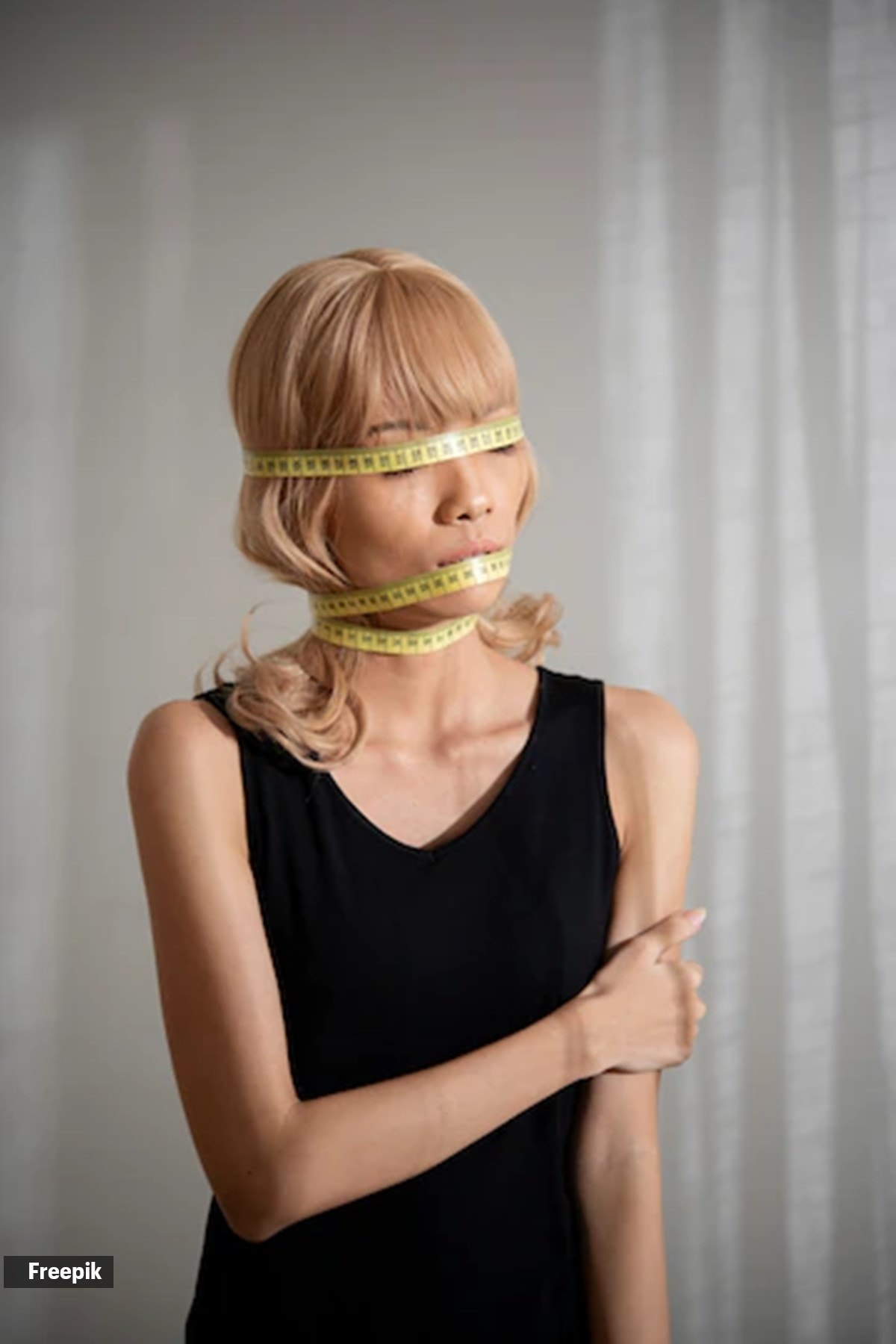
‘Eating disorders are not lifestyle choices’: Why many people share a complicated relationship with food Social media plays a huge role in our relationship with food. (Source: Freepik)

Talking about the same, Dr Ramakrishnan said, “Exposure to media like fashion magazines, television and social media mediate thin-ideal internalisation and can be associated with the development of eating disorders. More time spent or frequent use of social media means more exposure to images, messages and peer interactions which can propagate body stereotypes.” She further explained that inaccurate visual media representation like the use of filters on photos and videos can raise the risk of eating disorders.

Moreover, after analysis of videos and chat groups across social media platforms, there is a worrying presence of ‘pro-ana’ and ‘pro-mia’ content which focus on anorexia and bulimia being lifestyle choices (that are to be respected) rather than being categorised as disorders, Dr Ramakrishnan said. 

Agreeing, Dr Dinika Anand, Clinical Psychologist, BLK-Max Superspeciality Hospital said, “Social media plays a huge role in our relationship with food. On one end, social media projects the ideal body type and size, and on the other end, it glorifies and celebrates food through advertisements and food bloggers.”

The experts stressed that women are more likely to be affected by social pressure and unfavourable evaluations of their physical appearance. Moreover, gender stereotypes, especially the objectification and sexualisation of women, contribute to the emergence of eating disorders among them. Research published in The Journal of Treatment and Prevention in 2012 concurs with this claim as it showed that men are less likely to be diagnosed with an eating disorder even when they exhibit the same symptoms as women because eating disorders are considered generally ‘female’ disorders.

Here are some tips by experts that can help manage eating disorders:

*Keep meals on track
*Eat small portions of meals throughout the day
*Stop starving
*Do not restrict your urges
*Delete or limit the usage of food delivery applications
*Scroll through social media mindfully by engaging with body positivity and relatable content instead of unrealistic and curated feeds

📣 For more lifestyle news, follow us on Instagram | Twitter | Facebook and don’t miss out on the latest updates!

Include These Five Nutritious Dishes In Your Meals To Aid Weight Loss

Include These Five Nutritious Dishes In Your Meals To Aid Weight Loss

Your diet does not necessarily need to undergo major changes, but you need to make a few healthy choices for food

A subtle tweak, like introducing a high-protein and fibre-rich diet and reducing the intake of carbohydrates, can help in losing weight

A healthy diet and a few lifestyle changes could help you achieve your weight loss goal faster. To shed those extra kilos, you have to be mindful of your diet and physical exercise routine. It may sound challenging at first, but gradually, you will get used to it. Your diet does not necessarily need to undergo major changes, but you need to make a few healthy choices for food.

A subtle tweak, like introducing a high-protein and fibre-rich diet and reducing the intake of carbohydrates, can help with your weight loss journey.

Here are 5 nutritious meals that may aid in weight loss:

Veggies and Hummus sandwich

A veggie and hummus sandwich makes a great fibre-rich lunch. Hummus is a spread or a dip that is made from cooked and mashed chickpeas blended with tahini, garlic, olive oil, lemon juice and salt. You can pair it with any kind of bread or use it in sandwiches. Take a few slices of multi-grain bread and spread the hummus on all the slices. Add the vegetables like bell pepper, cucumber, lettuce, onion, and tomato slices to make a delicious sandwich.

Oats Khichdi

We all know that oats are healthy and should be a part of our regular diet. You can either eat it as porridge or just make a khichdi out of it. You can add dal and vegetables to make it healthier. Just add chopped carrots, onions, cauliflower, tomatoes, french beans and a few chillies. For extra flavour you can add garlic as well.

Upma

Upma is a flavourful and healthy dish that you can cook in a jiffy. It is a perfect meal option made of lightly roasted semolina, green peas, carrot and onions and lightly tempered with mustard seeds and curry leaves. Green Peas are high in protein content and low in calories. It is loaded with vitamins K and C, manganese and fibre.

Oats dosa

Switch the rice ingredient with oats and you can cut down on your carbs intake. Unlike typical dosa, oats do not need to be soaked. You can add soaked urad dal in a small quantity with oats for binding. Make a batter blending the urad dal and oats together. Let it ferment for 10-12 hours. You can make oats dosas and pair it with sambar and coconut chutney.

Besan Chilla

Besan Chilla is made with gram flour (besan), onions, tomatoes, herbs and spices. You can add finely chopped or grated vegetables to increase the nutrition of the dish. Have it for your breakfast or lunch .

Read all the Latest Lifestyle News here

Why Medicare politics are heating up : Shots

Why Medicare politics are heating up : Shots

Prescription drug coverage is just one part of Medicare, the federal government’s health insurance program for people age 65 and over.

d3sign/Getty Images


hide caption

toggle caption

d3sign/Getty Images


Prescription drug coverage is just one part of Medicare, the federal government’s health insurance program for people age 65 and over.

d3sign/Getty Images

The White House released President Biden’s $6.8 trillion proposed budget last week, listing his priorities for the upcoming fiscal year. Among other things, Biden singled out Medicare — the federal health insurance program for people aged 65 or older. Republican leaders insist they won’t be threatening cuts to Medicare in upcoming budget negotiations, but others in the party have floated the idea of making changes over time to the program — including benefit cuts they say will be necessary to keep Medicare solvent.

NPR’s Michel Martin, as co-host of All Things Considered, sat down this week with veteran health care journalist Julie Rovner, of Kaiser Health News, to get a better sense of where the debate is headed over how to fund Medicare, an expensive, but popular program. The following excerpt of their conversation has been edited for length and clarity.

MARTIN: So, what is the issue here?

ROVNER: Medicare’s trustees say that within six years, the trust fund is going to run out of reserves, and so it won’t be able to pay all of the current benefits. So basically, in order to bring down the cost, you have three options: You can make the people who are on the program pay more, you can make taxpayers who help support the program pay more, or you can pay health care providers — doctors and hospitals and all those folks — less.

Everybody considers any of those things, “cuts,” although paying providers less is usually only considered a cut to the providers. If the cuts get too big, and the health care providers say “We’ll walk away from the program,” that’s a problem too.

But Medicare is very popular, and I think in the State of the Union, when the president said he wasn’t going to do anything to Medicare, people sort of slapped back and said, “But Medicare is going to go broke if we don’t do anything.” So in the budget, Biden said, well, here are a couple of things that we could do, none of which affect how much beneficiaries pay.

MARTIN: What are the top lines of what President Biden’s proposing, in regards to Medicare?

ROVNER: It’s actually fairly small. Last year, for the first time, Medicare was given legal permission to negotiate the price of drugs. There is a short list of drugs. This budget would make the list longer, and it would have those negotiations happen faster. It would also raise a tax on very high-income earners — those earning over $400,000. The Biden budget would raise that Medicare tax from 3.8{bf0515afdcaddba073662ceb89fbb62b6b1bf123143c0e06b788e1946e8c353f} to 5{bf0515afdcaddba073662ceb89fbb62b6b1bf123143c0e06b788e1946e8c353f} on those high earners.

MARTIN: Republicans have said that they can balance the budget over the next decade, but won’t touch Medicare. Is that a credible stance?

ROVNER: It is, but only if they go after Medicaid — the actually larger public health insurance program for people with low incomes — and the subsidies on the Affordable Care Act, which the president has now also said he won’t go after. It is possible to balance the budget without touching Medicare or Social Security or raising taxes, but you would have to cut so much from the rest of the budget. That’s why we haven’t seen a Republican plan yet. They’re still trying to figure it out.

MARTIN: Senate Minority Leader Mitch McConnell has already said publicly that Biden’s plan to increase the Medicare tax on high earners, “will not see the light of day.” So what are we likely to see next?

ROVNER: Well, at some point, you know, the two parties are going to have to come together before the Medicare trust fund runs out of money. This is not the first time we’ve been within this close period where the trust fund could run out of money. It’s happened several times in the past. Eventually, the parties do get together and figure out some way to shore it up. And I’m sure that will happen this time, too, but I suspect this year is going to be more of a fight leading up to the 2024 elections.

MARTIN: The talks over the debt ceiling are approaching. The leaders of both parties have said that Medicare is off the table. But is it conceivable that Medicare won’t be implicated at some point in these talks?

ROVNER: No. Of course Medicare is going to be implicated at some point in these talks. First of all, what Republican leaders say is not necessarily what all of the Republican rank and file will do. That’s true of the Democrats, too, so it’s hard to imagine that Medicare won’t be put on the table in some way, shape or form.

MARTIN: So, what will you be paying attention to as these discussions continue over the next couple of weeks and months?

ROVNER: Something needs to be done to Medicare, lest it run out of money. So I think that pretty much the entire federal panoply of health programs is going to be up for discussion — and that’s what I’ll be watching.

MARTIN: I’m just wondering, is this the kind of subject that the public really can focus on, can really get galvanized around?

ROVNER: It can and it can’t. The trick is how this gets negotiated and how it gets presented to the public as to whether it will actually affect their health care.

Julie Rovner is the Washington correspondent for KHN and host of “What The Health?” — KHN’s weekly health policy news podcast. After nearly eight years of hosting Weekend All Things Considered, Michel Martin is taking on a new hosting role on NPR’s Morning Edition.

AI language models open a potential Pandora’s box of medical research fraud

AI language models open a potential Pandora’s box of medical research fraud
Credit: Unsplash/CC0 Public Domain

Medical student and researcher Faisal Elali of the State University of New York Downstate Health Sciences University and medical scribe and researcher Leena Rachid from the New York-Presbyterian/Weill Cornell Medical Center wanted to see if artificial intelligence could write a fabricated research paper and then investigate how best to detect it.

Artificial intelligence is an increasingly valuable and vital part of scientific research. It is used as a tool to analyze complicated data sets, but it is never used to generate the actual paper for publication. AI-generated research papers, on the other hand, can look convincing even when based on an entirely fabricated study. But exactly how convincing?

In a paper published in the open-access journal Patterns, the research duo demonstrated the feasibility of fabricating a research paper using ChatGPT, an AI-based language model. Simply by asking, they were able to have ChatGPT produce a number of well-written, entirely made-up abstracts. A hypothetical fraudster could then submit these fake abstracts to multiple journals seeking publication. If accepted, the same process could be used to write an entire study with false data, nonexistent participants and meaningless results. However, it could appear legitimate, especially if the subject is particularly abstract or not screened by an expert in the specific field.

In a previous experiment cited in the current paper, humans were given both human-created and AI-generated abstracts to consider. In that experiment, humans incorrectly identified 32{bf0515afdcaddba073662ceb89fbb62b6b1bf123143c0e06b788e1946e8c353f} of the AI-generated research abstracts as real and 14{bf0515afdcaddba073662ceb89fbb62b6b1bf123143c0e06b788e1946e8c353f} of the human-written abstracts as fake.

The current research team decided to test their ChatGPT fabricated study against three online AI detectors. The texts were overwhelmingly identified as AI-generated, suggesting the adoption of AI detection tools by journals could be a successful diverter of fraudulent applications. However, when they took the same text and ran it through a free, online, AI-powered rephrasing tool first—the consensus unanimously flipped to “likely human,” suggesting we need better AI detection tools.

Actual science is hard work, and communicating the details of that work is a crucial aspect of science requiring substantial effort. But any mostly hairless ape can string sensible sounding words together given enough time and coffee—as the writer of this article can firmly attest. Creating a fake study with enough detail to seem credible would take tremendous effort, requiring hours of researching how best to sound believable, and might be too tedious a task for someone interested in malicious mischief. With AI completing the task in minutes, that mischief could become an entirely achievable objective. As the researchers point out in their paper, that mischief could have terrible consequences.

They give an example of a legitimate study that supports the use of drug A over drug B for treating a medical condition. Now, suppose a fabricated study makes the opposite claim and is not detected (as a side note, even if it is detected, clawing back citations and reprints of retracted studies is notoriously difficult). It could impact subsequent meta-analyses and systematic reviews of these studies—studies that guide health care policies, standards of care and clinical recommendations.

Beyond the simple mischief motive, the authors of the paper point to the pressure on medical professionals to quickly produce a high volume of publications to gain research funding or entry into higher career positions. In part, they point out that the United States Medical Licensing Examination recently switched from a graded exam to a pass/fail model, meaning ambitious students rely more heavily on published research to distinguish them from the pack. This raises the stakes for a trustworthy AI detection system to remove potentially fraudulent medical research that could pollute the publishing environment—or worse still, practitioners who submit fraudulent papers from practicing on patients.

The goal of AI language models has long been to produce texts that are indistinguishable from human text. That we need AI that can detect when a human is using AI to produce fraudulent work indistinguishable from reality should not come as a surprise. What might be surprising is just that we may need it so soon.

More information:
Faisal R. Elali et al, AI-generated research paper fabrication and plagiarism in the scientific community, Patterns (2023). DOI: 10.1016/j.patter.2023.100706

© 2023 Science X Network

Citation:
AI language models open a potential Pandora’s box of medical research fraud (2023, March 14)
retrieved 14 March 2023
from https://medicalxpress.com/news/2023-03-ai-language-potential-pandora-medical.html

This document is subject to copyright. Apart from any fair dealing for the purpose of private study or research, no
part may be reproduced without the written permission. The content is provided for information purposes only.