Families say Kansas Medicaid red tape cuts off kids from the medical equipment they need | KCUR 89.3

OLATHE, Kansas — It’s a typical Thursday evening in the Hoffman house.

The family hangs out in the living room for a small dance party. Then one of the kids reads a book to 18-month-old Miles.

Neil and Abby Hoffman make sure Miles, who has chronic lung disease and cerebral palsy, joins in with his three siblings while sitting in his positioning chair.

“He has some vision problems,” Neil Hoffman said. “He eats through a G tube (a gastrostomy tube used to deliver food and medication directly to the stomach), has a tracheostomy tube in his throat. (He’s) ventilator dependent. So he’s basically on life support. But he’s doing really well. He’s fighting through it all.”

The coat closet in the front hallway is filled with Miles’ medical supplies. He sleeps in the dining room.

“It’s just too hard to take him up and down the stairs,” Abby Hoffman said.

What their son really needs now is a standing frame to learn how to stand and build leg muscle. With that, Miles might walk one day.

But insurance won’t pay. Miles is covered by overlapping plans — his parents’ Blue Cross Blue Shield of Kansas City policy and a second one managed by Aetna from the Kansas Medicare program, KanCare.

Blue Cross says it doesn’t cover standing frames. That passes the buck to Aetna.

Aetna might pay the $5-6,000 cost for a standing frame. But only after Blue Cross puts its denial in writing. Blue Cross won’t. And that leaves Miles in limbo.

“It’d be nice if they just talk to each other and say, ‘Hey, we’re not going to cover this, so will you?’”

Families across Kansas find themselves in similar bureaucratic dead zones, unable to get critical medical devices. The denials can spoil chances to develop at home, at school and into productive adults. And in some cases, like Miles, that first step.

Doctors, therapists and advocacy groups say the denials of prescriptions for medical equipment come too often and appear to violate at least the spirit of federal law.

The Kansas Department of Health and Environment did not respond to questions about chronic delays and denials for physician-prescribed devices by KanCare insurance companies.

Instead, in an emailed statement, KDHE said it is working to get lawmakers to address low Medicaid reimbursement rates.

“The Medicaid program needs the Legislature’s approval to increase rates to the levels our providers are asking for,” the agency said.

Wait Times

A small closet door is swung open. On it hangs a clear plastic organizer stuffed with medical supplies. Inside the closet are more shelves and plastic drawers filled with medical supplies.

Carlos Moreno

/

KCUR 89.3

The Hoffmans’ entryway coat closet has been repurposed to hold Mile’s medical supplies.

Carrie Grosdidier, an early childhood intervention occupational therapist who works with the Hoffmans, said the absence of that standing frame could have profound consequences for Miles.

“That’s impacting his ability to move forward with his outcomes, his goals, and his independence,” she said.

Cases like his can prove complicated and mean navigating through red tape. The barriers cost families life-changing equipment. Elizabeth Edwards, an attorney with the health care rights group National Health Law Program, said bureaucracy too often gets in the way of care.

“People should not be waiting … an extremely long time to get these medically necessary devices,” she said.

The federal Early and Periodic Screening, Diagnostic and Treatment law, or EPSDT, mandates children on Medicaid receive access to comprehensive equipment and services they need.

“One of the things that comes up often is whether or not the state sets the definition of medical necessity, or whether or not managed care plans have more wiggle room to define what medical necessity means,” Edwards said. “That can really inhibit whether or not something is covered by a plan.”

The insurers

A young girl wearing a purple shirt and dark jeans sits in a wheel chair. A man, standing left and a woman are attending to her, getting her situated and prepared to roll out the door of a bedroom.

Carlos Moreno

/

KCUR 89.3

Dan and Kacy Seitz get their daughter, Hudsyn, ready for the day.

Kacy and Dan Seitz have learned to navigate the system over the years while taking care of their 12-year-old daughter, Hudsyn. She suffered a brain injury at birth. The Shawnee, Kansas, family has had to get a wheelchair, a bathing chair and a stairlift.

“We’ve been on this road for about 12 years, that process is more familiar to us,” Kacy Seitz said. “For new families, that’s pretty intimidating.”

Each month, Dan Seitz talks with insurers about what the family needs for Hudson. But insurance does not cover everything each month. Sometimes it depends on how much their claims add up to in a given month and whether KanCare, the state’s Medicaid program, will cover something or the family needs to pay for things on its own.

“These are not devices that are optional for our daughter,” Kacy Seitz said. “We have to have them.”

Knowing the lengthy wait times and potential denials that can routinely come with durable medical equipment means trying to prepare well in advance.

“You almost have to think about it a year ahead of time in order to follow the existing process and get equipment on time,” Kacy Seitz said.

And sometimes they just make something themselves. They’ve placed a La-Z-Boy recliner on a wooden platform with wheels and fashioned a paper towel holder to station one of her pumps by her bed.

“Kacy’s first thought is how do we get something paid for,” Dan Seitz said. “My first thought is, ‘How can I just make it, because I already know it’s probably not gonna get paid for.’”

National Health Law Program senior policy analyst David Machledt said few people appeal their denials. It’s even more difficult for those that do not have extra support systems to help.

“(It) exacerbates some of the health disparities and access that we are seeing for people with disabilities, for people from different cultural backgrounds,” he said.

A Strained System

A small room with white walls and patterned rug has a wooden crib in it with many medical accessories like oxygen tank, chart with medical information, latex gloves, stethoscope and hand sanitizer.

Carlos Moreno

/

KCUR 89.3

The Hoffmans’ formal dining room has been converted to a bedroom for Miles.

Federal law promises children on Medicaid the equipment they need to thrive. Critics say routine delays and denials of medical equipment suggest KanCare does not live up to the law’s intent.

Disability Rights Center of Kansas executive director Rocky Nichols said the issue got worse when Kansas privatized Medicaid 10 years ago and handed over management to insurance companies.

“There’s been a lot more problems,” he said. “It’s a lot more difficult for people with disabilities or parents of kids with disabilities, to frankly get what they need under Medicaid.”

Kansas has three managed care organizations, known as MCOs, that operate KanCare.

Aetna, UnitedHealth and the Centene subsidiary Sunflower all received contracts with the state starting in 2019. Those contracts were automatically renewed last year for two years and won’t expire until the end of 2024.

“The managed care company gets paid upfront,” Nichols said. “So it creates a real problem.”

He said that cuts into incentives to insurers to cover more expenses.

Sheila Simmons operates a sort of stop-gap library of medical equipment in Parsons, Kansas. It checks out items including wheelchairs, crutches and beds.

Wheeled metal chairs made with metal tubing and other plastic parts are shown sitting on a carpeted floor. They are mobility devices for impaired children.

Samantha Horton

/

KCUR 89.3

Some standing frames sit in the lobby area at the Assistive Technology for Kansas facility in Parsons. The location includes a variety of medical equipment able to borrowed as needed.

“The process is almost designed to be disheartening in some ways, if you ask a parent,” she said.

State negotiations

Advocates for those families want to make Medicaid work with fewer delays and denials.

Simmons, for instance, said more training for insurance companies on federal rules like EPSDT could help children access care they need.

“Kansas Medicaid needs to reassert that EPSDT is how they’re supposed to be operating,” she said. “And reminding (insurers) that if you’re able to document the child’s need — medically, physically — that equipment should be purchased.”

Alliance Rehab owner Scott Lopez finds himself regularly lobbying to get KanCare payments for equipment that doctors have prescribed.

“I’ve been trying to get a kid a bath chair since July,” Lopez said. “And we still don’t have that with them.”

That bath chair was finally delivered six months later. He said he has seen some progress.

“We’ve had some wins, we’ve had some kids get equipment that I didn’t think they’d get, it took a long time, we’re getting better at it, the state’s getting better at it,” he said. “But we just got to keep working to make it better.”

A woman leans over the back of a padded chair stroking the arm of a young girl sitting. She is covered with a blanket. Behind them a man is holding a coffee cup and looking on.

Carlos Moreno

/

KCUR 89.3

Dan and Kacy Seitz with their 12-year-old daughter, Hudsyn.

But the reimbursement through KanCare is still too little. If that doesn’t change, Lopez said, he is going to have to stop accepting Medicaid patients from Kansas.

With the current contracts to run KanCare ending next year, Nichols with the Disability Rights Center of Kansas, said the state can force insurance companies to deny less and pay for medical equipment more quickly.

“We don’t have the right incentives in the contract that the state controls to ensure that things are provided promptly,” said Nichols. “And the state needs to fix that.”

Other states, including Iowa, publish quarterly performance reports showing the rate of denials for each of the MCOs and what is being appealed the most by each insurer.

Frustrations

Dana Peterson is mom to a 20-year-old son, Charlie, with a chromosome abnormality. A few years back, she had to work to get a toilet adapter and wheelchair for him. They were custom-made, but the wrong sizes. So the family faces another long wait for the custom-made gear to be manufactured.

“It’s like starting all over again,” Peterson said. “If I have to pay out of pocket, I’m going to, because he needs something that works for him and that fits him.”

A temporary standing frame sits in the corner of Miles Hoffman’s room. His therapist, Grosdidier, has been able to loan it to the family until Miles gets his own personalized one. Neil Hoffman is grateful to have one, but he fears there will come a day when they lose it.

“I’m already pretty frustrated about it,” he said. “But I’d be pretty furious if we didn’t have one already.”

Samantha Horton reports on health for the Kansas News Service. You can follow her on Twitter @SamHorton5.

The Kansas News Service is a collaboration of KCUR, Kansas Public Radio, KMUW, and High Plains Public Radio focused on health, the social determinants of health and their connection to public policy.

Kansas News Service stories and photos may be republished by news media at no cost with proper attribution and a link to ksnewsservice.org.


COVID and kids’ mental health: Financial hardship took a big toll

It’s well-known that COVID-19 protocols caused financial hardship — particularly among lower- and middle-class families — and now a new study highlights the toll those struggles took on children’s mental health.

A new study led by researchers from Columbia University and Weill Cornell Medicine, both in New York, suggests that family economic hardship was the biggest driver of “stress, sadness and COVID-related worry” among kids.

The study, published in the JAMA Network, also suggested that COVID-related school closures did not have an impact on kids’ mental health.

AS EMERGENCY ROOMS SEE MORE OF AMERICA’S MENTALLY ILL KIDS, NEW STUDY PINPOINTS ISSUES

Researchers analyzed data from the Adolescent Brain Cognitive Development Study, which was funded by the National Institutes of Health. That study surveyed 6,030 children between 10 and 13 years old in 21 U.S. cities between 2020 and 2021. 

It also gathered data from kids and their guardians about their experiences during the pandemic, including job loss, remote schooling and COVID-related policies. 

Additionally, it included questions about the link between sleep and mental health.

COVID and kids’ mental health: Financial hardship took a big toll

A new study suggests that family economic hardship was the biggest driver of “stress, sadness and COVID-19-related worry” among kids during the lockdowns.  (iStock)

Dr. Michael Roeske, a licensed clinical psychologist and senior director of the Newport Healthcare Center, which is headquartered in California, was not involved in the study but said he was not surprised that financial struggles impacted kids’ mental health. 

COVID-19 SHOCKER: PARENTS LIED ABOUT THEIR KIDS’ SICKNESS STATUS AND BROKE QUARANTINE RULES, STUDY FINDS

“Kids are often highly attuned to stress in the home,” he told Fox News Digital in an email. 

“If there were feelings of uncertainty and concern, which almost certainly comes from loss of a job or reductions in income, it would undoubtedly impact them. If the parents are overly stressed or scared themselves, kids may no longer feel safe in the home. This can be devastating developmentally.”

“If parents are overly stressed or scared themselves, kids may no longer feel safe in the home.”

And in even more dire cases, kids may become worried about basic necessities and housing, he added.

Dr. Roeske said he is seeing the effects of the pandemic firsthand via Newport Healthcare, which operates a series of mental health treatment centers across the country. 

“We’re counseling more kids struggling with depression, anxiety and suicidality than we saw previously,” he said.

Study suggests school closures had no mental health impact

While other studies have found that school closures did indeed cause a spike in children’s mental health struggles, this research did not identify any such link.

PARENTS, STUDENTS ON THE IMPACT OF SCHOOL CLOSURES THREE YEARS LATER

Dr. Yunyu Xiao, an assistant professor at Weill Cornell Medicine who co-authored the study, offered one possible explanation for what may seem like a surprising lack of impact.

“If children had more protective factors like increased parental care at home during lockdown, that would help with mental health,” she said in an email to Fox News Digital.

"Kids are often highly attuned to stress in the home," one psychiatrist told Fox News Digital. "If there were feelings of uncertainty and concern, which almost certainly comes from loss of a job or reductions in income, it would undoubtedly impact them."

“Kids are often highly attuned to stress in the home,” one psychiatrist told Fox News Digital. “If there were feelings of uncertainty and concern, which almost certainly comes from loss of a job or reductions in income, it would undoubtedly impact them.” (iStock)

The study didn’t use specific measures of mental health, so it couldn’t speak to severity or whether new disorders emerged, said Dr. Roeske.

“Certainly, it is hard to argue that no association between school closures and children’s mental health existed given the isolation, uncertainty and even added time on devices that occurred as a result,” he said. 

MAJORITY OF COLLEGE STUDENTS SUFFERING FROM MENTAL ILLNESS, ANXIETY AND DEPRESSION ON THE RISE: STUDY

“The disruption of one’s normal routine in such an extreme way alone can cause anxiety and symptoms of depression.”

Communication, mental health care are key

To protect kids’ mental health during times of hardship, it’s essential to maintain age-appropriate lines of communication, said Roeske, and to carefully consider how much children hear and know about any financial struggles.

KIDS’ SCREEN TIME SKYROCKETED DURING PANDEMIC — AND IT’S STILL HIGHER THAN PRE-COVID

“Know the signs of distress, like changes in behaviors, eating patterns and sleep,” he said. 

“And get your child help if things do not improve or continue to worsen; do not wait for things to get really bad.”

It's important for parents to recognize signs of distress and to know how to get help for their kids.

It’s important for parents to recognize signs of distress and to know how to get help for their kids. (iStock)

Dr. Roeske pointed out that many parents don’t know where to turn for help. 

He cited a recent survey of 1,000 parents of teens ages 13-17 conducted by Wakefield Research for Newport Healthcare. 

The researchers didn’t look at the severity or onset of new psychiatric disorders.

While nearly half of parents (46{bf0515afdcaddba073662ceb89fbb62b6b1bf123143c0e06b788e1946e8c353f}) reported that the pandemic allowed them to see more of their teens’ mental health struggles during quarantine and remote learning, nearly 70{bf0515afdcaddba073662ceb89fbb62b6b1bf123143c0e06b788e1946e8c353f} lacked the knowledge of what to do if their teen were experiencing problems that might require treatment. 

Study had limitations

Because the data was self-reported, Dr. Xiao said there is a chance that responses were biased or inaccurate. Also, the researchers didn’t look at the severity or onset of new psychiatric disorders.

“Future research should incorporate more precise mental health measurements, such as clinical scales, and make use of advanced techniques for more efficient and bias-corrected estimations,” she said.

CLICK HERE TO SIGN UP FOR OUR HEALTH NEWSLETTER

There may also be other disruptive factors, such as COVID-19-related deaths in the family, which could affect mental health, Dr. Xiao also said.

“While our study aimed to correct bias for family financial and school disruptions, it does not imply that no other significant disruptions are present,” she explained.

CLICK HERE TO GET THE FOX NEWS APP

The study also did not have a large enough sample to segment by race, age, gender or family environment.

What CrossFit Kids is teaching children about exercise and nutrition.

This is an installment of Good Fit, a column about exercise.

I took my first CrossFit Kids class when I was 10 years old, the summer between fifth and sixth grade. I remember a circuit that involved situps and running around cones, facilitated in the parking lot outside the CrossFit “box” my mom went to. I was immediately hooked. In part, I’m sure, because it was fun—the instructors were kind and encouraging, the other kids nice. But more fundamentally, because of what I hoped it would do: make me thin.

CrossFit itself is famously controversial, even when it’s just adults in question. Its critics argue that the workouts, which encourage participants to complete complex weightlifting movements as quickly as possible, are injury minefields. Die-hards say that this caricatures CrossFit, and that the mistakes of some coaches aren’t representative of the whole community.

At a more fundamental level, CrossFit founder Greg Glassman has described CrossFit as “a religion run by a biker gang”—and CrossFit the company historically appears to have incorporated the worst elements of both. Glassman stepped down as CEO and then sold CrossFit in 2020, following deeply racist comments about the murder of George Floyd, which themselves intersected with a corporate pandemic response defined by both dismissiveness and ignorance of science. (Glassman also faces allegations of workplace sexual harassment, which he denies but which were thoroughly reported by the New York Times.) Those crises set off a domino of CrossFit gyms’ disaffiliating from the brand—and the company, under new leadership and ownership, now faces the challenge of charting its future.

The controversy surrounding CrossFit’s exercise philosophy and the brand’s serious culture problems are even more pressing when you take into account the CrossFit Kids program, which has been a part of the company since 2006. The aim of the program is to provide “a physically and psychologically fun and safe space for kids to socialize while supporting a healthier lifestyle,” Nick Pappas, a CrossFit Kids seminar trainer (aka a trainer who trains trainers), said in an email. More than 3,500 CrossFit affiliates offered kids programs as of 2018, and that year there were 407 grade schools registered as affiliates, the company told me. Participants range in age from 3 to 18.

When I started CrossFit, the classmates who called me fat behind my back—and the adults who tried to subtly suggest various exercise routines to me—had already convinced me that I needed to lose weight. At CrossFit Kids, that was never explicitly the goal: The instructors talked about healthy lifestyle choices and the mental benefits of movement. But it was impossible to separate the kids’ classes I took from my underlying shame, vulnerability, and deeply rooted fatphobia. The atmosphere of the classes certainly did not dispel the idea that a central goal of exercise was to have a particular body shape: Adults at the gym discussed macros and the calories they were burning on the rowing machine, and swapped anecdotes about fellow gym-goers who had come in overweight but now wore size 4 Lululemons. During yearly CrossFit Open competitions, they showed videos of pro CrossFitters without an ounce of body fat.

For me, this environment was magnetic: I went to every class my parents would take me to, bought a situp mat to use at home, went on long walks around my neighborhood during my free time, and began tracking calories on an app, trying to keep myself under a strict limit. That summer, I lost 30 pounds.

The praise and surprise from teachers, coaches, and random friends of my parents taught me an important lesson: Under no circumstances could I stop what I was doing. For the next seven years, I didn’t. I graduated from a CrossFit Kid to a CrossFit Teen, snatching and push-jerking and kipping my way through adolescence. I earned medals from CrossFit Teens competitions, as well as a tear in the cartilage of my hip socket from overuse. I moved into adult classes.

Because it was my first serious encounter with exercise, CrossFit has shaped the way I approach fitness. In an effort to better understand how, I decided to read the 154-page CrossFit Kids training guide, which is available for free online.

The training guide, a CrossFit Kids bible of sorts, first came out in 2011 (about three years after I started CrossFit) and is now on its fourth edition. It’s paired with the CrossFit Kids Starter Curriculum, a 269-page resource full of sample workouts and games. This is important because, while trainers have some flexibility, CrossFit generally follows a clear, top-down structure—it’s not like, say, your local yoga studio, where instructors design their own routines.

The guide starts by walking through the fundamental logic behind CrossFit: Our ancestors ate varied, unprocessed foods and were constantly moving, whereas we eat Cheetos and sit behind a screen all day. CrossFit, then, “is one component of how to change the behaviors of adults, in an attempt to reverse our maladaptation to our current circumstances.” (Is a 10-minute pullup and clean circuit really a close approximation of a hunter-gatherer lifestyle? Don’t think about it.) CrossFit Kids, the guide continues, is an attempt to “break the cycle” and “reduce Exercise Deficit Disorder and poor lifestyle choices”—before 3-year-olds have a chance to grow up into Cheeto-munching, scrolling adults.

Some of the guide is a useful breakdown of how to teach young children the basics of exercise movements. Preschool participants might learn, for example, how to deadlift (without any weight) through cues to assume an “angry gorilla position,” an instruction that still comes back to me when I prepare to deadlift. Older kids add in real weight and learn more complex movements like front squats, thrusters, and push presses. And teen classes include scaled-down versions of the standard set of adult exercises. The guide acknowledges an “undercurrent of concern that children lifting loads is inherently dangerous” but argues that such concern “has been discredited by modern sports science.” Indeed, there is fairly good consensus that strength training, including just learning about form, can be beneficial for children, so long as actual weights are not introduced until around age 7, and after that, only light weights. At the end of the day, safety is dependent on how well instructors plan their classes and monitor their athletes. I was lucky to have good trainers who prioritized safety, carefully broke down movements, and gave me weightlifting confidence and skill that aren’t easy to access, especially for teen girls.

The food stuff is iffier. Trainers are instructed to incorporate nutrition education into their classes—children can be taught, for example, to associate foods with various kinds of nutrients via “plastic food replicas and teams shouting answers, all in an exciting game format.” Although the CrossFit Kids training guide specifically discourages calorie counting and “panacea” supplements, it recommends that “everyone optimize their own ratios … by weighing and measuring food” and repeats the CrossFit nutrition mantra, still prominently credited to Glassman on CrossFit’s main site: “Eat meat and vegetables, nuts and seeds, some fruit, little starch, and no sugar. Keep intake to levels that will support exercise but not body fat.” The guide also includes 40 pages of paleo recipes for things like “Pumpkin Nut Muffins by Primal Blueprint” and “Crockpot Buffalo Chicken Lettuce Wraps by Skinny Taste.” And while I can see the importance of incorporating general nutrition education into exercise programs (for example, protein is important!), the focus on no sugar, low body fat, and paleo muffins feels like an explicit, and dangerous, replication of diet culture propaganda. Not only can you have high body fat and be good at weightlifting, being heavy, including via a belly, can actually help with lifting.

Nonetheless, this exercise and nutrition regimen has produced an impressive star: After starting CrossFit at age 10, Mallory O’Brien won last year’s CrossFit Open at just 18 years old, becoming the youngest person to do so—and she’s a front-runner to win this year’s CrossFit Games. (You should probably watch this video of 17-year-old O’Brien clean-and-jerking 245 pounds.) O’Brien came to CrossFit as a competitive gymnast and trained with a private coach, so our experiences are very different—but we’re both roughly part of the generation that saw CrossFit Kids grow up, and grew up alongside it. Indeed, CrossFit recently pointed out in a video profile of O’Brien that she is among the first group of professional CrossFit athletes who started the sport as children.

There are also probably thousands of more attainable, real-world success stories of kids finding an outlet for their emotions and developing skills and community. If I don’t squint back at it too hard, I could perhaps even put my experience among them. I fumbled around for years in team sports before finding in CrossFit a place where I felt as if I belonged: It was the first time I had ever felt “good” at anything physical, because my progress was measured individually. Exercise became a habit, an escape, and even something I could find joy in. Two years after starting CrossFit, at age 12, I was fit enough to run a half marathon, my first of many such races.

Though I stopped CrossFit at 17, when I went to college and moved away from my beloved box, I kept running and lifting weights. I have CrossFit to thank for my relative comfort in the weights section of the gym, a place that (unless you, for instance, played college rugby or pledged Sigma Chi) is notoriously intimidating.

But I also walked away with a real, deep belief that my self-worth was tied to exercise—that there was such thing as a “correct” body, and that exercise is what would keep my body that way. I still feel enormous pangs of guilt every time I take a rest day, even though logically, I know that resting is a critical part of any fitness regimen. Sometimes I still can’t tell if I run marathons because I truly enjoy distance running or because I’m so programmed to believe that the best version of a sport is always the most “intense” version. I’m not sure I can blame CrossFit for these attitudes—perhaps I would have learned the same thing in track or ballet or basketball, as plenty of people do.

When I read the CrossFit Kids Training Guide, I felt desperate to find red flags, something I could point at to definitively explain my screwed-up relationship with my body. But mostly, the guide seemed like a replication of the tired narrative of “lifestyle choices” and diet culture that underlies a lot of the ways we talk about exercise. CrossFit might, per the founder, have a bit of a religion-slash-biker-gang aura around it—but what it transmitted to me about food and body fat wasn’t all that different from the standard cultural dogmas.

On my training runs, I occasionally pass a CrossFit gym. When I do, despite myself, I can’t help but notice that I miss it.

Read more installments of Good Fit.  

Long Covid can be debilitating, even for healthy kids


CNN
 — 

Jessica Rosario loved watching her 15-year-old, Eliana, play flute with the rest of the marching band during Open Door Christian School football games. But after the homecoming game in 2021, she got an alarming call from the Ohio school’s band director.

Rosario’s daughter was on the floor of the band room, clutching her chest.

“We ran up to the school, went into the band room, and I found her laying on the floor with her legs elevated on a chair, and I’m looking at her, and she’s not really moving,” Rosario said.

The freshman couldn’t speak or stand. When paramedics transported her to the ambulance, she was dead weight, her mom says.

Eliana’s condition turned out to be an extreme form of long Covid. She’s one of potentially millions of US children who have symptoms long after their initial infection.

Children – even healthy teens and the very young – can have long Covid, several studies have found, and it can follow an infection that’s severe or mild.

Eliana Rosario needed intense physical therapy because of long Covid.

When Eliana collapsed, EMTs rushed her to University Hospitals Elyria Medical Center.

“We had a room full of doctors. They were there ready to go, which I totally believe that God was in control of everything at this point,” Rosario said.

Eliana’s blood tests, toxicology screens, chest X-ray and CT scan all looked OK, but she still had this strange paralysis. The hospital transferred her to UH Rainbow Babies & Children’s and hoped that the experts there could solve the mystery.

“I was praying all this time for God to do a miracle and guide these doctors and nurses to shine some light on whatever it was that was causing this,” Rosario said.

Eliana and the rest of the family had caught the coronavirus over Christmas 2020. Eliana’s case was mild, her mother says, but weeks after she recovered, she developed chest pain, heart palpitations and lightheadedness. Tests didn’t show any problems, and a pediatric cardiologist gave her the all-clear.

The temporary paralysis came later. It went away and returned. The medical team eventually determined that Eliana’s chest pain and her elevated heart rate may have been related to inflammation due to Covid-19 – 10 months before the trip to the hospital.

Doctors officially diagnosed her with Covid-related postural orthostatic tachycardia syndrome or POTS, a blood circulation disorder that causes an elevated heart rate when standing.

Eliana had long Covid, also called post-Covid or long-haul Covid.

“I had never heard of long haul until we were in the hospital,” Rosario said.

More than a quarter of kids who get Covid-19 may develop long-term symptoms, according to a study from June. A 2021 study suggested that it may be even more; more than half of children between ages 6 and 16 in that study had at least one Covid-19 symptom that lasted more than four months.

There’s no specific test or treatment for long Covid for kids or adults.

covid long hauler symptoms gupta dnt vpx

Mount Sinai launches post-Covid care center for long-haulers

Symptoms can include fatigue, rash, stomachache, headache, muscle ache, loss of smell and taste, circulation problems, trouble concentrating and pain, according to the American Academy of Pediatrics.

The vast majority of children recover – sometimes even faster than adults do, according to UNICEF. But in some cases, kids can have symptoms for months or more.

It’s still not clear why some kids develop long Covid and others don’t, but experts do know that children and adolescents don’t have to have been severely ill with Covid-19 to get long-term symptoms. Several institutions, including the National Institutes of Health, have studies underway to learn more.

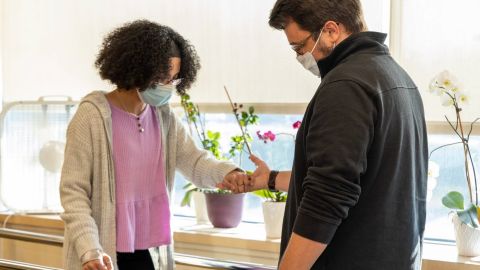
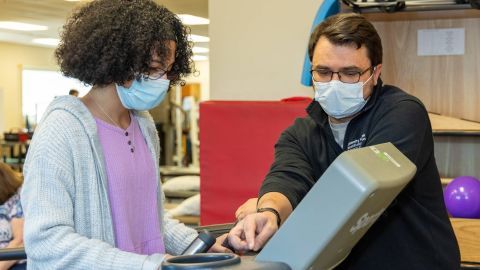
Physical therapy helped Eliana Rosario get back to her usual self.

Dr. Amy Edwards, associate medical director of pediatric infection control at UH Rainbow Babies & Children’s, manages the hospital’s long Covid clinic and says she has been booked solid since she started seeing children with the condition in early 2021.

“We just started seeing patients, and it slowly spread like wildfire,” Edwards said.

“Looking at our first 60 patients that came to our clinic, we found that about 13{bf0515afdcaddba073662ceb89fbb62b6b1bf123143c0e06b788e1946e8c353f} of our patients had these functional neurologic deficits.”

These are conditions in which it appears the nervous system isn’t working the way it should, but doctors can’t figure out why.

“In the case of our kids, it most always presents with loss of limb function, an inability to walk or move an arm, something like that,” Edwards said. “When you’re talking about 60 kids, 13{bf0515afdcaddba073662ceb89fbb62b6b1bf123143c0e06b788e1946e8c353f} is a big number, especially when you’re talking about loss of limb function that has to be regained with physical therapy. It’s not a rare 1{bf0515afdcaddba073662ceb89fbb62b6b1bf123143c0e06b788e1946e8c353f} complication.”

It doesn’t help that not everyone believes these children are sick. The Rosarios and their pediatricians understood, but Edwards says that more than one adult has asked her how she knows that the children aren’t just making up their symptoms for attention or to get out of school.

“One of the biggest things that I do with these kids is provide a diagnosis and reassure the families that they’re not crazy, because so many of these kids have been to see doctor after doctor after doctor who tell them they’re faking it or chalk it up to anxiety or whatever,” Edwards said. “I want to help them know they are not alone. I can’t cure them, but we can help.”

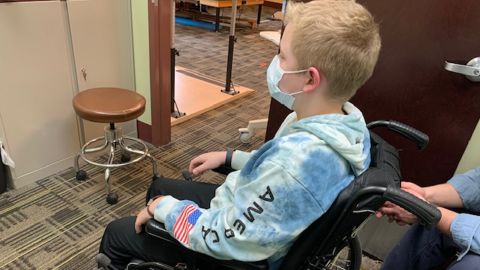
Ayden Varno needed physical therapy to regain his balance.

Lynda Varno is grateful for that help and recognition.

Her 12-year-old son, Ayden, had Covid-19 in November 2020. He recovered and seemed fine. Four months later, he used a push mower to mow the lawn of their rural Ohio home and, at bedtime, mentioned to his parents that his back hurt. When he woke up the next day, he couldn’t move.

“He was in so much pain, from his head down to his toes,” Varno said.

The local ER and, later, his pediatrician chalked it up to growing pains. But the boy who jumped on a trampoline every day, who loved to run and play football, could barely walk or move.

“That pain level was still there. Nothing was helping,” Varno said.

She spent months taking him to several hospitals, but none could find a way to ease his pain. It got so bad that it triggered nonepileptic seizures – up to 100 a day at one point, his mom said.

It wasn’t until the next year, when Varno saw Edwards talk on the news about starting a pediatric long Covid unit, that she thought things could get better.

“I just remember sitting there just sobbing because Ayden met every single thing she talked about,” Varno said. “It gave me goosebumps. I just sat there crying and saying, ‘God, thank you so much. This is what we needed.’ “

Varno got an appointment and said “it’s been a blessing ever since.”

After Ayden Varno had Covid, he had trouble standing up without getting lightheaded.

In addition to complex pediatric long Covid, Ayden had been diagnosed with orthostatic intolerance, an inability to remain upright without symptoms like lightheadedness, and dysautonomia, a dysfunction of the nerves that regulate involuntary body functions like heart rate and blood pressure.

Edwards’ clinic uses an integrated approach to long Covid treatment. Ayden’s regimen included physical therapy, acupuncture, deep breathing and cognitive behavioral therapy, as well as diet changes.

Children at the clinic are often urged to lower sugar in their diet and add more healthy whole foods. The eating plan limits animal products and emphasizes minimally processed foods, vegetables, fruits, whole grains, beans, seeds and nuts. Although more research is needed in children and adults, some early studies suggest that a plant-based diet may generally benefit adults with long Covid.

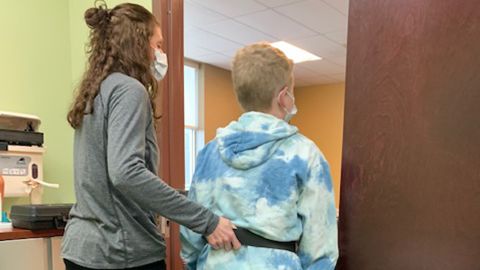
Physical therapist Sara Pesut worked with Ayden on his balance and body position.

In January 2022, Ayden started with Sara Pesut, a physical therapist at University Hospitals. She normally works with adults with functional neurological disorders, but Ayden and some of the others at the pediatric long Covid clinic were around the same age as her own children.

“It was kind of like, ‘how do I not lean into this problem and try to help if I know something that could possibly help these families?’ ” Pesut said.

He came to her first appointment in a wheelchair, she said, but after about three weeks working on balance, body position exercises and other activities, he no longer needed it.

“It just kind of evolved from there,” Pesut said. “He’s really done a wonderful job.”

Ayden went for PT for 9 months and also had some virtual visits for check-ins, as well as doing home exercises and following his therapy guidelines at home, Pesut said.

Ayden went from a point where he couldn’t feed, bathe himself or walk to running and playing sports.

“It has been like night and day from where Ayden was this time last year to now. It is a complete 180,” his mother said.

After months of physical therapy for long Covid, Ayden Varno is back to playing sports.

Edwards’ clinic isn’t the only one to see kids with these extreme symptoms.

At Johns Hopkins Children’s Center, pediatric rehabilitation physician Dr. Amanda Morrow said the main symptom is severe fatigue, but she has also seen patients like Edwards’ who have more complicated conditions.

With treatment, she believes, long Covid won’t mean a lifetime of problems for any child.

“We’re hopeful that the more we can support these kids earlier on and provide recommendations and things, we’re hopeful that that helps out their recovery or maybe doesn’t trigger them to go down this road where things are really difficult long-term,” said Morrow, who is also an assistant professor of physical medicine and rehabilitation at the Johns Hopkins University School of Medicine.

Murrow and Edwards remind parents that the best way to protect kids from long Covid is to keep them from catching the virus in the first place. Vaccinations are important, as well as precautions like wearing a mask when cases are high and washing hands thoroughly.

Eliana spent eight days in the hospital and then was treated as an outpatient at Edwards’ pediatric long Covid clinic.

“We work with them as if they’ve had a stroke, and they recover very, very well, actually,” Edwards said.

When Eliana came into the clinic, physical therapist Art Lukovich said, he had to go back to basics and figure out what would help her best.

“You don’t see stuff like this,” he said.

He had her go back to the foundations of movement and motor control, and he figured out how much he could push. “Which has definitely given me some sleepless nights and gray hairs, but definitely worth it in the end.”

“I had a sense of humility since this is a young lady that basically had her life put on pause because of this,” he added.

In eight months of physical therapy, Eliana went from a wheelchair to a walker to a cane, her mom says.

“When I saw her run for the first time in the clinic, I definitely had that moment where I was like ‘Oh, my God.’ I think her mother and I both looked at each other and thought, ‘wow!’ We didn’t completely think we could get there,” Lukovich said.

Today, Eliana is back to school and back to feeling good. She finished her freshman year with straight As.

Her mother is proud of the way she handled long Covid.

“Not once did she cry. Not once did she panic. She gave me strength every day,” Rosario said. “She’s come a long way, and with the right people in place, she’s now running and jumping and riding roller coasters.”

Jacksonville Nutrition and Fitness hosts drive for CASA kids | Local News

Jacksonville Diet and Physical fitness is hosting a blanket and stuffed animal push to gain the Jacksonville business of CASA.

CASA, Court Appointed Specific Advocates, recruits, trains and mentors volunteers who advocate in court for abused and neglected children in the foster treatment procedure. CASA gives a new blanket and stuffed animal to each and every youngster referred to them. Volunteers advocate for the children’s finest interest in court.

Maria Morales, owner of Jacksonville Diet and Fitness, opened her business enterprise about 6 months ago and is by now supplying back to the community by means of this push.

“It’s the season of offering and I genuinely needed to give. My initially assumed was to do a toy drive,” Morales stated.

However, when she contacted the Jacksonville Chamber for ideas, CASA was named as a non-financial gain that could perhaps use her guidance. Morales mentioned she assumed it was a wonderful strategy.

Becky Derrington, Scenario Supervisor at CASA of Trinity Valley’s Jacksonville office environment, claimed she welcomed the toys if which is the generate Morales desired to do, but informed her that all 105 young children CASA at the moment signifies had been not in have to have of toys. The children’s would like lists, comparable to the Children’s Xmas Tree system in Jacksonville, experienced been adopted and presented by volunteers.

“We do frequently get in stuffed animals and blankets for each individual new circumstance that we get,” Derrington claimed she instructed Morales, who then opted to alter the push.

Morales assumed the Xmas time would be a fantastic time for the drive as folks were currently out browsing for gifts and might be inclined to pick up that one particular extra product to donate.

The business enterprise, found at 407 Frankston St./Hwy 175, will accept donations in the course of regular company hours by way of Friday, Dec. 30.

When dropping off items, donors can test the balanced food items options the enterprise gives, such as waffles and donuts. For the much more active or individuals seeking to get into form, Jacksonville Diet and Fitness offer 4 training lessons a working day for $7 every single, no membership expected.

“Thank you to Jacksonville Nutrition for benefiting CASA with a blanket and stuffed animal drive this thirty day period,” Derrington explained.

Derrington also expressed gratitude to other folks this period.

“CASA also was ready to get 105 Gingerbread young children Christmas bought by the generous donations from our community. A exclusive thank you to Neighbors coffee for putting up a tree at their spot where by the public could get children’s wishes to acquire for,” she mentioned. “CASA of Trinity Valley in Cherokee County are extremely grateful for the outpouring of love and generosity shown to the small children we are serving that are currently in the treatment of CPS.”

In addition to the Xmas items and the blankets at present remaining gathered, CASA is constantly in look for of volunteers. Folks will have to be more than 21 many years of age and pass a background check out to grow to be volunteers. Coaching is furnished. Volunteers common somewhere around 10-15 hours a thirty day period in visits, court docket hearings and other get the job done, in accordance to Derrington.

For the duration of 2022, volunteers gave 1,600 hours and drove about 24,500 miles, serving 184 young children. Their initiatives resulted in the permanent placement of 86 young children. This could incorporate both reunification with mother and father or placement in adoptive properties, in accordance to Derrington.

“If you can spare 10 hours a thirty day period, you can assist see a child obtain a permanently residence. It is astounding.” Derrington reported. “It’s the best work I’ve ever had.”